



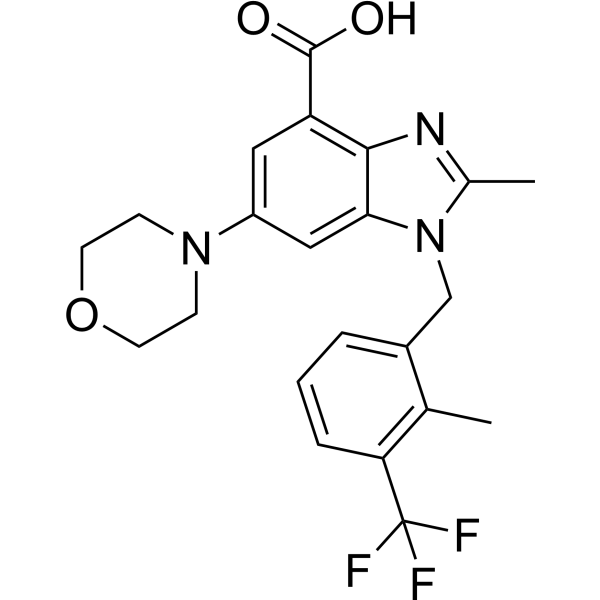
GSK2636771
Based on 12 publication(s) in Google Scholar
GSK2636771 is a potent, selective and orally bioavailable inhibitor of PI3Kβ with a Ki of 0.89 nM and an IC50 of 5.2 nM, showing 900-fold selectivity over p110α and p110γ, and 10-fold selectivity over p110δ isoforms.
商品は「研究用試薬」です。人や動物の医療用・臨床診断用・食品用の製品ではありません。
研究用途以外に使用した場合、当社は一切の責任を負いかねます。
- 純度 : 99.88%
- CAS 番号: 1372540-25-4
- 分子式: C22H22F3N3O3
- 分子量:433.42
-
保管条件:Powder -20°C, 3 years , 4°C, 2 years ; In solvent -80°C, 1 year , -20°C, 6 months

To place orders, for customer services and technical support, please contact: MedChemExpress USA
Tel: 609-228-6898 E-mail: [email protected] [email protected]


-
 生物活性
生物活性
-
化学情報
-
溶剤 & 溶解度
- 純度とドキュメンテーション
- 参考文献
-
 Help & FAQs


-
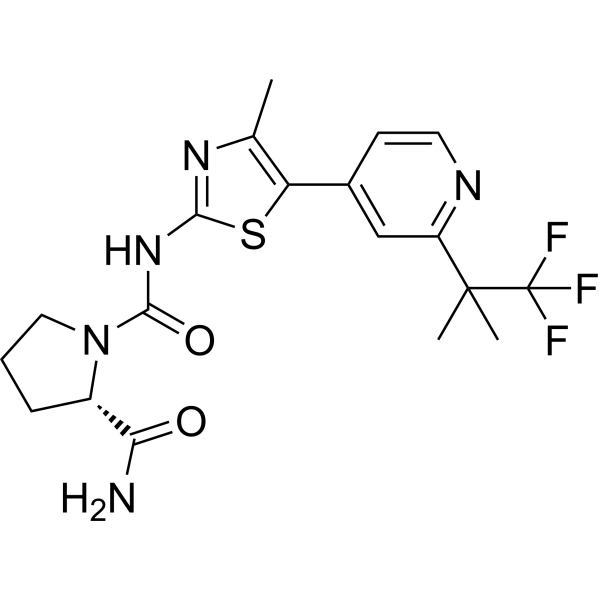
HY-15244
AlpelisibPI3Kα Inhibitor -
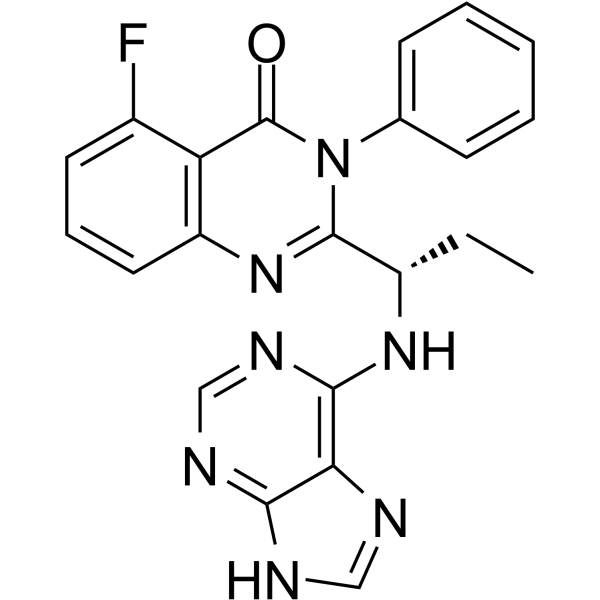
HY-13026
IdelalisibPI3Kδ Inhibitor -
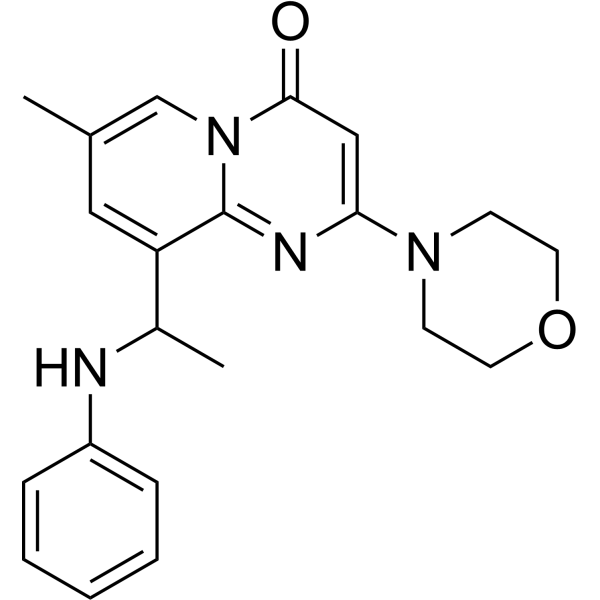
HY-10114
TGX-221Keap1-Nrf2 Interaction Inhibitor -
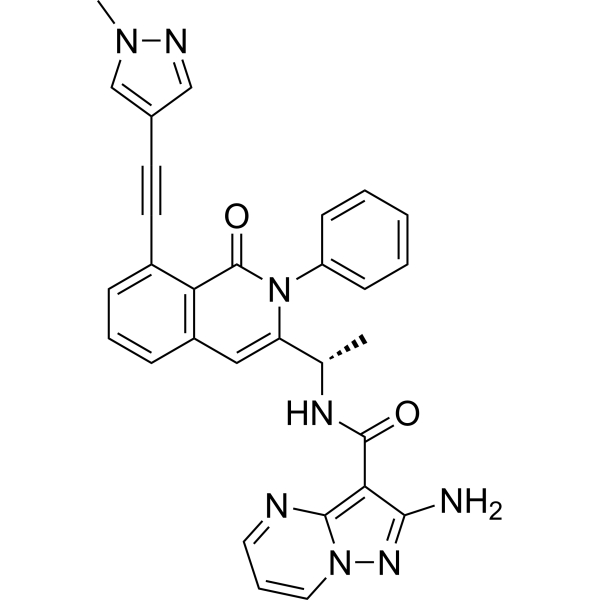
HY-100716
EganelisibPI3Kγ Inhibitor -
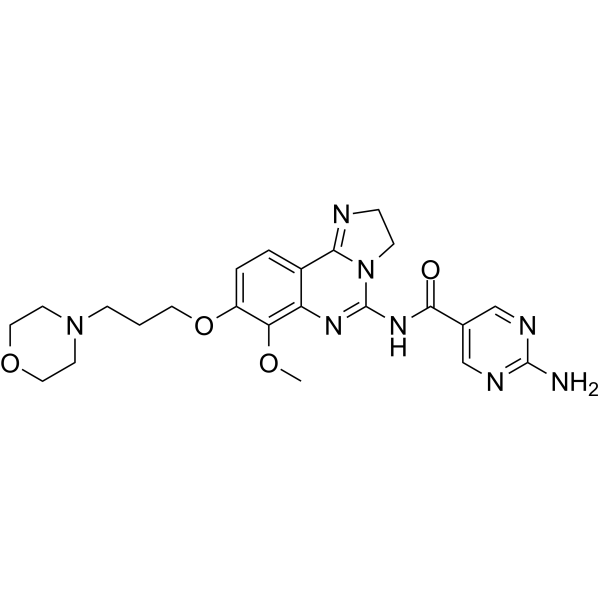
HY-15346
CopanlisibPI3K Inhibitor -
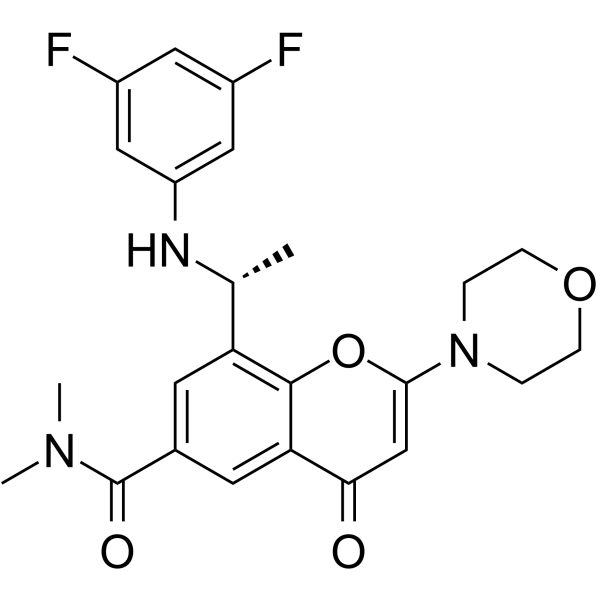
HY-12330
AZD8186PI3K Inhibitor -
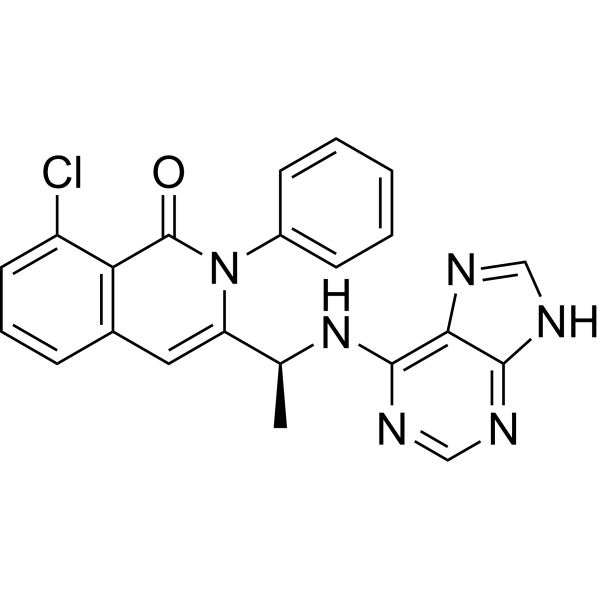
HY-17044
DuvelisibPI3Kδ Inhibitor -
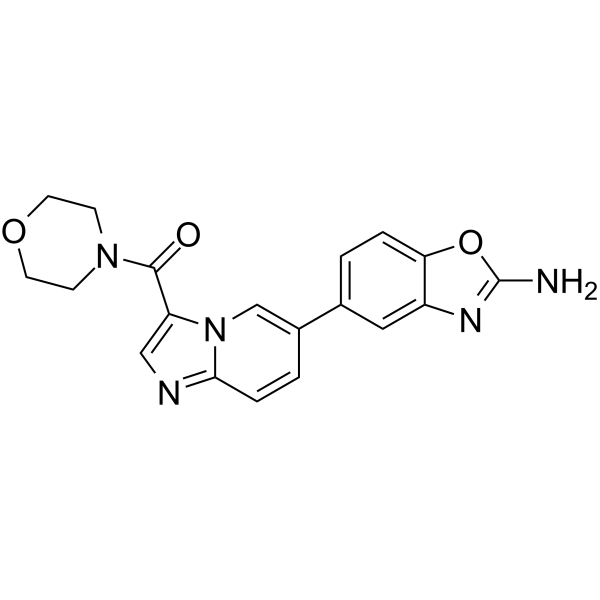
HY-12285
Serabelisibp110α Inhibitor -
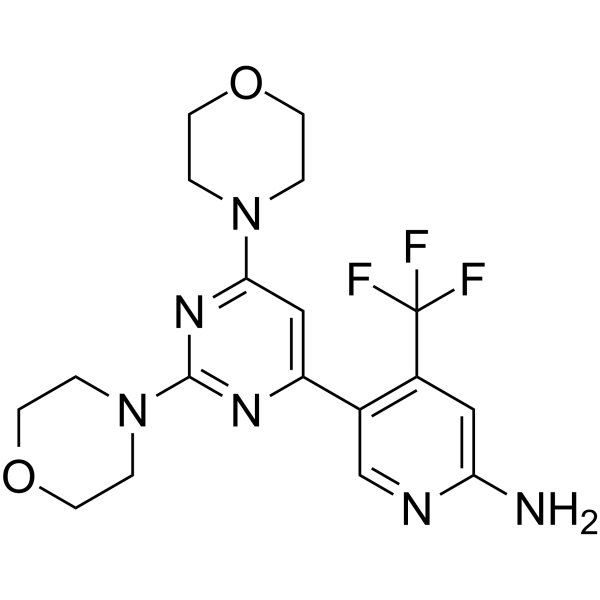
HY-70063
BuparlisibPI3K Inhibitor -
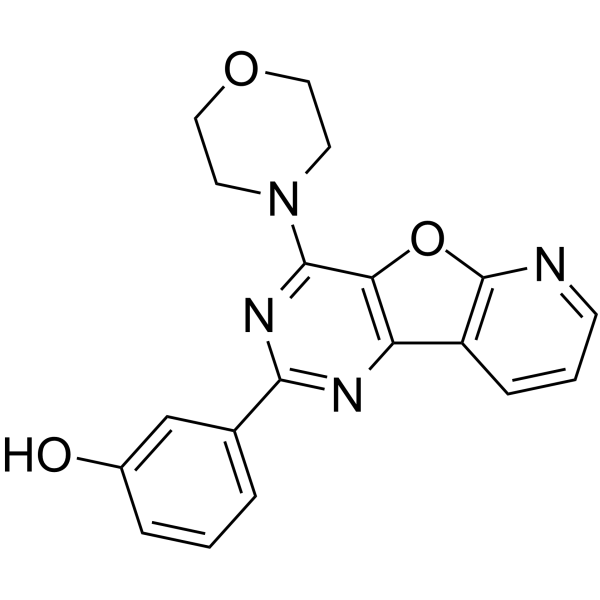
HY-10115
PI-103PI3K/mTOR Inhibitor -
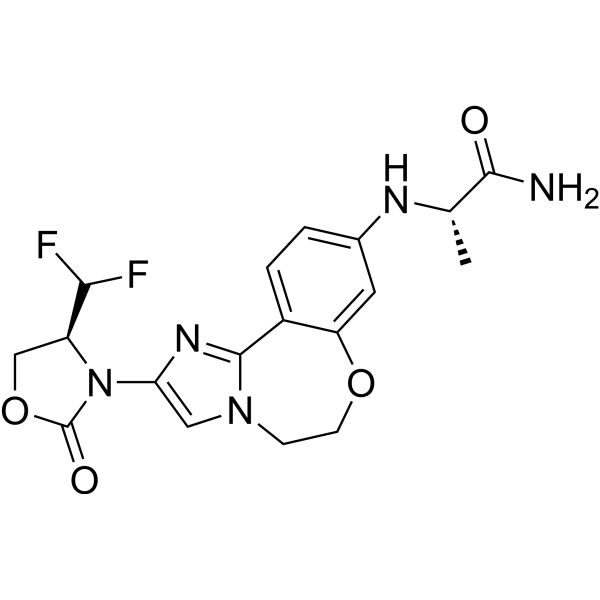
HY-101562
InavolisibPI3Kα Inhibitor -
HY-15466
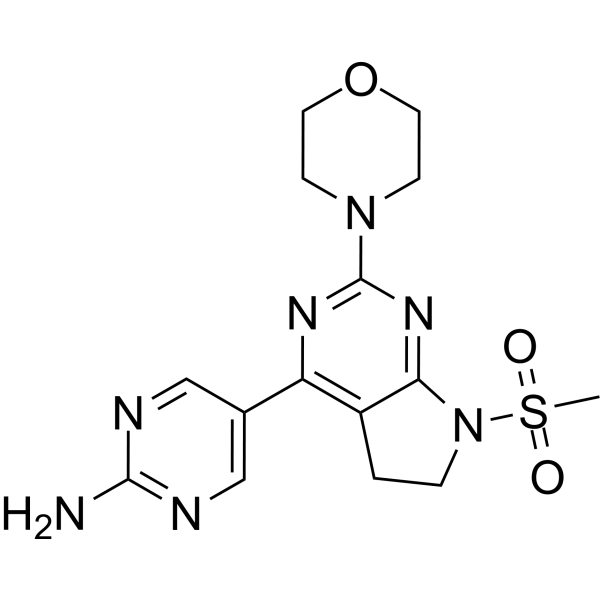
IzorlisibClass I PI3K Inhibitor
MedChemExpress(MCE)の使用を引用している文献 GSK2636771
More- Sci Transl Med. 2018 Jul 18;10(450):eaaq1093. [Abstract]
- Sci Signal. 2021 Dec 21;14(714):eabj0057. [Abstract]
- Cell Rep Methods. 2026 Jun 15;6(6):101339. [Abstract]
- Cell Rep Methods. 2023 Oct 23;3(10):100599. [Abstract]
- Mol Cell Neurosci. 2022 Jan:118:103691. [Abstract]
- Mol Pharmacol. 2016 Dec;90(6):726-737. [Abstract]
- Biochem Biophys Res Commun. 2022 Dec 31:637:267-275. [Abstract]
- Université de Toulouse. 2026 Jun 3.
- bioRxiv. 2026 Jan 18.
- bioRxiv. 2025 Sep 20:2025.09.17.676669. [Abstract]
- Research Square Preprint. 2023 Nov 21.
- Research Square Preprint. 2020 Jun.


生物活性
製品説明
IC50 & Target
[1]|
PI3Kβ 0.89 nM (Ki) |
PI3Kβ 5.2 nM (IC50) |
Cellular Effect
|
Cell Line

|
Type | Value | Description | References |
|---|---|---|---|---|
| LNCaP | EC50 |
178 nM
Compound: GSK2636771
|
Inhibition of PI3Kbeta in PTEN-deficient human LNCAP cells assessed as reduction in AKT phosphorylation at Ser473 residue after 2 hrs by mesoscale assay
Inhibition of PI3Kbeta in PTEN-deficient human LNCAP cells assessed as reduction in AKT phosphorylation at Ser473 residue after 2 hrs by mesoscale assay
|
[PMID: 32551006] |
| LNCaP | EC50 |
42 nM
Compound: GSK2636771
|
Inhibition of PI3Kbeta in PTEN-deficient human LNCaP C4-2 cells assessed as reduction in AKT phosphorylation at Ser473 residue after 2 hrs by mesoscale assay
Inhibition of PI3Kbeta in PTEN-deficient human LNCaP C4-2 cells assessed as reduction in AKT phosphorylation at Ser473 residue after 2 hrs by mesoscale assay
|
[PMID: 32551006] |
| MDA-MB-415 | EC50 |
40 nM
Compound: GSK2636771
|
Inhibition of PI3Kbeta in PTEN-deficient human MDA-MB-415 cells assessed as reduction in AKT phosphorylation at Ser473 residue after 2 hrs by mesoscale assay
Inhibition of PI3Kbeta in PTEN-deficient human MDA-MB-415 cells assessed as reduction in AKT phosphorylation at Ser473 residue after 2 hrs by mesoscale assay
|
[PMID: 32551006] |
| PC-3 | EC50 |
23 nM
Compound: GSK2636771
|
Inhibition of PI3Kbeta in PTEN-deficient human PC3 cells assessed as reduction in AKT phosphorylation at Ser473 residue after 2 hrs by mesoscale assay
Inhibition of PI3Kbeta in PTEN-deficient human PC3 cells assessed as reduction in AKT phosphorylation at Ser473 residue after 2 hrs by mesoscale assay
|
[PMID: 32551006] |
| Sf21 | IC50 |
25 nM
Compound: GSK2636771
|
Inhibition of recombinant human full-length N-terminal His6-tagged p110beta/human recombinant full-length untagged p85alpha expressed in baculovirus infected Sf21 insect cells using PIP2 as substrate after 30 mins in presence of ATP at 2xKm concentration
Inhibition of recombinant human full-length N-terminal His6-tagged p110beta/human recombinant full-length untagged p85alpha expressed in baculovirus infected Sf21 insect cells using PIP2 as substrate after 30 mins in presence of ATP at 2xKm concentration
|
[PMID: 32551006] |
| ZR-75-1 | EC50 |
28 nM
Compound: GSK2636771
|
Inhibition of PI3Kbeta in PTEN-deficient human ZR-75-1 cells assessed as reduction in AKT phosphorylation at Ser473 residue after 2 hrs by mesoscale assay
Inhibition of PI3Kbeta in PTEN-deficient human ZR-75-1 cells assessed as reduction in AKT phosphorylation at Ser473 residue after 2 hrs by mesoscale assay
|
[PMID: 32551006] |
体外実験
GSK2636771 treatment causes cell viability significantly more decreased in the control cells (p110β-reliant PTEN-deficient PC3 prostate and BT549 and HCC70 breast cancer cell lines) than in PTEN-mutant and PTEN wild-type EEC cells. Inhibition of p110β by GSK2636771 or AZD6482 leads to a marked decrease of AKT phosphorylation only in the control prostate and breast cancer cell lines, whereas only marginal effects on AKT activation are observed in EEC cells[1].
MedChemExpress (MCE) has not independently confirmed the accuracy of these methods. They are for reference only.
体内実験
MedChemExpress (MCE) has not independently confirmed the accuracy of these methods. They are for reference only.
臨床実験
| NCT Number | Sponsor | Condition | Start Date |
Phase
|
|---|---|---|---|---|
| NCT01329991 | Plexxikon| | 2011-05 | PHASE1 |


化学情報
-
CAS 番号 1372540-25-4
-
性状 Solid
-
分子量 433.42
-
分子式 C22H22F3N3O3
-
Color White to yellow
-
SMILES
CC1=NC2=C(C(O)=O)C=C(C=C2N1CC3=CC=CC(C(F)(F)F)=C3C)N4CCOCC4
-
輸送条件
Room temperature in continental US; may vary elsewhere.
-
保管条件
Powder -20°C 3 years 4°C 2 years In solvent -80°C 1 year -20°C 6 months


Publications (12)
-
Journal Impact Factor
-
Most Recent
-
Sci Transl Med
PP2A inhibition is a druggable MEK inhibitor resistance mechanism in KRAS-mutant lung cancer cells. [Abstract]2018 Jul 18;10(450):eaaq1093. PMID: 30021885 -
Sci Signal
Suppression of caspase 8 activity by a coronin 1-PI3Kδ pathway promotes T cell survival independently of TCR and IL-7 signaling. [Abstract]2021 Dec 21;14(714):eabj0057. PMID: 34932374 -
Cell Rep Methods
Tumor immune microenvironment reconstitution in patient-derived organoids enables therapy modeling for NSCLC. [Abstract]2026 Jun 15;6(6):101339. PMID: 42134319 -
Cell Rep Methods
RECOVER identifies synergistic drug combinations in vitro through sequential model optimization. [Abstract]2023 Oct 23;3(10):100599. PMID: 37797618 -
Mol Cell Neurosci
GPR3 accelerates neurite outgrowth and neuronal polarity formation via PI3 kinase-mediating signaling pathway in cultured primary neurons. [Abstract]2022 Jan:118:103691. PMID: 34871769 -
Mol Pharmacol
2016 Dec;90(6):726-737. PMID: 27754899 -
Biochem Biophys Res Commun
Dual PI3Kδγ inhibition demonstrates potent anticancer effects in diffuse large B-cell lymphoma models: Discovery and preclinical characterization of LL-00084282. [Abstract]2022 Dec 31:637:267-275. PMID: 36410276 -
-
-
bioRxiv
Loss of the tumor suppressor PTEN activates cell-intrinsic interferon signaling to drive immune resistance. [Abstract]2025 Sep 20:2025.09.17.676669. PMID: 41000885 -
-


溶剤 & 溶解度
体外:
DMSO : 16.67 mg/mL (38.46 mM; ultrasonic and warming and heat to 60°C; Hygroscopic DMSO has a significant impact on the solubility of product, please use newly opened DMSO)
Please refer to the solubility information to select the appropriate solvent. Once prepared, please aliquot and store the solution to prevent product inactivation from repeated freeze-thaw cycles.
Storage method and period of stock solution: -80°C, 1 year; -20°C, 6 months. When stored at -80°C, please use it within 1 year. When stored at -20°C, please use it within 6 months.
Please refer to the solubility information to select the appropriate solvent. Once prepared, please aliquot and store the solution to prevent product inactivation from repeated freeze-thaw cycles.
Storage method and period of stock solution: -80°C, 1 year; -20°C, 6 months. When stored at -80°C, please use it within 1 year. When stored at -20°C, please use it within 6 months.
濃度 (開始) × 体積 (開始) = 濃度 (終了) × 体積 (終了)
体内:
Select the appropriate dissolution method based on your experimental animal and administration route.
- For the following dissolution methods, please ensure to first prepare a clear stock solution using an In Vitro approach and then sequentially add co-solvents:
- To ensure reliable experimental results, the clarified stock solution can be appropriately stored based on storage conditions. As for the working solution for In Vivo experiments, it is recommended to prepare freshly and use it on the same day.
- The percentages shown for the solvents indicate their volumetric ratio in the final prepared solution. If precipitation or phase separation occurs during preparation, heat and/or sonication can be used to aid dissolution.
Add each solvent one by one: 10% DMSO 40% PEG300 5% Tween-80 45% Saline
Solubility: 2.5 mg/mL (5.77 mM); Suspended solution; Need ultrasonic
This protocol yields a suspended solution of 2.5 mg/mL. Suspended solution can be used for oral and intraperitoneal injection.
Taking 1 mL working solution as an example, add 100 μL DMSO stock solution (25.0 mg/mL) to 400 μL PEG300, and mix evenly; then add 50 μL Tween-80 and mix evenly; then add 450 μL Saline to adjust the volume to 1 mL.
Preparation of Saline: Dissolve 0.9 g sodium chloride in ddH₂O and dilute to 100 mL to obtain a clear Saline solution.
For the following dissolution methods, please prepare the working solution directly:
It is recommended to prepare fresh solutions and use them promptly within a short period of time.
The percentages shown for the solvents indicate their volumetric ratio in the final prepared solution. If precipitation or phase separation occurs during preparation, heat and/or sonication can be used to aid dissolution.
Add each solvent one by one: 50% PEG300 50% Saline
Solubility: 1.67 mg/mL (3.85 mM); Suspended solution; Need ultrasonic
In Vivo Dissolution Calculator
Please enter the basic information of animal experiments:
-
-
-
-
Recommended: Prepare an additional quantity of animals to account for potential losses during experiments.
Please enter your animal formula composition:
-
%DMSO +
Recommended: Keep the proportion of DMSO in working solution below 2% if your animal is weak.
-
%+
-
+%Tween-80 + +
-
%Saline +
The co-solvents required include: DMSO, . All of co-solvents are available by MedChemExpress (MCE). , Tween 80. All of co-solvents are available by MedChemExpress (MCE).
Working solution concentration: 0.22 mg/mL
Method for preparing stock solution: mg drug dissolved in μL DMSO. Stock solution concentration: mg/mL.
1. Take μL DMSO stock solution;
2. Add μL .
μL , mix evenly;
3. Then add μL Tween 80, mix evenly;
4. Then add μL
Please ensure that the stock solution in the first step is dissolved to a clear state, and add co-solvents in sequence. You can use ultrasonic heating (ultrasonic cleaner, recommended frequency 20-40 kHz), vortexing, etc. to assist dissolution.


純度とドキュメンテーション
-
データシート (281 KB)
-
SDS (396 KB)
- English - EN (396 KB)
- Français - FR (396 KB)
- Deutsch - DE (396 KB)
- Norwegian - NO (396 KB)
- Español - ES (396 KB)
- Swedish - SV (396 KB)
- Italian - IT (396 KB)
- Korean - KR (396 KB)
- Portuguese - PT (396 KB)
-
取扱説明書 (2659 KB)
参考文献
[1]. Weigelt B, et al. PI3K pathway dependencies in endometrioid endometrial cancer cell lines. Clin Cancer Res. 2013, 19(13), 3533-3544. [Content Brief]
[2]. Hosford SR, et al. Combined inhibition of both p110α and p110β isoforms of phosphatidylinositol 3-kinase is required for sustained therapeutic effect in PTEN-deficient, ER+ breast cancer. Clin Cancer Res. 2016 Nov 30 [Content Brief]


Complete Stock Solution Preparation Table
Please refer to the solubility information to select the appropriate solvent. Once prepared, please aliquot and store the solution to prevent product inactivation from repeated freeze-thaw cycles.
Storage method and period of stock solution: -80°C, 1 year; -20°C, 6 months. When stored at -80°C, please use it within 1 year. When stored at -20°C, please use it within 6 months.
| Optional Solvent | Concentration Solvent Mass | 1 mg | 5 mg | 10 mg | 25 mg |
|---|---|---|---|---|---|
| DMSO | 1 mM | 2.3072 mL | 11.5362 mL | 23.0723 mL | 57.6808 mL |
| 5 mM | 0.4614 mL | 2.3072 mL | 4.6145 mL | 11.5362 mL | |
| 10 mM | 0.2307 mL | 1.1536 mL | 2.3072 mL | 5.7681 mL | |
| 15 mM | 0.1538 mL | 0.7691 mL | 1.5382 mL | 3.8454 mL | |
| 20 mM | 0.1154 mL | 0.5768 mL | 1.1536 mL | 2.8840 mL | |
| 25 mM | 0.0923 mL | 0.4614 mL | 0.9229 mL | 2.3072 mL | |
| 30 mM | 0.0769 mL | 0.3845 mL | 0.7691 mL | 1.9227 mL |


GSK2636771 関連分類
HY-15245 関連分類
 Powered by Bioz