



MF498
Based on 2 publication(s) in Google Scholar
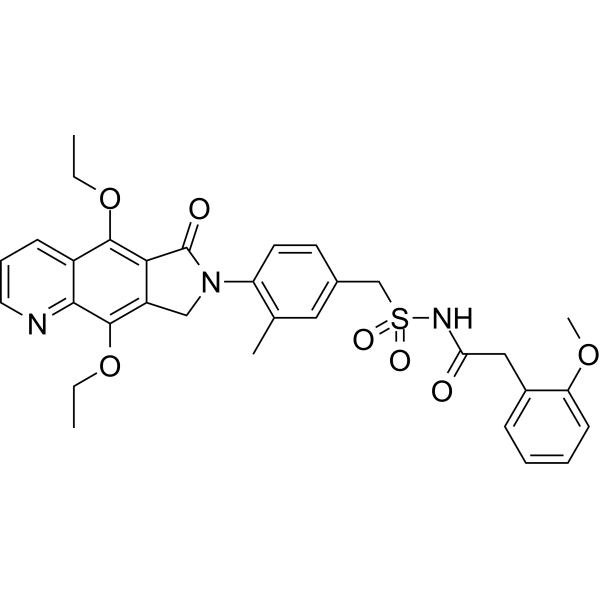
MF498 is a selective and orally active E prostanoid Receptor 4 (EP4) antagonist with a Ki value of 0.7 nM. MF498 can be used in the research of inflammation, such as rheumatoid and osteoarthritis.
For research use only. We do not sell to patients.
- Purity : 99.26%
- CAS No.: 915191-42-3
- Formula: C32H33N3O7S
- Molecular Weight:603.69
-
Storage:Powder -20°C, 3 years , 4°C, 2 years ; In solvent -80°C, 2 years , -20°C, 1 year

To place orders, for customer services and technical support, please contact: MedChemExpress USA
Tel: 609-228-6898 E-mail: [email protected] [email protected]


-
 Biological Activity
-
Chemical Information
-
Solvent & Solubility
- Protocols
- Purity & Documentation
- References
-
 Help & FAQs


-
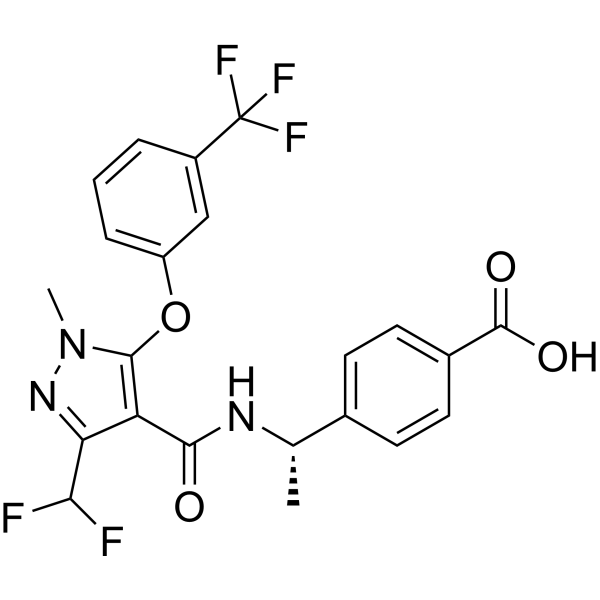
HY-103088
PalupiprantEP4 Antagonist -
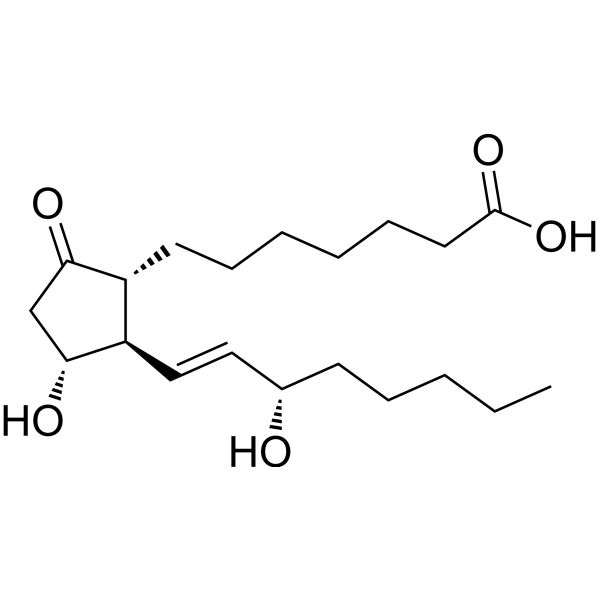
HY-B0131
Prostaglandin E1Vasodilator -
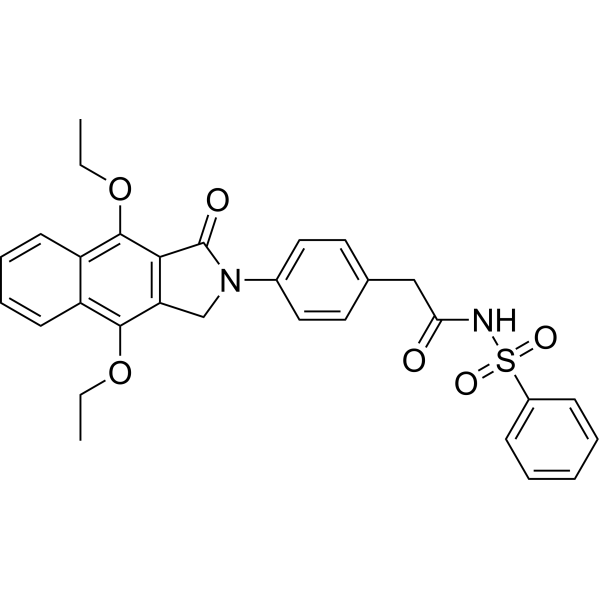
HY-16963
GW627368Prostaglandin Receptor Antagonist -
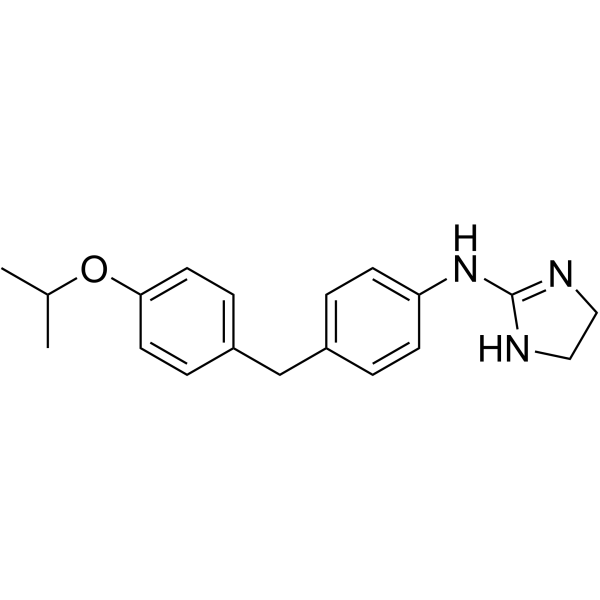
HY-108912
RO1138452Prostaglandin Receptor Antagonist -
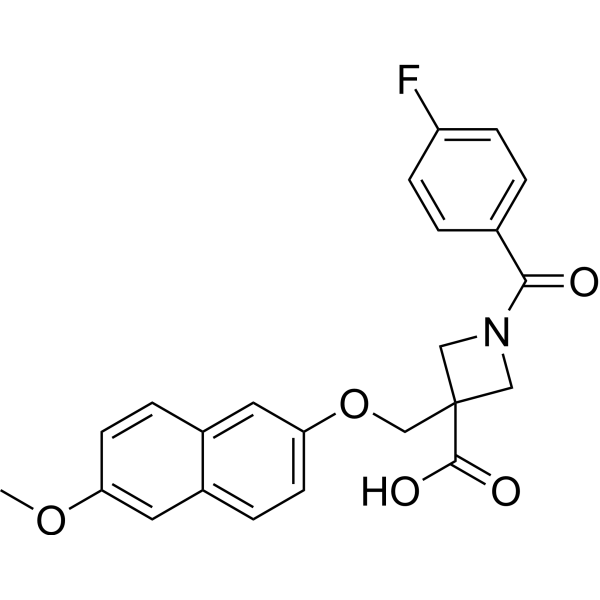
HY-18966
PF-04418948EP2 Receptor Antagonist -
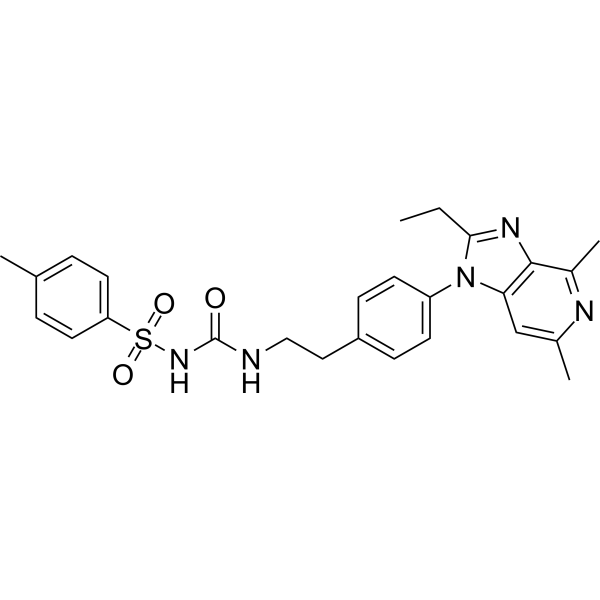
HY-16781
GrapiprantEP4 Receptor Antagonist -
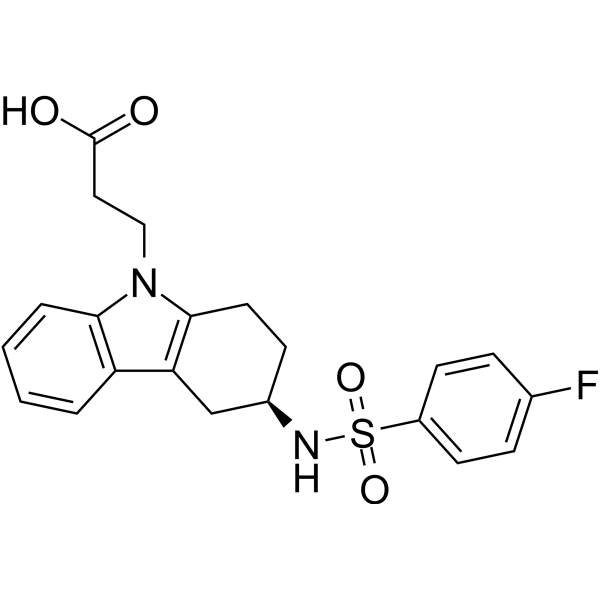
HY-B0745
RamatrobanThromboxane A2 Receptor Antagonist -
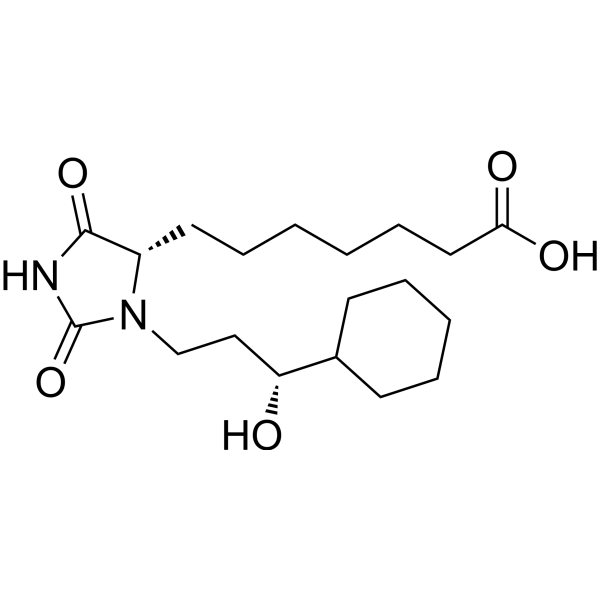
HY-101987
BW 245CDP1 Agonist -
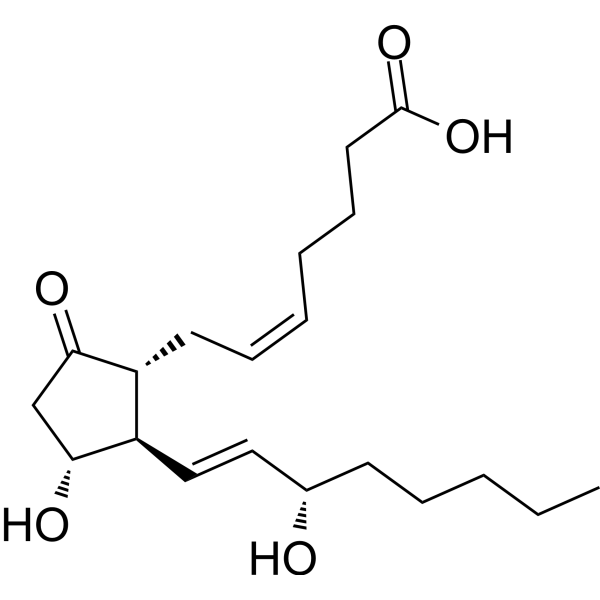
HY-101952
Prostaglandin E2Prostaglandin Receptor Agonist -

HY-10794R
MF498 (Standard)Reference Standard -
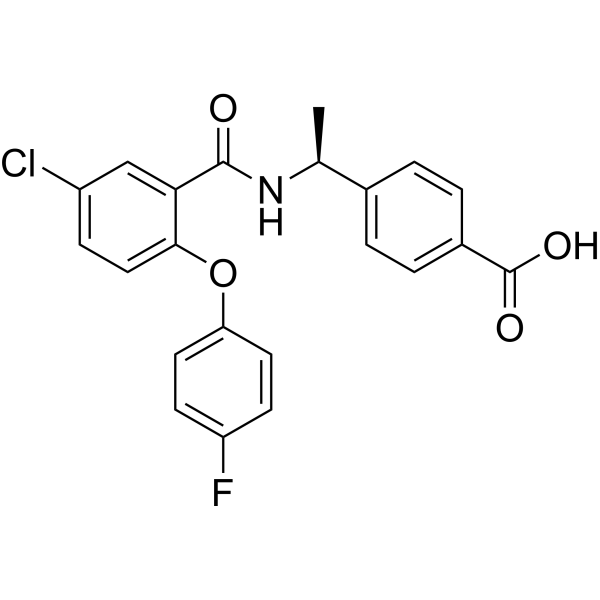
HY-10797
CJ-42794EP4 Antagonist -
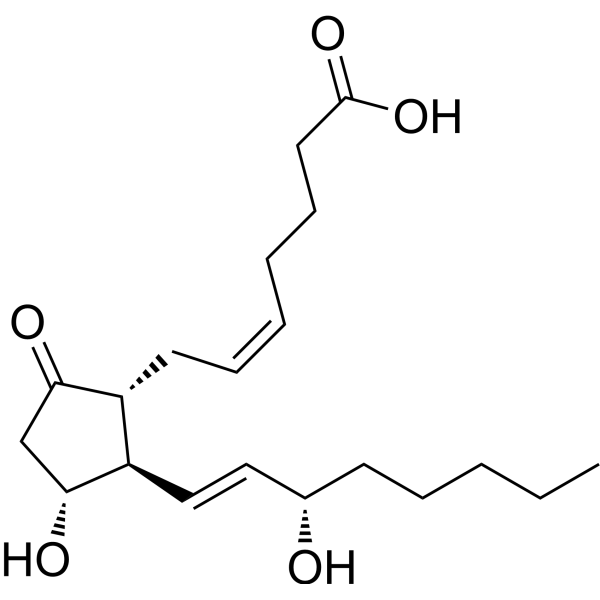
HY-101952R
Prostaglandin E2 (Standard)
Publications Citing Use of MedChemExpress (MCE) MF498
More Customer Validation & Images

-
WB


Biological Activity
Description
IC50 & Target
[1]|
EP4 0.7 nM (Ki) |
In Vitro
MF498 (0.01 nM-10 μM, 30 min) inhibits PGE2-stimulated cAMP accumulation with IC50 values of 1.7 and 17 nM in the absence and presence of 10% serum, respectively[1].
MF498 (0.01 and 0.1 μM, 30 min) inhibits FBS and PDGF-BB-induced VSMC proliferation in rat VSMCs[2].
MF498 (0.1 μM, 30 min) reduced PDGF-induced cyclin D1 and PCNA expression in rat VSMCs[2].
MF498 (0.1 μM, 30 min) inhibits the PDGF-BB-induced migration[2].
MedChemExpress (MCE) has not independently confirmed the accuracy of these methods. They are for reference only.
-
Cell Line:Rat VSMCs
-
Concentration:0.01 nM-10 μM
-
Incubation Time:30 min before FBS treating.
-
Result:Inhibited FBS and PDGF-BB-induced VSMC proliferation.
In Vivo
MF498 (0-30 mg/kg, p.o.) attenuates the EP4 agonist-(L-902688)-induced hyperalgesia in guinea pigs[1].
MF498 (20 mg/kg, p.o.) shows 100% bioavailability, resulting in plasma concentration of 1.2 μM at 6 h[1].
MedChemExpress (MCE) has not independently confirmed the accuracy of these methods. They are for reference only.
-
Animal Model:Rats with adjuvant-induced arthritis (AIA)[1]
-
Dosage:0, 0.008, 0.04, 0.2, 2, 20 mg/kg
-
Administration:Oral administration (p.o.)
-
Result:Showed anti-inflammatory effect in both the primary and secondary paw.


Chemical Information
-
CAS No. 915191-42-3
-
Appearance Solid
-
Molecular Weight 603.69
-
Formula C32H33N3O7S
-
Color White to light yellow
-
SMILES
O=C1N(C2=C(C)C=C(CS(NC(CC3=CC=CC=C3OC)=O)(=O)=O)C=C2)CC4=C(OCC)C5=NC=CC=C5C(OCC)=C41
-
Shipping
Room temperature in continental US; may vary elsewhere.
-
Storage
Powder -20°C 3 years 4°C 2 years In solvent -80°C 2 years -20°C 1 year


Publications (2)
-
Journal Impact Factor
-
Most Recent
-
Cancer Discov
Arachidonic Acid Metabolism in PMN-MDSCs Suppresses Antitumor Capacity of T cells in KRAS-Mutant Cholangiocarcinoma. [Abstract]2026 Apr 8. PMID: 41949259 -
J Virol
Nonsteroidal Anti-inflammatory Drugs Potently Inhibit the Replication of Zika Viruses by Inducing the Degradation of AXL. [Abstract]2018 Sep 26;92(20):e01018-18. PMID: 30068645
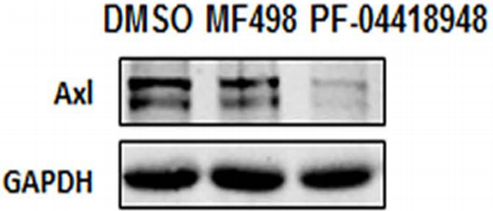
MF498 purchased from MedChemExpress. Usage Cited in: J Virol. 2018 Sep 26;92(20):e01018-18. [Abstract]
A549 cells are added with an EP2 or an EP4 inhibitor. After 48 h, cells are subjected to WB with an anti-Axl antibody.


Solvent & Solubility
In Vitro:
DMSO : ≥ 31 mg/mL (51.35 mM; Hygroscopic DMSO has a significant impact on the solubility of product, please use newly opened DMSO)
* "≥" means soluble, but saturation unknown.
Please refer to the solubility information to select the appropriate solvent. Once prepared, please aliquot and store the solution to prevent product inactivation from repeated freeze-thaw cycles.
Storage method and period of stock solution: -80°C, 2 years; -20°C, 1 year. When stored at -80°C, please use it within 2 years. When stored at -20°C, please use it within 1 year.
Please refer to the solubility information to select the appropriate solvent. Once prepared, please aliquot and store the solution to prevent product inactivation from repeated freeze-thaw cycles.
Storage method and period of stock solution: -80°C, 2 years; -20°C, 1 year. When stored at -80°C, please use it within 2 years. When stored at -20°C, please use it within 1 year.
Concentration (start) × Volume (start) = Concentration (final) × Volume (final)
In Vivo:
Select the appropriate dissolution method based on your experimental animal and administration route.
- For the following dissolution methods, please ensure to first prepare a clear stock solution using an In Vitro approach and then sequentially add co-solvents:
- To ensure reliable experimental results, the clarified stock solution can be appropriately stored based on storage conditions. As for the working solution for In Vivo experiments, it is recommended to prepare freshly and use it on the same day.
- The percentages shown for the solvents indicate their volumetric ratio in the final prepared solution. If precipitation or phase separation occurs during preparation, heat and/or sonication can be used to aid dissolution.
Add each solvent one by one: 10% DMSO 40% PEG300 5% Tween-80 45% Saline
Solubility: ≥ 2.5 mg/mL (4.14 mM); Clear solution
This protocol yields a clear solution of ≥ 2.5 mg/mL (saturation unknown).
Taking 1 mL working solution as an example, add 100 μL DMSO stock solution (25.0 mg/mL) to 400 μL PEG300, and mix evenly; then add 50 μL Tween-80 and mix evenly; then add 450 μL Saline to adjust the volume to 1 mL.
Preparation of Saline: Dissolve 0.9 g sodium chloride in ddH₂O and dilute to 100 mL to obtain a clear Saline solution.
Add each solvent one by one: 10% DMSO 90% (20% SBE-β-CD in Saline)
Solubility: ≥ 2.5 mg/mL (4.14 mM); Clear solution
This protocol yields a clear solution of ≥ 2.5 mg/mL (saturation unknown).
Taking 1 mL working solution as an example, add 100 μL DMSO stock solution (25.0 mg/mL) to 900 μL 20% SBE-β-CD in Saline, and mix evenly.
Preparation of 20% SBE-β-CD in Saline (4°C, storage for one week): 2 g SBE-β-CD powder is dissolved in 10 mL Saline, completely dissolve until clear.
In Vivo Dissolution Calculator
Please enter the basic information of animal experiments:
-
-
-
-
Recommended: Prepare an additional quantity of animals to account for potential losses during experiments.
Please enter your animal formula composition:
-
%DMSO +
Recommended: Keep the proportion of DMSO in working solution below 2% if your animal is weak.
-
%+
-
+%Tween-80 + +
-
%Saline +
The co-solvents required include: DMSO, . All of co-solvents are available by MedChemExpress (MCE). , Tween 80. All of co-solvents are available by MedChemExpress (MCE).
Working solution concentration: 0.22 mg/mL
Method for preparing stock solution: mg drug dissolved in μL DMSO. Stock solution concentration: mg/mL.
1. Take μL DMSO stock solution;
2. Add μL .
μL , mix evenly;
3. Then add μL Tween 80, mix evenly;
4. Then add μL
Please ensure that the stock solution in the first step is dissolved to a clear state, and add co-solvents in sequence. You can use ultrasonic heating (ultrasonic cleaner, recommended frequency 20-40 kHz), vortexing, etc. to assist dissolution.


Purity & Documentation
-
Data Sheet (277 KB)
-
SDS (251 KB)
- English - EN (251 KB)
- Français - FR (251 KB)
- Deutsch - DE (251 KB)
- Norwegian - NO (251 KB)
- Español - ES (251 KB)
- Swedish - SV (251 KB)
- Italian - IT (251 KB)
- Korean - KR (251 KB)
- Portuguese - PT (251 KB)
-
Handling Instructions (2659 KB)
References
[1]. Clark P, et al. MF498 [N-{[4-(5,9-Diethoxy-6-oxo-6,8-dihydro-7H-pyrrolo[3,4-g]quinolin-7-yl)-3-methylbenzyl]sulfonyl}-2-(2-methoxyphenyl)acetamide], a selective E prostanoid receptor 4 antagonist, relieves joint inflammation and pain in rodent models of rheumatoid and osteoarthritis. J Pharmacol Exp Ther. 2008 May;325(2):425-434. [Content Brief]
[2]. Xu H, et al. The Prostaglandin E2 Receptor EP4 Promotes Vascular Neointimal Hyperplasia through Translational Control of Tenascin C via the cAPM/PKA/mTORC1/rpS6 Pathway. Cells. 2022 Aug 31;11(17):2720. [Content Brief]


Complete Stock Solution Preparation Table
Please refer to the solubility information to select the appropriate solvent. Once prepared, please aliquot and store the solution to prevent product inactivation from repeated freeze-thaw cycles.
Storage method and period of stock solution: -80°C, 2 years; -20°C, 1 year. When stored at -80°C, please use it within 2 years. When stored at -20°C, please use it within 1 year.
| Optional Solvent | Concentration Solvent Mass | 1 mg | 5 mg | 10 mg | 25 mg |
|---|---|---|---|---|---|
| DMSO | 1 mM | 1.6565 mL | 8.2824 mL | 16.5648 mL | 41.4120 mL |
| 5 mM | 0.3313 mL | 1.6565 mL | 3.3130 mL | 8.2824 mL | |
| 10 mM | 0.1656 mL | 0.8282 mL | 1.6565 mL | 4.1412 mL | |
| 15 mM | 0.1104 mL | 0.5522 mL | 1.1043 mL | 2.7608 mL | |
| 20 mM | 0.0828 mL | 0.4141 mL | 0.8282 mL | 2.0706 mL | |
| 25 mM | 0.0663 mL | 0.3313 mL | 0.6626 mL | 1.6565 mL | |
| 30 mM | 0.0552 mL | 0.2761 mL | 0.5522 mL | 1.3804 mL | |
| 40 mM | 0.0414 mL | 0.2071 mL | 0.4141 mL | 1.0353 mL | |
| 50 mM | 0.0331 mL | 0.1656 mL | 0.3313 mL | 0.8282 mL |


MF498 Related Classifications
HY-10794 Related Classifications
 Powered by Bioz