



Launaea mucronata (Forssk.) Muschl.
-
Launaea mucronata (Forssk.) Muschl. (5)


- Formula: C15H18O5
- Molecular Weight: 278.30
11β,13-Dihydrolactucin is an antimicrobial agent. 11β,13-Dihydrolactucin also has several biological properties, including antioxidant, anti-inflammatory, and antitumor activities.
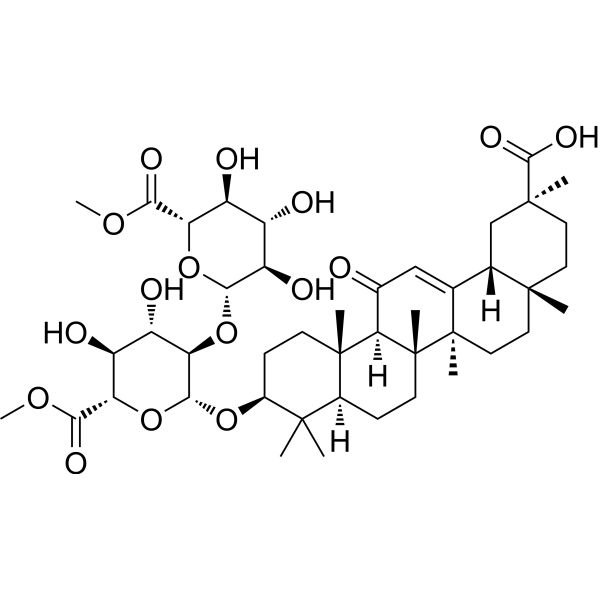
- Formula: C44H66O16
- Molecular Weight: 850.99
Glycyrrhizin-6′,6′′-dimethylester (compound 23) is a licorice saponin isolated from licorice root. Glycyrrhizin-6′,6′′-dimethylester can participate as an aglycone in the generation of methyl glucuronate, producing similar threshold sweetness, licorice, and bitterness.
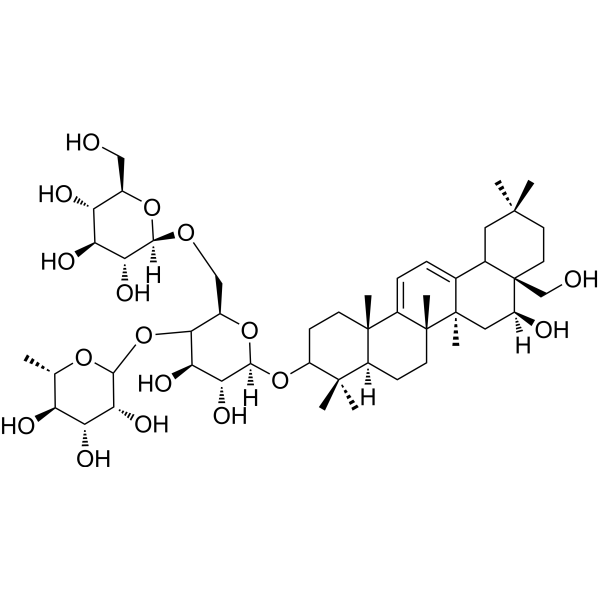
- Formula: C48H78O17
- Molecular Weight: 927.12
Saikosaponin I is a triterpene saponin extracted from Bupleurum falcatum L. Saikosaponin can be used to treat fever, inflammation, liver disease, and nephritis.
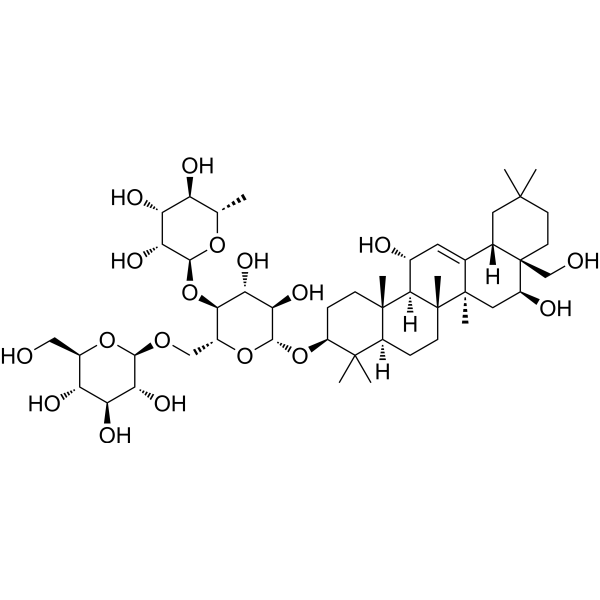
- Formula: C48H80O18
- Molecular Weight: 945.14
Hydroxysaikosaponin C is a natural product that can be isolated from the root of Bupleurum falcatum.

- Formula: C12H16O2
- Molecular Weight: 192.25
Carvacryl acetate is an orally active and brain-penetrant TRPA1 receptor activator and Na+/K+-ATPase activator. Carvacryl acetate modulates GABAergic signaling, alters hippocampal GABA and glutamine levels, reduces lipid peroxidation and nitrite formation, scavenges hydroxyl radicals, and boosts glutathione and antioxidant enzyme activity. Carvacryl acetate inhibits Haemonchus contortus larval hatching, development, adult motility, and fecal egg counts, and induces adult worm structural damage. Carvacryl acetate can be used for the research of intestinal mucositis, gastrointestinal nematode infection, epilepsy, and neurodegenerative diseases.



