



Others
-
Others Related Products (76374)
Related Products (76374)


-
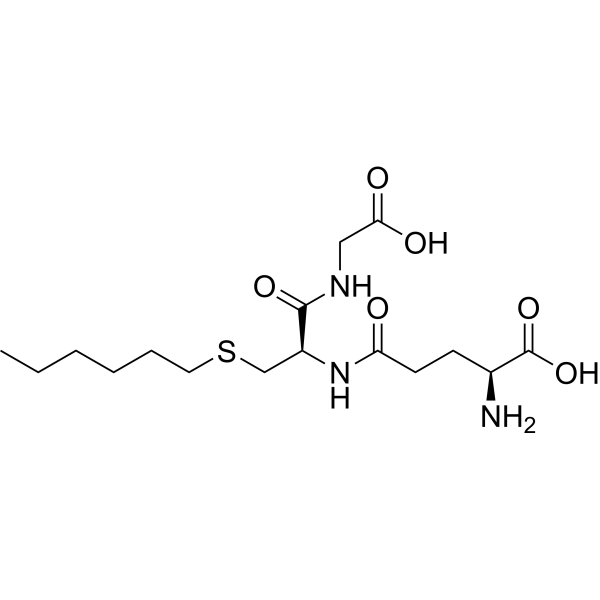
S-Hexylglutathione
 0 Images
S-Hexylglutathione is an S-substituted glutathione in which the hydrogen of the thiol has been replaced by a hexyl group. S-Hexylglutathione is also an competitive inhibitor against glutathione-S-transferase. S-Hexylglutathione can be used as an affinity chromatographic ligand for glutathione-S-transferase and glutathione peroxidase.
-
Glycyl-L-phenylalanine
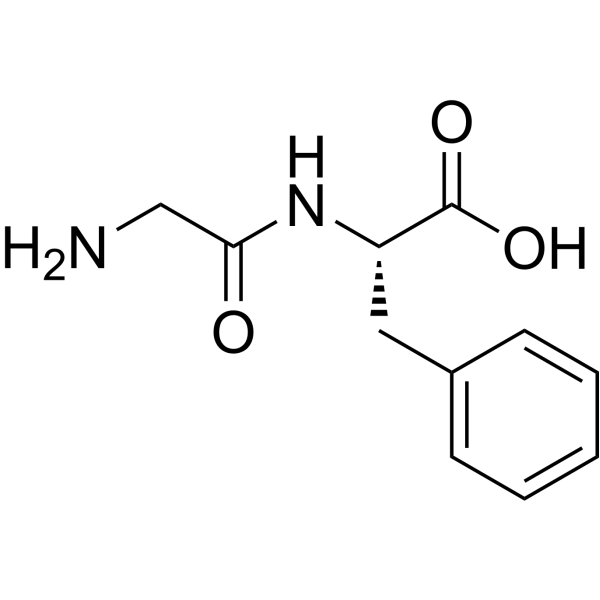 0 ImagesSynonyms: Gly-Phe; H-Gly-Phe-OH
Glycyl-L-phenylalanine is a phenylalanine derivative.
-
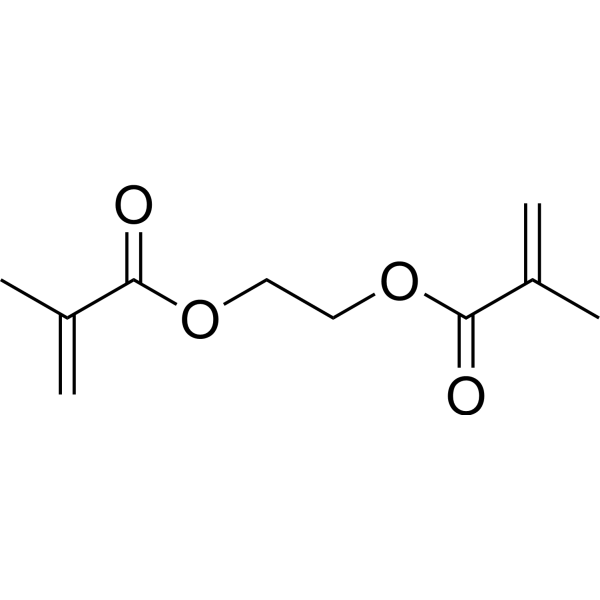
Ethylene glycol dimethacrylate
 0 Images
Ethylene glycol dimethacrylate is a diester formed by the condensation of Ethylene glycol (HY-Y0338) and Methacrylic acid. Ethylene glycol dimethacrylate is a cross-linking agent for polymers. Ethylene glycol dimethacrylate increases Apoptosis, GPx4, SOD2, ROS. Ethylene glycol dimethacrylate is cytotoxic and genotoxic. Ethylene glycol dimethacrylate exhibits cross-linking activity, enhancing the mechanical properties and stability of materials.

-
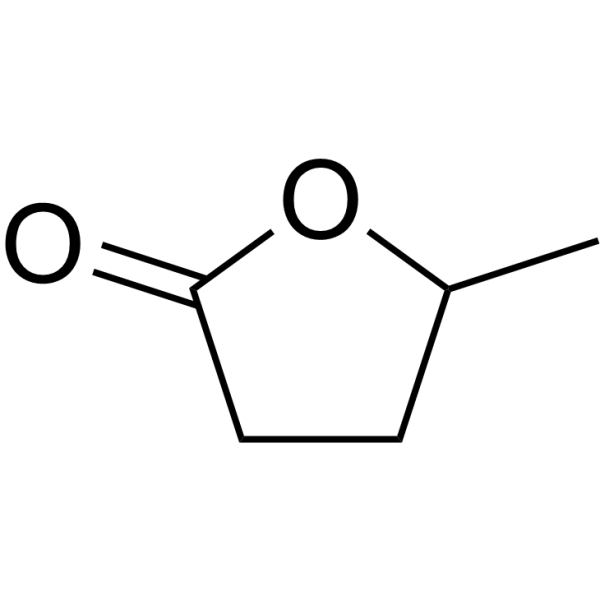
gamma-Valerolactone
 0 Images
5-Methyldihydrofuran-2(3H)-one is a biochemical reagent that can be used as a biological material or organic compound for life science related research.
-
1,6-Bismaleimidohexane
 0 Images
1,6-Bismaleimidohexane is a biochemical assay reagent.
-
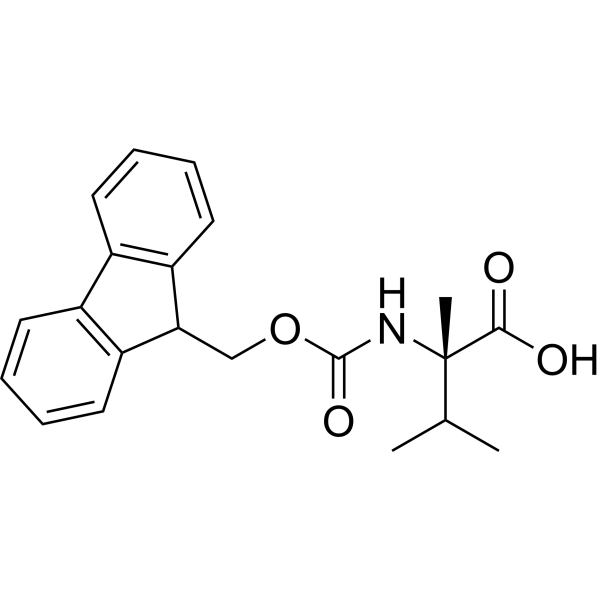
(S)-2-((((9H-Fluoren-9-yl)methoxy)carbonyl)amino)-2,3-dimethylbutanoic acid
 0 Images
(S)-2-((((9H-Fluoren-9-yl)methoxy)carbonyl)amino)-2,3-dimethylbutanoic acid is a valine derivative.
-
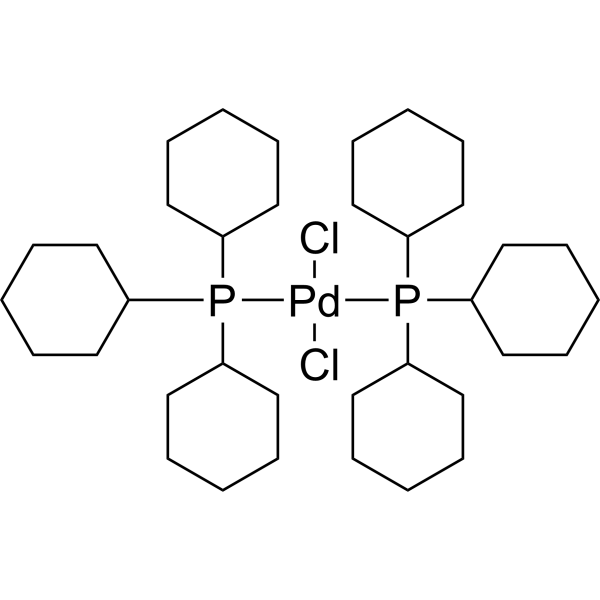
Dichlorobis(tricyclohexylphosphine)palladium(II)
 0 Images
Dichlorobis(tricyclohexylphosphine)palladium(II) is a biochemical reagent that can be used as a biological material or organic compound for life science related research.
-
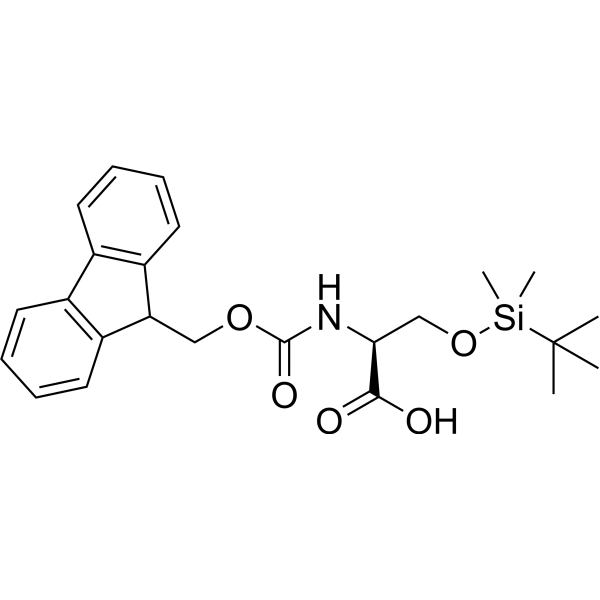
N-(((9H-Fluoren-9-yl)methoxy)carbonyl)-O-(tert-butyldimethylsilyl)-L-serine
 0 Images
N-(((9H-Fluoren-9-yl)methoxy)carbonyl)-O-(tert-butyldimethylsilyl)-L-serine is a serine derivative.
-
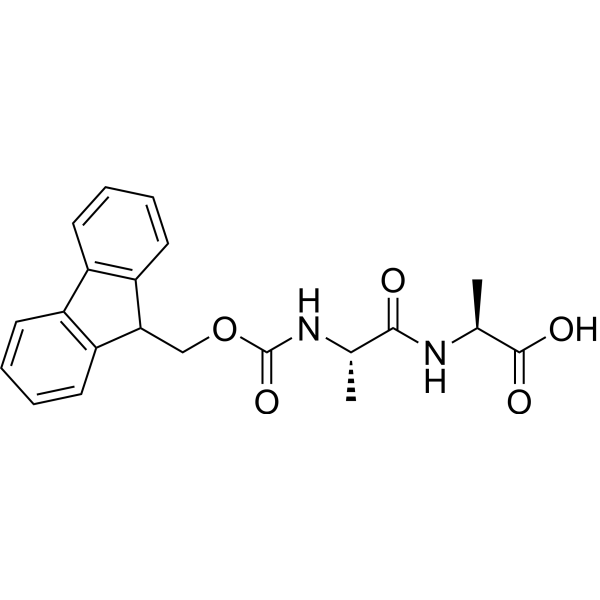
Fmoc-Ala-Ala-OH
 0 Images
Fmoc-Ala-Ala-OH is a self-assembling fluorenylmethoxycarbonyl dipeptide, a small amphiphilic building block composed of a dipeptide linked to a fluorenylmethoxycarbonyl (Fmoc) group. Under conditions of pH < 4, Fmoc-Ala-Ala-OH spontaneously assembles to form a nanofiber network, constructing a hydrogel scaffold with a water content exceeding 99% (w/w). The fibers have a diameter of approximately 22 nm, matching the size of extracellular matrix (ECM) components. Fmoc-Ala-Ala-OH supports cell adhesion, proliferation, and maintains of cell phenotype. Fmoc-Ala-Ala-OH's function is to mimic the ECM, providing a 3D growth microenvironment for cells, and Fmoc-Ala-Ala-OH is primarily used in tissue engineering and 3D cell culture, particularly suitable for in vitro culture studies of cells such as chondrocytes[1].
-
Morin hydrate
 0 ImagesCat. No.: HY-W051229CAS No.: 654055-01-3
Morin hydrate is a biochemical assay reagent.
-
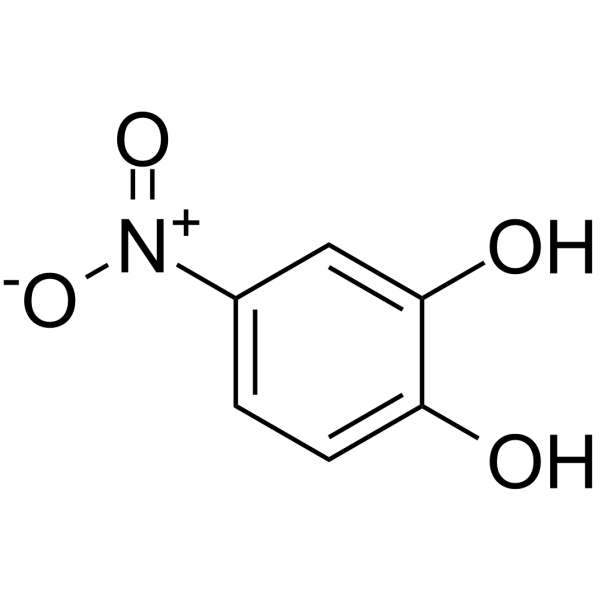
4-Nitrocatechol
 0 Images
4-Nitrocatechol is a potent lipoxygenase inhibitor.
-
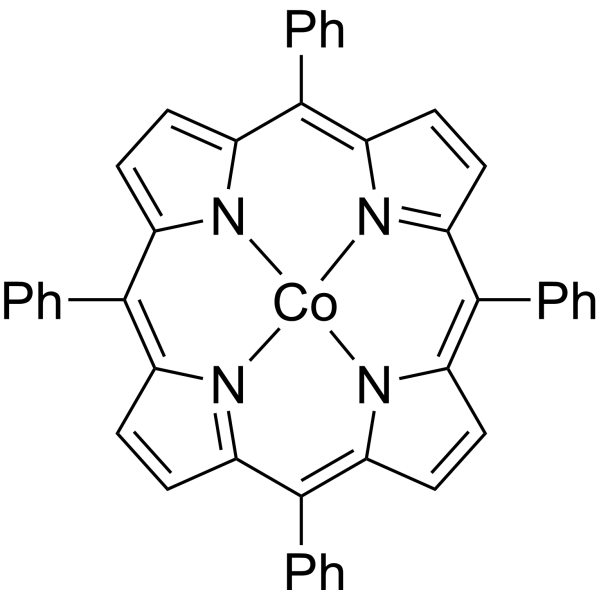
Cobalt(II) TPP
 0 ImagesCat. No.: HY-W073013CAS No.: 14172-90-8
5,10,15,20-Tetraphenyl-21H,23H-porphine cobalt(II), commonly known as CoTPP or cobalt porphyrin, is a coordination compound. 5,10,15,20-Tetraphenyl-21H,23H-porphine cobalt(II) is widely used in various fields such as catalysis, sensing, and organic electronics because of its unique electronic and optical properties. An efficient catalyst for reactions including oxidation, reduction, and CH bond activation, moreover, it has been used as a fluorescent probe for detecting oxygen content in biological systems and as an active material in organic solar cells.
-
ZIF-67(Co)
 0 ImagesSynonyms: Monocobalt(II) bis(2-methyl-1H-imidazole); Cobalt 2-methylimidazole (ZIF-67)
ZIF-67(Co) (Monocobalt(II) bis(2-methyl-1H-imidazole)) is a metal-organic framework (MOF).
-
UiO 66
 0 ImagesCat. No.: HY-W075680CAS No.: 1072413-89-8
UiO 66 is a metal-organic framework (MOF).
-
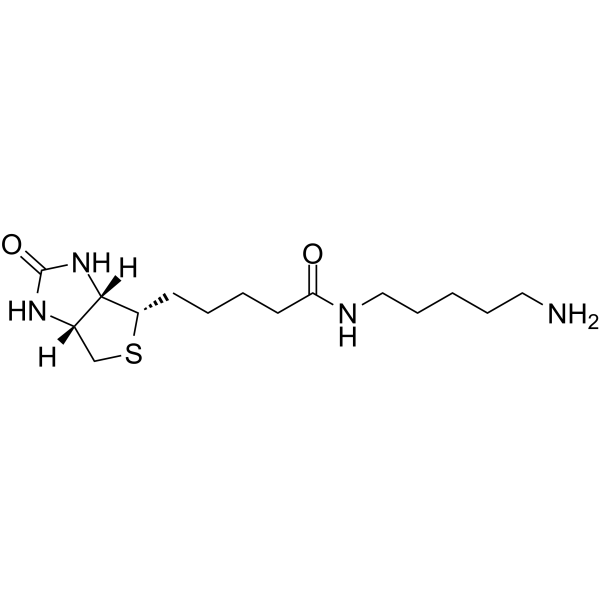
5-(Biotinamido)pentylamine
 0 Images
5-(Biotinamido)pentylamine is an amine donor substrate for transglutaminase. 5-(Biotinamido)pentylamine can be used as a biotin-labeled probe to specifically participate in the calcium-dependent reaction catalyzed by TG, bind to the γ-carboxamide group of the glutamine residue in the protein, introduce the biotin tag into the target protein, and form a biotinylated protein product. 5-(Biotinamido)pentylamine can be used for the labeling, separation, and detection of TG amine receptor protein substrates.
-
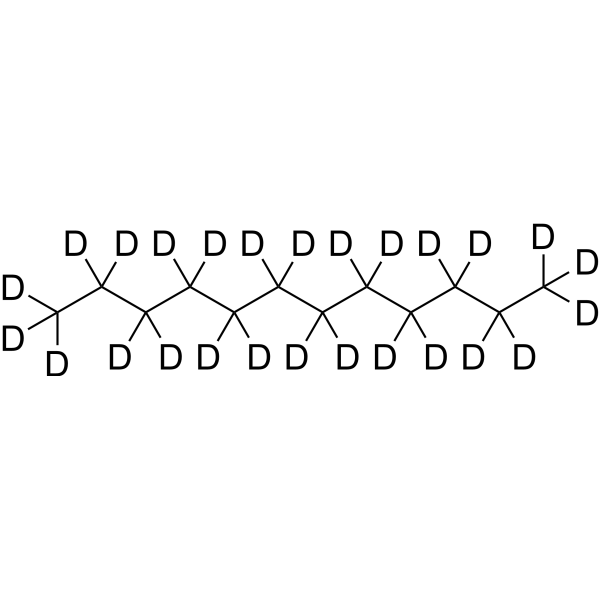
Dodecane-d26
 0 Images
Dodecane-d26 is the deuterium labeled Dodecane.
-
Tetrabutylammonium perchlorate
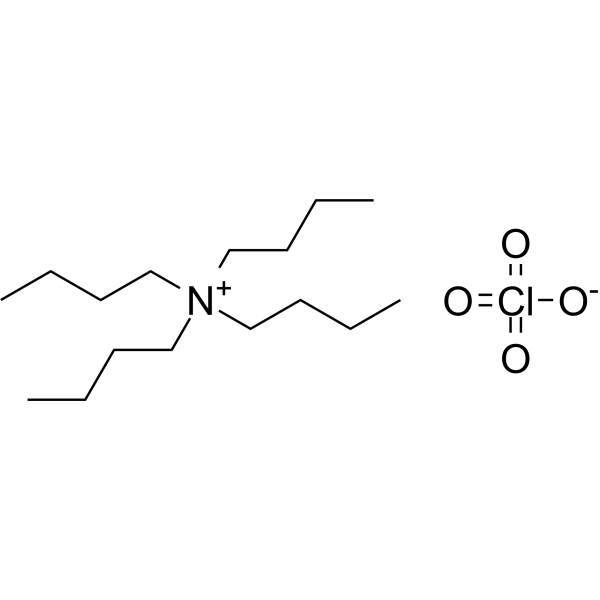 0 ImagesSynonyms: Tetra-n-butylammonium perchlorate
Tetrabutylammonium perchlorate is an organic compound containing ammonium ions and perchlorate ions. It is commonly used as an electrolyte in electrochemistry and as a source of perchlorate anion in analytical chemistry. Tetrabutylammonium perchlorate has a variety of applications in the production of batteries, fuel cells and electronic components due to its high ionic conductivity and stability under extreme conditions. In addition, it can be used as a reference standard in analytical methods such as ion chromatography.
-
2-Aminobenzimidazole
 0 ImagesSynonyms: 2-Iminobenzimidazoline; 1H-Benzimidazol-2-ylamine; 2-Benzimidazolamine
2-Aminobenzimidazole (2-Iminobenzimidazoline; 1H-Benzimidazol-2-ylamine; 2-Benzimidazolamine) is a heterocyclic aromatic compound. 2-Aminobenzimidazole is a kind of biological materials or organic compounds that are widely used in life science research.



