Others
-
Others Related Products (76551)
Related Products (76551)

-
Benzylboronic acid pinacol ester
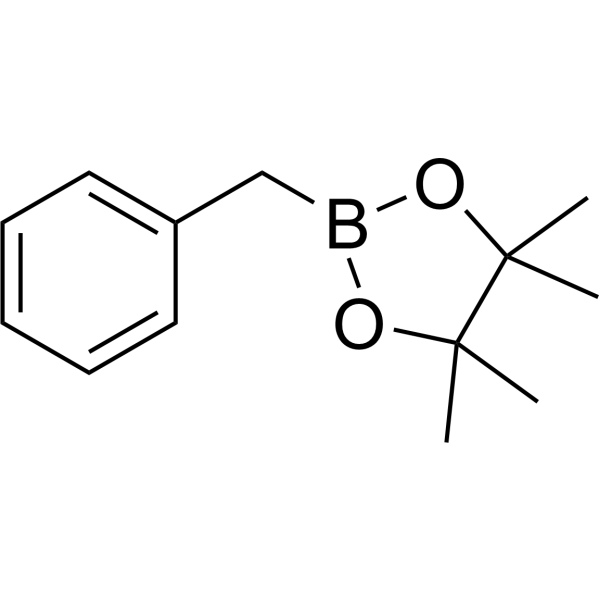 0 ImagesCat. No.: HY-W000993CAS No.: 87100-28-5
2-Benzyl-4,4,5,5-tetramethyl-1,3,2-dioxaborolane is a biochemical reagent that can be used as a biological material or organic compound for life science related research.
-
(R)-(-)-2-Phenylglycinol
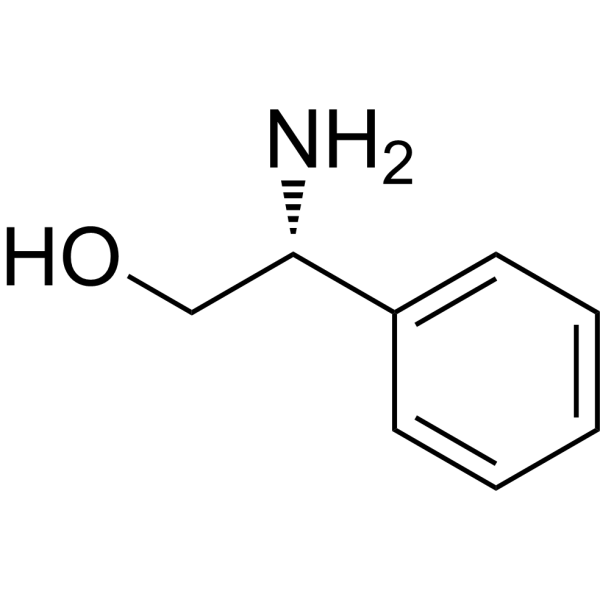 0 ImagesSynonyms: D-Phenylglycinol; (-)-Phenylglycinol
(R)-(-)-2-Phenylglycinol (D-Phenylglycinol; (-)-Phenylglycinol) is a chiral β-amino alcohol, a starting material for chiral synthesis, and a potential nematicide. (R)-(-)-2-Phenylglycinol exhibits nematicidal and egg hatching inhibitory activity against the southern root-knot nematode (Meloidogyne incognita), and is also an upregulated metabolite in the fermentation broth of Streptomyces aquilus JXGZ01. (R)-(-)-2-Phenylglycinol can be used as a framework for constructing zwitterionic bicyclic lactams and multi-substituted piperidine/piperidine acid drugs. (R)-(-)-2-Phenylglycinol can be used in drug synthesis and nematode infection-related research.
-
Cyjohnphos
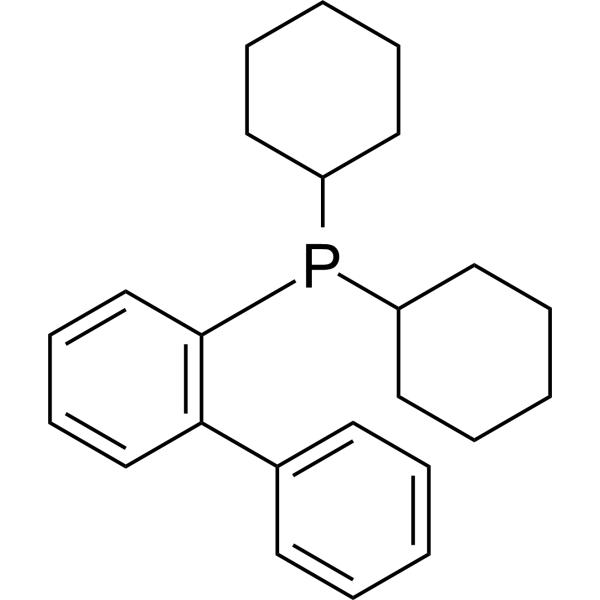 0 ImagesSynonyms: 2-(Dicyclohexylphosphino)biphenyl
CyJohnPhos (2-(Dicyclohexylphosphino)biphenyl) is an organophosphine ligand. Gold (I) complexes derived from CyJohnPhos exhibit anti-colon cancer activity, inhibit the enzymatic activities of COX-1/COX-2 and TrxR, upregulate ROS levels, induce cell apoptosis, and some derivatives can induce cell cycle arrest. CyJohnPhos can serve as an intermediate for research related to organic synthesis.
-
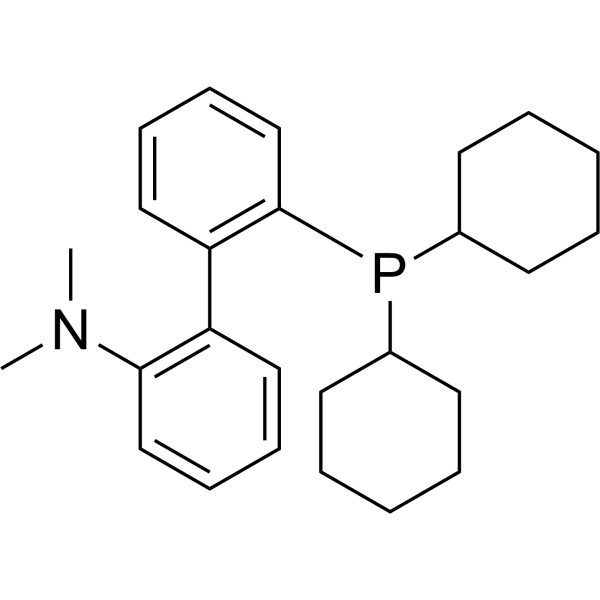
DavePhos
 0 Images
DavePhos is a phosphine ligand and electron donor. DavePhos can form cationic rhodium complexes to promote the selective hydrocarboxylation of styrene derivatives with CO2 and H2. As a sacrificial electron donor, DavePhos assists in generating active Rh-H species to initiate the catalytic cycle. DavePhos can be used in Buchwald−Hartwig cross-coupling reactions within palladium-based catalytic systems. DavePhos is applicable to platinum-catalyzed reductive amination of amine-acid.
-
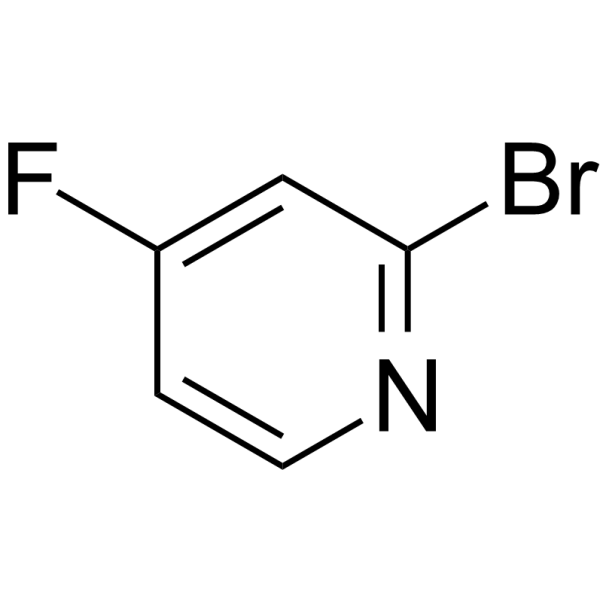
2-Bromo-4-fluoropyridine
 0 Images
2-Bromo-4-fluoropyridine is a synthetic halogenated heterocyclic organic compound and a key intermediate in the pharmaceutical and agrochemical industries. 2-Bromo-4-fluoropyridine can be used to synthesize bioactive molecules through cross-coupling reactions, such as Suzuki coupling or Buchwald-Hartwig amination.
-
Methyl nonadecanoate
 0 Images
Methyl nonadecanoate is an internal standard. Methyl nonadecanoate can be used to determine the content of fatty acid methyl esters (FAME) in biodiesel.
-
6,6'-Dimethyl-2,2'-bipyridyl
 0 ImagesCat. No.: HY-W004545CAS No.: 4411-80-7Synonyms: 6,6'-Dimethyl-2,2'-bipyridine
6,6'-Dimethyl-2,2'-bipyridyl (6,6'-Dimethyl-2,2'-bipyridine) is a metal-organic framework (MOF).
-
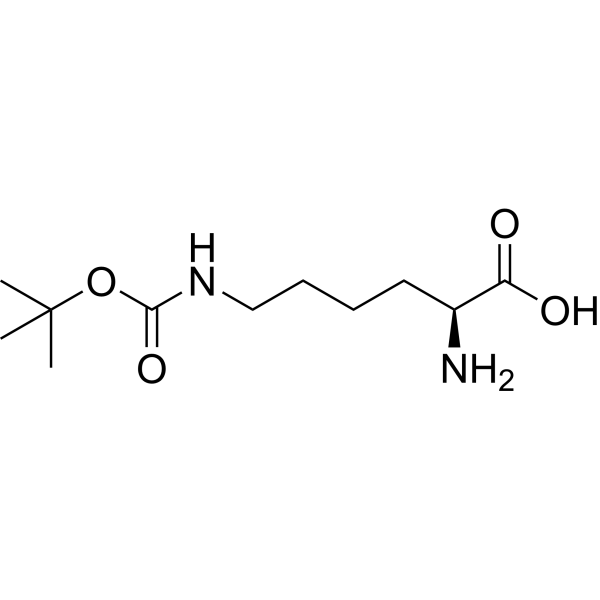
(S)-2-Amino-6-((tert-butoxycarbonyl)amino)hexanoic acid
 0 Images
(S)-2-Amino-6-((tert-butoxycarbonyl)amino)hexanoic acid is a lysine derivative.
-
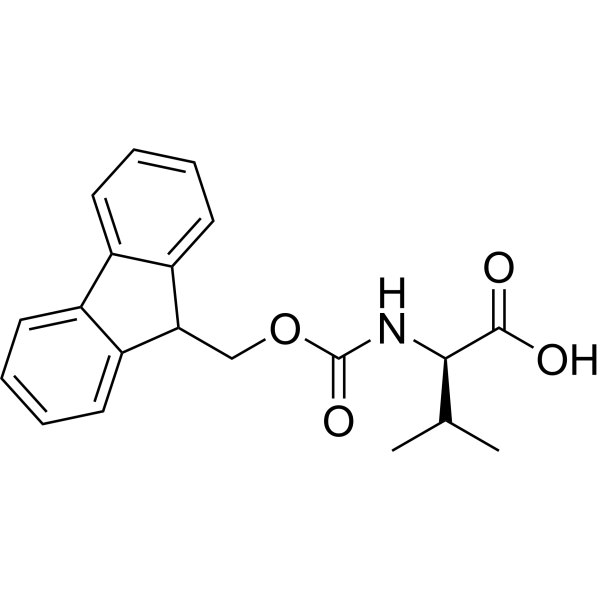
Fmoc-D-Val-OH
 0 Images
Fmoc-D-Val-OH is a valine derivative.
-
L-Cystine hydrochloride
 0 Images
L-Cystine hydrochloride is an orally active extracellular form of L-Cysteine (HY-Y0337), occurring in proteins of plants and animals. L-Cystine hydrochloride elevates Nrf2 protein expression and activates Nrf2 transcription factor. L-Cystine hydrochloride reduces ROS generation and protects against oxidant- or Doxorubicin (HY-15142A)-induced apoptosis. L-Cystine hydrochloride combined with L-theanine (HY-15121) enhances the production of antigen-specific IgG by increasing glutathione (GSH) levels and T helper 2 (Th2) mediated responses in mice. L-Cystine hydrochloride is promising for research of cystinuria and kidney stones
-
Methyl heptadecanoate
 0 ImagesSynonyms: Methyl margarate
Methyl heptadecanoate (Methyl margarate) is a methyl ester derivative of heptadecanoic acid (HY-W004284). Methyl heptadecanoate is used as an internal standard for the quantitative calibration of fatty acids in GC-MS analysis.
-
9,9-Dimethyl-9,10-dihydroacridine
 0 ImagesSynonyms: DM-AD
9,9-Dimethyl-9,10-dihydroacridine (DM-AD) is an electron-donating group with hole transport mobility, which serves as a building block for the synthesis of organic semiconductors and light-emitting emitters. 9,9-Dimethyl-9,10-dihydroacridine can form donor-acceptor-donor type thermally activated delayed fluorescence emitters. 9,9-Dimethyl-9,10-dihydroacridine undergoes oxidation to form radical cations, which further participate in dimerization or oligomerization reactions.
-
Boc-Glu(OtBu)-OH
 0 Images
Boc-Glu (OtBu)-OH is a glutamic acid-derived protected amino acid with its N-terminal amino group protected by tert-butyloxycarbonyl (Boc) and side-chain carboxyl group protected by tert-butyl ester (OtBu), serving as an orthogonally protected building block for polypeptide synthesis. Boc-Glu (OtBu)-OH is applicable to research on the synthesis of peptide compounds.
-
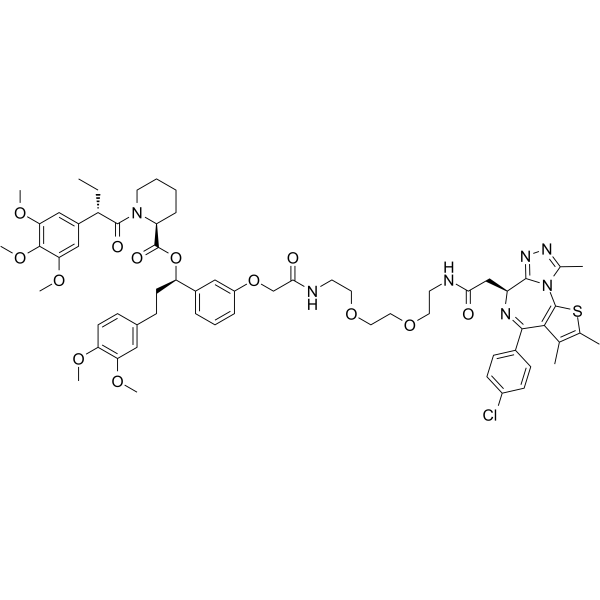
NICE-01
 0 ImagesSynonyms: AP1867-PEG2-JQ1; AP-PEG2-JQ1
NICE-01 (AP1867-PEG2-JQ1; AP-PEG2-JQ1) is a bifunctional compound that bind to proteins in separate cellular compartments that can induce nuclear import of cytosolic cargoes, using nuclear-localized bromodomain-containing protein 4 (BRD4) as a “carrier” for co-import and nuclear trapping of cytosolic proteins.
-
BCIP
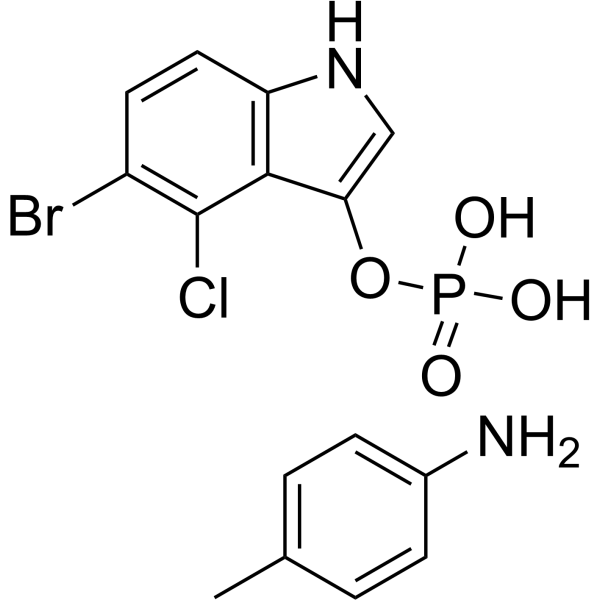 0 ImagesSynonyms: BCIP p-toluidine salt; X-phosphate p-toluidine salt
BCIP(BCIP p-toluidine salt; X-phosphate p-toluidine salt) is an artificial chromogenic substrate used for the sensitive colorimetric detection of alkaline phosphatase activity.
-
Cholesteryl-Teg azide
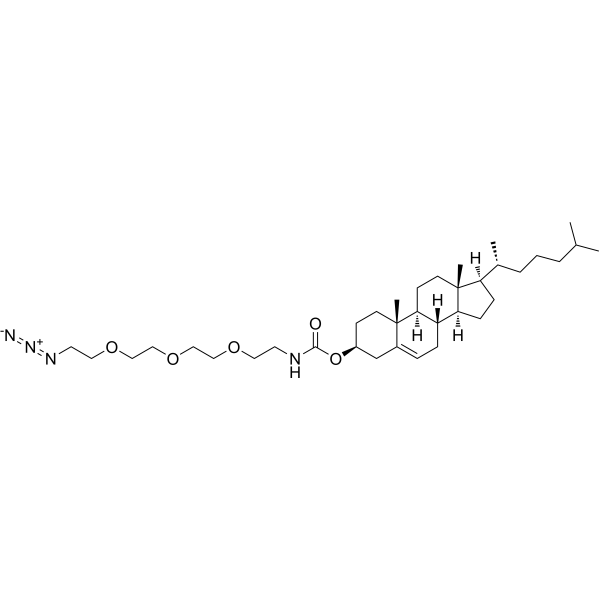 0 Images
Cholesteryl-Teg azide is a cholesterol azide and can be used as a ligand for bioconjugation. Cholesteryl-Teg azide can modify RNA strands.
-
1-(Cyclopropylcarbonyl)piperazine hydrochloride
 0 Images
1-(Cyclopropylcarbonyl)piperazine hydrochloride is a drug intermediate for synthesis of various active compounds.
-
Ribociclib impurity 1
 0 Images
Ribociclib impurity 1 is an impurity of Ribociclib.
-
2-((4-((2-Isopropoxyethoxy)methyl)phenoxy)methyl)oxirane
 0 ImagesCat. No.: HY-79416CAS No.: 66722-57-4
2-((4-((2-Isopropoxyethoxy)methyl)phenoxy)methyl)oxirane is a drug intermediate for synthesis of various active compounds.
-
(Rp,R'p)-(R)-Mandyphos
 0 ImagesCat. No.: HY-79503CAS No.: 210842-74-3Synonyms: Mandyphos SL-M001-1, (2R,2μR)-1,1μ-Bis[(R)-(dimethylamino)phenylmethyl]-2,2μ-bis(diphenylphosphino)ferrocene (acc to CAS)
(Rp,R'p)-(R)-Mandyphos (Mandyphos SL-M001-1, (2R,2μR)-1,1μ-Bis[(R)-(dimethylamino)phenylmethyl]-2,2μ-bis(diphenylphosphino)ferrocene (acc to CAS)) is a drug intermediate for synthesis of various active compounds.