



FAK
PTK2 protein tyrosine kinase 2; PTK2; Focal adhesion kinase
FAK (Focal Adhesion Kinase or PTK2) is a non-receptor and non-membrane associated protein tyrosine kinase that is activated at the sites of cell-matrix adhesions and integrin clustering by auto-phosphorylation (at Tyr397), Src, and other tyrosine kinases. FAK mediates integrin-based cell signaling by transferring signals regulating cell migration, adhesion, and survival from the extracellular matrix to the cytoplasm.
FAK is overexpressed in many tumors, including those derived from the head and neck, colon, breast, prostate, liver, and thyroid. Furthermore, FAK overexpression is highly correlated with an invasive phenotype in these tumors. Inhibition of FAK signaling by overexpression of dominant-negative fragments of FAK reduces invasion of glioblastomas and ovarian cancer cells. FAK therefore represents an important target for the development of anti-neoplastic and anti-metastatic drugs.
All Product Categories
-
FAK Related Products (192)
Related Products (192)

-
Antibodies (6)
-
GZD-257
 0 ImagesCat. No.: HY-178969GZD-257 is a brain-penetrant, ATP-competitive FAK inhibitor (IC50 = 14.3 nM), performing 4.77-fold selectivity with FAK to Pyk2 (IC50 = 68.2 nM). GZD-257 can significantly induce apoptosis of U118MG cells and arrest the cell cycle at the G2/M phase. GZD-257 can be used for the study of Glioblastoma (GBM).
-
Fangchinoline (Standard)
 0 ImagesFangchinoline (Standard) is the analytical standard of Fangchinoline. This product is intended for research and analytical applications. Fangchinoline is isolated from Stephania tetrandra with extensive biological activities, such as enhancing immunity, anti-inflammatory sterilization and anti-atherosclerosis. Fangchinoline, a novel HIV-1 inhibitor, inhibits HIV-1 replication by impairing gp160 proteolytic processing. Fangchinoline targets Focal adhesion kinase (FAK) and suppresses FAK-mediated signaling pathway in tumor cells which highly expressed FAK. Fangchinoline induces apoptosis and adaptive autophagy in bladder cancer.
-
FAK activator-1
 0 ImagesCat. No.: HY-181487CAS No.: 2769848-56-6
-
Chloropyramine hydrochloride (Standard)
 0 ImagesChloropyramine hydrochloride (Standard) is the analytical standard of Chloropyramine hydrochloride. This product is intended for research and analytical applications. Chloropyramine hydrochloride is a histamine receptor H1 antagonist which can also inhibit the biochemical function of VEGFR-3 and FAK.
-
SKLB-C05
 0 ImagesCat. No.: HY-122860CAS No.: 2300981-68-2SKLB-C05 is a novel selective, orally active TOPK inhibitor, with an IC50 of 0.5 nM. SKLB-C05 selectively inhibit TOPK kinase. SKLB-C05 induces Apoptosis, downregulates c-Myc, γ-H2AX, activates p53, blocks FAK/Src medicated migration-related signaling. SKLB-C05 disturbs cell mitosis. SKLB-C05 shows anticancer activity only against TOPK-positive colorectal cancer.
-
PROTAC FAK degrader 5
 0 ImagesCat. No.: HY-183768PROTAC FAK degrader 5 is a potent PROTAC degrader targeting FAK, with a DC50 of 11.65 nM. PROTAC FAK degrader 5 induces FAK protein degradation, selectively inhibits colony formation of human colorectal cancer HCT116 cells, and blocks the proliferation of human umbilical vein endothelial HUVEC cells, exhibiting anti-angiogenic activity. PROTAC FAK degrader 5 can be used in the research of colorectal cancer and angiogenesis.
-
FAK-IN-29
 0 ImagesCat. No.: HY-179679CAS No.: 3104566-26-6FAK-IN-29 is a selective FAK inhibitor with an IC50 of 0.5 nM. FAK-IN-29 can inhibit the proliferation and colony formation of MDA-MB-231 cells, and induce cell cycle arrest and apoptosis. FAK-IN-29 exhibits antitumor activity and can be used for the research of tumors such as triple-negative breast cancer.
-
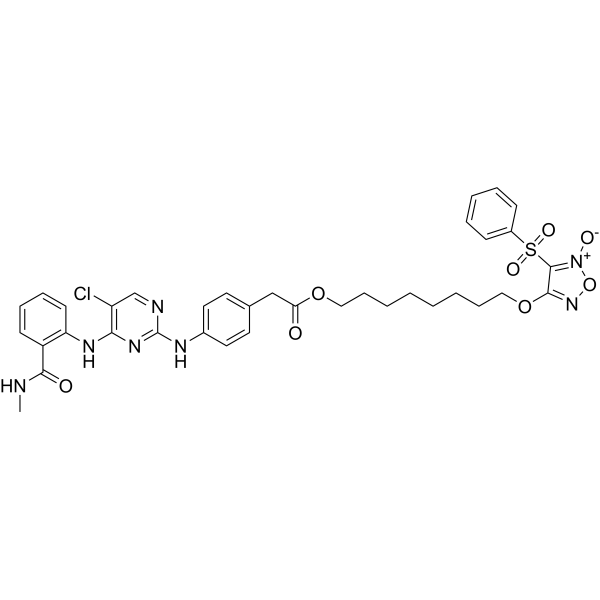
COX/5-LO-IN-2
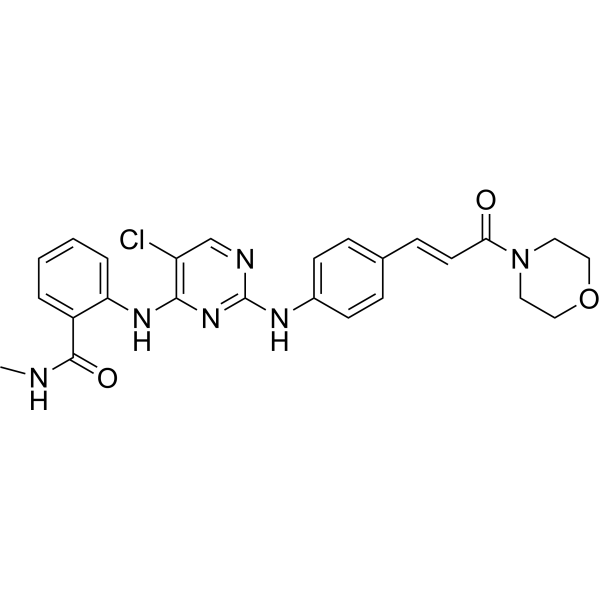
 0 ImagesCat. No.: HY-181061COX/5-LO-IN-2 is a COX2, EGFR, COX1, 5-LOX, BRAF and FAK inhibitor with IC50 of 1.22 μM, 2.5 μM, 2.95 μM, 4.65 μM, 7.4 μM, 12.2 μM, respectively. COX/5-LO-IN-2 induces cell growth arrest at G2/M phase. COX/5-LO-IN-2 triggers apoptotic activity by up-regulating proapoptotic proteins p53, Bax, and caspase-7 and down-regulating anti-apoptotic protein Bcl-2. COX/5-LO-IN-2 can be used for the research of breast cancer.

-
Creosol-d4
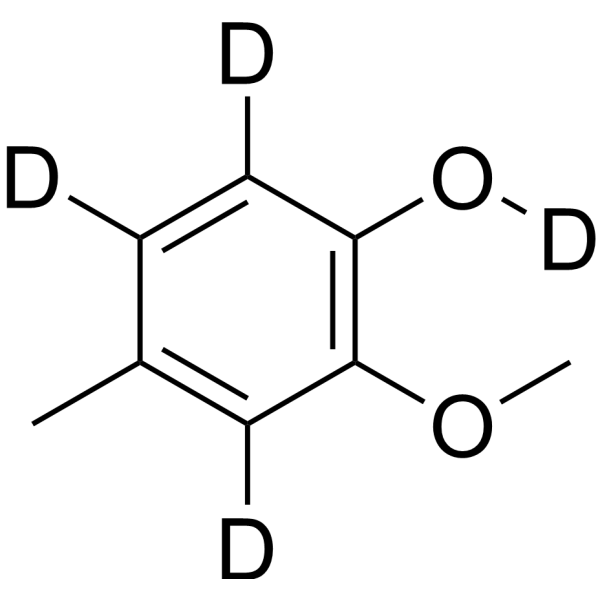 0 ImagesCat. No.: HY-W040971SCAS No.: 20189-08-6Synonyms: 2-Methoxy-4-methylphenol-d4Creosol-d4 (2-Methoxy-4-methylphenol-d4) is the deuterium labeled Creosol (HY-W040971). Creosol (2-Methoxy-4-methylphenol) is an endogenous metabolite that acts as an important chemical intermediate and potential biofuel mainly derived from lignocellulosic biomass. Creosol is blood brain barrier penetrable.
-
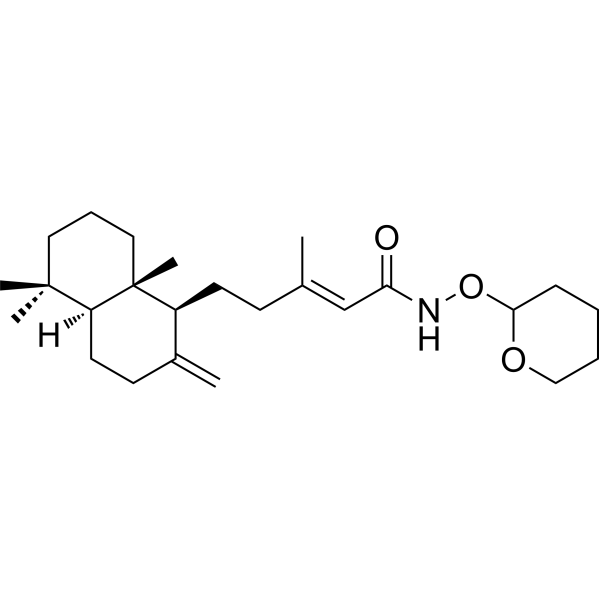
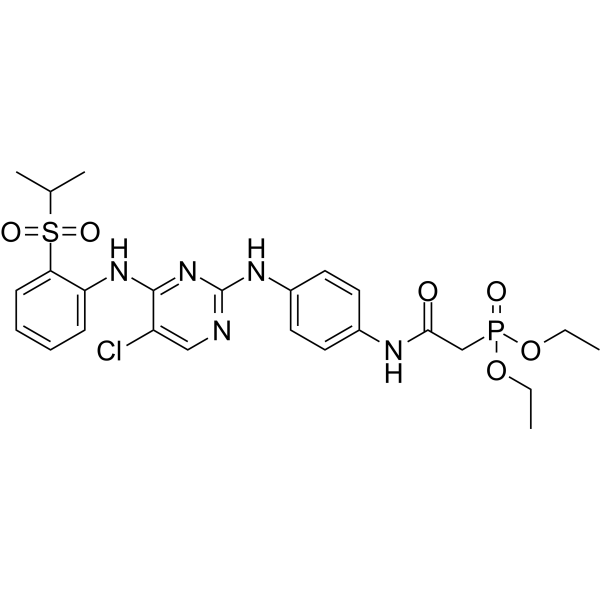
FAK inhibitor 7
 0 ImagesCat. No.: HY-162879CAS No.: 2890814-94-3FAK inhibitor 7 is a type of FAK inhibitor with an IC50 value of 3.58 nM. FAK inhibitor 7 can inhibit the downstream signaling cascades of FAK (like Src and AKT), causing ovarian cancer cells to stall in the G0/G1 phase and induce cytotoxic autophagy. FAK inhibitor 7 can also suppress tumor metastasis and growth in ovarian cancer mice.

-
FAK inhibitor 6
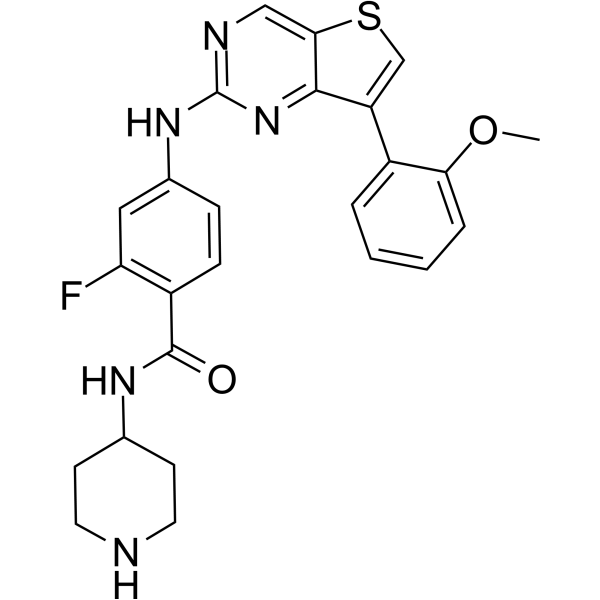 0 ImagesCat. No.: HY-146203CAS No.: 2410056-27-6Compound 26F not only optimized the effective inhibitory enzyme (ic50= 28.2 nm), but also showed relatively less cytotoxicity (ic50= 3.32 μ M) And induced MDA-MB-231 cell apoptosis in a dose-dependent manner, effectively blocking MDA-MB-231 cells in g0/g1 phase.
-
ZINC09875266
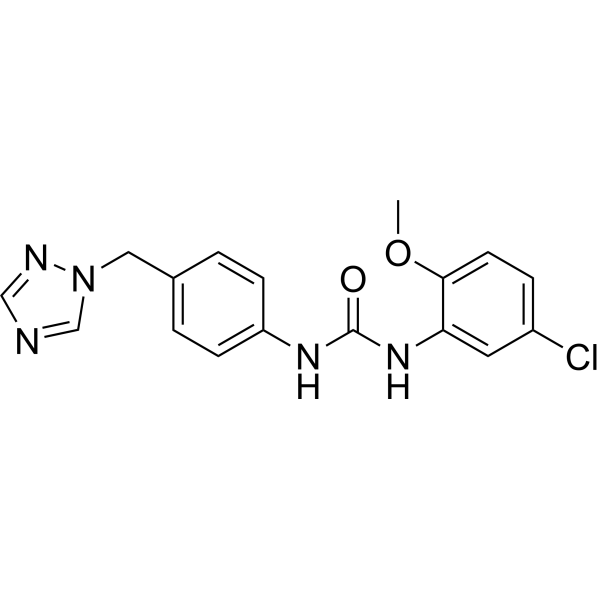 0 ImagesCat. No.: HY-157965CAS No.: 925200-00-6

-
FAK-IN-31
 0 ImagesCat. No.: HY-183769FAK-IN-31 is a FAK inhibitor with antiproliferative activity against a variety of cancer cell lines. FAK-IN-31 serves as a PROTAC target protein ligand for the development of FAK-targeted PROTAC degrader heads, such as PROTAC FAK degrader 5 (HY-183768). FAK-IN-31 can be used in the research of colorectal cancer, pancreatic cancer, breast cancer, hepatocellular carcinoma and lung cancer.




