



FAK
PTK2 protein tyrosine kinase 2; PTK2; Focal adhesion kinase
FAK (Focal Adhesion Kinase or PTK2) is a non-receptor and non-membrane associated protein tyrosine kinase that is activated at the sites of cell-matrix adhesions and integrin clustering by auto-phosphorylation (at Tyr397), Src, and other tyrosine kinases. FAK mediates integrin-based cell signaling by transferring signals regulating cell migration, adhesion, and survival from the extracellular matrix to the cytoplasm.
FAK is overexpressed in many tumors, including those derived from the head and neck, colon, breast, prostate, liver, and thyroid. Furthermore, FAK overexpression is highly correlated with an invasive phenotype in these tumors. Inhibition of FAK signaling by overexpression of dominant-negative fragments of FAK reduces invasion of glioblastomas and ovarian cancer cells. FAK therefore represents an important target for the development of anti-neoplastic and anti-metastatic drugs.
All Product Categories
-
FAK Related Products (192)
Related Products (192)

-
Antibodies (6)
-
MLK3-IN-1
 0 ImagesCat. No.: HY-170486CAS No.: 3104123-06-7MLK3-IN-1 (Compound 37) is a selective inhibitor for mixed-lineage protein kinase 3 (MLK3) with an IC50 <1 nM. MLK3-IN-1 inhibits FAK with an IC50 of 15.5 μM. MLK3-IN-1 exhibits good metabolic stability in mouse and human liver microsomes.
-
PROTAC EGFR degrader 10
 0 ImagesCat. No.: HY-161632CAS No.: 3034244-56-6PROTAC EGFR degrader 10 (Compound B56) is a PROTAC degrader for epidermal growth factor receptor (EGFR), with DC50 <100 nM. PROTAC EGFR degrader 10 binds CRBN-DDB1 with a Ki of 37 nM. PROTAC EGFR degrader 10 degrades EGFR, focal adhesion kinase (FAK), and RSK1, inhibits the proliferation of BaF3 wild type and EGFR mutants, with IC50 <150 nM.
-
FAK-IN-18
 0 ImagesCat. No.: HY-160411CAS No.: 2941086-18-4
-
P2X7R antagonist-1
 0 ImagesCat. No.: HY-183784P2X7R antagonist-1 is an orally active P2X7 receptor antagonist with an IC50 of 3.57 μM. P2X7R antagonist-1 inhibits the proliferation, invasion and metastasis abilities of cancer cells. P2X7R antagonist-1 downregulates the expression of FAK and MMP-9. P2X7R antagonist-1 suppresses tumor growth and metastasis in a mouse breast cancer model. P2X7R antagonist-1 promotes the activation of CD4 and CD8 T cells. P2X7R antagonist-1 can be used in breast cancer-related research.
-
FAK-IN-24
 0 ImagesCat. No.: HY-168899CAS No.: 3062175-62-3FAK-IN-24 (Compound 9f) is a FAK inhibitor (IC50: 0.815 nM). FAK-IN-24 induces DNA damage and apoptosis. FAK-IN-24 has anti-glioblastoma activity. FAK-IN-24 inhibits proliferation of glioblastoma cell lines U87-MG (IC50 = 15 nM) and U251 (IC50 = 20 nM). FAK-IN-24 inhibits tumor growth in U87-MG xenograft model.
-
1α-Hydroxyvitamin D5
 0 ImagesCat. No.: HY-13692CAS No.: 187935-17-7Synonyms: CARD-0241α-Hydroxyvitamin D5 (CARD-024) is a vitamin D analog with extremely low hypercalcemic effects. 1α-Hydroxyvitamin D5 effectively attenuates the pro-fibrotic response of colonic myofibroblasts to TGFβ and high-stiffness substrates by inhibiting the expression of αSMA, the phosphorylation of FAK, and the gene expression of MLCK and ET-1, while activating the anti-inflammatory pathway of IL-1β/COX-2. 1α-Hydroxyvitamin D5 can be used in research related to intestinal fibrosis associated with Crohn's disease.
-
Nitidine chloride (Standard)
 0 ImagesCat. No.: HY-N0498RCAS No.: 13063-04-2Nitidine (chloride) (Standard) is the analytical standard of Nitidine (chloride). This product is intended for research and analytical applications. Nitidine chloride, a potential anti-malarial lead compound derived from Zanthoxylum nitidum (Roxb) DC, exerts potent anticancer activity through diverse pathways, including inducing apoptosis, inhibiting STAT3 signaling cascade, DNA topoisomerase 1 and 2A, ERK and c-Src/FAK associated signaling pathway. Nitidine chloride inhibits LPS-induced inflammatory cytokines production via MAPK and NF-kB pathway.
-
Ifebemtinib tosylate
 0 ImagesCat. No.: HY-122844BCAS No.: 2761021-80-9Synonyms: BI-853520 tosylate; IN-10018 tosylateIfebemtinib (tosylate) (BI-853520 (tosylate); IN-10018 (tosylate)) is a highly selective PTK2 kinase inhibitor. Ifebemtinib (tosylate) demonstrates anti-tumor activity. Ifebemtinib (tosylate) inhibits FAK autophosphorylation in prostate carcinoma cells. Ifebemtinib (tosylate) can inhibit spheroid formation and orthotopic tumor growth in vivo. Ifebemtinib (tosylate) can be studied in anticancer research such as solid tumors, breast cancer, and malignant pleural mesothelioma.
-
FAK-IN-17
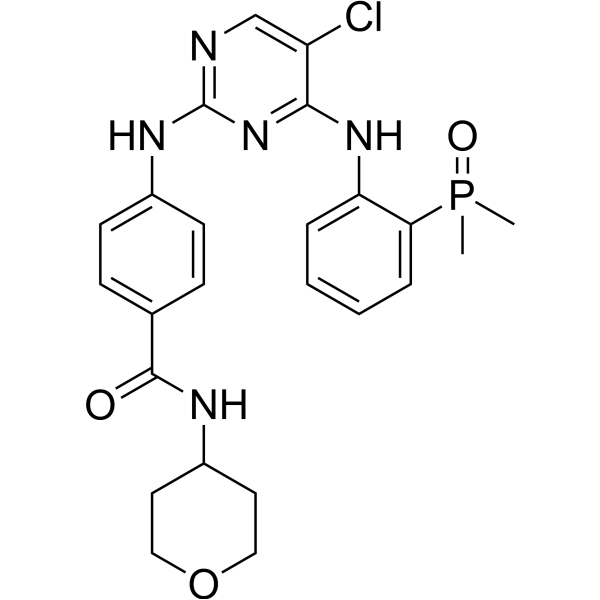 0 ImagesCat. No.: HY-162034FAK-IN-17 is a focal adhesion kinase (FAK) inhibitor. FAK-IN-17 possesses anticancer activity against A549 and MDA-MB-231 cell lines with IC50 values of 130 nM and 94 nM.

-
FAK-IN-28
 0 ImagesCat. No.: HY-175039FAK-IN-28 is an orally active FAK inhibitor (IC50 = 0.4 nM). FAK-IN-28 exhibits dual antiproliferative and anti-metastatic properties. FAK-IN-28 triggers caspase-3-dependent apoptosis via ROS elevation. FAK-IN-28 inhibits tumor growth without causing weight loss or hepatotoxicity. FAK-IN-28 is useful in the study of FAK-driven malignancies, such as colon cancer, cervical cancer, triple-negative breast cancer, and melanoma.
-
FAK ligand-5
 0 ImagesCat. No.: HY-43760CAS No.: 1227948-58-4FAK ligand-5 is a FAK ligand. FAK ligand-5 can be coupled with a linker to synthesize BI-4464 (HY-124625). FAK ligand-5 can be used as a target protein ligand for PROTAC development, specifically for designing PROTAC FAK degraders. FAK ligand-5 can be used in the synthesis of PROTAC FAK degrader 4 (HY-178467). FAK ligand-5 can be used in cancer research.
-
EGFR T790M/FAK-IN-2
 0 ImagesCat. No.: HY-183120CAS No.: 2143104-11-2EGFR T790M/FAK-IN-2 is an orally active dual FAK and EGFRT790M kinase inhibitor, with an IC50 of 1.03 nM against FAK and an IC50 of 3.89 nM against EGFRT790M. EGFR T790M/FAK-IN-2 exerts antiproliferative effects in drug-resistant cancer cells overexpressing FAK, inducing apoptosis and cell cycle arrest. EGFR T790M/FAK-IN-2 exhibits antitumor activity in a pancreatic cancer xenograft mouse model. EGFR T790M/FAK-IN-2 can be used for the research of pancreatic cancer, breast cancer and non-small cell lung cancer.
-
FAK1/2 ligand-1
 0 ImagesCat. No.: HY-184307FAK1/2 Ligand-1 is a FAK1/FAK2 ligand with KD values of 2.9 μM and 2.5 μM for binding to FAK1 and FAK2, respectively. FAK1/2 Ligand-1 induces G2/M phase arrest, activates DNA damage-related signaling pathways, and reduces the phosphorylation level of CDK1. Antitumor agent-220 is applicable to the research of triple-negative breast cancer.
-
STK899704
 0 ImagesCat. No.: HY-120339CAS No.: 1578247-29-6STK899704 is a tubulin polymerization inhibitor. STK899704 exhibits broad-spectrum inhibitory activity against various cancer cell lines with IC50 values ranging from 0.2 to 1.0 μM. STK899704 disrupts the mitotic spindle structure, inducing G2/M phase cell cycle arrest. STK899704 inhibits the migration ability of HT29 cells by downregulating the FAK-MEK-ERK signaling pathway, thereby suppressing the expression and activity of MMP-2 and MMP-9. STK899704 activates caspase-3/7/8/9, leading to PARP cleavage and inducing apoptosis. STK899704 induces cellular senescence through the p53 pathway. STK899704 can be used in research on skin cancer, lung cancer, colon cancer, and other cancers.
-
Excisanin A
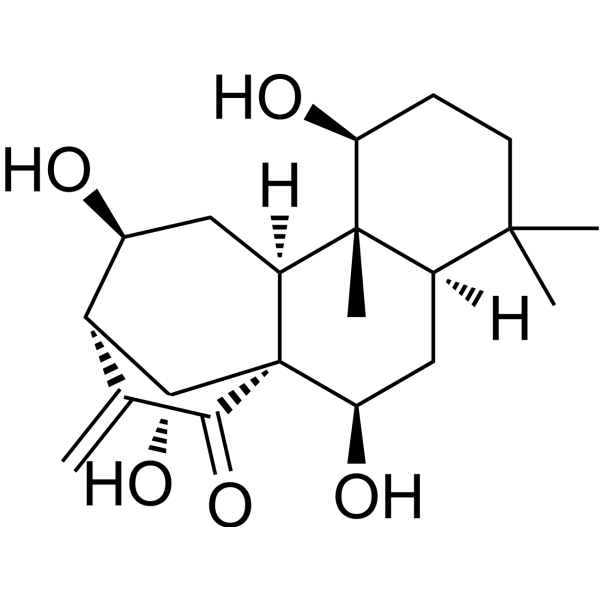 0 ImagesCat. No.: HY-136699CAS No.: 78536-37-5Excisanin A is a potent anticancer agent. Excisanin A inhibits cell proliferation, migration, adhesion and invasion. Excisanin A decreases the expression of MMP-2, MMP-9, p-FAK, p-Src, integrin β1 protein. Excisanin A has the potential for the research of breast cancer.
-
Defactinib-d6
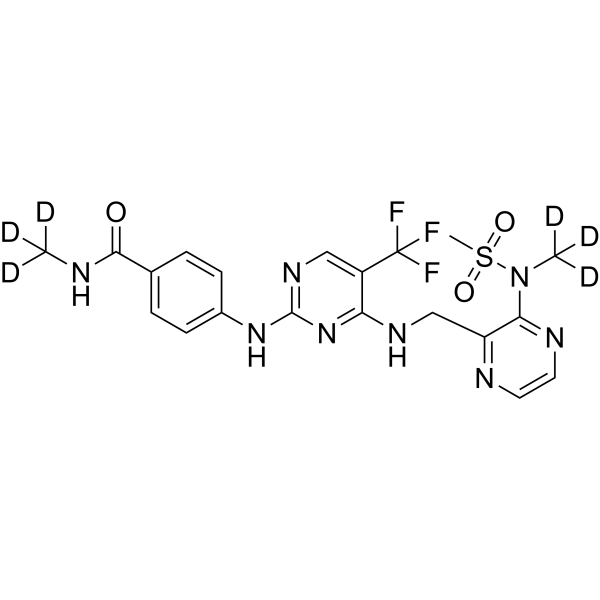 0 ImagesCat. No.: HY-12289SCAS No.: 2384121-03-1Synonyms: VS-6063-d6; PF-04554878-d6Defactinib-d6 is a deuterium labeled Defactinib (HY-12289). Defactinib is a novel FAK inhibitor with potential antiangiogenic and antineoplastic activities.
-
Vernodalin
 0 ImagesCat. No.: HY-N19029CAS No.: 21871-10-3Vernodalin is an orally active, cytotoxic sesquiterpene lactone with a Kd value of 9.55 μM for p38 MAPK. Vernodalin downregulates the expression of phosphorylated ERK, JNK, AKT, PI3K, mTOR, p38MAPK, FAK, MMP-2, MMP-9, and uPA, while upregulates the expression of TIMP-1 and TIMP-2. Vernodalin increases ROS production, upregulates the expression of Bax and caspase 3, downregulates the expression of Bcl-2, and induces apoptosis (apoptosis), oxidative stress response and cell cycle arrest. Vernodalin inhibits the proliferation, adhesion and metastasis of cancer cells. Vernodalin enhances the activity of VEGF-B, AMPK and eNOS signaling pathways. Vernodalin alleviates myocardial injury and restores hemodynamic parameters. Vernodalin inhibits the growth of Trypanosoma brucei rhodesiense. Vernodalin can be used in research related to various cancers including gastric cancer, colorectal cancer and lung cancer, as well as African human trypanosomiasis and myocardial infarction.
-
PROTAC FAK degrader 2
 0 ImagesCat. No.: HY-163709PROTAC FAK degrader 2 is an orally active PROTAC FAK degrader with a DC50 of 60.10 nM. PROTAC FAK degrader 2 forms a ternary complex with FAK and CRBN E3 ubiquitin ligase, driving proteasome-mediated degradation of total and phosphorylated FAK. PROTAC FAK degrader 2 inhibits phosphorylation of AKT and ERK, suppressing their downstream signaling pathways. PROTAC FAK degrader 2 reduces cancer cell viability, adhesion, migration, and invasion. PROTAC FAK degrader 2 exerts anti-tumor activity in HCT8/T tumor xenografts in mice. PROTAC FAK degrader 2 can be used for the research of breast cancer, colorectal cancer, lung cancer.
-
Multi-kinase-IN-7
 0 ImagesCat. No.: HY-178142Multi-kinase-IN-7 is a multikinase inhibitor with IC50s of 2.19, 2.95, 3.59 and 9.31 μM against EGFR, VEGFR2, TrKA and CDK2, respectively. Multi-kinase-IN-7 shows moderate and weaker activity against FAK, AKT1, GSK3β and CDK5 with IC50 values of 6.3, 9.2, 11.7 and 23.4 μM, respectively. Multi-kinase-IN-7 displays broad spectrum antiproliferative potential against NCI cancer cell lines. Multi-kinase-IN-7 induces cell cycle arrest, apoptosis and necrosis. Multi-kinase-IN-7 Inhibitor can be used for the study of breast cancer.




