



G protein-coupled Bile Acid Receptor 1
G-protein coupled receptor 19; GPCR19; TGR5; GPBAR1
G protein-coupled bile acid receptor 1 (GPCR19, TGR5, GPBAR1) is a plasma membrane-bound, G protein-coupled receptor that has bile acids as its ligand. GPCR19 is a regulator of energy homeostasis, bile acid homeostasis as well as glucose metabolism. GPCR19 transduces extracellular signals through heterotrimeric G proteins.
GPCR19 can be activated by bile acids and then it induces cAMP production. As a membrane receptor, GPCR19 can be internalized into the cytoplasm in response to its ligands. GPCR19 plays important roles in cell signaling pathways such as nuclear factor κB (NF-κB), AKT, and extracellular signal-regulated kinases (ERK). Its agonists may be potential drugs for the treatment of metabolic, inflammation, and digestive disorders. In addition, GPCR19 stimulates glucagon-like peptide 1 (GLP-1) secretion. It also has become an attractive therapeutic target for the prevention and/or the treatment of obesity and its highly associated Type II diabetes and metabolic syndrome.
All Product Categories
-
G protein-coupled Bile Acid Receptor 1 Inhibitors
(3)
View all products
-
G protein-coupled Bile Acid Receptor 1 Agonists
(55)
View all products
-
G protein-coupled Bile Acid Receptor 1 Antagonists
(4)
View all products
-
G protein-coupled Bile Acid Receptor 1 Activators
(30)
View all products
-
G protein-coupled Bile Acid Receptor 1 Modulators
(2)
View all products
-
G protein-coupled Bile Acid Receptor 1 Ligands
(2)
View all products
-
G protein-coupled Bile Acid Receptor 1 Related Products (99)
Related Products (99)


-
Sodium taurodeoxycholate hydrate (Standard)
 0 ImagesCat. No.: HY-W089835RCAS No.: 207737-97-1Sodium taurodeoxycholate hydrate (Standard) is the analytical standard of Sodium taurodeoxycholate hydrate. This product is intended for research and analytical applications. Sodium taurodeoxycholate hydrate, a bile acid, is an amphiphilic surfactant molecule synthesized from cholesterol in the liver. Sodium taurodeoxycholate hydrate activates the S1PR2 pathway in addition to the TGR5 pathway.
-
LIFR/GPBAR1 modulator 1
 0 ImagesCat. No.: HY-178477LIFR/GPBAR1 modulator 1 is an orally active, potent GPBAR1 agonist (EC50 = 0.2 μM) and LIFR inhibitor (IC50 = 7.9 μM). LIFR/GPBAR1 modulator 1 upregulates leukaemia inhibitory factor (LIF)-mediated mRNA expression of LIFR and GPBAR1 and significantly reduces the expression of pro-fibrosis markers (COL1A1, ASMA, and TGFβ), and reduces TIMP1 expression and increases MMP9 expression. LIFR/GPBAR1 modulator 1 can be used for the study of human fibrotic disorders.
-
Glycocholic acid-13C2,d4N
 0 ImagesCat. No.: HY-W754548Glycocholic acid-13C2,d4 is the deuterium labeled and 13C-labeled Glycocholic acid (HY-N1423). Glycocholic acid is a bile acid derivative. Glycocholic acid downregulates MDR1, Bcl-2, MRP1, MRP2 and FXR, upregulates Bax, p53, caspase-9, caspase-3, TGR5 and S1PR2. Glycocholic acid inhibits multidrug resistance and efflux pumps, induces mitochondrial apoptosis, and enhances chemosensitivity. Glycocholic acid modulates related bile acid receptor signaling. Glycocholic acid suppresses growth and conjugation of Enterobacteriaceae and increases their antibiotic susceptibility. Glycocholic acid can be used for the research of colon adenocarcinoma and cholangiocarcinoma (CCA).
-
Hyocholic Acid (Standard)
 0 ImagesHyocholic Acid (Standard) is the analytical standard of Hyocholic Acid. This product is intended for research and analytical applications. Hyocholic Acid is a bile acid found in pig. Hyocholic Acid can also be found in urine samples from patients with cholestasis. Hyocholic Acid promotes GLP-1 secretion via activating TGR5 and inhibiting FXR in enteroendocrine cells. Hyocholic Acid is known for its exceptional resistance to type 2 diabetes [1][2][3].
-
SSTR5/TGR5-modulator-1
 0 ImagesCat. No.: HY-182905CAS No.: 3069267-46-2SSTR5/TGR5-modulator-1 is an orally active and dual-target small molecule, balanced in vitro activity at human TGR5 and human SSTR5. SSTR5/TGR5-modulator-1 activates human TGR5 to promote cAMP accumulation. SSTR5/TGR5-modulator-1 blocks human SSTR5 to inhibit agonist-induced calcium mobilization. SSTR5/TGR5-modulator-1 improves glucose tolerance in mice. SSTR5/TGR5-modulator-1 alleviates gallbladder filling in mice at pharmacologically relevant doses. SSTR5/TGR5-modulator-1 has suboptimal physicochemical and metabolic properties.SSTR5/TGR5-modulator-1 can be used for the research of type 2 diabetes mellitus.
-
RG-239
 0 ImagesCat. No.: HY-177050CAS No.: 1199222-56-4RG-239 is an orally active TGR5 agonist with an EC50 of 120 nM, significantly outperforming Betulinic acid (HY-10529) (EC50 = 1.04 μM). RG-239 demonstrates higher selectivity for TGR5 compared to the FXRα. RG-239 increases mitochondrial activity in adipocytes and promotes neurite outgrowth at higher concentrations. RG-239 inhibits LPS (HY-D1056)-induced iNOS expression and nitrite production in Raw264.7 and microglia cells. RG-239 can be used for the study of type 2 diabetes[1][2][3][4][5].
-
FXR agonist 18
 0 ImagesCat. No.: HY-183692CAS No.: 3061938-00-6FXR agonist 18 is an orally active FXR agonist, with an EC50 of 10 nM against human FXR and an EC50 of 1360 nM against human TGR5. FXR agonist 18 inhibits inflammatory responses by reducing nitrite production, downregulating the expression of pro-inflammatory genes (Tnf, Adgre1, Cyp8b1, upregulating the expression of FXR, Hmox1, Nqo1, Nrf2, and enhancing antioxidant responses. FXR agonist 18 ameliorates liver fibrosis in mice, exhibits protective effects in mice with cholestatic liver injury, and shows anti-MASH efficacy. FXR agonist 18 can be used in studies of metabolic dysfunction-associated steatohepatitis.
-
Neuromedin S (human)
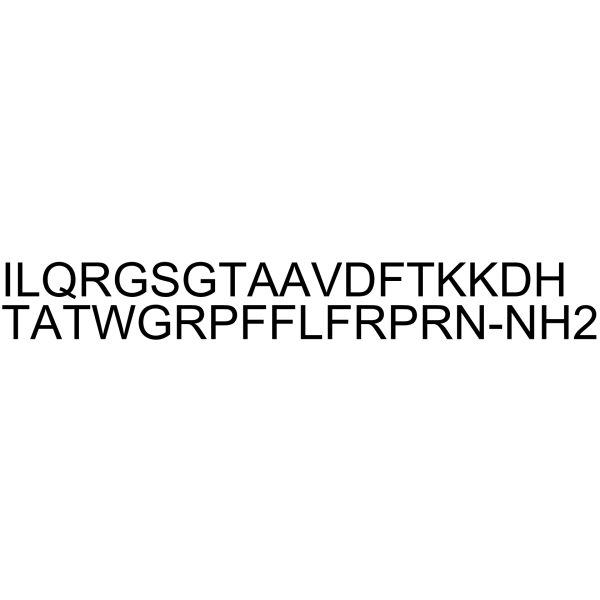 0 ImagesCat. No.: HY-P5084CAS No.: 1138204-27-9Neuromedin S (human) is a neuropeptide that contains 33 amino acids. Neuromedin S (human)has been identified in the brain as an endogenous ligand for the orphan G-protein coupled receptor (GPCR) FM-4/TGR-1 and acts on the neuromedin U (NMU) receptor 2 (NMUR2) in the regulation of body weight homeostasis.

-
TGR5 agonist 7
 0 ImagesCat. No.: HY-168329TGR5 agonist 7 (Compound 22-Na) is a gut-restricted, orally active agonist for G protein-coupled bile acid receptor TGR5 (GPBAR1 or GPR131) with an EC50 < 1 μM. TGR5 agonist 7 exhibits blood glucose lowering effect in mouse model, and can be used in diabete research.
-
Allolithocholic acid (Standard)
 0 ImagesCat. No.: HY-143712RCAS No.: 2276-94-0Allolithocholic acid (Standard) is the analytical standard of Allolithocholic acid (HY-143712). This product is intended for research and analytical applications. Allolithocholic acid is an orally active metabolite of Lithocholic acid (HY-B0172). Allolithocholic acid is a dual GPBAR1 agonist (EC50 = 2.7 μM) and RORγt inverse agonist (IC50 = 3.4 μM). Allolithocholic acid modulates immune and metabolic pathways, regulates immune cell polarization, prevents M1 macrophage and Th17 CD4 cell polarization. Allolithocholic acid improves insulin sensitivity, reduces liver lipid accumulation, reverses liver immunological, inflammatory and metabolic signaling dysregulation, restores bile acid homeostasis, adipose tissue histopathology/function, and intestinal microbiota composition, modulates intestinal immunity. Allolithocholic acid can be used for the researches of cancer, inflammayion, immunology and metabolic disease.
-
Hyocholic acid-d5
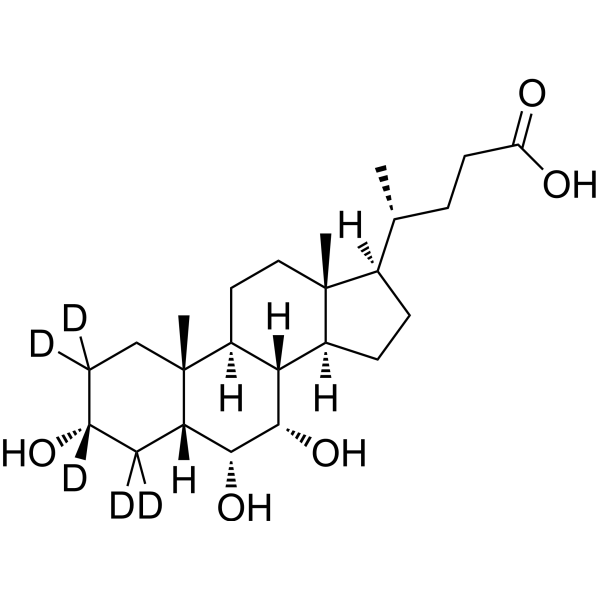 0 ImagesCat. No.: HY-121238S1Hyocholic Acid-d5 is the deuterium labeled Hyocholic Acid.
-
SCH-202676
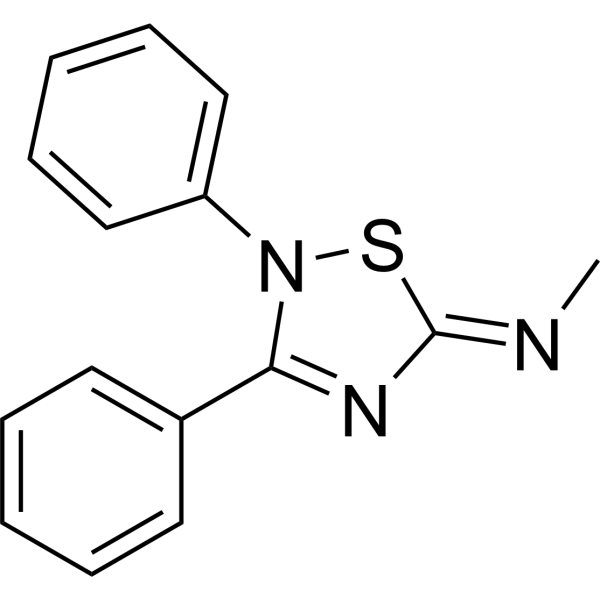 0 ImagesSCH-202676 is an allosteric modulator of G protein-coupled receptors (GPCRs) and adenosine receptor (AR). SCH-202676 has antiviral activity and inhibits 3CLpro in a time-dependent manner with an IC50 value of 0.655 µM.
-
Ursodeoxycholic acid-13C
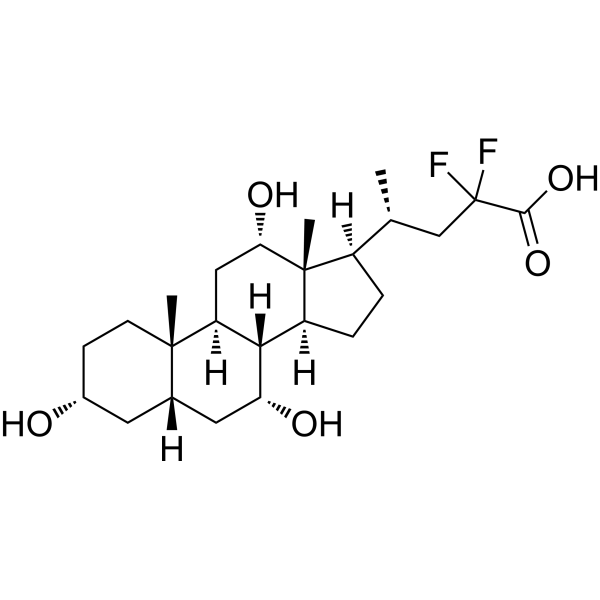
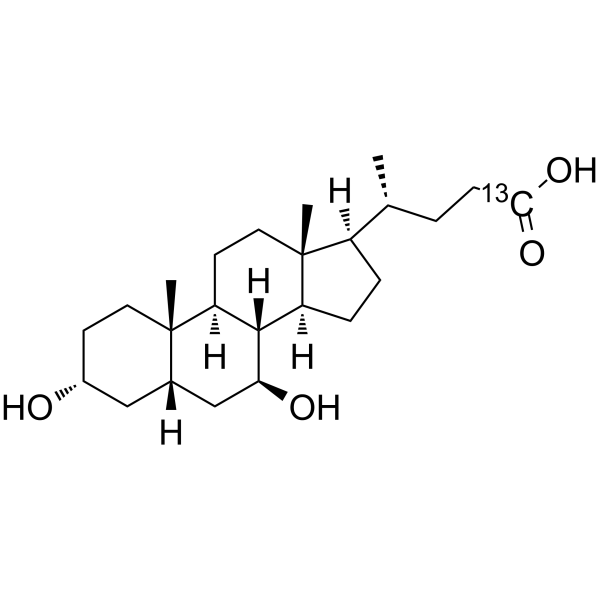 0 ImagesCat. No.: HY-13771S1CAS No.: 63296-46-8Synonyms: Ursodeoxycholate-13C; Ursodiol-13C; UDCA-13CUrsodeoxycholic acid-13C is the 13C labeled Ursodeoxycholic acid. Ursodeoxycholic acid (Ursodeoxycholate) is a secondary bile acid issued from the transformation of (cheno)deoxycholic acid by intestinal bacteria, acting as a key regulator of the intestinal barrier integrity and essential for lipid metabolism. Ursodeoxycholic acid acts as signaling molecule, exerting its effects by interacting with bile acid activated receptors, including G-protein coupled bile acid receptor 5 (TGR5, GPCR19) and the farnesoid X receptor (FXR). Ursodeoxycholic acid can be used for the research of a variety of hepatic and gastrointestinal diseases. Orally active.
-
FXR agonist 17
 0 ImagesCat. No.: HY-182026CAS No.: 3107769-23-0FXR agonist 17 is an orally active, steroidal FXR agonist with EC50 values of 42.2 nM (TR-FRET) and 176.4 nM (luciferase reporter assay), respectively. FXR agonist 17 activates TGR5 (EC50 = 2.6 μM) but does not activate hMRGPRX4. FXR agonist 17 exerts anti-inflammatory, hepatoprotective and antifibrotic effects, improves the non-alcoholic steatohepatitis (NAFLD) activity score and reduces the severity of liver fibrosis. FXR agonist 17 can be used for the research of NAFLD, cholestatic liver disease and liver fibrosis.
-
LT-188A
 0 ImagesCat. No.: HY-173466CAS No.: 2922530-99-0LT-188A is a potent TGR5 agonist with an EC50 of 23 μM. LT-188A decreases the levels of inflammatory mediators in macrophages.
-
RO5527239
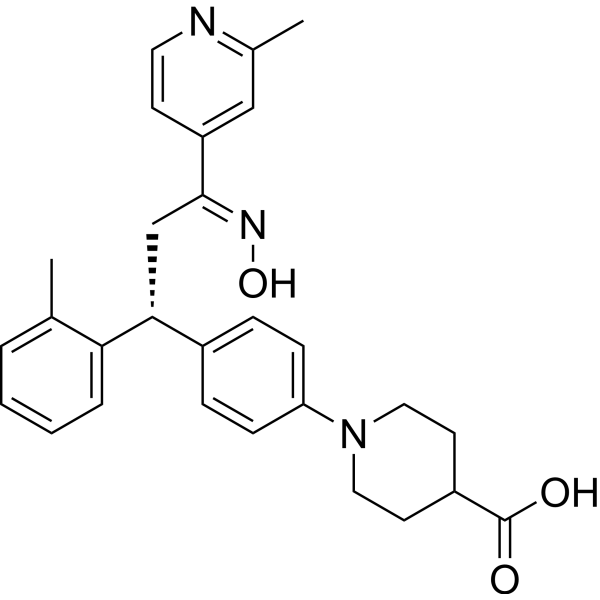 0 ImagesCat. No.: HY-116453CAS No.: 1354812-99-9RO5527239 is an orally active TGR5 agonist, that induces a stimulatory response from intestinal L cells and specificially secrets the endogenous hormone GLP-2.
-
5β-Cholestane-3α,7α,12α,25-tetrol
 0 ImagesCat. No.: HY-171949CAS No.: 18866-87-0Synonyms: 3α,7α,12α,25-Tetrahydroxycoprostane5β-Cholestane-3α,7α,12α,25-tetrol (3α,7α,12α,25-Tetrahydroxycoprostane) is a bile acid alcohol. 5β-Cholestane-3α,7α,12α,25-tetrol is a GPBAR1 (also known as TGR5) activator (EC50: 1.36 μM). 5β-Cholestane-3α,7α,12α,25-tetrol is the predominant bile-alcohol disease marker present in patients with Cerebrotendinous xanthomatosis (CTX).



