



G protein-coupled Bile Acid Receptor 1
G-protein coupled receptor 19; GPCR19; TGR5; GPBAR1
G protein-coupled bile acid receptor 1 (GPCR19, TGR5, GPBAR1) is a plasma membrane-bound, G protein-coupled receptor that has bile acids as its ligand. GPCR19 is a regulator of energy homeostasis, bile acid homeostasis as well as glucose metabolism. GPCR19 transduces extracellular signals through heterotrimeric G proteins.
GPCR19 can be activated by bile acids and then it induces cAMP production. As a membrane receptor, GPCR19 can be internalized into the cytoplasm in response to its ligands. GPCR19 plays important roles in cell signaling pathways such as nuclear factor κB (NF-κB), AKT, and extracellular signal-regulated kinases (ERK). Its agonists may be potential drugs for the treatment of metabolic, inflammation, and digestive disorders. In addition, GPCR19 stimulates glucagon-like peptide 1 (GLP-1) secretion. It also has become an attractive therapeutic target for the prevention and/or the treatment of obesity and its highly associated Type II diabetes and metabolic syndrome.
All Product Categories
-
G protein-coupled Bile Acid Receptor 1 Inhibitors
(3)
View all products
-
G protein-coupled Bile Acid Receptor 1 Agonists
(55)
View all products
-
G protein-coupled Bile Acid Receptor 1 Antagonists
(4)
View all products
-
G protein-coupled Bile Acid Receptor 1 Activators
(30)
View all products
-
G protein-coupled Bile Acid Receptor 1 Modulators
(2)
View all products
-
G protein-coupled Bile Acid Receptor 1 Ligands
(2)
View all products
-
G protein-coupled Bile Acid Receptor 1 Related Products (99)
Related Products (99)

-
Glycocholic acid-d4
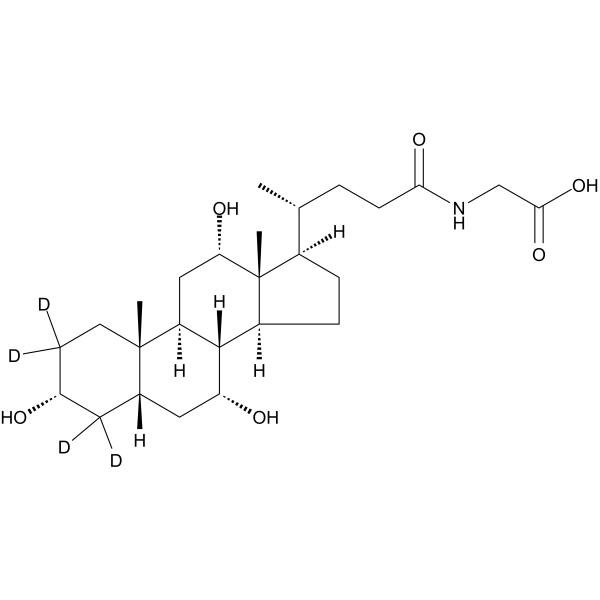 0 ImagesGlycocholic acid-d4 is the deuterium labeled Glycocholic acid (HY-N1423). Glycocholic acid is a bile acid derivative. Glycocholic acid downregulates MDR1, Bcl-2, MRP1, MRP2 and FXR, upregulates Bax, p53, caspase-9, caspase-3, TGR5 and S1PR2. Glycocholic acid inhibits multidrug resistance and efflux pumps, induces mitochondrial apoptosis, and enhances chemosensitivity. Glycocholic acid modulates related bile acid receptor signaling. Glycocholic acid suppresses growth and conjugation of Enterobacteriaceae and increases their antibiotic susceptibility. Glycocholic acid can be used for the research of colon adenocarcinoma and cholangiocarcinoma (CCA).
-
Taurodeoxycholic acid sodium hydrate
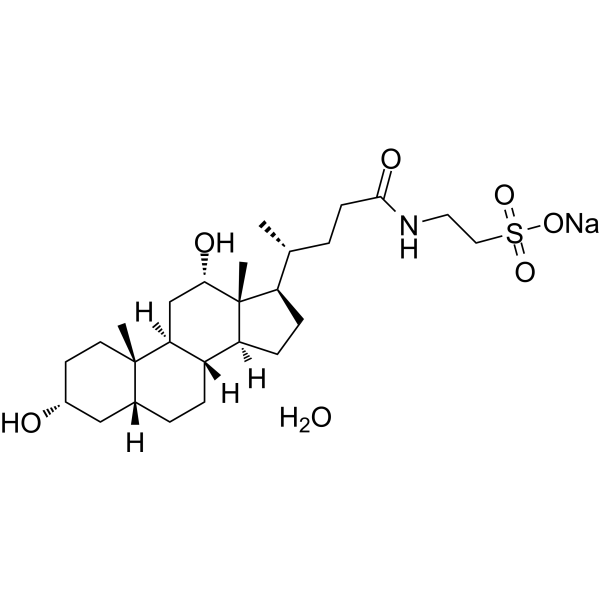 0 ImagesSynonyms: Taurodeoxycholate sodium hydrateTaurodeoxycholic acid sodium hydrate (Sodium taurodeoxycholate monohydrate), a bile acid, is an amphiphilic surfactant molecule synthesized from cholesterol in the liver. Taurodeoxycholic acid sodium hydrate activates the S1PR2 pathway in addition to the TGR5 pathway.
-
2-Bromo-LSD
 0 Images2-Bromo-LSD (BOL-148) is a blood-brain barrier-permeable 5-HT2A partial agonist and competitive partial antagonist. 2-Bromo-LSD acts as both a potent partial agonist (with an EC50 of 0.81 nM for Gq dissociation) and a potent partial antagonist (with a KB of 0.18 nM for Gq dissociation) at the 5-HT2A receptor. 2-Bromo-LSD exhibits partial agonist activity at multiple aminergic GPCRs, including 5-HT2A. 2-Bromo-LSD lacks 5-HT2B agonist activity. 2-Bromo-LSD induces dendritogenesis and spinogenesis. 2-Bromo-LSD reverses the behavioral effects of chronic stress and increases active coping behaviors in mice.
-
Ursodeoxycholic acid (Standard)
 0 ImagesSynonyms: Ursodeoxycholate (Standard); Ursodiol (Standard); UDCA (Standard)Ursodeoxycholic acid (Standard) is the analytical standard of Ursodeoxycholic acid. This product is intended for research and analytical applications. Ursodeoxycholic acid (Ursodeoxycholate) is a secondary bile acid issued from the transformation of (cheno)deoxycholic acid by intestinal bacteria, acting as a key regulator of the intestinal barrier integrity and essential for lipid metabolism. Ursodeoxycholic acid acts as signaling molecule, exerting its effects by interacting with bile acid activated receptors, including G-protein coupled bile acid receptor 5 (TGR5, GPCR19) and the farnesoid X receptor (FXR). Ursodeoxycholic acid can be used for the research of a variety of hepatic and gastrointestinal diseases. Ursodeoxycholic acid also reduces ACE2 expression and is beneficial for reducing SARS-CoV-2 infection. Orally active.
-
Glycocholic acid (Standard)
 0 ImagesGlycocholic acid (Standard) is the analytical standard of Glycocholic acid (HY-N1423). This product is intended for research and analytical applications. Glycocholic acid is a bile acid with anticancer activity, targeting against pump resistance-related and non-pump resistance-related pathways.
-
Deoxycholic acid (Standard)
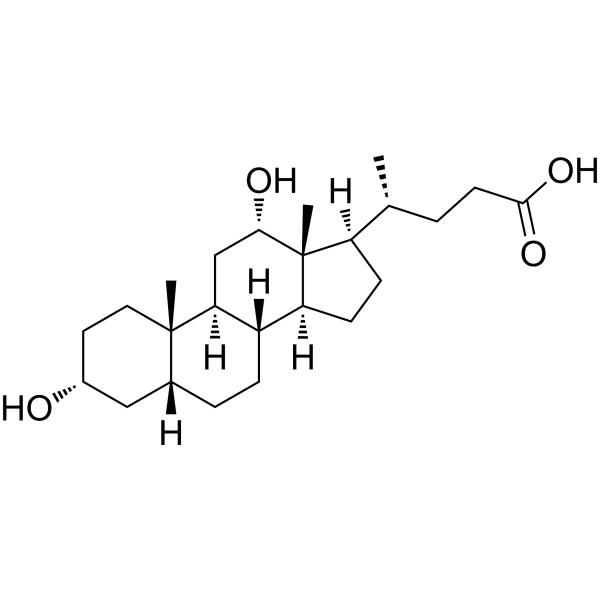 0 ImagesSynonyms: Cholanoic Acid(Standard); Desoxycholic acid (Standard)Deoxycholic acid (Standard) is the analytical standard of Deoxycholic acid. This product is intended for research and analytical applications. Deoxycholic acid (cholanoic acid), a bile acid, is a by-product of intestinal metabolism, that activates the G protein-coupled bile acid receptorTGR5.
-
Notoginsenoside Ft1
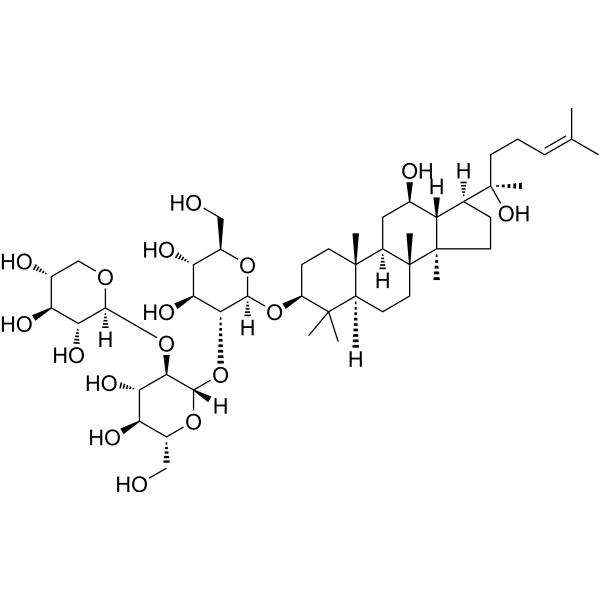 0 ImagesNotoginsenoside Ft1 is an orally active bioactive saponin. Notoginsenoside Ft1 inhibits the PI3K/AKT/mTOR signaling pathway, activates the p38 MAPK and ERK1/2 signaling pathways, and increases the proportion of CD8+ T cells, thereby inducing apoptosis and lysosomal cell death in various cancer cells, and promoting angiogenesis. Notoginsenoside Ft1 causes vasodilation by activating glucocorticoid receptors (GR) and estrogen receptor beta (ERβ) in endothelial cells. Notoginsenoside Ft1 increases intracellular Ca2+ accumulation, reduces cAMP levels by activating a signaling network mediated through P2Y12 receptors, and promotes platelet aggregation, thereby exerting a procoagulant effect. Notoginsenoside Ft1 inhibits ferroptosis (ferroptosis) in renal tubular epithelial cells by activating the TGR5 receptor, thereby demonstrating a renal protective effect. Notoginsenoside Ft1 acts as a TGR5 agonist and an FXR antagonist to combat obesity and insulin resistance.
-
Colesevelam hydrochloride
 0 ImagesCat. No.: HY-106539CAS No.: 182815-44-7Colesevelam hydrochloride is an orally active bile acid sequestrant, lipid-lowering agent, and glycemic control agent. Colesevelam hydrochloride binds bile acids in the gastrointestinal tract to form nonabsorbable complexes, interrupts enterohepatic recirculation and increases fecal bile acid elimination. Colesevelam hydrochloride modulates FXR, TGR5, and Cyp7a1 activity and triggers cAMP signaling and GLP-1 release. Colesevelam hydrochloride alters hepatic lipid and glucose metabolism, suppresses hepatic glycogenolysis, reduces hepatic triglyceride and cholesterol levels, and increases LDL-C (low-density lipoprotein cholesterol) clearance. Colesevelam hydrochloride can be used for the research of type 2 diabetes mellitus, hypercholesterolemia, and alcohol-related liver disease.
-
TC-G 1005
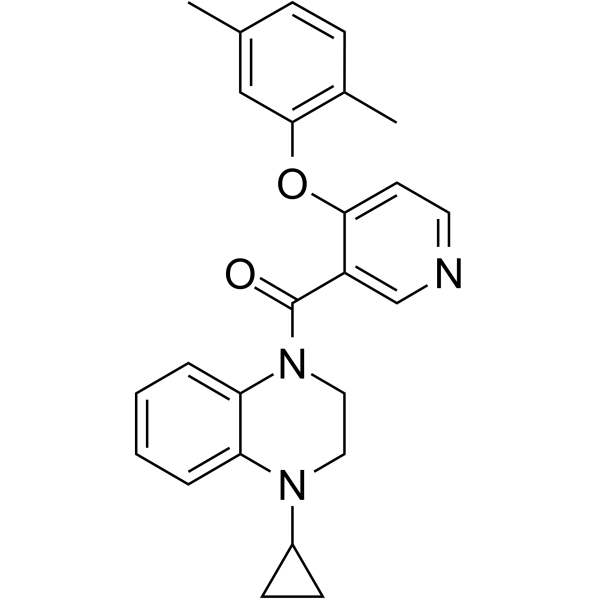 0 ImagesTC-G 1005 is a potent, selective and orally active agonist of the BA receptor Takeda G protein-coupled receptor 5 (TGR5), with EC50s of 0.72 and 6.2 nM for hTGR5 and mTGR5, respectively. TC-G 1005 can reduce glucose levels in vivo.
-
Sodium taurodeoxycholate hydrate
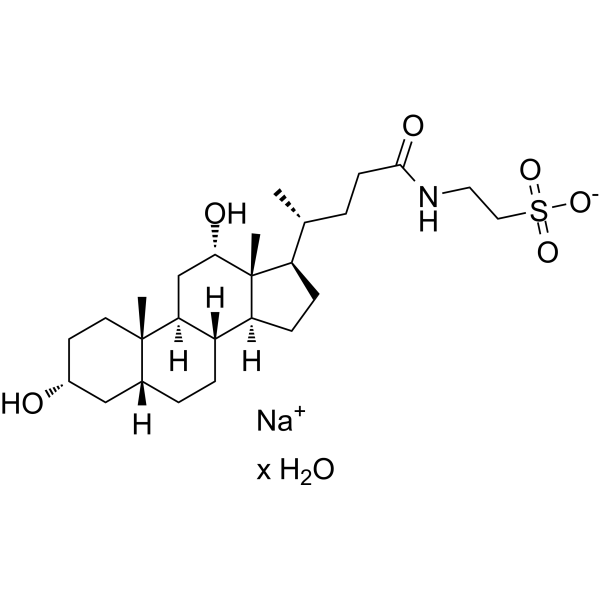 0 ImagesCat. No.: HY-W089835CAS No.: 207737-97-1Sodium taurodeoxycholate hydrate is a bile salt-related anionic detergent. Sodium taurodeoxycholate hydrate is formed in the liver by conjugation of deoxycholate with Taurine (HY-B0351). Sodium taurodeoxycholate hydrate is used for isolation of membrane proteins including inner mitochondrial membrane proteins. Taurodeoxycholate-d6 (TDCA) exhibits anti-inflammatory and neuroprotective effects.
-
SB756050
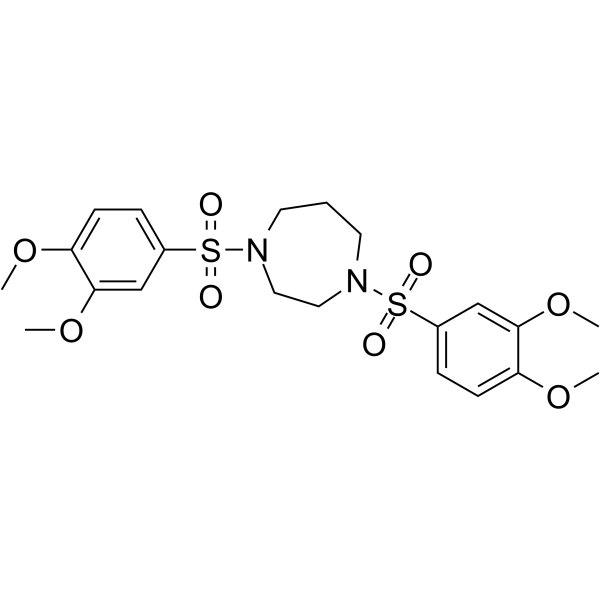 0 ImagesSB756050 is a selective TGR5 agonist. SB756050 has the potential for type 2 diabetes treatment.
-
Sodium glycocholate hydrate, 98%
 0 ImagesSynonyms: N-Cholylglycine sodium salt, 98%Sodium glycocholate hydrate, 98% is a bile acid derivative. Sodium glycocholate hydrate, 98% downregulates MDR1, Bcl-2, MRP1, MRP2 and FXR, upregulates Bax, p53, caspase-9, caspase-3, TGR5 and S1PR2. Sodium glycocholate hydrate, 98% inhibits multidrug resistance and efflux pumps, induces mitochondrial apoptosis, and enhances chemosensitivity. Sodium glycocholate hydrate, 98% modulates related bile acid receptor signaling. Sodium glycocholate hydrate, 98% suppresses growth and conjugation of Enterobacteriaceae and increases their antibiotic susceptibility. Sodium glycocholate hydrate, 98% can be used for the research of colon adenocarcinoma and cholangiocarcinoma (CCA).
-
Hyodeoxycholic acid (Standard)
 0 ImagesHyodeoxycholic acid (Standard) is the analytical standard of Hyodeoxycholic acid. This product is intended for research and analytical applications. Hyodeoxycholic acid is a secondary bile acid formed in the small intestine by the gut flora, and acts as a TGR5 (GPCR19) agonist, with an EC50 of 31.6 µM in CHO cells.
-
Deoxycholic acid-13C
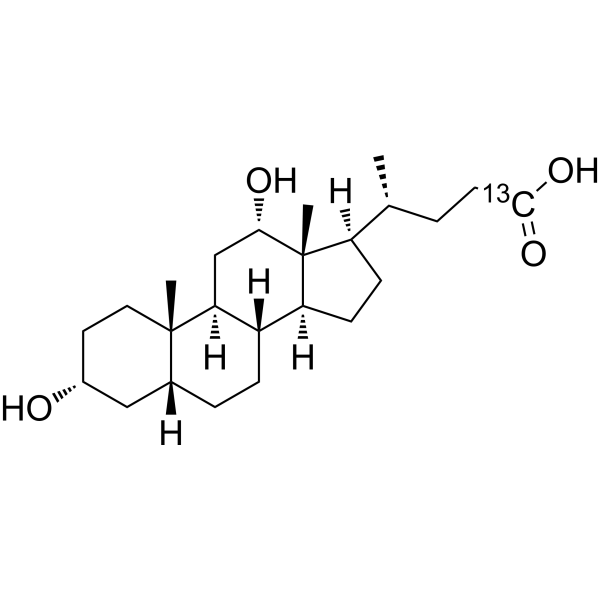 0 ImagesSynonyms: Cholanoic Acid-13C; Desoxycholic acid-13CDeoxycholic acid-13C is the 13C-labeled Deoxycholic acid. Deoxycholic acid is specifically responsible for activating the G protein-coupled bile acid receptor TGR5 that stimulates brown adipose tissue (BAT) thermogenic activity.
-
TGR5 Receptor Agonist 3
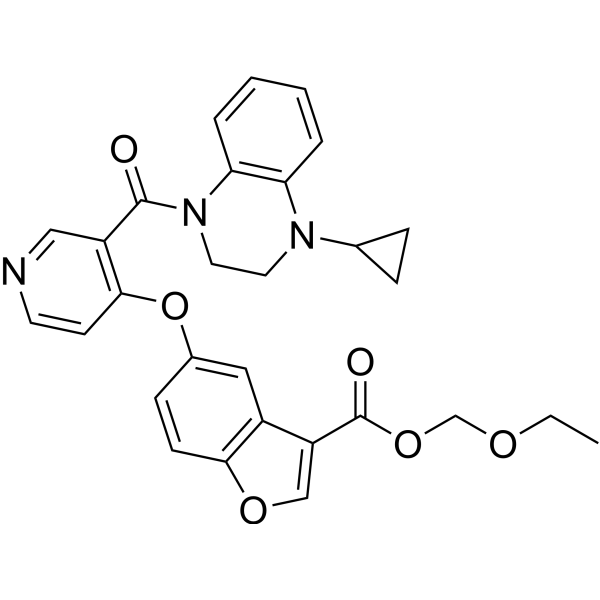 0 ImagesCat. No.: HY-146453CAS No.: 2643391-08-4TGR5 Receptor Agonist 3 (Compound 19) is a soft-agent G-protein-coupled bile acid receptor 1 (GPBAR1, TGR5) agonist with reduced gallbladder-filling effects (favorable gallbladder safety), with EC50s of 16.4 and 209 nM for hTGR5 and mTGR5, respectively.
-
Deoxycholic acid sodium salt (Standard)
 0 ImagesSynonyms: Sodium deoxycholate (Standard)Deoxycholic acid sodium salt (Standard) is the analytical standard of Deoxycholic acid sodium salt. This product is intended for research and analytical applications. Deoxycholic acid sodium salt (sodium deoxycholate), a bile acid, is a by-product of intestinal metabolism, that activates the G protein-coupled bile acid receptorTGR5.
-
Glycocholic acid hydrate
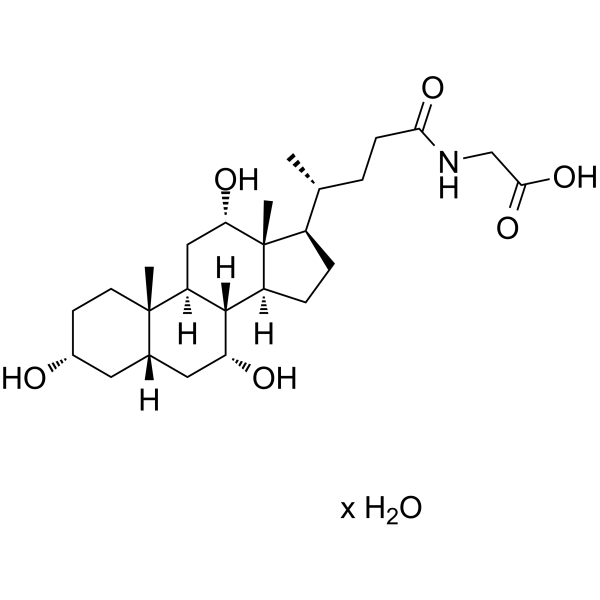 0 ImagesGlycocholic acid hydrate is a bile acid derivative. Glycocholic acid hydrate downregulates MDR1, Bcl-2, MRP1, MRP2 and FXR, upregulates Bax, p53, caspase-9, caspase-3, TGR5 and S1PR2. Glycocholic acid hydrate inhibits multidrug resistance and efflux pumps, induces mitochondrial apoptosis, and enhances chemosensitivity. Glycocholic acid hydrate modulates related bile acid receptor signaling. Glycocholic acid hydrate suppresses growth and conjugation of Enterobacteriaceae and increases their antibiotic susceptibility. Glycocholic acid hydrate can be used for the research of colon adenocarcinoma and cholangiocarcinoma (CCA).
-
PEN (human)
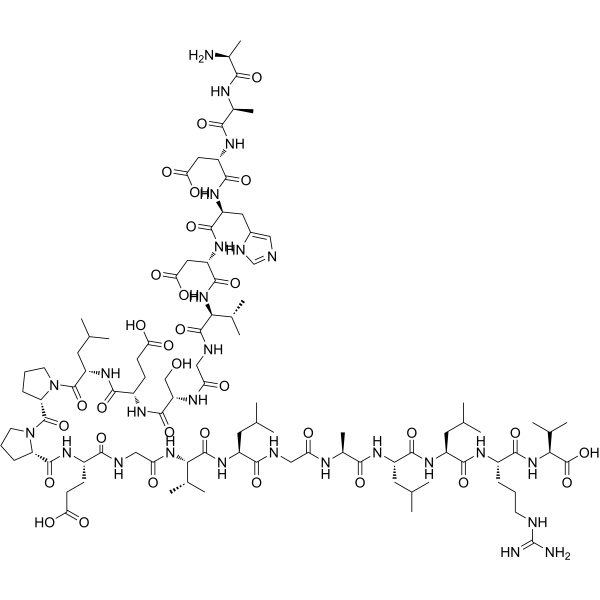 0 ImagesPEN (human), one of the most abundant hypothalamic neuropeptide and derived from the proprotein ProSAAS, is an endogenous ligand of GPR83.



