



Sodium taurodeoxycholate hydrate
Based on 1 publication(s) in Google Scholar
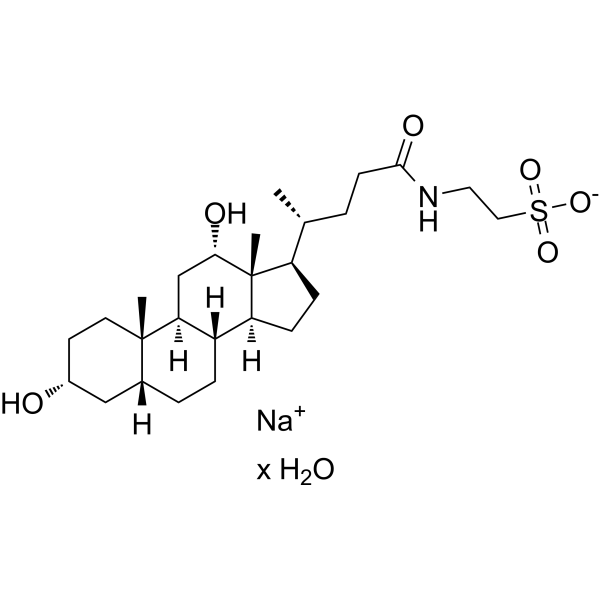
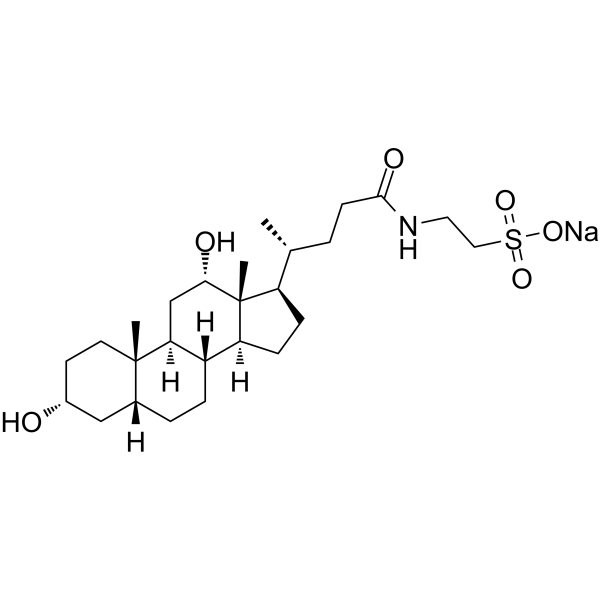
Sodium taurodeoxycholate hydrate is a bile salt-related anionic detergent. Sodium taurodeoxycholate hydrate is formed in the liver by conjugation of deoxycholate with Taurine (HY-B0351). Sodium taurodeoxycholate hydrate is used for isolation of membrane proteins including inner mitochondrial membrane proteins. Taurodeoxycholate-d6 (TDCA) exhibits anti-inflammatory and neuroprotective effects.
For research use only. We do not sell to patients.
- Purity : 97.0%
- CAS No.: 207737-97-1
- Formula: C26H44NNaO6S·xH2O
-
Storage:
4°C, sealed storage, away from moisture
* In solvent : -80°C, 6 months; -20°C, 1 month (sealed storage, away from moisture)

To place orders, for customer services and technical support, please contact: MedChemExpress USA
Tel: 609-228-6898 E-mail: [email protected] [email protected]


-
 Biological Activity
-
Chemical Information
-
Solvent & Solubility
- Protocols
- Purity & Documentation
- References
-
 Help & FAQs


-
HY-113308A
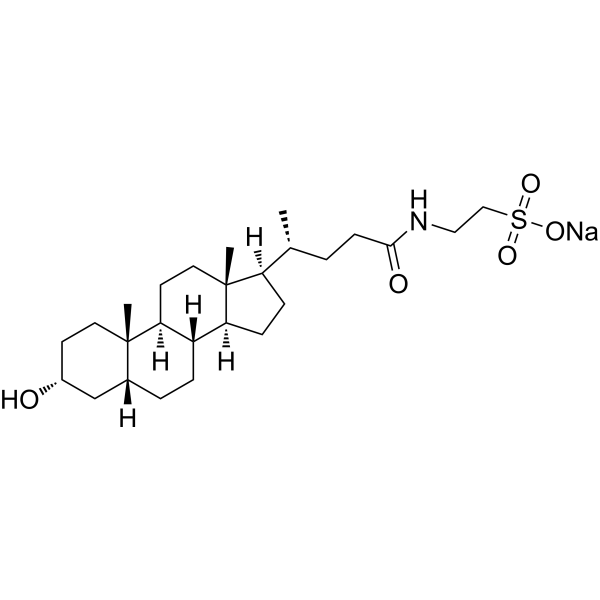
Taurolithocholic acid sodium saltCholestatic Agent -
HY-B1131
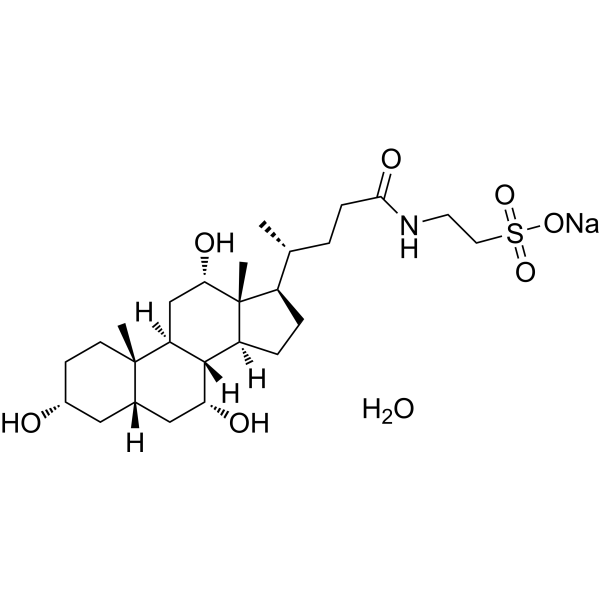
Taurocholic acid sodium salt hydrateEndogenous Metabolite -
HY-N1429
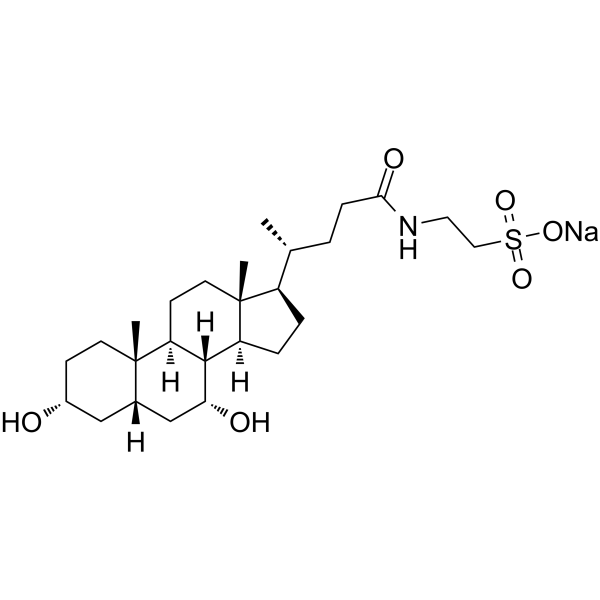
Taurochenodeoxycholic acid sodiumAnti-inflammatory Drug -
HY-128853
Taurodeoxycholate sodiumAnti-inflammatory Agent -

HY-W089835R
Sodium taurodeoxycholate hydrate (Standard)Bile Acid -

HY-N1429R
Taurochenodeoxycholic acid sodium (Standard)Anti-inflammatory Drug -
HY-N0324
Cholic acidEndogenous Metabolite -
HY-B0172
Lithocholic acidAutophagy Inducer -
HY-N0378
D-MannitolResistant Sugar/Osmotic Diuretics -
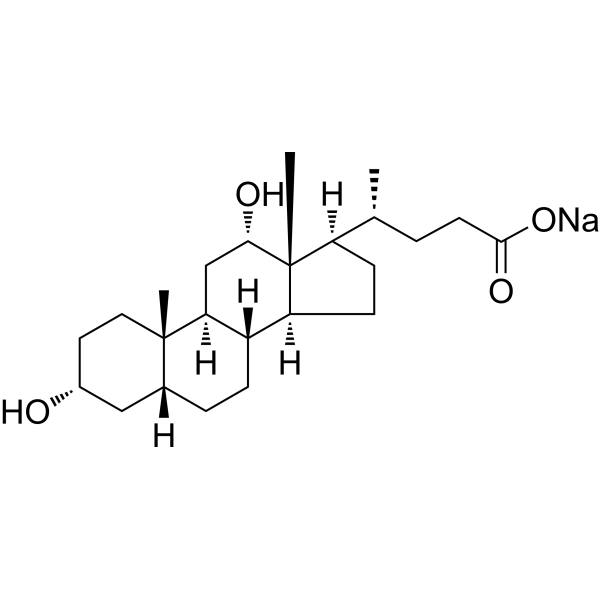
HY-N0593A
Deoxycholic acid sodium saltBile Acid Receptor Activator -
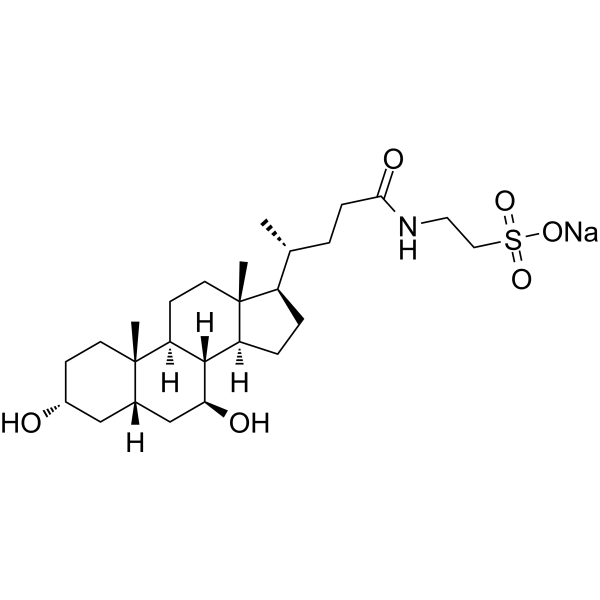
HY-19696A
Tauroursodeoxycholate sodiumEndoplasmic Reticulum Stress Inhibitor -
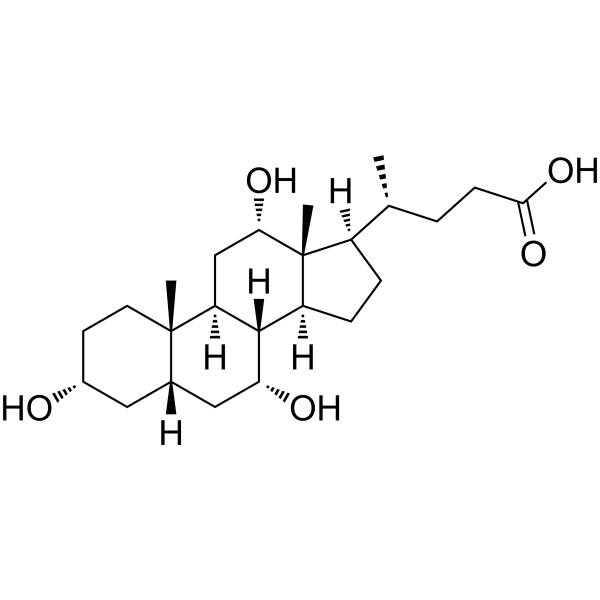
HY-N0324R
Cholic acid (Standard)Endogenous Metabolite
Publications Citing Use of MedChemExpress (MCE) Sodium taurodeoxycholate hydrate
MoreAll Endogenous Metabolite Isoforms
More

Biological Activity
Description
IC50 & Target
|
Microbial Metabolite |
In Vitro
Sodium taurodeoxycholate hydrate (Taurodeoxycholic acid form) shows agonist activity at human TGR5 expressed in CHO cells by luciferase assay, with an EC50 of 0.79 μM[4].
Sodium taurodeoxycholate hydrate (Taurodeoxycholic acid form, 16 h) shows agonist activity at wild type and Y89A mutant human TGR5 expressed in HEK293 cells assessed as rise in intracellular cAMP level, with EC50s of 0.68 and 8.9 μM, respectively[5].
Sodium taurodeoxycholate hydrate (Taurodeoxycholic acid form, 50 μM, 100 μM; 4 h) increases oligonucleosomal DNA cleavage and apoptotic nuclei in primary human hepatocytes[6].
Sodium taurodeoxycholate hydrate (Taurodeoxycholic acid form, 400 μM, 18-24 h) increases DNA fragmentation and PARP cleavage in human liver-derived cell line Huh7 cells, thus induces apoptosis[8].
Sodium taurodeoxycholate hydrate (0.05-1.00 mM; 1-6 days) stimulates intestinal epithelial cell proliferation[8].
Sodium taurodeoxycholate hydrate (0.05-1.00 mM; 24 h) induces a significant increase in S-phase concentration and a significant decrease in G1-phase concentration of the cell cycle, increases c-myc protein and mRNA expression in IEC-6 cells[8].
Sodium taurodeoxycholate hydrate (25-400 ng/mL, with a four-fold dilution, 3 h) inhibits the activation of NF-κB in lipopolysaccharide-activated bone marrow-derived macrophages (BMDMs) by activating the cAMP-PKA axis[9].
MedChemExpress (MCE) has not independently confirmed the accuracy of these methods. They are for reference only. Further protocols information, click here.
-
Cell Line:IEC-6 and caco-2 cells
-
Concentration:0, 0.05, 0.50, and 1.00 mM
-
Incubation Time:1, 2, 4 and 6 days
-
Result:Significantly stimulated intestinal epithelial cell proliferation in a dose-dependent manner.
-
Cell Line:IEC-6 cells
-
Concentration:0, 0.05, 0.50, and 1.00 mM
-
Incubation Time:24 h
-
Result:Significantly increased cells in S phase and decreased cells in G1-phase.
-
Cell Line:IEC-6 cells
-
Concentration:0.5 mM
-
Incubation Time:1 and 6 days
-
Result:Significantly increased c-myc protein expression.
In Vivo
Sodium taurodeoxycholate hydrate (Taurodeoxycholic acid form, 50 mg/kg; i.p.; once daliy for 34 d) prevents neuropathology and associated behavioral deficits in the 3-nitropropionic acid rat model of Huntington's disease (HD) [10].
Sodium taurodeoxycholate hydrate (Taurodeoxycholic acid form, 500 mg/kg; s.c.; once every 3 d for 7 weeks) leads to a significant reduction in striatal neuropathology of the R6/2 transgenic HD mouse[11].
Sodium taurodeoxycholate hydrate (0.5 mg/kg; i.v., once) confers protection to C57BL/6N mice with sepsis, but does not protect TGR5 KO mice under sepsis[12].
MedChemExpress (MCE) has not independently confirmed the accuracy of these methods. They are for reference only.
-
Animal Model:A mouse colitis model (fed with 3% (w/v) DSS in drinking water for the first seven days and then switched to normal drinking water for an additional two days)[9]
-
Dosage:1.25, 2.5, and 5 mg/kg
-
Administration:Oral gavage (p.o.), from day 3 to day 8, once a day
-
Result:Prevented loss of body weight, shortening of the colon, production of pro-inflammatory cytokines, infiltration of pro-inflammatory cells, and mucosal ulceration in the colon.
-
Animal Model:Huntington's disease model in mouse[10]
-
Dosage:50 mg/kg
-
Administration:Intraperitoneal injection; once daliy for 34 d, injected 3-NP at 6 hr after Taurodeoxycholic acid treatment
-
Result:Reduced striatal atrophy, decreased striatal apoptosis, as well as fewer and smaller size ubiquitinated neuronal intranuclear huntingtin inclusions.
Significantly improved locomotor and sensorimotor deficits.
-
Animal Model:C57BL/6N mice, Lipopolysaccharides (HY-D1056) injection model of sepsis[12]
-
Dosage:0.5 mg/kg
-
Administration:Intravenous injection, 30 min or 24 h after LPS injection
-
Result:Improved the survival rate of mice with sepsis.
Decreased liver and kidney damage in septic mice.
Ameliorated systemic inflammation and normalized blood pressure in septic mice.


Chemical Information
-
CAS No. 207737-97-1
-
Appearance Solid
-
Formula C26H44NNaO6S·xH2O
-
Color White to off-white
-
SMILES
C[C@@]12[C@](CC[C@]2([H])[C@H](C)CCC(NCCS(=O)(O[Na])=O)=O)([H])[C@@]3([H])[C@@](C[C@@H]1O)([H])[C@@]4([C@](C[C@@H](CC4)O)([H])CC3)C.O.[x]
-
Structure Classification
-
Initial Source
-
Shipping
Room temperature in continental US; may vary elsewhere.
-
Storage
4°C, sealed storage, away from moisture
* In solvent : -80°C, 6 months; -20°C, 1 month (sealed storage, away from moisture)


Publications (1)
-
Journal Impact Factor
-
Most Recent
-
Nature
2025 Jul;643(8070):192-200. PMID: 39695227


Solvent & Solubility
In Vitro:
H2O : 100 mg/mL (Need ultrasonic)
DMSO : 100 mg/mL (ultrasonic and warming and heat to 60°C; Hygroscopic DMSO has a significant impact on the solubility of product, please use newly opened DMSO)

Protocols
-
Research Protocol for Inflammation-related Diseases
The NLRP3 inflammasome is a cytosolic innate immune signaling platform that integrates priming signals and danger-signal activation to promote caspase-1 activation, maturation of IL-1β and IL-18, and gasdermin D-mediated pyroptotic cell death. The core experimental logic is to determine whether inflammatory disease phenotypes are driven by increased NLRP3 expression, ASC-containing inflammasome assembly, caspase-1 cleavage, GSDMD cleavage, and extracellular release of IL-1β/IL-18 rather than by nonspecific cell injury alone. The pathway is strongly linked to inflammation-related disease phenotypes because monosodium urate crystals activate NALP3/NLRP3 inflammasome signaling in gout-like crystal inflammation, cholesterol crystals activate NLRP3 inflammasomes in atherogenesis models, and DSS-induced intestinal inflammation has been reported to involve NLRP3 inflammasome activity. However, experimental colitis studies also show context-dependent protective effects of NLRP3 inflammasome co


Purity & Documentation
-
Data Sheet (283 KB)
-
SDS (394 KB)
- English - EN (394 KB)
- Français - FR (394 KB)
- Deutsch - DE (394 KB)
- Norwegian - NO (394 KB)
- Español - ES (394 KB)
- Swedish - SV (394 KB)
- Italian - IT (394 KB)
- Korean - KR (394 KB)
- Portuguese - PT (394 KB)
-
Handling Instructions (2659 KB)
References
[1]. Villavicencio-Queijeiro A, et al. The fully-active and structurally-stable form of the mitochondrial ATP synthase of Polytomella sp. is dimeric. J Bioenerg Biomembr. 2009 Feb;41(1):1-13. [Content Brief]
[2]. Kispal G, et al. Isolation and characterization of 3-hydroxyacyl coenzyme A dehydrogenase-binding protein from pig heart inner mitochondrial membrane. J Biol Chem. 1986 Oct 25;261(30):14209-13. [Content Brief]
[3]. Choi HJ, et al. Evaluation of acute and subacute toxicity of sodium Taurodeoxycholate in rats. Drug Chem Toxicol. 2021 May;44(3):268-276. [Content Brief]
[4]. Sato H, et al. Novel potent and selective bile acid derivatives as TGR5 agonists: biological screening, structure-activity relationships, and molecular modeling studies. J Med Chem. 2008 Mar 27;51(6):1831-41. [Content Brief]
[5]. Gertzen CG, et al. Mutational mapping of the transmembrane binding site of the G-protein coupled receptor TGR5 and binding mode prediction of TGR5 agonists. Eur J Med Chem. 2015 Nov 2;104:57-72. [Content Brief]
[6]. Benz C, et al. Effect of tauroursodeoxycholic acid on bile acid-induced apoptosis in primary human hepatocytes. Eur J Clin Invest. 2000 Mar;30(3):203-9. [Content Brief]
[7]. Xie Q, et al. Effect of tauroursodeoxycholic acid on endoplasmic reticulum stress-induced caspase-12 activation. Hepatology. 2002 Sep;36(3):592-601. [Content Brief]
[8]. Yamaguchi J, et al. Taurodeoxycholate increases intestinal epithelial cell proliferation through c-myc expression. Surgery. 2004 Feb;135(2):215-21. [Content Brief]
[9]. Zou Y, et al. Taurodeoxycholate ameliorates DSS-induced colitis in mice. Int Immunopharmacol. 2023 Sep;122:110628. [Content Brief]
[10]. Keene CD, et al. A bile acid protects against motor and cognitive deficits and reduces striatal degeneration in the 3-nitropropionic acid model of Huntington's disease. Exp Neurol. 2001 Oct;171(2):351-60. [Content Brief]
[11]. Keene CD, et al. Tauroursodeoxycholic acid, a bile acid, is neuroprotective in a transgenic animal model of Huntington's disease. Proc Natl Acad Sci U S A. 2002 Aug 6;99(16):10671-6. [Content Brief]
[12]. Chang S, et al. Taurodeoxycholate Increases the Number of Myeloid-Derived Suppressor Cells That Ameliorate Sepsis in Mice. Front Immunol. 2018 Sep 18;9:1984. [Content Brief]

Calculators
Concentration (start) × Volume (start) = Concentration (final) × Volume (final)


Sodium taurodeoxycholate hydrate Related Classifications
HY-W089835 Related Classifications
 Powered by Bioz