



HIV
Human immunodeficiency virus
HIV (Human immunodeficiency virus) is a lentivirus (a subgroup of retrovirus) that causes the acquired immunodeficiency syndrome (AIDS), a condition in humans in which progressive failure of the immune system allows life-threatening opportunistic infections and cancers to thrive. Infection with HIV occurs by the transfer of blood, semen, vaginal fluid, pre-ejaculate, or breast milk. Within these bodily fluids, HIV is present as both free virus particles and virus within infected immune cells. HIV infects vital cells in the human immune system such as helper T cells (specifically CD4+ T cells), macrophages, and dendritic cells. HIV infection leads to low levels of CD4+ T cells through a number of mechanisms, including apoptosis of uninfected bystander cells, direct viral killing of infected cells, and killing of infected CD4+ T cells by CD8 cytotoxic lymphocytes that recognize infected cells. When CD4+ T cell numbers decline below a critical level, cell-mediated immunity is lost, and the body becomes progressively more susceptible to opportunistic infections.
HIV Isoform Specific Products
All Product Categories
-
HIV Inhibitors
(1209)
View all products
-
HIV Antagonists
(4)
View all products
-
HIV Activators
(19)
View all products
-
HIV Modulator
(1)
View all products
-
HIV Inducers
(2)
View all products
-
HIV Degrader
(1)
View all products
-
HIV Controls
(4)
View all products
-
HIV Ligand
(1)
View all products
-
HIV Proteins
(26)
View all products
-
HIV Related Products (1381)
Related Products (1381)

-
Recombinant Proteins (26)
-
Antibodies (6)
-
HIV Isoform Comparison
-
Islatravir (Standard)
 0 ImagesSynonyms: MK-8591 (Standard)Islatravir (Standard) is the analytical standard of Islatravir (HY-104012). This product is intended for research and analytical applications. Islatravir (MK-8591) is a potent anti-HIV-1 agent, acting as a nucleoside reverse transcriptase inhibitor, with EC50s of 0.068 nM, 3.1 nM and 0.15 nM for HIV-1 (WT), HIV-1 (M184V), HIV-1 (MDR), respectively. Islatravir is a click chemistry reagent, it contains an Alkyne group and can undergo copper-catalyzed azide-alkyne cycloaddition (CuAAc) with molecules containing Azide groups.
-
Plerixafor octahydrochloride (Standard)
 0 ImagesSynonyms: AMD3100 octahydrochloride (Standard); JM3100 octahydrochloride (Standard); SID791 octahydrochloride (Standard)Plerixafor (octahydrochloride) (Standard) is the analytical standard of Plerixafor (octahydrochloride). This product is intended for research and analytical applications. Plerixafor octahydrochloride (AMD3100 octahydrochloride) is a selective CXCR4 antagonist with an IC50 of 44 nM.
-
Schirubridilactone D
 0 ImagesCat. No.: HY-N19901CAS No.: 1210051-95-8Schirubridilactone D is a HIV-1 inhibitor with an EC50 of 80.8 µg/mL. Schirubridilactone D is a nortriterpenoid isolated from the leaves and stems of Schisandra rubriflora. Schirubridilactone D inhibits HIV-1 replication and blocks HIV-1-induced cytopathic effects. Schirubridilactone D is applicable to research related to HIV-1 infection.
-
HI-346
 0 ImagesCat. No.: HY-118711CAS No.: 149486-68-0HI-346 is a non-nucleoside reverse transcriptase inhibitor (NNRTI) for HIV-1 with an IC50 value against the HIV-1 virus strain (HTLV-IIIB) of 3 nM. HI-346 is a vaginal bactericidal contraceptive agent, with its sperm-killing activity having an EC50 value of 42 μM. HI-346 shows no cytotoxicity to normal cells at effective concentrations. HI-346 can be used in anti-HIV-1 and contraceptive research.
-
PD 161374
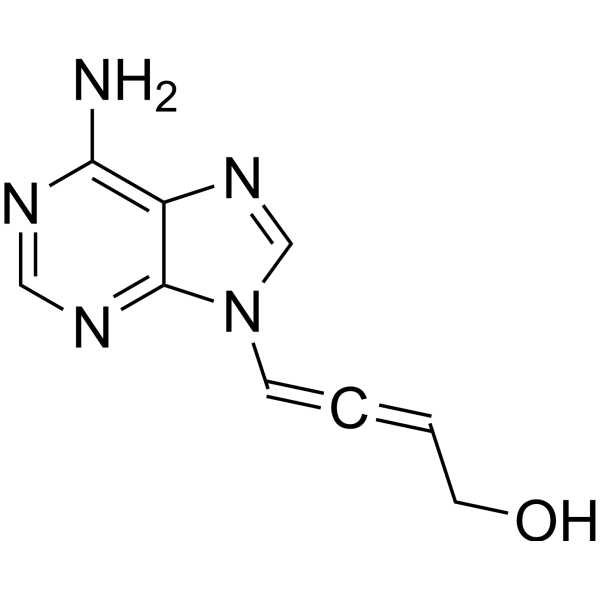
 0 ImagesCat. No.: HY-106971CAS No.: 177785-47-6PD 161374 is an inhibitor targeting the HIV-1 nucleocapsid protein NCp7. PD 161374 primarily acts on the early stages of viral replication, inhibiting the completion of reverse transcription without affecting viral entry or later assembly. PD 161374 remains active against HIV-1, HIV-2, SIV, and drug-resistant strains. PD 161374 can be used to study antiretroviral agents.
-
Stavudine sodium
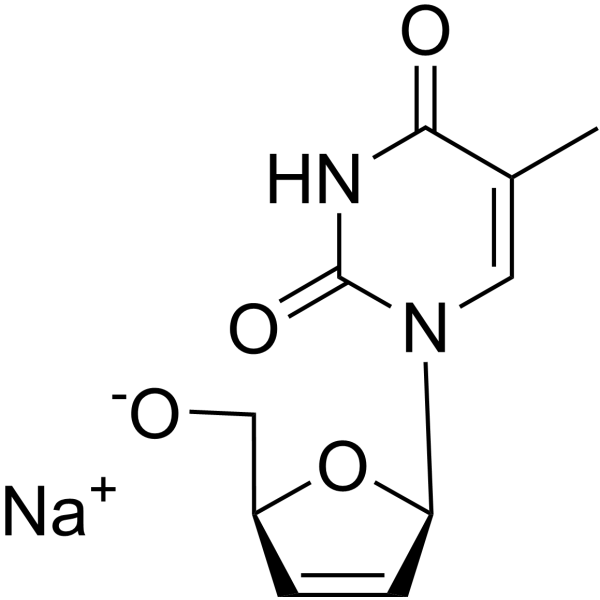 0 ImagesSynonyms: d4T sodiumStavudine (d4T) sodium is an orally active nucleoside reverse transcriptase inhibitor (NRTI). Stavudine sodium has activity against HIV-1 and HIV-2. Stavudine sodium also inhibits the replication of mitochondrial DNA (mtDNA). Stavudine sodium reduces NLRP3 inflammasome activation and modulates Amyloid-β autophagy. Stavudine sodium induces apoptosis.
-
CDK9-IN-1 (Standard)
 0 ImagesCDK9-IN-1 (Standard) is the analytical standard of CDK9-IN-1. This product is intended for research and analytical applications. CDK9-IN-1 is a novel, selective CDK9 inhibitor for the treatment of HIV infection, with an IC50 of 39 nM for CDK9/CycT1, extracted from reference, compound 87.
-
Decarine
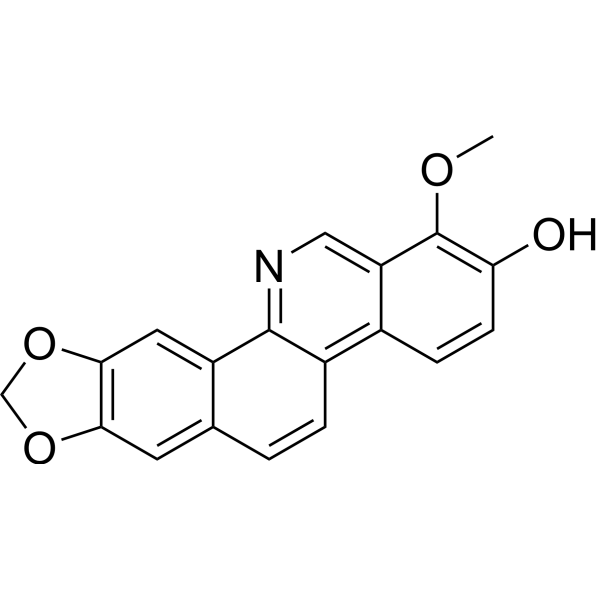 0 ImagesCat. No.: HY-N3700CAS No.: 54354-62-0Synonyms: RutacelineDecarine (Rutaceline) is a benzophenanthridine alkaloid found in Zanthoxylum species. Decarinewith shows anti-inflammatory, antimycobacterial, and anti-HIV activity. Decarine inhibits NO, TNF-α, IL-1β, IL-6, and IL-8 production in inflammatory cell models. Decarine inhibits growth of Mycobacterium tuberculosis strains, reduces intracellular Mycobacterium tuberculosis survival, and shows low cytotoxicity toward human macrophages. Decarine inhibits HIV replication in acutely infected lymphocytes. Decarine can be used for the researches of inflammation, tuberculosis, and HIV infection.
-
Canventol
 0 ImagesCat. No.: HY-183561CAS No.: 150956-50-6Canventol is an antitumor agent that inhibits the release of TNF-α. Canventol inhibits protein isoprenylation, regulates mevalonate metabolism, enhances Okadaic acid (HY-N6785)-induced early response gene expression, suppresses cell transformation, and inhibits HIV-1 production in infected cells. Canventol can be used in studies related to skin tumor promotion and cancer.
-
Baculiferin A
 0 ImagesCat. No.: HY-N15283CAS No.: 1141448-57-8Baculiferins A is a DOPA-derived pyrrole alkaloid. Baculiferins A can be isolated from the Chinese marine sponge Iotrochota baculifera. Baculiferins A have anti-HIV activity.
-
Tenofovir alafenamide-d6
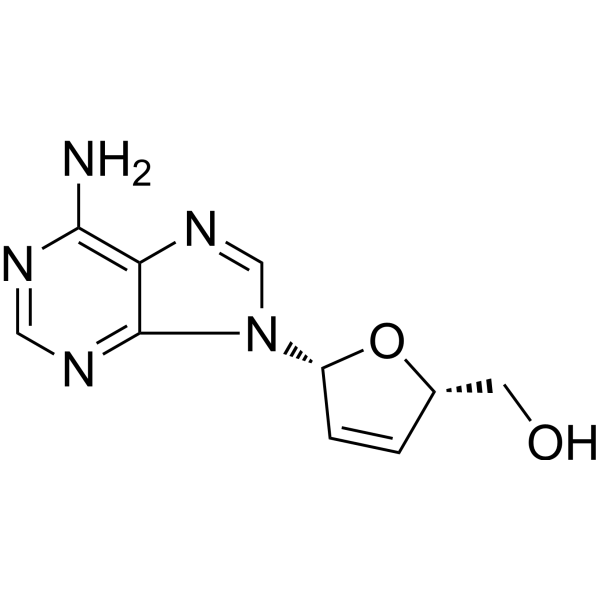
 0 ImagesCat. No.: HY-15232S2Synonyms: GS-7340-d6Tenofovir alafenamide-d6 (GS-7340-d6) is deuterium labeled Tenofovir alafenamide. Tenofovir alafenamide (GS-7340) is an investigational oral proagent of Tenofovir. Tenofovir is a HIV-1 nucleotide reverse transcriptase inhibitor.
-
Bromhexine hydrochloride (Standard)
 0 ImagesBromhexine (hydrochloride) (Standard) is the analytical standard of Bromhexine (hydrochloride). This product is intended for research and analytical applications. Bromhexine hydrochloride is a potent and specific TMPRSS2 protease inhibitor with an IC50 of 0.75 μM. Bromhexine hydrochloride can prevent and manage SARS-CoV-2 infection. Bromhexine hydrochloride is an autophagy agonist. Bromhexine hydrochloride is a mucolytic cough suppressant and has the potential for a range of respiratory conditions.
-
Schinlignan B
 0 ImagesCat. No.: HY-N15262CAS No.: 77881-08-4Synonyms: Angeloylgomisin PSchinlignan B (Angeloylgomisin P) is a lignan with antioxidant, anti-HIV, anti-HBV activities, which is found in plants of the Schisandra genus. Schinlignan B is promising for research of antioxidant-associated diseases.
-
Aloperine (Standard)
 0 ImagesAloperine (Standard) is the analytical standard of Aloperine. This product is intended for research and analytical applications. Aloperine is an alkaloid in sophora plants such as Sophora alopecuroides L, which has shown anti-cancer, anti-inflammatory and anti-virus properties. Aloperine is widely used to treat patients with allergic contact dermatitis eczema and other skin inflammation in China. Aloperine induces apoptosis and autophagy in HL-60 cells.
-
GSK878
 0 ImagesCat. No.: HY-153782CAS No.: 2417048-11-2GSK878 is a highly potent, long-acting HIV-1 inhibitor with the EC50 of 39 pM.
-
HIV-IN-8
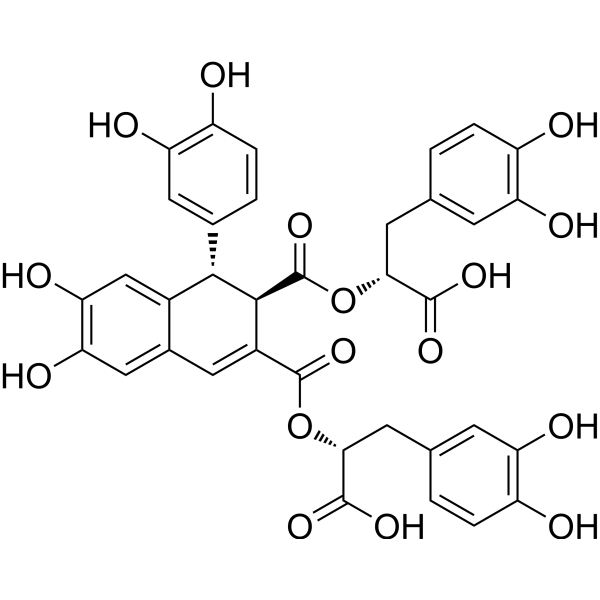 0 ImagesCat. No.: HY-N12082CAS No.: 130286-75-8
-
Hyrtiosal
 0 ImagesCat. No.: HY-N15327CAS No.: 138355-07-4Hyrtiosal, found in the marine sponge Hyrtios erectus, is an inhibitor of the N-terminal domain (NTD) of HIV-1 integrase (HIV-1 IN) with an IC50 value of 9.60-0.86 μM. Hyrtiosal binds to the Ser17, Trp19, and Lys34 sites on the NTD of HIV-1 IN, inhibiting the binding of HIV-1 viral DNA to integrase and interfering with the formation of the pre-integrated complex of HIV-1. Hyrtiosal is promising for research of anti-HIV agents.
-
Ditiocarb-d10
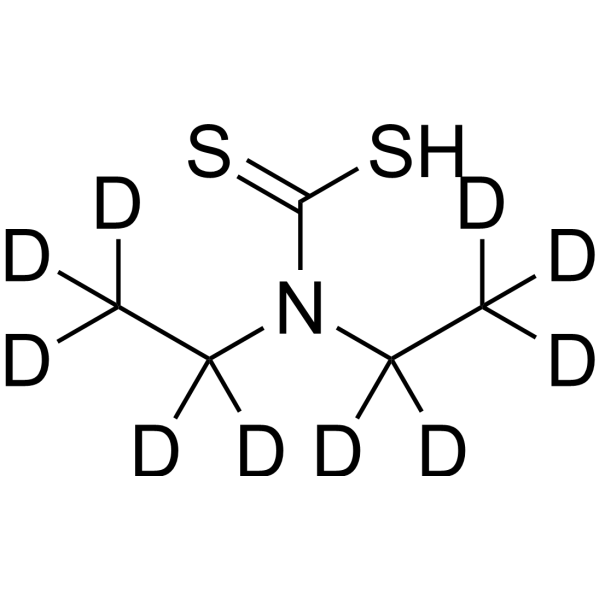 0 ImagesCat. No.: HY-126363SCAS No.: 1261734-83-1Synonyms: Diethyldithiocarbamic acid-d10Ditiocarb-d10 (Diethyldithiocarbamic acid-d10) is the deuterium labeled Ditiocarb (HY-126363). Ditiocarb (Diethyldithiocarbamic acid) is an accelerator of the rate of copper cementation. Ditiocarb (Diethyldithiocarbamic acid) reduces the incidence of HIV infection, and also enhances adjuvant immunoresearch of high risk breast cancer.




