



MicroRNA Inhibitor
- 1
- 2
-
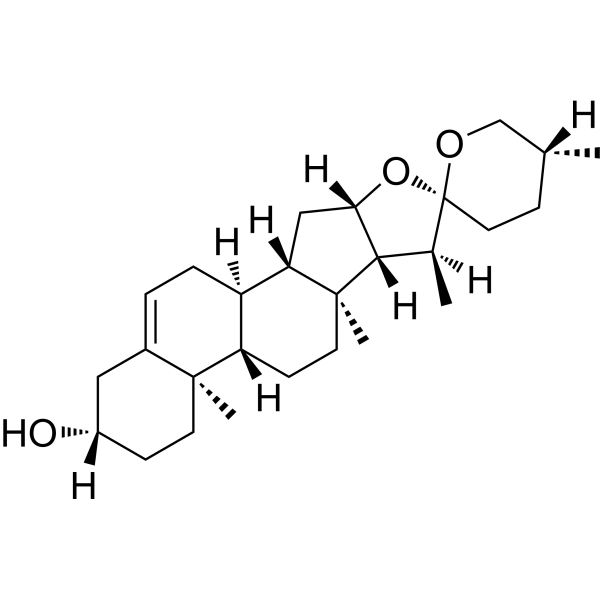
Diosgenin
 0 Images
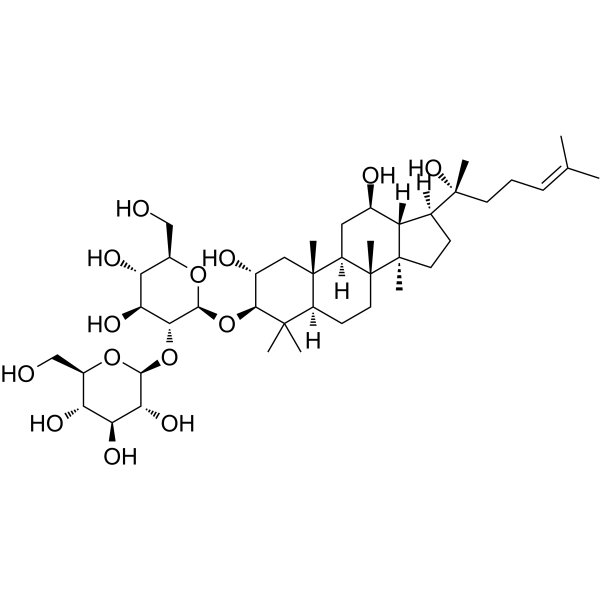
Diosgenin, a steroidal saponin, can inhibit STAT3 signaling pathway. Diosgenin is an exogenous activator of Pdia3/ERp57. Diosgenin inhibits aortic atherosclerosis progression by suppressing macrophage miR-19b expression.
-
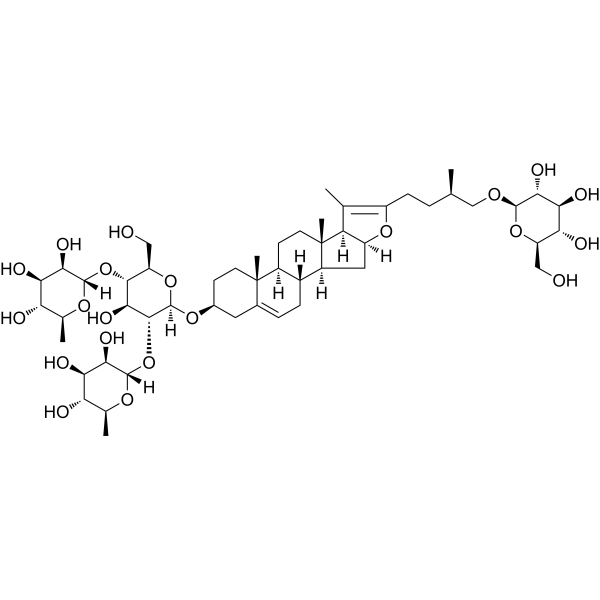
Pseudoprotodioscin
 0 Images
Pseudoprotodioscin, a furostanoside, inhibits SREBP1/2 and microRNA 33a/b levels and reduces the gene expression regarding the synthesis of cholesterol and triglycerides.
-
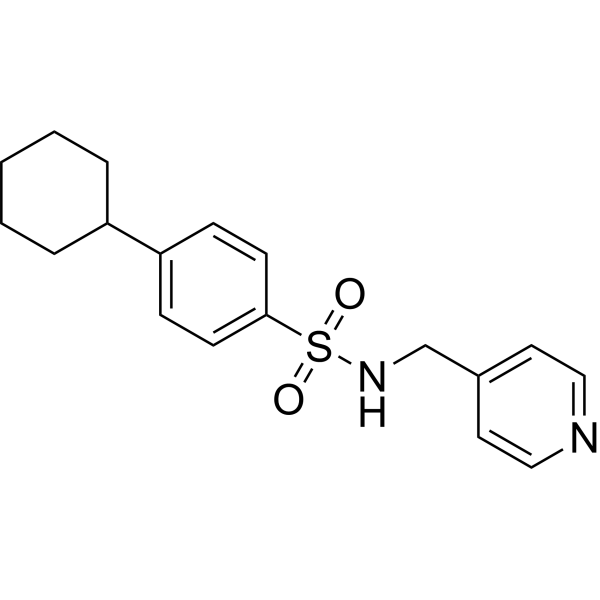
PU.1-IN-1
 0 Images
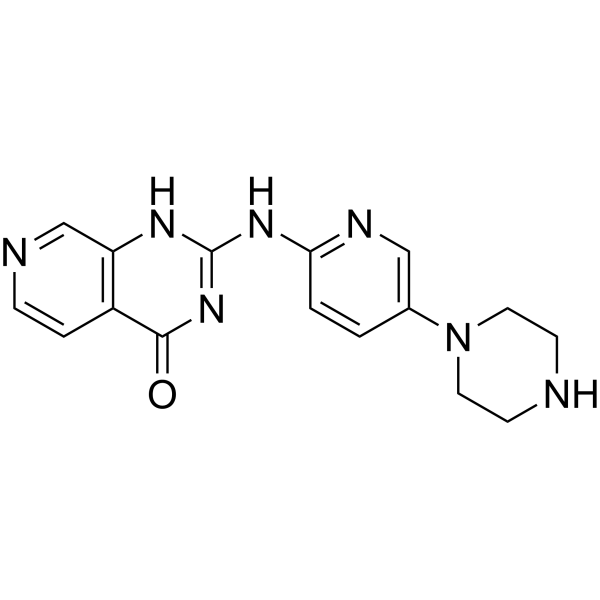
PU.1-IN-1 is a potent PU.1 inhibitor with an IC50 of 2 nM. PU.1-IN-1 reduces rMANF-induced miR-223 expression. PU.1-IN-1 exhibits anti-inflammatory properties.
-
Thymidine 3',5'-diphosphate tetrasodium
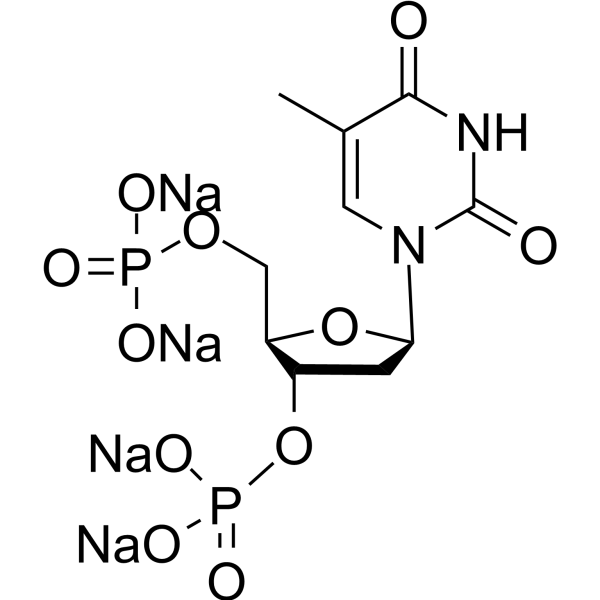 0 ImagesSynonyms: Deoxythymidine 3′,5′-diphosphate tetrasodium; pdTp tetrasodium
Thymidine 3',5'-diphosphate (Deoxythymidine 3′,5′-diphosphate) tetrasodium is a selective inhibitor of staphylococcal nuclease and tudor domain containing 1 (SND1, the MicroRNA regulatory complex RISC subunit) and [3,5-2H2] tyrosyl nuclease. Thymidine 3',5'-diphosphate tetrasodium has anti-tumor activity and can also be used as a catalyst in biochemical reactions.
-
Targapremir-210
 0 ImagesSynonyms: TGP-210
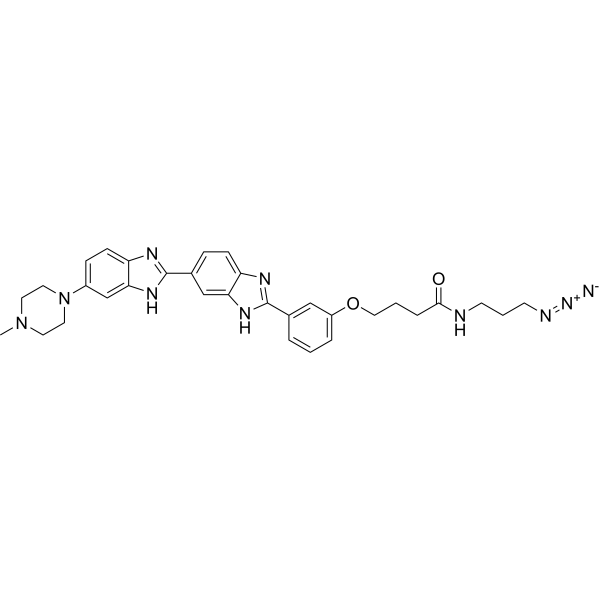
Targapremir-210 (TGP-210) is a potent and selective miR-210 (miRNA-210, microRNA-210) inhibitor. Targapremir-210 inhibits pre-miR-210 processing with high binding affinity (Kd~200 nM). Targapremir-210 is a click chemistry reagent, it contains an Azide group and can undergo copper-catalyzed azide-alkyne cycloaddition reaction (CuAAc) with molecules containing Alkyne groups. It can also undergo strain-promoted alkyne-azide cycloaddition (SPAAC) reactions with molecules containing DBCO or BCN groups.
-
LIN28 inhibitor LI71
 0 Images
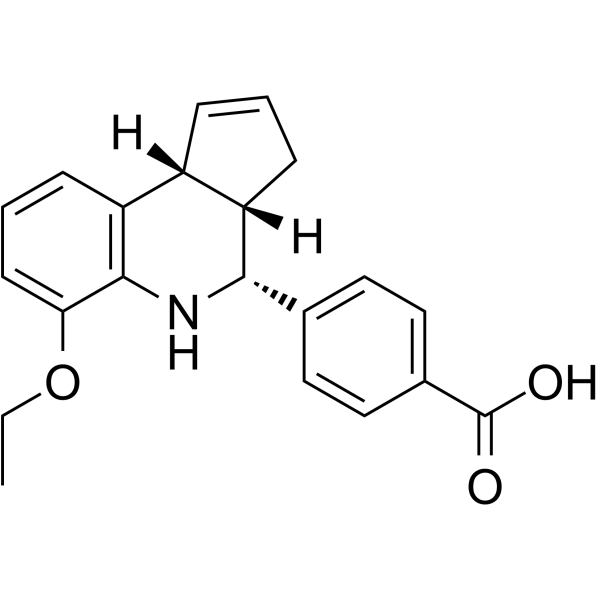
LIN28 inhibitor LI71 is a LIN28 inhibitor that effectively inhibits LIN28:let-7 binding (IC50: 7 μM). LIN28 inhibitor LI71 can abolish LIN28-mediated oligouridylation of let-7 precursor (IC50: 27 μM). LIN28 inhibitor LI71 has potential application value in LIN28-driven cancer research. LIN28 inhibitor LI71 inhibits the interaction of cold shock protein of Plasmodium falciparum (PfCoSP) with DNA and α/β tubulin and has an inhibitory effect on Plasmodium falciparum.
-
MIR96-IN-1
 0 Images
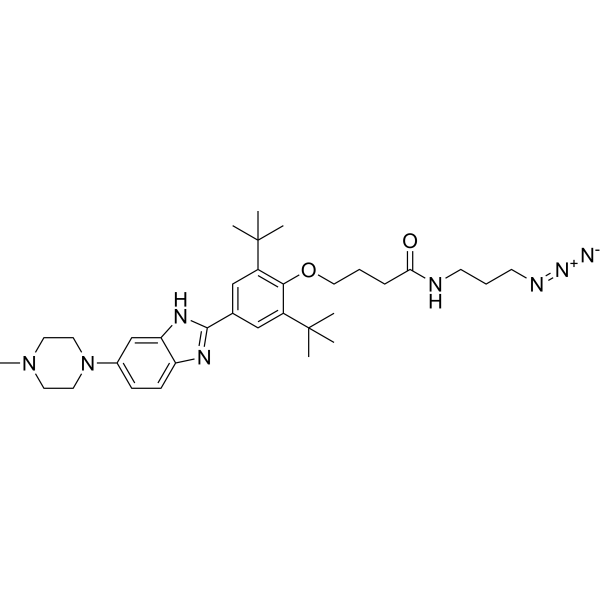
MIR96-IN-1 targets the Drosha site in the miR-96 (miRNA-96, microRNA-96) hairpin precursor, inhibiting its biogenesis, derepressing downstream targets, and triggering apoptosis in breast cancer cells. MIR96-IN-1 binds to RNAs with Kds of 1.3, 9.4, 3.4, 1.3 and 7.4 μM for RNA1, RNA2, RNA3, RNA4 and RNA5, respectively. MIR96-IN-1 is a click chemistry reagent, it contains an Azide group and can undergo copper-catalyzed azide-alkyne cycloaddition reaction (CuAAc) with molecules containing Alkyne groups. It can also undergo strain-promoted alkyne-azide cycloaddition (SPAAC) reactions with molecules containing DBCO or BCN groups.
-
Farabursen sodium
 0 ImagesCat. No.: HY-150364ACAS No.: 2921918-19-4Synonyms: RGLS8429 sodium; RG1015 sodium
Farabursen sodium (RGLS8429 sodium; RG1015 sodium) is a miR-17 inhibitor. Farabursen sodium inhibits the function of the miR-17 family, relieves the inhibitory effect on miR-17 target genes including PKD1 and PKD2, and increases the level of PC1/2. Farabursen sodium slows the growth of renal cysts, reduces the ratio of kidney weight to body weight, and decreases the cyst index and proliferation index. Farabursen sodium is applicable to research related to autosomal dominant polycystic kidney disease.
-
miR-21-IN-2
 0 Images
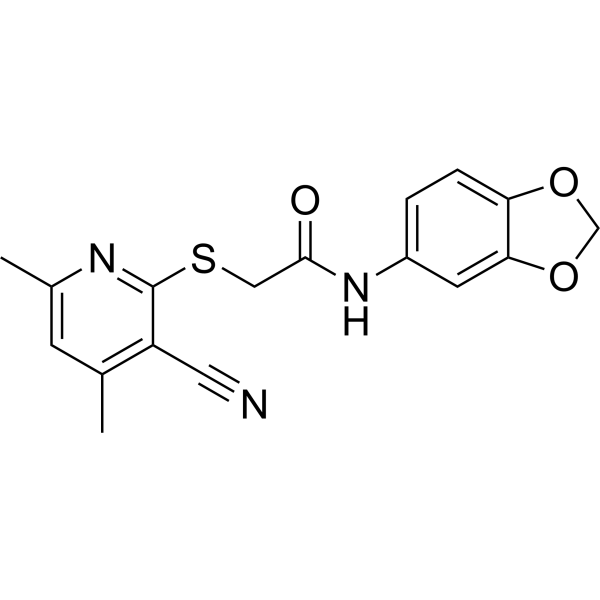
miR-21-IN-2 is a high-affinity miR-21 inhibitor. miR-21-IN-2 binds to the apical loop region of the pre-miR-21 hairpin, inhibits Dicer-mediated processing, and thereby blocks the biosynthesis of mature miR-21. miR-21-IN-2 can be used for the research of microRNA-related diseases.
-
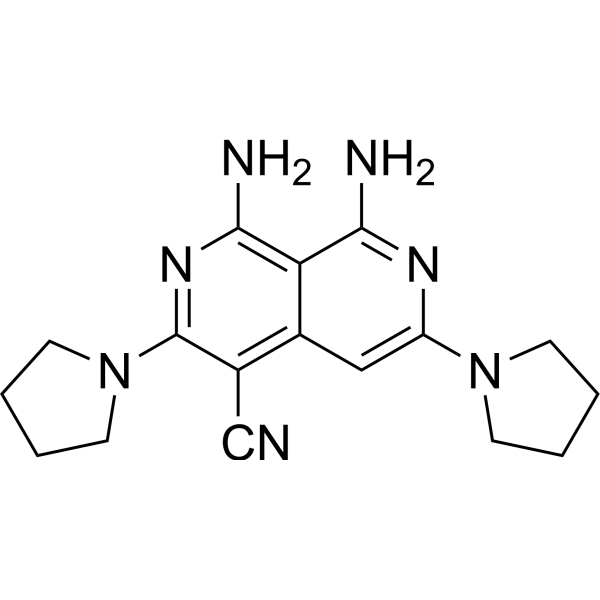
SID 3712249
 0 ImagesSynonyms: MiR-544 Inhibitor 1
-
hsa-miR-222-3p inhibitor
 0 ImagesCat. No.: HY-RI04608
hsa-miR-222-3p inhibitors are chemically-modified oligonucleotides that hybridize with mature miRNAs. The miRNA inhibitors have full-length nucleotide 2'-methoxy modification. The miRNA inhibitors strongly compete with mature miRNAs to prevent the complementary pairing of miRNAs and their target genes, thereby inhibiting miRNAs from functioning.
-
TGP-377/421
 0 ImagesSynonyms: Targapre-miR-377/421
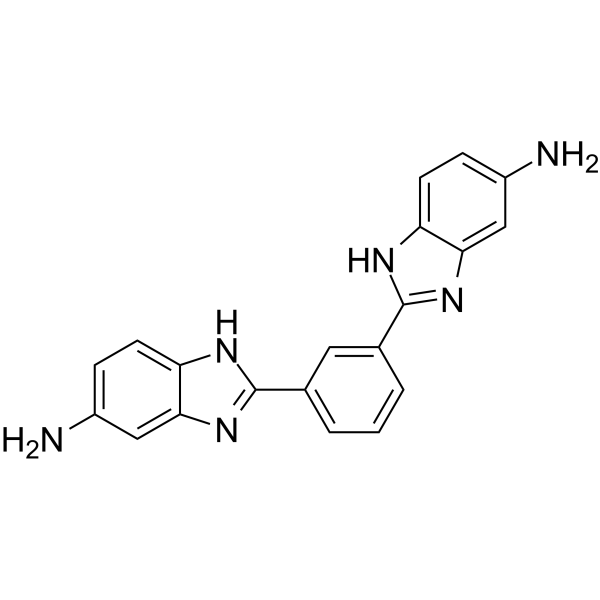
TGP-377/421 (Targapre-miR-377/421) is a potent miR-377 and miR-421 inhibitor that binds a functional site in both miRNAs.
-
Cobomarsen
 0 ImagesSynonyms: MRG-106
Cobomarsen (MRG-106) is an oligonucleotide inhibitor of miR-155. Cobomarsen inhibits multiple gene pathways associated with cell survival (including JAK/STAT, MAPK/ERK and PI3K/AKT). Cobomarsen can be used for the research of B-cell lymphoma.
-
Miravirsen
 0 ImagesCat. No.: HY-132598CAS No.: 1072874-90-8Synonyms: SPC-3649
-
Diosgenin (Standard)
 0 Images
Diosgenin (Standard) is the analytical standard of Diosgenin. This product is intended for research and analytical applications. Diosgenin, a steroidal saponin, can inhibit STAT3 signaling pathway. Diosgenin is an exogenous activator of Pdia3/ERp57. Diosgenin inhibits aortic atherosclerosis progression by suppressing macrophage miR-19b expression.
-
mmu-miR-378a-5p inhibitor
 0 ImagesCat. No.: HY-RI04605
mmu-miR-378a-5p inhibitors are chemically-modified oligonucleotides that hybridize with mature miRNAs. The miRNA inhibitors have full-length nucleotide 2'-methoxy modification. The miRNA inhibitors strongly compete with mature miRNAs to prevent the complementary pairing of miRNAs and their target genes, thereby inhibiting miRNAs from functioning.
-
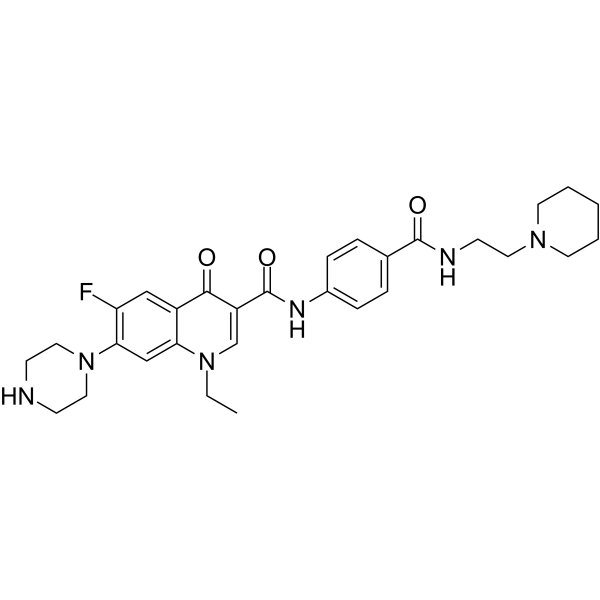
microRNA-21-IN-1
 0 Images
microRNA-21-IN-1 (compound A7) is an efficient microRNA inhibitor. microRNA-21-IN-1 has antiproliferative activity against Hela and HCT-116 cells with IC50s of 5.5 μM and 2.8 μM respectively, as well as promotes apoptosis of Hela cells. microRNA-21-IN-1 upregulates the expression of microRNA-21 downstream functional targets (PTEN, EGR1 and SLIT2). microRNA-21-IN-1 can be used for researching anticancer.
- 1
- 2



