



PD-1/PD-L1
PD-1/Programmed death-ligand 1
Programmed death-1 (PD-1) is a cell surface receptor that functions as a T cell checkpoint and plays a central role in regulating T cell exhaustion. PD-1 is activated by the engagement of its ligands PDL-1 or PDL-2. PD-1 receptor delivers inhibitory checkpoint signals to activated T cells upon binding to its ligands PD-L1 and PD-L2 expressed on antigen-presenting cells and cancer cells, resulting in suppression of T-cell effector function and tumor immune evasion. Inhibiting the programmed cell death-1 (PD-1)/programmed cell death-ligand 1 (PD-L1) pathway is an attractive strategy for tumor immunotherapy.
PD-1 is expressed on activated T cells, B cells, monocytes, dendritic cells (DCs), regulatory T cells (Tregs), and natural killer T cells (NKT). It is a member of a family of immunoglobulin domain (Ig) co-receptors that modify the outcome of activation of the T cell receptor by an antigen-presenting cell (APC) or infected target cell. PD-L1 is widely and constitutively expressed on both hematopoietic and nonhematopoietic cells; e.g., naive T and B cells, vascular endothelial cells, and pancreatic islet cells, whereas PD-L2 is exclusively and inducibly expressed on professional APCs.
All Product Categories
-
PD-1/PD-L1 Inhibitors
(341)
View all products
-
PD-1/PD-L1 Agonists
(5)
View all products
-
PD-1/PD-L1 Antagonists
(11)
View all products
-
PD-1/PD-L1 Activators
(16)
View all products
-
PD-1/PD-L1 Modulators
(7)
View all products
-
PD-1/PD-L1 Inducers
(3)
View all products
-
PD-1/PD-L1 Degraders
(13)
View all products
-
PD-1/PD-L1 Control
(1)
View all products
-
PD-1/PD-L1 Substrates
(2)
View all products
-
PD-1/PD-L1 Ligands
(7)
View all products
-
PD-1/PD-L1 Related Products (451)
Related Products (451)

-
Antibodies (8)
-
Anti-PD-L1/B7-H1 Antibody (29E.2A3)
 0 ImagesCat. No.: HY-P990828Purity: 99%Anti-PD-L1/B7-H1 Antibody (29E.2A3) is a kind of mouse IgG2b κ chimeric antibody inhibitor, targeting to human PD-L1/B7-H1. Anti-PD-L1/B7-H1 Antibody (29E.2A3) can block the binding of PD-1 to PD-L1. Anti-PD-L1/B7-H1 Antibody (29E.2A3) can be used for the research of infection, such as hepatitis C virus (HCV).
-
PD-1/PD-L1-IN 3 TFA
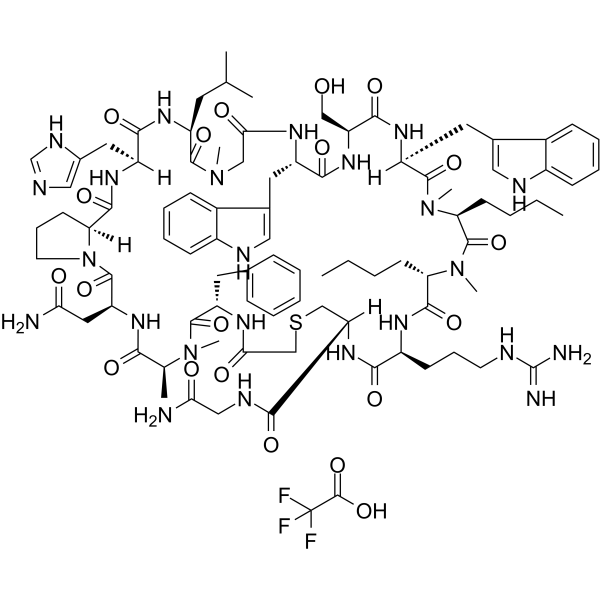 0 ImagesCat. No.: HY-103048APurity: 99.34%PD-1/PD-L1-IN 3 TFA, a macrocyclic peptide, is a potent and selective inhibitor of the PD-1/PD-L1 and CD80/PD-L1 interactions extracted from patent WO2014151634A1, compound No.1. PD-1/PD-L1-IN 3 TFA interferes with PD-L1 binding to PD-1 and CD80 by binding to PD-L1, with IC50s of 5.60 nM and 7.04 nM, respectively. PD-1/PD-L1-IN 3 TFA can be used for the research of various diseases, including cancer and infectious diseases.
-
Prolgolimab
 0 ImagesSynonyms: BCD-100
-
Retifanlimab
 0 ImagesCat. No.: HY-P99941CAS No.: 2079108-44-2Synonyms: INCMGA-00012; MGA-012Retifanlimab is an anti-programmed cell death protein 1 (anti-PD-1) monoclonal antibody (mAb). Retifanlimab can be used for the research of gastroesophageal adenocarcinoma (GEA).
-
PDL1 degrader-1
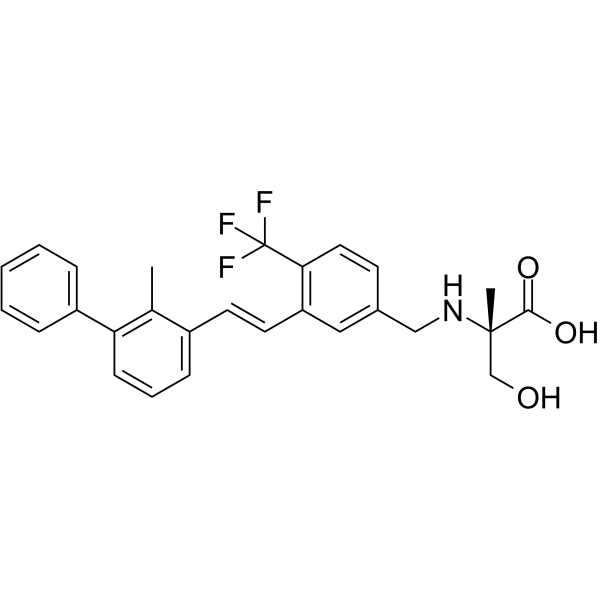
 0 ImagesCat. No.: HY-168530CAS No.: 3122200-59-0PDL1 degrader-1 (compound PMT-O9-1A) is a potent PD-L1 degrader. PDL1 degrader-1 decreases the protein expression of PD-L1. PDL1 degrader-1 shows cytotoxicity. PDL1 degrader-1 shows anticancer activity.
-
Ragistomig
 0 ImagesCat. No.: HY-P990757CAS No.: 2763222-58-6Synonyms: ABL503, TJ-L14B
-
PDL1 degrader-2
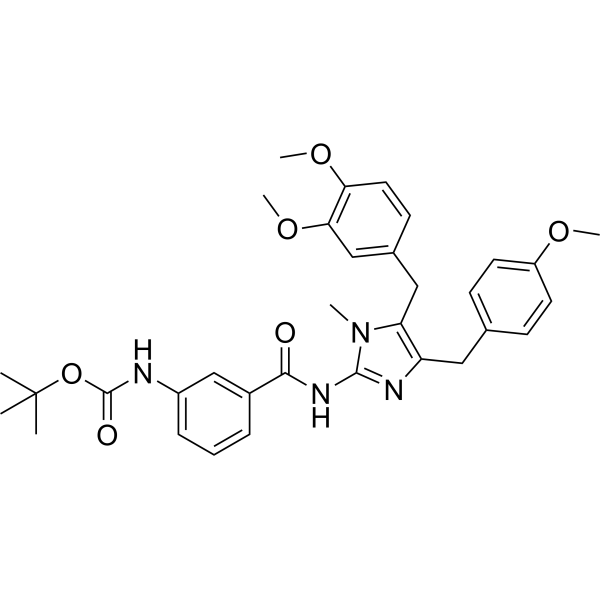
 0 ImagesCat. No.: HY-169363Purity: 99.41%PD-L1 degrader-2 (Compound B3) is an orally active AUTAC degrader, that degrades PD-L1 through autophagy-lysosome pathway with a DC50 of 0.5 μM. PD-L1 degrader-2 exhibits inhibitory activity against PD-1/PD-L1 interaction with an IC50 of 22.8 nM. PD-L1 degrader-2 upregulates the expressions of Atg9b, Lamp1 and Mitf, and activates the autophagy lysosome system. PD-L1 degrader- exhibits antitumor efficacy in CT26 mouse model. (Pink: autophagy-lysosome activator (HY-159894); Black: linker (HY-W015088); Blue: PD-L1 ligand (HY-169365))
-
LSD1/TLK1-IN-1
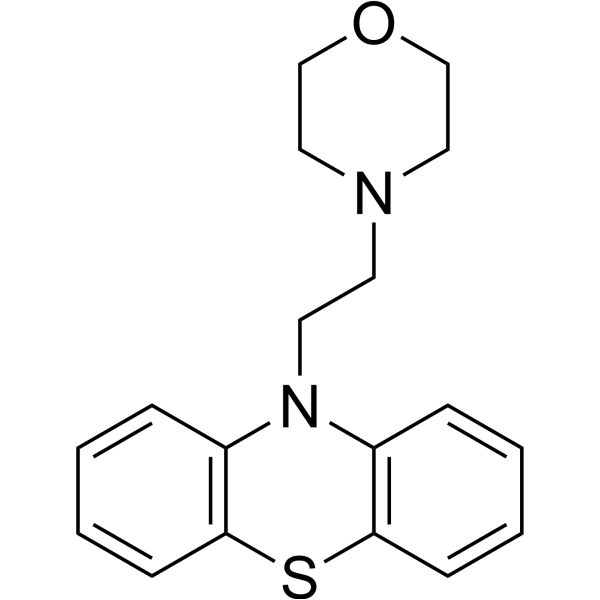 0 ImagesLSD1/TLK1-IN-1 is an orally active LSD1, TLK1, TLK2, TTK inhibitor with an LSD1 IC50 of 0.247 μM. LSD1/TLK1-IN-1 suppresses phosphorylation of Nek1 at T141 and Rad9 at S328, abrogates the TLK1>Nek1>ATR>Chk1 axis, protects H3K4me1/2 from demethylation, and does not affect LSD2, MAO-A, or MAO-B. LSD1/TLK1-IN-1 induces apoptosis, bypasses cell-cycle arrest, suppresses tumor growth, downregulates PD-L1 expression, enhances T-cell killing response, inhibits gastric cancer cell proliferation. LSD1/TLK1-IN-1 can be used for the research of prostate cancer and gastric cancer.
-
PD-1/PD-L1-IN-29
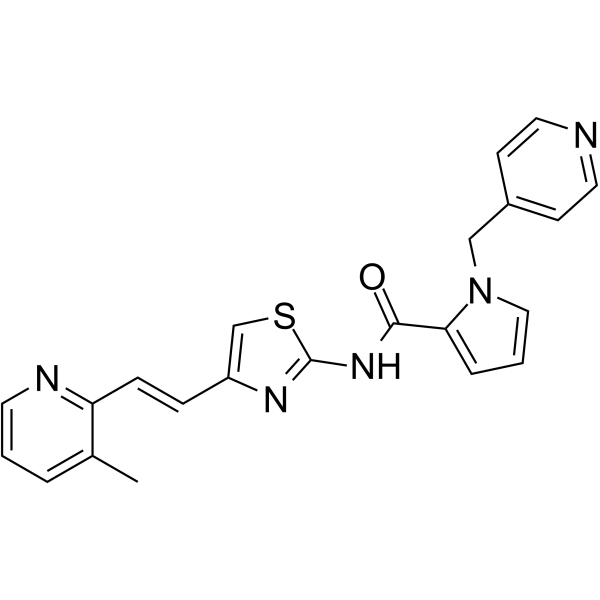
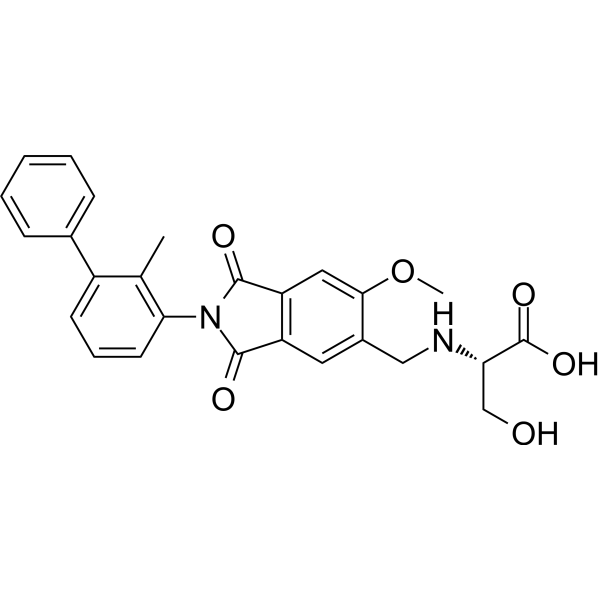 0 ImagesPD-1/PD-L1-IN-29 (S4-1) is a potent PD-1/PD-L1 inhibitor with an IC50 value of 6.1 nM. PD-1/PD-L1-IN-29 binds PD-L1 and disrupts PD-1/PD-L1 interactions, induces PD-L1 dimerization and internalization, improves its localization to the endoplasmic reticulum, and promotes PD-L1 entry into the endoplasmic reticulum. PD-1/PD-L1-IN-29 has anticancer activity.
-
SCL-1
 0 ImagesSCL-1 is an orally active anti-PD-1/PD-L1 inhibitor. SCL-1 can inhibit PD-1/PD-L1 binding. SCL-1 increases T cells, B cells and natural killer cells. SCL-1 exerts strong tumor growth inhibitory effects that were mediated by effector T-cell induction inside tumors and the up-regulated expression of long non-coding RNAs as neoantigens leading to cytotoxic T lymphocyte activation. SCL-1 can be used for the research of cancer, such as triple-negative breast cancer.
-
OPBP-1
 0 ImagesOPBP-1 is a D-peptide obtained by phage display screening, molecular docking and molecular dynamics simulation. OPBP-1 has high stability and strong antitumor and oral activity. OPBP-1 can selectively bind PD-L1 protein, significantly block the interaction between PD-1 and PD-L1, and this blocking effect helps to restore and improve the function of T lymphocytes and reduce the proportion of bone marrow derived suppressor cells (MDSCs) to combat tumor-induced immune escape. OPBP-1 can be used in cancer immunotherapy research.
-
(Rac)-Chem-0199
 0 Images(Rac)-Chem-0199 is the racemic mixture of Chem-0199 (HY-178193). Chem-0199 is an Adipocyte Enhancer-Binding Protein 1 (AEBP1) inhibitor. Chem-0199 can disrupt the interaction between AEBP1 and CKAP4, thereby enhances antitumor immunity. Chem-0199 can inhibit Akt phosphorylation (p-Akt) and downregulates PD-L1 expression. Chem-0199 can be used for the research of cancer, such as colon cancer.
-
LYP-IN-3
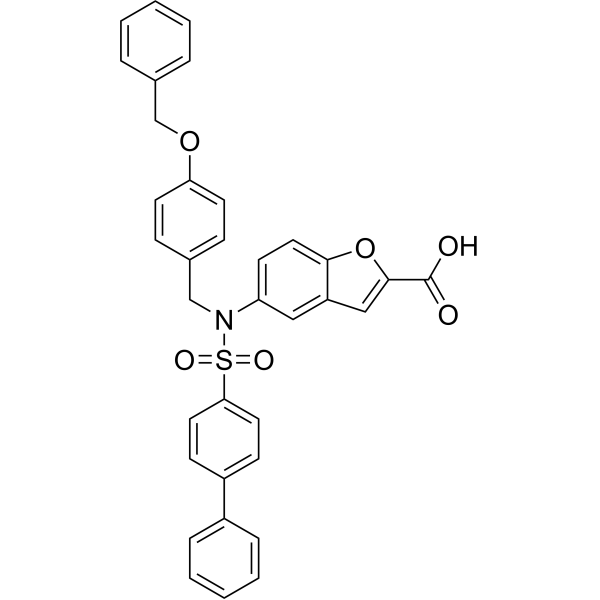 0 ImagesLYP-IN-3 is a selective, orally active and reversible lymphoid-tyrosine phosphatase (LYP) inhibitor (IC50 = 2.55 μM, Ki = 0.93 μM). D34 exhibits high selectivity of PTP1B, PTPN12, PTPN5 and SSH2. LYP-IN-3 regulates the T-cell receptor (TCR) signaling by specifically inhibiting LYP. LYP-IN-3 does not significantly inhibit MC38 cell viability; its anti-tumor effect stems from immune regulation. LYP-IN-3 can significantly upregulate PD-L1 or PD-1 expression in different immune cells. LYP-IN-3 facilitates T-cell infiltration and enhances T-cell functions. LYP-IN-3 synergizes with PD-L1 blockade can significantly improve colorectal tumor regression. LYP-IN-3 can be used for the study of colorectal cancer.
-
BMS-200
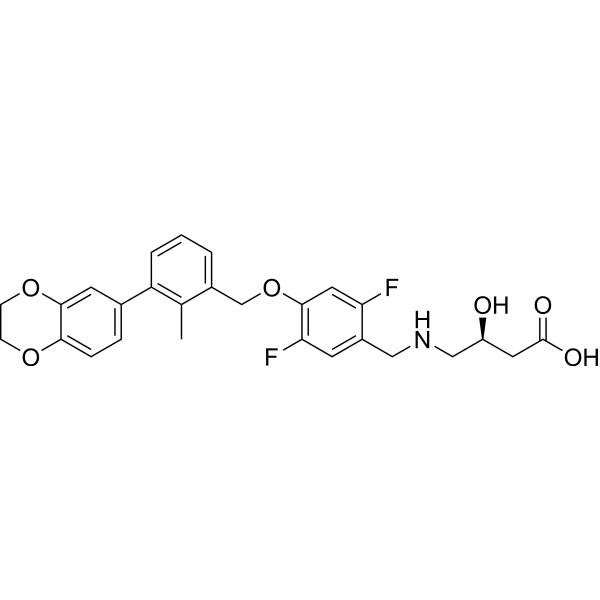 0 ImagesBMS-200 is a potent PD-1/PD-L1 interaction inhibitor with an IC50 of 80 nM. BMS-200 can induce dimerization of PD-L1.
-
Nebratamig
 0 ImagesCat. No.: HY-P991209CAS No.: 2694723-68-5Synonyms: GNC-035
-
Budigalimab
 0 ImagesSynonyms: ABBV 181; PR 1648817Budigalimab (ABBV 181; PR 1648817) is a humanized, recombinant IgG1 monoclonal antibody targeting programmed cell death 1 (PD-1) receptor. Budigalimab has an Fc mutation that reduces the inhibition of Fc receptor interactions and effector factors. Budigalimab can block the binding of PD-1 and PD-L1, which has anti-tumor activity. Budigalimab can be used in the study of solid tumors.
-
Cetrelimab
 0 ImagesSynonyms: JNJ 63723283; JNJ 3283Cetrelimab (JNJ 63723283; JNJ 3283) is a human IgG4κ mAb targeting PD-1. Cetrelimab binds PD-1 (Kd=1.72 nM, HEK293) to block the interaction of PD-1 with PD-L1 and PD-L2 (IC50s=111.7 ng/mL and 138.6 ng/mL, respectively). Cetrelimab stimulates peripheral T cells, increases IFN-γ, IL-2, TNF-α level and inhibits tumor growth in vivo.




