



PPAR
Peroxisome proliferator-activated receptors
PPARs (Peroxisome proliferator-activated receptors) are ligand-activated transcription factors of nuclear hormone receptor superfamily comprising of the following three subtypes: PPARα, PPARγ, and PPARβ/δ. PPARs play essential roles in the regulation of cellular differentiation, development, and metabolism (carbohydrate, lipid, protein), and tumorigenesis of higher organisms. All PPARs heterodimerize with the retinoid X receptor (RXR) and bind to specific regions on the DNA of target genes. Activation of PPAR-α reduces triglyceride level and is involved in regulation of energy homeostasis. Activation of PPAR-γ enhances glucose metabolism, whereas activation of PPAR-β/δ enhances fatty acids metabolism.
PPAR Isoform Specific Products
All Product Categories
-
PPAR Inhibitors
(104)
View all products
-
PPAR Agonists
(336)
View all products
-
PPAR Antagonists
(30)
View all products
-
PPAR Activators
(168)
View all products
-
PPAR Modulators
(41)
View all products
-
PPAR Inducers
(6)
View all products
-
PPAR Controls
(3)
View all products
-
PPAR Ligands
(4)
View all products
-
Peroxisome Proliferator-activated Receptor Proteins
(11)
View all products
-
PPAR alpha Proteins
(2)
View all products
-
PPAR gamma Proteins
(7)
View all products
-
PPAR-delta Proteins
(2)
View all products
-
PPAR Related Products (736)
Related Products (736)

-
Recombinant Proteins (11)
-
Antibodies (4)
-
PPAR Isoform Comparison
-
MD001
 0 ImagesCat. No.: HY-139172CAS No.: 2254605-76-8
-
XYQ3-B11
 0 ImagesCat. No.: HY-181894CAS No.: 3126891-03-7
-
BAY-9683
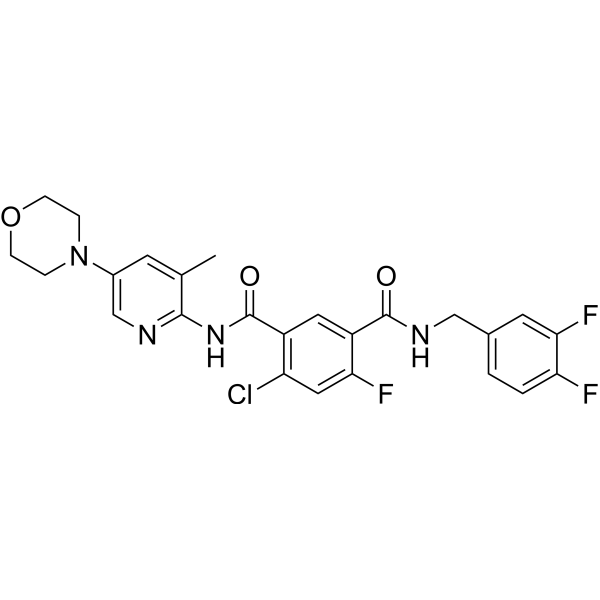 0 ImagesCat. No.: HY-160188CAS No.: 2891706-83-3BAY-9683 is an orally active covalent PPARG inverse agonist. BAY-9683 can be used in the study of diseases with overactive PPARG, such as luminal bladder cancer.
-
(R)-Pioglitazone
 0 ImagesCat. No.: HY-13956CCAS No.: 959687-65-1Synonyms: (R)-U 72107(R)-Pioglitazone ((+)-pioglitazone) is the R enantiomer of Pioglitazone (HY-13956). (R)-Pioglitazone is an orally active and selective peroxisome proliferator-activated receptor (PPARγ) agonist with high affinity binding to the PPARγ ligand-binding domain. (R)-Pioglitazone can be used for the research of Alzheimer's disease.
-
Pioglitazone-d4 hydrochloride
 0 ImagesCat. No.: HY-W738533Synonyms: U 72107A-d4; AD 4833-d4Pioglitazone-d4 hydrochloride (U 72107A-d4; AD 4833-d4) is the deuterium labeled Pioglitazone hydrochloride (HY-14601). Pioglitazone hydrochloride is a potent and selective PPARγ agonist with EC50s of 0.93 and 0.99 μM for human and mouse PPARγ, respectively.
-
Leriglitazone-d4
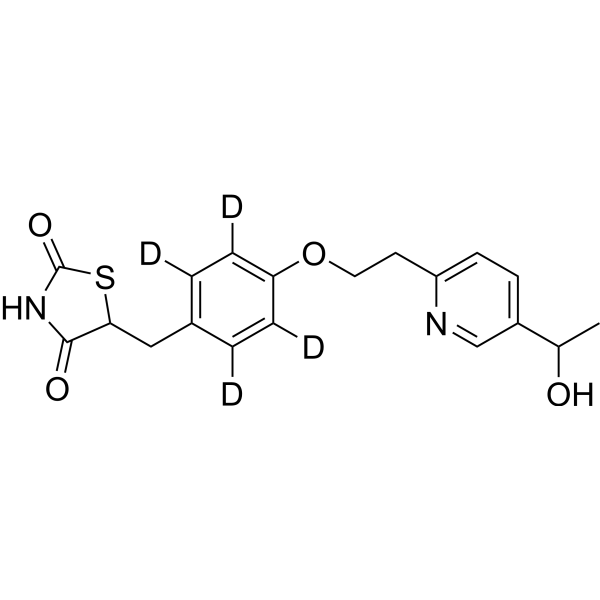 0 ImagesCat. No.: HY-117727SCAS No.: 1188263-49-1Synonyms: MIN-102-d4; Hydroxypioglitazone-d4Leriglitazone-d4 (MIN-102-d4; Hydroxypioglitazone-d4) is deuterium labeled Leriglitazone. Leriglitazone is an orally active and a BBB-penetrable PPARγ agonist with an EC50 of 9 μM. Leriglitazone, as a regulator of mitochondrial function, has neuroprotective, anti-inflammatory and antioxidant effects. Leriglitazone can be used in the study of neuroinflammatory and neurodegenerative diseases.
-
Halofenate
 0 ImagesCat. No.: HY-14998CAS No.: 26718-25-2Synonyms: MK 185Halofenate, structurally akin to clofibrate, was evaluated in hypertriglyceridemic patients over 6-week periods in a controlled, double-blind crossover trial. It effectively reduced serum triglycerides by 50%, with minimal impact on serum cholesterol levels. Additionally, it lowered serum uric acid by 30% and exhibited uricosuric effects independent of glomerular filtration rate. Halofenate was associated with a significant increase in plasma thyroxine (T4), accompanied by a decrease in protein-bound iodine and T4 by column. In vitro studies confirmed its ability to displace T4 from thyroid-binding proteins, suggesting a thyroxine-displacing effect, which could influence thyroid function in vivo.
-
Fenofibrate (GMP)
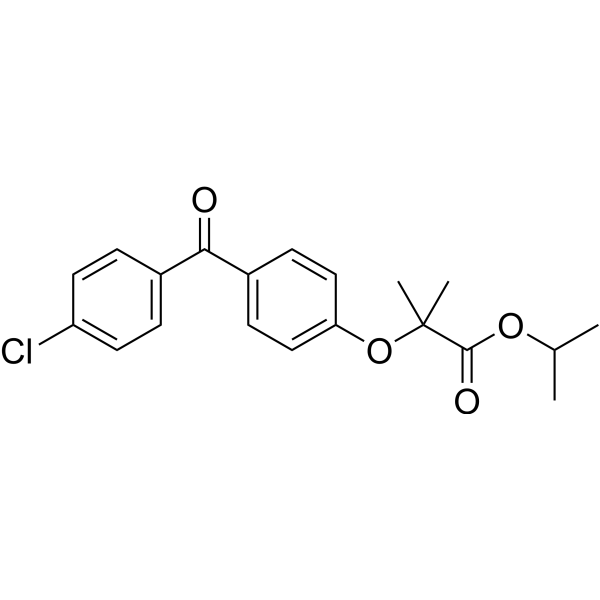 0 ImagesCat. No.: HY-17356GCAS No.: 49562-28-9Fenofibrate (GMP) is Fenofibrate (HY-17356) produced by using GMP guidelines. GMP small molecules work appropriately as an auxiliary reagent for cell therapy manufacture. Fenofibrate is a selective PPARα agonist with an EC50 of 30 μM. Fenofibrate also inhibits human cytochrome P450 isoforms, with IC50s of 0.2, 0.7, 9.7, 4.8 and 142.1 μM for CYP2C19, CYP2B6, CYP2C9, CYP2C8, and CYP3A4, respectively.
-
23-epi-26-Deoxyactein (Standard)
 0 ImagesCat. No.: HY-139058RCAS No.: 501938-01-8Synonyms: 27-Deoxyactein (Standard)23-epi-26-Deoxyactein (Standard) is the analytical standard of 23-epi-26-Deoxyactein. This product is intended for research and analytical applications. 23-epi-26-Deoxyactein is a natural and orally active anti-obesity and anti-cancer compound.
-
D-Arabinose-d2
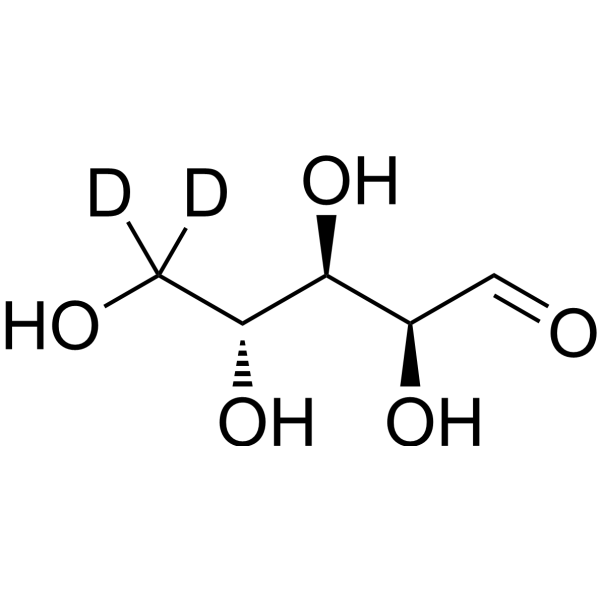 0 ImagesCat. No.: HY-N0059S4CAS No.: 2419933-20-1D-Arabinose-d2 is the deuterium labeled D-Arabinose (HY-N0059). D-Arabinose is is an orally active antidepressant and a growth inhibitor of C. elegans (IC50 is 7.5 mM). D-Arabinose can penetrate the blood-brain barrier, selectively interfere with the metabolism of D-ribose and D-fructose, and inhibit the growth of nematodes. D-Arabinose can also inhibit the synthesis of cell biofilm and exert antibacterial activity. D-Arabinose activates the ACSS2-PPARγ/TFEB-CRTC1 axis through the lysosomal AXIN-LKB1-AMPK pathway, inducing CRTC1 transcription, exerts antidepressant-like activity. D-Arabinose is the ring-opened form of the aldopentose D-?Arabinose (HY-N7082).
-
AI 3-25755
 0 ImagesAI 3-25755 (OMS-403) is a peroxisome proliferator-activated receptor gamma (PPARγ) agonist. AI 3-25755 can be used for research on opioid abuse and smoking cessation.
-
L-764406
 0 ImagesCat. No.: HY-121579CAS No.: 227002-04-2L-764406 is a non-thiazolidinedione (TZD)-type PPARg nuclear receptor ligand with high affinity. L-764406 has significant binding ability to PPARg (IC50=70 nM). L-764406 exhibited partial agonist activity and induced expression of the adipocyte-specific gene aP2 in chimeric receptors expressing the PPARg LBD and the corresponding reporter gene, as well as in 3T3-L1 cells. In contrast, L-764406 showed no activity in cells transfected with chimeric receptors containing PPARa or PPARd LBDs.
-
PPARγ agonist 1
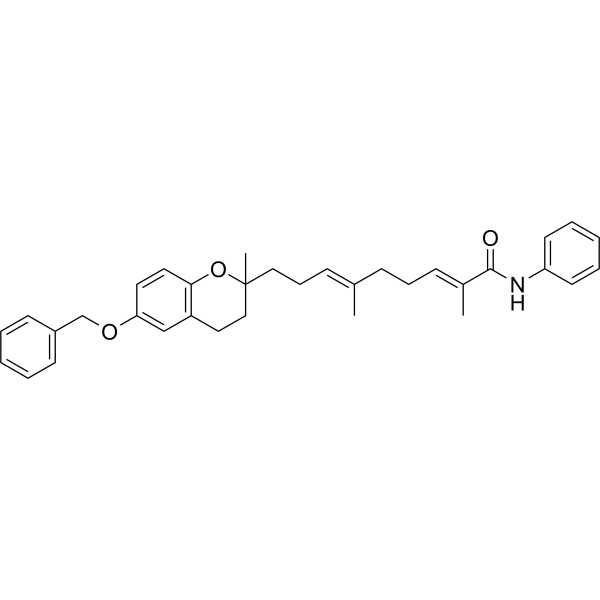 0 ImagesCat. No.: HY-146731CAS No.: 3032632-09-7PPARγ agonist 1 (compound 15) is a potent agonist of PPARγ. PPARγ agonist 1 shows high efficacy to activate hPPARγ without raising a full agonism and probably avoiding adverse effects. PPARγ agonist 1 has the potential for the research of cardiovascular diseases associated with metabolic disorders.

-
Aluminium clofibrate
 0 ImagesCat. No.: HY-B1520CAS No.: 24818-79-9Synonyms: Aluminum clofibrateAluminium clofibrate is an orally active peroxisome proliferator. Aluminium clofibrate increases peroxisomal β-oxidation enzyme activities, elevates catalase. Aluminium clofibrate can be used in the research of cancer.
-
Inclisiran sodium scrambled negative control
 0 ImagesCat. No.: HY-132591CInclisiran sodium scrambled negative control is the sequence scrambled negative control of Inclisiran sodium.
-
HD202A
 0 ImagesCat. No.: HY-182046CAS No.: 2930131-74-9HD202A is an orally active, selective dual inhibitor of MNK1/MNK2 (with IC50 values of 6.09 nM and 8.06 nM, and Kd values of 1.913 μM and 5.244 μM, respectively) that inhibits the MNK-eIF4E signaling pathway. By downregulating perilipin 2 and SCD1, while upregulating adipose triglyceride lipase and PPARγ coactivator 1α, HD202A enhances mitochondrial fatty acid oxidation and redox homeostasis. HD202A effectively suppresses body weight gain, hepatic lipid accumulation and elevation of serum lipids, significantly improves glucose tolerance and insulin sensitivity of the organism, and ameliorates inflammatory features. With these comprehensive pharmacological activities, HD202A exhibits great application potential in studies of metabolic dysfunction-associated steatotic liver disease.
-
Cevoglitazar
 0 ImagesCat. No.: HY-19848CAS No.: 839673-52-8Synonyms: LBM-642
-
Pparδ agonist 2
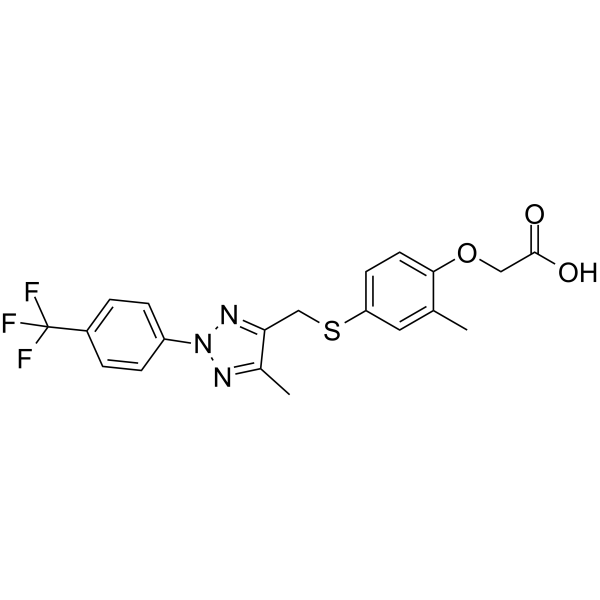 0 ImagesCat. No.: HY-100120CAS No.: 870884-12-1Pparδ agonist 2 is a PPARδ agonist extracted from patent WO 2016057656 A1.
-
SP-C01
 0 ImagesCat. No.: HY-173443CAS No.: 2982533-42-4SP-C01 is an orally active soluble epoxide hydrolase (sEH) inhibitor and partial PPARγ agonist. SP-C01 can inhibit Ser273 phosphorylation.




