



Trypanosoma
Trypanosoma spp. are divergent protozoan parasites that cause human African trypanosomiasis, Chagas disease, and animal trypanosomiasis[1][2]. Their core biology centers on stage-specific adaptation between mammalian hosts and insect vectors, requiring changes in morphology, organelle positioning, surface biology, and gene expression[2][3]. Mechanistically, kinetoplastids contain glycosomes that compartmentalize major glycolytic and pentose-phosphate enzymes, supporting energy and carbohydrate metabolism[4]. cAMP signaling differs from mammalian pathways because trypanosomatids lack G-protein-coupled receptors, possess structurally different adenylyl cyclases, and express class 1 cyclic nucleotide phosphodiesterases PDEA-D[5]. Compared with related isoforms, only T. brucei PDEB, expressed as PDEB1 and PDEB2, has been reported essential after ablation[5]. Disease models use T. brucei to study bloodstream infection, tsetse-vector differentiation, antigenic variation, cytokinesis, and drug discovery[2][3]. For experimental intervention, N-myristoyltransferase inhibition causes trypanosomatid cell death, compromises virulence, and cures T. brucei infection in rodents[6]. Neuropeptides also kill T. brucei by disrupting lysosome integrity, redistributing glycolytic enzymes, and inducing autophagic-like cell death[7].
References:
- [1]. Lopes AH, et al. Trypanosomatids: odd organisms, devastating diseases. Open Parasitol J. 2010;4:30-59.
- [2]. Dean S. Basic Biology of Trypanosoma brucei with Reference to the Development of Chemotherapies. Curr Pharm Des. 2021;27(14):1650-1670. [Content Brief]
- [3]. Matthews KR. The developmental cell biology of Trypanosoma brucei. J Cell Sci. 2005 Jan 15;118(Pt 2):283-90. doi: 10.1242/jcs.01649. Erratum in: J Cell Sci. 2005 May 1;118(Pt 9):2078. PMID: 15654017; PMCID: PMC2686837. et al. The developmental cell biology of Trypanosoma brucei. J Cell Sci. 2005 Jan 15;118(Pt 2):283-90. [Content Brief]
- [4]. Hannaert V, et al. Evolution of energy metabolism and its compartmentation in Kinetoplastida. Kinetoplastid Biology and Disease. 2003;2:11.
- [5]. Tagoe DN, et al. The ever unfolding story of cAMP signaling in trypanosomatids: vive la difference! Front Pharmacol. 2015 Sep 7;6:185. [Content Brief]
- [6]. Goldston AM, et al. Acylation in trypanosomatids: an essential process and potential drug target. Trends Parasitol. 2014 Jul;30(7):350-60. [Content Brief]
- [7]. Delgado M, et al. Neuropeptides kill African trypanosomes by targeting intracellular compartments and inducing autophagic-like cell death. Cell Death Differ. 2009 Mar;16(3):406-16. [Content Brief]
All Product Categories
-
Trypanosoma Related Products (79)
Related Products (79)

-
S-MGB-234
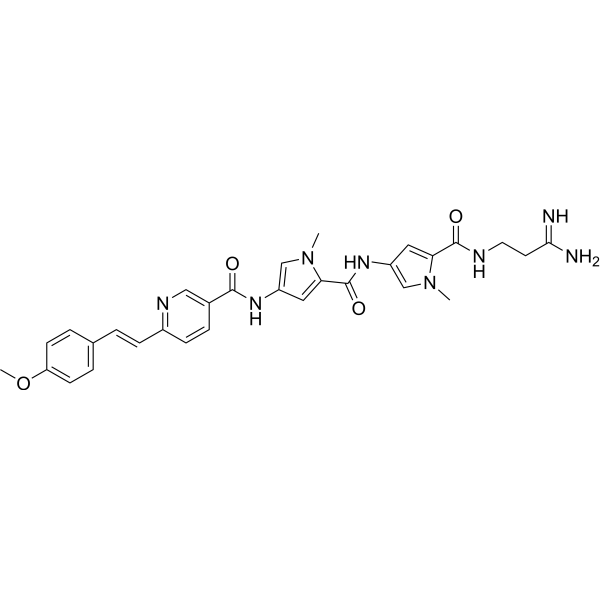 0 ImagesCat. No.: HY-145287CAS No.: 1970223-53-0S-MGB-234 is a minor groove binder of Animal African Trypanosomiasis (AAT). S-MGB-234 displays excellent in vitro activities against the principal causative organisms of AAT; Trypanosoma congolense, and Trypanosoma vivax. S-MGB-234 does not show cross-resistance with the current diamidine agents and are not internalized via the transporters used by diamidines.
-
Euphorbadienol
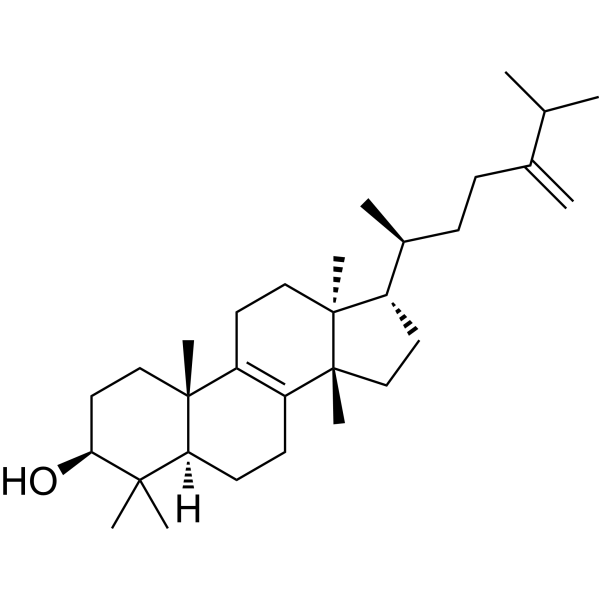 0 ImagesEuphorbadienol (alpha-Euphorbol), a triterpenic compound, isolated from the latex of Euphorbia resinifera. The derivatives of Euphorbadienol can be used as elicitors of disease resistance, and has antileishmanial and antitrypanosomal activity.
-
Anti-Trypanosoma cruzi agent-4
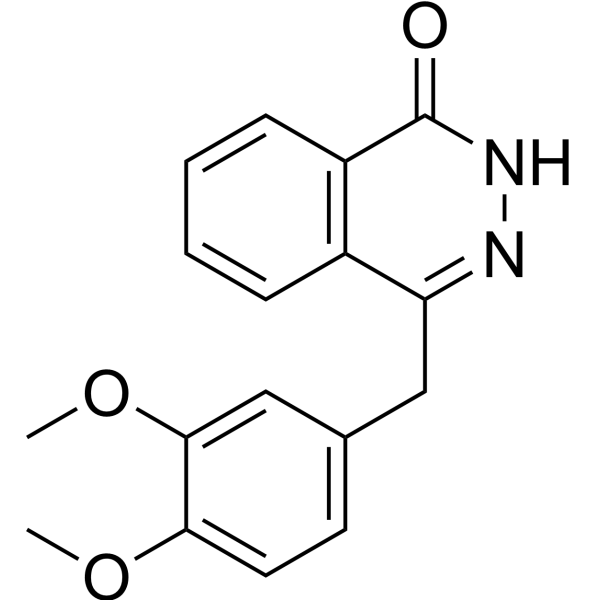 0 ImagesCat. No.: HY-148323CAS No.: 10001-31-7Anti-Trypanosoma cruzi agent-4 (compound 5c) is an inhibitor of Trypanosoma cruzi. Anti-Trypanosoma cruzi agent-4 can be used for the research of infection.
-
Antiparasitic agent-15
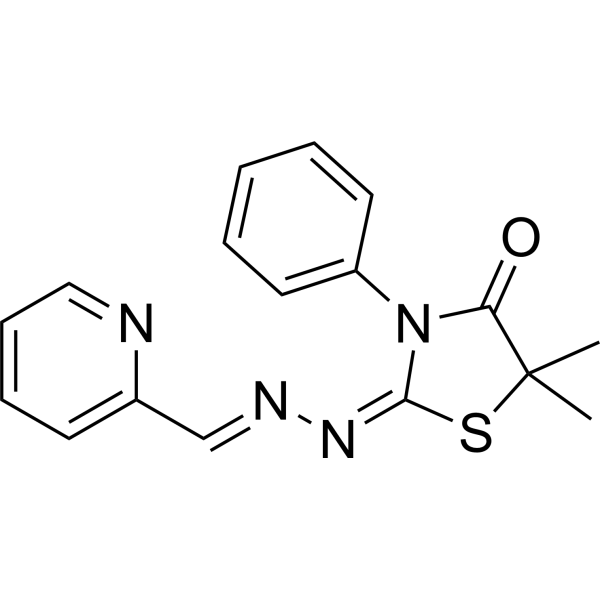 0 ImagesCat. No.: HY-149079CAS No.: 3046451-91-3Antiparasitic agent-15, a pyridine-thiazolidinone, has anti-Trypanosoma cruzi and leishmanicidal activities. Antiparasitic agent-15 has IC50s of 0.9 μM and 0.64 μM against trypomastigote and amastigote forms of T. cruzi. Antiparasitic agent-15 has IC50s of 42.2 μM and 9.58 μM against trypomastigote and amastigote forms of L. amazonensis. Antiparasitic agent-15 induces parasite cell death through necrosis induction. Antiparasitic agent-15 induces morphological changes such as shortening, retraction and curvature of the parasite body and leakage of internal content with T. cruzi trypomastigotes.
-
Dehydrobruceine A
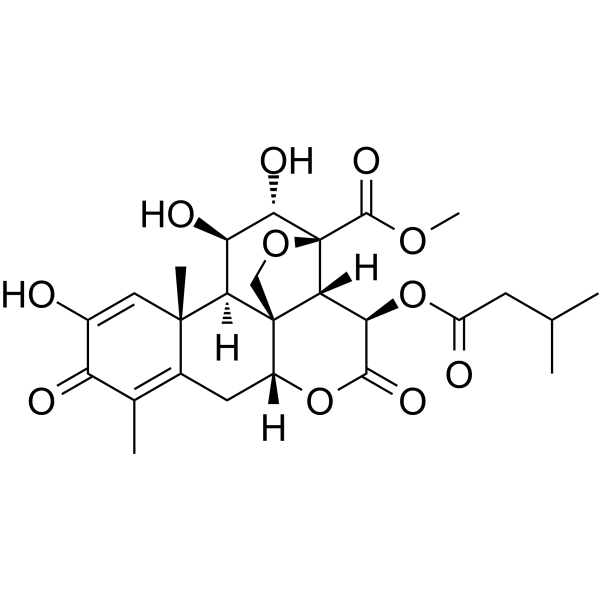 0 ImagesCat. No.: HY-N8257CAS No.: 73435-47-9Dehydrobruceine A is a low potent antitrypanosomal agent, with an IC50 of 88.5 nM for Plasmodium falciparum.
-
Alazopeptin
 0 ImagesAlazopeptin is a non-ribosomal tripeptide azoamino acid antibiotic isolated from various Streptomyces species, with significant anti-tumor, antibacterial and trypanocidal activities. Alazopeptin exhibits cytotoxicity against mouse leukemia cells and S-180 tumor cells, inhibits the growth of Bacillus subtilis, and shows activity against Trypanosoma brucei. Alazopeptin can be widely used in studies related to mouse leukemia, S-180 tumor, human African trypanosomiasis and nagana.
-
Antiparasitic agent-2
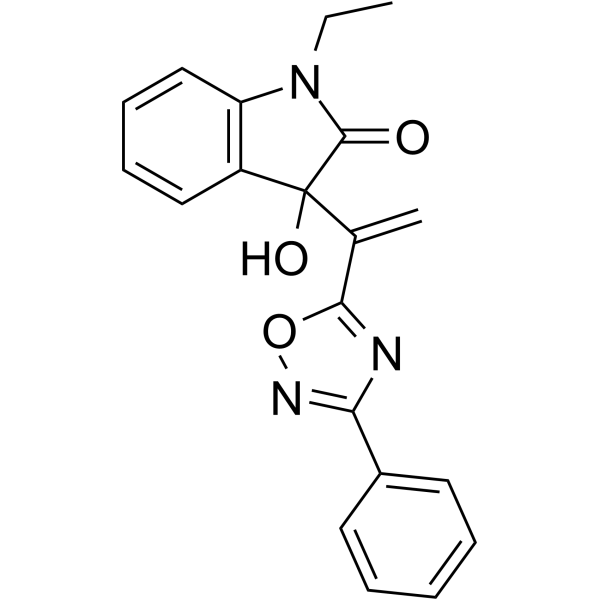 0 ImagesCat. No.: HY-146041CAS No.: 2494277-80-2Antiparasitic agent-2 (compound 8a) has highly antiparasitic activity against Leishmania infantum (L. infantum) and Trypanosoma cruzi (T. cruzi) with IC50s of 7.28 μM and 2.30 μM, respectively. Antiparasitic agent-2 also has certain cytotoxicity against HepG2 (CC50 = 26.79 μM).
-
MDL 73811
 0 ImagesCat. No.: HY-112252CAS No.: 123642-27-3MDL 73811 is a potent AdoMetDC inhibitor and anti-trypanosomal compound. MDL 73811 has curative efficacy in a hemolymphatic model of HAT.
-
Antitrypanosomal agent 6
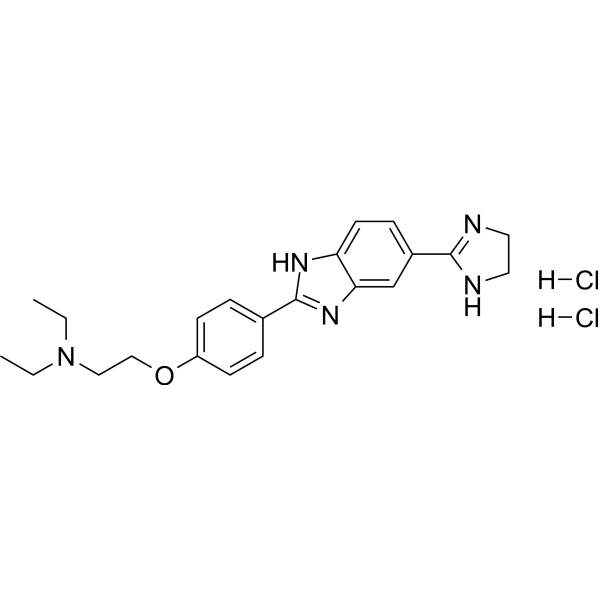 0 ImagesCat. No.: HY-147549CAS No.: 2492436-35-6Antitrypanosomal agent 6 (compound 18a) is a potent and antitrypanosomal agent with favorable ADME properties. Antitrypanosomal agent 6 is > 2-fold more potent against Trypanosoma brucei (T. brucei) than Nifurtimox, with an IC50 value of 0.47 μM. Antitrypanosomal agent 6 has strong interaction to DNA and can bind with high selectivity to AT-rich DNA.
-
Antiparasitic agent-16
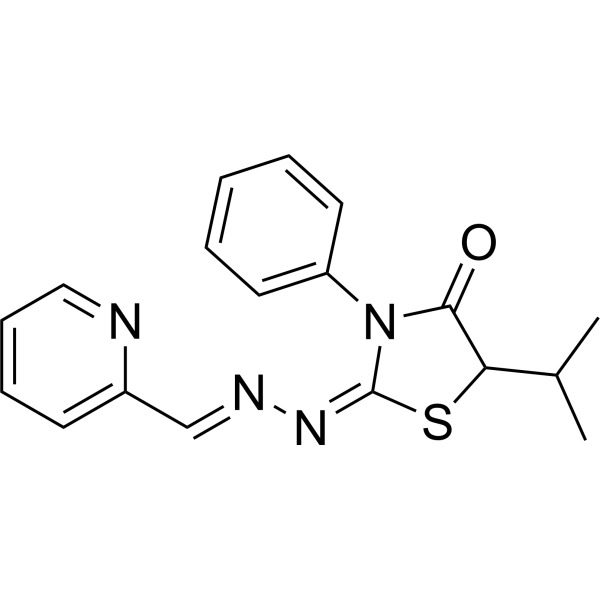 0 ImagesCat. No.: HY-149080CAS No.: 3046451-89-9Antiparasitic agent-16, a pyridine-thiazolidinone, has anti-Trypanosoma cruzi and leishmanicidal activities. Antiparasitic agent-16 has IC50s of 1.0 μM and 0.6 μM against trypomastigote and amastigote forms of T. cruzi. Antiparasitic agent-16 has IC50s of 150.2 μM and 16.75 μM against trypomastigote and amastigote forms of L. amazonensis. Antiparasitic agent-16 induces parasite cell death through necrosis induction. Antiparasitic agent-16 induces morphological changes such as shortening, retraction and curvature of the parasite body and leakage of internal content with T. cruzi trypomastigotes.
-
Anti-Trypanosoma cruzi agent-8
 0 ImagesCat. No.: HY-181516Anti-Trypanosoma cruzi agent-8 is an anti-Trypanosoma agent and also a Trypanosoma cruzi trypanothione reductase (TcTR) inhibitor, with an IC50 of 3.9 μM against TcTR. Anti-Trypanosoma cruzi agent-8 functionally inhibits the enzymatic activity of TcTR. Anti-Trypanosoma cruzi agent-8 exhibits trypanocidal activity against intracellular Trypanosoma cruzi amastigotes.
-
Pentamidine dihydrochloride
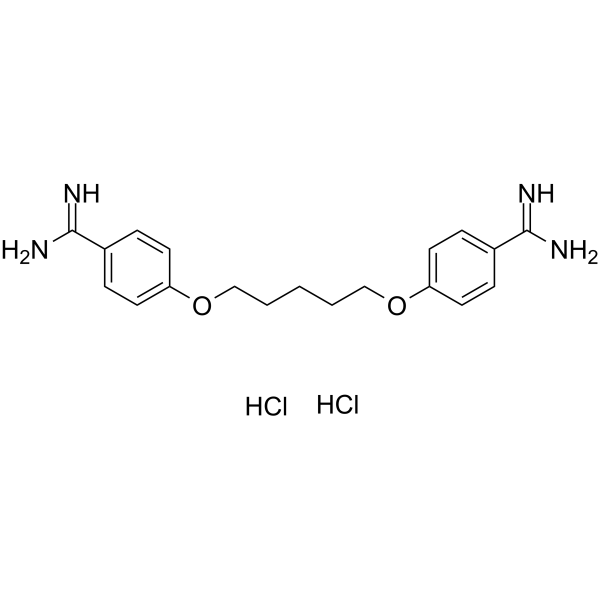 0 ImagesCat. No.: HY-B0537ACAS No.: 50357-45-4Synonyms: MP-601205 dihydrochloridePentamidine dihydrochloride (MP-601205 dihydrochloride) is an antimicrobial agent and interferes with DNA biosynthetics. Pentamidine dihydrochloride inhibits parasite Leishmania infantum with an IC50 of 2.5 μM. Pentamidine dihydrochloride is a potent and selective protein tyrosine phosphatases (PTPases) and phosphatase of regenerating liver (PRL) inhibitor. Pentamidine dihydrochloride has the potential for Gambian trypanosomiasis, antimony-resistant leishmaniasis, and Pneumocystis carinii pneumonia treatment. Antitumor and antibacterial activities.
-
Didesmethylpromazine
 0 ImagesDidesmethylpromazine (Compound 18) is a trypanothione reductase inhibitor with an I50of 1412 μM against T. cruzi trypanothione reductase. Didesmethylpromazine can be used in the research of trypanosome and leishmania infections.
-
FTI-2628
 0 ImagesCat. No.: HY-183458CAS No.: 655234-81-4FTI-2628 is an antimalarial agent and a farnesyl transferase inhibitor, with an IC50 of 41.7 nM against TbPET. FTI-2628 attenuates glucose-stimulated insulin secretion. FTI-2628 exhibits antimalarial activity against Trypanosoma brucei.
-
Antitrypanosomal agent 31
 0 ImagesCat. No.: HY-183529CAS No.: 551919-54-1Antitrypanosomal agent 31 is an antitrypanosoma agent with a pEC50 of 6.4. Antitrypanosomal agent 31 inhibits GSK-3β, CDK-2, and CDK-4 with pIC50s of 5.8, 6.9, and 7.1, respectively. Antitrypanosomal agent 31 can be used for the research of human african trypanosomiasis.
-
NEU-4438
 0 ImagesCat. No.: HY-125188CAS No.: 2306305-57-5NEU-4438 is an antimalarial agent. NEU-4438 inhibits DNA synthesis, reduces AMPK-γ, and increases Clathrin heavy chain. NEU-4438 exhibits antiparasitic activity against Trypanosoma brucei. NEU-4438 reduces trypanosome tissue burden in a chronic HAT mouse model.
-
E5700
 0 ImagesCat. No.: HY-123746CAS No.: 332132-39-5E5700 is an orally active squalene synthase inhibitor, antimalarial agent and antifungal agent with an IC50 of 0.49 nM (without PPi) against squalene synthase from T. cruzi epimastigotes. E5700 shows antiparasitic activities against Trypanosoma cruzi. E5700 inhibits the growth and alters the lipid prolife and the ultrastructure of a multiple agent-resistant C. tropicalis strain. E5700 is a potent and selective inhibitor of the growth of Leishmania amazonensis.
-
Antiparasitic agent-39
 0 ImagesCat. No.: HY-180943CAS No.: 2568585-37-3Antiparasitic agent-39 (Compound 14) is a selective antiparasitic agent and Deferasirox (HY-17359) derivative. Antiparasitic agent-39 reduces the mitochondrial membrane potential. Antiparasitic agent-39 shows antiparasitic activity against T. brucei, T. gambiense, L. Mexicana, T. gondii, B. divergens, P. falciparum with EC50s of 4.2 nM, 10.4 nM, 52.0 nM, 17.0 nM, 41.2 nM, 54.8 nM, respectively.
-
Ambigol C
 0 ImagesCat. No.: HY-N18878CAS No.: 850655-31-1Ambigol C is an ambigol, Antibacterial agent and Antimalarial agent. Ambigol C is isolated from Fischerella ambigua 108b. Ambigol C exhibits selective antibacterial activity against Gram-positive Staphylococcus aureus strains (including MRSA) with MIC values of 0.98-3.91 μg/mL. Ambigol C also shows potent antibacterial activity against B. megaterium, and possesses weak antimalarial and trypanocidal effects. Ambigol C can be used in the research of bacterial infections, plasmodial infections and trypanosomal infections.



