



ASK1
Apoptosis signal-regulating kinase 1; MAP3K5; MAPKKK5; Mitogen-activated protein kinase kinase kinase 5; MEK kinase 5
Apoptosis signal-regulating kinase 1 (ASK1) is a member of the mitogen-activated protein kinase (MAP3K) family which acts as an upstream regulator for the activation of p38 MAPK and c-Jun N-terminal kinase (JNK). Under normal physiological conditions, ASK1 is maintained in an inactive state through binding to the reduced form of thioredoxin. However, during pathological conditions which induce intracellular production of reactive oxygen species (e.g., mitochondrial or endoplasmic reticulum stress), thioredoxin is oxidized and dissociates from ASK1 facilitating activation of ASK1 and downstream p38 MAPK and JNK signaling that can cause tissue injury .
All Product Categories
-
ASK1 Related Products (28)
Related Products (28)

- 1
- 2

-
dASK1
 0 ImagesCat. No.: HY-174862CAS No.: 3064086-31-0dASK1 is a selective and cereblon (CRBN)-based PROTAC degrader of apoptosis signal-regulating kinase 1 (ASK1). dASK1 forms a stable ternary complex with ASK1, facilitating ASK1 rapid and sustained degradation via the ubiquitin-proteasome pathway. dASK1 demonstrates potent ASK1 degradation. dASK1 can be used for the research of steatohepatitis.
-
Ecliptasaponin A (Standard)
 0 ImagesCat. No.: HY-N1508RCAS No.: 78285-90-2Ecliptasaponin A (Standard) is the analytical standard for Ecliptasaponin A (HY-N1508). Ecliptasaponin A is an orally active pentacyclic triterpenoid saponin. Ecliptasaponin A exerts anti-tumor activity by activating ASK1/JNK pathway, inducing apoptosis and autophagy in lung cancer cells. Ecliptasaponin A exerts anti-inflammatory/anti-fibrotic effects and protects the cardiovascular system by inhibiting the HMGB1/TLR4/NF-κB pathway, and the expression of COX-2 and MMP-9. Ecliptasaponin A can enhance SOD activity, reduce MDA levels, and alleviate oxidative stress damage. Ecliptasaponin A exerts chondroprotective effects by inhibiting the expression of MMP13 and regulating inflammatory factors. Ecliptasaponin A improves ovarian function and regulates sex hormones by upregulating the expression of ESR1 receptors.
-
K812
 0 ImagesCat. No.: HY-183933CAS No.: 1355228-39-5
-
ASK1-IN-7
 0 ImagesCat. No.: HY-169555CAS No.: 1427537-92-5ASK1-IN-7 (Compound 4c) is an ASK1 inhibitor and a derivative of the ASK1 inhibitor scaffold 5-(5-Phenyl-furan-2-ylmethylene)-2-thioxo-thiazolidin-4-one. ASK1-IN-7 holds promise for research related to the ASK1 signaling pathway, such as cell stress responses, inflammation, neurodegenerative diseases, and cardiovascular diseases.

-
ASK1-IN-5
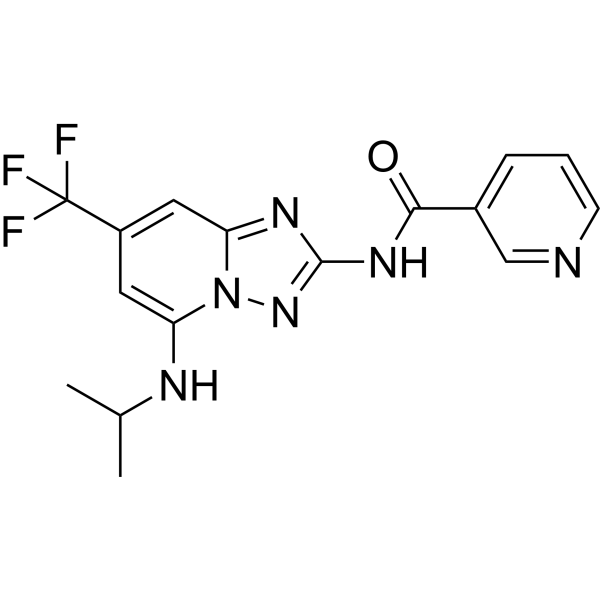 0 ImagesCat. No.: HY-18297CAS No.: 1124381-69-6
-
Aceglutamide (Standard)
 0 ImagesSynonyms: α-N-Acetyl-L-glutamine (Standard); N2-Acetylglutamine (Standard)Aceglutamide (α-N-Acetyl-L-glutamine; N2-Acetylglutamine) (Standard) is the analytical standard of Aceglutamide (HY-B1065). This product is intended for research and analytical applications. Aceglutamide (α-N-Acetyl-L-glutamine; N2-Acetylglutamine) is a neuroprotectant that can penetrate the blood-brain barrier. Aceglutamide can enhance the antioxidant systems of glutathione (GSH), thioredoxin (Trx) and Nrf2. Aceglutamide also inhibits ASK1 and TRAF1, activates the Akt/Bcl-2 anti-apoptotic pathway, enhances the activity of antioxidant enzymes and reduces oxidative damage. Aceglutamide can improve neurological deficits after cerebral ischemia, reduce infarct volume, and inhibit neuronal apoptosis, especially substantia nigra dopaminergic neurons. Aceglutamide can reduce cerebral ischemia/reperfusion injury, improve motor dysfunction, and is used in ischemic stroke-related research.
- 1
- 2



