



c-Myc
Myc
The transcription factor c-Myc is a member of the basic helix-loop-helix leucinezipper (bHLHZip) protein family. The target genes of the c-MYC protein participate in different cellular functions, including cell cycle, survival, protein synthesis, cell adhesion, and micro-RNA expression. c-Myc is also one of the four factors used in reprogramming somatic cells to induce pluripotent stem (iPS) cells and is implicated in maintaining cancer stem-like cells (CSCs). Most biological functions of c-Myc require heterodimerization with its activation partner Max.
c-Myc is also part of a dynamic network whose members interact selectively with one another and with various transcriptional coregulators and histone-modifying enzymes. Deregulated expression of c-MYC caused by gene amplification, retroviral insertion, or chromosomal translocation is associated with tumorigenesis. c-Myc has been identified as a highly promising target for cancer therapy.
All Product Categories
-
c-Myc Related Products (258)
Related Products (258)

-
Antibodies (12)
-
WDR5-MYC-IN-2
 0 ImagesCat. No.: HY-174255CAS No.: 3062125-47-4
-
Cephalotaxine-ester-(R)-1-ethoxy-3-mercaptopropan-2-ol-Ph(3,4OMe)
 0 ImagesCat. No.: HY-181078Cephalotaxine-ester-(R)-1-ethoxy-3-mercaptopropan-2-ol-Ph (3,4OMe) is an anti-leukemic agent with potent ribosome-targeting protein synthesis inhibition. Cephalotaxine-ester-(R)-1-ethoxy-3-mercaptopropan-2-ol-Ph (3,4OMe) downregulates short-lived oncoproteins, including c-Myc and Mcl-1, by inhibiting protein synthesis. Cephalotaxine-ester-(R)-1-ethoxy-3-mercaptopropan-2-ol-Ph (3,4OMe) induces cell cycle arrest at the G0/G1 phase and triggers mitochondrial pathway-mediated apoptosis in acute myeloid leukemia (AML) cells. Cephalotaxine-ester-(R)-1-ethoxy-3-mercaptopropan-2-ol-Ph (3,4OMe) is applicable for research on leukemia.
-
STAT3-IN-53
 0 ImagesCat. No.: HY-181514CAS No.: 3113051-34-3STAT3-IN-53 (Compound L20) is a STAT3 inhibitor with a Kd value of 6.16 μM. STAT3-IN-53 binds directly to the SH2 domain of STAT3, inhibits phosphorylation at the Y705 site without affecting the total STAT3 protein level, and suppresses the IL-6/JAK/STAT3 pathway. STAT3-IN-53 downregulates the transcription and expression of cyclin-D1 and c-Myc. STAT3-IN-53 induces cell cycle arrest and promotes Apoptosis. STAT3-IN-53 exhibits anticancer activity against colorectal cancer.
-
C620-0696
 0 ImagesCat. No.: HY-115663CAS No.: 902156-98-3C620-0696 is an inhibitor targeting the brom domain of BPTF, with a KD value of 35.5 μM. C620-0696 can exert cytotoxic effects on A549 and H358 cells, inhibiting the expression of c-Myc. C620-0696 inhibits cell migration and colony formation, and induces apoptosis and cell cycle arrest. C620-0696 can be used in the research of non-small cell lung cancer.
-
GSK-3β-IN-28
 0 ImagesCat. No.: HY-175850GSK-3β inhibitor 28 is selective and non-competitivea glycogen synthase kinase-3β (GSK-3β) inhibitor with an IC50 of 14.82 nM. GSK-3β inhibitor 28 can upregulate the expression level of phosphorylated GSK-3β and downregulate the expression of p-NF-κB, P65, C-myc and Cyclin D1. GSK-3β inhibitor 28 can induce cells apoptosis, G1 phase arrest and inhibit migration. GSK-3β inhibitor 28 can be used for the research of cancer, such as colorectal cancer.
-
ATAD2-IN-1
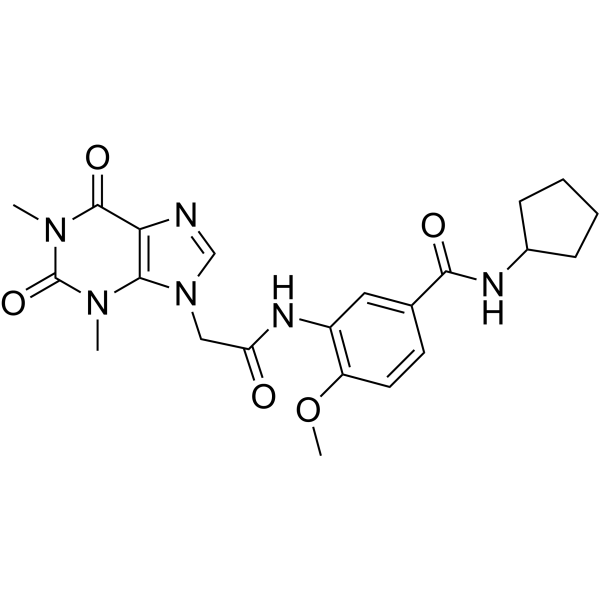 0 ImagesCat. No.: HY-163108CAS No.: 3004556-06-0

-
XY25026
 0 ImagesCat. No.: HY-181970XY25026 is an orally active LRH-1 inhibitor with an IC50 of 0.28 μM. XY25026 inhibits the proliferation of androgen receptor (AR)-positive prostate cancer cells, suppresses the expression of AR target genes KLK2 and KLK3, and inhibits tumor growth in xenograft models. XY25026 is applicable to the research of castration-resistant prostate cancer.
-
GW694590A
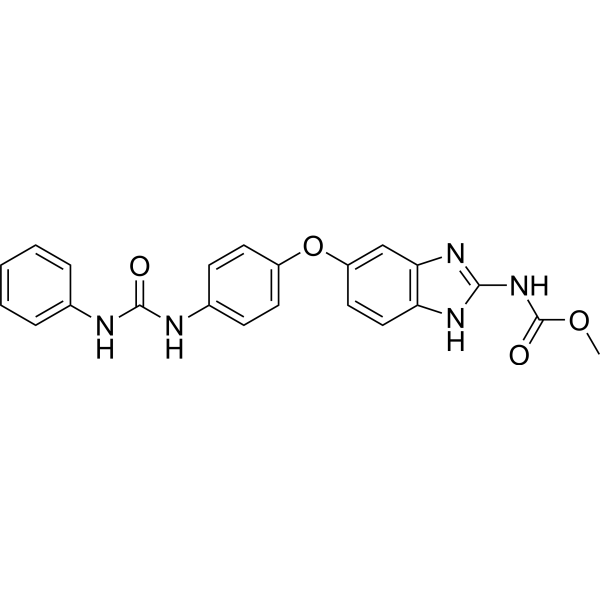 0 ImagesCat. No.: HY-160689CAS No.: 948313-24-4Synonyms: UNC10112731GW694590A (UNC10112731) is a MYC protein stabilizer that increases endogenous MYC protein levels. GW694590A also targets receptor tyrosine kinases, inhibiting DDR2, KIT and PDGFRα by 81% at 1 μM. , 68% and 67%. GW694590A is a protein kinase inhibitor across ATP-dependent and -independent luciferases with potential effects on the Fluc reporter gene.
-
PROTAC BRD4 Degrader-41
 0 ImagesCat. No.: HY-179734PROTAC BRD4 Degrader-41 (Compound A5) is a BRD4 PROTAC degrader with a DC50 of 0.97 nM. PROTAC BRD4 Degrader-41 exhibits potent anti-proliferative activity against various types of cancer cells such as AML, lymphoma, breast cancer, ovarian cancer, and non-small cell lung cancer. PROTAC BRD4 Degrader-41 can induce G0/G1 phase arrest and apoptosis in MV4-11 cells. PROTAC BRD4 Degrader-41 downregulates the transcriptional level of c-Myc.
-
AV-9606-129
 0 ImagesCat. No.: HY-182681CAS No.: 783309-48-8
-
VTX-0811
 0 ImagesCat. No.: HY-P991432VTX-0811 is a human IgG4 monoclonal antibody (mAb) targeting PSGL1/CD162. VTX-0811 up-regulates TNF-α/NF-κB and chemokine-mediated signaling and down-regulates oxidative phosphorylation, fatty acid metabolism, and Myc signaling pathways. VTX-0811 increases the proportion of CD8+ T cells among infiltrating T cells. VTX-0811 has antitumor activity in a humanized mouse PDX model of melanoma.
-
ZX079
 0 ImagesCat. No.: HY-181854CAS No.: 3124583-65-6ZX079 is a dual BRD4 and CBP PROTAC degrader with a BRD4 DC50 value of 0.035 nM and a CBP DC50 value of < 0.02 nM. ZX079 induces dose- and time-dependent degradation of BRD4 and CBP proteins through recruitment of the cereblon E3 ligase. ZX079 induces apoptosis in MV4-11 and MOLM-13 cells, reduces tumor growth in an acute myeloid leukemia xenograft model. ZX079 can be used for the research of acute myeloid leukemia.
-
Mollugin (Standard)
 0 ImagesMollugin (Standard) is the analytical standard of Mollugin. This product is intended for research and analytical applications. Mollugin is an orally active and potent NF-κB inhibitor. Mollugin induces S-phase arrest of HepG2 cells, and increased intracellular reactive oxygen species (ROS) levels. Mollugin induces DNA damage in HepG2 cells, as well as an increase in the expression of p-H2AX. Mollugin shows anti-cancer effect by inhibiting TNF-α-induced NF-κB activation. Mollugin enhances the osteogenic action of BMP-2 (bone morphogenetic protein 2) via the p38-Smad signaling pathway.
-
c-Myc inhibitor 5
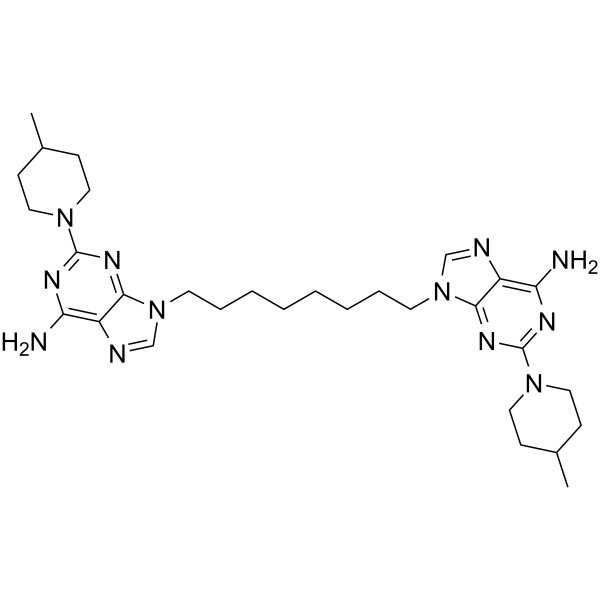 0 ImagesCat. No.: HY-145843c-Myc inhibitor 5 (DA3) is a fluorescent, long chain-bridged bispurine that selectively targets the c-MYC G-quadruplex (KD of 16 μM). c-Myc inhibitor 5 shows inhibition on c-MYC expression rather than other G4-driven oncogenes.
-
SGI-1776-VHL-02
 0 ImagesCat. No.: HY-186146CAS No.: 3013618-84-0SGI-1776-VHL-02 is a stereoselective PIM PROTAC degrader. SGI-1776-VHL-02 promotes the ubiquitination and degradation of PIM1, PIM2 and PIM3. SGI-1776-VHL-02 downregulates c-myc protein levels, induces Apoptosis. SGI-1776-VHL-02 has anti-cancer activity against prostate cancer. SGI-1776-VHL-02 can be used in studies related to prostate cancer.
-
Anticancer agent 84
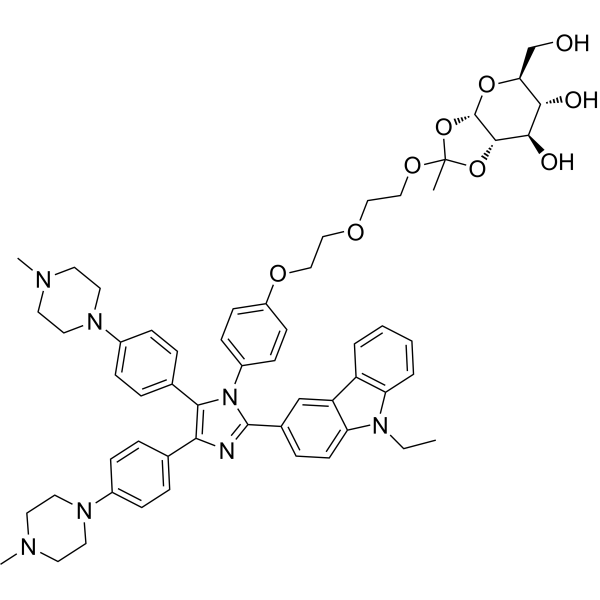 0 ImagesCat. No.: HY-151471CAS No.: 2714510-72-0Anticancer agent 84 is an anticancer agent. Anticancer agent 84 represses the transcription of c-MYC by stabilizing the G-quadruplex (G4) structure. Anticancer agent 84 can be used for the research of cancer.
-
GQC-05
 0 ImagesCat. No.: HY-177872CAS No.: 501662-77-7Synonyms: NSC 338258

-
c-Myc NLS
 0 ImagesCat. No.: HY-P11948CAS No.: 253328-16-4c-Myc NLS is a non-canonical nuclear localization signal (NLS) derived from the oncoprotein c-Myc, with the sequence PAAKRVKLD and containing 3 basic amino acids. c-Myc NLS mediates the nuclear localization of fusion proteins, and all its regions are essential or play important roles in nuclear import. c-Myc NLS can target fused pyruvate kinase to the nuclei of transfected cells.




