



c-Myc
Myc
The transcription factor c-Myc is a member of the basic helix-loop-helix leucinezipper (bHLHZip) protein family. The target genes of the c-MYC protein participate in different cellular functions, including cell cycle, survival, protein synthesis, cell adhesion, and micro-RNA expression. c-Myc is also one of the four factors used in reprogramming somatic cells to induce pluripotent stem (iPS) cells and is implicated in maintaining cancer stem-like cells (CSCs). Most biological functions of c-Myc require heterodimerization with its activation partner Max.
c-Myc is also part of a dynamic network whose members interact selectively with one another and with various transcriptional coregulators and histone-modifying enzymes. Deregulated expression of c-MYC caused by gene amplification, retroviral insertion, or chromosomal translocation is associated with tumorigenesis. c-Myc has been identified as a highly promising target for cancer therapy.
All Product Categories
-
c-Myc Related Products (282)
Related Products (282)

-
Antibodies (12)
-
GXF-111
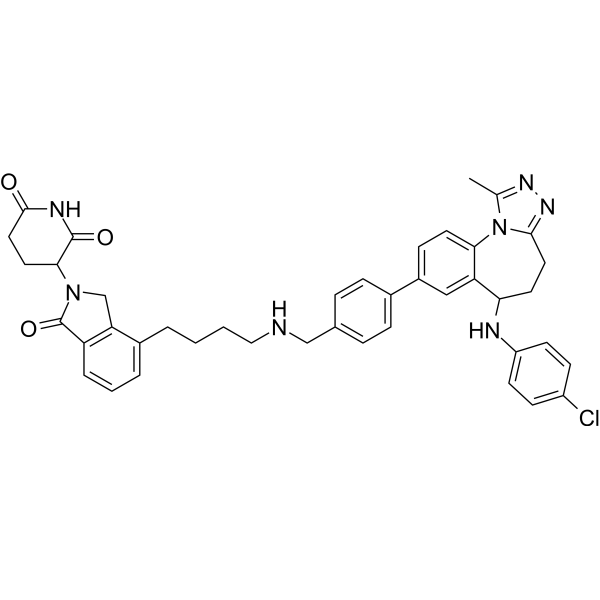 0 ImagesCat. No.: HY-153414GXF-111 is a BRD3 and BRD4-L PROTAC degrader. Its BD1 and BD2 Ki values against human BRD3 are 11.97 nM and 2.45 nM, respectively. The degradation activity of GXF-111 depends on its binding to BET proteins and Cereblon, as well as the involvement of a functional proteasome. The degradation selectivity of GXF-111 is mainly determined by differences in degradation kinetics and cell types. GXF-111 induces G1 phase cell cycle arrest, downregulates c-Myc expression, upregulates p21 expression, and exhibits antiproliferative activity against a variety of cancer cell lines. GXF-111 can serve as a research tool for cancer-related studies.
-
KI-ARv-03
 0 ImagesCat. No.: HY-153718CAS No.: 2416873-72-6KI-ARv-03 is a potent and selective ATP-competitive CDK9 inhibitor with an IC₅₀ of 0.15 μM (at 45 μM ATP), exhibiting over 130-fold selectivity against other CDKs (including CDK1-7). KI-ARv-03 reduces androgen receptor (AR)-driven transcription and proliferation in prostate cancer cells. KI-ARv-03 can be used for leukemia, pancreatic cancer, alveolar rhabdomyosarcoma (ARMS) and castration-resistant prostate cancer (CRPC) research. KI-ARv-03 is a ligand for target protein for PROTAC. KI-ARv-03 can be used to synthesize PROTAC KI-CDK9d-32 (HY-173523)[1][2].
-
CDK9/CycT1 degrader-1
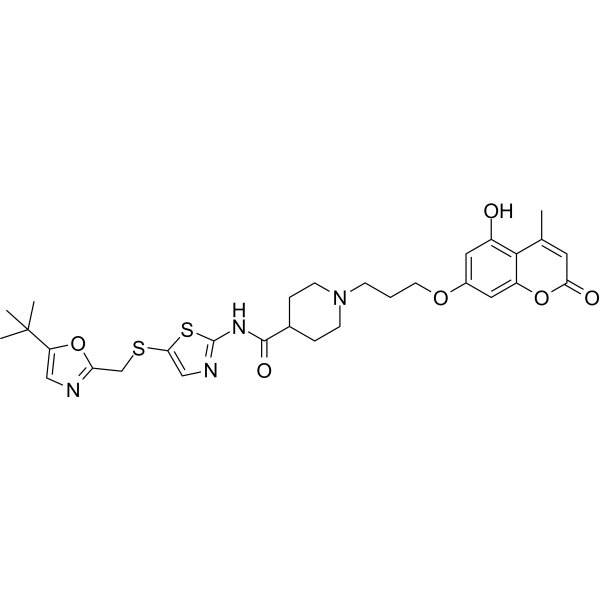 0 ImagesCat. No.: HY-156795CAS No.: 3020773-91-2CDK9/CycT1 degrader-1 is an autophagy-anchored bifunctional degrader that mediates the degradation of the CDK9/cyclin T1 protein complex. CDK9/CycT1 degrader-1 binds both CDK9 and LC3B simultaneously to form a ternary complex, achieving target protein degradation via the autophagy-lysosome pathway. CDK9/CycT1 degrader-1 downregulates the protein levels of Mcl‑1 and c‑Myc and induces apoptosis. PROTAC CDK9/CycT1 Degrader-2 is applicable to cancer-related research.
-
AF9/ENL-DOT1L PPI-IN-1
 0 ImagesCat. No.: HY-178172AF9/ENL-DOT1L/AF4 PPI-IN-1 is a potent AF9/ENL and histone methyltransferase DOT1L/AF4 protein-protein interactions (PPI) inhibitor. AF9/ENL-DOT1L/AF4 PPI-IN-1 can inhibit the AF9-DOT1L (IC50 = 1.5 μM), AF9-AF4 (IC50 = 1 μM), ENL-AF4 (IC50 = 1.2 μM) interactions. AF9/ENL-DOT1L/AF4 PPI-IN-1 can suppress the expression of Mixed lineage leukemia (MLL) target genes Myc and Meis1 and selectively block the proliferation of MLL-r and several other leukemia cells. AF9/ENL-DOT1L/AF4 PPI-IN-1 exhibits significant antitumor activities in a mouse model of MLL-r leukemia without overt toxicities. AF9/ENL-DOT1L/AF4 PPI-IN-1 can be used for the study of MLL-r leukemia.
-
SF-3-030
 0 ImagesCat. No.: HY-180419CAS No.: 1883721-73-0SF-3-030 is a potent, selective and non-ATP competitive ERK1/2 inhibitor. SF-3-030 selectively induces apoptosis in melanoma cells containing mutated BRaf and constitutively active ERK1/2 signalling. SF-3-030 mitigates multiple features of asthma in a murine model of asthma. SF-3-030 can be used for the research of asthma and melanomasup.
-
Inosine-5'-diphosphate
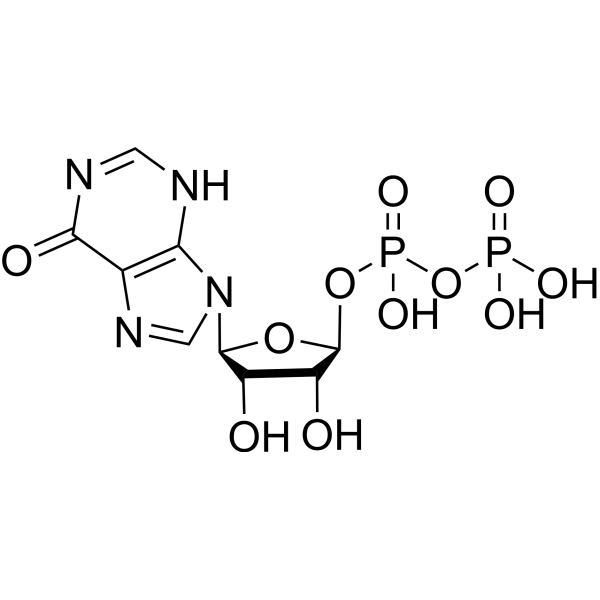 0 ImagesInosine-5'-diphosphate (IDP) is a decoy substrate of NM23-H2. Inosine-5'-diphosphate has a superior bond capacity on GDP-binding pocket of NM23-H2 (KD: 5.0 μM). Inosine-5'-diphosphate abrogates c-MYC transcription, induces apoptosis and G2/M cell cycle arrest by disrupting NM23-H2-Pu27-GQ interactions without affecting NM23-H2-mediated kinase properties. Inosine-5'-diphosphate has antihypoxic, antihyperthermic and antiarrhythmic activity and protects animals against the noxious effects of γ-irradiation. Inosine-5'-diphosphate can be used for cancers like Burkitt's lymphoma and cardiovascular diseases research.
-
W1307
 0 ImagesCat. No.: HY-184891CAS No.: 3028770-95-5W1307 is a selective STAT3 inhibitor with a KD value of 1.74 μM. W1307 inhibits STAT3 Tyr705 phosphorylation, disrupts STAT3 dimerization, and suppresses STAT3 transcriptional activity. W1307 downregulates the expression of STAT3 downstream targets c-Myc, Mcl-1 and Bcl-2. W1307 transcriptionally inhibits SREBP1 and CPT2 expression to disrupt lipid homeostasis. W1307 shows potent anti-leukemic activity and synergizes with Cytarabine (Ara-C) (HY-13605) to overcome chemoresistance in acute myeloid leukemia (AML).
-
ZD-1-186
 0 ImagesCat. No.: HY-180886ZD-1-186 is a non-degradative, covalent-dependent molecular glue that targets BCL6 and BRD9. ZD-1-186 inhibits the transcriptional output of MYC, relieves the repression of canonical BCL6 target loci (including CDKN1A (p21)), and mediates the selective recruitment of BRD9 to BCL6. ZD-1-186 can be used for research on diffuse large B-cell lymphoma.
-
METTL3-IN-11
 0 ImagesCat. No.: HY-178446CAS No.: 3069369-05-4METTL3-IN-11 is an excellent, selective METTL3 inhibitor (IC50 = 45.31 nM). METTL3-IN-11 exhibits high selectivity towards METTL3 compared to DNMT1, EZH1, MLL1, and PRMT1. METTL3-IN-11 reduces the m6A level of total RNA in MOLM-13 and SKOV3 cells, induces cell apoptosis, and inhibits cell migration. METTL3-IN-11 can reduce the expression of m6A downstream target genes (c-MYC and BCL2). METTL3-IN-11 can be used for the study of ovarian cancer and acute myeloid leukemia.
-
SKLB-C05
 0 ImagesCat. No.: HY-122860CAS No.: 2300981-68-2SKLB-C05 is a novel selective, orally active TOPK inhibitor, with an IC50 of 0.5 nM. SKLB-C05 selectively inhibit TOPK kinase. SKLB-C05 induces Apoptosis, downregulates c-Myc, γ-H2AX, activates p53, blocks FAK/Src medicated migration-related signaling. SKLB-C05 disturbs cell mitosis. SKLB-C05 shows anticancer activity only against TOPK-positive colorectal cancer.
-
STAT3-IN-32
 0 ImagesCat. No.: HY-164445CAS No.: 2591440-71-8STAT3-IN-32 is an orally active, selective STAT3 SH2 domain inhibitor with a Kd of 21.3 nM, showing selectivity over STAT1/5. STAT3-IN-32 binds to the STAT3 SH2 domain, blocks Tyr705 and Ser727 phosphorylation, abrogates nuclear transcription and mitochondrial oxidative phosphorylation functions. STAT3-IN-32 inhibits tumor growth in mouse pancreatic cancer xenograft models. STAT3-IN-32 can be used for the research of pancreatic cancer.
-
PM54-1
 0 ImagesCat. No.: HY-183631CAS No.: 2248127-86-6PM54 is an antitumor agent with activity across multiple cancer types. PM54 acts as a transcription and WNT/β-catenin signaling pathway inhibitor. PM54 suppresses oncogenic transcriptional programs, and key malignant pathways, while inducing DNA double-strand breaks, S-phase cell cycle arrest and apoptosis. PM54 enhances innate immune recognition, remodels the tumor microenvironment. PM54 exhibits antitumor activity as monotherapy or in combination in xenograft models. PM54 is applicable to research on various cancers and advanced solid tumors.
-
SY-5102
 0 ImagesCat. No.: HY-180355CAS No.: 2365230-48-2SY-5102 is a potent, selective, and orally active cyclin-dependent kinase (CDK7) inhibitor with a Kd value of 0.03 nM. SY-5102 occupies the ATP-binding pocket of CDK7 via non-covalent binding to inhibit CDK7 activity, and downregulates its phosphorylation of cyclin CDK and RNA polymerase II. SY-5102 inhibits cancer cell proliferation, and induces tumor growth inhibition and regression. SY-5102 can be used in research related to triple-negative breast cancer.
-
PROTAC BRD4 Degrader-15
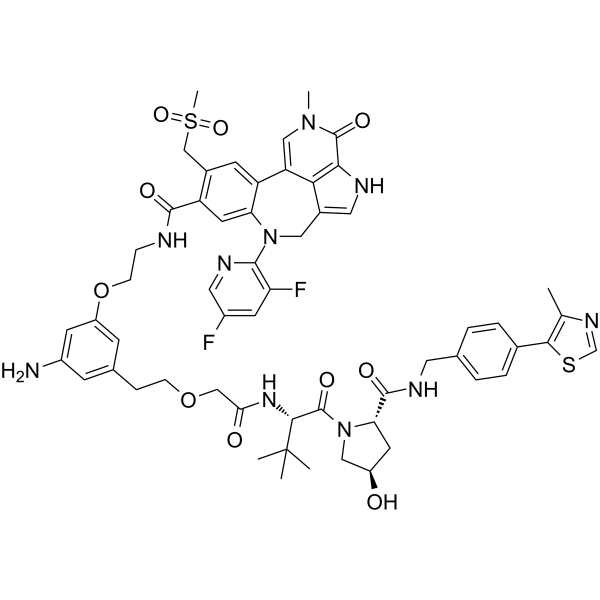 0 ImagesCat. No.: HY-139294CAS No.: 2417370-67-1PROTAC BRD4 Degrader-15 is a BRD4 PROTAC degrader with a DC50 of 2.1 nM. PROTAC BRD4 Degrader-15 forms a ternary complex with BRD4 and VHL ubiquitin ligase to induce degradation. PROTAC BRD4 Degrader-15 inhibits the transcription level of the MYC gene. PROTAC BRD4 Degrader-15 suppresses human megakaryocytopoiesis and exhibits antigen-dependent tumor growth inhibition in xenograft models of prostate cancer and acute myeloid leukemia. PROTAC BRD4 Degrader-15 can be used in studies related to prostate cancer and acute myeloid leukemia.
-
PROTAC PRMT3 degrader 1
 0 ImagesCat. No.: HY-159728PROTAC PRMT3 degrader 1 is a selective PRMT3 PROTAC degrader with a DC50 of 2.566 μM. PROTAC PRMT3 degrader 1 forms a ternary complex with MDM2 E3 ubiquitin ligase to induce proteasomal and neddylation-dependent degradation of PRMT3. PROTAC PRMT3 degrader 1 activates intrinsic apoptosis, endoplasmic reticulum stress signaling pathways. PROTAC PRMT3 degrader 1 downregulates E2F, MYC, oxidative phosphorylation pathways. PROTAC PRMT3 degrader 1 reduces cellular asymmetric dimethylarginine (ADMA) levels. PROTAC PRMT3 degrader 1 inhibits acute leukemia cell growth. PROTAC PRMT3 degrader 1 acts with glycolysis inhibitor 2-DG to reduce ATP production, induce intrinsic apoptosis, drive synergistic antiproliferative effects. PROTAC PRMT3 degrader 1 can be used for the research of acute leukemia.
-
c-Myc inhibitor 8
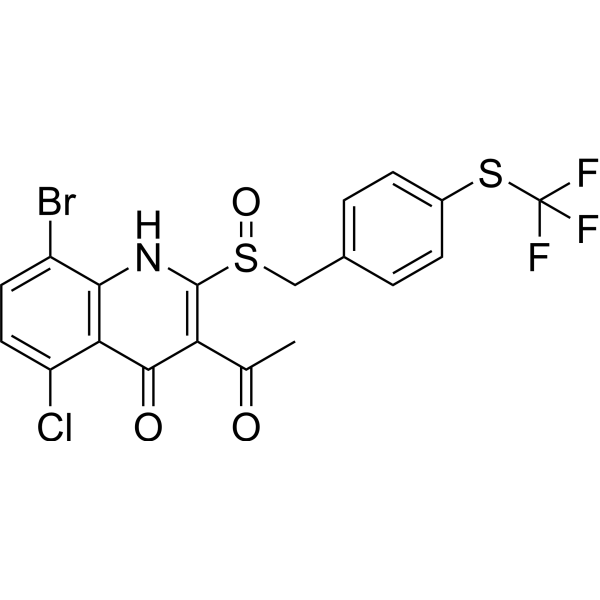 0 ImagesCat. No.: HY-148838CAS No.: 2173505-97-8
-
TNIK-IN-10
 0 ImagesCat. No.: HY-181930CAS No.: 3112758-72-9TNIK-IN-10 (Compound N15) is a TNIK inhibitor with an IC50 of 0.49 nM against human TNIK. TNIK-IN-10 inhibits the enzymatic activity of TNIK, downregulates the expression of Wnt pathway target genes c-Myc and AXIN2, and reduces the protein expression of LRP5 and LRP6. TNIK-IN-10 induces apoptosis. TNIK-IN-10 exhibits anticancer activity against colorectal cancer. TNIK-IN-10 can be used in the research of colorectal cancer.
-
(S)-GNE-987
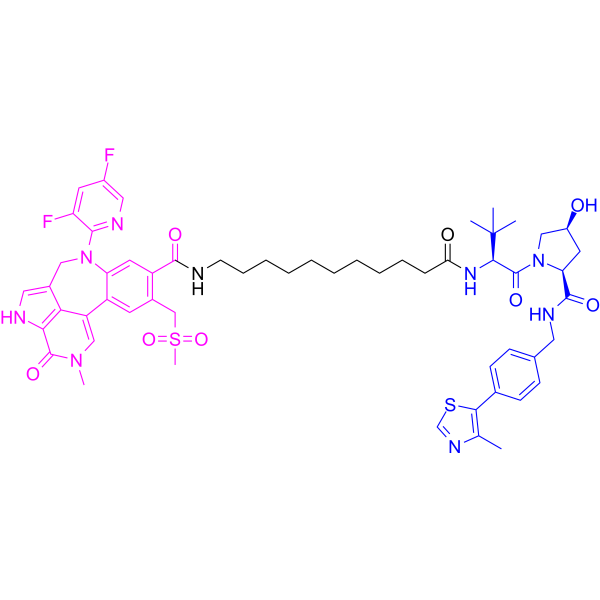 0 ImagesCat. No.: HY-129937CAS No.: 2738533-33-8(S)-GNE-987 is an isomer of GNE-987 (HY-129937A), which loses VHL binding capacity and BRD4 protein degradation activity, but retains BRD4 inhibitory activity. (S)-GNE-987 is a BRD4/BET inhibitor that potently binds to the BD1 and BD2 bromodomains of BRD4, with a BRD4 BD1 IC50 of 4.0 nM and a BRD4 BD2 IC50 of 3.9 nM. (S)-GNE-987 inhibits MYC expression and exhibits inhibitory activity against acute myeloid leukemia cells, whereas its CLL1‑6 antibody-drug conjugate shows almost no in vivo antitumor efficacy in the HL‑60 xenograft tumor model. (S)-GNE-987 can be used in related research on acute myeloid leukemia.
-
SVC112
 0 ImagesCat. No.: HY-175164SVC112 is a translation elongation inhibitor that prevents the cyclic dissociation of EF2 from the ribosome, thereby inhibiting the elongation step of translation. SVC112 shows activity in growth inhibition among cancer cell lines of various origins (acute myeloid leukemia (AML), multiple myeloma (Myeloma), colorectal cancer (CRC), and head and neck squamous cell carcinoma (HNSCC)). SVC112 preferentially impedes ribosomal processing of mRNAs, and decreaseds CSC-related proteins including Myc and Sox2. SVC112 induces apoptosis in hematologic cancer cell lines, while phosphorylation of c-Myc correlates with sensitivity to SVC112 in colorectal cancer cell lines. SVC112 inactivates HNSCC stem cells in vitro and prevents the regrowth of HNSCC tumor xenografts in mice. SVC112 can be used for the study of HNSCC.
-
c-Myc inhibitor 12
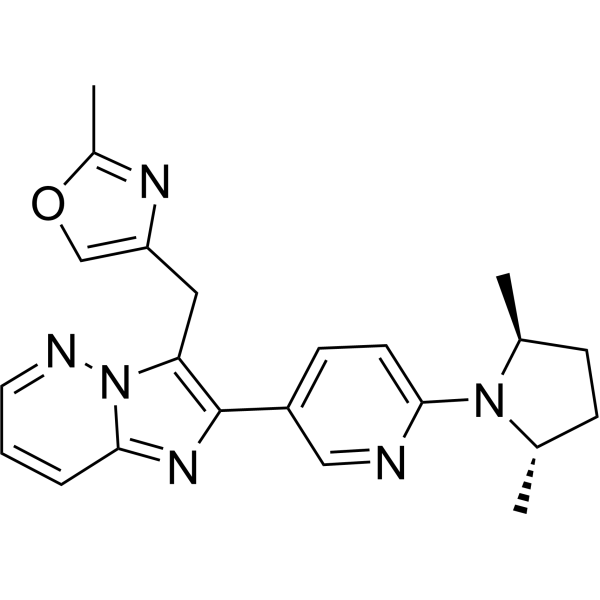 0 ImagesCat. No.: HY-155508CAS No.: 3040017-65-7




