



Insecticide
Insecticide
Insecticides refer to any toxic substances used to kill insects, which exert toxic effects on pests through different mechanisms, thereby achieving the purpose of controlling pest populations and protecting crops and human health. Insecticides have both chemical and biological origins and can be classified into organochlorine insecticides, organophosphorus insecticides, carbamate insecticides, and mineral insecticides based on their chemical properties. Insecticides interact with different target and non-target sites, including receptors, enzymes, and many other known and unknown molecules. Most insecticides are neurotoxicants that target the nervous system, but they can also affect other organs and body systems. Insecticides are metabolized through different metabolic pathways and often serve as biomarkers of exposure in the form of their parent compounds or metabolites. The toxicity of insecticides can be acute, subacute, or chronic, depending on the duration of exposure and the dose involved. Therefore, selecting sensitive, accurate, and validated biomarkers of exposure, effects, and susceptibility appears to be a challenging task.
Insecticides are widely used in agriculture, horticulture, forestry, gardening, homes, offices, and other fields[1][2].
All Product Categories
-
Insecticide Related Products (523)
Related Products (523)

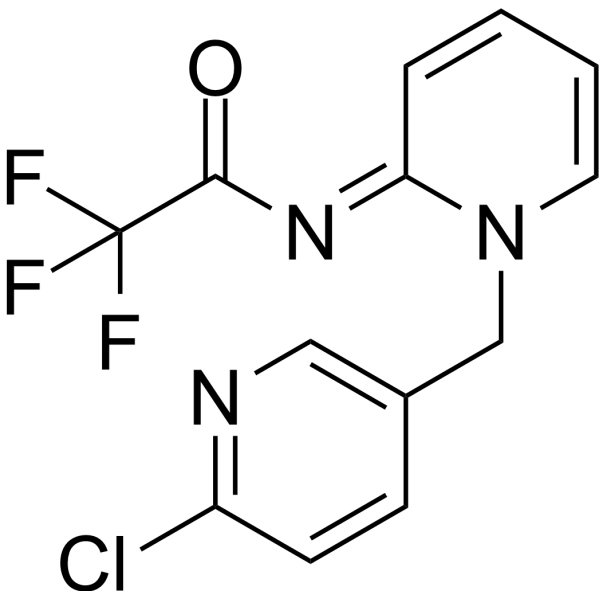
-
Novaluron (Standard)
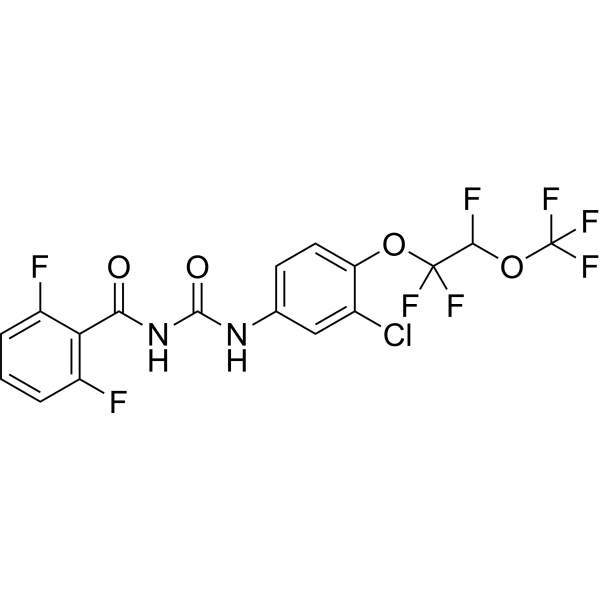 0 ImagesNovaluron (Standard) is the analytical standard of Novaluron. This product is intended for research and analytical applications.
-
(Z)-9-Tricosene (Standard)
 0 ImagesSynonyms: cis-9-Tricosene (Standard)(Z)-9-Tricosene (Standard) (cis-9-Tricosene (Standard)) is the analytical standard of (Z)-9-Tricosene (HY-W009165). This product is intended for research and analytical applications. (Z)-9-Tricosene (cis-9-Tricosene) is an insect pheromone found in dipteran flies. (Z)-9-Tricosene has multiple functions as a sex pheromone, aggregation pheromone and aphrodisiac pheromone, and mediates insect behaviors such as attraction, oviposition and mating via antennal receptors (e.g., the Or7a receptor). (Z)-9-Tricosene can be used in studies related to insecticides and insect chemical ecology.
-
2',4-Dihydroxychalcone
 0 ImagesCat. No.: HY-141462CAS No.: 13323-66-52',4-Dihydroxychalcone is an orally active natural chalcone flavonoid. 2',4-Dihydroxychalcone restores intestinal barrier integrity by upregulating tight junction proteins, regulates intestinal flora balance and alleviates inflammation. 2',4-Dihydroxychalcone induces GPX4 degradation, ferroptosis and apoptosis, triggers cell cycle arrest, and exhibits broad anti-tumor activity. 2',4-Dihydroxychalcone also possesses antifungal activity, antileishmanial activity, and reduces the hemolytic effect and virulence of Vibrio vulnificus.
-
Sphingomyelin phosphodiesterase, Bacillus cereus
 0 ImagesSphingomyelin phosphodiesterase, Bacillus cereus is a sphingomyelin hydrolase and Insecticide. Sphingomyelin phosphodiesterase, Bacillus cereus catalyzes the decomposition of sphingomyelin into ceramide and phosphorylcholine. Sphingomyelin phosphodiesterase, Bacillus cereus causes rapid paralysis and death in injected insects, including German cockroaches and black cutworms. Sphingomyelin phosphodiesterase, Bacillus cereus reduces H2O2 production. Sphingomyelin phosphodiesterase, Bacillus cereus can be used in studies related to sepsis and endophthalmitis.
-
Tetradecyl acetate
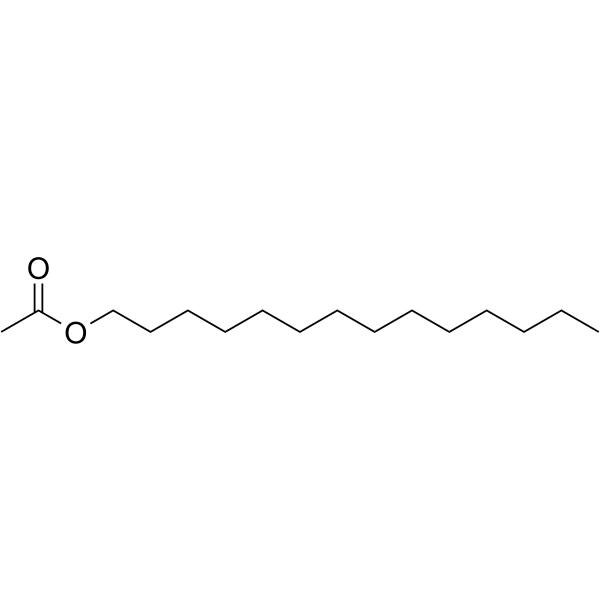 0 ImagesSynonyms: Myristyl acetateTetradecyl (Myristyl) acetate is a native sex pheromone component of Yponomeuta rorellus. Tetradecyl acetate elicits orientation behaviour, upwind flight, and landing at the odour source in male Yponomeuta rorellus. Tetradecyl acetate can be used in research on insecticides.
-
MGK-264
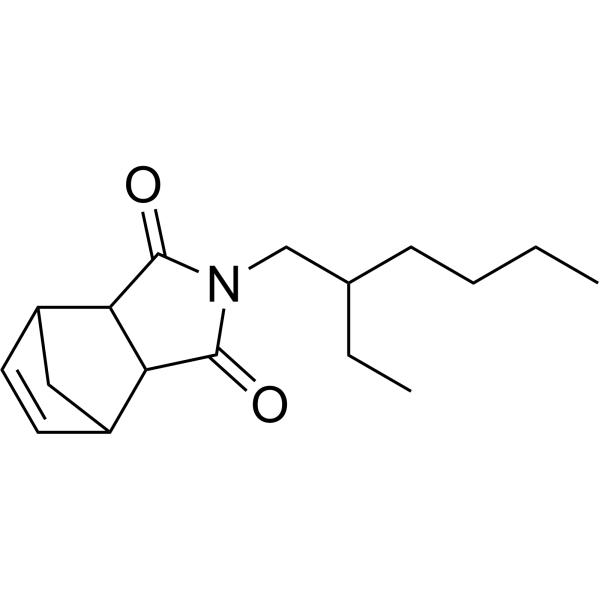 0 ImagesSynonyms: N-Octylbicycloheptenedicarboximide; ENT 8184MgK-264 (N-octylbicycloheptenedicarboximide) is a synergist enhancing the potency of pyrethroid ingredients. MgK-264 has no intrinsic pesticidal qualities itself.
-
Looplure
 0 ImagesCat. No.: HY-120407CAS No.: 14959-86-5Synonyms: ENT-33266Looplure (ENT-33266) is an insect attractant with acute toxicity studies in different animal models showing activity at oral and dermal median lethal doses (LD50) and median lethal concentrations (LC50) for fish with some values, and low toxicity in most cases except for some cases.
-
Profenofos (Standard)
 0 ImagesCat. No.: HY-B0832RCAS No.: 41198-08-7Profenofos (Standard) is the analytical standard of Profenofos. This product is intended for research and analytical applications. Profenofos is an insecticida used on field crops, vegetables, and fruit crops. Profenofos is an acetylcholinesterase (AChE) inhibitor, with neurotoxicity.
-
Prenyl acetate
 0 ImagesCat. No.: HY-W010415CAS No.: 1191-16-8Prenyl acetate is an insecticide. At low concentrations, prenyl acetate exhibits an attractant effect on worker ants of the red imported fire ant, and it elicits strong antennal electroantennogram (EAG) responses in all castes of the red imported fire ant. Prenyl acetate shows low toxicity to mammals. It can be used in research related to the control of the red imported fire ant (Solenopsis invicta) .
-
Phoxim
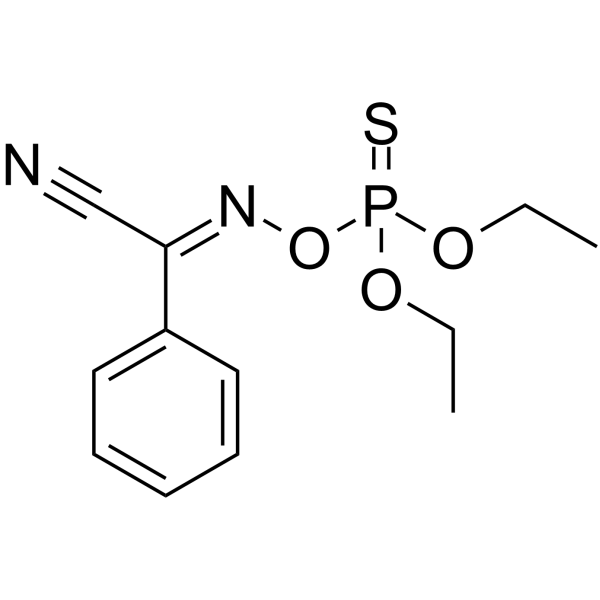 0 ImagesCat. No.: HY-B0819CAS No.: 14816-18-3Phoxim is an organic phosphorus pesticide and widely applies worldwide for agricultural purposes.
-
Ferric phosphate
 0 ImagesFerric phosphate is used as food and feed supplement, particularly in bread enrichment. Ferric phosphate is also used as a fertilizer and as a molluscicide for a variety of slugs and snails including Deroceras reticulatum, D.laeve, Arion subfuscus.
-
1-Undecanol-d23
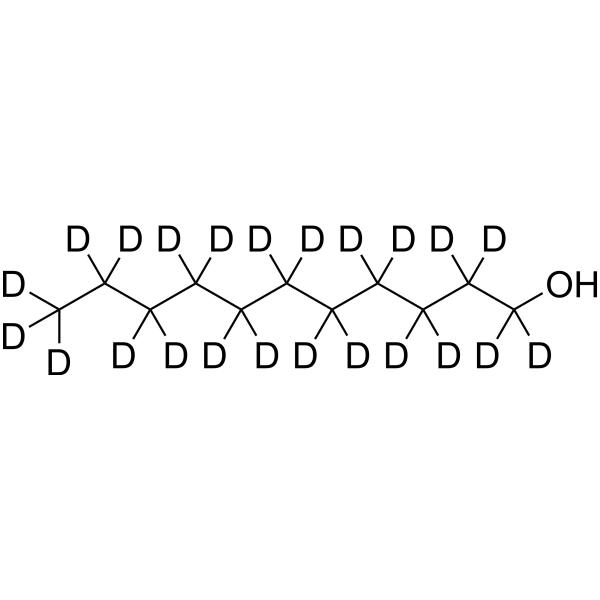 0 ImagesSynonyms: Undecyl alcohol-d231-Undecanol-d23 (Undecyl alcohol-d23) is the deuterium labeled 1-Undecanol (HY-W004292). 1-Undecanol (Undecyl alcohol) is the main product generated from the degradation of 2-tridecanone by Pseudomonas bacteria isolated from the soil. 1-Undecanol can enhance the attraction of Grapholita molesta to sex pheromone traps.
-
Flonicamid-15N18O
 0 ImagesSynonyms: IKI220-15N18OFlonicamid-15N,18O (IKI220-15N,18O) is the 18O , 15N-labeled Flonicamid (HY-119649). Flonicamid (IKI220) is an antifeedant Insecticide active against Hemiptera, Thysanoptera, and piercing-sucking pests including aphids of all species, developmental stages and morphs. Flonicamid inhibits the inward rectifier potassium channel NlKir1, blocking stylet penetration, salivation, sap feeding, honeydew secretion, and fluid secretion by isolated Malpighian tubules. Flonicamid reduces renal excretory function in female Culex pipiens pallens. Flonicamid rapidly disrupts insect feeding behavior without neurotoxic poisoning symptoms, induces irreversible starvation, and increases the mortality of nymph progeny of adult aphids exposed to this agent.
-
Goniothalamin
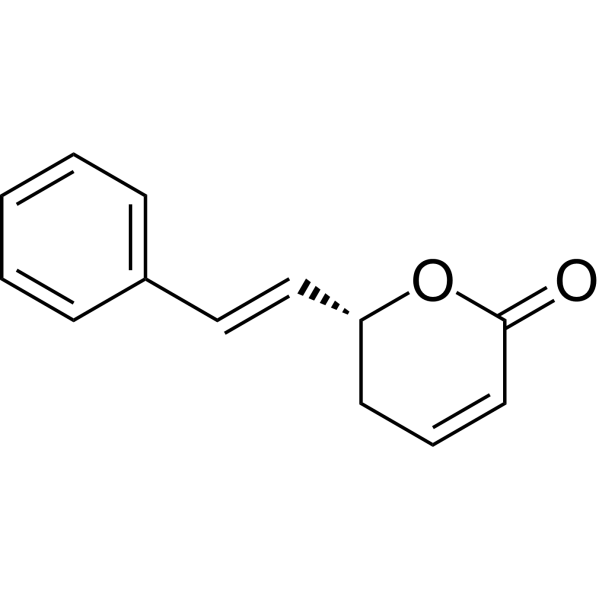 0 ImagesSynonyms: GTN; (R)-(+)-GoniothalaminGoniothalamin (GTN) is a styryl lactone. Goniothalamin exhibits insecticidal, anti-tumor and antibacterial activities. Goniothalamin induces cell cycle arrest and apoptosis in tumor cells. Goniothalamin acts as a larvicide against Culex quinquefasciatus larvae and as a cytotoxin against brine shrimp larvae. Goniothalamin functions as an antibacterial agent against Gram-positive and Gram-negative bacteria, and also acts as an antifungal agent against pathogens including Candida albicans, Trichophyton rubrum and Trichophyton mentagrophytes. Goniothalamin is applicable to research related to breast cancer, lymphatic filariasis, bacterial infections and fungal infections.
-
Chitinase-IN-2
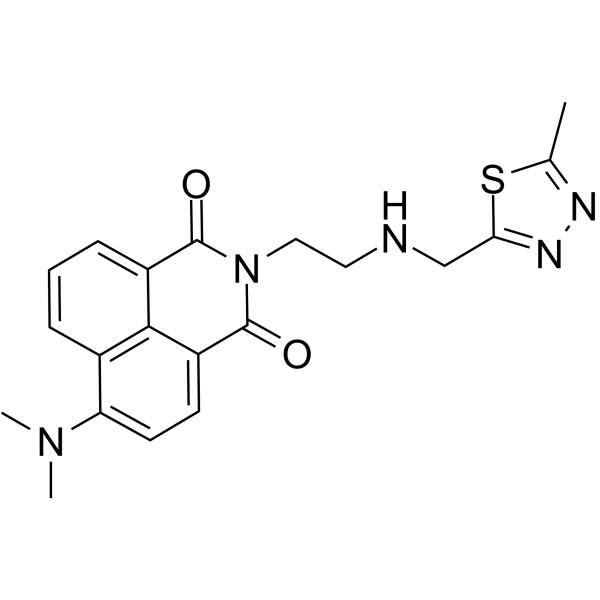 0 ImagesChitinase-IN-2 is an insecticide that can inhibit the activity of chitinase and N-acetylhexosaminidase, with inhibition percentages of 98% and 92% at concentrations of 50 μM and 20 μM, respectively.
-
Phenylphosphonic acid
 0 ImagesPhenylphosphonic acid (Compound 1) is a synthetic pyrethroid insecticide that can effectively control some underground pests. Phenylphosphonic acid also can be a ligand in some metal-catalyzed reactions, which is promising for research of metal phosphonates comprising layered structures and pesticides.
-
Carbosulfan (Standard)
 0 ImagesCat. No.: HY-B2015RCAS No.: 55285-14-8Carbosulfan (Standard) is the analytical standard of Carbosulfan. This product is intended for research and analytical applications. Carbosulfan is an orally active AChE inhibitor that hydrolyzes to Carbofuran in organisms to exert insecticidal effects. Carbosulfan exhibits broad-spectrum insecticidal activity, and it also induces severe oxidative stress by enhancing lipid peroxidation and impairing the antioxidant defense system. Carbosulfan causes reproductive toxicity in male rats and developmental disorders in their offspring. Carbosulfan shows persistence in paddy field environments and potential hazards to non-target organisms, and it is commonly used in studies related to reproductive toxicity and environmental risk assessment.
-
cis-?Jasmone (Standard)
 0 Imagescis-Jasmone (Standard) is the analytical standard of cis-Jasmone. This product is intended for research and analytical applications. Cis-Jasmone is a plant-derived natural product. Cis-Jasmone is a plant-derived natural product. Cis-Jasmone is constitutively released by many flowers and sometimes by leaves as an attractant for pollinators or as a chemical cue for host location by insect flower herbivores. Cis-Jasmone treatment of crop plants not only induces direct defense against herbivores, but also induces indirect defense by releasing VOCs that attract natural enemies.



