



Isotope-Labeled Compounds
Isotope-labeled compounds are chemical substances in which some atoms in their molecules are replaced by isotope atoms. The range of stable isotope products can cover from gases to complex molecules. Isotope-labeled compounds could provide a site-specific investigation of structures, making molecules easily detectable by mass spectrometry and NMR, and maintaining the physico-chemical properties of the target molecule at the same time.
MCE isotope-labeled compounds are all stable isotope-labeled compounds and are non-radioactive labeled substances. MCE isotope-labeled compounds are unique tools for identifying and understanding biological and chemical processes. Stable isotope-labeled products are now getting more and more popular among scientists. The scope of application is gradually penetrating into various scientific fields, such as life sciences, food and medicine, agriculture, environment, geology, etc. Stable isotope-labeled compounds have a wide range of applications in the Life Science areas, such as Metabolomics, Proteomics, Clinical studies, Deuterium drugs, etc.
All Product Categories
-
Isotope-Labeled Compounds Related Products (11051)
Related Products (11051)

-
Choline-d9 bromide
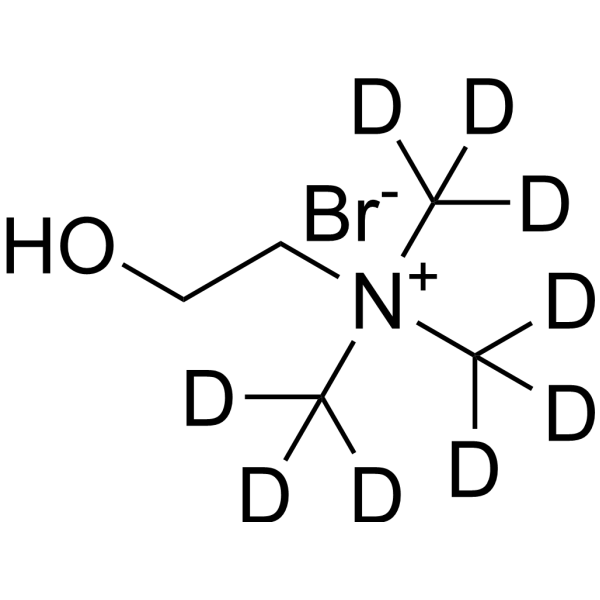 0 ImagesCat. No.: HY-W127656S2CAS No.: 285979-71-7Choline-d9 (bromide) is the deuterium labeled Choline bromide.
-
Nemonoxacin-13C,d3
 0 ImagesCat. No.: HY-14956S3Synonyms: TG-873870-13C,d3Nemonoxacin-13C,d3 (TG-873870-13C,d3) is the deuterium and 13C-labeled Nemonoxacin (HY-14956). Nemonoxacin (TG-873870) is an orally active and potent broad-spectrum antibiotic. Nemonoxacin shows good inhibitory activity against different species of staphylococci, streptococci, and enterococci, Neisseria gonorrhoeae, and Haemophilus influenza. Nemonoxacin can be used in the study of bacterial infections and community-acquired pneumonia.
-
Veratryl alcohol-13C
 0 ImagesCat. No.: HY-W738271CAS No.: 91384-88-2Synonyms: 3,4-Dimethoxybenzyl alcohol-13CVeratryl alcohol-13C (3,4-Dimethoxybenzyl alcohol-13C) is the 13C-labeled Veratryl alcohol (HY-107858). Veratryl alcohol (3,4-Dimethoxybenzyl alcohol) is a secondary metabolite of lignin-degrading fungi, commonly used as a substrate for lignin peroxidase (LiP) to measure lignin degradation activity. Veratryl alcohol protects LiP from inactivation by H2O2 and prevents the accumulation of LiP III compounds. Veratryl alcohol also acts as a stabilizer for manganese-dependent peroxidases (MnP). Veratryl alcohol is a quorum-sensing inhibitor (QSI) and exhibits antibacterial efficacy.
-
5b-Dihydrocortisol 21-O-(1-ethoxy ethyl) ether-d6
 0 ImagesCat. No.: HY-W7458905b-Dihydrocortisol 21-O-(1-ethoxy ethyl) ether-d6 is the deuterium labeled 5b-Dihydrocortisol 21-O-(1-ethoxy ethyl) ether.
-
rac 2-(tert-Butyldimethylsilyloxy) Ibuprofen-d6
 0 ImagesCat. No.: HY-W704952CAS No.: 2714421-43-7rac 2-(tert-Butyldimethylsilyloxy) Ibuprofen-d6 is the deuterium labeled rac 2-(tert-Butyldimethylsilyloxy) Ibuprofen.
-
9(S)-HODE-13C18
 0 ImagesCat. No.: HY-113455S1Synonyms: Alpha-dimorphecolic acid-13C189(S)-HODE-13C18 ((+)-α-Dimophecolic acid-13C18) is 13C labeled 9S-HODE. 9S-HODE (Alpha-dimorphecolic acid) is an octadecadienoic acid and the main active derivative of linoleic acid, which can reduce the viability of HL-60 cells and induce apoptosis. 9S-HODE is rich in lipid peroxidation (LPO) products and is almost an ideal marker for LPO.
-
24-Nor ursodeoxycholic acid acyl-b-D-glucuronide-d5
 0 ImagesCat. No.: HY-W75994724-Nor ursodeoxycholic acid-d5 acyl-b-D-glucuronide is the deuterium labeled 24-Nor ursodeoxycholic acid-d5 acyl-b-D-glucuronide (HY-W759947).
-
Nicardipine-d4 hydrochloride
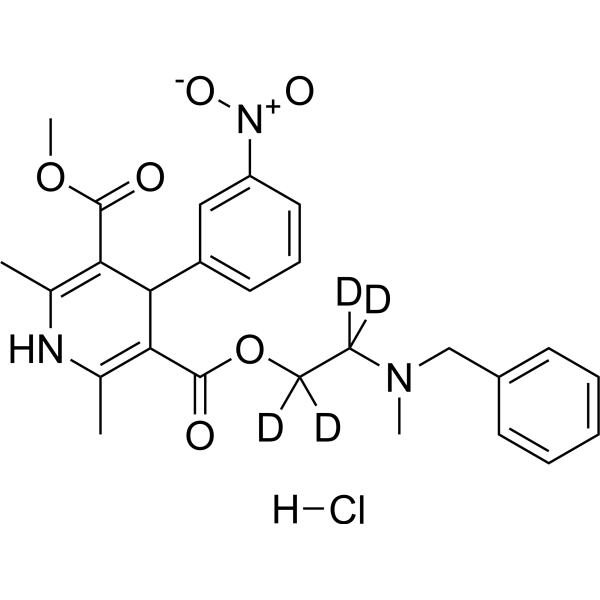 0 ImagesCat. No.: HY-12515AS2Synonyms: YC-93-d4Nicardipine-d4 hydrochloride is deuterated labeled Nicardipine hydrochloride (HY-12515A). Nicardipine hydrochloride (YC-93) is a calcium channel blocker with an IC50 of 1 μM for blocking cardiac calcium channels. Nicardipine hydrochloride acts as an agent for chronic stable angina and for controlling blood pressure.
-
2,5-Dichlorobiphenyl-2′,3′,4′,5′,6′-d5
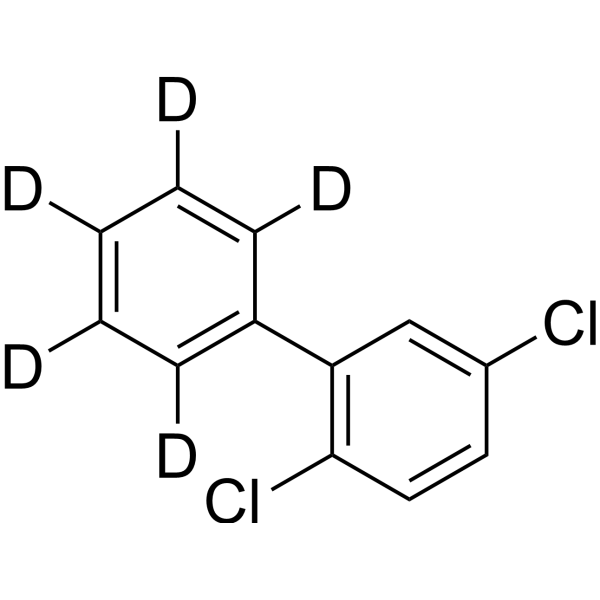 0 ImagesCat. No.: HY-151081SCAS No.: 1219804-50-82,5-Dichlorobiphenyl-2′,3′,4′,5′,6′-d5 is the deuterium labeled 2,5-Dichlorobiphenyl.
-
6-(Methyl-d3)picolinaldehyde
 0 ImagesCat. No.: HY-W705329CAS No.: 2712189-02-96-(Methyl-d3)picolinaldehyde is the deuterium labeled 6-Methyl-2-pyridinecarboxaldehyde (HY-W007849).
-
Desisopropylatraton-d3
 0 ImagesCat. No.: HY-W714177SSynonyms: Atraton-desisopropyl-d3Desisopropylatraton-d3 (Atraton-desisopropyl-d3) is deuterium labeled Desisopropylatraton.
-
4-Carboethoxypiperidine-d9
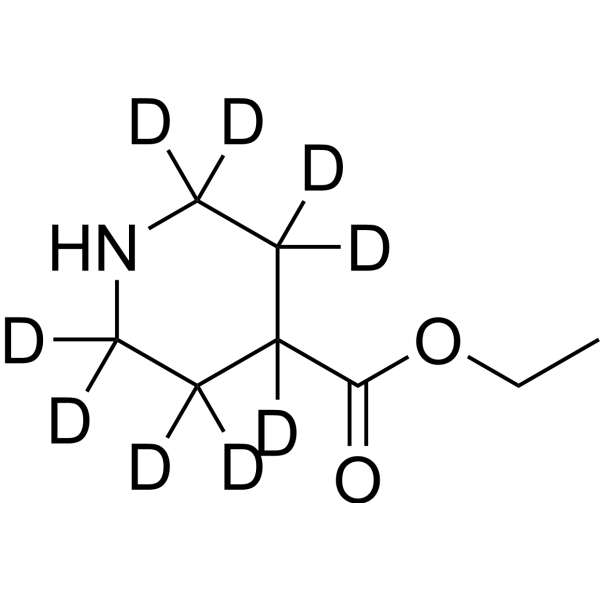 0 ImagesCat. No.: HY-Y0453SCAS No.: 1219803-75-4Synonyms: Ethyl isonipecotate-d9; NSC 93792-d9; Piperidin-4-carboxylic acid ethyl ester-d94-Carboethoxypiperidine-d9 is the deuterium labeled 4-Carboethoxypiperidine.
-
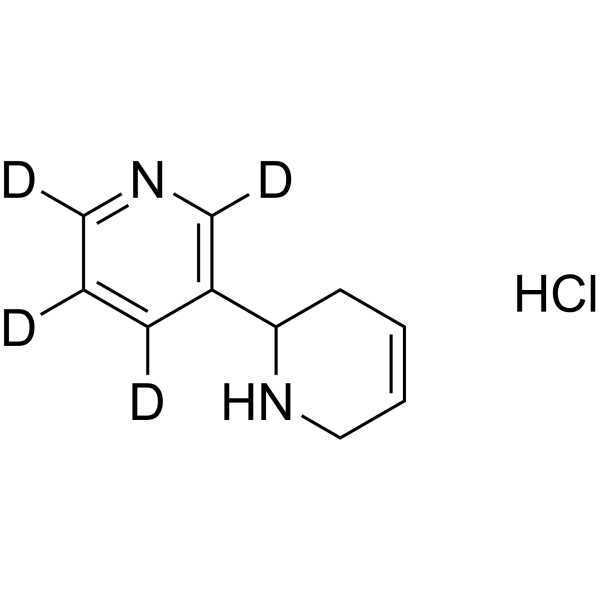
Pyronaridine-13C2,d4 tetraphosphate
 0 ImagesCat. No.: HY-14749AS1Pyronaridine tetraphosphate-13C2,d4 is the deuterium and 13C-labeled Pyronaridine tetraphosphate (HY-14749A). Pyronaridine tetraphosphate is an orally active Mannich base anti-malarial agent. Pyronaridine tetraphosphate is active against P. falciparum and Echinococcus granulosus infection.
-
Sulfameter-d4
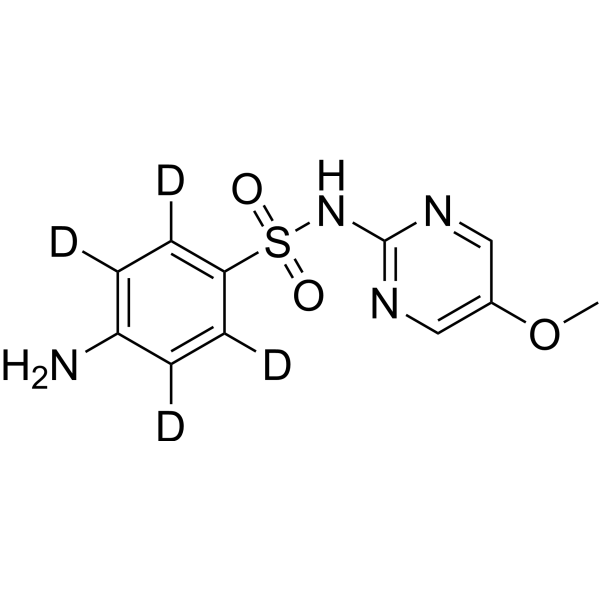 0 ImagesSynonyms: Sulfametoxydiazine-d4; 5-Methoxysulfadiazine-d4; NSC 683528-d4Sulfameter-d4 (Sulfametoxydiazine-d4) is the deuterium labeled Sulfameter (HY-B0213). Sulfameter (Sulfametoxydiazine) is an orally active long-acting sulfonamide antibiotic. Sulfameter is active against both Gram-positive and Gram-negative bacteria. Sulfameter can be used for the research of diseases such as respiratory and urinary tract infections.
-
Mitoxantrone-d8 dihydrochloride
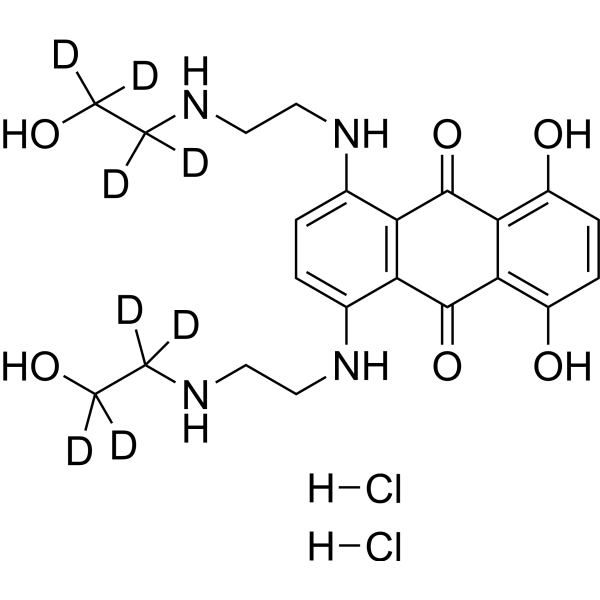 0 ImagesCat. No.: HY-13502ASSynonyms: Mitozantrone-d8dihydrochloride; NSC 301739-d8 dihydrochlorideMitoxantrone-d8 dihydrochloride is deuterated labeled Mitoxantrone dihydrochloride (HY-13502A). Mitoxantrone dihydrochloride is a potent topoisomerase II inhibitor. Mitoxantrone dihydrochloride also inhibits protein kinase C (PKC) activity with an IC50 of 8.5 μM. Mitoxantrone dihydrochloride induces apoptosis of B-CLL (B-chronic lymphocytic leukaemia) cells. Mitoxantrone dihydrochloride shows antitumor activity. Mitoxantrone dihydrochloride also has anti-orthopoxvirus activity with EC50s of 0.25 μM and and 0.8 μM for cowpox and monkeypox, respectively.
-
Tadalafil-13C2,d3-1
 0 ImagesCat. No.: HY-90009AS1Synonyms: IC-351-13C2,d3Tadalafil-13C2,d3-1 (IC-351-13C2,d3-1) is the deuterium and 13C-labeled Tadalafil (HY-90009A). Tadalafil (IC-351) is a PDE5 inhibitor with an IC50 value of 1.8 nM.
-
3-epi-25-Hydroxy Vitamin D3-d6
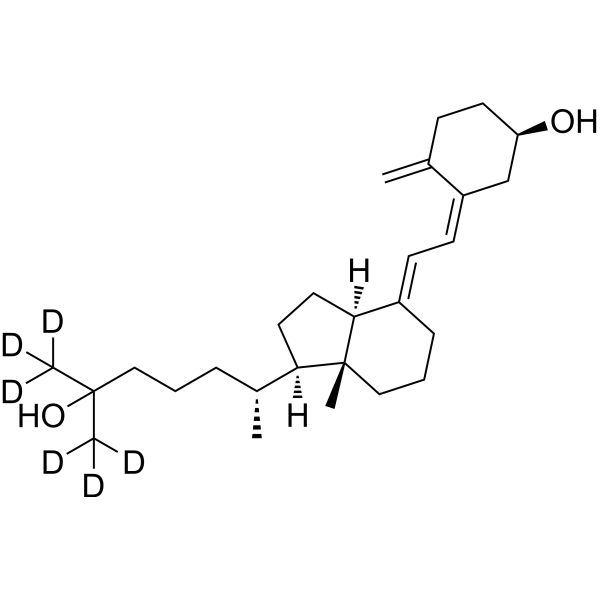 0 ImagesCat. No.: HY-142140SCAS No.: 2483831-27-03-epi-25-Hydroxy Vitamin D3-d6 is the deuterium labeled 3-epi-25-Hydroxy Vitamin D3 (HY-142140). 3-epi-25-Hydroxy Vitamin D3 is the vitamin D metabolite, while vitamin D metabolism highly dependent on macrophage polarization. The C3-epimerase pathway for vitamin D is active in macrophages.
-
Pyridin-4-ol-d5
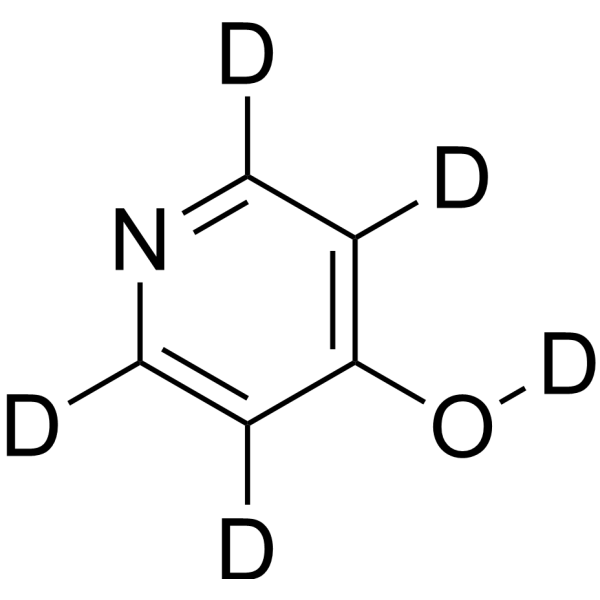 0 ImagesCat. No.: HY-W007690SCAS No.: 45503-33-1Pyridin-4-ol-d5 is the deuterium labeled Pyridin-4-ol (HY-W007690). Pyridin-4-ol is a pyridinol and can be used as synthetic intermediate.
-
1-(Methyl-d3)-4-nitrosopiperazine
 0 ImagesCat. No.: HY-W700581CAS No.: 1184974-41-11-(Methyl-d3)-4-nitrosopiperazine is the deuterium labeled 1-Methyl-4-nitrosopiperazine (HY-W663740). 1-Methyl-4-nitrosopiperazine (MNP; MeNP;N-Methyl-N'-nitrosopiperazine) is a potential impurity in sartans, non-steroidal anti-inflammatory drugs (NSAIDs), and thiazide diuretics.



