



Isotope-Labeled Compounds
Isotope-labeled compounds are chemical substances in which some atoms in their molecules are replaced by isotope atoms. The range of stable isotope products can cover from gases to complex molecules. Isotope-labeled compounds could provide a site-specific investigation of structures, making molecules easily detectable by mass spectrometry and NMR, and maintaining the physico-chemical properties of the target molecule at the same time.
MCE isotope-labeled compounds are all stable isotope-labeled compounds and are non-radioactive labeled substances. MCE isotope-labeled compounds are unique tools for identifying and understanding biological and chemical processes. Stable isotope-labeled products are now getting more and more popular among scientists. The scope of application is gradually penetrating into various scientific fields, such as life sciences, food and medicine, agriculture, environment, geology, etc. Stable isotope-labeled compounds have a wide range of applications in the Life Science areas, such as Metabolomics, Proteomics, Clinical studies, Deuterium drugs, etc.
All Product Categories
-
Isotope-Labeled Compounds Related Products (11051)
Related Products (11051)

-
Taurochenodeoxycholic acid-d9 sodium
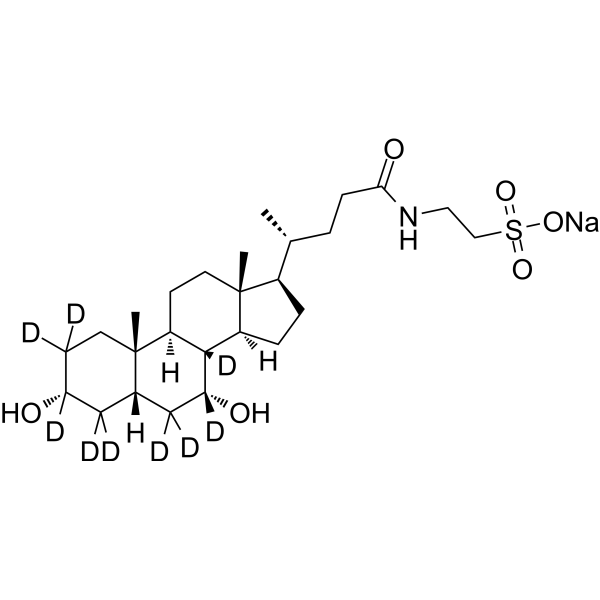 0 ImagesCat. No.: HY-N1429SCAS No.: 2483832-00-2Synonyms: 12-Deoxycholyltaurine-d9 sodiumTaurochenodeoxycholic acid-d9 (sodium) is the deuterium labeled Taurochenodeoxycholic acid sodium. Taurochenodeoxycholic acid sodium salt (12-Deoxycholyltaurine sodium salt) is one of the main bioactive substances of animals' bile acid. Taurochenodeoxycholic acid induces apoptosis and shows obvious anti-inflammatory and immune regulation properties.
-
α-Cyano-4-hydroxycinnamic acid-d4
 0 ImagesCat. No.: HY-107641SCAS No.: 1258536-45-6Synonyms: α-Cyano-4-hydroxycinnamate-d4α-Cyano-4-hydroxycinnamic acid-d4 (α-Cyano-4-hydroxycinnamate-d4) is the deuterium labeled α-Cyano-4-hydroxycinnamic acid (HY-107641). α-Cyano-4-hydroxycinnamic acid (α-Cyano-4-hydroxycinnamate) is a potent and non-competitive inhibitor of monocarboxylate transporters (MCTs). α-Cyano-4-hydroxycinnamic acid inhibits mitochondrial pyruvate transporter with a Ki of 6.3 μM. α-Cyano-4-hydroxycinnamic acid is used as a matrix to facilitate peptide ionization in matrix-assisted laser desorption/ionization time-of-flight (MALDI-TOF) mass spectrometry applications.
-
L-Methionine-methyl-sulfonium-d6 chloride hydrochloride, 97%
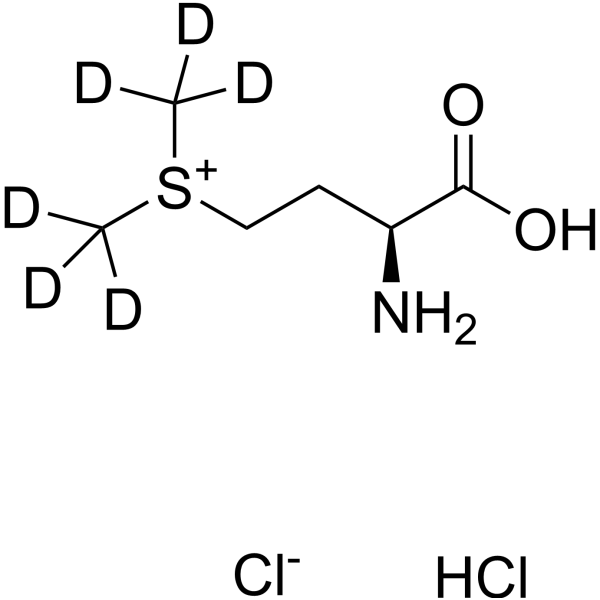 0 ImagesCat. No.: HY-151176SCAS No.: 63889-27-0L-Methionine-d3-methyl-d3-sulfonium chloride HCl-d6 (hydrochloride) is the deuterium labeled L-Methionine-methyl-sulfonium chloride HCl hydrochloride.
-
1,4-Bis(tert-butoxycarbonyl)piperazine-d8
 0 ImagesCat. No.: HY-W701429CAS No.: 1246816-49-81,4-Bis(tert-butoxycarbonyl)piperazine-d8 is the deuterium labeled 1,4-Bis(tert-butoxycarbonyl)piperazine (HY-42542).
-
Matrine-d3
 0 ImagesCat. No.: HY-W654256Synonyms: Matridin-15-one-d3; Vegard-d3; α-Matrine-d3Matrine-d3 (Matridin-d3) is a deuterium labeled Matrine (HY-N0164). Matrine (Matridin-15-one) is an alkaloid found in plants from the Sophora genus that can act as a kappa opioid receptor and u-receptor agonist. Matrine has a variety of pharmacological effects, including anti-cancer, anti-oxidative stress, anti-inflammation and anti-apoptosis effects. Matrine is potential in the research of disease like human non-small cell lung cancer, hepatoma, papillary thyroid cancer and acute kidney injury (AKI).
-
Otilonium-d4 bromide
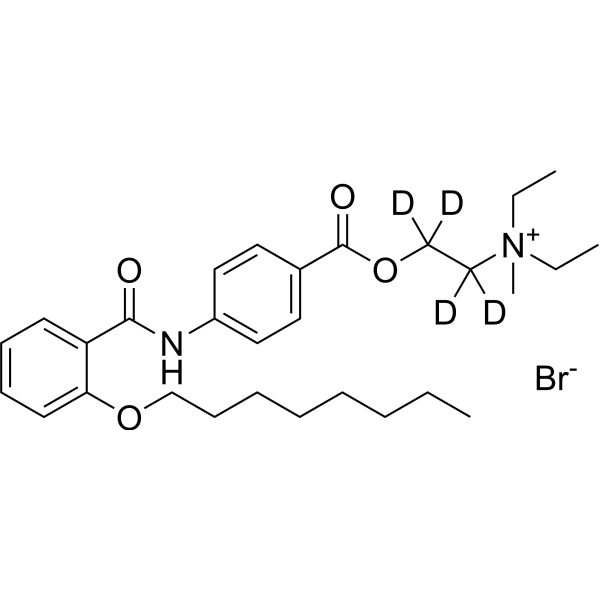 0 ImagesCat. No.: HY-B0499AS1Synonyms: Octylonium-d4 bromide; SP63-d4 bromideOtilonium-d4 (bromide) is deuterium labeled Otilonium (bromide).
-
Linagliptin Acetamide-d3
 0 ImagesCat. No.: HY-W745844Linagliptin Acetamide-d3 is the deuterium labeled Linagliptin Acetamide.
-
Ethyl (r)-2-methylbutanoate-d5
 0 ImagesCat. No.: HY-W708818Ethyl (r)-2-methylbutanoate-d5 is the deuterium labeled Ethyl (r)-2-methylbutanoate (HY-W792448).
-
(±)-Penbutolol-d9 hydrochloride
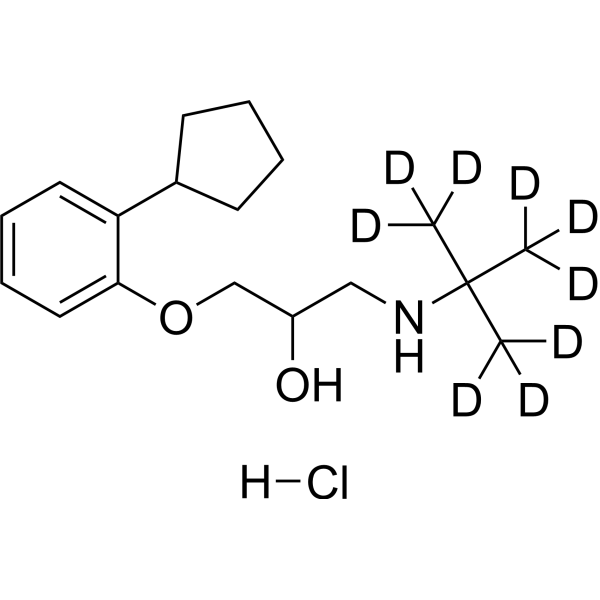 0 ImagesCat. No.: HY-116790BSACAS No.: 1346605-01-3Synonyms: (Rac)-Penbutolol-d9 hydrochloride; (±)-Isopenbutolol-d9 hydrochloride(±)-Penbutolol-d9 (hydrochloride) is a deuterium labeled (±)-Penbutolol hydrochloride. (+)-Penbutolol hydrochloride is a β-adrenoceptor antagonist, with an IC50 of 0.74 μM.
-
4-Propylphenol-d12
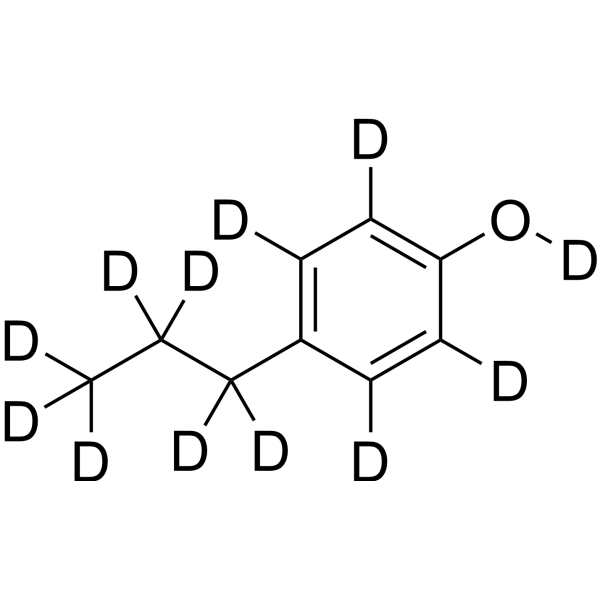 0 ImagesCat. No.: HY-W017611SCAS No.: 352431-21-14-Propylphenol-d12 is the deuterium labeled 4-Propylphenol. 4-Propylphenol is a plant-derived phenolic compound. 4-Propylphenol causes an increase in ROS within the Fusarium graminearum cells, leading to damage to the DNA and cell membranes of the mycelia, effectively inhibiting the growth of the mycelia. 4-Propylphenol also has a growth inhibitory effect on walnut pathogenic fungi (C. gloeosporioides, C. siamense, A. alternata), with its EC50 ranging from 29.11 to 31.89 mg/L, and it also inhibits spore germination, with EC50 being 55.04-71.85 mg/L. 4-Propylphenol can be used in the research of fungal diseases in walnuts and wheat Fusarium head blight.
-
Tanespimycin-d5
 0 ImagesCat. No.: HY-10211SSynonyms: 17-AAG-d5; NSC 330507-d5; CP 127374-d5Tanespimycin-d5 (17-AAG-d5; NSC 330507-d5; CP 127374-d5) is the deuterium labeled Tanespimycin (HY-10211). Tanespimycin (17-AAG) is a potent HSP90 inhibitor with an IC50 of 5 nM, having a 100-fold higher binding affinity for tumour cell derived HSP90 than normal cell derived HSP90. Tanespimycin depletes cellular STK38/NDR1 and reduces STK38 kinase activity. Tanespimycin also downregulates the stk38 gene expression.
-
17:0-22:4 PG-d5
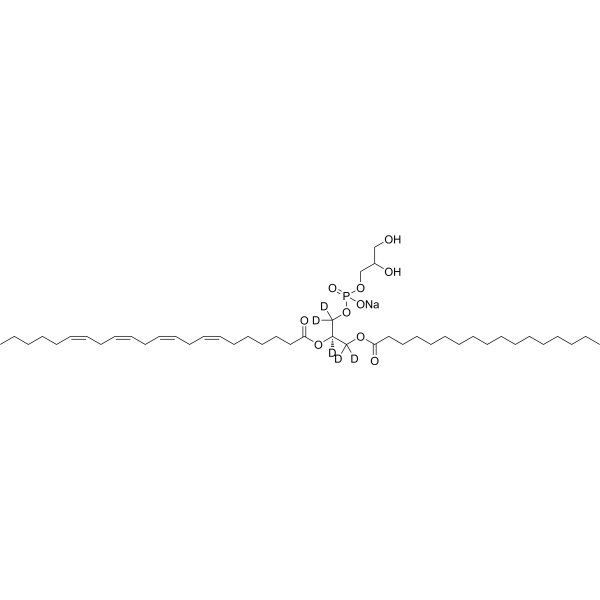 0 ImagesCat. No.: HY-146857SCAS No.: 2342575-46-417:0-22:4 PG-d5 is deuterium labeled 17:0-22:4 PG.
-
1-Isopropyl-4-nitrobenzene-d4
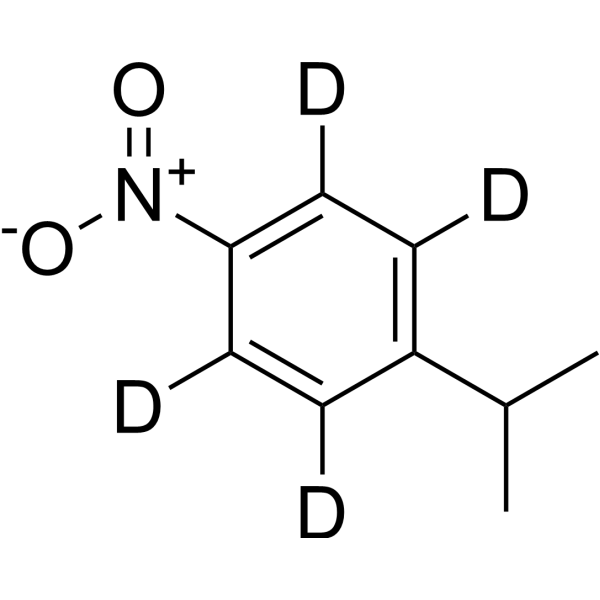 0 Images1-Isopropyl-4-nitrobenzene-d4 is the deuterium labeled 1-Isopropyl-4-nitrobenzene.
-
24(R/S),25-Epoxycholesterol-d6
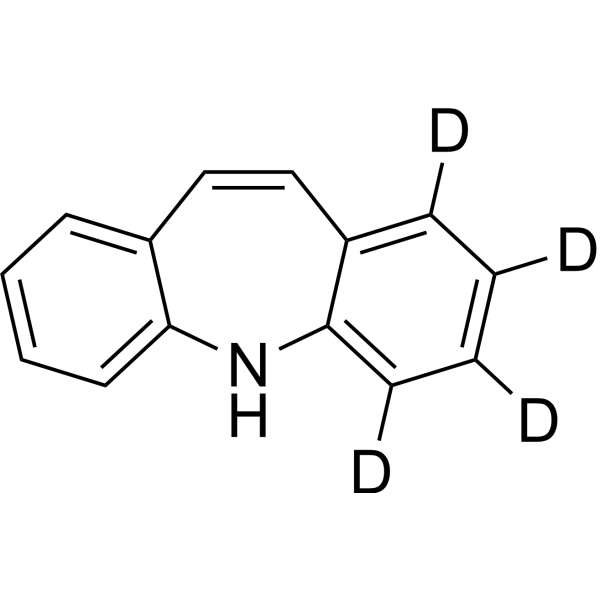
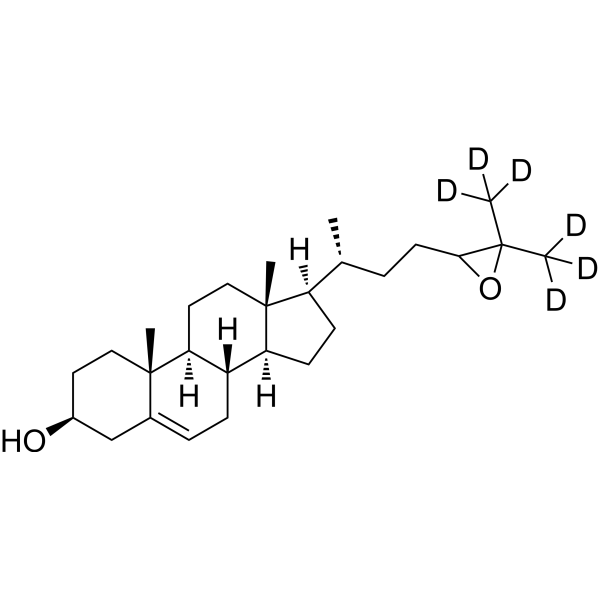 0 ImagesCat. No.: HY-146768SCAS No.: 1246302-86-224(R/S),25-Epoxycholesterol-d6 is deuterium labeled 24(R/S),25-Epoxycholesterol.
-
N,N-dimethyl-N-((phenyl-dd5)methyl)tetradecan-1-aminium bromide
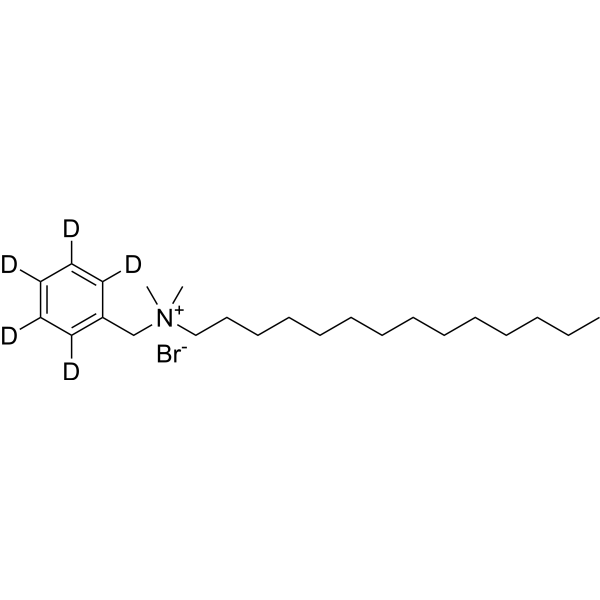 0 ImagesCat. No.: HY-W335735CAS No.: 1515861-68-3Synonyms: Benzyldimethyltetradecylammonium BromideN,N-dimethyl-N-((phenyl-dd5)methyl)tetradecan-1-aminium bromide is the deuterium labeled N,N-dimethyl-N-((phenyl)methyl)tetradecan-1-aminium bromide.
-
Lauric acid-13C-1
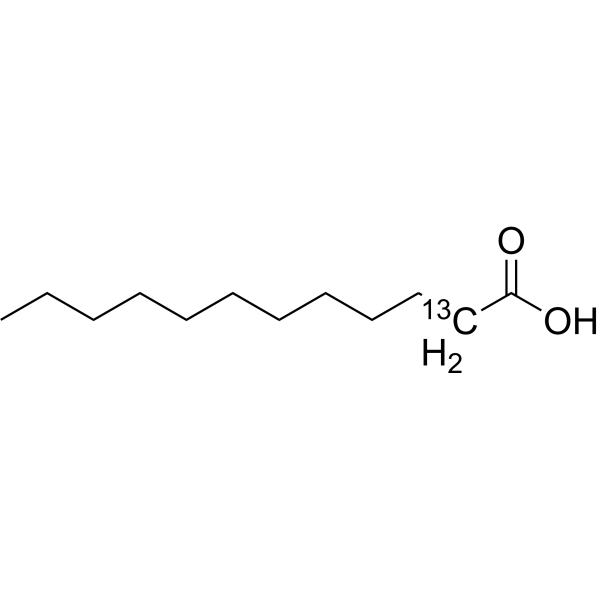 0 ImagesCat. No.: HY-Y0366S4CAS No.: 287100-78-1Lauric acid-13C-1 is the deuterium labeled Lauric acid. Lauric acid is a middle chain-free fatty acid with strong bactericidal properties. The EC50s for P. acnes, S.aureus, S. epidermidis, are 2, 6, 4 μg/mL, respectively.
-
2,3'-Bipyridine-d4
 0 ImagesCat. No.: HY-W698875CAS No.: 1020719-56-5Synonyms: Isonicoteine-d42,3'-Bipyridine-d4 (Isonicoteine-d4) is the deuterium labeled 2,3'-Bipyridine (HY-W018272).
-
Deferiprone-d3 3-O-Beta-D-Glucuronide Sodium Salt
 0 ImagesCat. No.: HY-167814SDeferiprone-d3 3-O-Beta-D-Glucuronide Sodium Salt is the deuterium labeled Deferiprone O-β-D-glucuronide (HY-160078). Deferiprone O-β-D-glucuronide is a novel orally active iron chelator. Deferiprone O-β-D-glucuronide shows the capability of reducing the iron burden in patients with β-thalassemia.
-
T01-1-d5
 0 ImagesCat. No.: HY-148185SSynonyms: KL610023-d5T01-1-d5 (KL610023-d5) is the deuterium labeled T01-1 (HY-148185). T01-1 is an anticancer agent (camptothecin derivative) with good anti-proliferative activity.



