1. Search Result
Search Result
Results for "

Y-

" in MedChemExpress (MCE) Product Catalog:

1499

Inhibitors & Agonists

129

Fluorescent Dyes

34

Biochemical Assay Reagents

284

Peptides

12

Inhibitory Antibodies

137

Natural
Products

83

Recombinant Proteins

201

Isotope-Labeled Compounds

62

Antibodies

20

Click Chemistry

28

Oligonucleotides

2

GMP Molecules

Cat. No. Product Name Target Research Areas Chemical Structure
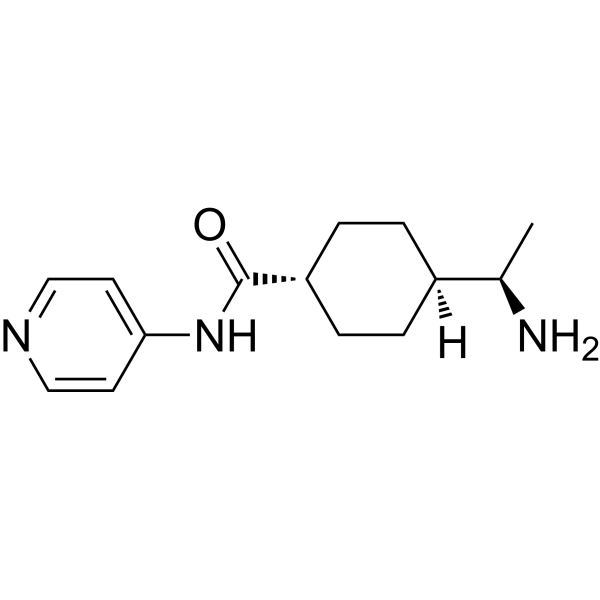
  • HY-10071
    Y-27632
    Maximum Cited Publications
    533 Publications Verification

    mTOR Ras ROCK NADPH Oxidase NF-κB Reactive Oxygen Species (ROS) Akt Apoptosis Autophagy PAK Cancer
    Y-27632 is a ROCK inhibitor with Ki values of 220 nM and 300 nM for ROCK1 and ROCK2, respectively. Y-27632 exerts anti-inflammatory and immunomodulatory effects in systemic lupus erythematosus models by inhibiting the ROCK/NF-κB pathway. Y-27632 enhances autophagy by inhibiting the AKT/mTOR pathway, thereby inducing apoptosis apoptosis in oral squamous cell carcinoma. Y-27632 induces the formation of tunneling nanotubes in ARPE-19 cells and significantly enhances mitochondrial transfer through these channels. Y-27632 promotes neurite outgrowth in PC12 cells by activating the Rac1/NOX1/ROS/AKT/PAK1 signaling cascade .
    Y-27632
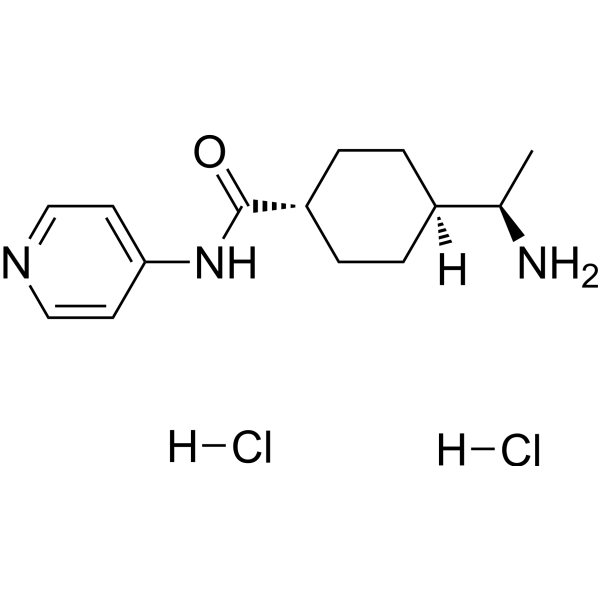
  • HY-10583
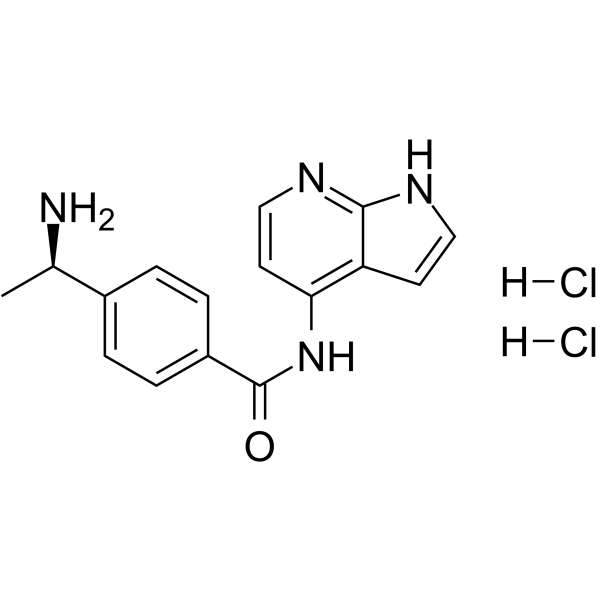
    Y-27632 dihydrochloride
    530+ Cited Publications

    Organoid ROCK Neurological Disease Cancer
    Y-27632 dihydrochloride is an orally active and ATP-competitive ROCK (Rho-kinase) inhibitor (ROCK-I Ki=220 nM; ROCK-II Ki=300 nM). Y-27632 dihydrochloride shows antiepileptic effects .
    Y-27632 dihydrochloride
  • HY-12444
    Y15
    25+ Cited Publications

    FAK Inhibitor 14

    FAK Cancer
    Y15 is a potent and specific inhibitor of focal adhesion kinase (FAK) that inhibits its autophosphorylation activity, decreases the viability of cancer cells, and blocks tumor growth.
    Y15
  • HY-111557
    YM-254890
    Maximum Cited Publications
    17 Publications Verification

    P2Y Receptor Cardiovascular Disease
    YM-254890 is a selective Gαq/11 protein inhibitor isolated from Chromobacterium sp. YM-254890 shows no inhibition of other G protein subtypes. YM-254890 inhibits platelet aggregation induced by ADP by blocking the P2Y1 signal transduction pathway, with an IC50 value below 0.6 μM .
    YM-254890
  • HY-10583G
    Y-27632 dihydrochloride
    1 Publications Verification

    ROCK Neurological Disease Cancer
    Y-27632 dihydrochloride (GMP) is the GMP level of Y-27632 dihydrochloride (HY-10583). GMP guidelines are used to produce Y-27632 dihydrochloride (GMP). GMP small molecules works appropriately as an auxiliary reagent for cell research manufacture. Y-27632 dihydrochloride is an orally active and ATP-competitive ROCK (Rho-kinase) inhibitor with antiepileptic effect .
    Y-27632 dihydrochloride
  • HY-10583R
    Y-27632 dihydrochloride (Standard)
    530+ Cited Publications

    ROCK Organoid Reference Standards Cancer
    Y-27632 dihydrochloride (Standard) is the analytical standard of Y-27632 dihydrochloride. Y-27632 dihydrochloride is an orally active and ATP-competitive ROCK (Rho-kinase) inhibitor (ROCK-I Ki=220 nM; ROCK-II Ki=300 nM). Y-27632 dihydrochloride shows antiepileptic effects .
    Y-27632 dihydrochloride (Standard)
  • HY-10069
    Y-33075 dihydrochloride
    10+ Cited Publications

    ROCK Cancer
    Y-33075 dihydrochloride is a selective ROCK inhibitor with an IC50 of 3.6 nM.
    Y-33075 dihydrochloride
  • HY-12649
    Y16
    5+ Cited Publications

    Ras Cancer
    Y16 is a specific inhibitor of Leukemia-associated Rho guanine nucleotide exchange factor (LARG) with a Kd value of 76 nM. Y16 is active in blocking the interaction of LARG and related G-protein-coupled Rho GEFs with RhoA. Y16 shows no detectable effect on other diffuse B-cell lymphoma (Dbl) family Rho GEFs, Rho effectors, or a RhoGAP .
    Y16
  • HY-15898
    Y-320
    5 Publications Verification

    Interleukin Related Apoptosis Inflammation/Immunology Cancer
    Y-320 is a potent, orally active phenylpyrazoleanilide immunomodulator. Y-320 inhibits IL-17 production by CD4 T cells stimulated with IL-15 with IC50 values of 20 to 60 nM. Y-320 enhances TP53, DMD, and COL17A1 PTC readthrough by G418 and increases cellular protein levels and protein synthesis. Y-320 concomitants use of with a low dose of Paclitaxel (HY-B0015) significantly sensitized multidrug resistance (MDR) tumors by inducing G2/M phase arrest and apoptosis. Y-320 can be used for research of rheumatoid arthritis (RA) and cancer .
    Y-320
  • HY-N10535

    Lewis y

    FAK Cancer
    Lewis Y tetrasaccharide (Lewis Y, Le Y) is a tetrasaccharide derivative form of Lewis X trisaccharide (HY-N10534). Lewis Y tetrasaccharide is an antigen associated with malignant ovarian carcinomas metastasis and poor prognosis .
    Lewis y tetrasaccharide
  • HY-174806

    7-(β-D-Galactopyranosyloxy)-4-phenylchromen-2-one

    Mitophagy PINK1/Parkin Amyloid-β Neurological Disease
    Y040-7904 is a mitophagy activator. Y040-7904 enhances mitophagy by promoting mitochondria transport to autophagosomes and the fusion of autophagosomes with autolysosomes. Y040-7904 induces mitophagy through the SIRT1/FoxO3 pathway. Y040-7904 upregulates the levels of Parkin, PINK1, and LC3II/I. Y040-7904 reduces amyloid-β () accumulation in both in vitro and in vivo models of Alzheimer’s disease.
    Y040-7904
  • HY-111354
    Tinoridine hydrochloride
    1 Publications Verification

    Y-3642 hydrochloride

    Glutathione Peroxidase Inflammation/Immunology
    Tinoridine hydrochloride is a nonsteroidal anti-inflammatory agent and also has potent radical scavenger and antiperoxidative activity.
    Tinoridine hydrochloride
  • HY-10067
    Y-33075
    10+ Cited Publications

    Y-39983 free base

    ROCK Cancer
    Y-33075 is a selective ROCK inhibitor derived from Y-27632, and is more potent than Y-27632, with an IC50 of 3.6 nM.
    Y-33075
  • HY-P1601

    Neuropeptide Y Receptor Neurological Disease Endocrinology
    Neuropeptide Y(29-64) is a 36 amino acid peptide, a fragment of Neuropeptide Y.
    Neuropeptide Y(29-64)
  • HY-P11335A

    Ser/Thr Protease Bacterial Others
    Oscillamide Y TFA is the trifluoroacetate salt of Oscillamide Y (HY-P11335). Oscillamide Y (Compound 1), a ureido-containing cyclic peptide, is a Chymotrypsin inhibitor. Oscillamide Y can be isolated from freshwater toxic cyanobacterium Oscillatoria agardhii. Oscillamide Y has potent toxicity against fish, daphnid magna and algae with a stimulatory effect for Raphidocelis subcapitata (EC50: 4.62 mg/L). Oscillamide Y induces high luminescence inhibition in Aliivibrio fischeri. Oscillamide Y can be used for ecological development research .
    Oscillamide Y TFA
  • HY-N7880

    Reactive Oxygen Species (ROS) Cancer
    Salvianolic acid Y is a phenolic acid with the same planar structure as Salvianolic acid B. Salvianolic acid Y rescues cell injury by H2O2 .
    Salvianolic acid Y
  • HY-B0068
    Azasetron hydrochloride
    2 Publications Verification

    Y-25130 hydrochloride

    5-HT Receptor Neurological Disease
    Azasetron (Y-25130) hydrochloride, a benzamide derivative, is a potent and selective 5-HT3 receptor antagonist. Azasetron is used in the study for Chemotherapy-induced nausea and vomiting (CINV) .
    Azasetron hydrochloride
  • HY-110156
    YZ9
    1 Publications Verification

    Phosphatase Cancer
    Y29 is a potent PFKFB3 inhibitor with an IC50 of 0.183 µM, and acts as a competitive inhibitor against Fru-6-P with a Ki value of 0.094 µM. Y29 exhibits antitumor effects against cervical cancer .
    YZ9
  • HY-103471

    FAK Interleukin Related Cancer
    Y11 inhibits the autophosphorylation of FAK1 by blocking the phosphorylation of Y397. Y11 increases the expression level of IL-6. Y11 is applicable for cancer research .
    Y11
  • HY-103457

    Estrogen Receptor/ERR Cancer
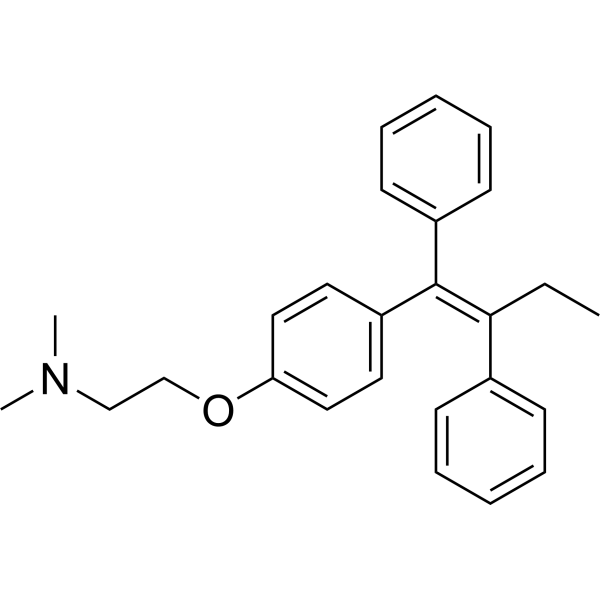
    Y134 is a selective and orally active oestrogen receptor (ER) modulator (SERM), exhibits potent antagonist activity at ERα and ERβ. Y134 shows 121.1-fold selectivity for ERα (Ki=0.09 nM) over ERβ (Ki=11.31 nM). Y134 inhibits oestrogen-stimulated proliferation of ER-positive human breast cancer cells .
    Y134
  • HY-111502

    Epigenetic Reader Domain Cancer
    Y06036 is a potent and selective BET inhibitor, which binds to the BRD4(1) bromodomain with Kd value of 82 nM . Antitumor activity .
    Y06036
  • HY-136182A

    Na+/Ca2+ Exchanger Cardiovascular Disease Neurological Disease
    YM-244769 is a potent, selective and orally active Na +/Ca 2+ exchanger (NCX) inhibitor. YM-244769 preferentially inhibits NCX3 and suppresses the unidirectional outward NCX current (Ca 2+ entry mode), with IC50s of 18 nM and 50 nM, respectively. YM-244769 efficiently protects against hypoxia/reoxygenation-induced SH-SY5Y neuronal cell damage. YM-244769 can also increase urine volume and urinary excretion of electrolytes in mice .
    YM-244769
  • HY-149454
    P2Y1/P2Y12 antagonist-1
    1 Publications Verification

    P2Y Receptor Cancer
    P2Y1/P2Y12 antagonist-1 (compound 24w) is an orally available dual inhibitor of P2Y1 and P2Y12 with antiplatelet activity. P2Y1/P2Y12 antagonist-1 inhibits ADP-induced platelet aggregation in rabbit plasma with an IC50 of 4.23 μM. P2Y1/P2Y12 antagonist-1 exhibits potent inhibitory effects in rat thrombosis model.
    P2Y1/P2Y12 antagonist-1
  • HY-P1322

    Neuropeptide Y Receptor Neurological Disease
    [D-Trp34]-Neuropeptide Y is a potent and selective neuropeptide Y (NPY) Y5 receptor agonist. [D-Trp34]-Neuropeptide Y is a significantly less potent agonist at the NPY Y1, Y2, Y4, and y6 receptors. [D-Trp34]-Neuropeptide Y markedly increases food intake in rats .
    [D-Trp34]-Neuropeptide Y
  • HY-101069
    Y-26763
    2 Publications Verification

    Potassium Channel Cardiovascular Disease
    Y-26763 is a K + channel opener and active metabolite of Y-27152 . Y-26763 is an ATP-sensitive K + (KATP) channel activator .
    Y-26763
  • HY-10071A
    Y-27632 hydrochloride hydrate
    395+ Cited Publications

    ROCK NF-κB Apoptosis Autophagy Akt mTOR NADPH Oxidase Reactive Oxygen Species (ROS) PAK Ras Neurological Disease Inflammation/Immunology Cancer
    Y-27632 hydrochloride hydrate is a ROCK inhibitor with Ki values of 220 nM and 300 nM for ROCK1 and ROCK2, respectively. Y-27632 hydrochloride hydrate exerts anti-inflammatory and immunomodulatory effects in systemic lupus erythematosus models by inhibiting the ROCK/NF-κB pathway. Y-27632 hydrochloride hydrate enhances autophagy by inhibiting the AKT/mTOR pathway, thereby inducing apoptosis apoptosis in oral squamous cell carcinoma. Y-27632 hydrochloride hydrate induces the formation of tunneling nanotubes in ARPE-19 cells and significantly enhances mitochondrial transfer through these channels. Y-27632 hydrochloride hydrate promotes neurite outgrowth in PC12 cells by activating the Rac1/NOX1/ROS/AKT/PAK1 signaling cascade .
    Y-27632 hydrochloride hydrate
  • HY-174156

    RANKL/RANK TNF Receptor Inflammation/Immunology
    Y2641, a etrahydro-β-carboline derivative, is an orally active dual RANKL/TNF-α inhibitor with Kd values of 3.984 μM and 18.59 μM for RANKL and TNF-α, respectively. Y2641 inhibits RANKL-induced osteoclastogenic and has anti-inflammatory and cartilage destruction. Y2641 can be used for study of osteoarthritis .
    Y2641
  • HY-136182

    Na+/Ca2+ Exchanger Cardiovascular Disease Neurological Disease
    YM-244769 dihydrochloride is a potent, selective and orally active Na +/Ca 2+ exchanger (NCX) inhibitor. YM-244769 dihydrochloride preferentially inhibits NCX3 and suppresses the unidirectional outward NCX current (Ca 2+ entry mode), with IC50s of 18 nM and 50 nM, respectively. YM-244769 dihydrochloride efficiently protects against hypoxia/reoxygenation-induced SH-SY5Y neuronal cell damage. YM-244769 dihydrochloride can also increase urine volume and urinary excretion of electrolytes in mice .
    YM-244769 dihydrochloride
  • HY-10068

    Y-39983

    ROCK Neurological Disease
    Y-33075 hydrochloride (Y-39983) is a selective ROCK inhibitor derived from Y-27632, and is more potent than Y-27632, with an IC50 of 3.6 nM.
    Y-33075 hydrochloride
  • HY-15113A

    Prolyl Endopeptidase (PREP) Neurological Disease Cancer
    Y-29794 tosylate is a selective, orally active inhibitor for non-peptide prolyl endopeptidase (PREP), with an IC50 of 3 nM and a Ki of 0.95 nM. Y-29794 tosylate enhances the effect of thyrotropin-releasing hormone (TRH) on the release of ACh in the rat hippocampus, exhibits potential neuroprotective efficacy. Y-29794 tosylate exhibits anticancer activity through inhibition of the IRS1-AKT-mTORC1 pathway. Y-29794 tosylate penetrates the brain-blood barrier (BBB) .
    Y-29794 tosylate
  • HY-178909

    c-Myc Apoptosis Reactive Oxygen Species (ROS) Cancer
    Y502-2304 is a c-Myc G-quadruplex stabilizer. Y502-2304 exhibits potent antiproliferative activity in multiple myeloma (MM) cells. Y502–2304 downregulates c-Myc mRNA and protein expression. Y502-2304 induces apoptosis in MM cells, characterizes by elevated γH2AX levels, increases reactive oxygen species (ROS) generation, and mitochondrial dysfunction. Y502-2304 significantly inhibits tumor growth in a xenograft MM model. Y502-2304 can be used for the study of multiple myeloma .
    Y502-2304
  • HY-115910A

    Interleukin Related Cholinesterase (ChE) Neurological Disease
    Y13g dihydrochloride is the potent inhibitor of both AChE and IL-6. Interleukin-6 (IL-6) and acetylcholinesterase (AChE) are two important targets implicated in progression of Alzheimer's Disease (AD). Y13g dihydrochloride reverses the STZ (HY-13753)-induced memory deficit, and shows histopathology similarly as in normal animals .
    Y13g dihydrochloride
  • HY-137294

    Y6

    Endogenous Metabolite Others
    BTPTT-4F (Y6) is a non-fullerene acceptor-donor-acceptor (A-D-A) type small molecular acceptor (SMA) characterized by its flexible alkyl chains and centrally fused ring structure. Featuring a ladder-type electron-deficient core, BTPTT-4F can be effectively blended with PM6, showcasing significant potential for enhancing the performance of organic photovoltaic applications. Its tailored optical properties and adjustable electronic energy levels contribute to improved thermal and photochemical stability, making it a promising candidate for next-generation high-performance organic solar cells.
    BTPTT-4F
  • HY-107659

    Na+/Ca2+ Exchanger Cardiovascular Disease Neurological Disease
    YM-244769 hydrochloride is a potent, selective and orally active Na +/Ca 2+ exchanger (NCX) inhibitor. YM-244769 hydrochloride preferentially inhibits NCX3 and suppresses the unidirectional outward NCX current (Ca 2+ entry mode), with IC50s of 18 nM and 50 nM, respectively. YM-244769 hydrochloride efficiently protects against hypoxia/reoxygenation-induced SH-SY5Y neuronal cell damage. YM-244769 hydrochloride can also increase urine volume and urinary excretion of electrolytes in mice .
    YM-244769 hydrochloride
  • HY-N9389

    Ginsenoside Y

    Drug Metabolite Metabolic Disease
    Ginsenoside C-Y (Ginsenoside Y) is a metabolite of Ginsenoside Rb2 (HY-N0040). Ginsenoside C-Y exhibits anti-photoaging and anti-melanogenesis properties .
    Ginsenoside C-Y
  • HY-144603

    Neuropeptide Y Receptor Neurological Disease
    Neuropeptide Y Y1 receptor antagonist 1 (compound 39), a fluorescent probe, is a potent antagonist of neuropeptide Y Y 1 receptor (Y 1R), with a Ki of 0.19 nM .
    Neuropeptide Y Y1 receptor antagonist 1
  • HY-108582

    Potassium Channel Cardiovascular Disease
    Y-27152, a proagent of the KATP (Kir6) channel opener Y-26763, is a long-acting K+ channel opener with less tachycardia: antihypertensive effects in hypertensive rats and dogs in conscious state .
    Y-27152
  • HY-180895

    Polo-like Kinase (PLK) Cancer
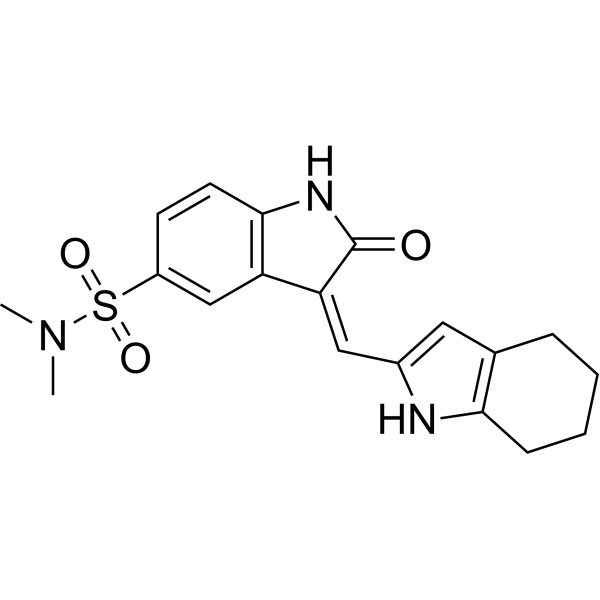
    Y207–5465 is a potent and highly selective PLK2 inhibitor with an IC50 value of 584.3 nM. Y207–5465 shows only limited anti-cancer activity in HT-29 and HCT-116 cells. Y207–5465 can be used in cancer research .
    Y207–5465
  • HY-117783

    Antibiotic Infection
    Y-05460M-A is a substituted isocoumarin antibiotic. Y-05460M-A exhibits inhibitory activity against Gram-positive and Gram-negative bacteria. Y-05460M-A is cytotoxic against P388 lymphatic leukemia. Y-05460M-A also has antiulcer activity. Y-05460M-A is a one-carbon lower homologue of PM-04128. Y-05460M-A can be achieved from N-Boc-L-valine .
    Y-05460M-A
  • HY-P11335

    Ser/Thr Protease Bacterial Others
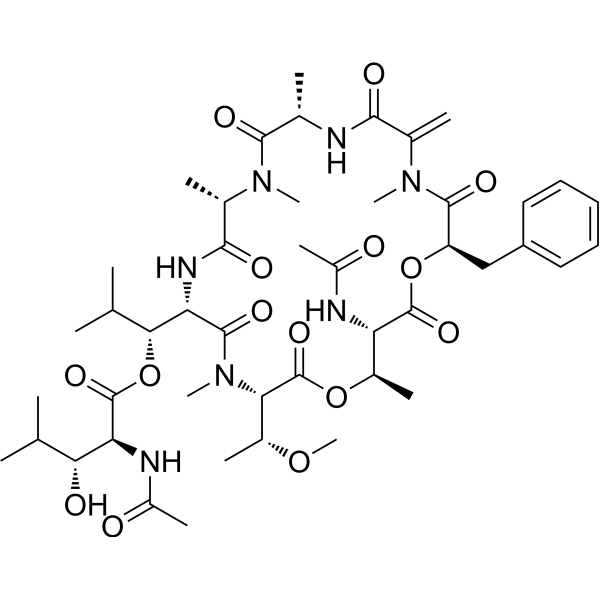
    Oscillamide Y (Compound 1), a ureido-containing cyclic peptide, is a Chymotrypsin inhibitor. Oscillamide Y can be isolated from freshwater toxic cyanobacterium Oscillatoria agardhii. Oscillamide Y has potent toxicity against fish, daphnid magna and algae with a stimulatory effect for Raphidocelis subcapitata (EC50: 4.62 mg/L). Oscillamide Y induces high luminescence inhibition in Aliivibrio fischeri. Oscillamide Y can be used for ecological development research .
    Oscillamide Y
  • HY-P1818

    Neuropeptide Y Receptor Neurological Disease Endocrinology
    Neuropeptide Y (22-36), a 15 amino acid peptide, is a fragment of Neuropeptide Y. Neuropeptide Y (22-36) acts on Y2 receptor and retains subnanomolar affinity for the Y2 receptor .
    Neuropeptide Y (22-36)
  • HY-W700452

    Isotope-Labeled Compounds Apoptosis ROCK Cancer
    Y-27632-d4 hydrochloride hydrate is the deuterium labeled Y-27632 hydrochloride hydrate (HY-10071A). Y-27632 hydrochloride hydrate is an orally active, ATP-competitive inhibitor of ROCK-I and ROCK-II, with Kis of 220 and 300 nM, respectively. Y-27632 hydrochloride hydrate attenuates Doxorubicin-induced apoptosis of human cardiac stem cells. Y-27632 hydrochloride hydrate also suppresses dissociation-induced apoptosis of murine prostate stem/progenitor cells. Y-27632 hydrochloride hydrate primes human induced pluripotent stem cells (hIPSCs) to selectively differentiate towards mesendodermal lineage via epithelial-mesenchymal transition-like modulation .
    Y-27632-d4 hydrochloride hydrate
  • HY-124585

    Epigenetic Reader Domain Cancer
    Y08060 is a selective BET inhibitor. Y08060 inhibits the viability of C4-2B and LNCaP cell lines with IC50 values of 3.23 and 4.41 μM. Y08060 can suppress colony formation as well as AR expression in prostate cancer cell line. Y08060 can be studied in prostate cancer research .
    Y08060
  • HY-17487

    Y 0213; Y 9213

    COX Neurological Disease Inflammation/Immunology
    Miroprofen (Y 0213) is an orally active nonsteroidal anti-inflammatory analgesic (NSAID). Miroprofen exhibits anti-inflammatory, analgesic and anti-platelet activities .
    Miroprofen
  • HY-W032848
    Tinoridine
    1 Publications Verification

    Y-3642

    COX Inflammation/Immunology
    Tinoridine (Y-3642) is an orally active non-steroidal anti-inflammatory agent with potent antiperoxidative ability and radical scavenger activity. Tinoridine acts function by inhibiting COX enzyme, involves in hepatotoxicity inhibition. .
    Tinoridine
  • HY-139839

    Fungal Infection
    Y12196 is a novel succinate dehydrogenase inhibitor (SDHI) which exhibits strong fungicidal activity against F. graminearum.
    Y12196
  • HY-101704

    H 409-22 (isomer)

    Neurokinin Receptor Cardiovascular Disease Neurological Disease
    Y1 receptor antagonist 1 (H 409-22 isomer) (Example 4) is a neuropeptide Y1 receptor antagonist. Y1 receptor antagonist 1 can be used for the study of cardiovascular diseases, such as vasoconstriction .
    Y1 receptor antagonist 1
  • HY-111073

    Y101

    HBV Infection Inflammation/Immunology
    Bentysrepinine (Y101) is an orally active HBV inhibitor with anti-hepatitis B virus infection activity. Bentysrepinine exhibits favorable pharmacokinetic characteristics, with absolute bioavailability of 44.9%, 43.1%, and 19.2% in rats, dogs, and monkeys, respectively, and it does not accumulate in monkeys after 90 days of oral administration. Bentysrepinine is under research in the antiviral and hepatitis fields .
    Bentysrepinine
  • HY-173250

    PROTACs Ras Apoptosis Cancer
    YN14-H is a PROTAC degrader targeting KRAS G12C. YN14-H inhibits cell growth in NCI-H358 and MIA PaCa-2 cells (IC50 values of 0.042, 0.021 μM, DC50 values of 28.9, 18.1 nM, respectively). YN14-H significantly induces apoptosis and inhibits migration. YN14-H demonstrates favorable pharmacokinetic properties and excellent antitumor activity in vivo. (Structure Note: Pink: target protein ligand (HY-173252); Blue: E3 ligase ligand (HY-125905); Black: linker (HY-Y0840); E3 ligase ligand + linker (HY-173253) .
    YN14-H
  • HY-19019

    Dopamine Receptor Neurological Disease
    Y-20024 hydrochloride is an orally active D2 receptor antagonist with blood-brain barrier permeability. Y-20024 hydrochloride can inhibit Apomorphine (HY-12723)-induced ADHD in mice. Y-20024 hydrochloride can inhibit Apomorphine-induced vomiting in dogs. Y-20024 hydrochloride has prolactin-promoting activity. Y-20024 hydrochloride can be used in research on neurological disorders such as ADHD and vomiting .
    Y-20024 hydrochloride

Inquiry Online

Your information is safe with us. * Required Fields.

Salutation


Country or Region *

Applicant Name *


Organization Name *

Department *


Email Address *


Product Name *

Cat. No.


Requested quantity *

Phone Number *


Remarks

Inquiry Online

Inquiry Information

Product Name:
Cat. No.:
Quantity:
MCE Japan Authorized Agent:

