



PP1C alpha/beta Antibody (YA1700)
(Synonyms: Alpha isoform serine threonine protein phosphatase PP1alpha 1 catalytic subunit; Catalytic subunit; PP1A; PP1A_HUMAN; PP1alpha; PP2C ALPHA; PP2CA; Ppp1ca; Protein Phosphatase 2C Alpha Isoform; Serine threonine protein phosphatase PP1 alpha catalytic subunit; Serine threonine protein phosphatase PP1 alpha catalytic subunit protein phosphatase 1; Serine/threonine-protein phosphatase PP1-alpha catalytic subunit.)
Based on 1 Customer Validation
PP1C alpha/beta Antibody (YA1700) is a Rabbit-derived and non-conjugated IgG monoclonal antibody, targeting to PP1C alpha/beta.
-
Host:
Rabbit
-
Isotype:
IgG
-
Application:
WB, IHC-P, IP
-
Reactivity :
Human, Mouse, Rat
-
Formulation:
Supplied in 50mM Tris-Glycine(pH 7.4), 0.15M NaCl, 40% Glycerol, 0.01% Sodium azide and 0.05% BSA
-
Conjugation:
Non-conjugated


To place orders, for customer services and technical support, please contact: MedChemExpress USA
Tel: 609-228-6898 E-mail: [email protected] [email protected]





Applications
| Application |
WB

WB: Western Blot
|
IHC-P
IHC-P: Immunohistochemistry-Paraffin
|
IP
IP: Immunoprecipitation
|
|---|---|---|---|
| Dilution Ratio | 1:500-1:1000 | 1:50-1:100 | 1:20 |


Product Details
PP1C alpha/beta Antibody (YA1700) is a Rabbit-derived and non-conjugated IgG monoclonal antibody, targeting to PP1C alpha/beta.
-
Host Rabbit

-
Clonality Recombinant,Monoclonal

-
Species ReactivityHuman, Mouse, Rat
-
Observed Molecular WeightObserved band size: 38 kDa
Note: Due to possible protein modifications or aggregation, the molecular weight should be confirmed by actual measurement, and the predicted value is for reference only.

-
Calculated Molecular Weight Predicted band size: 38 kDa

Entrez Gene: 5499 Human ; 19045 Mouse ;
SwissProt: P62136 Human ; P62140 Human ; P62137 Mouse ; 24668 Rat
OMIM: 176875 Human
A synthetic peptide of human PPP1CA+PPP1CB
Endogenous
Affinity Purified
Non-conjugated
Unmodified
IgG


Product Properties
-
Appearance
Solution
-
Formulation
Supplied in 50mM Tris-Glycine(pH 7.4), 0.15M NaCl, 40% Glycerol, 0.01% Sodium azide and 0.05% BSA
-
Concentration
Batch-dependent, Please check the COA for the concentration of each lot. Check Lot Concentration
-
Storage & Stability
Stored at -20°C for 1 year. Avoid repeated freeze / thaw cycles.
-
Shipping
Shipping with blue ice.


Verification Images
-
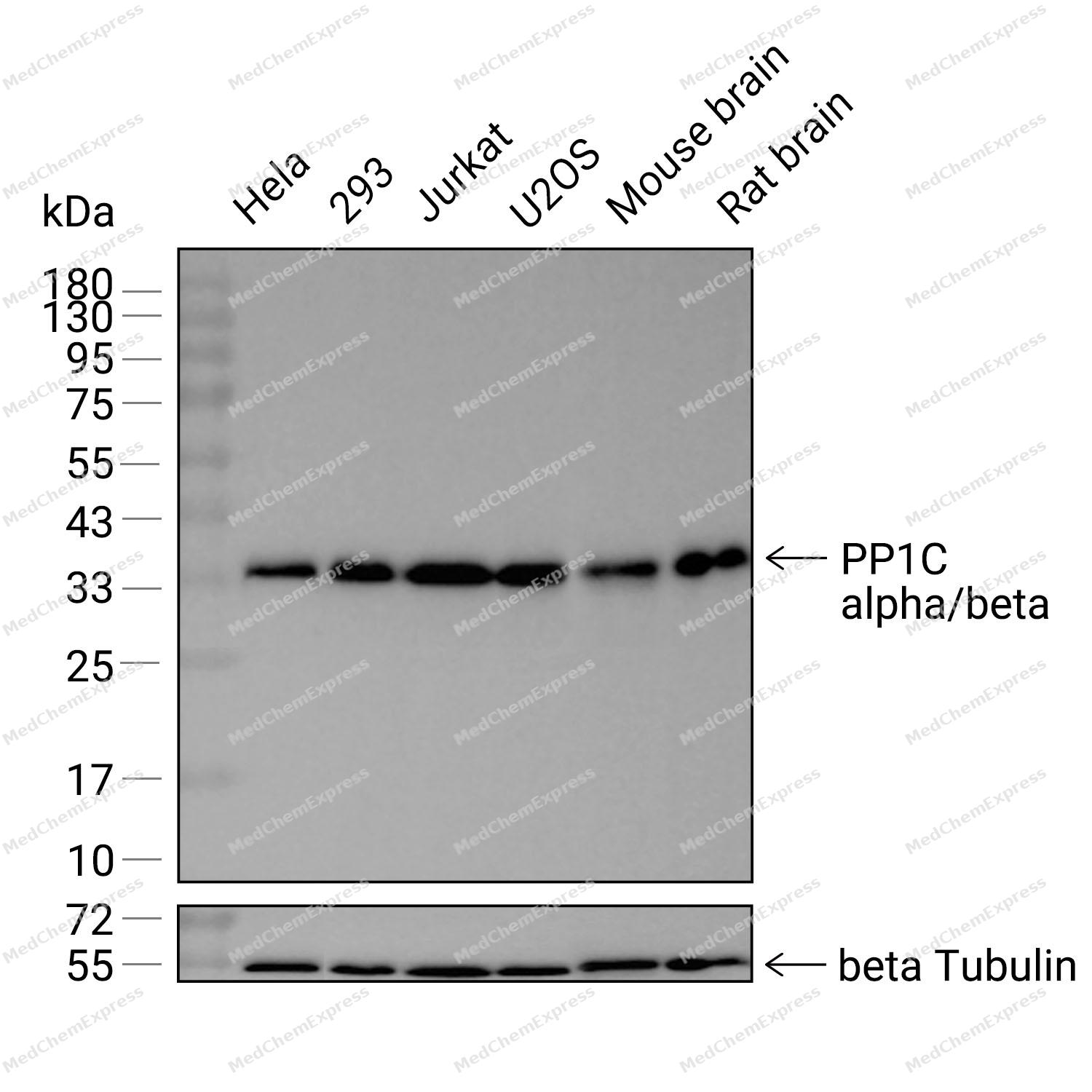 Western blot analysis was performed on extracts from Hela (lane 1, 15 μg), 293 (lane 2, 15 μg), Jurkat (lane 3, 15 μg), U2OS (lane 4, 15 μg), Mouse brain (lane 5, 15 μg), and Rat brain (lane 6, 15 μg) using PP1C alpha/beta Rabbit mAb.Proteins were transferred to a PVDF membrane and blocked with 5% non - fat milk in TBST at 4°C overnight.The primary antibody (1:1000 dilution) and the loading control antibody (beta-Tubulin, HY-P80487, 1:20000 dilution) were incubated in 5% non-fat milk in TBST for 1 hour at 37°C.Goat Anti - Rabbit IgG - HRP Secondary Antibody (1:20000 dilution) was then applied for 40 minutes at 37°C.
 -
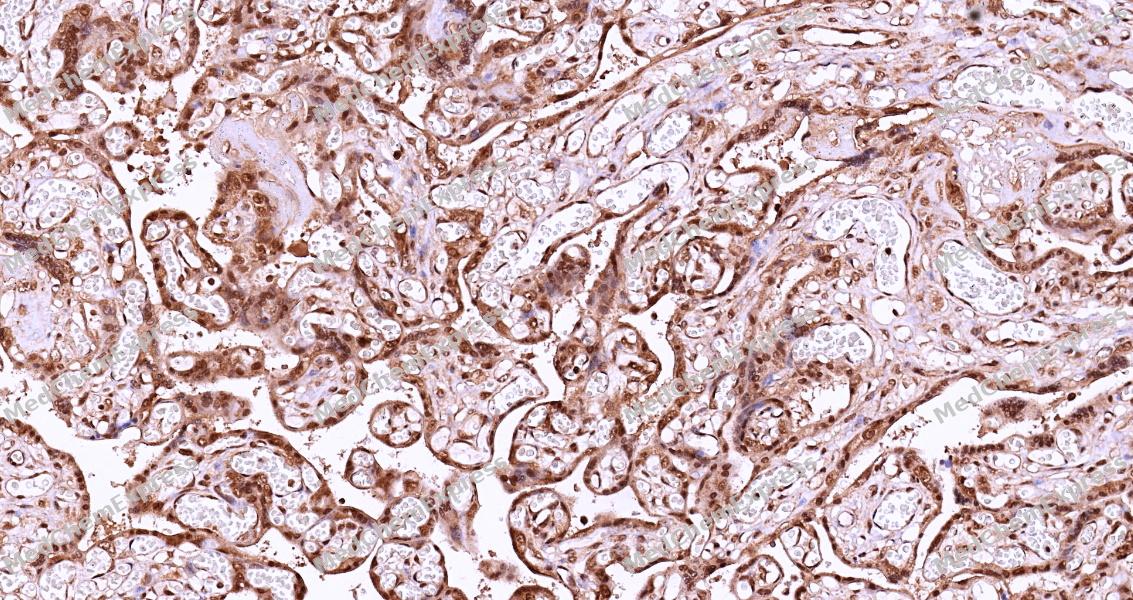 Immunohistochemical analysis of paraffin-embedded human placenta tissue using PP1C alpha/beta Antibody (HY-P81955, 1/100). The section was pretreated using heat mediated antigen retrieval with sodium citrate buffer (pH 6.0) for 8 minutes. The tissues were blocked with quick block buffer for 0.5 hours at room temperature, washed with PBS and PBST, and then incubated with the primary antibody overnight at 4℃. The detection was performed using an HRP conjugated compact polymer system. DAB was used as the chromogen. Tissues were counterstained with hematoxylin and mounted with DPX.
 -
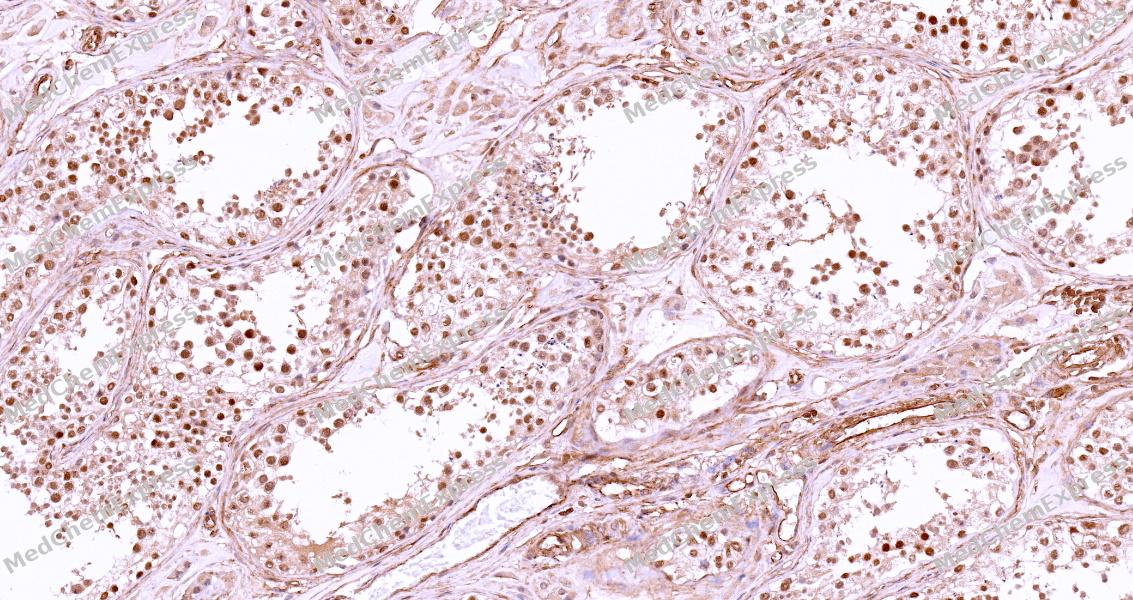 Immunohistochemical analysis of paraffin-embedded human testis tissue using PP1C alpha/beta Antibody (HY-P81955, 1/100). The section was pretreated using heat mediated antigen retrieval with sodium citrate buffer (pH 6.0) for 8 minutes. The tissues were blocked with quick block buffer for 0.5 hours at room temperature, washed with PBS and PBST, and then incubated with the primary antibody overnight at 4℃. The detection was performed using an HRP conjugated compact polymer system. DAB was used as the chromogen. Tissues were counterstained with hematoxylin and mounted with DPX.
 -
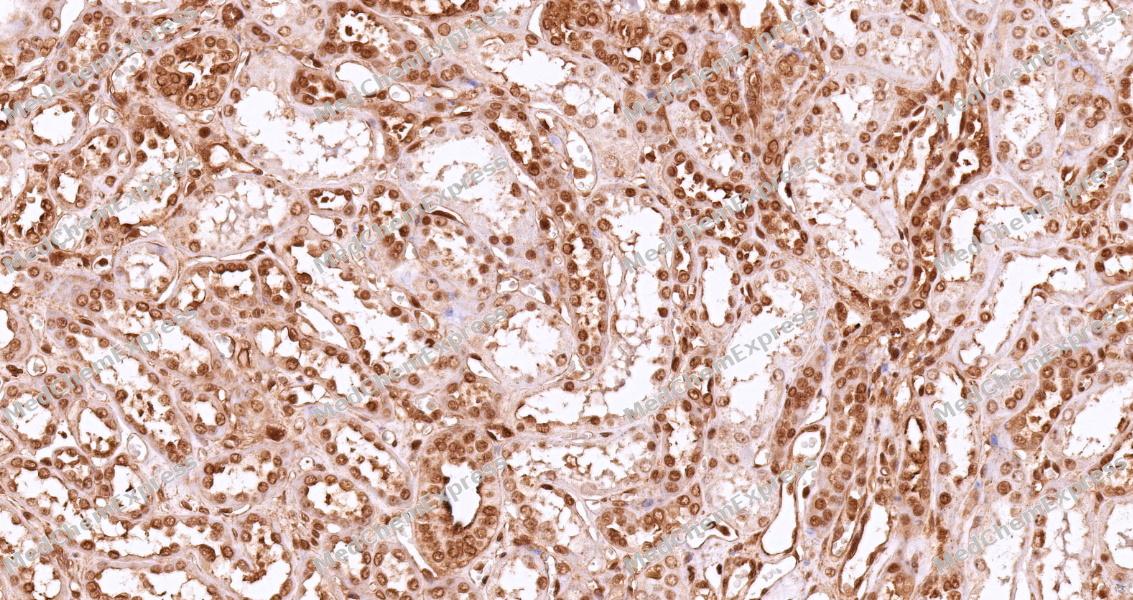 Immunohistochemical analysis of paraffin-embedded human kidney tissue using PP1C alpha/beta Antibody (HY-P81955, 1/100). The section was pretreated using heat mediated antigen retrieval with sodium citrate buffer (pH 6.0) for 8 minutes. The tissues were blocked with quick block buffer for 0.5 hours at room temperature, washed with PBS and PBST, and then incubated with the primary antibody overnight at 4℃. The detection was performed using an HRP conjugated compact polymer system. DAB was used as the chromogen. Tissues were counterstained with hematoxylin and mounted with DPX.
 -
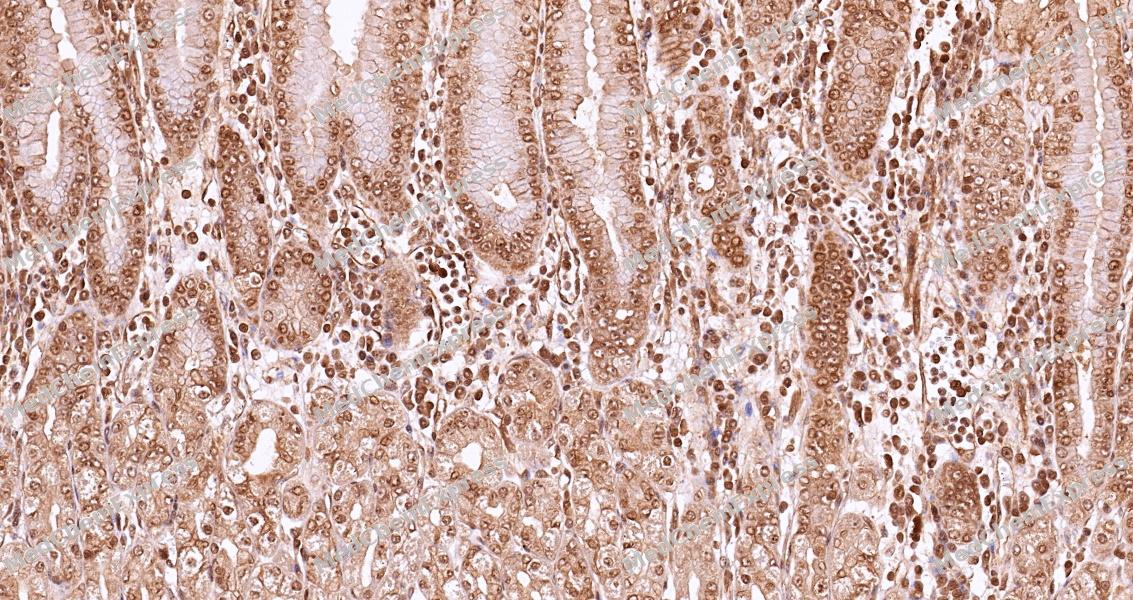 Immunohistochemical analysis of paraffin-embedded human stomach tissue using PP1C alpha/beta Antibody (HY-P81955, 1/100). The section was pretreated using heat mediated antigen retrieval with sodium citrate buffer (pH 6.0) for 8 minutes. The tissues were blocked with quick block buffer for 0.5 hours at room temperature, washed with PBS and PBST, and then incubated with the primary antibody overnight at 4℃. The detection was performed using an HRP conjugated compact polymer system. DAB was used as the chromogen. Tissues were counterstained with hematoxylin and mounted with DPX.
 -
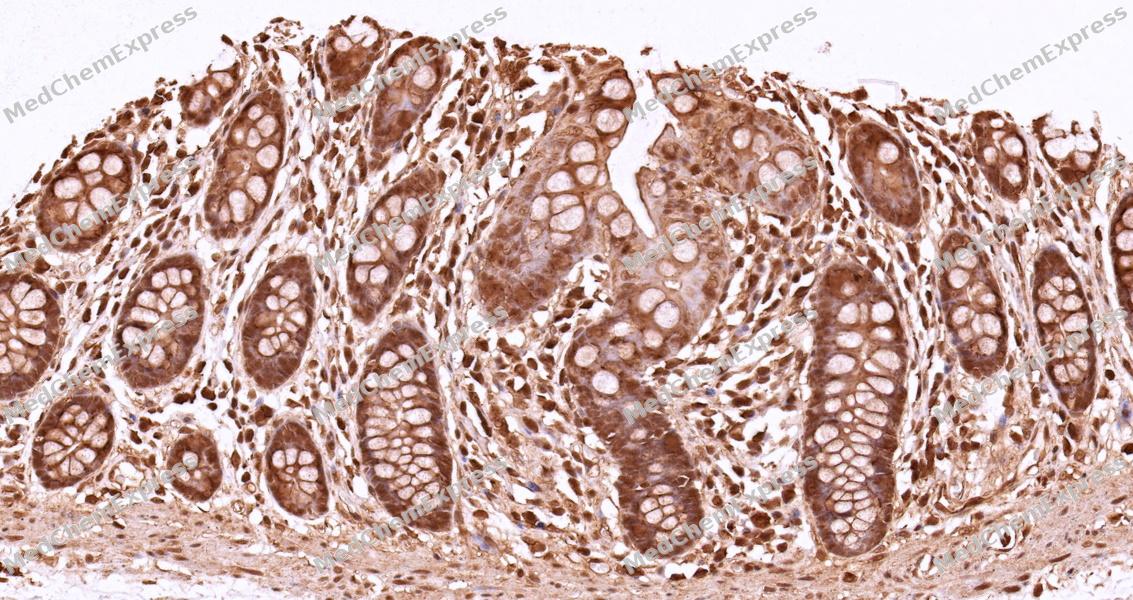 Immunohistochemical analysis of paraffin-embedded human colon tissue using PP1C alpha/beta Antibody (HY-P81955, 1/100). The section was pretreated using heat mediated antigen retrieval with sodium citrate buffer (pH 6.0) for 8 minutes. The tissues were blocked with quick block buffer for 0.5 hours at room temperature, washed with PBS and PBST, and then incubated with the primary antibody overnight at 4℃. The detection was performed using an HRP conjugated compact polymer system. DAB was used as the chromogen. Tissues were counterstained with hematoxylin and mounted with DPX.
 -
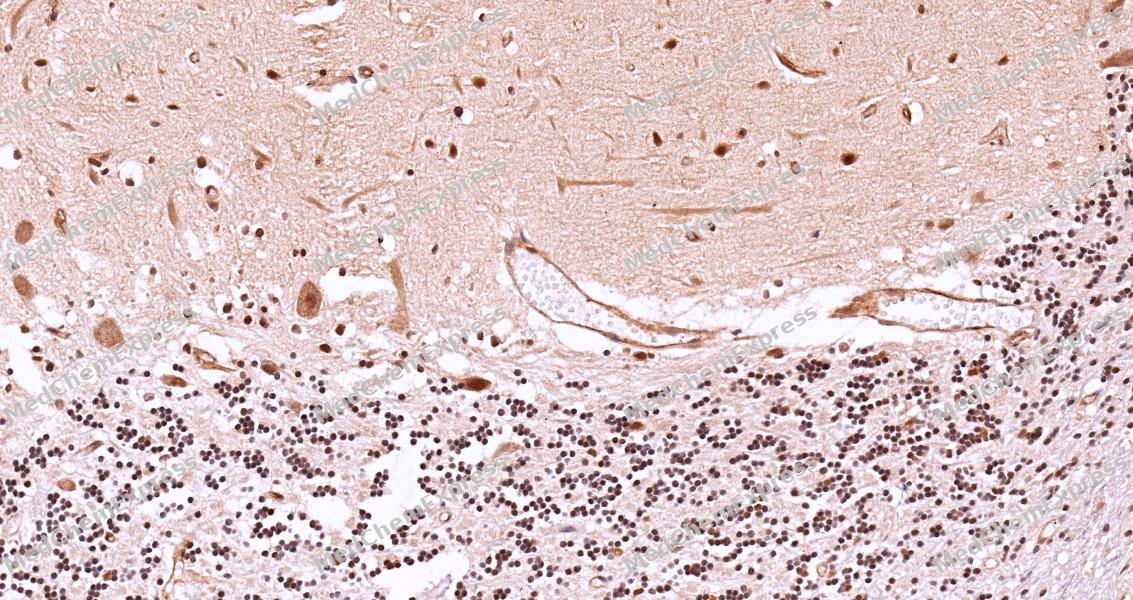 Immunohistochemical analysis of paraffin-embedded human cerebellum tissue using PP1C alpha/beta Antibody (HY-P81955, 1/100). The section was pretreated using heat mediated antigen retrieval with sodium citrate buffer (pH 6.0) for 8 minutes. The tissues were blocked with quick block buffer for 0.5 hours at room temperature, washed with PBS and PBST, and then incubated with the primary antibody overnight at 4℃. The detection was performed using an HRP conjugated compact polymer system. DAB was used as the chromogen. Tissues were counterstained with hematoxylin and mounted with DPX.


Background
-
Function
PP1C alpha/beta is a Protein phosphatase that associates witH2O2er 200 regulatory proteins to form highly specific holoenzymes which dephosphorylate hundreds of biological targets. Protein phosphatase 1 (PP1) is essential for cell division, transcription elongation, and participates in the regulation of glycogen metabolism, muscle contractility and protein synthesis. Involved in regulation of ionic conductances and long-term synaptic plasticity. May play an important role in dephosphorylating substrates such as the postsynaptic density-associated Ca(2+)/calmodulin dependent protein kinase II. Catalytic component of the PNUTS-PP1 protein phosphatase complex, a protein phosphatase 1 (PP1) complex that promotes RNA polymerase II transcription pause-release, allowing transcription elongation: the PNUTS-PP1 complex mediates the release of RNA polymerase II from promoter-proximal region of genes by catalyzing dephosphorylation of proteins involved in transcription, such as AFF4, CDK9, MEPCE, INTS12, NCBP1, POLR2M/GDOWN1 and SUPT6H. The PNUTS-PP1 complex also regulates transcription termination by mediating dephosphorylation of SUPT5H in termination zones downstream of poly(A) sites, thereby promoting deceleration of RNA polymerase II transcription. PNUTS-PP1 complex is also involved in the response to replication stress by mediating dephosphorylation of POLR2A at 'Ser-5' of the CTD, promoting RNA polymerase II degradation. PNUTS-PP1 also plays a role in the control of cH2O2atin structure and cell cycle progression during the transition from mitosis into interphase. Regulates NEK2 function in terms of kinase activity and centrosome number and splitting, both in the presence and absence of radiation-induced DNA damage. Regulator of neural tube and optic fissure closure, and enteric neural crest cell (ENCCs) migration during development. In balance with CSNK1D and CSNK1E, determines the circadian period length, tH2O2gh the regulation of the speed and rhythmicity of PER1 and PER2 phosphorylation. May dephosphorylate CSNK1D and CSNK1E. Dephosphorylates the 'Ser-418' residue of FOXP3 in regulatory T-cells (Treg) from with rheumatoid arthritis, thereby inactivating FOXP3 and rendering Treg cells functionally defective. Dephosphorylates CENPA. Dephosphorylates the 'Ser-139' residue of ATG16L1 causing dissociation of ATG12-ATG5-ATG16L1 complex, thereby inhibiting autophagy. Together with PPP1CC (PP1-gamma subunit), dephosphorylates IFIH1/MDA5 and RIG-I leading to their activation and a functional innate immune response. Core component of the SHOC2-MRAS-PP1c (SMP) holophosphatase complex that regulates the MAPK pathway activation. The SMP complex specifically dephosphorylates the inhibitory phosphorylation at 'Ser-259' of RAF1 kinase, 'Ser-365' of BRAF kinase and 'Ser-214' of ARAF kinase, stimulating their kinase activities. The SMP complex enhances the dephosphorylation activity and substrate specificity of PP1c; (Microbial infection) Necessary for alphaviruses replication[1][2][3][4][5][6][7][8][9][10][11][12][13][14][15][16][17].
-
Subcellular Localization
Cytoplasm; Nucleus; Nucleus, nucleoplasm; Nucleus, nucleolus
-
Expression
Induction:Up-regulated in synovial fluid mononuclear cells and peripheral blood mononuclear cells from with rheumatoid arthritis -
Isoforms & Post-Translational Modification
P62136 has 3 isomers: P62136-1: 37512 Da (predicted); P62136-2: 38631 Da (predicted); P62136-3: 32595 Da (predicted).
Phosphorylated. Dephosphorylated at Thr-320 in the presence of ionizing radiation -
Subunit
PP1 comprises a catalytic subunit, PPP1CA, PPP1CB or PPP1CC, which is folded into its native form by inhibitor 2 and glycogen synthetase kinase 3, and then complexed to one or several targeting or regulatory subunits.
-
SwissProt ID
-
Synonyms
Alpha isoform serine threonine protein phosphatase PP1alpha 1 catalytic subunit; Catalytic subunit; PP1A; PP1A_HUMAN; PP1alpha; PP2C ALPHA; PP2CA; Ppp1ca; Protein Phosphatase 2C Alpha Isoform; Serine threonine protein phosphatase PP1 alpha catalytic subunit; Serine threonine protein phosphatase PP1 alpha catalytic subunit protein phosphatase 1; Serine/threonine-protein phosphatase PP1-alpha catalytic subunit.
-
Research Field
Signal Transduction


Documentation
-
Data Sheet (263 KB)
-
SDS (254 KB)
- English - EN (254 KB)
- Français - FR (254 KB)
- Deutsch - DE (254 KB)
- Norwegian - NO (254 KB)
- Español - ES (254 KB)
- Swedish - SV (254 KB)
- Italian - IT (254 KB)
- Korean - KR (254 KB)
- Portuguese - PT (254 KB)
-
User Guide for Antibodies (1077 KB)
References
[1]. Rai R, et al. NBS1 Phosphorylation Status Dictates Repair Choice of Dysfunctional Telomeres. Mol Cell. 2017 Mar 2;65(5):801-817.e4. [Content Brief]
[2]. Dingar D, et al. MYC dephosphorylation by the PP1/PNUTS phosphatase complex regulates chromatin binding and protein stability. Nat Commun. 2018 Aug 29;9(1):3502. [Content Brief]
[3]. Liau NPD, et al. Structural basis for SHOC2 modulation of RAS signalling. Nature. 2022 Sep;609(7926):400-407. [Content Brief]
[4]. Hauseman ZJ, et al. Structure of the MRAS-SHOC2-PP1C phosphatase complex. Nature. 2022 Sep;609(7926):416-423. [Content Brief]
[5]. Kwon JJ, et al. Structure-function analysis of the SHOC2-MRAS-PP1C holophosphatase complex. Nature. 2022 Sep;609(7926):408-415. [Content Brief]
[6]. Bonsor DA, et al. Structure of the SHOC2-MRAS-PP1C complex provides insights into RAF activation and Noonan syndrome. Nat Struct Mol Biol. 2022 Oct;29(10):966-977. [Content Brief]
[7]. Kelley JR, et al. The PNUTS phosphatase complex controls transcription pause release. Mol Cell. 2024 Dec 19;84(24):4843-4861.e8. [Content Brief]
[8]. Wang Z, et al. The phosphatase PP1 sustains global transcription by promoting RNA polymerase II pause release. Mol Cell. 2024 Dec 19;84(24):4824-4842.e7. [Content Brief]
[9]. Cortazar MA, et al. Control of RNA Pol II Speed by PNUTS-PP1 and Spt5 Dephosphorylation Facilitates Termination by a "Sitting Duck Torpedo" Mechanism. Mol Cell. 2019 Dec 19;76(6):896-908.e4. [Content Brief]
[10]. Landsverk HB, et al. WDR82/PNUTS-PP1 Prevents Transcription-Replication Conflicts by Promoting RNA Polymerase II Degradation on Chromatin. Cell Rep. 2020 Dec 1;33(9):108469. [Content Brief]
[11]. Lee JH, et al. Identification and characterization of a novel human PP1 phosphatase complex. J Biol Chem. 2010 Aug 6;285(32):24466-76. [Content Brief]
[12]. Mi J, et al. Protein phosphatase-1alpha regulates centrosome splitting through Nek2. Cancer Res. 2007 Feb 1;67(3):1082-9. [Content Brief]
[13]. Schmutz I, et al. Protein phosphatase 1 (PP1) is a post-translational regulator of the mammalian circadian clock. PLoS One. 2011;6(6):e21325. [Content Brief]
[14]. Nie H, et al. Phosphorylation of FOXP3 controls regulatory T cell function and is inhibited by TNF-α in rheumatoid arthritis. Nat Med. 2013 Mar;19(3):322-8. [Content Brief]
[15]. Yu Z, et al. Dynamic phosphorylation of CENP-A at Ser68 orchestrates its cell-cycle-dependent deposition at centromeres. Dev Cell. 2015 Jan 12;32(1):68-81. [Content Brief]
[16]. Song H, et al. ATG16L1 phosphorylation is oppositely regulated by CSNK2/casein kinase 2 and PPP1/protein phosphatase 1 which determines the fate of cardiomyocytes during hypoxia/reoxygenation. Autophagy. 2015;11(8):1308-25. [Content Brief]
[17]. Wies E, et al. Dephosphorylation of the RNA sensors RIG-I and MDA5 by the phosphatase PP1 is essential for innate immune signaling. Immunity. 2013 Mar 21;38(3):437-49. [Content Brief]

 Powered by Bioz
