



PRPF8 Antibody (YA1759)
(Synonyms: HPRP8; p220; PRP8; PRPC8; Prpf8; RP13; SNRNP220)
Based on 1 Customer Validation
PRPF8 Antibody (YA1759) is a Rabbit-derived and non-conjugated IgG monoclonal antibody, targeting to PRPF8.
-
Host:
Rabbit
-
Isotype:
IgG
-
Application:
WB, IHC-P
-
Reactivity :
Human
-
Formulation:
Supplied in 50mM Tris-Glycine(pH 7.4), 0.15M NaCl, 40% Glycerol, 0.01% sodium azide and 0.05% BSA.
-
Conjugation:
Non-conjugated


To place orders, for customer services and technical support, please contact: MedChemExpress USA
Tel: 609-228-6898 E-mail: [email protected] [email protected]





Applications
| Application |
WB

WB: Western Blot
|
IHC-P
IHC-P: Immunohistochemistry-Paraffin
|
|---|---|---|
| Dilution Ratio | 1:500-1:1000 | 1:50-1:100 |


Product Details
PRPF8 Antibody (YA1759) is a Rabbit-derived and non-conjugated IgG monoclonal antibody, targeting to PRPF8.
-
Host Rabbit

-
Clonality Recombinant,Monoclonal

-
Species ReactivityHuman
-
Observed Molecular WeightObserved band size: 274 kDa
Note: Due to possible protein modifications or aggregation, the molecular weight should be confirmed by actual measurement, and the predicted value is for reference only.

-
Calculated Molecular Weight Predicted band size: 274 kDa

A synthetic peptide of human PRPF8
Endogenous
Affinity Purified
Non-conjugated
Unmodified
IgG


Product Properties
-
Appearance
Liquid
-
Formulation
Supplied in 50mM Tris-Glycine(pH 7.4), 0.15M NaCl, 40% Glycerol, 0.01% sodium azide and 0.05% BSA.
-
Concentration
Batch-dependent, Please check the COA for the concentration of each lot. Check Lot Concentration
-
Storage & Stability
Stored at -20°C for 1 year. Avoid repeated freeze / thaw cycles.
-
Shipping
Shipping with blue ice.


Verification Images
-
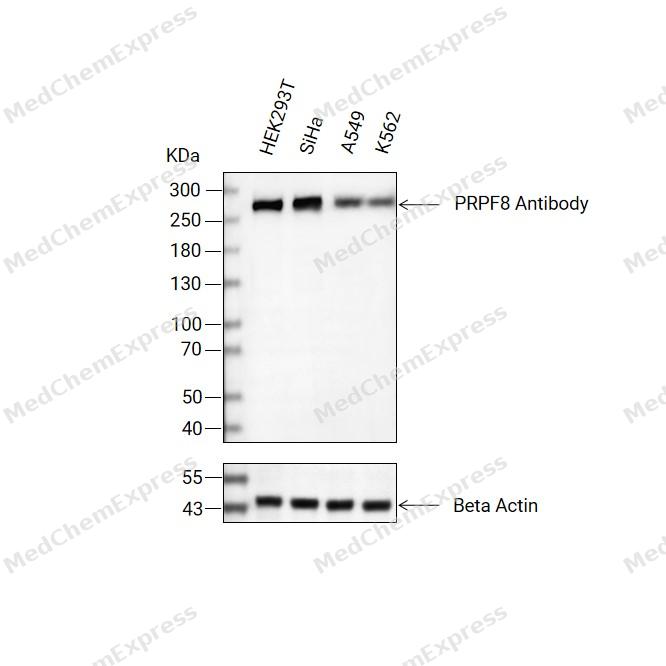 Western blot analysis of extracts from HEK293T (lane 2(20μg), SiHa (lane 3(20μg), A549 (lane 4(20μg), K562 (lane 5(20μg) using PRPF8 Antibody. Proteins were transferred to a PVDF membrane and blocked with 5% BSA in TBST for 2 hour at room temperature. The primary antibody (1/1000) and Loading control antibody (Beta Actin, HY-P80438, 1/3000) was used in 5% BSA in TBST at 4°C overnight. Goat Anti-Mouse/Rabbit IgG-HRP Secondary Antibody (HY-P8004/HY-P8001, 1/10,000) was used for 1 hour at room temperature.
 -
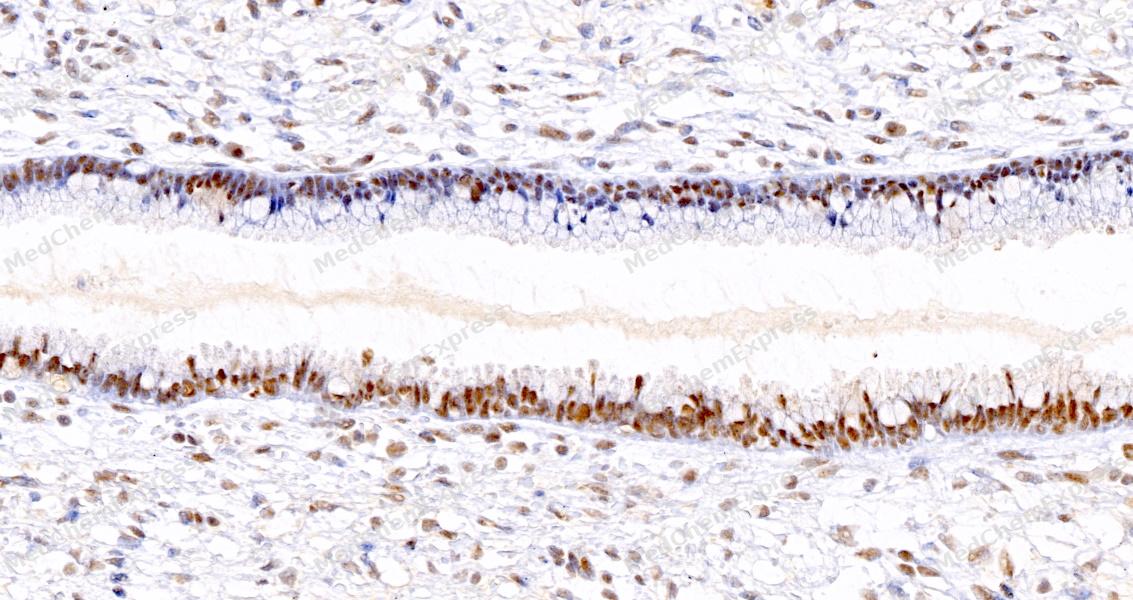 Immunohistochemical analysis of paraffin-embedded human cervix tissue using PRPF8 Antibody (HY-P82014, 1/100). The section was pretreated using heat mediated antigen retrieval with sodium citrate buffer (pH 6.0) for 8 minutes. The tissues were blocked with quick block buffer for 0.5 hours at room temperature, washed with PBS and PBST, and then incubated with the primary antibody overnight at 4℃. The detection was performed using an HRP conjugated compact polymer system. DAB was used as the chromogen. Tissues were counterstained with hematoxylin and mounted with DPX.
 -
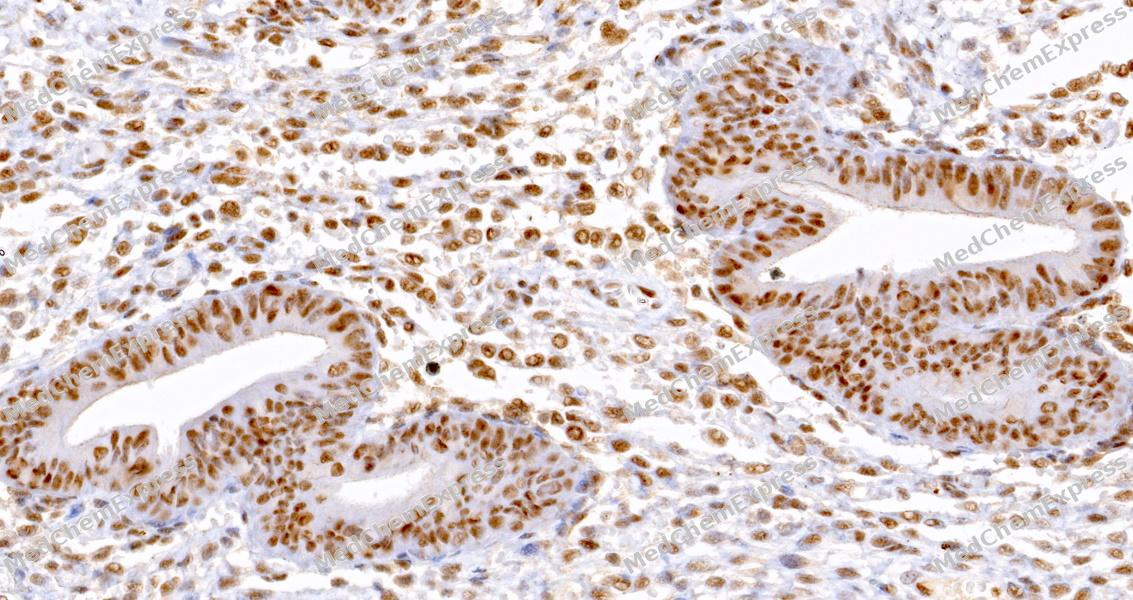 Immunohistochemical analysis of paraffin-embedded human endometrium tissue using PRPF8 Antibody (HY-P82014, 1/100). The section was pretreated using heat mediated antigen retrieval with sodium citrate buffer (pH 6.0) for 8 minutes. The tissues were blocked with quick block buffer for 0.5 hours at room temperature, washed with PBS and PBST, and then incubated with the primary antibody overnight at 4℃. The detection was performed using an HRP conjugated compact polymer system. DAB was used as the chromogen. Tissues were counterstained with hematoxylin and mounted with DPX.
 -
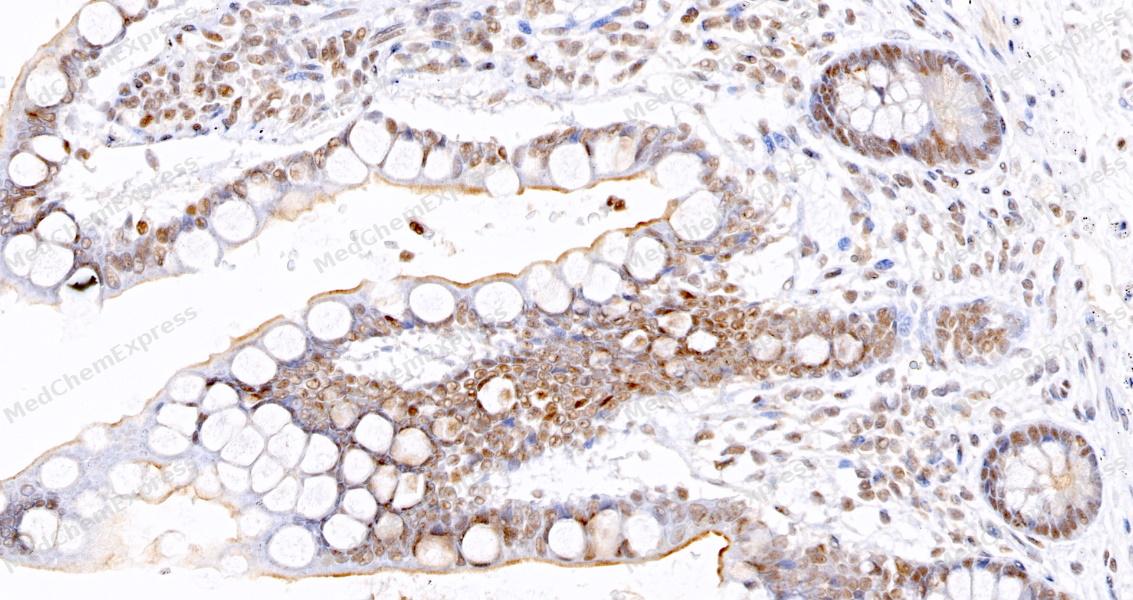 Immunohistochemical analysis of paraffin-embedded human small intestine tissue using PRPF8 Antibody (HY-P82014, 1/100). The section was pretreated using heat mediated antigen retrieval with sodium citrate buffer (pH 6.0) for 8 minutes. The tissues were blocked with quick block buffer for 0.5 hours at room temperature, washed with PBS and PBST, and then incubated with the primary antibody overnight at 4℃. The detection was performed using an HRP conjugated compact polymer system. DAB was used as the chromogen. Tissues were counterstained with hematoxylin and mounted with DPX.
 -
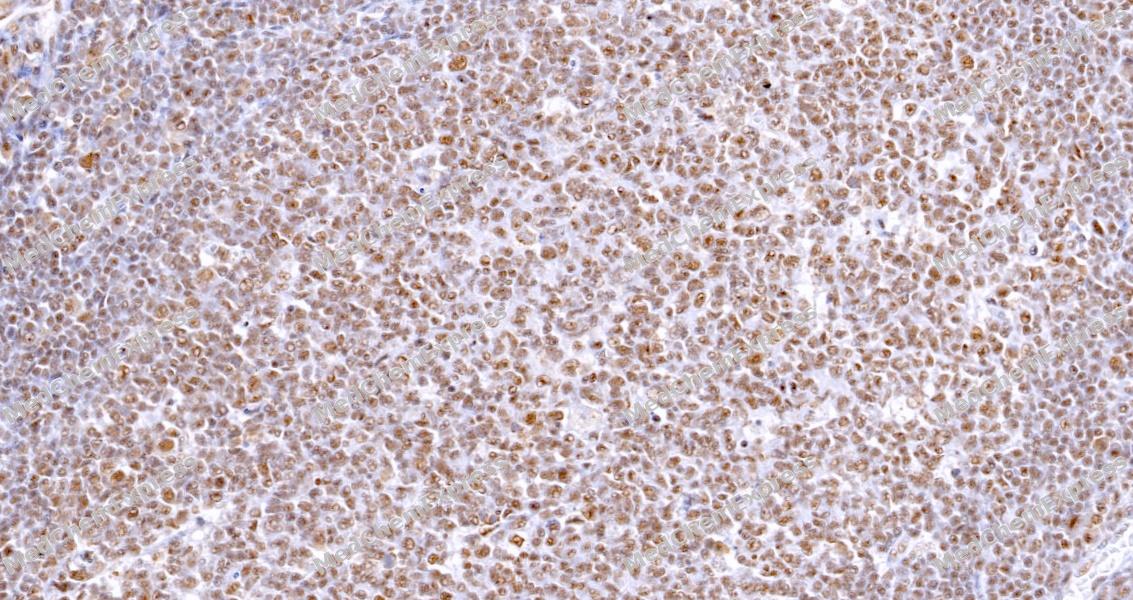 Immunohistochemical analysis of paraffin-embedded human tonsil tissue using PRPF8 Antibody (HY-P82014, 1/100). The section was pretreated using heat mediated antigen retrieval with sodium citrate buffer (pH 6.0) for 8 minutes. The tissues were blocked with quick block buffer for 0.5 hours at room temperature, washed with PBS and PBST, and then incubated with the primary antibody overnight at 4℃. The detection was performed using an HRP conjugated compact polymer system. DAB was used as the chromogen. Tissues were counterstained with hematoxylin and mounted with DPX.
 -
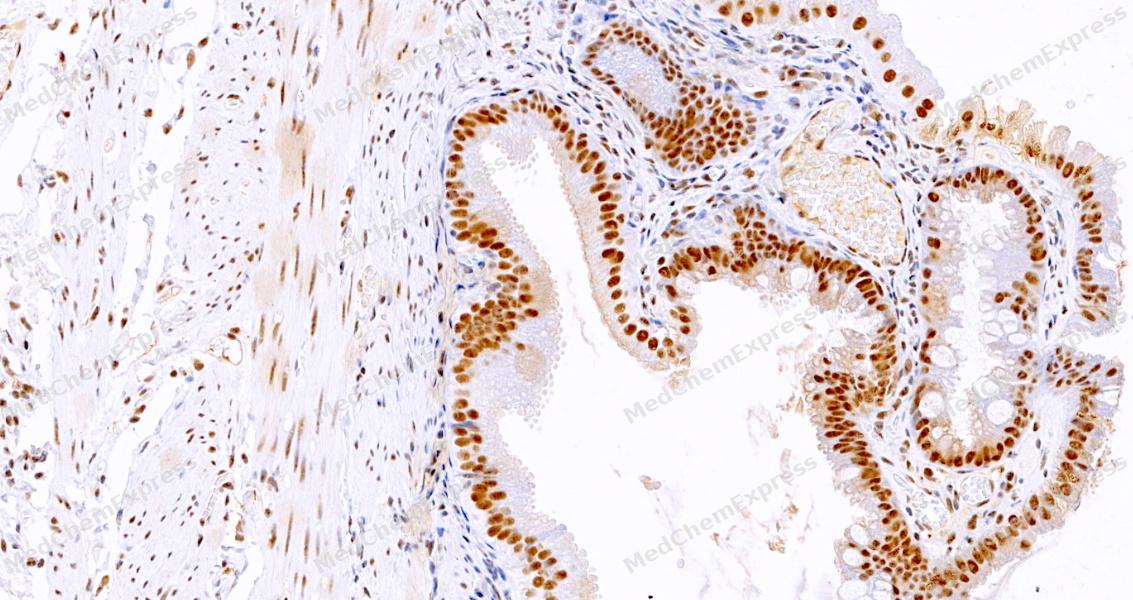 Immunohistochemical analysis of paraffin-embedded human gallbladder tissue using PRPF8 Antibody (HY-P82014, 1/100). The section was pretreated using heat mediated antigen retrieval with sodium citrate buffer (pH 6.0) for 8 minutes. The tissues were blocked with quick block buffer for 0.5 hours at room temperature, washed with PBS and PBST, and then incubated with the primary antibody overnight at 4℃. The detection was performed using an HRP conjugated compact polymer system. DAB was used as the chromogen. Tissues were counterstained with hematoxylin and mounted with DPX.
 -
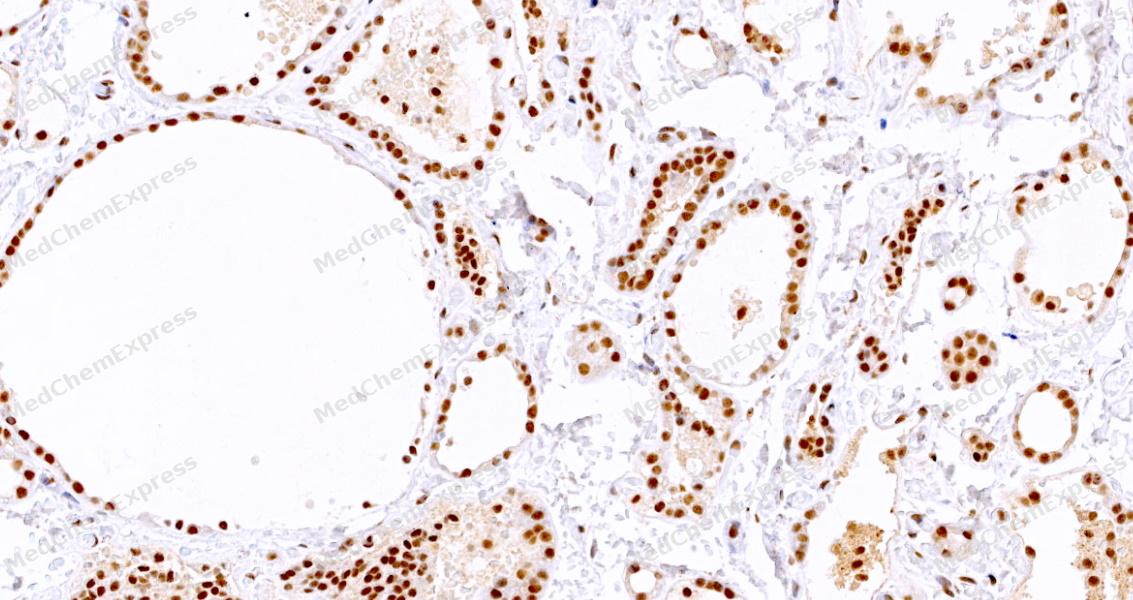 Immunohistochemical analysis of paraffin-embedded human thyroid gland tissue using PRPF8 Antibody (HY-P82014, 1/100). The section was pretreated using heat mediated antigen retrieval with sodium citrate buffer (pH 6.0) for 8 minutes. The tissues were blocked with quick block buffer for 0.5 hours at room temperature, washed with PBS and PBST, and then incubated with the primary antibody overnight at 4℃. The detection was performed using an HRP conjugated compact polymer system. DAB was used as the chromogen. Tissues were counterstained with hematoxylin and mounted with DPX.


Background
-
Function
PRPF8 plays a role in pre-mRNA splicing as core component of precatalytic, catalytic and postcatalytic spliceosomal complexes, both of the predominant U2-type spliceosome and the minor U12-type spliceosome. Functions as a scaffold that mediates the ordered assembly of spliceosomal proteins and snRNAs. Required for the assembly of the U4/U6-U5 tri-snRNP complex, a building block of the spliceosome. Functions as a scaffold that positions spliceosomal U2, U5 and U6 snRNAs at splice sites on pre-mRNA substrates, so that splicing can occur. Interacts with both the 5' and the 3' splice site[1][2][3][4][5][6][7][8][9][10][11].
-
Subcellular Localization
Nucleus; Nucleus speckle
-
Expression
Tissue_specificity:Widely expressed -
Subunit
Part of the U5 snRNP complex (PubMed:2527369, PubMed:2532307). Component of the U4/U6-U5 tri-snRNP complex composed of the U4, U6 and U5 snRNAs and at least PRPF3, PRPF4, PRPF6, PRPF8, PRPF31, SNRNP200, TXNL4A, SNRNP40, DDX23, CD2BP2, PPIH, SNU13, EFTUD2, SART1 and USP39 (PubMed:16723661, PubMed:2479028, PubMed:26912367). Component of the U5.U4atac/U6atac snRNP complexes in U12-dependent spliceosomes (PubMed:11971955). Within the minor spliceosome, which acts on U12-type introns, interacts with PPIL2 and RBM48 (PubMed:33509932). Core component of U2-type precatalytic, catalytic and postcatalytic spliceosomal complexes (PubMed:10411133, PubMed:28076346, PubMed:28502770, PubMed:28781166, PubMed:29301961, PubMed:29360106, PubMed:29361316, PubMed:30315277, PubMed:30705154, PubMed:30728453). Found in a mRNA splicing-dependent exon junction complex (EJC) with SRRM1. Interacts with U5 snRNP proteins SNRP116 and SNRNP40. Interacts with EFTUD2. Interacts (via the MPN (JAB/Mov34) domain) with PRPF3 ('Lys-63'-linked polyubiquitinated); may stabilize the U4/U6-U5 tri-snRNP complex. Interacts (via RNase H homology domain) with AAR2 (PubMed:26527271). Interacts with RPAP3 and URI1 in a ZNHIT2-dependent manner (PubMed:28561026). Interacts with C9orf78 (PubMed:35167828, PubMed:35241646). Interacts with SNRNP200; the interaction is direct (PubMed:35188580, PubMed:35241646). Interacts with TSSC4; the interaction is direct (PubMed:35188580)
-
SwissProt ID
-
Synonyms
HPRP8; p220; PRP8; PRPC8; Prpf8; RP13; SNRNP220
-
Research Field
Epigenetics and Nuclear Signaling


Documentation
-
Data Sheet (232 KB)
-
SDS (251 KB)
- English - EN (251 KB)
- Français - FR (251 KB)
- Deutsch - DE (251 KB)
- Norwegian - NO (251 KB)
- Español - ES (251 KB)
- Swedish - SV (251 KB)
- Italian - IT (251 KB)
- Korean - KR (251 KB)
- Portuguese - PT (251 KB)
-
User Guide for Antibodies (1077 KB)

 Powered by Bioz
