

340 Results for "

penetration

" in MedChemExpress (MCE) Product Catalog:
Products (340)

340 Results for "penetration" in MCE Product Catalog:

379
379 Publications Verification
Art. -Nr.: HY-Y0320
CAS. Nr.: 67-68-5
Synonyms: DMSO, meets analytical specification of Ch.P.
Dimethyl sulfoxide (DMSO), meets analytical specification of Ch.P. is an aprotic solvent that dissolves polar and non-polar compounds, including water-insoluble therapeutic and toxic agents. Dimethyl sulfoxide (DMSO) has a strong affinity for water and can rapidly penetrate or enhance the penetration of other substances into biological membranes. Dimethyl sulfoxide also has potential free radical scavenging and anticholinesterase effects and may affect coagulation activity. Dimethyl sulfoxide also induces histamine release from mast cells but is thought to have low systemic toxicity. Dimethyl sulfoxide also exhibits antifreeze and antibacterial properties .
MCE provides Dimethyl sulfoxide that complies with the inspection standards (Ch.P) of Part 4 of the Chinese Pharmacopoeia (2020 Edition). Amicrobic, low endotoxin, can be used in various biochemical experiments such as drug dissolution.
loading...
    loading...
76
76 Cited Publications
Art. -Nr.: HY-13318
CAS. Nr.: 187227-45-8
Reinheit:  99.50%
Synonyms: GS 4071; Ro 64-0802; Oseltamivir carboxylate
Forschungsgebiete:  

Infection Neurological Disease

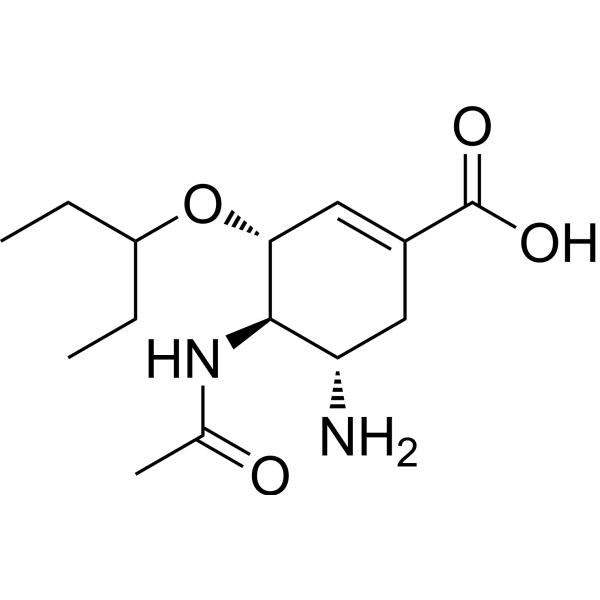
Oseltamivir acid (GS 4071), the active metabolite of Oseltamivir phosphate, is an orally bioavailable, potent and selective inhibitor of influenza virus neuraminidase (IC50=2 nM) with activity against both influenza A and B viruses. Oseltamivir acid has an extremely weak ability to penetrate the BBB under normal physiological conditions, but its blood-brain barrier penetration is significantly enhanced under inflammatory conditions .
loading...
    loading...
53
53 Cited Publications
Art. -Nr.: HY-Y0320C
CAS. Nr.: 67-68-5
Synonyms: DMSO
Dimethyl sulfoxide (DMSO) is an aprotic solvent that can dissolve water-insoluble therapeutic and toxic agents. Dimethyl sulfoxide (DMSO) has a strong affinity for water and has the ability to rapidly penetrate or enhance the penetration of other substances through biological membranes. Dimethyl sulfoxide also has potential free radical scavenging and anticholinesterase effects and may affect coagulation activity. Dimethyl sulfoxide also induces histamine release from mast cells but is thought to have low systemic toxicity .
Low endotoxin, can be used in various biochemical experiments such as drug dissolution.
loading...
    loading...
44
44 Cited Publications
Art. -Nr.: HY-13011
CAS. Nr.: 1256580-46-7
Reinheit:  99.78%
Synonyms: CH5424802; RO5424802; RG7853
Forschungsgebiete:  

Neurological Disease Cancer

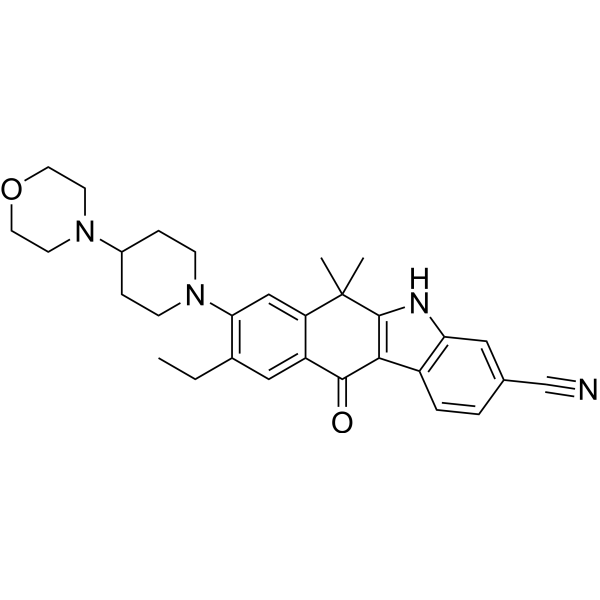
Alectinib (CH5424802; RO5424802; RG7853) is a potent, selective, and orally available ALK inhibitor with an IC50 of 1.9 nM and a Kd value of 2.4 nM (in an ATP-competitive manner), and also inhibits ALK F1174L and ALK R1275Q with IC50s of 1 nM and 3.5 nM, respectively . Alectinib demonstrates effective central nervous system (CNS) penetration .
loading...
    loading...
44
44 Cited Publications
Art. -Nr.: HY-13011A
CAS. Nr.: 1256589-74-8
Reinheit:  99.92%
Synonyms: CH5424802 Hydrochloride; RO5424802 Hydrochloride; AF-802 Hydrochloride
Forschungsgebiete:  

Neurological Disease Cancer

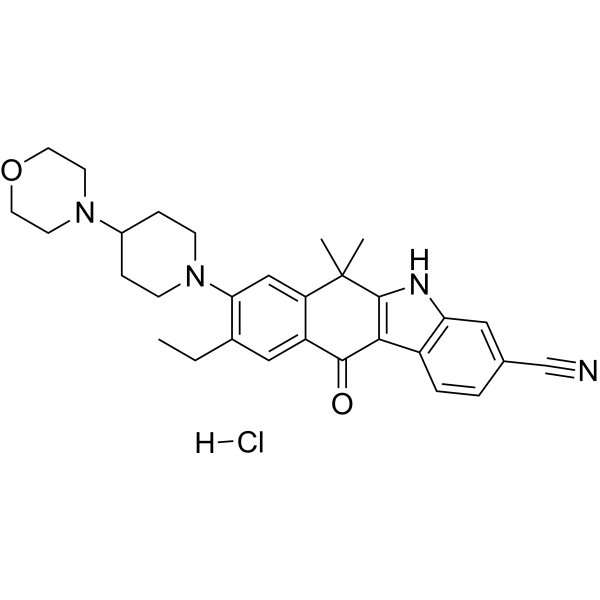
Alectinib (CH5424802; RO5424802; RG7853) Hydrochloride is a potent, selective, and orally available ALK inhibitor with an IC50 of 1.9 nM and a Kd value of 2.4 nM (in an ATP-competitive manner), and also inhibits ALK F1174L and ALK R1275Q with IC50s of 1 nM and 3.5 nM, respectively . Alectinib demonstrates effective central nervous system (CNS) penetration .
loading...
    loading...
28
28 Cited Publications
Art. -Nr.: HY-13637
CAS. Nr.: 82410-32-0
Reinheit:  99.89%
Synonyms: BW 759; 2'-Nor-2'-deoxyguanosine
Forschungsgebiete:  

Infection Cancer

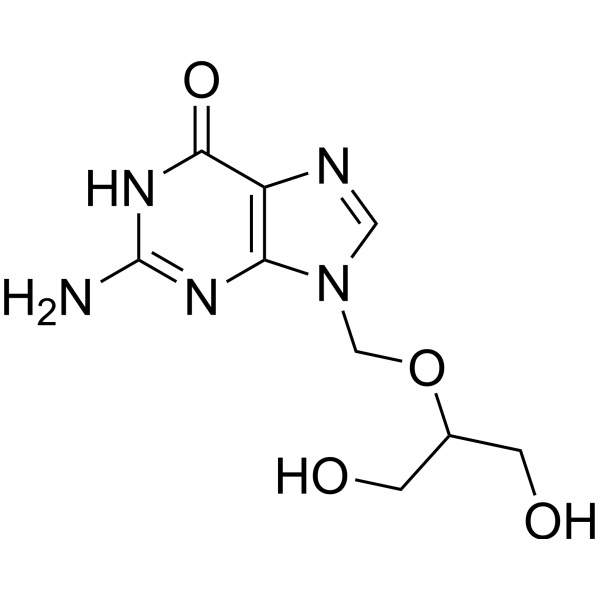
Ganciclovir (BW 759), a nucleoside analogue, is an orally active antiviral agent with activity against CMV. Ganciclovir also has activity in vitro against members of the herpes group and some other DNA viruses. Ganciclovir inhibits the in vitro replication of human herpes viruses (HSV 1 and 2, CMV) and adenovirus serotypes 1, 2, 4, 6, 8, 10, 19, 22 and 28. Ganciclovir has an IC50 of 5.2 μM for feline herpesvirus type-1 (FHV-1) and can diffuse into the brain .
loading...
    loading...
28
28 Cited Publications
Art. -Nr.: HY-13637A
CAS. Nr.: 107910-75-8
Reinheit:  99.92%
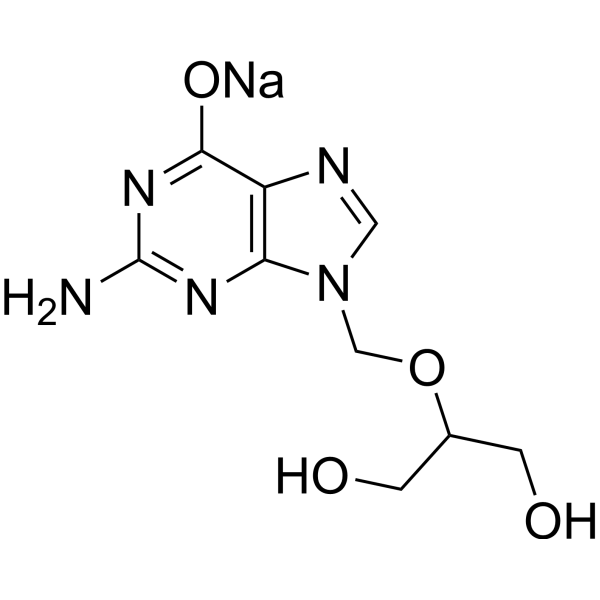
Synonyms: BW 759 sodium; 2'-Nor-2'-deoxyguanosine sodium
Forschungsgebiete:  

Infection Cancer

Ganciclovir (BW 759) sodium, a nucleoside analogue, is an orally active antiviral agent with activity against CMV. Ganciclovir sodium also has activity in vitro against members of the herpes group and some other DNA viruses. Ganciclovir sodium inhibits the in vitro replication of human herpes viruses (HSV 1 and 2, CMV) and adenovirus serotypes 1, 2, 4, 6, 8, 10, 19, 22 and 28. Ganciclovir sodium has an IC50 of 5.2 μM for feline herpesvirus type-1 (FHV-1) and can diffuse into the brain .
loading...
    loading...
19
19 Cited Publications
Art. -Nr.: HY-B0250
CAS. Nr.: 134678-17-4
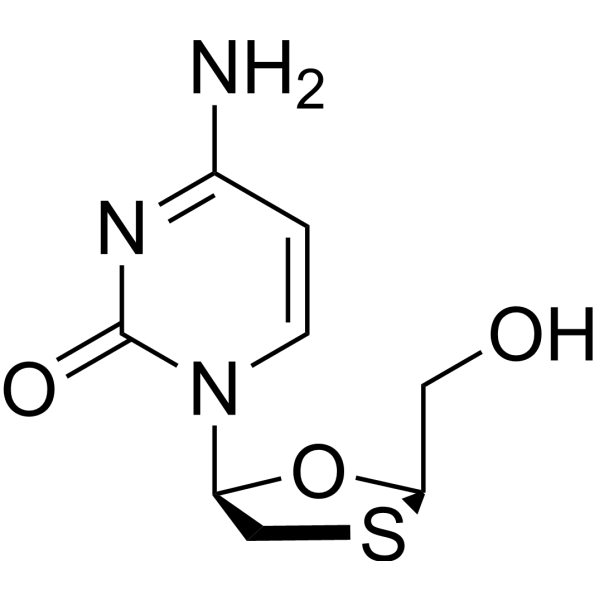
Synonyms: BCH-189
Forschungsgebiete:  

Infection Cancer

Lamivudine (BCH-189) is an orally active nucleoside reverse transcriptase inhibitor (NRTI). Lamivudine can inhibit HIV reverse transcriptase 1/2 and also the reverse transcriptase of hepatitis B virus. Lamivudine salicylate can penetrate the CNS .
loading...
    loading...
16
16 Cited Publications
Art. -Nr.: HY-108463
CAS. Nr.: 1170613-55-4
Reinheit:  99.30%
Target:  

TRP Channel

A-967079 is a selective TRPA1 receptor antagonist with IC50s of 67 nM and 289 nM at human and rat TRPA1 receptors, respectively, and has good penetration into the blood-brain barrier .
loading...
    loading...
9
9 Cited Publications
Art. -Nr.: HY-137207
CAS. Nr.: 864388-65-8
Reinheit:  99.88%
Target:  

PERK

Forschungsgebiete:  

Neurological Disease

MK-28 is a potent and selective PERK activator. MK-28 exhibits remarkable pharmacokinetic properties and high BBB penetration in mice .
loading...
    loading...
7
7 Cited Publications
Art. -Nr.: HY-12599
CAS. Nr.: 1229582-33-5
Reinheit:  99.34%
Forschungsgebiete:  

Neurological Disease Cancer

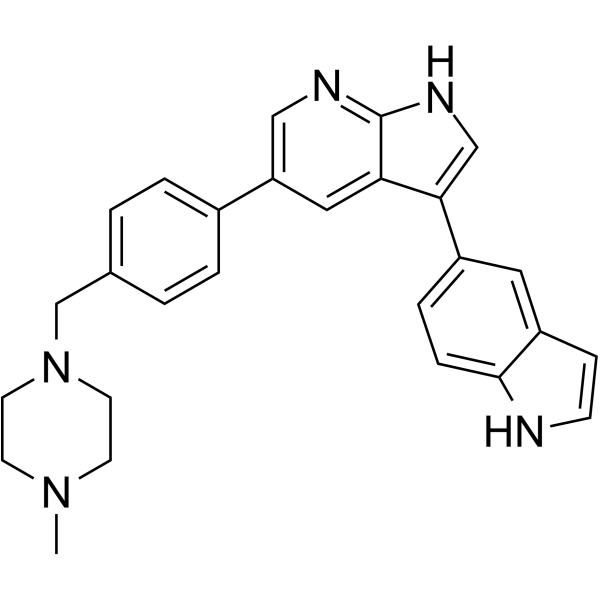
URMC-099 is an orally bioavailable and potent mixed lineage kinase type 3 (MLK3) (IC50=14 nM) inhibitor with with excellent blood-brain barrier penetration properties.
loading...
    loading...
7
7 Cited Publications
Art. -Nr.: HY-P0122
CAS. Nr.: 1392278-76-0
Synonyms: c(CRGDKGPDC)
Target:  

Integrin

Forschungsgebiete:  

Cancer

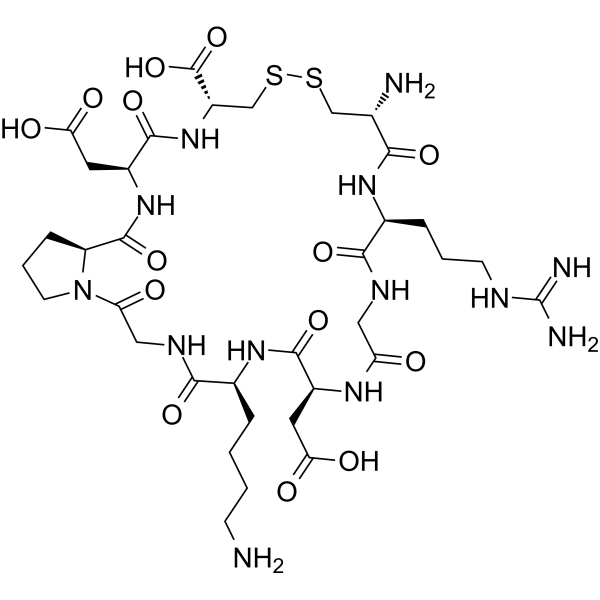
iRGD peptide is a 9-amino acid cyclic peptide, triggers tissue penetration of agents by first binding to αv-integrins, then proteolytically cleaved in the tumor to produce CRGDK/R to interact with neuropilin-1, and has tumor-targeting and tumor-penetrating properties.
loading...
    loading...
7
7 Cited Publications
Art. -Nr.: HY-17595
CAS. Nr.: 31431-39-7
Forschungsgebiete:  

Infection Cancer

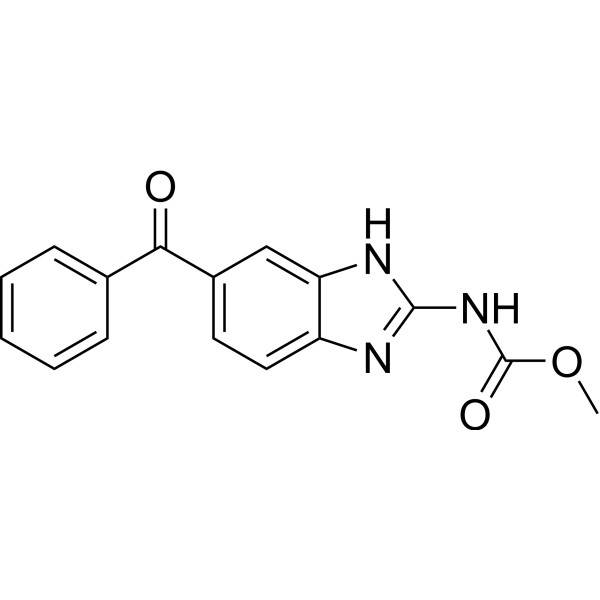
Mebendazole is a highly effective, broad-spectrum antihelmintic against nematode infestations. Mebendazole also exhibits inhibitory effect against glioblastoma multiforme (GBM), inhibits Hedgehog pathway and tubulin polymerization. Mebendazole is orally active and can cross CNS penetration .
loading...
    loading...
7
7 Cited Publications
Art. -Nr.: HY-112641A
CAS. Nr.: 2558205-28-8
Reinheit:  99.92%
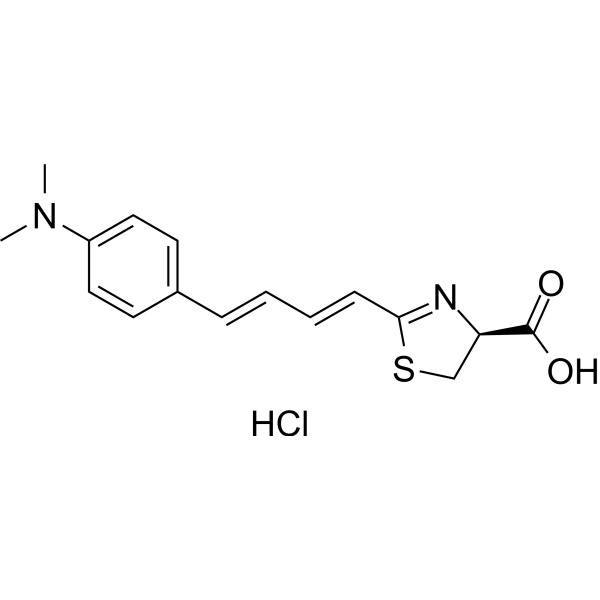
AkaLumine hydrochloride is a D-luciferin (HY-12591A) analogue with a Km of 2.06 μM for recombinant firefly luciferase (Fluc) protein. AkaLumine hydrochloride emits near-infrared (NIR) light (λmax=677 nm) in reactions with native Fluc. AkaLumine hydrochloride has high tissue-penetration and increases detection sensitivity from deep-tissue targets .
loading...
    loading...
6
6 Cited Publications
Art. -Nr.: HY-100788
CAS. Nr.: 173039-10-6
Reinheit:  ≥98.0%
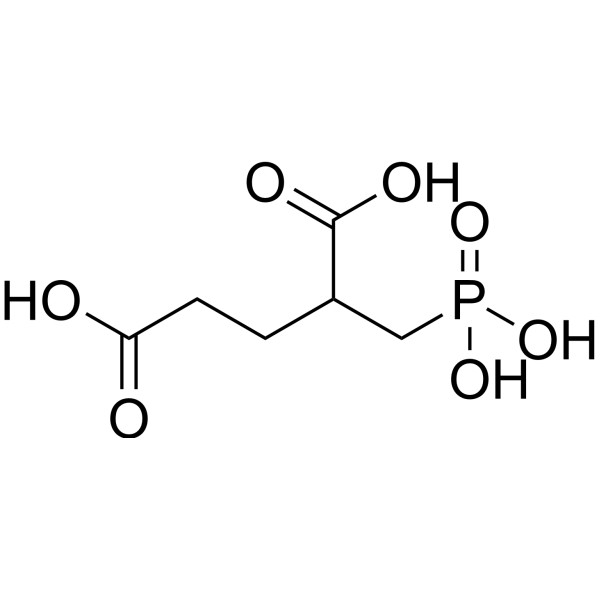
Synonyms: 2-(Phosphonomethyl)pentanedioic acid
Target:  

Carboxypeptidase

Forschungsgebiete:  

Neurological Disease

2-PMPA (2-(Phosphonomethyl)pentanedioic acid) is a glutamate carboxypeptidase II (GCPII) inhibitor with an IC50 of 0.0003 μM. 2-PMPA shows low blood-brain barrier penetration. 2-PMPA sodium blocks the hydrolysis of NAAG, regulates glutamate levels in the brain and neurovascular coupling. 2-PMPA is applicable to the research of neurological diseases .
loading...
    loading...
6
6 Cited Publications
Art. -Nr.: HY-100788C
CAS. Nr.: 373645-42-2
Synonyms: 2-(Phosphonomethyl)pentanedioic acid sodium
Target:  

Carboxypeptidase

Forschungsgebiete:  

Neurological Disease

2-PMPA (2-(Phosphonomethyl)pentanedioic acid) sodium is a glutamate carboxypeptidase II (GCPII) inhibitor with an IC50 of 0.0003 μM. 2-PMPA sodium shows low blood-brain barrier penetration. 2-PMPA sodium blocks the hydrolysis of NAAG, regulates glutamate levels in the brain and neurovascular coupling. 2-PMPA sodium is applicable to the research of neurological diseases .
loading...
    loading...
5
5 Cited Publications
Art. -Nr.: HY-17037
CAS. Nr.: 29868-97-1
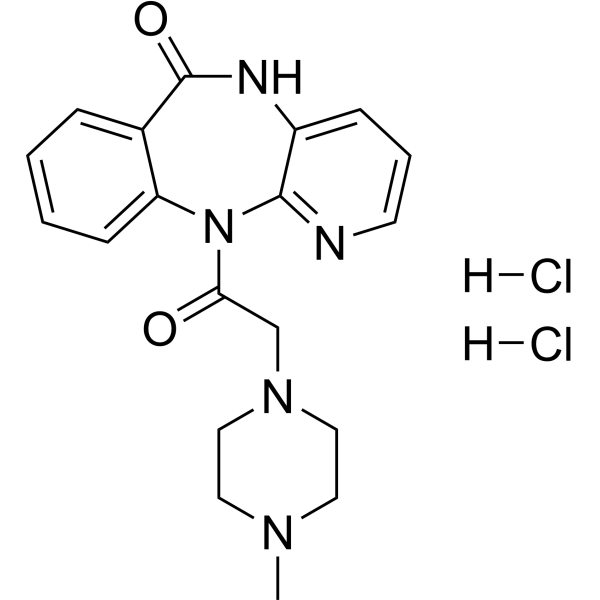
Synonyms: LS 519; Pirenzepin dihydrochloride; Gastrozepin dihydrochloride
Target:  

mAChR

Forschungsgebiete:  

Metabolic Disease Cancer

Pirenzepine (LS 519) dihydrochloride is a selective M1 mAChR (muscarinic acetylcholine receptor) antagonist, with poor penetration of the blood-brain barrier. Pirenzepine dihydrochloride reduces gastric acid secretion and reduces muscle spasm, can be used in peptic ulcers research. Pirenzepine dihydrochloride shows anti-proliferative activity to cancer cells .
loading...
    loading...
5
5 Cited Publications
Art. -Nr.: HY-17037A
CAS. Nr.: 28797-61-7
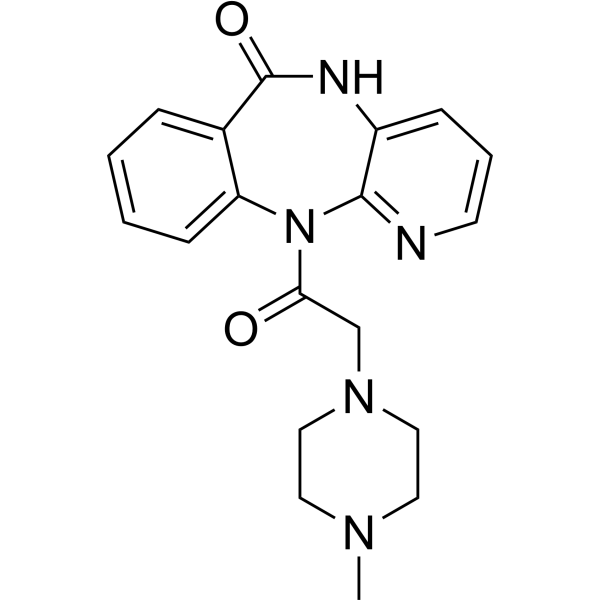
Synonyms: LS 519 free base; Pirenzepin; Gastrozepin
Target:  

mAChR

Forschungsgebiete:  

Metabolic Disease Cancer

Pirenzepine (LS 519 free base) is a selective M1 mAChR (muscarinic acetylcholine receptor) antagonist, with poor penetration of the blood-brain barrier. Pirenzepine reduces gastric acid secretion and reduces muscle spasm, can be used in peptic ulcers research. Pirenzepine shows anti-proliferative activity to cancer cells .
loading...
    loading...
5
5 Cited Publications
Art. -Nr.: HY-B1858
CAS. Nr.: 50512-35-1
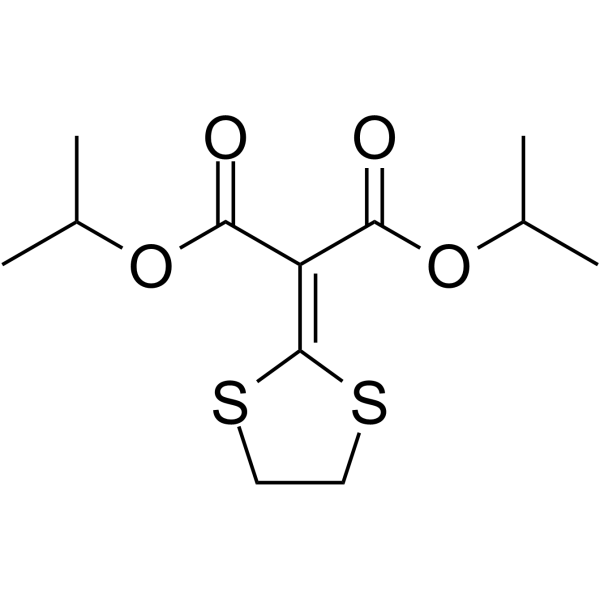
Isoprothiolane is a blast fungicide with antifungal, anti-inflammatory and insecticidal activities. Isoprothiolane primarily acts on fungi during the penetration and growth stages of infecting hyphae. Isoprothiolane can be used as an insecticide, pesticide, etc. In addition, Isoprothiolane can reduce serum phospholipid and total lipid concentrations, regulating lipid metabolism. Isoprothiolane is also used in the research of fatty liver .
loading...
    loading...
4
4 Cited Publications
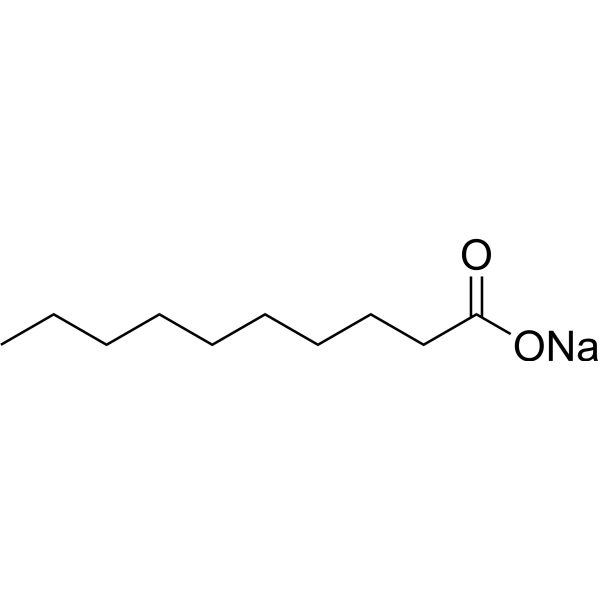
Art. -Nr.: HY-115340
CAS. Nr.: 1002-62-6
Reinheit:  99.92%
Synonyms: Sodium decanoate; Sodium caprate
Decanoic acid sodium, also known as Decanoic acid sodium, is a salt of the fatty acid capric acid. It is easily soluble in water and has a slightly soapy smell. Decanoic acid sodium acts as a penetration enhancer, which means it increases the absorption and bioavailability of drugs across biological membranes, including the intestinal epithelium and the blood-brain barrier. This property makes it useful in pharmaceutical formulations to improve drug delivery and effectiveness. Furthermore, Decanoic acid sodium has potential applications in food preservatives and cosmetics due to its antibacterial properties.
loading...
    loading...

