



Allicin
Based on 17 publication(s) in Google Scholar
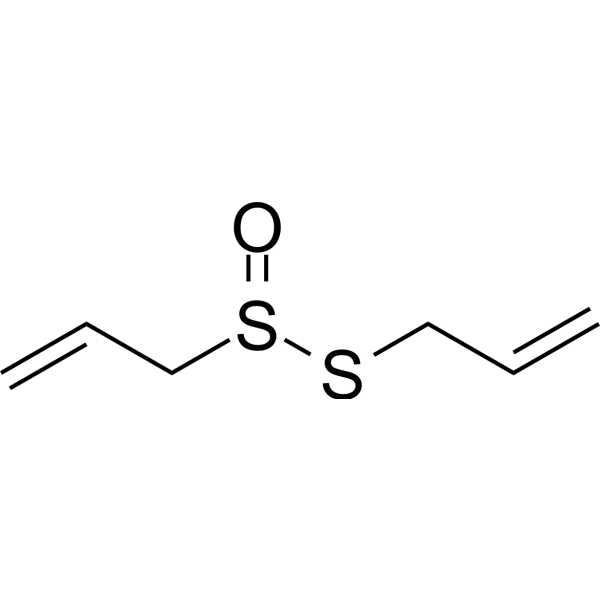
Allicin (diallyl thiosulfinate) is isolated from garlic including Diallyl monosulfide, Diallyl disulfide, Diallyl trisulfide, Diallyl tetrasulfide, and Methyl allyl disulphide etc. They accounts for 98% of the extract. Allicin (diallyl thiosulfinate) has highly potent antimicrobial activity, and inhibits growth of a variety of microorganisms, among them antibiotic-resistant strains.
For research use only. We do not sell to patients.
- Purity : 97.20%
- CAS No.: 539-86-6
-
Storage:
4°C, sealed storage, away from moisture and light
* In solvent : -80°C, 6 months; -20°C, 1 month (sealed storage, away from moisture and light)

To place orders, for customer services and technical support, please contact: MedChemExpress USA
Tel: 609-228-6898 E-mail: [email protected] [email protected]


-
 Biological Activity
-
Chemical Information
-
Solvent & Solubility
- Protocols
- Purity & Documentation
- References
-
 Help & FAQs


-
HY-15142
Doxorubicin hydrochlorideTopoisomerase Inhibitor -
HY-10182
LaduviglusibGSK-3 Inhibitor -
HY-N0005
Curcuminp300 Histone Acetylatransferase Inhibitor -
HY-18739
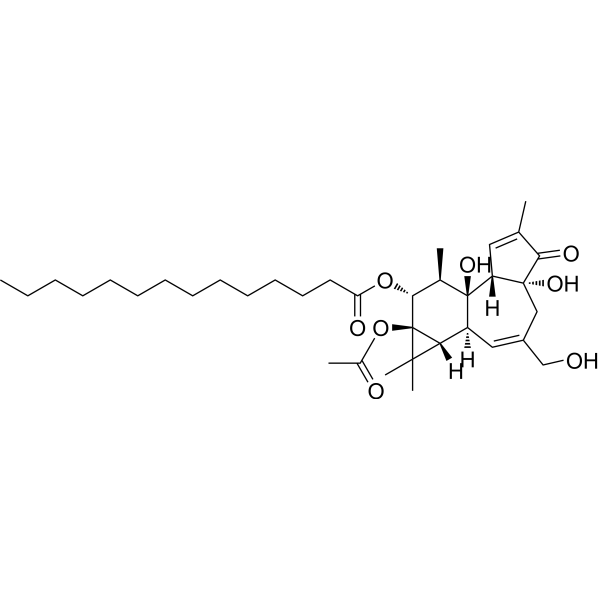
Phorbol 12-myristate 13-acetatePKC Activator -
HY-10448
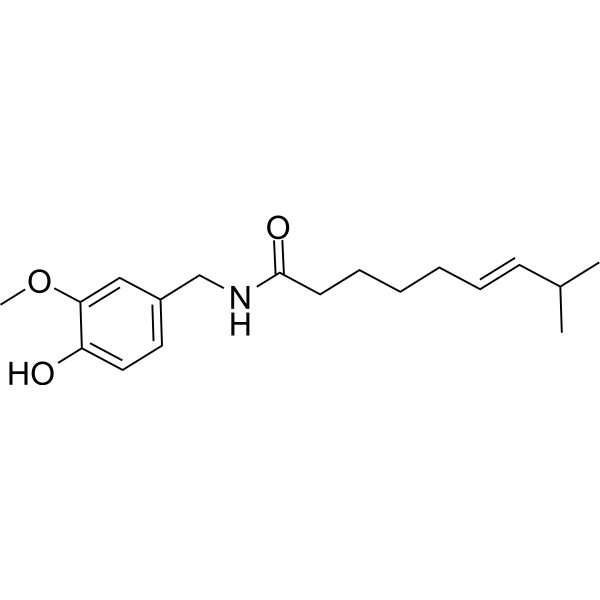
CapsaicinTRPV1 Agonist -
HY-10583
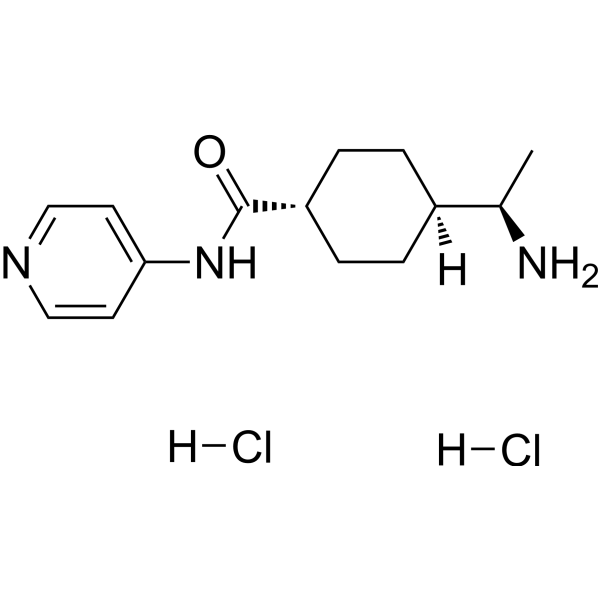
Y-27632 dihydrochlorideROCK Inhibitor -
HY-101952
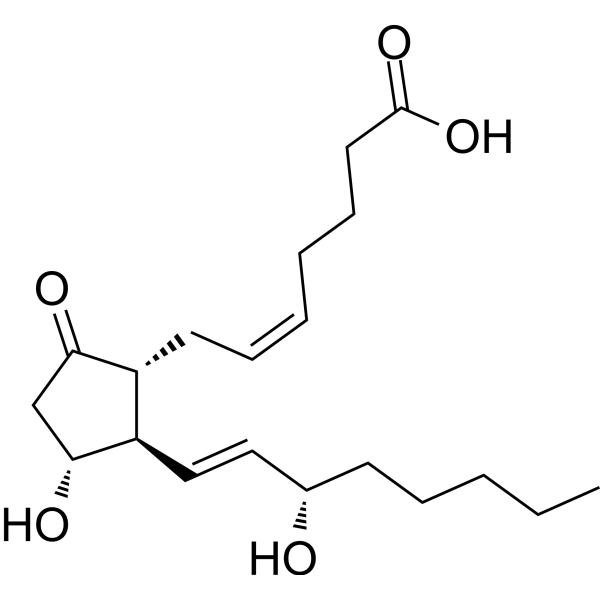
Prostaglandin E2Prostaglandin Receptor Agonist -
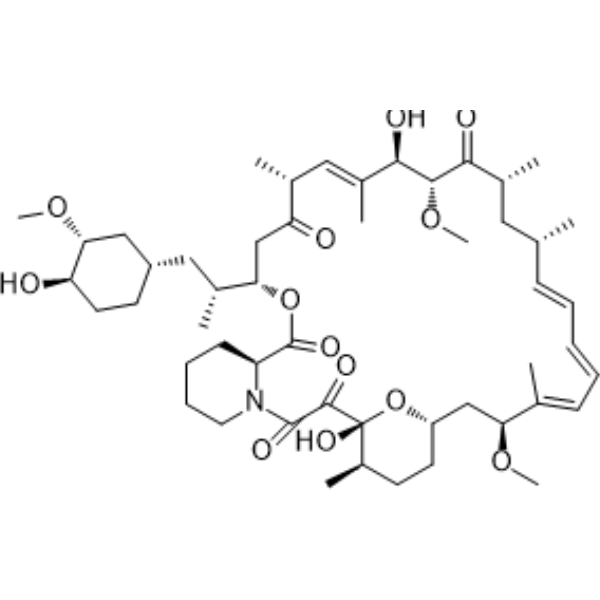
HY-10219
RapamycinmTOR Inhibitor -
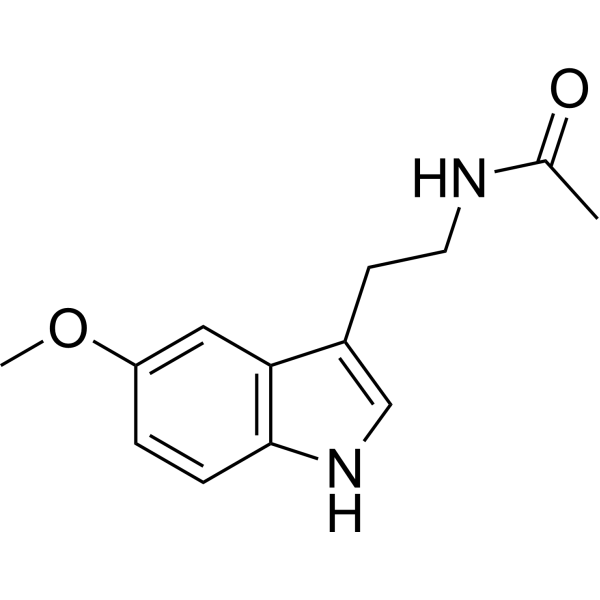
HY-B0075
MelatoninMelatonin Receptor Activator -
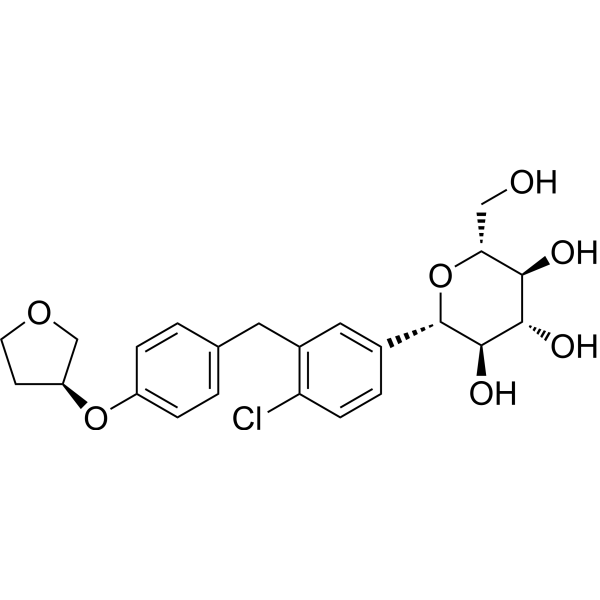
HY-15409
EmpagliflozinSGLT2 Inhibitor -
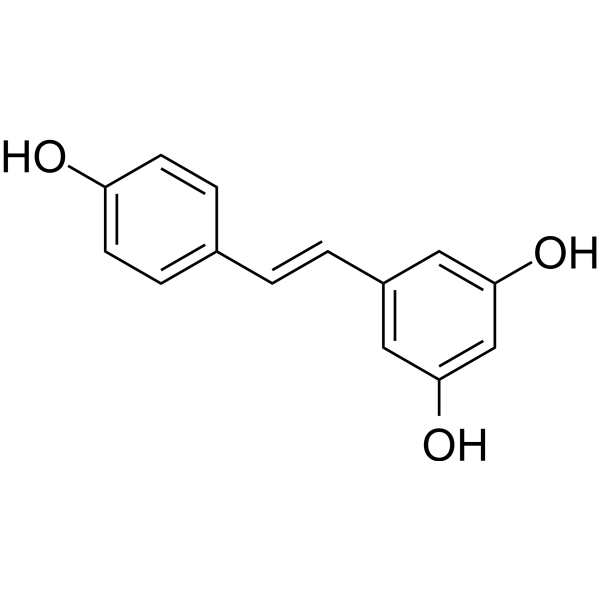
HY-16561
ResveratrolPolyphenolic Phytoalexin -
![[6]-Gingerol](https://file.medchemexpress.com/product_pic/hy-14615.gif)
HY-14615
[6]-GingerolApoptosis Inducer
Publications Citing Use of MedChemExpress (MCE) Allicin
More- Phytomedicine. 2026 Jan:150:157740. [Abstract]
- Phytomedicine. 2025 May:140:156484. [Abstract]
- Phytomedicine. 2025 Feb 21:139:156500. [Abstract]
- J Infect. 2023 Jan;86(1):47-59. [Abstract]
- ACS Environ Au. 2025 Aug 5;5(6):573-582. [Abstract]
- Anal Chem. 2025 Jun 3;97(21):11099-11109. [Abstract]
- Front Immunol. 2022 Feb 4;13:847861. [Abstract]
- J Agric Food Chem. 2025 Aug 27. [Abstract]
- Int Immunopharmacol. 2026 Jan 15:169:115996. [Abstract]
- Int J Mol Sci. 2025 Jul 23;26(15):7069. [Abstract]
- Front Pharmacol. 2024 Jul 23:15:1388540. [Abstract]
- J Cell Mol Med. 2026 Feb;30(3):e71034. [Abstract]
- Plants (Basel). 2024 Apr 23;13(9):1170. [Abstract]
- Microbiol Spectr. 2023 Jun 15;11(3):e0090723. [Abstract]
- J Pharmacol Sci. 2023 Dec;153(4):208-214. [Abstract]
- bioRxiv. 2025 Jun 12.
- University of Wyoming. 2025.
 Customer Validation & Images

-
Cell Imaging/Staining
-
ELISA
-
WB
-
Histological Imaging/Staining
-
Flow Cytometry
All Antibiotic Isoforms
More

Biological Activity
Description
Cellular Effect
|
Cell Line

|
Type | Value | Description | References |
|---|---|---|---|---|
| Daudi | IC50 |
35.3 μM
Compound: Allicin
|
Antiproliferative activity against human Daudi cells assessed as [methyl-3H]thymidine incorporation after 16 hrs by XTT assay
Antiproliferative activity against human Daudi cells assessed as [methyl-3H]thymidine incorporation after 16 hrs by XTT assay
|
[PMID: 18467007] |
| HeLa | IC50 |
103.5 μM
Compound: Allicin
|
Antiproliferative activity against human HeLa cells assessed as [methyl-3H]thymidine incorporation after 16 hrs by XTT assay
Antiproliferative activity against human HeLa cells assessed as [methyl-3H]thymidine incorporation after 16 hrs by XTT assay
|
[PMID: 18467007] |
| HepG2 | IC50 |
39.4 μM
Compound: 120
|
Antimalarial activity against liver stages of Plasmodium berghei assessed as human HepG2 cells assessed as inhibition of hepatic parasite growth after invasion of hepatocytes incubated for 48 hrs followed by compound wash out measured after 2 days by RT-P
Antimalarial activity against liver stages of Plasmodium berghei assessed as human HepG2 cells assessed as inhibition of hepatic parasite growth after invasion of hepatocytes incubated for 48 hrs followed by compound wash out measured after 2 days by RT-P
|
[PMID: 22122518] |
| HepG2 | IC50 |
40 μM
Compound: 120
|
Antimalarial activity against liver stages of Plasmodium yoelii 17XNL expressing GFP infected in human HepG2 cells transfected with CD81 assessed as growth inhibition of hepatic parasite after 40 hrs by flow cytometry
Antimalarial activity against liver stages of Plasmodium yoelii 17XNL expressing GFP infected in human HepG2 cells transfected with CD81 assessed as growth inhibition of hepatic parasite after 40 hrs by flow cytometry
|
[PMID: 22122518] |
| HepG2 | IC50 |
6.8 μM
Compound: 120
|
Antimalarial activity against liver stages of Plasmodium berghei infected in human HepG2 cells assessed as growth inhibition of hepatic parasite before invasion of hepatocytes incubated for 48 hrs followed by compound wash out measured after 3 days by RT-
Antimalarial activity against liver stages of Plasmodium berghei infected in human HepG2 cells assessed as growth inhibition of hepatic parasite before invasion of hepatocytes incubated for 48 hrs followed by compound wash out measured after 3 days by RT-
|
[PMID: 22122518] |
| HL-60 | IC50 |
5.5 μM
Compound: Allicin
|
Antiproliferative activity against human HL60 cells assessed as [methyl-3H]thymidine incorporation after 16 hrs by XTT assay
Antiproliferative activity against human HL60 cells assessed as [methyl-3H]thymidine incorporation after 16 hrs by XTT assay
|
[PMID: 18467007] |
| HT-29 | IC50 |
83.8 μM
Compound: Allicin
|
Antiproliferative activity against multidrug-resistant human HT-29 cells assessed as [methyl-3H]thymidine incorporation after 16 hrs by XTT assay
Antiproliferative activity against multidrug-resistant human HT-29 cells assessed as [methyl-3H]thymidine incorporation after 16 hrs by XTT assay
|
[PMID: 18467007] |
| Kelly | ED50 |
9.21 μM
Compound: Allicin
|
Antiproliferative activity against human Kelly cells after 24 hrs
Antiproliferative activity against human Kelly cells after 24 hrs
|
[PMID: 32786875] |
| NCI-N87 | IC50 |
16.8 μM
Compound: Allicin
|
Antiproliferative activity against human NCI-N87 cells assessed as [methyl-3H]thymidine incorporation after 16 hrs by XTT assay
Antiproliferative activity against human NCI-N87 cells assessed as [methyl-3H]thymidine incorporation after 16 hrs by XTT assay
|
[PMID: 18467007] |
| SGC-7901 | IC50 |
0.5 μM
Compound: Allicin
|
Inhibition of telomerase in human SGC7901 cells by TRAP-PCR-ELISA
Inhibition of telomerase in human SGC7901 cells by TRAP-PCR-ELISA
|
10.1039/C0MD00241K |
| SK-N-AS | ED50 |
19.48 μM
Compound: Allicin
|
Antiproliferative activity against human SK-N-AS cells after 24 hrs
Antiproliferative activity against human SK-N-AS cells after 24 hrs
|
[PMID: 32786875] |
| SK-N-BE(2)-M17 | ED50 |
10.27 μM
Compound: Allicin
|
Antiproliferative activity against human SK-N-BE(2)-M17 cells after 24 hrs
Antiproliferative activity against human SK-N-BE(2)-M17 cells after 24 hrs
|
[PMID: 32786875] |
| SK-N-FI | ED50 |
18.06 μM
Compound: Allicin
|
Antiproliferative activity against human SK-N-FI cells after 24 hrs
Antiproliferative activity against human SK-N-FI cells after 24 hrs
|
[PMID: 32786875] |
| U-937 | IC50 |
19.7 μM
Compound: Allicin
|
Antiproliferative activity against human U937 cells assessed as [methyl-3H]thymidine incorporation after 16 hrs by XTT assay
Antiproliferative activity against human U937 cells assessed as [methyl-3H]thymidine incorporation after 16 hrs by XTT assay
|
[PMID: 18467007] |
In Vitro
Allicin exhibits comparable MICs (32-64 μg/mL) toward methicillin-resistant S. aureus ATCC 43300, the type strain S. aureus DSM 20231, E. coli DSM 30083, A. baumannii DSM 30007, and C. albicans DSM 1386[1].
MedChemExpress (MCE) has not independently confirmed the accuracy of these methods. They are for reference only.
Clinical Trial
| NCT Number | Sponsor | Condition | Start Date |
Phase
|
|---|---|---|---|---|
| NCT01329991 | 2011-05 | PHASE1 |


Chemical Information
-
CAS No. 539-86-6
-
Appearance Liquid (Density: 1.112 g/cm3)
-
Color Light yellow to yellow
-
SMILES
[Allicin]
-
Synonyms
Diallyl thiosulfinate
-
Structure Classification
-
Initial Source
-
Shipping
Room temperature in continental US; may vary elsewhere.
-
Storage
4°C, sealed storage, away from moisture and light
* In solvent : -80°C, 6 months; -20°C, 1 month (sealed storage, away from moisture and light)


Publications (17)
-
Journal Impact Factor
-
Most Recent
-
Phytomedicine
Bruceantin inhibits the c-Myc/RL27A axis to suppress tumor progression in hepatocellular carcinoma. [Abstract]2026 Jan:150:157740. PMID: 41477978 -
Phytomedicine
Fangchinoline suppresses nasopharyngeal carcinoma progression by inhibiting SQLE to regulate the PI3K/AKT pathway dysregulation. [Abstract]2025 May:140:156484. PMID: 40090046 -
Phytomedicine
Allicin alleviates traumatic brain injury-induced neuroinflammation by enhancing PKC-δ-mediated mitophagy. [Abstract]2025 Feb 21:139:156500. PMID: 39986225
Allicin purchased from MedChemExpress. Usage Cited in: Phytomedicine. 2025 Feb 21:139:156500. [Abstract]
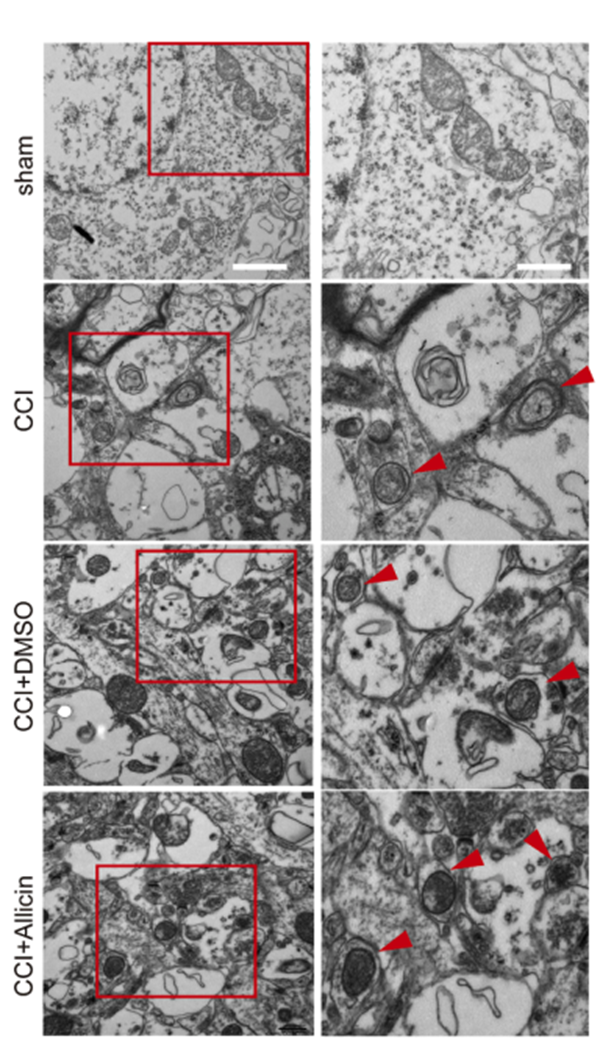
Allicin (30 mg/kg, i.p.) treatment increased the number of mitochondria with a double-layered membrane structure.
Allicin purchased from MedChemExpress. Usage Cited in: Phytomedicine. 2025 Feb 21:139:156500. [Abstract]
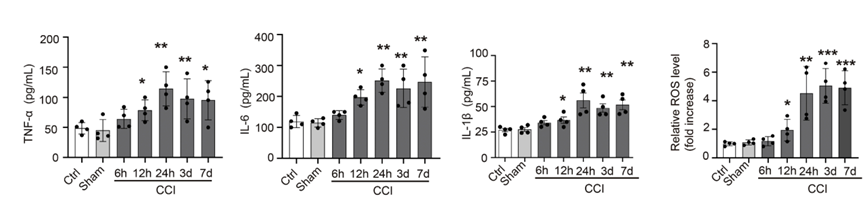
ELISA results demonstrated a reduction in CSF levels of TNF-α, IL-1β, IL-6, and ROS following Allicin (30 mg/kg, i.p.) treatment.
Allicin purchased from MedChemExpress. Usage Cited in: Phytomedicine. 2025 Feb 21:139:156500. [Abstract]
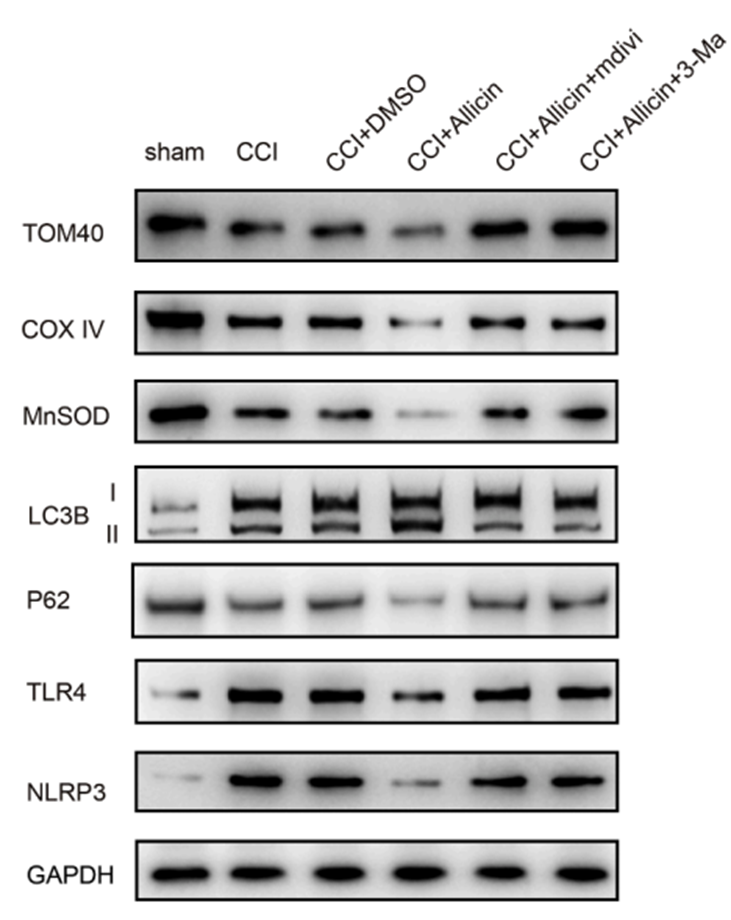
Allicin (30 mg/kg, i.p.) attenuated the expression of TOM40, COX IV and MnSOD but upregulated overall autophagy.
Allicin purchased from MedChemExpress. Usage Cited in: Phytomedicine. 2025 Feb 21:139:156500. [Abstract]
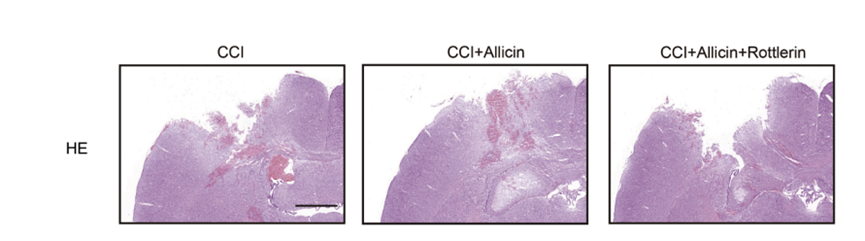
Allicin (30 mg/kg, i.p.) reduced the lesion volume, as assessed by H&E staining.
Allicin purchased from MedChemExpress. Usage Cited in: Phytomedicine. 2025 Feb 21:139:156500. [Abstract]
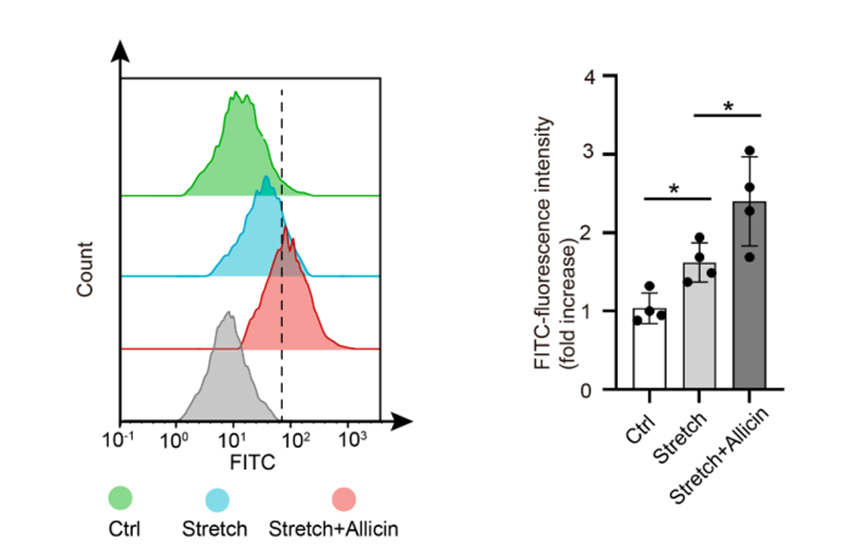
A marked increase was observed following Allicin (30 mg/kg, i.p.) administration in Annexin V-FITC intensity, indicating elevated CL levels on the OMM.
-
J Infect
Toxoplasma gondii infection triggers ongoing inflammation mediated by increased intracellular Cl- concentration in airway epithelium. [Abstract]2023 Jan;86(1):47-59. PMID: 36334726 -
ACS Environ Au
Machine Learning-Assisted Recognition of Environmental Sulfur-Containing Chemicals in Nontargeted Mass Spectrometry Analysis of Inadequate Mass Resolution. [Abstract]2025 Aug 5;5(6):573-582. PMID: 41277996 -
Anal Chem
Exposome-Scale Investigation of Cl-/Br-Containing Chemicals Using High-Resolution Mass Spectrometry, Multistage Machine Learning, and Cloud Computing. [Abstract]2025 Jun 3;97(21):11099-11109. PMID: 40401576 -
Front Immunol
Allicin Improves Intestinal Epithelial Barrier Function and Prevents LPS-Induced Barrier Damages of Intestinal Epithelial Cell Monolayers. [Abstract]2022 Feb 4;13:847861. PMID: 35185936 -
J Agric Food Chem
Allicin Attenuates Mitochondrial Calcium (Ca2+) Overload Induced by Acrylamide in Hepatocytes via the NAD+/SIRT3-FoxO3 Axis. [Abstract]2025 Aug 27. PMID: 40864228 -
Int Immunopharmacol
2026 Jan 15:169:115996. PMID: 41352095 -
Int J Mol Sci
Comparison of Various Assays of Antioxidant Activity/Capacity: Limited Significance of Redox Potentials of Oxidants/Indicators. [Abstract]2025 Jul 23;26(15):7069. PMID: 40806202 -
Front Pharmacol
Garlic ameliorates atherosclerosis by regulating ferroptosis pathway: an integrated strategy of network pharmacology, bioinformatic and experimental verification. [Abstract]2024 Jul 23:15:1388540. PMID: 39108744 -
J Cell Mol Med
Immunomodulatory Mechanism of Baiyaojian Decoction on Periodontitis: Network Pharmacology, Single-Cell RNA Sequencing and Molecular Docking. [Abstract]2026 Feb;30(3):e71034. PMID: 41605874 -
Plants (Basel)
NMR Metabolite Profiling for the Characterization of Vessalico Garlic Ecotype and Bioactivity against Xanthomonas campestris pv. campestris. [Abstract]2024 Apr 23;13(9):1170. PMID: 38732385 -
Microbiol Spectr
Antifungal Activity and Potential Action Mechanism of Allicin against Trichosporon asahii. [Abstract]2023 Jun 15;11(3):e0090723. PMID: 37199655 -
J Pharmacol Sci
2023 Dec;153(4):208-214. PMID: 37973218 -
-


Solvent & Solubility
In Vitro:
DMSO : 100 mg/mL (Need ultrasonic; Hygroscopic DMSO has a significant impact on the solubility of product, please use newly opened DMSO)
Ethanol : 70 mg/mL (Need ultrasonic)
In Vivo:
Select the appropriate dissolution method based on your experimental animal and administration route.
- For the following dissolution methods, please ensure to first prepare a clear stock solution using an In Vitro approach and then sequentially add co-solvents:
- To ensure reliable experimental results, the clarified stock solution can be appropriately stored based on storage conditions. As for the working solution for In Vivo experiments, it is recommended to prepare freshly and use it on the same day.
- The percentages shown for the solvents indicate their volumetric ratio in the final prepared solution. If precipitation or phase separation occurs during preparation, heat and/or sonication can be used to aid dissolution.
Add each solvent one by one: 10% EtOH 40% PEG300 5% Tween-80 45% Saline
Solubility: ≥ 3.5 mg/mL; Clear solution
This protocol yields a clear solution of ≥ 3.5 mg/mL (saturation unknown).
Taking 1 mL working solution as an example, add 100 μL EtOH stock solution (35.0 mg/mL) to 400 μL PEG300, and mix evenly; then add 50 μL Tween-80 and mix evenly; then add 450 μL Saline to adjust the volume to 1 mL.
Preparation of Saline: Dissolve 0.9 g sodium chloride in ddH₂O and dilute to 100 mL to obtain a clear Saline solution.
Add each solvent one by one: 10% EtOH 90% (20% SBE-β-CD in Saline)
Solubility: ≥ 3.5 mg/mL; Clear solution
This protocol yields a clear solution of ≥ 3.5 mg/mL (saturation unknown).
Taking 1 mL working solution as an example, add 100 μL EtOH stock solution (35.0 mg/mL) to 900 μL 20% SBE-β-CD in Saline, and mix evenly.
Preparation of 20% SBE-β-CD in Saline (4°C, storage for one week): 2 g SBE-β-CD powder is dissolved in 10 mL Saline, completely dissolve until clear.
Add each solvent one by one: 10% EtOH 90% Corn Oil
Solubility: ≥ 3.5 mg/mL; Clear solution
This protocol yields a clear solution of ≥ 3.5 mg/mL (saturation unknown). If the continuous dosing period exceeds half a month, please choose this protocol carefully.
Taking 1 mL working solution as an example, add 100 μL EtOH stock solution (35.0 mg/mL) to 900 μL Corn oil, and mix evenly.
Add each solvent one by one: 10% DMSO 40% PEG300 5% Tween-80 45% Saline
Solubility: 3.25 mg/mL; Suspended solution; Need ultrasonic
This protocol yields a suspended solution of 3.25 mg/mL. Suspended solution can be used for oral and intraperitoneal injection.
Taking 1 mL working solution as an example, add 100 μL DMSO stock solution (32.5 mg/mL) to 400 μL PEG300, and mix evenly; then add 50 μL Tween-80 and mix evenly; then add 450 μL Saline to adjust the volume to 1 mL.
Preparation of Saline: Dissolve 0.9 g sodium chloride in ddH₂O and dilute to 100 mL to obtain a clear Saline solution.
Add each solvent one by one: 10% DMSO 90% (20% SBE-β-CD in Saline)
Solubility: ≥ 3.25 mg/mL; Clear solution
This protocol yields a clear solution of ≥ 3.25 mg/mL (saturation unknown).
Taking 1 mL working solution as an example, add 100 μL DMSO stock solution (32.5 mg/mL) to 900 μL 20% SBE-β-CD in Saline, and mix evenly.
Preparation of 20% SBE-β-CD in Saline (4°C, storage for one week): 2 g SBE-β-CD powder is dissolved in 10 mL Saline, completely dissolve until clear.
In Vivo Dissolution Calculator
Please enter the basic information of animal experiments:
-
-
-
-
Recommended: Prepare an additional quantity of animals to account for potential losses during experiments.
Please enter your animal formula composition:
-
%DMSO +
Recommended: Keep the proportion of DMSO in working solution below 2% if your animal is weak.
-
%+
-
+%Tween-80 + +
-
%Saline +
The co-solvents required include: DMSO, . All of co-solvents are available by MedChemExpress (MCE). , Tween 80. All of co-solvents are available by MedChemExpress (MCE).
Working solution concentration: 0.22 mg/mL
Method for preparing stock solution: mg drug dissolved in μL DMSO. Stock solution concentration: mg/mL. * In solvent : -80°C, 6 months; -20°C, 1 month (sealed storage, away from moisture and light)
1. Take μL DMSO stock solution;
2. Add μL .
μL , mix evenly;
3. Then add μL Tween 80, mix evenly;
4. Then add μL
Please ensure that the stock solution in the first step is dissolved to a clear state, and add co-solvents in sequence. You can use ultrasonic heating (ultrasonic cleaner, recommended frequency 20-40 kHz), vortexing, etc. to assist dissolution.


Purity & Documentation
-
Data Sheet (272 KB)
-
SDS (394 KB)
- English - EN (394 KB)
- Français - FR (394 KB)
- Deutsch - DE (394 KB)
- Norwegian - NO (394 KB)
- Español - ES (394 KB)
- Swedish - SV (394 KB)
- Italian - IT (394 KB)
- Korean - KR (394 KB)
- Portuguese - PT (394 KB)
-
Handling Instructions (2659 KB)
References

Calculators
Concentration (start) × Volume (start) = Concentration (final) × Volume (final)


Allicin Related Classifications
HY-N0315 Related Classifications
 Powered by Bioz