



BR102375
Based on 1 publication(s) in Google Scholar
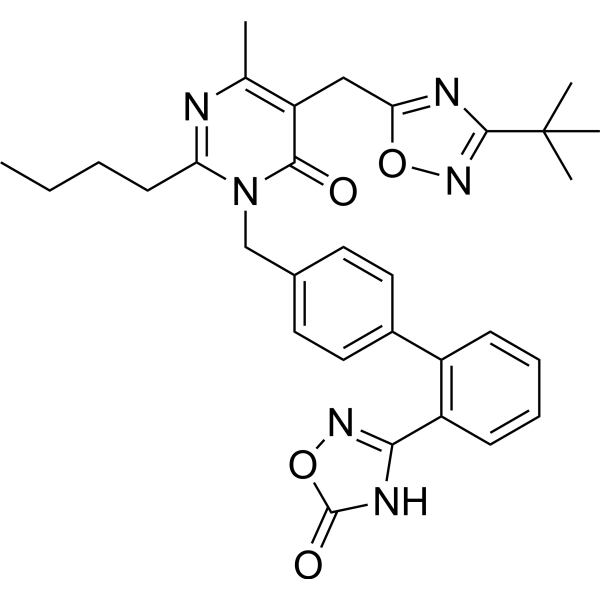
BR102375 is a non-TZD peroxisome proliferator-activated receptor γ (PPAR γ) full agonist for the treatment of type 2 diabetes, reveals EC50 value of 0.28 μM and Amax ratio of 98%.
Nur für Forschungszwecke. Wir verkaufen nicht an Patienten.
- CAS. Nr.: 2366255-59-4
- Formel: C31H34N6O4
- Molecular Weight:554.64
-
Speicherung:
Please store the product under the recommended conditions in the Certificate of Analysis.

To place orders, for customer services and technical support, please contact: MedChemExpress USA
Tel: 609-228-6898 E-mail: [email protected] [email protected]


-
 Biologische Aktivität
-
Chemical Information
- Protokoll
- Reinheit & Dokumentation
- Verweise
-
 Help & FAQs


-
HY-145471
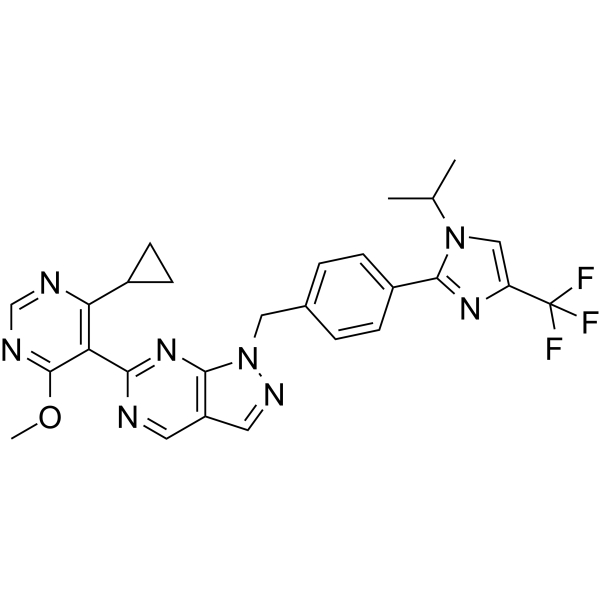
KSQ-4279USP1 Inhibitor -
HY-100225
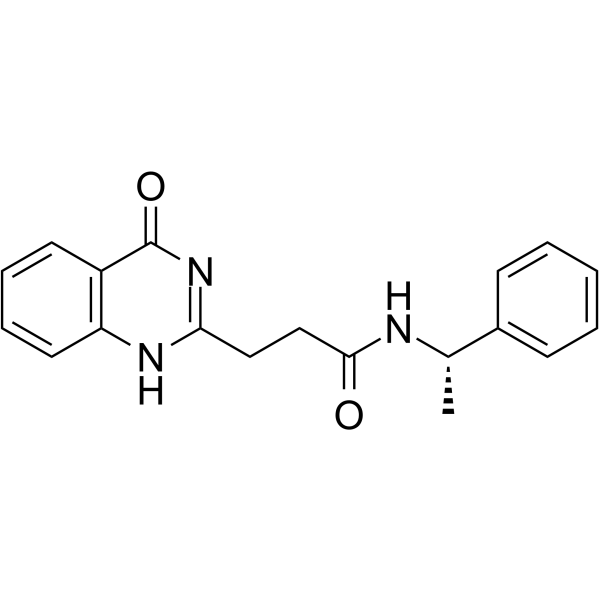
ME0328ARTD3/PARP3 Inhibitor -
HY-101020
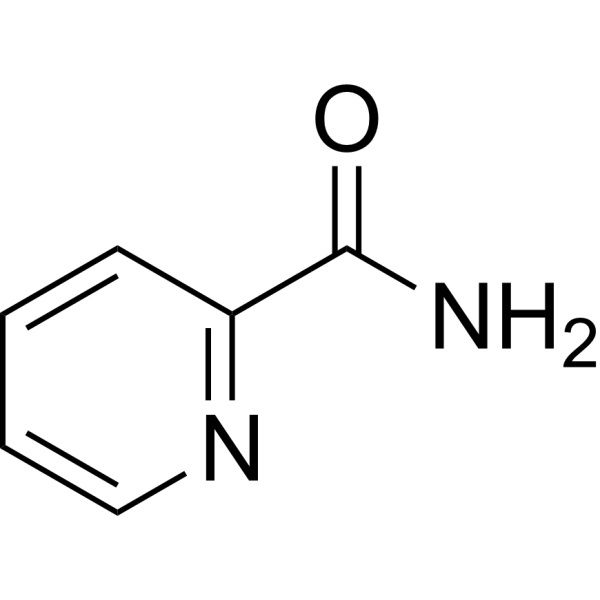
PicolinamidePARS Inhibitor -
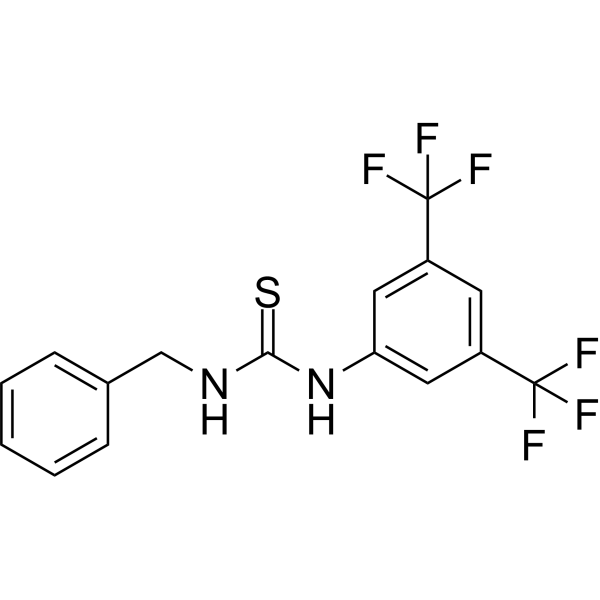
HY-147291
VPC-70063Myc-Max Inhibitor -
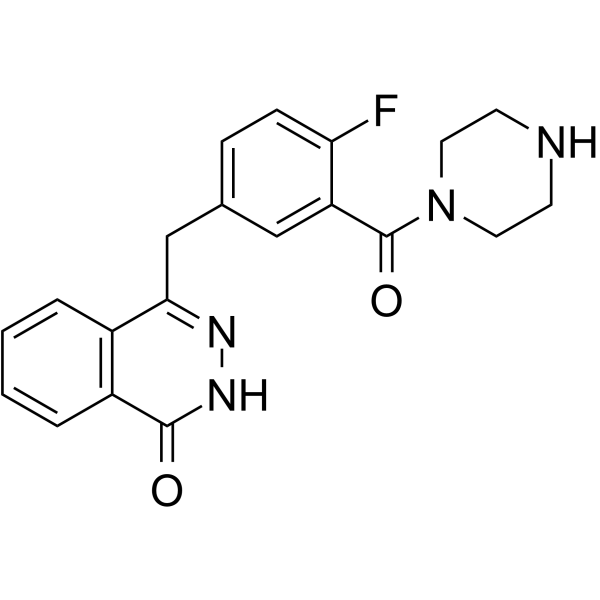
HY-75706
N-Descyclopropanecarbaldehyde OlaparibPARP Inhibitor -
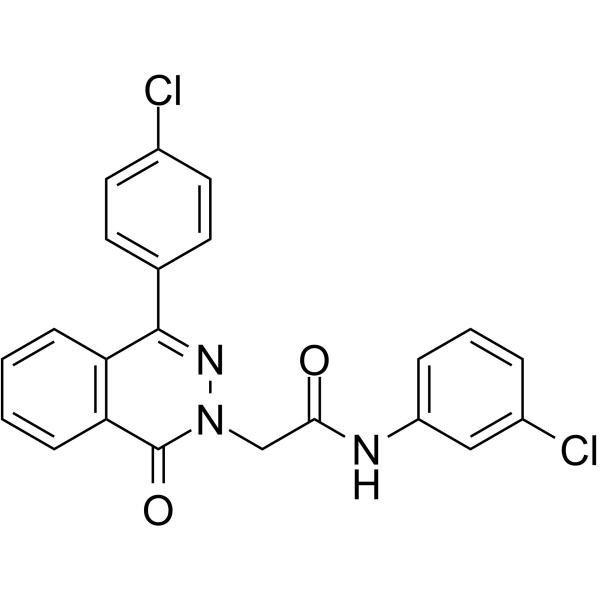
HY-147027
PARP-1-IN-2PARP1 Inhibitor -
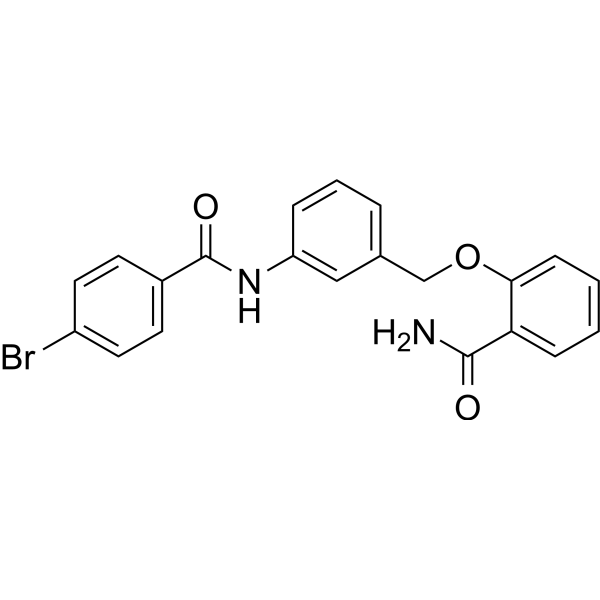
HY-149800
PARP-1-IN-3PARP-1 Inhibitor -
HY-128400
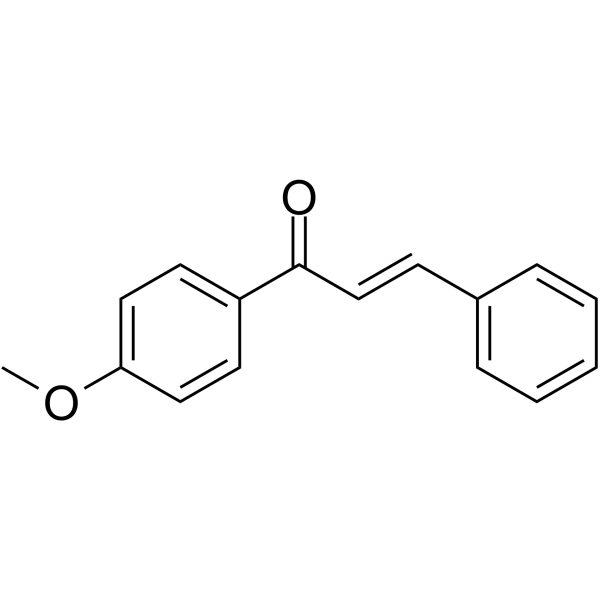
4'-MethoxychalconePARP Activator -
HY-156432
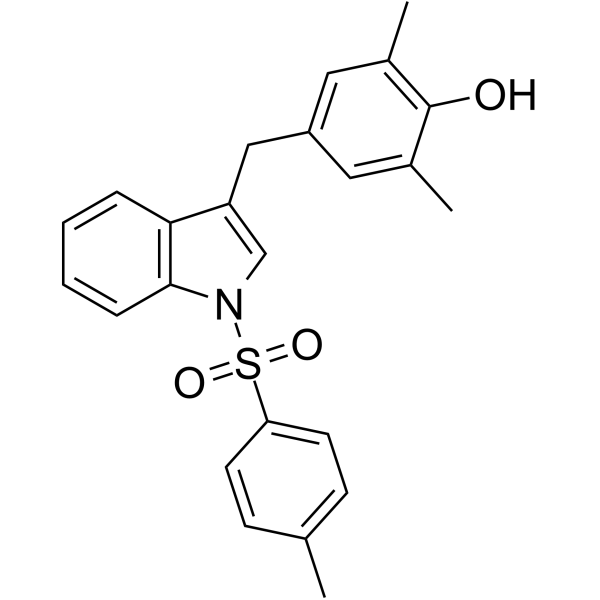
ALK-IN-26ALK Inhibitor -
HY-101020R
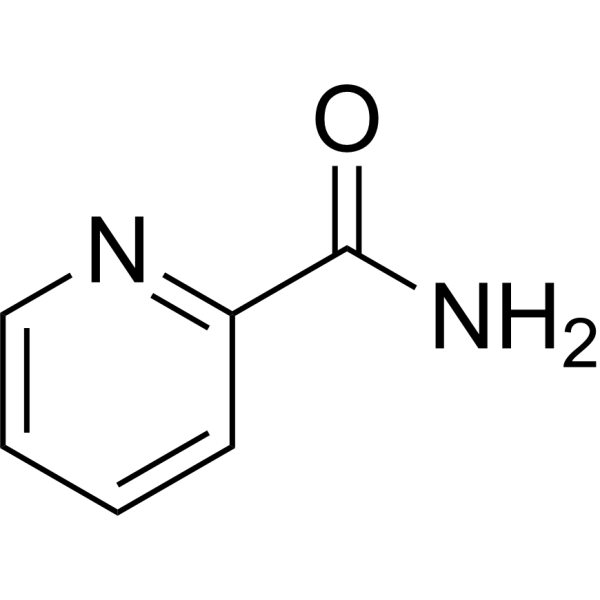
Picolinamide (Standard)PARS Inhibitor -

HY-128400R
4'-Methoxychalcone (Standard)PARP Activator
Publications Citing Use of MedChemExpress (MCE) BR102375
More

Biologische Aktivität
Beschreibung
In Vitro
BR102375 (Compound 18) (10 μM) increases gene expression levels relevant to PPARγ activation and enhances glucose uptake under insulin stimulation[1]. BR102375 (Compound 18) (10 nM, 100 nM, 1 μM; 6 days, 14 days) shows a concentration-dependent, insulin-sensitive effects on adipogenesis[1].
MedChemExpress (MCE) has not independently confirmed the accuracy of these methods. They are for reference only.
-
Cell Line:3T3-L1 mouse preadipocyte cells
-
Concentration:10 μM
-
Incubation Time:
-
Result:Increased AP2 and CD36 cells gene mRNA expression and enhanced glucose uptake when stimulated by insulin.
In Vivo
MedChemExpress (MCE) has not independently confirmed the accuracy of these methods. They are for reference only.


Chemical Information
-
CAS. Nr. 2366255-59-4
-
Molecular Weight 554.64
-
Formel C31H34N6O4
-
SMILES
CCCCC(N1CC2=CC=C(C3=C(C4=NOC(N4)=O)C=CC=C3)C=C2)=NC(C)=C(CC5=NC(C(C)(C)C)=NO5)C1=O
-
Versand
Room temperature in continental US; may vary elsewhere.
-
Speicherung
Please store the product under the recommended conditions in the Certificate of Analysis.


Publications (1)
-
Journal Impact Factor
-
Most Recent
-
Life Sci
Protective role of long noncoding RNA CRNDE in myocardial tissues from injury caused by sepsis through the microRNA-29a/SIRT1 axis. [Abstract]2020 Aug 15:255:117849. PMID: 32473249


Reinheit & Dokumentation
Verweise
[1]. Choung W, et al. Discovery of BR102375, a new class of non-TZD PPARγ full agonist for the treatment of type 2 diabetes. Bioorg Med Chem Lett. 2019 Jun 19. pii: S0960-894X(19)30407-X. [Content Brief]
[2]. Yan Zhu, et al. Protective Role of Long Noncoding RNA CRNDE in Myocardial Tissues From Injury Caused by Sepsis Through the microRNA-29a/SIRT1 Axis. Life Sci. 2020 May 27;117849. [Content Brief]

Calculators
Konzentration (Stammlösung) × Volumen (Stammlösung) = Konzentration (Ziellösung) × Volumen (Ziellösung)


BR102375 Related Classifications
HY-128344 Related Classifications
 Powered by Bioz