



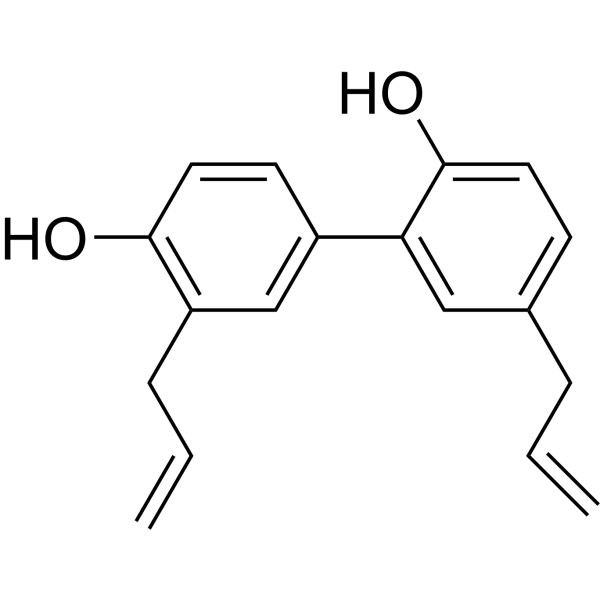
Honokiol
Based on 70 publication(s) in Google Scholar
Honokiol is a bioactive, biphenolic phytochemical that possesses potent antioxidative, anti-inflammatory, antiangiogenic, and anticancer activities by targeting a variety of signaling molecules. It inhibits the activation of Akt. Honokiol can readily cross the blood brain barrier.
For research use only. We do not sell to patients.
- Purity : 99.85%
- CAS No.: 35354-74-6
- Formula: C18H18O2
- Molecular Weight:266.33
-
Storage:Powder -20°C, 3 years , 4°C, 2 years ; In solvent -80°C, 1 year , -20°C, 6 months

To place orders, for customer services and technical support, please contact: MedChemExpress USA
Tel: 609-228-6898 E-mail: [email protected] [email protected]


-
 Biological Activity
-
Chemical Information
-
Solvent & Solubility
- Protocols
- Purity & Documentation
- References
-
 Help & FAQs


-
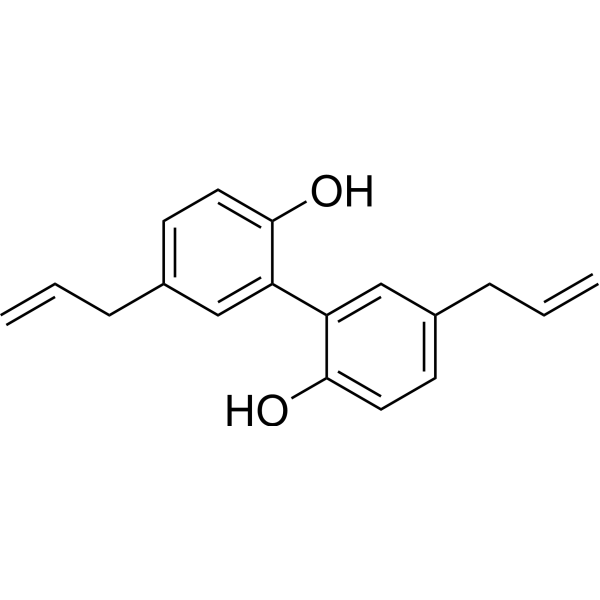
HY-N0163
MagnololBacterial Inhibitor -
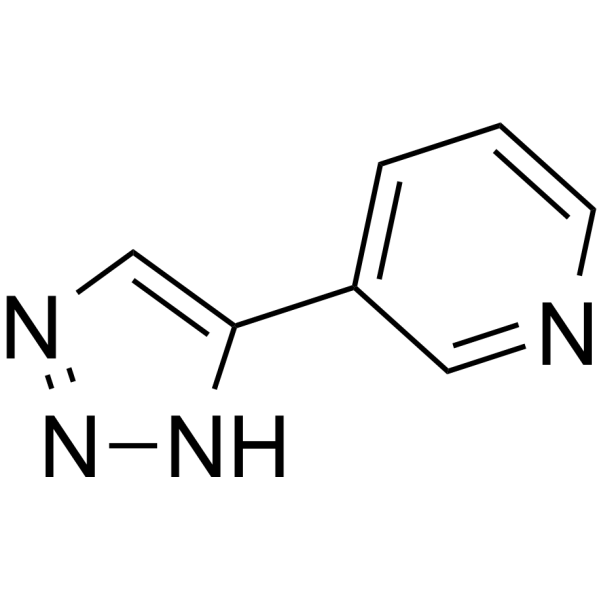
HY-108331
3-TYPSIRT3 Inhibitor -
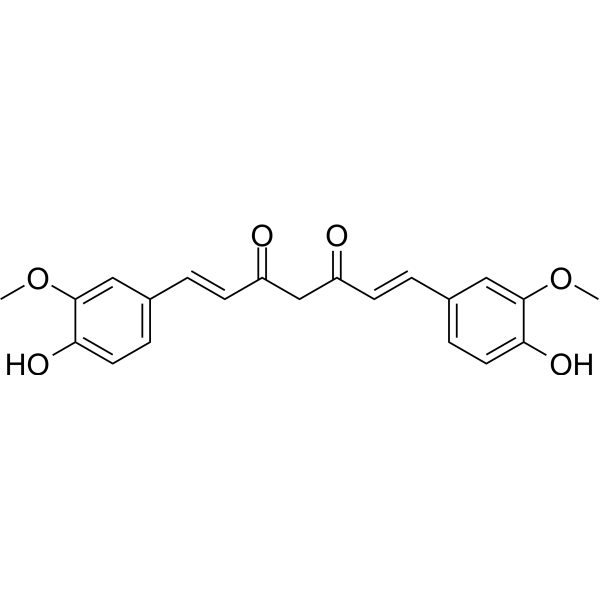
HY-N0005
Curcuminp300 Histone Acetylatransferase Inhibitor -
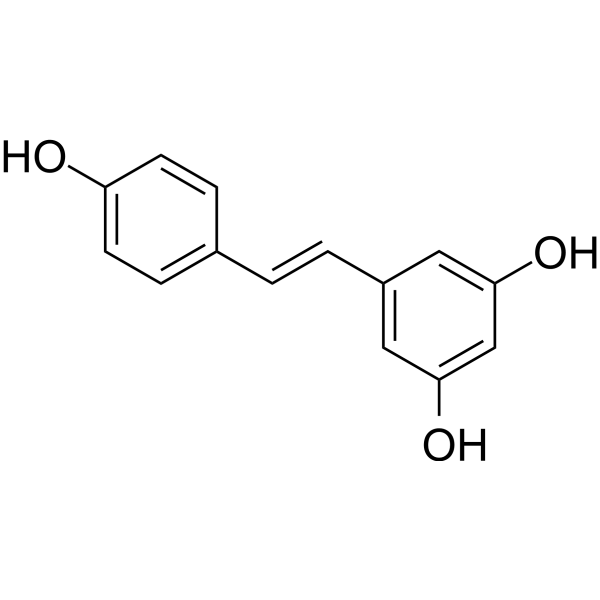
HY-16561
ResveratrolPolyphenolic Phytoalexin -
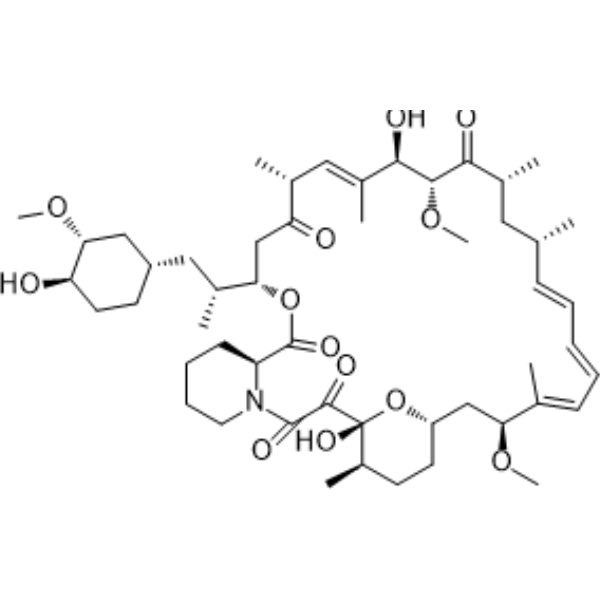
HY-10219
RapamycinmTOR Inhibitor -
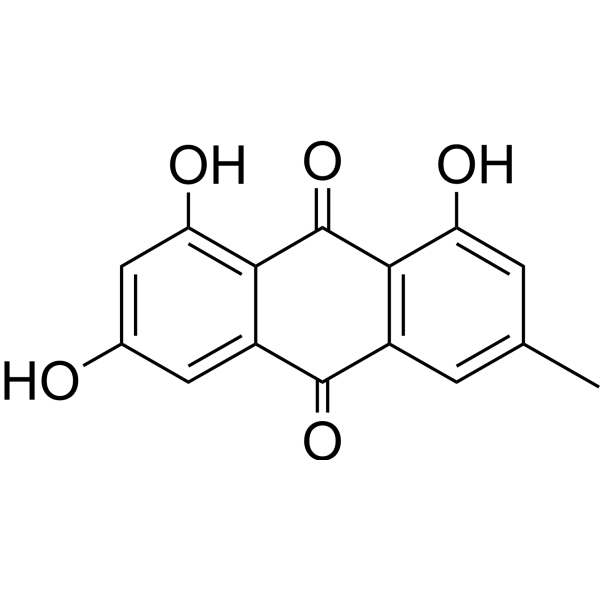
HY-14393
EmodinNatural Anthraquinone -
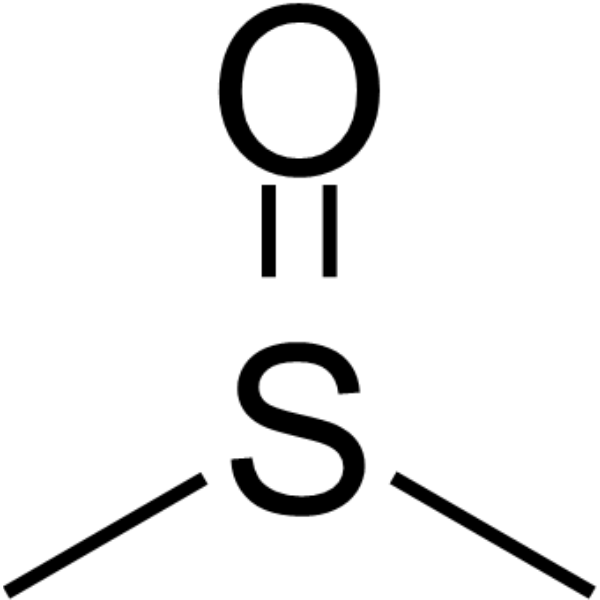
HY-Y0320
Dimethyl sulfoxide, meets analytical specification of Ch.P.Aprotic Solvent -
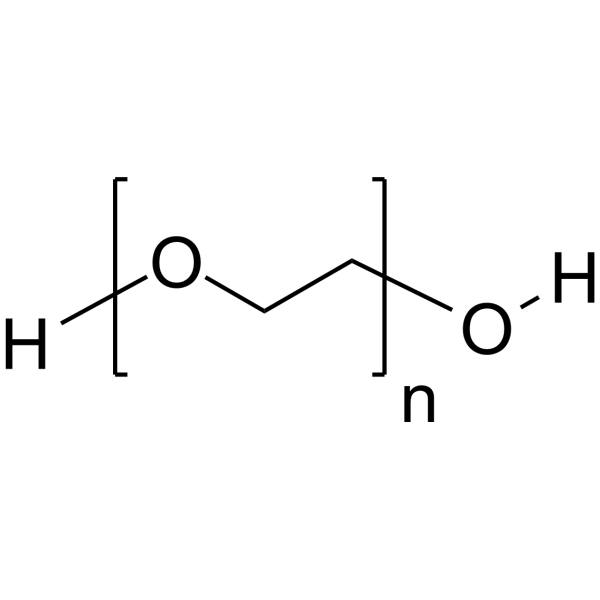
HY-Y0873
PEG300Neutral Polymer -
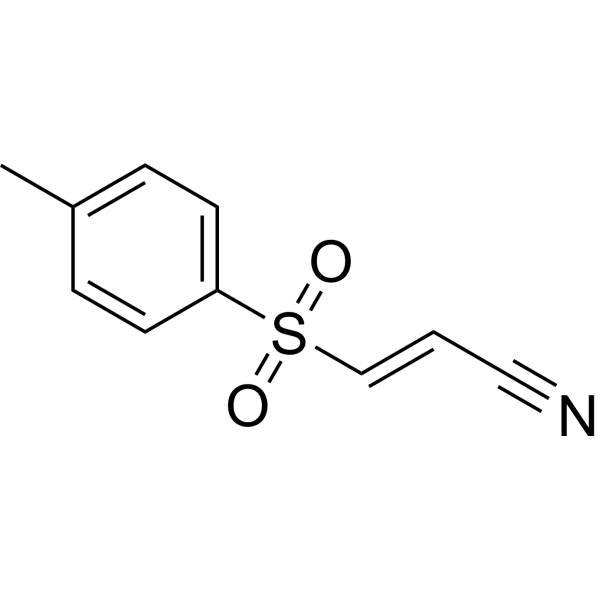
HY-13453
BAY 11-7082IκBα/NF-κB Inhibitor -

HY-Y1888
Corn oil -
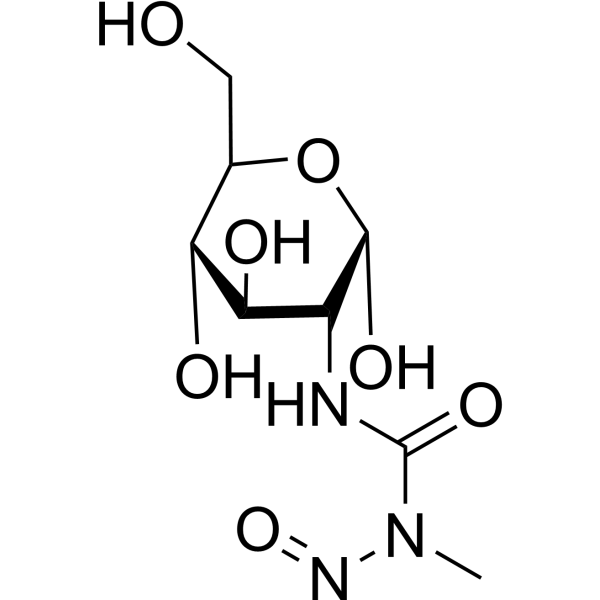
HY-13753
StreptozotocinDiabetes Modeling Agent -
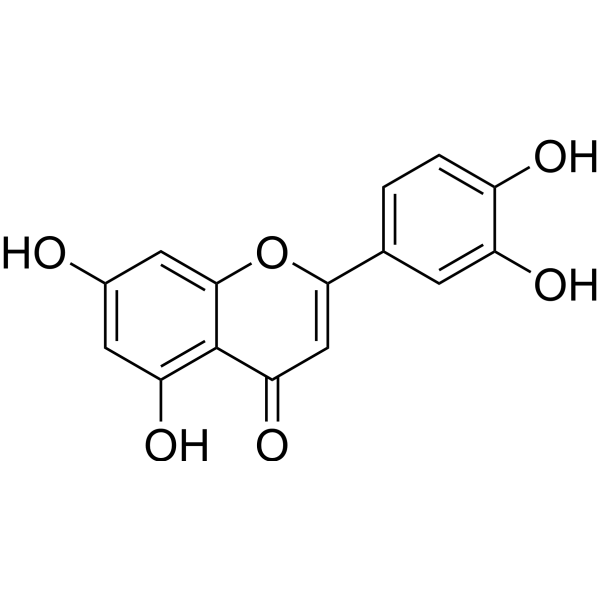
HY-N0162
LuteolinNrf2 Inhibitor
Publications Citing Use of MedChemExpress (MCE) Honokiol
More- J Adv Res. 2025 Apr:70:255-269. [Abstract]
- J Nanobiotechnology. 2025 Jun 4;23(1):414. [Abstract]
- J Nanobiotechnology. 2025 Mar 11;23(1):201. [Abstract]
- Adv Sci (Weinh). 2025 Dec 16:e10368. [Abstract]
- Adv Sci (Weinh). 2025 Feb;12(8):e2411943. [Abstract]
- Sci Adv. 2025 Jul 25;11(30):eadv4238. [Abstract]
- Cell Death Dis. 2023 Mar 1;14(3):174. [Abstract]
- Phytomedicine. 2025 Sep:145:156971. [Abstract]
- Phytomedicine. 2025 Jul 25:143:156904. [Abstract]
- Phytomedicine. 2025 May:140:156484. [Abstract]
- Phytomedicine. 2021 Nov:92:153740. [Abstract]
- Cell Death Discov. 2024 Apr 8;10(1):167. [Abstract]
- J Transl Med. 2023 Jul 22;21(1):494. [Abstract]
- Chin Med J (Engl). 2023 Mar 20;136(6):719-731. [Abstract]
- Int J Biol Macromol. 2020 Mar 15:147:79-88. [Abstract]
- Int J Mol Med. 2025 Jun;55(6):96. [Abstract]
- Int J Mol Med. 2020 Jan;45(1):186-194. [Abstract]
- Mol Med. 2021 Apr 26;27(1):43. [Abstract]
- Phytother Res. 2026 Mar;40(3):873-886. [Abstract]
- Free Radic Biol Med. 2026 Jun 9:254:78-90. [Abstract]
- Free Radic Biol Med. 2023 Feb 1:195:270-282. [Abstract]
- Am J Chin Med. 2024;52(6):1843-1861. [Abstract]
- Aging Cell. 2021 Feb;20(2):e13306. [Abstract]
- Neurosci Bull. 2023 Oct;39(10):1497-1511. [Abstract]
- Cell Mol Life Sci. 2025 Jun 5;82(1):226. [Abstract]
- Cell Biosci. 2023 Mar 16;13(1):57. [Abstract]
- Food Funct. 2021 Sep 7;12(17):8026-8036. [Abstract]
- Cell Rep Methods. 2025 Jul 21;5(7):101106. [Abstract]
- Pharmaceuticals (Basel). 2025 Nov 27;18(12):1814. [Abstract]
- Pharmaceuticals (Basel). 2023 Jan 1;16(1):70. [Abstract]
- Eur J Pharmacol. 2021 Oct 5;908:174356. [Abstract]
- Int J Mol Sci. 2024 Feb 18;25(4):2408. [Abstract]
- Int Immunopharmacol. 2022 May 6;109:108819. [Abstract]
- Int Immunopharmacol. 2022 May:106:108600. [Abstract]
- Inflamm Bowel Dis. 2023 Dec 5;29(12):1929-1940. [Abstract]
- Mucosal Immunol. 2022 Feb;15(2):314-326. [Abstract]
- Inflammation. 2021 Oct;44(5):1782-1792. [Abstract]
- J Integr Med. 2026 Jan 28:S2095-4964(26)00008-7. [Abstract]
- Chem Biol Interact. 2022 Jan 5:351:109741. [Abstract]
- AAPS PharmSciTech. 2018 Nov;19(8):3501-3511. [Abstract]
- Sci Rep. 2026 Feb 6;16(1):7619. [Abstract]
- Neuropharmacology. 2021 Jun 15:191:108584. [Abstract]
- Aquaculture. 2023 Apr 8,739553.
- Fish Shellfish Immunol. 2022 Oct:129:85-95. [Abstract]
- Microbiol Spectr. 2024 Aug 6;12(8):e0074924. [Abstract]
- J Biol Chem. 2024 Jan;300(1):105526. [Abstract]
- Microbiol Spectr. 2023 Jun 15;11(3):e0327322. [Abstract]
- Funct Integr Genomics. 2026 Feb 10;26(1):42. [Abstract]
- Naunyn Schmiedebergs Arch Pharmacol. 2025 Oct 22. [Abstract]
- J Immunol. 2021 Jun 1;206(11):2623-2637. [Abstract]
- PLoS Negl Trop Dis. 2019 Aug 20;13(8):e0007681. [Abstract]
- J Radiat Res Appl Sci. 2026 Jun 11;19(3):102500.
- Mol Biol Rep. 2023 Aug;50(8):6557-6568. [Abstract]
- Food Chem Toxicol. 2021 Dec:158:112592. [Abstract]
- Toxicol Lett. 2026 Jul 2:423:113152.
- Exp Eye Res. 2025 May:254:110328. [Abstract]
- Am J Hypertens. 2024 Oct 14;37(11):901-908. [Abstract]
- Vet Microbiol. 2026 May:316:110992. [Abstract]
- Dig Dis Sci. 2022 Oct;67(10):4780-4796. [Abstract]
- J Nat Med. 2025 Mar;79(2):314-327. [Abstract]
- Biochem Biophys Res Commun. 2025 Jul 12:770:151957. [Abstract]
- Biochem Biophys Res Commun. 2022 Apr 16:600:109-116. [Abstract]
- Surg Oncol. 2020 Dec:35:191-199. [Abstract]
- Exp Anim. 2023 Aug 7;72(3):346-355. [Abstract]
- J Obstet Gynaecol Res. 2024 May;50(5):864-872. [Abstract]
- Heliyon. 2023 Nov 28;9(12):e22939. [Abstract]
- bioRxiv. 2023 Jul 9.
- SSRN. 22 Apr 2022.
- Research Square Preprint. 2020 Oct.
- Biomed Pharmacother. 2019 Sep:117:109058. [Abstract]
 Customer Validation & Images

-
In Vivo Efficacy Study
-
Histological Imaging/Staining
-
Cell Imaging/Staining
-
IF
-
WB


Biological Activity
Description
IC50 & Target
[4]|
ERK1 |
ERK2 |
Autophagy |
Cellular Effect
|
Cell Line

|
Type | Value | Description | References |
|---|---|---|---|---|
| A2780 | IC50 |
30.5 μM
Compound: 1
|
Antiproliferative activity against cisplatin-sensitive human A2780 cells by MTT assay
Antiproliferative activity against cisplatin-sensitive human A2780 cells by MTT assay
|
[PMID: 19589678] |
| A2780 | IC50 |
30.5 μM
Compound: Honokiol
|
Antiproliferative activity against human A2780 cells after 24 hrs by MTT assay
Antiproliferative activity against human A2780 cells after 24 hrs by MTT assay
|
[PMID: 31278004] |
| A2780 | IC50 |
31.58 μM
Compound: HN; 2a
|
Antiproliferative activity against human A2780 cells assessed as reduction in cell viability after 48 hrs by MTT assay
Antiproliferative activity against human A2780 cells assessed as reduction in cell viability after 48 hrs by MTT assay
|
[PMID: 32996316] |
| A2780 | IC50 |
41.2 μM
Compound: 1
|
Antiproliferative activity against cisplatin-resistant human A2780 cells by MTT assay
Antiproliferative activity against cisplatin-resistant human A2780 cells by MTT assay
|
[PMID: 19589678] |
| A549 | IC50 |
>5 μg/mL
Compound: 6
|
Cytotoxicity against human A549 cells by MTT assay
Cytotoxicity against human A549 cells by MTT assay
|
[PMID: 17918910] |
| A549 | IC50 |
12.51 μM
Compound: Honokiol
|
Cytotoxicity against human A549 cells after 24 hrs by MTS assay
Cytotoxicity against human A549 cells after 24 hrs by MTS assay
|
[PMID: 22533983] |
| A549 | IC50 |
29.7 μM
Compound: Honokiol
|
Antiproliferative activity against human A549 cells by MTT assay
Antiproliferative activity against human A549 cells by MTT assay
|
[PMID: 31278004] |
| A549 | IC50 |
34.1 μM
Compound: Honokiol
|
Antiproliferative activity against human A549 cells after 24 hrs by MTT assay
Antiproliferative activity against human A549 cells after 24 hrs by MTT assay
|
[PMID: 31278004] |
| A549 | IC50 |
35 μM
Compound: 1
|
Antiproliferative activity against human A549 cells by MTT assay
Antiproliferative activity against human A549 cells by MTT assay
|
[PMID: 19589678] |
| A549 | IC50 |
35 μM
Compound: Honokiol
|
Antiproliferative activity against human A549 cells after 24 hrs by MTT assay
Antiproliferative activity against human A549 cells after 24 hrs by MTT assay
|
[PMID: 21853991] |
| A549 | IC50 |
35.31 μM
Compound: 1; HK
|
Antiproliferative activity against human A549 cells after 72 hrs by MTT assay
Antiproliferative activity against human A549 cells after 72 hrs by MTT assay
|
[PMID: 30006164] |
| A549 | IC50 |
35.41 μM
Compound: Honokiol
|
Antiproliferative activity against human A549 cells after 48 hrs by MTT assay
Antiproliferative activity against human A549 cells after 48 hrs by MTT assay
|
[PMID: 31278004] |
| A549 | IC50 |
38.04 μM
Compound: HN; 2a
|
Antiproliferative activity against human A549 cells assessed as reduction in cell viability after 48 hrs by MTT assay
Antiproliferative activity against human A549 cells assessed as reduction in cell viability after 48 hrs by MTT assay
|
[PMID: 32996316] |
| A549 | IC50 |
48.14 μM
Compound: HN
|
Antiproliferative activity against human A549 cells assessed as reduction in cell viability incubated for 48 hrs by MTT assay
Antiproliferative activity against human A549 cells assessed as reduction in cell viability incubated for 48 hrs by MTT assay
|
[PMID: 38086195] |
| A549 | IC50 |
7.75 μM
Compound: Honokiol
|
Cytotoxicity against human A549 cells after 72 hrs by MTS assay
Cytotoxicity against human A549 cells after 72 hrs by MTS assay
|
[PMID: 22533983] |
| BV-2 | IC50 |
17 μM
Compound: 1
|
Anti-inflammatory activity in mouse BV2 cells assessed as inhibition of LPS-induced nitric oxide production after 24 hrs by griess assay
Anti-inflammatory activity in mouse BV2 cells assessed as inhibition of LPS-induced nitric oxide production after 24 hrs by griess assay
|
[PMID: 30472026] |
| CCRF-CEM | CC50 |
10.9 μM
Compound: 1, honokiol
|
Cytotoxicity against human CEM cells
Cytotoxicity against human CEM cells
|
[PMID: 16722664] |
| CCRF-CEM | IC50 |
10.9 μM
Compound: 2
|
Cytotoxicity against human CEM cells
Cytotoxicity against human CEM cells
|
[PMID: 17587572] |
| CHO | EC50 |
>10 μM
Compound: 1
|
Agonist activity at recombinant human CB1 receptor expressed in CHO cells assessed as inhibition of forskolin-induced cAMP accumulation after 5 mins by cAMP-competition binding assay
Agonist activity at recombinant human CB1 receptor expressed in CHO cells assessed as inhibition of forskolin-induced cAMP accumulation after 5 mins by cAMP-competition binding assay
|
[PMID: 24900561] |
| CNE2Z | IC50 |
31.27 μM
Compound: Honokiol
|
Antiproliferative activity against human CNE2Z cells assessed as growth inhibition after 72 hrs by MTT assay
Antiproliferative activity against human CNE2Z cells assessed as growth inhibition after 72 hrs by MTT assay
|
[PMID: 31831382] |
| HCC827 | IC50 |
33.88 μM
Compound: 1; HK
|
Antiproliferative activity against human HCC827 cells after 72 hrs by MTT assay
Antiproliferative activity against human HCC827 cells after 72 hrs by MTT assay
|
[PMID: 30006164] |
| HCT-116 | IC50 |
17.25 μM
Compound: Honokiol
|
Antiproliferative activity against human HCT-116 cells assessed as inhibition of cell growth incubated for 48 hrs by MTT assay
Antiproliferative activity against human HCT-116 cells assessed as inhibition of cell growth incubated for 48 hrs by MTT assay
|
[PMID: 38759254] |
| HCT-116 | IC50 |
19.05 μM
Compound: Honokiol
|
Antiproliferative activity against human HCT116 cells after 72 hrs by MTT assay
Antiproliferative activity against human HCT116 cells after 72 hrs by MTT assay
|
[PMID: 31278004] |
| HCT-116 | IC50 |
47.65 μM
Compound: 35
|
Antitumor activity against human HCT-116 cells assessed as reduction in cell viability incubated for 48 hrs by CCK8 assay
Antitumor activity against human HCT-116 cells assessed as reduction in cell viability incubated for 48 hrs by CCK8 assay
|
[PMID: 36332549] |
| HEK293 | EC50 |
11.8 μM
Compound: 1
|
Agonist activity at RXRalpha in HEK293 cells assessed as transcriptional activation after 48 hrs by luciferase reporter gene assay
Agonist activity at RXRalpha in HEK293 cells assessed as transcriptional activation after 48 hrs by luciferase reporter gene assay
|
[PMID: 20695472] |
| HEK293 | ED50 |
11.8 μM
Compound: Honokiol
|
Agonist activity at human RXR-alpha expressed in HEK293 cells coexpressing with pCMX-beta-gal after 24 to 48 hrs by luciferase reporter gene assay
Agonist activity at human RXR-alpha expressed in HEK293 cells coexpressing with pCMX-beta-gal after 24 to 48 hrs by luciferase reporter gene assay
|
[PMID: 24959987] |
| HEK293 | IC50 |
40 μM
Compound: Ho
|
Cytotoxicity against HEK293 cells assessed as decrease in cell viability after 2 days by MTT assay
Cytotoxicity against HEK293 cells assessed as decrease in cell viability after 2 days by MTT assay
|
[PMID: 30733086] |
| HEK293 | IC50 |
9.3 μg/mL
Compound: Honokiol
|
Cytotoxicity against HEK293 cells assessed as reduction in cell growth after 3 days by MTT assay
Cytotoxicity against HEK293 cells assessed as reduction in cell growth after 3 days by MTT assay
|
[PMID: 27259399] |
| HeLa | IC50 |
>5 μg/mL
Compound: 6
|
Cytotoxicity against human HeLa cells by MTT assay
Cytotoxicity against human HeLa cells by MTT assay
|
[PMID: 17918910] |
| HeLa | IC50 |
62 μM
Compound: Honokiol
|
Antiproliferative activity against human HeLa cells
Antiproliferative activity against human HeLa cells
|
[PMID: 31278004] |
| HepG2 | IC50 |
16.5 μM
Compound: Honokiol
|
Antiproliferative activity against human HepG2 cells after 24 hrs by MTT assay
Antiproliferative activity against human HepG2 cells after 24 hrs by MTT assay
|
[PMID: 21853991] |
| HepG2 | IC50 |
16.5 μM
Compound: 2
|
Cytotoxicity of compound against human liver tumor cell line (Hep-G2) was determined
Cytotoxicity of compound against human liver tumor cell line (Hep-G2) was determined
|
[PMID: 15582432] |
| HepG2 | IC50 |
23.85 μM
Compound: HN; 2a
|
Antiproliferative activity against human HepG2 cells assessed as reduction in cell viability after 48 hrs by MTT assay
Antiproliferative activity against human HepG2 cells assessed as reduction in cell viability after 48 hrs by MTT assay
|
[PMID: 32996316] |
| HepG2 | IC50 |
32.9 μM
Compound: Honokiol
|
Antiproliferative activity against human HepG2 cells after 24 hrs by MTT assay
Antiproliferative activity against human HepG2 cells after 24 hrs by MTT assay
|
[PMID: 31278004] |
| HepG2 | IC50 |
33.88 μM
Compound: Honokiol
|
Antiproliferative activity against human HepG2 cells after 72 hrs by MTT assay
Antiproliferative activity against human HepG2 cells after 72 hrs by MTT assay
|
[PMID: 31278004] |
| HepG2 | IC50 |
34.3 μM
Compound: Honokiol
|
Antiproliferative activity against human HepG2 cells after 48 hrs by MTT assay
Antiproliferative activity against human HepG2 cells after 48 hrs by MTT assay
|
[PMID: 31278004] |
| HepG2 | IC50 |
41.42 μM
Compound: HN
|
Antiproliferative activity against human HepG2 cells assessed as reduction in cell viability incubated for 48 hrs by MTT assay
Antiproliferative activity against human HepG2 cells assessed as reduction in cell viability incubated for 48 hrs by MTT assay
|
[PMID: 38086195] |
| HT-29 | IC50 |
13.24 μM
Compound: Honokiol
|
Cytotoxicity against human HT-29 cells after 72 hrs by MTS assay
Cytotoxicity against human HT-29 cells after 72 hrs by MTS assay
|
[PMID: 22533983] |
| HT-29 | IC50 |
23.05 μM
Compound: Honokiol
|
Cytotoxicity against human HT-29 cells after 24 hrs by MTS assay
Cytotoxicity against human HT-29 cells after 24 hrs by MTS assay
|
[PMID: 22533983] |
| HT-29 | IC50 |
25 μM
Compound: Ho
|
Cytotoxicity against human HT-29 cells assessed as decrease in cell viability after 2 days by MTT assay
Cytotoxicity against human HT-29 cells assessed as decrease in cell viability after 2 days by MTT assay
|
[PMID: 30733086] |
| HT-29 | IC50 |
31.58 μM
Compound: HN; 2a
|
Antiproliferative activity against human HT29 cells assessed as reduction in cell viability after 48 hrs by MTT assay
Antiproliferative activity against human HT29 cells assessed as reduction in cell viability after 48 hrs by MTT assay
|
[PMID: 32996316] |
| HT-29 | IC50 |
6.1 μg/mL
Compound: Honokiol
|
Cytotoxicity against human HT-29 cells assessed as reduction in cell growth after 3 days by MTT assay
Cytotoxicity against human HT-29 cells assessed as reduction in cell growth after 3 days by MTT assay
|
[PMID: 27259399] |
| Huh-7 | EC50 |
9.4 μM
Compound: Honokiol
|
Antiviral activity against HCV infected in human Huh7.5 cells
Antiviral activity against HCV infected in human Huh7.5 cells
|
[PMID: 24388689] |
| Huh-7 | IC50 |
58.5 μM
Compound: Honokiol
|
Cytotoxicity against human Huh7.5 cells after 72 hrs
Cytotoxicity against human Huh7.5 cells after 72 hrs
|
[PMID: 24400834] |
| Huh-7 | IC50 |
58.5 μM
Compound: Honokiol
|
Cytotoxicity against human Huh7.5 cells
Cytotoxicity against human Huh7.5 cells
|
[PMID: 24388689] |
| HUVEC | IC50 |
52.6 μM
Compound: Honokiol
|
Antiproliferative activity against human HUVEC cells after 24 hrs by MTT assay
Antiproliferative activity against human HUVEC cells after 24 hrs by MTT assay
|
[PMID: 21853991] |
| I10 | IC50 |
31.11 μM
Compound: Honokiol
|
Antiproliferative activity against mouse I10 cells assessed as growth inhibition after 72 hrs by MTT assay
Antiproliferative activity against mouse I10 cells assessed as growth inhibition after 72 hrs by MTT assay
|
[PMID: 31831382] |
| K562 | IC50 |
>5 μg/mL
Compound: 6
|
Cytotoxicity against human K562 cells by MTT assay
Cytotoxicity against human K562 cells by MTT assay
|
[PMID: 17918910] |
| K562 | IC50 |
21.1 μM
Compound: 1
|
Antiproliferative activity against human K562 cells by MTT assay
Antiproliferative activity against human K562 cells by MTT assay
|
[PMID: 19589678] |
| K562 | IC50 |
22.1 μM
Compound: Honokiol
|
Antiproliferative activity against human K562 cells after 24 hrs by MTT assay
Antiproliferative activity against human K562 cells after 24 hrs by MTT assay
|
[PMID: 31278004] |
| K562 | IC50 |
23.91 μM
Compound: Honokiol
|
Antiproliferative activity against human K562 cells after 48 hrs by MTT assay
Antiproliferative activity against human K562 cells after 48 hrs by MTT assay
|
[PMID: 31278004] |
| K562 | IC50 |
28.4 μM
Compound: Honokiol
|
Antiproliferative activity against human K562 cells by MTT assay
Antiproliferative activity against human K562 cells by MTT assay
|
[PMID: 31278004] |
| KYSE-450 | IC50 |
32.41 μM
Compound: Honokiol
|
Antiproliferative activity against human KYSE-450 cells assessed as inhibition of cell growth incubated for 48 hrs by MTT assay
Antiproliferative activity against human KYSE-450 cells assessed as inhibition of cell growth incubated for 48 hrs by MTT assay
|
[PMID: 38759254] |
| L02 | IC50 |
25.49 μM
Compound: HN; 2a
|
Antiproliferative activity against human L02 cells assessed as reduction in cell viability after 48 hrs by MTT assay
Antiproliferative activity against human L02 cells assessed as reduction in cell viability after 48 hrs by MTT assay
|
[PMID: 32996316] |
| L02 | IC50 |
47.93 μM
Compound: HN
|
Cytotoxicity against human HL7702 cells assessed as reduction in cell viability incubated for 48 hrs by MTT assay
Cytotoxicity against human HL7702 cells assessed as reduction in cell viability incubated for 48 hrs by MTT assay
|
[PMID: 38086195] |
| Lewis lung carcinoma cell line | IC50 |
65.4 μM
Compound: Honokiol
|
Antiproliferative activity against mouse LL/2 cells after 24 hrs by MTT assay
Antiproliferative activity against mouse LL/2 cells after 24 hrs by MTT assay
|
[PMID: 21853991] |
| MCF7 | IC50 |
35 μM
Compound: Ho
|
Cytotoxicity against human MCF7 cells assessed as decrease in cell viability after 2 days by MTT assay
Cytotoxicity against human MCF7 cells assessed as decrease in cell viability after 2 days by MTT assay
|
[PMID: 30733086] |
| MCF7 | IC50 |
41.8 μM
Compound: Honokiol
|
Antiproliferative activity against human MCF7 cells assessed as growth inhibition after 72 hrs by MTT assay
Antiproliferative activity against human MCF7 cells assessed as growth inhibition after 72 hrs by MTT assay
|
[PMID: 31831382] |
| MCF7 | IC50 |
5 μg/mL
Compound: Honokiol
|
Cytotoxicity against human MCF7 cells assessed as reduction in cell growth after 3 days by MTT assay
Cytotoxicity against human MCF7 cells assessed as reduction in cell growth after 3 days by MTT assay
|
[PMID: 27259399] |
| MDA-MB-231 | IC50 |
44.89 μM
Compound: Honokiol
|
Antiproliferative activity against human MDA-MB-231 cells measured after 24 hrs by MTT assay
Antiproliferative activity against human MDA-MB-231 cells measured after 24 hrs by MTT assay
|
[PMID: 34605238] |
| MGC-803 | IC50 |
11.77 μM
Compound: Honokiol
|
Antiproliferative activity against human MGC-803 cells assessed as inhibition of cell growth incubated for 48 hrs by MTT assay
Antiproliferative activity against human MGC-803 cells assessed as inhibition of cell growth incubated for 48 hrs by MTT assay
|
[PMID: 38759254] |
| NCI-H1650 | IC50 |
37.35 μM
Compound: 1; HK
|
Antiproliferative activity against human NCI-H1650 cells after 72 hrs by MTT assay
Antiproliferative activity against human NCI-H1650 cells after 72 hrs by MTT assay
|
[PMID: 30006164] |
| NCI-H1975 | IC50 |
30.2 μM
Compound: 1; HK
|
Antiproliferative activity against human NCI-H1975 cells after 72 hrs by MTT assay
Antiproliferative activity against human NCI-H1975 cells after 72 hrs by MTT assay
|
[PMID: 30006164] |
| NCI-H1975 | IC50 |
30.2 μM
Compound: Honokiol
|
Antiproliferative activity against human NCI-H1975 cells after 72 hrs by MTT assay
Antiproliferative activity against human NCI-H1975 cells after 72 hrs by MTT assay
|
[PMID: 31278004] |
| NCI-H358 | IC50 |
31.57 μM
Compound: 1; HK
|
Antiproliferative activity against human NCI-H358 cells after 72 hrs by MTT assay
Antiproliferative activity against human NCI-H358 cells after 72 hrs by MTT assay
|
[PMID: 30006164] |
| NCI-H441 | IC50 |
33.32 μM
Compound: 1; HK
|
Antiproliferative activity against human H441 cells after 72 hrs by MTT assay
Antiproliferative activity against human H441 cells after 72 hrs by MTT assay
|
[PMID: 30006164] |
| NCI-H446 | IC50 |
44.49 μM
Compound: HN
|
Antiproliferative activity against human NCI-H446 cells assessed as reduction in cell viability incubated for 48 hrs by MTT assay
Antiproliferative activity against human NCI-H446 cells assessed as reduction in cell viability incubated for 48 hrs by MTT assay
|
[PMID: 38086195] |
| NCI-H460 | IC50 |
38.46 μM
Compound: 1; HK
|
Antiproliferative activity against human H460 cells after 72 hrs by MTT assay
Antiproliferative activity against human H460 cells after 72 hrs by MTT assay
|
[PMID: 30006164] |
| Oocyte | EC50 |
23.4 μM
Compound: Hon, HK
|
Modulation of GABA Aalpha5beta2 receptor expressed in Xenopus laevis oocytes assessed as potentiation of GABA-induced chloride current at holding potential -70 mV by two-microelectrode voltage clamp technique
Modulation of GABA Aalpha5beta2 receptor expressed in Xenopus laevis oocytes assessed as potentiation of GABA-induced chloride current at holding potential -70 mV by two-microelectrode voltage clamp technique
|
[PMID: 21699169] |
| Oocyte | EC50 |
36.2 μM
Compound: Hon, HK
|
Modulation of GABA alpha1beta2gamma2s receptor expressed in Xenopus laevis oocytes assessed as potentiation of GABA-induced chloride current at holding potential -70 mV by two-microelectrode voltage clamp technique
Modulation of GABA alpha1beta2gamma2s receptor expressed in Xenopus laevis oocytes assessed as potentiation of GABA-induced chloride current at holding potential -70 mV by two-microelectrode voltage clamp technique
|
[PMID: 21699169] |
| Oocyte | EC50 |
39.3 μM
Compound: Hon, HK
|
Modulation of GABA Aalpha1beta2 receptor expressed in Xenopus laevis oocytes assessed as potentiation of GABA-induced chloride current at holding potential -70 mV by two-microelectrode voltage clamp technique
Modulation of GABA Aalpha1beta2 receptor expressed in Xenopus laevis oocytes assessed as potentiation of GABA-induced chloride current at holding potential -70 mV by two-microelectrode voltage clamp technique
|
[PMID: 21699169] |
| Oocyte | EC50 |
46.4 μM
Compound: Hon, HK
|
Modulation of GABA Aalpha2beta2 receptor expressed in Xenopus laevis oocytes assessed as potentiation of GABA-induced chloride current at holding potential -70 mV by two-microelectrode voltage clamp technique
Modulation of GABA Aalpha2beta2 receptor expressed in Xenopus laevis oocytes assessed as potentiation of GABA-induced chloride current at holding potential -70 mV by two-microelectrode voltage clamp technique
|
[PMID: 21699169] |
| Oocyte | EC50 |
52.4 μM
Compound: Hon, HK
|
Modulation of GABA Aalpha3beta2 receptor expressed in Xenopus laevis oocytes assessed as potentiation of GABA-induced chloride current at holding potential -70 mV by two-microelectrode voltage clamp technique
Modulation of GABA Aalpha3beta2 receptor expressed in Xenopus laevis oocytes assessed as potentiation of GABA-induced chloride current at holding potential -70 mV by two-microelectrode voltage clamp technique
|
[PMID: 21699169] |
| Oocyte | EC50 |
57 μM
Compound: Hon, HK
|
Modulation of GABA Aalpha1beta1 receptor expressed in Xenopus laevis oocytes assessed as potentiation of GABA-induced chloride current at holding potential -70 mV by two-microelectrode voltage clamp technique
Modulation of GABA Aalpha1beta1 receptor expressed in Xenopus laevis oocytes assessed as potentiation of GABA-induced chloride current at holding potential -70 mV by two-microelectrode voltage clamp technique
|
[PMID: 21699169] |
| Oocyte | EC50 |
59.6 μM
Compound: Hon, HK
|
Modulation of GABA Aalpha1beta3 receptor expressed in Xenopus laevis oocytes assessed as potentiation of GABA-induced chloride current at holding potential -70 mV by two-microelectrode voltage clamp technique
Modulation of GABA Aalpha1beta3 receptor expressed in Xenopus laevis oocytes assessed as potentiation of GABA-induced chloride current at holding potential -70 mV by two-microelectrode voltage clamp technique
|
[PMID: 21699169] |
| PANC-1 | IC50 |
31.24 μM
Compound: HN; 2a
|
Antiproliferative activity against human PANC1 cells assessed as reduction in cell viability after 48 hrs by MTT assay
Antiproliferative activity against human PANC1 cells assessed as reduction in cell viability after 48 hrs by MTT assay
|
[PMID: 32996316] |
| PBMC | CC50 |
16.1 μM
Compound: 1, honokiol
|
Cytotoxicity against human PBM cells
Cytotoxicity against human PBM cells
|
[PMID: 16722664] |
| PC-3 | IC50 |
29.03 μM
Compound: HN; 2a
|
Antiproliferative activity against human PC-3 cells assessed as reduction in cell viability after 48 hrs by MTT assay
Antiproliferative activity against human PC-3 cells assessed as reduction in cell viability after 48 hrs by MTT assay
|
[PMID: 32996316] |
| PC-9 | IC50 |
36.72 μM
Compound: 1; HK
|
Antiproliferative activity against human PC9 cells after 72 hrs by MTT assay
Antiproliferative activity against human PC9 cells after 72 hrs by MTT assay
|
[PMID: 30006164] |
| Platelet | IC50 |
0.6 μM
Compound: 2
|
Inhibition of collagen-induced platelet aggregation in human platelet suspension preincubated for 3 mins followed by collagen stimulation and measured after 6 mins by lumi-aggregometry
Inhibition of collagen-induced platelet aggregation in human platelet suspension preincubated for 3 mins followed by collagen stimulation and measured after 6 mins by lumi-aggregometry
|
[PMID: 32463237] |
| RKO | IC50 |
11.42 μM
Compound: 35
|
Antitumor activity against human RKO cells assessed as reduction in cell viability incubated for 48 hrs by CCK8 assay
Antitumor activity against human RKO cells assessed as reduction in cell viability incubated for 48 hrs by CCK8 assay
|
[PMID: 36332549] |
| RKO | IC50 |
11.42 μM
Compound: Honokiol
|
Antitumor activity against human RKO cells assessed as reduction in tumor growth incubated for 72 hrs by CCK8 assay
Antitumor activity against human RKO cells assessed as reduction in tumor growth incubated for 72 hrs by CCK8 assay
|
[PMID: 38306267] |
| SW480 | IC50 |
15.14 μM
Compound: 35
|
Antitumor activity against human SW480 cells assessed as reduction in cell viability incubated for 48 hrs by CCK8 assay
Antitumor activity against human SW480 cells assessed as reduction in cell viability incubated for 48 hrs by CCK8 assay
|
[PMID: 36332549] |
| UACC-903 | IC50 |
5.1 μM
Compound: Honokiol
|
Cytotoxicity against human UACC-903 cells after 72 hrs by MTS assay
Cytotoxicity against human UACC-903 cells after 72 hrs by MTS assay
|
[PMID: 22533983] |
| UACC-903 | IC50 |
7.45 μM
Compound: Honokiol
|
Cytotoxicity against human UACC-903 cells after 24 hrs by MTS assay
Cytotoxicity against human UACC-903 cells after 24 hrs by MTS assay
|
[PMID: 22533983] |
| Vero | CC50 |
22.5 μM
Compound: 1, honokiol
|
Cytotoxicity against Vero cells
Cytotoxicity against Vero cells
|
[PMID: 16722664] |
| Vero | CC50 |
88.9 μM
Compound: 18
|
Cytotoxicity against Vero E6 cells by MTT assay
Cytotoxicity against Vero E6 cells by MTT assay
|
[PMID: 17663539] |
| Vero | EC50 |
6.5 μM
Compound: 18
|
Antiviral activity against SARS coronavirus in Vero E6 cells assessed as inhibition of viral replication by ELISA
Antiviral activity against SARS coronavirus in Vero E6 cells assessed as inhibition of viral replication by ELISA
|
[PMID: 17663539] |
| Vero | IC50 |
22.5 μM
Compound: 2
|
Cytotoxicity against Vero cells
Cytotoxicity against Vero cells
|
[PMID: 17587572] |
In Vitro
Honokiol (0, 12.5, 25 and 50 μM) inhibits the growth of GBM cells and induces apoptosis, with IC50 of appr against 30 μM DBTRG-05MG cell. Honokiol-induced apoptosis of GBM cells is associated with the downregulation of the Rb protein and cleavage of PARP and Bcl-x (S/L). Honokiol (50 μM) increases the level of autophagy markers in GBM cells[1].
Honokiol has anticancer effect, and the IC50 values with MDA-MB-231, MDA-MB-468, and MDA-MB-453 cell lines is 16.99 ± 1.28 μM, 15.94 ± 2.35 μM and 20.11 ±3.13 μM respectively. Honokiol (3, 10 μM) produces significant inhibition on the spheroid number and spheroid sizes in the clonogenic assay[2].
Honokiol (0.1-1.0 μM) specifically inhibits washed human platelet aggregation stimulated by collagen, but not by other agonists. honokiol (0.6 and 1.0 μM) can concentration-dependently inhibit the collagen-induced ATP-release reaction in washed human platelets. Honokiol specifically inhibits platelet aggregation and the phosphorylation of Lyn, PLCγ2, and PKC stimulated with convulxin. Honokiol (5, 10 μM) significantly inhibits convulxin-stimulated MAPKs and Akt activation[3].
MedChemExpress (MCE) has not independently confirmed the accuracy of these methods. They are for reference only.
In Vivo
MedChemExpress (MCE) has not independently confirmed the accuracy of these methods. They are for reference only.
Clinical Trial
| NCT Number | Sponsor | Condition | Start Date |
Phase
|
|---|---|---|---|---|
| NCT01329991 | 2011-05 | PHASE1 |


Chemical Information
-
CAS No. 35354-74-6
-
Appearance Solid
-
Molecular Weight 266.33
-
Formula C18H18O2
-
Color White to off-white
-
SMILES
OC1=C(CC=C)C=C(C2=CC(CC=C)=CC=C2O)C=C1
-
Synonyms
NSC 293100
-
Structure Classification
-
Shipping
Room temperature in continental US; may vary elsewhere.
-
Storage
Powder -20°C 3 years 4°C 2 years In solvent -80°C 1 year -20°C 6 months


Publications (70)
-
Journal Impact Factor
-
Most Recent
-
J Adv Res
Sodium-glucose exchanger 2 inhibitor canagliflozin promotes mitochondrial metabolism and alleviates salt-induced cardiac hypertrophy via preserving SIRT3 expression. [Abstract]2025 Apr:70:255-269. PMID: 38744404 -
J Nanobiotechnology
Sirtuin-3 activation by honokiol attenuated anesthesia/surgery-induced cognitive impairment and neuronal ferroptosis via inhibiting mitochondrial GPX4 acetylation. [Abstract]2025 Jun 4;23(1):414. PMID: 40462120 -
J Nanobiotechnology
Mesenchymal stem cell-derived extracellular vesicles alleviate autism by regulating microglial glucose metabolism reprogramming and neuroinflammation through PD-1/PD-L1 interaction. [Abstract]2025 Mar 11;23(1):201. PMID: 40069859 -
Adv Sci (Weinh)
Skeletal Muscle HSF1 Alleviates Age-Associated Sarcopenia and Mitochondrial Function Decline via SIRT3-PGC1α Axis. [Abstract]2025 Dec 16:e10368. PMID: 41400028 -
Adv Sci (Weinh)
Aldehyde Dehydrogenase 2 Lactylation Aggravates Mitochondrial Dysfunction by Disrupting PHB2 Mediated Mitophagy in Acute Kidney Injury. [Abstract]2025 Feb;12(8):e2411943. PMID: 39737891
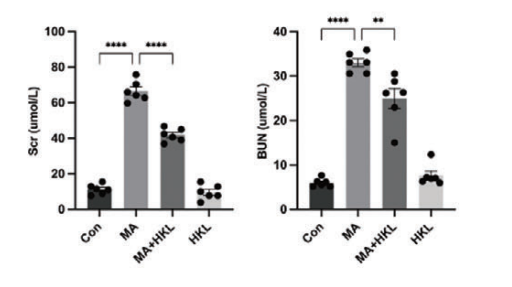
Honokiol purchased from MedChemExpress. Usage Cited in: Adv Sci (Weinh). 2025 Feb;12(8):e2411943. [Abstract]
Honokiol (5 mg/kg) was injected intraperitoneally (i.p.) for three days before the injection of MA. Serum creatinine (Scr) and urea nitrogen (BUN) levels in MA‐AKI mice.
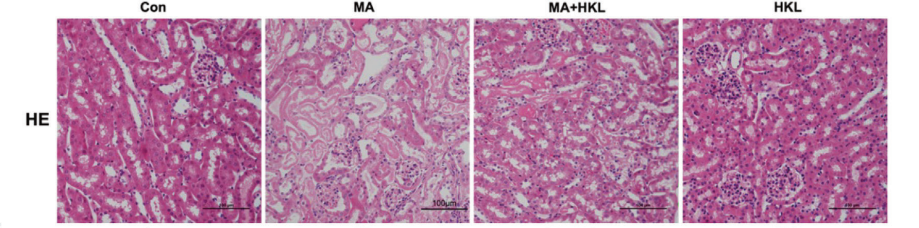
Honokiol purchased from MedChemExpress. Usage Cited in: Adv Sci (Weinh). 2025 Feb;12(8):e2411943. [Abstract]
Images stained with hematoxylin and eosin (HE) after intraperitoneal injection of magnolol (5 mg/kg) three days prior to MA injection.
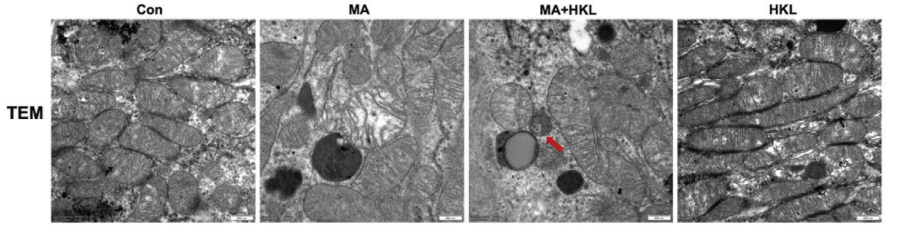
Honokiol purchased from MedChemExpress. Usage Cited in: Adv Sci (Weinh). 2025 Feb;12(8):e2411943. [Abstract]
Three days before MA injection, magnolol (5 mg/kg) was injected intraperitoneally. Representative transmission electron microscopy (TEM) images of mitochondria in renal tubular epithelial cells of mice in each group.
-
Sci Adv
Genetically engineered chondrocyte-mimetic nanoplatform attenuates osteoarthritis by blocking IL-1β and restoring sirtuin-3. [Abstract]2025 Jul 25;11(30):eadv4238. PMID: 40712009 -
Cell Death Dis
Honokiol suppresses the aberrant interactions between renal resident macrophages and tubular epithelial cells in lupus nephritis through the NLRP3/IL-33/ST2 axis. [Abstract]2023 Mar 1;14(3):174. PMID: 36859530 -
Phytomedicine
Ginger-processed Magnoliae Officinalis Cortex ameliorates ovalbumin-induced asthma by alleviating inflammation via the gut-lung axis. [Abstract]2025 Sep:145:156971. PMID: 40554292 -
Phytomedicine
Disruption of cholesterol homeostasis triggers NLRP3-cGAS-STING axis-dependent hepatic fibrosis and honokiol intervention effects. [Abstract]2025 Jul 25:143:156904. PMID: 40449452 -
Phytomedicine
Fangchinoline suppresses nasopharyngeal carcinoma progression by inhibiting SQLE to regulate the PI3K/AKT pathway dysregulation. [Abstract]2025 May:140:156484. PMID: 40090046 -
Phytomedicine
The role of daurisoline treatment in hepatocellular carcinoma: Inhibiting vasculogenic mimicry formation and enhancing sensitivity to sorafenib. [Abstract]2021 Nov:92:153740. PMID: 34600176 -
Cell Death Discov
Thrombomodulin reduces α-synuclein generation and ameliorates neuropathology in a mouse model of Parkinson's disease. [Abstract]2024 Apr 8;10(1):167. PMID: 38589400 -
J Transl Med
SIRT3 ameliorates diabetes-associated cognitive dysfunction via regulating mitochondria-associated ER membranes. [Abstract]2023 Jul 22;21(1):494. PMID: 37481555 -
Chin Med J (Engl)
Honokiol attenuates mitochondrial fission and cell apoptosis by activating Sirt3 in intracerebral hemorrhage. [Abstract]2023 Mar 20;136(6):719-731. PMID: 36805606 -
Int J Biol Macromol
A polysaccharide from Grifola frondosa fruit body induces HT-29 cells apoptosis by PI3K/AKT-MAPKs and NF-κB-pathway. [Abstract]2020 Mar 15:147:79-88. PMID: 31923503
Honokiol purchased from MedChemExpress. Usage Cited in: Int J Biol Macromol. 2020 Mar 15:147:79-88. [Abstract]
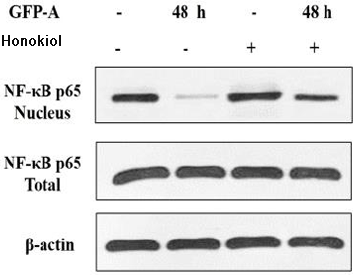
Effect of GFP-A and Honokiol (activator of ERK1/2) (10 μmol/L) on the protein expression of NF-κB p65 in HT-29 cells. Cells were treated with 180 μg/mL GFP-A in the presence or absence of Honokiol for different durations of time. The expression of protein was analyzed by western blot. β-Actin was used as an equal loading control.
-
Int J Mol Med
Honokiol ameliorates pyroptosis in intestinal ischemia‑reperfusion injury by regulating the SIRT3‑mediated NLRP3 inflammasome. [Abstract]2025 Jun;55(6):96. PMID: 40280115 -
Int J Mol Med
Honokiol antagonizes doxorubicin‑induced cardiomyocyte senescence by inhibiting TXNIP‑mediated NLRP3 inflammasome activation. [Abstract]2020 Jan;45(1):186-194. PMID: 31746354 -
Mol Med
2021 Apr 26;27(1):43. PMID: 33902432 -
Phytother Res
2026 Mar;40(3):873-886. PMID: 41518053 -
Free Radic Biol Med
The AMPK-PGC-1α-SIRT3 axis mediates mitochondrial metabolic dysfunction and neuronal senescence induced by Al(mal)3 exposure in HT22 hippocampal neuronal cells. [Abstract]2026 Jun 9:254:78-90. PMID: 42263892 -
Free Radic Biol Med
SIRT3 promotes metabolic maturation of human iPSC-derived cardiomyocytes via OPA1-controlled mitochondrial dynamics. [Abstract]2023 Feb 1:195:270-282. PMID: 36596388 -
Am J Chin Med
Honokiol Exhibits Anti-Tumor Effects in Breast Cancer by Modulating the miR-148a-5p-CYP1B1 Axis. [Abstract]2024;52(6):1843-1861. PMID: 39347954 -
Aging Cell
JUNB-FBXO21-ERK axis promotes cartilage degeneration in osteoarthritis by inhibiting autophagy. [Abstract]2021 Feb;20(2):e13306. PMID: 33450132 -
Neurosci Bull
Compound from Magnolia officinalis Ameliorates White Matter Injury by Promoting Oligodendrocyte Maturation in Chronic Cerebral Ischemia Models. [Abstract]2023 Oct;39(10):1497-1511. PMID: 37291477 -
Cell Mol Life Sci
Mitochondrial oxidative stress inhibited Sirt3/Foxo3/PPARα pathway and aggravated copper and zinc co-deficiency-induced hepatic lipotoxicity in a fish model. [Abstract]2025 Jun 5;82(1):226. PMID: 40471448 -
Cell Biosci
Remote ischemic preconditioning protects against spinal cord ischemia-reperfusion injury in mice by activating NMDAR/AMPK/PGC-1α/SIRT3 signaling. [Abstract]2023 Mar 16;13(1):57. PMID: 36927808 -
Food Funct
Pine nut antioxidant peptides ameliorate the memory impairment in a scopolamine-induced mouse model via SIRT3-induced synaptic plasticity. [Abstract]2021 Sep 7;12(17):8026-8036. PMID: 34269783 -
Cell Rep Methods
A fluorescent STING ligand sensor for high-throughput screening of compounds that can enhance tumor immunotherapy. [Abstract]2025 Jul 21;5(7):101106. PMID: 40669456 -
Pharmaceuticals (Basel)
In Silico and In Vitro Profiling of Honokiol and Paclitaxel-Loaded PBM Nanoparticles for Targeted Breast Cancer Delivery. [Abstract]2025 Nov 27;18(12):1814. PMID: 41471303 -
Pharmaceuticals (Basel)
Targeting Annexin A1 as a Druggable Player to Enhance the Anti-Tumor Role of Honokiol in Colon Cancer through Autophagic Pathway. [Abstract]2023 Jan 1;16(1):70. PMID: 36678567 -
Eur J Pharmacol
2021 Oct 5;908:174356. PMID: 34280398 -
Int J Mol Sci
ERK1/2-CEBPB Axis-Regulated hBD1 Enhances Anti-Tuberculosis Capacity in Alveolar Type II Epithelial Cells. [Abstract]2024 Feb 18;25(4):2408. PMID: 38397085 -
Int Immunopharmacol
Andrographolide attenuates Mycoplasma gallisepticum-induced inflammation and apoptosis by the JAK/PI3K/AKT signal pathway in the chicken lungs and primary alveolar type II epithelial cells. [Abstract]2022 May 6;109:108819. PMID: 35533556 -
Int Immunopharmacol
SIRT3-AMPK signaling pathway as a protective target in endothelial dysfunction of early sepsis. [Abstract]2022 May:106:108600. PMID: 35217431 -
Inflamm Bowel Dis
2023 Dec 5;29(12):1929-1940. PMID: 37335900 -
Mucosal Immunol
2022 Feb;15(2):314-326. PMID: 34686839 -
Inflammation
Protective Effect of Sirtuin 3 on CLP-Induced Endothelial Dysfunction of Early Sepsis by Inhibiting NF-κB and NLRP3 Signaling Pathways. [Abstract]2021 Oct;44(5):1782-1792. PMID: 33770326 -
J Integr Med
Honokiol protects against acute pancreatitis by activating SIRT3 to restore mitochondrial oxidative phosphorylation and alleviate hyperacetylation. [Abstract]2026 Jan 28:S2095-4964(26)00008-7. PMID: 41656152 -
Chem Biol Interact
Honokiol improves cognitive impairment in APP/PS1 mice through activating mitophagy and mitochondrial unfolded protein response. [Abstract]2022 Jan 5:351:109741. PMID: 34752757 -
AAPS PharmSciTech
2018 Nov;19(8):3501-3511. PMID: 30259402 -
Sci Rep
2026 Feb 6;16(1):7619. PMID: 41651965 -
Neuropharmacology
Early-life sevoflurane exposure impairs fear memory by suppressing extracellular signal-regulated kinase signaling in the bed nucleus of stria terminalis GABAergic neurons. [Abstract]2021 Jun 15:191:108584. PMID: 33933475 -
-
Fish Shellfish Immunol
Triclocarban evoked neutrophil extracellular trap formation in common carp (Cyprinus carpio L.) by modulating SIRT3-mediated ROS crosstalk with ERK1/2/p38 signaling. [Abstract]2022 Oct:129:85-95. PMID: 36057428 -
Microbiol Spectr
Quantitative analysis of the lysine acetylome reveals the role of SIRT3-mediated HSP60 deacetylation in suppressing intracellular Mycobacterium tuberculosis survival. [Abstract]2024 Aug 6;12(8):e0074924. PMID: 38916288 -
J Biol Chem
AKT Signaling Modulates Latent Viral Reservoir Viability in HIV-1-Infected Blood-Brain Barrier Pericytes. [Abstract]2024 Jan;300(1):105526. PMID: 38043797 -
Microbiol Spectr
2023 Jun 15;11(3):e0327322. PMID: 37212560 -
Funct Integr Genomics
Honokiol attenuates renal fibrosis via SIRT3-Mediated regulation of Wnt/β-Catenin signaling. [Abstract]2026 Feb 10;26(1):42. PMID: 41663594 -
Naunyn Schmiedebergs Arch Pharmacol
Honokiol inhibits cell migration and invasion by blocking EMT via Snail/Slug axis in endometriosis. [Abstract]2025 Oct 22. PMID: 41123636 -
J Immunol
β-Arrestin 2 Regulates Inflammatory Responses against Mycobacterium tuberculosis Infection through ERK1/2 Signaling. [Abstract]2021 Jun 1;206(11):2623-2637. PMID: 34001657 -
PLoS Negl Trop Dis
Identification of anti-flaviviral drugs with mosquitocidal and anti-Zika virus activity in Aedes aegypti. [Abstract]2019 Aug 20;13(8):e0007681. PMID: 31430351 -
-
Mol Biol Rep
Effects of honokiol protects against chronic kidney disease via BNIP3/NIX and FUNDC1-mediated mitophagy and AMPK pathways. [Abstract]2023 Aug;50(8):6557-6568. PMID: 37338733 -
Food Chem Toxicol
Exposure to di-(2-ethylhexyl) phthalate reduces secretion of GDNF via interfering with estrogen pathway and downregulating ERK/c-fos signaling pathway in astrocytes. [Abstract]2021 Dec:158:112592. PMID: 34624416 -
-
Exp Eye Res
SIRT3 mitigates dry eye disease through the activation of autophagy by deacetylation of FOXO1. [Abstract]2025 May:254:110328. PMID: 40064414 -
Am J Hypertens
SIRT3/AMPK signaling pathway regulates lipid metabolism and improves vulnerability to atrial fibrillation in Dahl salt sensitive rats. [Abstract]2024 Oct 14;37(11):901-908. PMID: 39023012 -
Vet Microbiol
The Chinese medicine monomer Schisandrin C inhibits PRRSV infection by regulating the OGT-PI3K/AKT/mTOR signaling pathway. [Abstract]2026 May:316:110992. PMID: 41865607 -
Dig Dis Sci
KISS-1, Mediated by Promoter Methylation, Suppresses Esophageal Squamous Cell Carcinoma Metastasis via MMP2/9/MAPK Axis. [Abstract]2022 Oct;67(10):4780-4796. PMID: 34993679 -
J Nat Med
Xanthohumol attenuates TXNIP-mediated renal tubular injury in vitro and in vivo diabetic models. [Abstract]2025 Mar;79(2):314-327. PMID: 39752106 -
Biochem Biophys Res Commun
Alleviation of fibrosis and oxidative stress in pressure overload-induced cardiac remodeling and heart failure via SIRT3 activation by colchicine. [Abstract]2025 Jul 12:770:151957. PMID: 40373382 -
Biochem Biophys Res Commun
Honokiol improves endothelial function in type 2 diabetic rats via alleviating oxidative stress and insulin resistance. [Abstract]2022 Apr 16:600:109-116. PMID: 35219098 -
Surg Oncol
BRCA1-associated protein induced proliferation and migration of gastric cancer cells through MAPK pathway. [Abstract]2020 Dec:35:191-199. PMID: 32890957 -
Exp Anim
SIRT3 confers protection against acute pulmonary embolism by anti-inflammation, anti-oxidative stress, anti-apoptosis: participation of AMPK/mTOR pathway. [Abstract]2023 Aug 7;72(3):346-355. PMID: 36858596
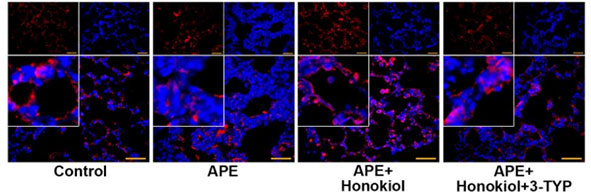
Honokiol purchased from MedChemExpress. Usage Cited in: Exp Anim. 2023 Aug 7;72(3):346-355. [Abstract]
IF staining assays demonstrates that Honokiol (5 mg/kg; i.p.; single) elevates the expression of SIRT3 in the lung tissues of APE (acute pulmonary embolism) rats.
-
J Obstet Gynaecol Res
Honokiol induces ferroptosis in ovarian cancer cells through the regulation of YAP by OTUB2. [Abstract]2024 May;50(5):864-872. PMID: 38480480 -
Heliyon
LncRNA GAS5 downregulates NLRP3 inflammasome activation-mediated pyroptosis in sepsis-induced myocardial injury by targeting SIRT3/AMPKα. [Abstract]2023 Nov 28;9(12):e22939. PMID: 38076153 -
-
-
-
Biomed Pharmacother
Cytological effects of honokiol treatment and its potential mechanism of action in non-small cell lung cancer. [Abstract]2019 Sep:117:109058. PMID: 31176168


Solvent & Solubility
In Vitro:
DMSO : ≥ 50 mg/mL (187.74 mM; Hygroscopic DMSO has a significant impact on the solubility of product, please use newly opened DMSO)
* "≥" means soluble, but saturation unknown.
Please refer to the solubility information to select the appropriate solvent. Once prepared, please aliquot and store the solution to prevent product inactivation from repeated freeze-thaw cycles.
Storage method and period of stock solution: -80°C, 1 year; -20°C, 6 months. When stored at -80°C, please use it within 1 year. When stored at -20°C, please use it within 6 months.
Please refer to the solubility information to select the appropriate solvent. Once prepared, please aliquot and store the solution to prevent product inactivation from repeated freeze-thaw cycles.
Storage method and period of stock solution: -80°C, 1 year; -20°C, 6 months. When stored at -80°C, please use it within 1 year. When stored at -20°C, please use it within 6 months.
Concentration (start) × Volume (start) = Concentration (final) × Volume (final)
In Vivo:
Select the appropriate dissolution method based on your experimental animal and administration route.
- For the following dissolution methods, please ensure to first prepare a clear stock solution using an In Vitro approach and then sequentially add co-solvents:
- To ensure reliable experimental results, the clarified stock solution can be appropriately stored based on storage conditions. As for the working solution for In Vivo experiments, it is recommended to prepare freshly and use it on the same day.
- The percentages shown for the solvents indicate their volumetric ratio in the final prepared solution. If precipitation or phase separation occurs during preparation, heat and/or sonication can be used to aid dissolution.
Add each solvent one by one: 10% DMSO 40% PEG300 5% Tween-80 45% Saline
Solubility: ≥ 2.5 mg/mL (9.39 mM); Clear solution
This protocol yields a clear solution of ≥ 2.5 mg/mL (saturation unknown).
Taking 1 mL working solution as an example, add 100 μL DMSO stock solution (25.0 mg/mL) to 400 μL PEG300, and mix evenly; then add 50 μL Tween-80 and mix evenly; then add 450 μL Saline to adjust the volume to 1 mL.
Preparation of Saline: Dissolve 0.9 g sodium chloride in ddH₂O and dilute to 100 mL to obtain a clear Saline solution.
Add each solvent one by one: 10% DMSO 90% (20% SBE-β-CD in Saline)
Solubility: ≥ 2.5 mg/mL (9.39 mM); Clear solution
This protocol yields a clear solution of ≥ 2.5 mg/mL (saturation unknown).
Taking 1 mL working solution as an example, add 100 μL DMSO stock solution (25.0 mg/mL) to 900 μL 20% SBE-β-CD in Saline, and mix evenly.
Preparation of 20% SBE-β-CD in Saline (4°C, storage for one week): 2 g SBE-β-CD powder is dissolved in 10 mL Saline, completely dissolve until clear.
For the following dissolution methods, please prepare the working solution directly:
It is recommended to prepare fresh solutions and use them promptly within a short period of time.
The percentages shown for the solvents indicate their volumetric ratio in the final prepared solution. If precipitation or phase separation occurs during preparation, heat and/or sonication can be used to aid dissolution.
Add each solvent one by one: Corn Oil
Solubility: 16.67 mg/mL (62.59 mM); Clear solution; Need ultrasonic
In Vivo Dissolution Calculator
Please enter the basic information of animal experiments:
-
-
-
-
Recommended: Prepare an additional quantity of animals to account for potential losses during experiments.
Please enter your animal formula composition:
-
%DMSO +
Recommended: Keep the proportion of DMSO in working solution below 2% if your animal is weak.
-
%+
-
+%Tween-80 + +
-
%Saline +
The co-solvents required include: DMSO, . All of co-solvents are available by MedChemExpress (MCE). , Tween 80. All of co-solvents are available by MedChemExpress (MCE).
Working solution concentration: 0.22 mg/mL
Method for preparing stock solution: mg drug dissolved in μL DMSO. Stock solution concentration: mg/mL.
1. Take μL DMSO stock solution;
2. Add μL .
μL , mix evenly;
3. Then add μL Tween 80, mix evenly;
4. Then add μL
Please ensure that the stock solution in the first step is dissolved to a clear state, and add co-solvents in sequence. You can use ultrasonic heating (ultrasonic cleaner, recommended frequency 20-40 kHz), vortexing, etc. to assist dissolution.


Purity & Documentation
-
Data Sheet (283 KB)
-
SDS (620 KB)
- English - EN (620 KB)
- Français - FR (620 KB)
- Deutsch - DE (620 KB)
- Norwegian - NO (620 KB)
- Español - ES (620 KB)
- Swedish - SV (620 KB)
- Italian - IT (620 KB)
- Korean - KR (620 KB)
- Portuguese - PT (620 KB)
-
Handling Instructions (2659 KB)
References
[1]. Chang KH, et al. Honokiol-induced apoptosis and autophagy in glioblastoma multiforme cells. Oncol Lett. 2013 Nov;6(5):1435-1438. [Content Brief]
[2]. Godugu C, et al. Honokiol nanomicellar formulation produced increased oral bioavailability and anticancer effects in triple negative breast cancer (TNBC). Colloids Surf B Biointerfaces. 2017 Jan 23;153:208-219 [Content Brief]
[3]. Lee TY, et al. Honokiol as a specific collagen receptor glycoprotein VI antagonist on human platelets: Functional ex vivo and in vivo studies. Sci Rep. 2017 Jan 5;7:40002 [Content Brief]
[4]. Zhai H, et al. Honokiol-induced neurite outgrowth promotion depends on activation of extracellular signal-regulated kinases (ERK1/2). Eur J Pharmacol. 2005 Jun 1;516(2):112-7. [Content Brief]


Complete Stock Solution Preparation Table
Please refer to the solubility information to select the appropriate solvent. Once prepared, please aliquot and store the solution to prevent product inactivation from repeated freeze-thaw cycles.
Storage method and period of stock solution: -80°C, 1 year; -20°C, 6 months. When stored at -80°C, please use it within 1 year. When stored at -20°C, please use it within 6 months.
| Optional Solvent | Concentration Solvent Mass | 1 mg | 5 mg | 10 mg | 25 mg |
|---|---|---|---|---|---|
| DMSO | 1 mM | 3.7547 mL | 18.7737 mL | 37.5474 mL | 93.8685 mL |
| 5 mM | 0.7509 mL | 3.7547 mL | 7.5095 mL | 18.7737 mL | |
| 10 mM | 0.3755 mL | 1.8774 mL | 3.7547 mL | 9.3869 mL | |
| 15 mM | 0.2503 mL | 1.2516 mL | 2.5032 mL | 6.2579 mL | |
| 20 mM | 0.1877 mL | 0.9387 mL | 1.8774 mL | 4.6934 mL | |
| 25 mM | 0.1502 mL | 0.7509 mL | 1.5019 mL | 3.7547 mL | |
| 30 mM | 0.1252 mL | 0.6258 mL | 1.2516 mL | 3.1290 mL | |
| 40 mM | 0.0939 mL | 0.4693 mL | 0.9387 mL | 2.3467 mL | |
| 50 mM | 0.0751 mL | 0.3755 mL | 0.7509 mL | 1.8774 mL | |
| 60 mM | 0.0626 mL | 0.3129 mL | 0.6258 mL | 1.5645 mL | |
| 80 mM | 0.0469 mL | 0.2347 mL | 0.4693 mL | 1.1734 mL | |
| 100 mM | 0.0375 mL | 0.1877 mL | 0.3755 mL | 0.9387 mL |


Honokiol Related Classifications
HY-N0003 Related Classifications
 Powered by Bioz