



18080-67-6
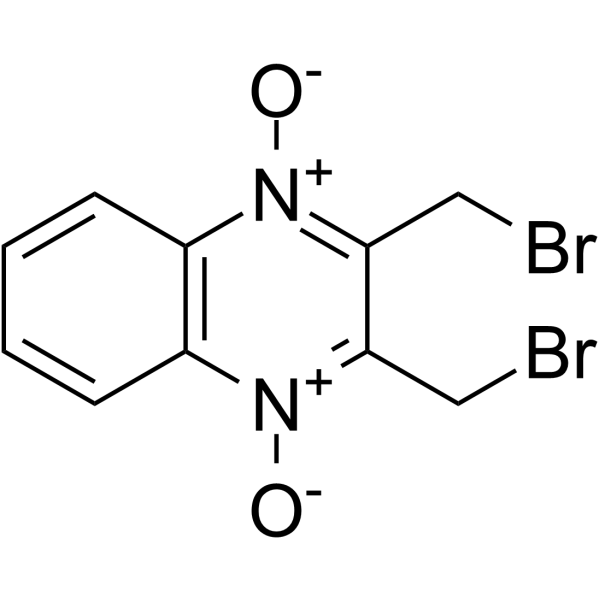
Chemical Structure
Conoidin A
- CAS No.: 18080-67-6
- Formula:C10H8Br2N2O2
- Molecular Weight:347.99
IUPAC Name: 2,3-bis(bromomethyl)quinoxaline 1,4-dioxide
InChIKey: DQKNFTLRMZOAMG-UHFFFAOYSA-N
SMILES: [O-][N+]1=C(C(CBr)=[N+](C2=C1C=CC=C2)[O-])CBr
Biological Activity: Conoidin A is a cell permeable inhibitor of T. gondii enzyme peroxiredoxin II (TgPrxII) with nematicidal properties. Conoidin A covalently binds to the peroxidatic Cys47 of TgPrxII, irreversibly inhibiting its hyperperoxidation activity with an IC50 of 23 μM. Conoidin A also inhibits hyperoxidation of mammalian PrxI and PrxII (but not PrxIII)[1][2]. Conoidin A has antioxidant, neuroprotective effects and can be used for the research of ischaemic heart disease[3].
| Cat. No. | Product Name | Purity | Description | Pricing | |||||||||||||||||||
|---|---|---|---|---|---|---|---|---|---|---|---|---|---|---|---|---|---|---|---|---|---|---|---|
|
|
Conoidin A | 99.32% | Conoidin A is a cell permeable inhibitor of T. gondii enzyme peroxiredoxin II (TgPrxII) with nematicidal properties. Conoidin A covalently binds to the peroxidatic Cys47 of TgPrxII, irreversibly inhibiting its hyperperoxidation activity with an IC50 of 23 μM. Conoidin A also inhibits hyperoxidation of mammalian PrxI and PrxII (but not PrxIII). Conoidin A has antioxidant, neuroprotective effects and can be used for the research of ischaemic heart disease. | ||||||||||||||||||||
|
loading...
/
|
|||||||||||||||||||||||
-
Similarity Score 0.80
 HY-128509Dioxidine
-
Similarity Score 0.69
 HY-131102RMequindox (Standard)
-
Similarity Score 0.66
 HY-N0465ROlaquindox (Standard)
-
Similarity Score 0.63
 HY-B1340RCarbadox (Standard)
-
Similarity Score 0.59
 HY-N15083Iodinin
-
Similarity Score 0.58
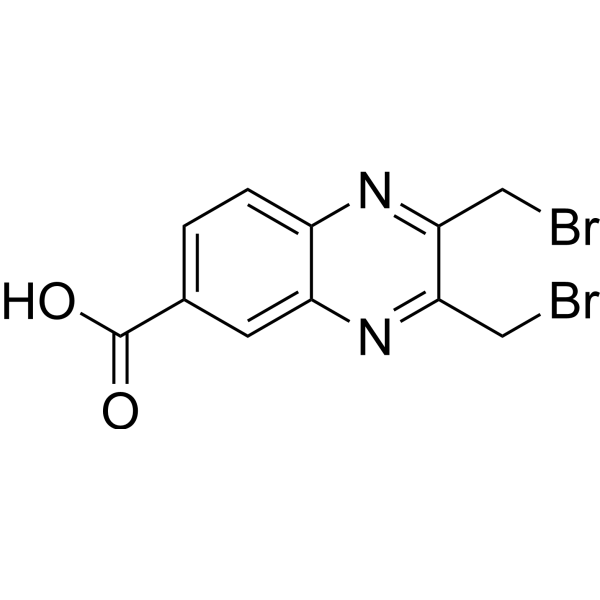 HY-212106-Quinoxalinecarboxylic acid, 2,3-bis(bromomethyl)-
-
Similarity Score 0.57
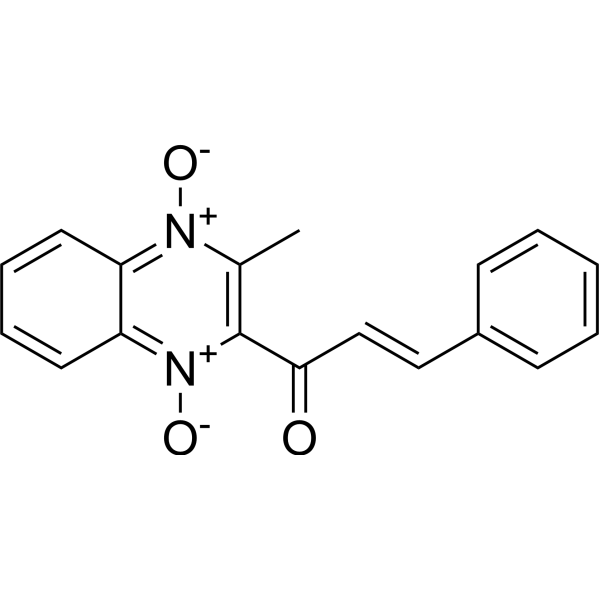 HY-123581Quinocetone
-
Similarity Score 0.56
 HY-W1448466,6'-Bis(bromomethyl)-2,2'-bipyridine
-
Similarity Score 0.54
 HY-130055RHQNO (Standard)
-

Explore the MedChemAI to find more analogs


References
- [1]. Jeralyn D Haraldsen, et al. IDENTIFICATION OF CONOIDIN A AS A COVALENT INHIBITOR OF PEROXIREDOXIN II. Org Biomol Chem. 2009;7:3040-3048. [Content Brief]
- [2]. Gu Liu, et al. Optimisation of conoidin A, a peroxiredoxin inhibitor. ChemMedChem. 2010 Jan;5(1):41-5. [Content Brief]
- [3]. Bo Wei, et al. Luteolin ameliorates rat myocardial ischaemia-reperfusion injury through activation of peroxiredoxin II. Br J Pharmacol [Content Brief]



