



Milnacipran
Based on 2 publication(s) in Google Scholar
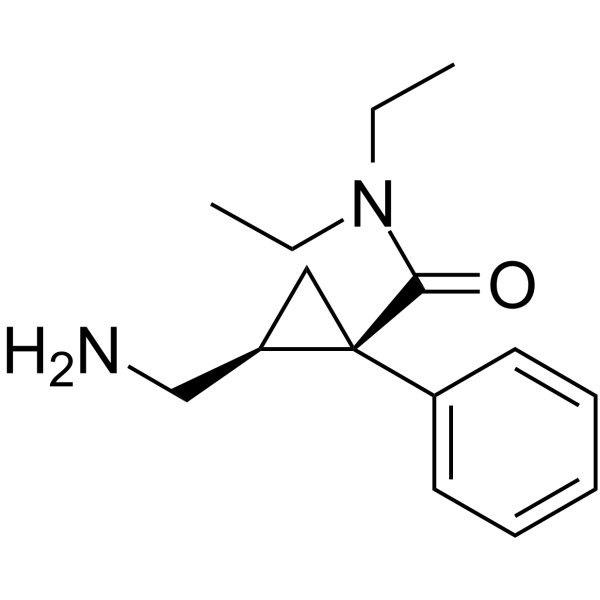
Milnacipran is an orally active Serotonin (HY-B1473A) and Norepinephrine (HY-13715) reuptake inhibitor. Milnacipran inhibits monoamine transporters, especially the norepinephrine transporter and the serotonin transporter (Ki values of 31 and 8.5 nM, respectively). Milnacipran inhibits pERK1/2 activation. Milnacipran has antidepressant, anxiolytic and analgesic properties. Milnacipran inhibits biting behavior in mice. Milnacipran can be used in the study of major depressive disorder, anxiety disorders, and neuropathic pain (e.g., fibromyalgia).
Nur für Forschungszwecke. Wir verkaufen nicht an Patienten.
- Reinheit : 99.69%
- CAS. Nr.: 92623-85-3
- Formel: C15H22N2O
- Molecular Weight:246.35
-
Speicherung:Pure form -20°C, 3 years , 4°C, 2 years ; In solvent -80°C, 6 months , -20°C, 1 month

To place orders, for customer services and technical support, please contact: MedChemExpress USA
Tel: 609-228-6898 E-mail: [email protected] [email protected]


-
 Biologische Aktivität
-
Chemical Information
-
Lösungsmittel & Löslichkeit
- Reinheit & Dokumentation
- Verweise
-
 Help & FAQs


-
HY-B0176A
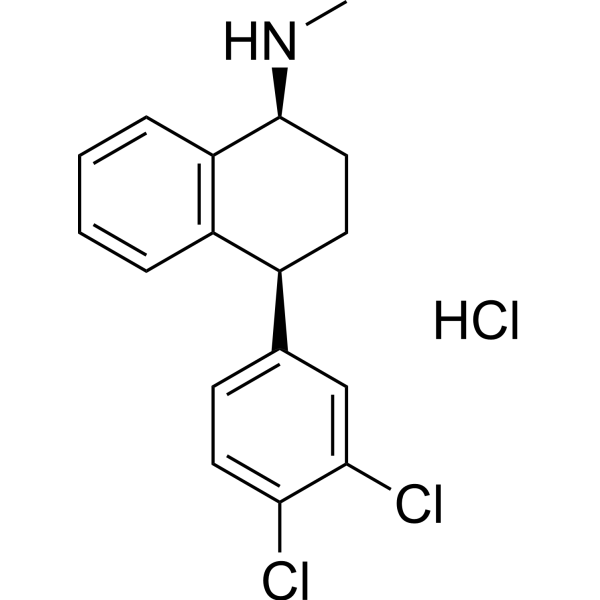
Sertraline hydrochlorideSSRI -
HY-B0168A
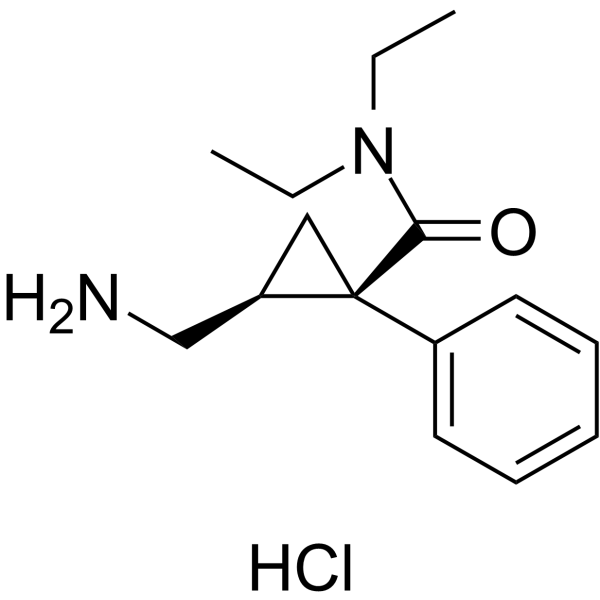
Milnacipran hydrochlorideSerotonin and Norepinephrine Reuptake Inhibitor -
HY-14258A
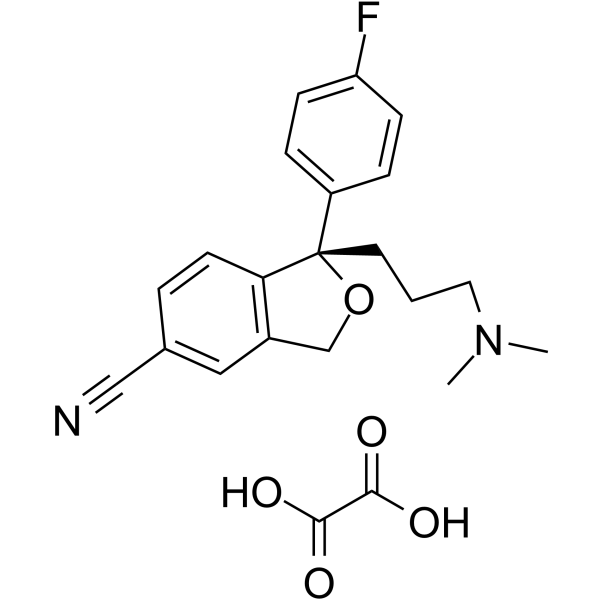
Escitalopram oxalateSerotonin Reuptake Inhibitor -

HY-B0176AR
Sertraline hydrochloride (Standard)SSRI -
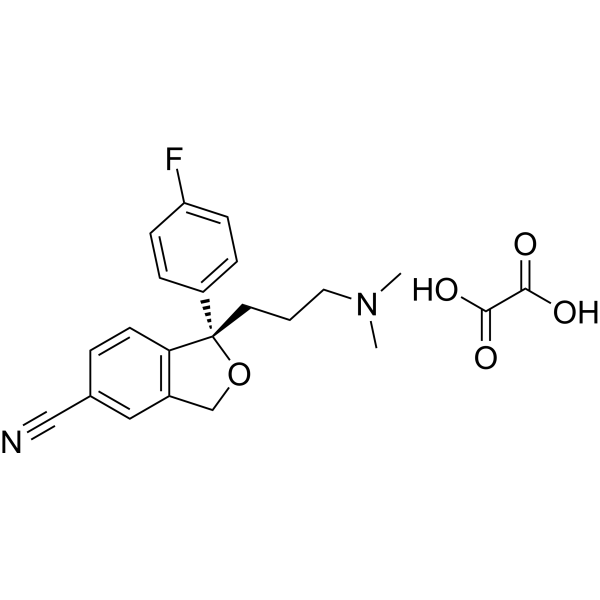
HY-14258AR
Escitalopram oxalate (Standard)Serotonin Reuptake Inhibitor -
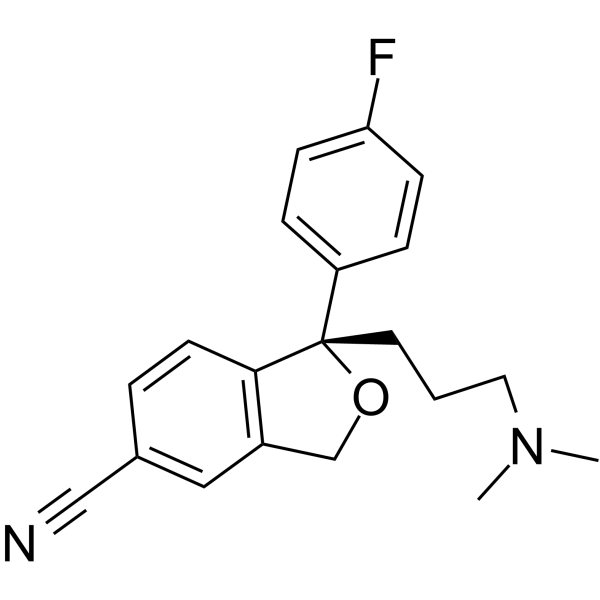
HY-14258
EscitalopramSerotonin Reuptake Inhibitor -

HY-B0168AR
Milnacipran hydrochloride (Standard)Standard of Milnacipran Hydrochloride -
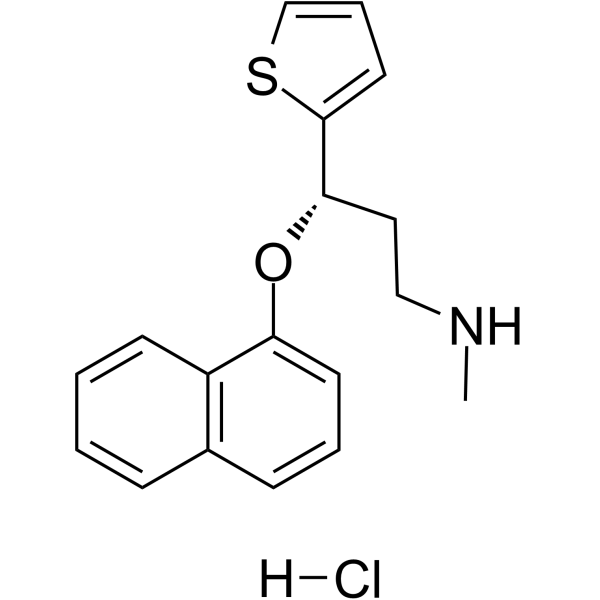
HY-B0161A
Duloxetine hydrochlorideSerotonin-norepinephrine Reuptake Inhibitor -
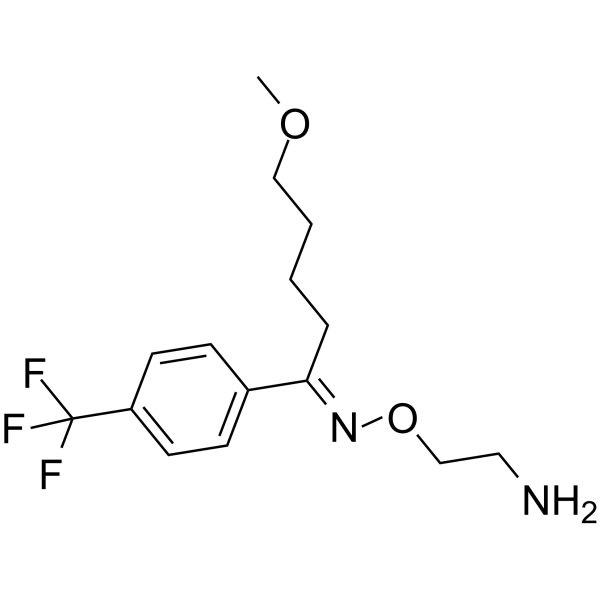
HY-B0103
FluvoxamineSerotonin Transporter Inhibitor -
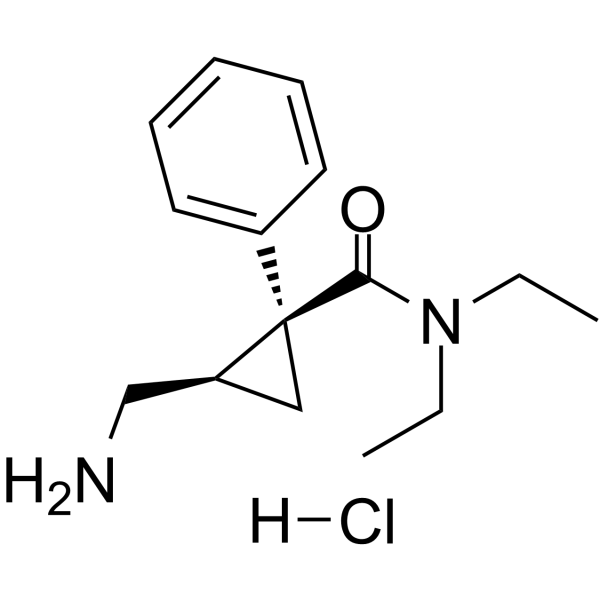
HY-B0168B
Levomilnacipran hydrochlorideSerotonin/Norepinephrine Reuptake Inhibitor -
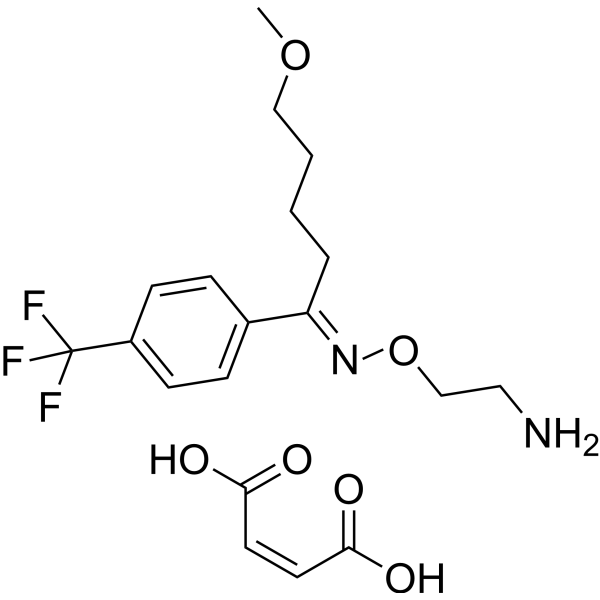
HY-B0103A
Fluvoxamine maleateSerotonin Transporter Inhibitor -
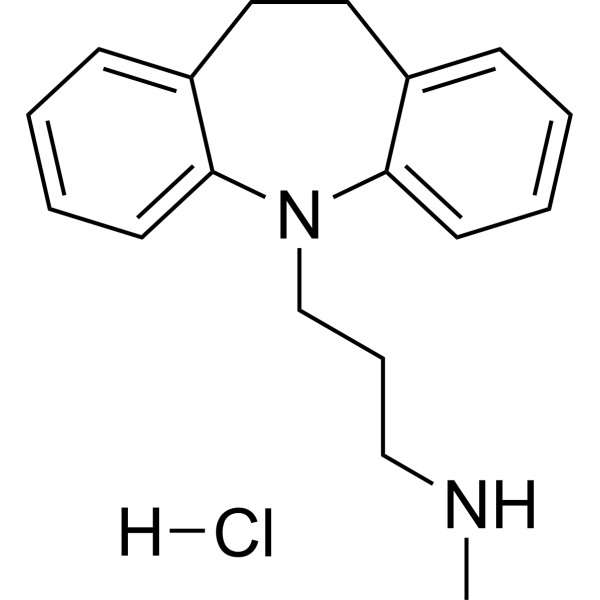
HY-B1272
Desipramine hydrochlorideSerotonin Transporter Inhibitor
Publications Citing Use of MedChemExpress (MCE) Milnacipran
More

Biologische Aktivität
Beschreibung
Cellular Effect
|
Cell Line

|
Type | Value | Description | References |
|---|---|---|---|---|
| CHO | IC50 |
64 nM
Compound: rel-Milnacipran
|
Inhibition of human SERT expressed in CHO cell membranes assessed as reduction in [3H]serotonin uptake preincubated for 10 mins followed by [3H]serotonin addition measured after 20 mins by liquid scintillation counting method
Inhibition of human SERT expressed in CHO cell membranes assessed as reduction in [3H]serotonin uptake preincubated for 10 mins followed by [3H]serotonin addition measured after 20 mins by liquid scintillation counting method
|
[PMID: 27865645] |
In Vitro
Milnacipran shows high affinity for 5-HT and NA transporters (Ki = 8.5 and 31 nM, respectively)[2].
Milnacipran (10-100 µM; 3 min) reduces the amplitude of NMDA (HY-17551)-induced currents in rat spinal lamina II neurons[5].
Milnacipran (100 µM; 10 min) suppresses NMDA (HY-17551)-induced pERK1/2 activation in superficial dorsal horn neurons[5].
MedChemExpress (MCE) has not independently confirmed the accuracy of these methods. They are for reference only.
In Vivo
Milnacipran (30-120 mg/kg; p.o.) increases withdrawal threshold to tactile stimulation and latency to heat stimulation in a dose-dependent manner in rats with spinal nerve ligation (SNL)[4].
Milnacipran (0.01-0.1 µmol; intrathecal) suppresses hyperalgesia in a dose-dependent manner in mice with intrathecal NMDA-induced thermal hyperalgesia[5].
Milnacipran (3-30 mg/kg; i.p.) suppresses impulsive, aggressive, and depressive-like behaviors in male C57BL/6N mice[6].
Milnacipran (20-60 mg/kg; i.p.) suppresses food intake in fasted male C57BL/6J and Ay mice, increases hypothalamic POMC and CART mRNA levels, and does not elevate plasma corticosterone or blood glucose[7].
Milnacipran (0.1-10 μg/site; intrathecal) inhibits Serotonin-induced biting behavior in male ICR mice[8].
MedChemExpress (MCE) has not independently confirmed the accuracy of these methods. They are for reference only.
-
Animal Model:Male Sprague-Dawley rats; conditioned fear stress test[2]
-
Dosage:10, 30, 60 mg/kg
-
Administration:Oral administration (p.o.), single dose 60 min before testing.
-
Result:Reduced freezing time at 30 and 60 mg/kg.
-
Animal Model:Male C57BL/6N mice and male BALB/c mice[6]
-
Dosage:0, 3, 10, 30 mg/kg (saline)
-
Administration:Intraperitoneal injection (i.p.); 60 min prior to each test; single dose per session with washout intervals (1 week for 3-CSRTT, 2 days for RIT).
-
Result:Reduced premature responses in 3-CSRTT and attack bites in RIT, shortened immobility time in FST (at 10 mg/kg).
Increased aggressive behavior and elevated dopamine levels in the nucleus accumbens (at 30 mg/kg).
Clinical Trial
| NCT Number | Sponsor | Condition | Start Date |
Phase
|
|---|---|---|---|---|
| NCT01329991 | 2011-05 | PHASE1 |


Chemical Information
-
CAS. Nr. 92623-85-3
-
Appearance Solid-Liquid Mixture
-
Molecular Weight 246.35
-
Formel C15H22N2O
-
Color Colorless to off-white
-
SMILES
CCN(CC)C([C@@]1(C2=CC=CC=C2)[C@H](C1)CN)=O
-
Versand
Room temperature in continental US; may vary elsewhere.
-
Speicherung
Pure form -20°C 3 years 4°C 2 years In solvent -80°C 6 months -20°C 1 month


Publications (2)
-
Journal Impact Factor
-
Most Recent
-
Cell Rep Med
2023 Mar 21;4(3):100979. PMID: 36948152 -
Int Immunopharmacol
Innovative role of the antidepressant imipramine in esophageal squamous cell carcinoma treatment: Promoting apoptosis and protective autophagy. [Abstract]2025 Feb 6:147:113969. PMID: 39764996


Lösungsmittel & Löslichkeit
In Vitro:
DMSO : 100 mg/mL (405.93 mM; Need ultrasonic; Hygroscopic DMSO has a significant impact on the solubility of product, please use newly opened DMSO)
Please refer to the solubility information to select the appropriate solvent. Once prepared, please aliquot and store the solution to prevent product inactivation from repeated freeze-thaw cycles.
Storage method and period of stock solution: -80°C, 6 months; -20°C, 1 month. When stored at -80°C, please use it within 6 months. When stored at -20°C, please use it within 1 month.
Please refer to the solubility information to select the appropriate solvent. Once prepared, please aliquot and store the solution to prevent product inactivation from repeated freeze-thaw cycles.
Storage method and period of stock solution: -80°C, 6 months; -20°C, 1 month. When stored at -80°C, please use it within 6 months. When stored at -20°C, please use it within 1 month.
Konzentration (Stammlösung) × Volumen (Stammlösung) = Konzentration (Ziellösung) × Volumen (Ziellösung)
In Vivo:
Select the appropriate dissolution method based on your experimental animal and administration route.
- For the following dissolution methods, please ensure to first prepare a clear stock solution using an In Vitro approach and then sequentially add co-solvents:
- To ensure reliable experimental results, the clarified stock solution can be appropriately stored based on storage conditions. As for the working solution for In Vivo experiments, it is recommended to prepare freshly and use it on the same day.
- The percentages shown for the solvents indicate their volumetric ratio in the final prepared solution. If precipitation or phase separation occurs during preparation, heat and/or sonication can be used to aid dissolution.
Add each solvent one by one: 10% DMSO 40% PEG300 5% Tween-80 45% Saline
Solubility: ≥ 2.5 mg/mL (10.15 mM); Clear solution
This protocol yields a clear solution of ≥ 2.5 mg/mL (saturation unknown).
Taking 1 mL working solution as an example, add 100 μL DMSO stock solution (25.0 mg/mL) to 400 μL PEG300, and mix evenly; then add 50 μL Tween-80 and mix evenly; then add 450 μL Saline to adjust the volume to 1 mL.
Preparation of Saline: Dissolve 0.9 g sodium chloride in ddH₂O and dilute to 100 mL to obtain a clear Saline solution.
Add each solvent one by one: 10% DMSO 90% (20% SBE-β-CD in Saline)
Solubility: ≥ 2.5 mg/mL (10.15 mM); Clear solution
This protocol yields a clear solution of ≥ 2.5 mg/mL (saturation unknown).
Taking 1 mL working solution as an example, add 100 μL DMSO stock solution (25.0 mg/mL) to 900 μL 20% SBE-β-CD in Saline, and mix evenly.
Preparation of 20% SBE-β-CD in Saline (4°C, storage for one week): 2 g SBE-β-CD powder is dissolved in 10 mL Saline, completely dissolve until clear.
In Vivo Dissolution Calculator
Please enter the basic information of animal experiments:
-
-
-
-
Recommended: Prepare an additional quantity of animals to account for potential losses during experiments.
Please enter your animal formula composition:
-
%DMSO +
Recommended: Keep the proportion of DMSO in working solution below 2% if your animal is weak.
-
%+
-
+%Tween-80 + +
-
%Saline +
The co-solvents required include: DMSO, . All of co-solvents are available by MedChemExpress (MCE). , Tween 80. All of co-solvents are available by MedChemExpress (MCE).
Working solution concentration: 0.22 mg/mL
Method for preparing stock solution: mg drug dissolved in μL DMSO. Stock solution concentration: mg/mL.
1. Take μL DMSO stock solution;
2. Add μL .
μL , mix evenly;
3. Then add μL Tween 80, mix evenly;
4. Then add μL
Please ensure that the stock solution in the first step is dissolved to a clear state, and add co-solvents in sequence. You can use ultrasonic heating (ultrasonic cleaner, recommended frequency 20-40 kHz), vortexing, etc. to assist dissolution.


Reinheit & Dokumentation
-
Data Sheet (282 KB)
-
SDS (393 KB)
- English - EN (393 KB)
- Français - FR (393 KB)
- Deutsch - DE (393 KB)
- Norwegian - NO (393 KB)
- Español - ES (393 KB)
- Swedish - SV (393 KB)
- Italian - IT (393 KB)
- Korean - KR (393 KB)
- Portuguese - PT (393 KB)
-
Handling Instructions (2659 KB)
Verweise
[1]. Chen C, et al. Studies on the SAR and pharmacophore of milnacipran derivatives as monoamine transporter inhibitors. Bioorg Med Chem Lett. 2008 Feb 15;18(4):1346-9. [Content Brief]
[2]. Mochizuki D, et al. Neurochemical and behavioural characterization of milnacipran, a serotonin and noradrenaline reuptake inhibitor in rats. Psychopharmacology (Berl). 2002 Jul;162(3):323-32. [Content Brief]
[3]. Ueta K, et al. In vitro inhibition of recombinant ligand-gated ion channels by high concentrations of milnacipran. Psychopharmacology (Berl). 2004 Sep;175(2):241-6. [Content Brief]
[4]. Suzuki T, et al. Antiallodynic and antihyperalgesic effect of milnacipran in mice with spinal nerve ligation. Anesth Analg. 2008 Apr;106(4):1309-15, table of contents. [Content Brief]
[5]. Kohno T, et al. Milnacipran inhibits glutamatergic N-methyl-D-aspartate receptor activity in spinal dorsal horn neurons. Mol Pain. 2012 Jun 19;8:45. [Content Brief]
[6]. Tsutsui-Kimura I, et al. Milnacipran affects mouse impulsive, aggressive, and depressive-like behaviors in a distinct dose-dependent manner. J Pharmacol Sci. 2017 Jul;134(3):181-189. [Content Brief]
[7]. Nonogaki K, et al. Milnacipran, a serotonin and norepinephrine reuptake inhibitor, induces appetite-suppressing effects without inducing hypothalamic stress responses in mice. Am J Physiol Regul Integr Comp Physiol. 2007 May;292(5):R1775-81. [Content Brief]
[8]. Andoh T, et al. Milnacipran inhibits itch-related responses in mice through the enhancement of noradrenergic transmission in the spinal cord. J Pharmacol Sci. 2013;123(2):199-202. [Content Brief]


Complete Stock Solution Preparation Table
Please refer to the solubility information to select the appropriate solvent. Once prepared, please aliquot and store the solution to prevent product inactivation from repeated freeze-thaw cycles.
Storage method and period of stock solution: -80°C, 6 months; -20°C, 1 month. When stored at -80°C, please use it within 6 months. When stored at -20°C, please use it within 1 month.
| Optional Solvent | Concentration Solvent Mass | 1 mg | 5 mg | 10 mg | 25 mg |
|---|---|---|---|---|---|
| DMSO | 1 mM | 4.0593 mL | 20.2963 mL | 40.5927 mL | 101.4816 mL |
| 5 mM | 0.8119 mL | 4.0593 mL | 8.1185 mL | 20.2963 mL | |
| 10 mM | 0.4059 mL | 2.0296 mL | 4.0593 mL | 10.1482 mL | |
| 15 mM | 0.2706 mL | 1.3531 mL | 2.7062 mL | 6.7654 mL | |
| 20 mM | 0.2030 mL | 1.0148 mL | 2.0296 mL | 5.0741 mL | |
| 25 mM | 0.1624 mL | 0.8119 mL | 1.6237 mL | 4.0593 mL | |
| 30 mM | 0.1353 mL | 0.6765 mL | 1.3531 mL | 3.3827 mL | |
| 40 mM | 0.1015 mL | 0.5074 mL | 1.0148 mL | 2.5370 mL | |
| 50 mM | 0.0812 mL | 0.4059 mL | 0.8119 mL | 2.0296 mL | |
| 60 mM | 0.0677 mL | 0.3383 mL | 0.6765 mL | 1.6914 mL | |
| 80 mM | 0.0507 mL | 0.2537 mL | 0.5074 mL | 1.2685 mL | |
| 100 mM | 0.0406 mL | 0.2030 mL | 0.4059 mL | 1.0148 mL |


Milnacipran Related Classifications
HY-B0168 Related Classifications
 Powered by Bioz