



Squalene
Based on 3 publication(s) in Google Scholar
Squalene (Super Squalene) is an intermediate product in the synthesis of cholesterol, and shows several pharmacological properties such as hypolipidemic, hepatoprotective, antiatherosclerotic, cardioprotective, antioxidant, and antitumour activity.
For research use only. We do not sell to patients.
- Purity : 98.0%
- CAS No.: 111-02-4
- Formula: C30H50
- Molecular Weight:410.72
-
Storage:Pure form -20°C, 3 years , 4°C, 2 years ; In solvent -80°C, 6 months , -20°C, 1 month

To place orders, for customer services and technical support, please contact: MedChemExpress USA
Tel: 609-228-6898 E-mail: [email protected] [email protected]


-
 Biological Activity
-
Chemical Information
-
Solvent & Solubility
- Purity & Documentation
- References
-
 Help & FAQs


-
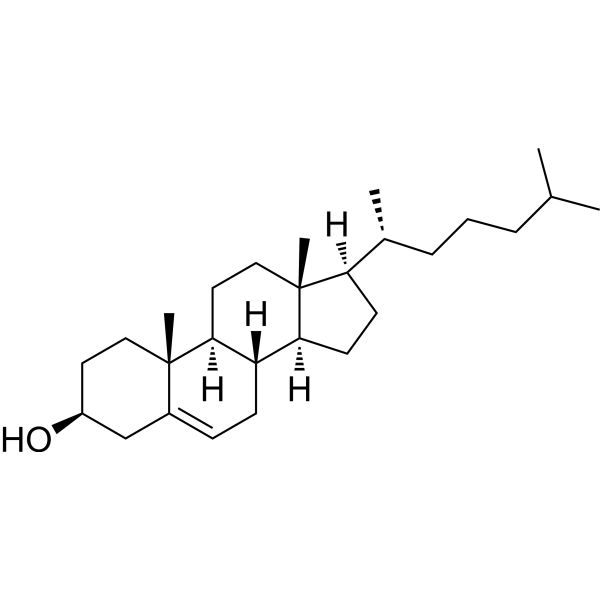
HY-N0322
Cholesterol (from animal)ERRα Agonist -
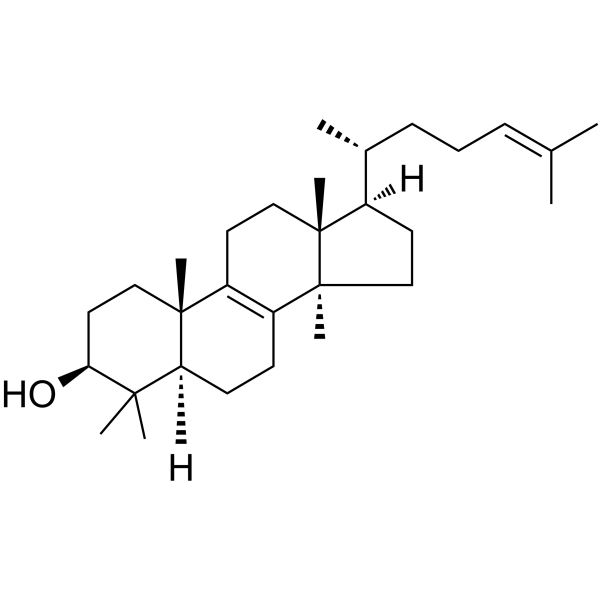
HY-W020033
Lanosterol -
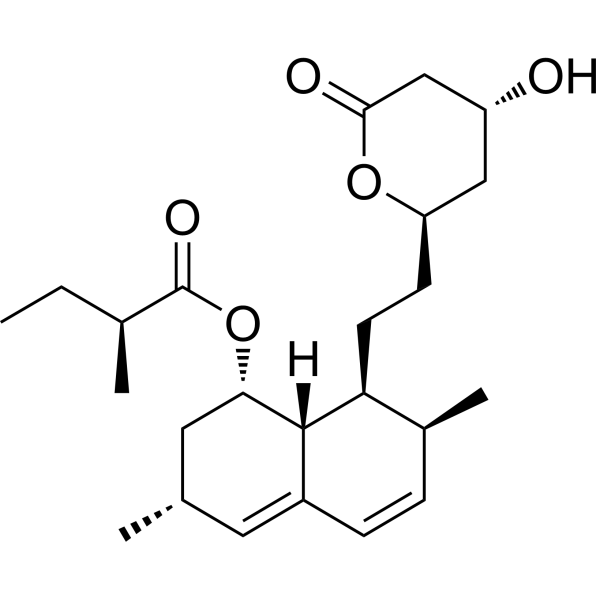
HY-N0504
LovastatinHMG-CoA Inhibitor -

HY-N1214R
Squalene (Standard)Hypolipidemic Agent -
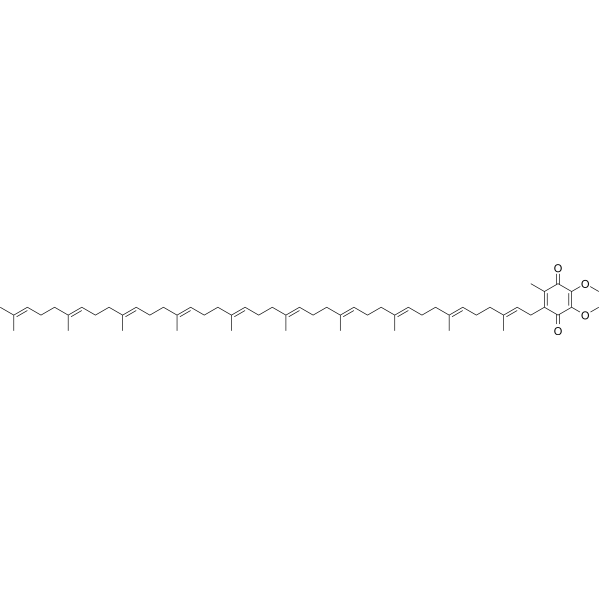
HY-N0111
Coenzyme Q10Antioxidant -
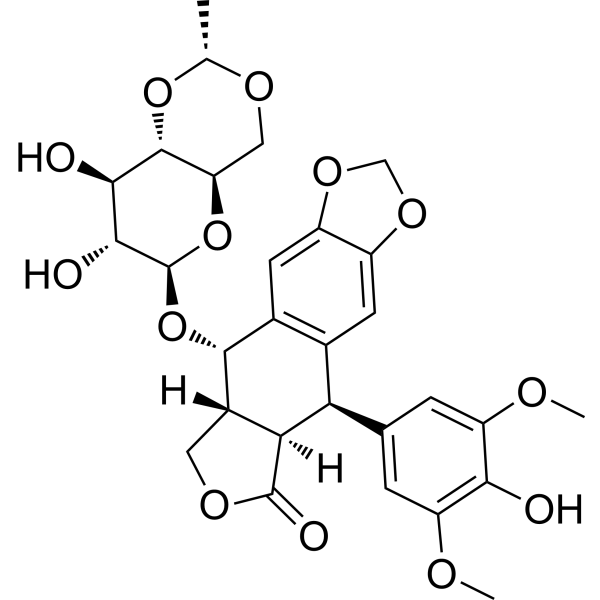
HY-13629
EtoposideTopoisomerase II Inhibitor -
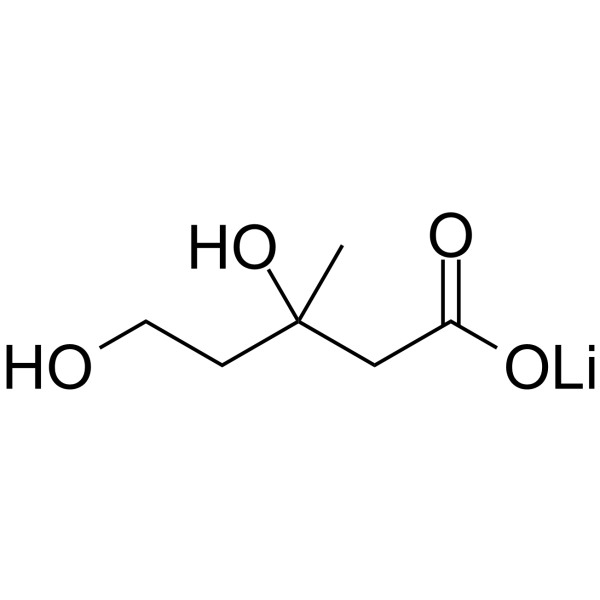
HY-113071A
Mevalonic acid lithium saltEndogenous Metabolite -
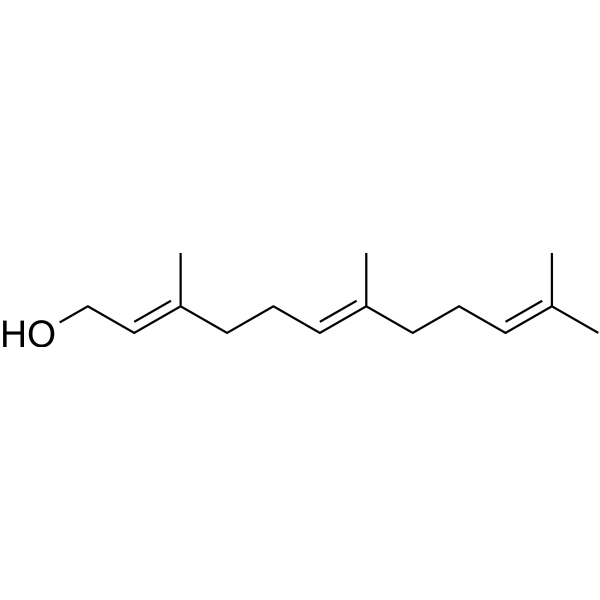
HY-Y0248A
Farnesol -
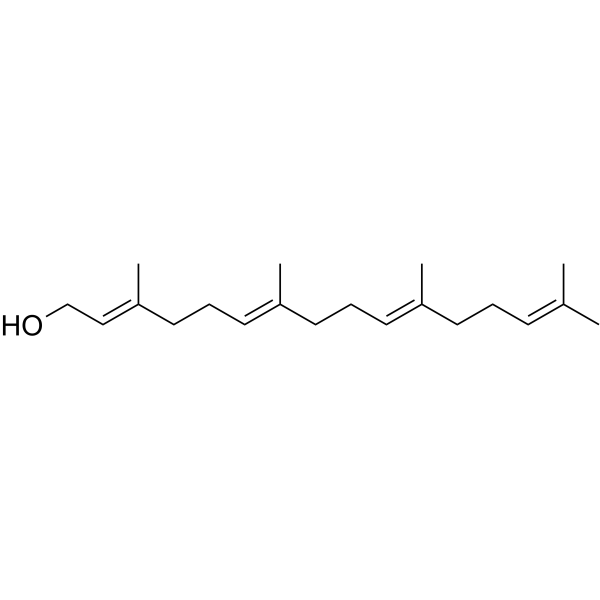
HY-W011474
GeranylgeraniolVitamin K2 -
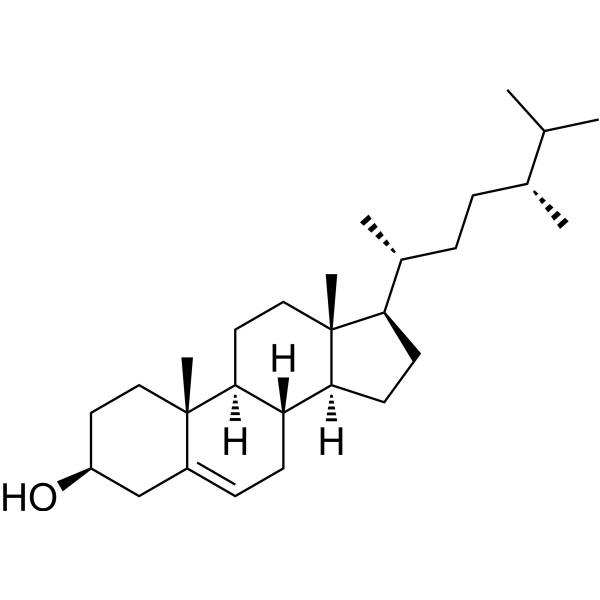
HY-N1459
CampesterolEndogenous Metabolite -
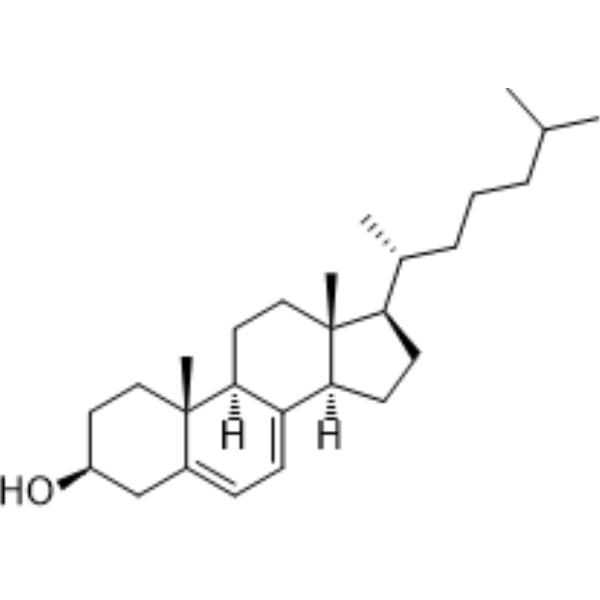
HY-113279
7-DehydrocholesterolEndogenous Metabolite -
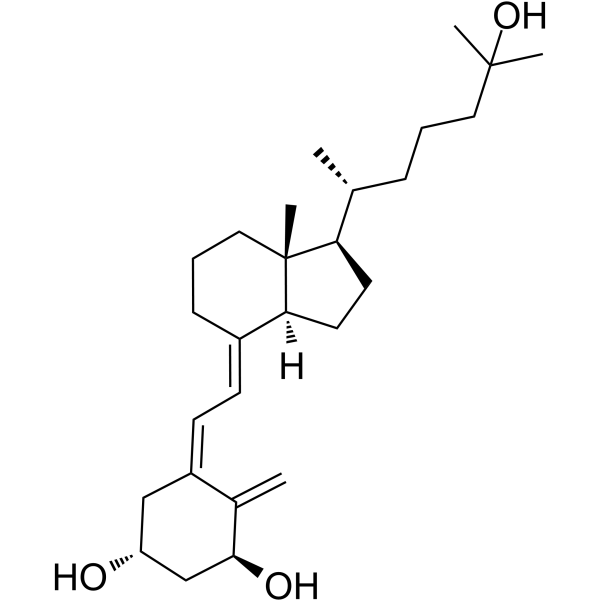
HY-10002
CalcitriolVDR Agonist
Publications Citing Use of MedChemExpress (MCE) Squalene
MoreAll Endogenous Metabolite Isoforms
More

Biological Activity
Description
IC50 & Target
|
Microbial Metabolite |
Human Endogenous Metabolite |
Cellular Effect
|
Cell Line

|
Type | Value | Description | References |
|---|---|---|---|---|
| MCF7 | IC50 |
>50 μM
Compound: 20
|
Cytotoxicity against human MCF7 cells after 72 hrs by MTS reduction assay
Cytotoxicity against human MCF7 cells after 72 hrs by MTS reduction assay
|
[PMID: 20704331] |
| NCI-H460 | IC50 |
>50 μM
Compound: 20
|
Cytotoxicity against human NCI-H460 cells after 72 hrs by MTS reduction assay
Cytotoxicity against human NCI-H460 cells after 72 hrs by MTS reduction assay
|
[PMID: 20704331] |
| Neutrophil | IC50 |
>30 μM
Compound: 8
|
Antiinflammatory activity in human neutrophils assessed as inhibition of fMet-Leu-Phe/Cytochalasin B-induced superoxide anion generation treated 5 mins before fMet-Leu-Phe/Cytochalasin B challenge by spectrophotometry
Antiinflammatory activity in human neutrophils assessed as inhibition of fMet-Leu-Phe/Cytochalasin B-induced superoxide anion generation treated 5 mins before fMet-Leu-Phe/Cytochalasin B challenge by spectrophotometry
|
[PMID: 19203247] |
| Neutrophil | IC50 |
>30 μM
Compound: 8
|
Antiinflammatory activity in human neutrophils assessed as inhibition of fMet-Leu-Phe/Cytochalasin B-induced elastase release treated 5 mins before fMet-Leu-Phe/Cytochalasin B challenge
Antiinflammatory activity in human neutrophils assessed as inhibition of fMet-Leu-Phe/Cytochalasin B-induced elastase release treated 5 mins before fMet-Leu-Phe/Cytochalasin B challenge
|
[PMID: 19203247] |
| SF-268 | IC50 |
>50 μM
Compound: 20
|
Cytotoxicity against human SF268 cells after 72 hrs by MTS reduction assay
Cytotoxicity against human SF268 cells after 72 hrs by MTS reduction assay
|
[PMID: 20704331] |
In Vitro
Squalene (12.5, 50 and 200 μM; 24 h) effects on MCF10A epithelial cells in a dose-dependent manner: (a) it decreases intracellular ROS level, (b) it prevents H2O2-induced oxidative injury, and (c) it protects against oxidative DNA damage[2].
MedChemExpress (MCE) has not independently confirmed the accuracy of these methods. They are for reference only.
In Vivo
MedChemExpress (MCE) has not independently confirmed the accuracy of these methods. They are for reference only.
-
Animal Model:Male mouse models (wild-type, Apoa1- and Apoe- deficient)[3]
-
Dosage:0.25 g/kg, 1 g/kg
-
Administration:Fed chow; diets for 11 weeks
-
Result:Increased high density lipoprotein-cholesterol and paraoxonase 1 and decreases oxidative stress in mice.
Clinical Trial
| NCT Number | Sponsor | Condition | Start Date |
Phase
|
|---|---|---|---|---|
| NCT01329991 | 2011-05 | PHASE1 |


Chemical Information
-
CAS No. 111-02-4
-
Appearance Liquid (Density: 0.858 g/cm3)
-
Molecular Weight 410.72
-
Formula C30H50
-
Color Colorless to light yellow
-
SMILES
C/C(C)=C\CC/C(C)=C/CC/C(C)=C/CC/C=C(C)/CC/C=C(C)/CC/C=C(C)\C
-
Synonyms
Super Squalene; trans-Squalene; AddaVax
-
Structure Classification
-
Initial Source
-
Shipping
Room temperature in continental US; may vary elsewhere.
-
Storage
Pure form -20°C 3 years 4°C 2 years In solvent -80°C 6 months -20°C 1 month


Publications (3)
-
Journal Impact Factor
-
Most Recent
-
J Control Release
A biomimetic phase-separating hydrogel potentiates local chemo-virotherapy to eradicate recurrent glioblastoma. [Abstract]2026 Jul 10:395:114990. PMID: 42097225 -
Dev Cell
2026 Apr 29:S1534-5807(26)00150-4. PMID: 42061405 -
Mol Cell Biochem
Squalene attenuates doxorubicin resistance in hepatocellular carcinoma by targeting SIRT6 to inhibit ERK1 deacetylation. [Abstract]2026 Apr 28. PMID: 42048041


Solvent & Solubility
In Vitro:
Ethanol : 20 mg/mL (48.69 mM; ultrasonic and warming and heat to 60°C)
DMSO : 16.67 mg/mL (40.59 mM; Need ultrasonic; Hygroscopic DMSO has a significant impact on the solubility of product, please use newly opened DMSO)
Please refer to the solubility information to select the appropriate solvent. Once prepared, please aliquot and store the solution to prevent product inactivation from repeated freeze-thaw cycles.
Storage method and period of stock solution: -80°C, 6 months; -20°C, 1 month. When stored at -80°C, please use it within 6 months. When stored at -20°C, please use it within 1 month.
Please refer to the solubility information to select the appropriate solvent. Once prepared, please aliquot and store the solution to prevent product inactivation from repeated freeze-thaw cycles.
Storage method and period of stock solution: -80°C, 6 months; -20°C, 1 month. When stored at -80°C, please use it within 6 months. When stored at -20°C, please use it within 1 month.
Concentration (start) × Volume (start) = Concentration (final) × Volume (final)
In Vivo:
Select the appropriate dissolution method based on your experimental animal and administration route.
- For the following dissolution methods, please ensure to first prepare a clear stock solution using an In Vitro approach and then sequentially add co-solvents:
- To ensure reliable experimental results, the clarified stock solution can be appropriately stored based on storage conditions. As for the working solution for In Vivo experiments, it is recommended to prepare freshly and use it on the same day.
- The percentages shown for the solvents indicate their volumetric ratio in the final prepared solution. If precipitation or phase separation occurs during preparation, heat and/or sonication can be used to aid dissolution.
Add each solvent one by one: 10% DMSO 40% PEG300 5% Tween-80 45% Saline
Solubility: ≥ 1.67 mg/mL (4.07 mM); Clear solution
This protocol yields a clear solution of ≥ 1.67 mg/mL (saturation unknown).
Taking 1 mL working solution as an example, add 100 μL DMSO stock solution (16.7 mg/mL) to 400 μL PEG300, and mix evenly; then add 50 μL Tween-80 and mix evenly; then add 450 μL Saline to adjust the volume to 1 mL.
Preparation of Saline: Dissolve 0.9 g sodium chloride in ddH₂O and dilute to 100 mL to obtain a clear Saline solution.
Add each solvent one by one: 10% DMSO 90% (20% SBE-β-CD in Saline)
Solubility: 1.67 mg/mL (4.07 mM); Suspended solution; Need ultrasonic
This protocol yields a suspended solution of 1.67 mg/mL. Suspended solution can be used for oral and intraperitoneal injection.
Taking 1 mL working solution as an example, add 100 μL DMSO stock solution (16.7 mg/mL) to 900 μL 20% SBE-β-CD in Saline, and mix evenly.
Preparation of 20% SBE-β-CD in Saline (4°C, storage for one week): 2 g SBE-β-CD powder is dissolved in 10 mL Saline, completely dissolve until clear.
In Vivo Dissolution Calculator
Please enter the basic information of animal experiments:
-
-
-
-
Recommended: Prepare an additional quantity of animals to account for potential losses during experiments.
Please enter your animal formula composition:
-
%DMSO +
Recommended: Keep the proportion of DMSO in working solution below 2% if your animal is weak.
-
%+
-
+%Tween-80 + +
-
%Saline +
The co-solvents required include: DMSO, . All of co-solvents are available by MedChemExpress (MCE). , Tween 80. All of co-solvents are available by MedChemExpress (MCE).
Working solution concentration: 0.22 mg/mL
Method for preparing stock solution: mg drug dissolved in μL DMSO. Stock solution concentration: mg/mL.
1. Take μL DMSO stock solution;
2. Add μL .
μL , mix evenly;
3. Then add μL Tween 80, mix evenly;
4. Then add μL
Please ensure that the stock solution in the first step is dissolved to a clear state, and add co-solvents in sequence. You can use ultrasonic heating (ultrasonic cleaner, recommended frequency 20-40 kHz), vortexing, etc. to assist dissolution.


Purity & Documentation
-
Data Sheet (269 KB)
-
SDS (418 KB)
- English - EN (418 KB)
- Français - FR (418 KB)
- Deutsch - DE (418 KB)
- Norwegian - NO (418 KB)
- Español - ES (418 KB)
- Swedish - SV (418 KB)
- Italian - IT (418 KB)
- Korean - KR (418 KB)
- Portuguese - PT (418 KB)
-
Handling Instructions (2659 KB)
References
[1]. Muzalevskaya EN, et al. SQUALENE: PHYSIOLOGICAL AND PHARMACOLOGICAL PROPERTIES. Eksp Klin Farmakol. 2015;78(6):30-6. [Content Brief]
[2]. Fernando Warleta, et al. Squalene protects against oxidative DNA damage in MCF10A human mammary epithelial cells but not in MCF7 and MDA-MB-231 human breast cancer cells. Food Chem Toxicol. 2010 Apr;48(4):1092-100. [Content Brief]
[3]. Clara Gabás-Rivera, et al. Dietary squalene increases high density lipoprotein-cholesterol and paraoxonase 1 and decreases oxidative stress in mice. PLoS One. 2014 Aug 12;9(8):e104224. [Content Brief]


Complete Stock Solution Preparation Table
Please refer to the solubility information to select the appropriate solvent. Once prepared, please aliquot and store the solution to prevent product inactivation from repeated freeze-thaw cycles.
Storage method and period of stock solution: -80°C, 6 months; -20°C, 1 month. When stored at -80°C, please use it within 6 months. When stored at -20°C, please use it within 1 month.
| Optional Solvent | Concentration Solvent Mass | 1 mg | 5 mg | 10 mg | 25 mg |
|---|---|---|---|---|---|
| DMSO / Ethanol | 1 mM | 2.4347 mL | 12.1737 mL | 24.3475 mL | 60.8687 mL |
| 5 mM | 0.4869 mL | 2.4347 mL | 4.8695 mL | 12.1737 mL | |
| 10 mM | 0.2435 mL | 1.2174 mL | 2.4347 mL | 6.0869 mL | |
| 15 mM | 0.1623 mL | 0.8116 mL | 1.6232 mL | 4.0579 mL | |
| 20 mM | 0.1217 mL | 0.6087 mL | 1.2174 mL | 3.0434 mL | |
| 25 mM | 0.0974 mL | 0.4869 mL | 0.9739 mL | 2.4347 mL | |
| 30 mM | 0.0812 mL | 0.4058 mL | 0.8116 mL | 2.0290 mL | |
| 40 mM | 0.0609 mL | 0.3043 mL | 0.6087 mL | 1.5217 mL |


Squalene Related Classifications
HY-N1214 Related Classifications
 Powered by Bioz