



ML-210
Based on 34 publication(s) in Google Scholar
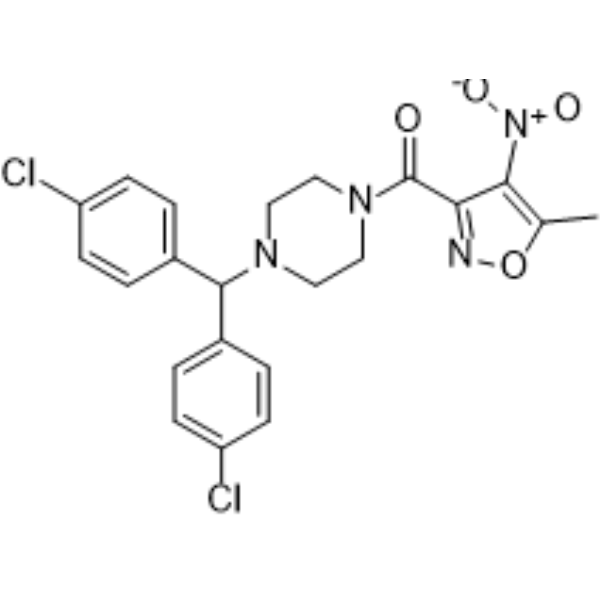
ML-210 is a selective and covalent glutathione peroxidase 4 (GPX4) inhibitor with an EC50 of 30 nM. ML-210 binds the GPX4 selenocysteine residue. ML-210 has anti-cancer activity.
Nur für Forschungszwecke. Wir verkaufen nicht an Patienten.
- Reinheit : 99.93%
- CAS. Nr.: 1360705-96-9
- Formel: C22H20Cl2N4O4
- Molecular Weight:475.32
-
Speicherung:Powder -20°C, 3 years , 4°C, 2 years ; In solvent -80°C, 2 years , -20°C, 1 year

To place orders, for customer services and technical support, please contact: MedChemExpress USA
Tel: 609-228-6898 E-mail: [email protected] [email protected]


-
 Biologische Aktivität
-
Chemical Information
-
Lösungsmittel & Löslichkeit
- Protokoll
- Reinheit & Dokumentation
- Verweise
-
 Help & FAQs


-
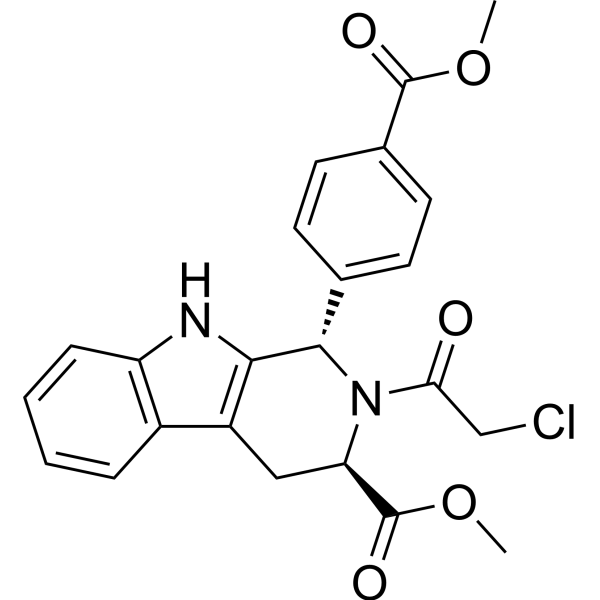
HY-100218A
RSL3GPX4 Inhibitor -
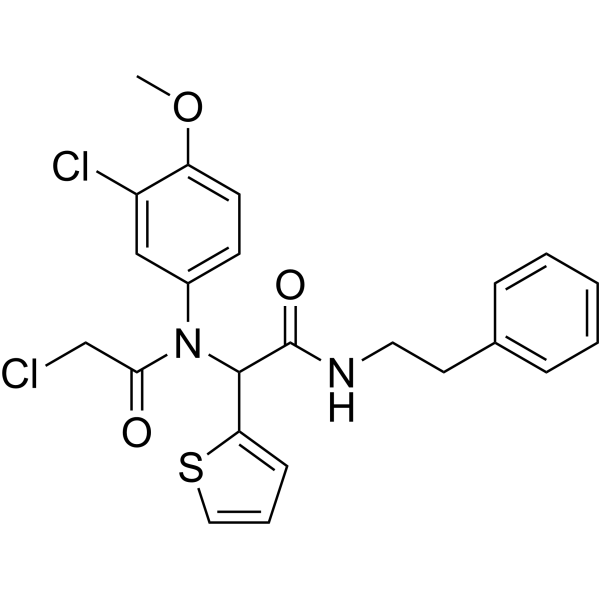
HY-100002
ML162GPX4 Inhibitor -
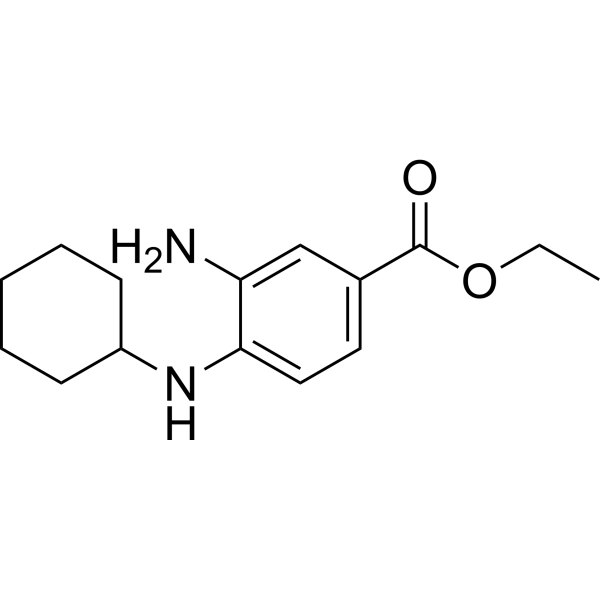
HY-100579
Ferrostatin-1Ferroptosis Inhibitor -
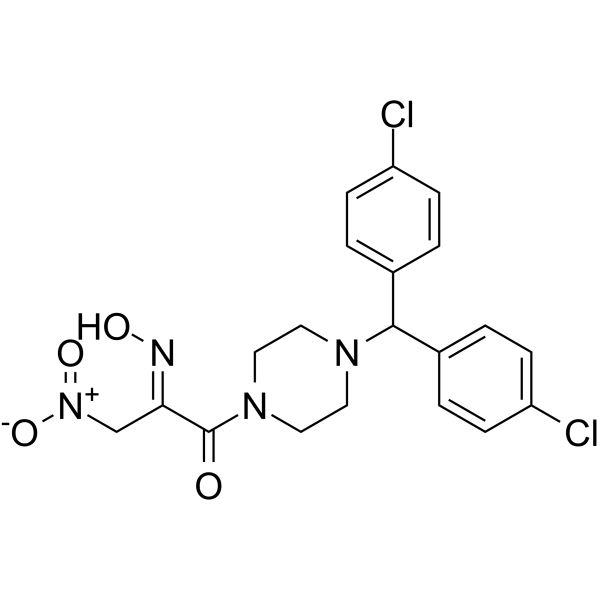
HY-138153
JKE-1674GPX4 Inhibitor -
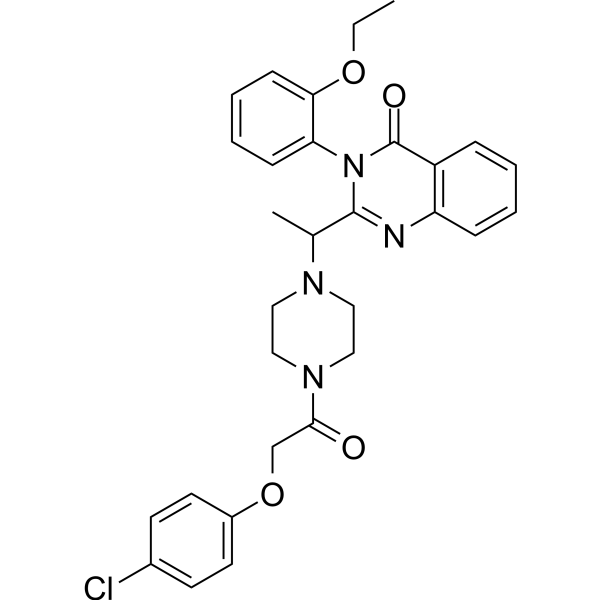
HY-15763
ErastinFerroptosis Inducer -
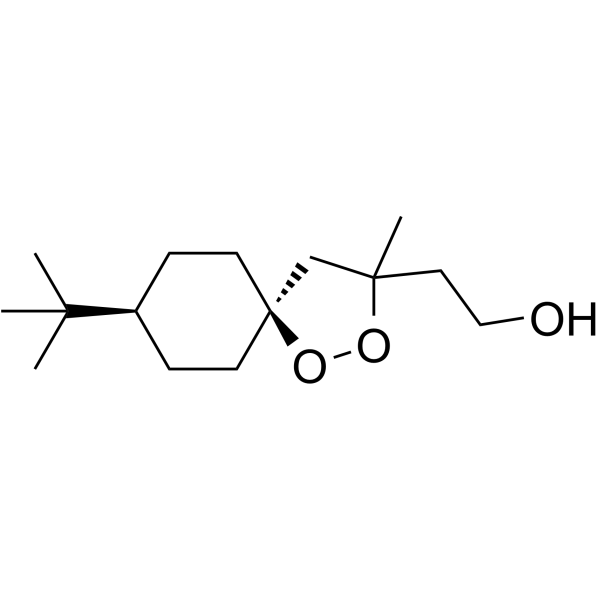
HY-129457
FINO2Ferroptosis Inducer -
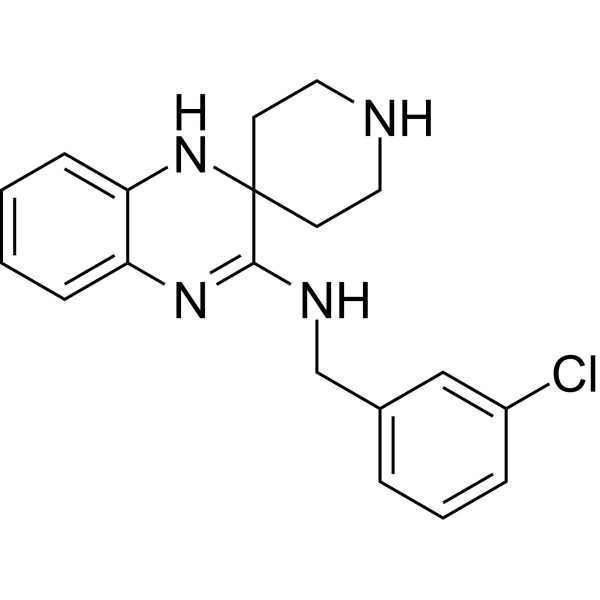
HY-12726
Liproxstatin-1Ferroptosis Inhibitor -
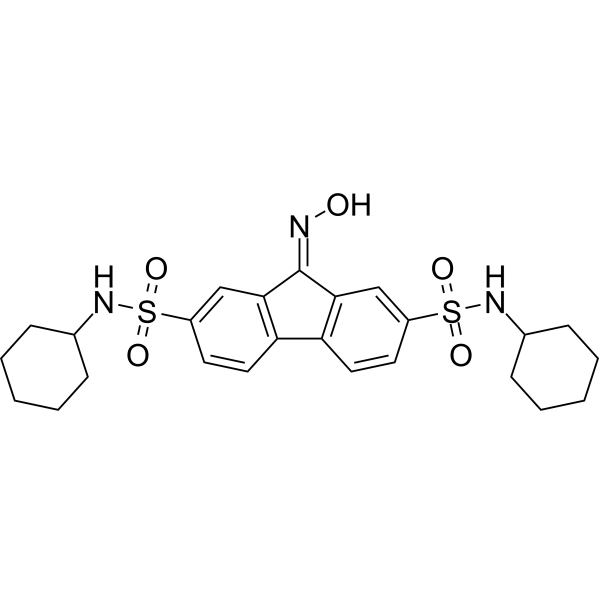
HY-103087
FIN56Ferroptosis Inducer -
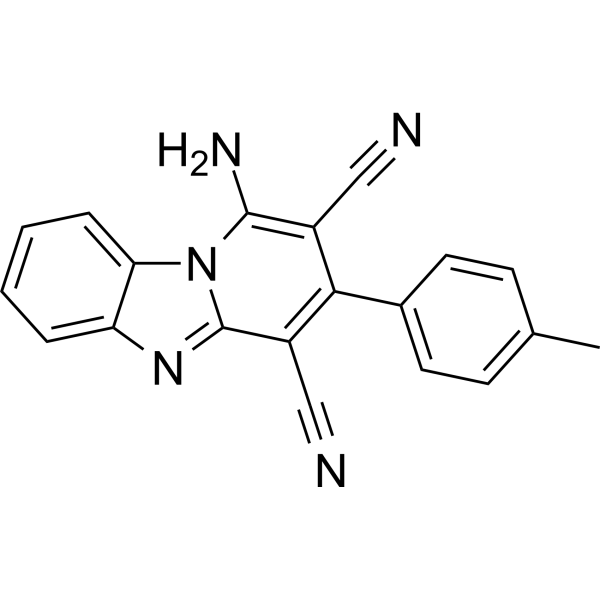
HY-136057
iFSP1FSP1 Inhibitor -
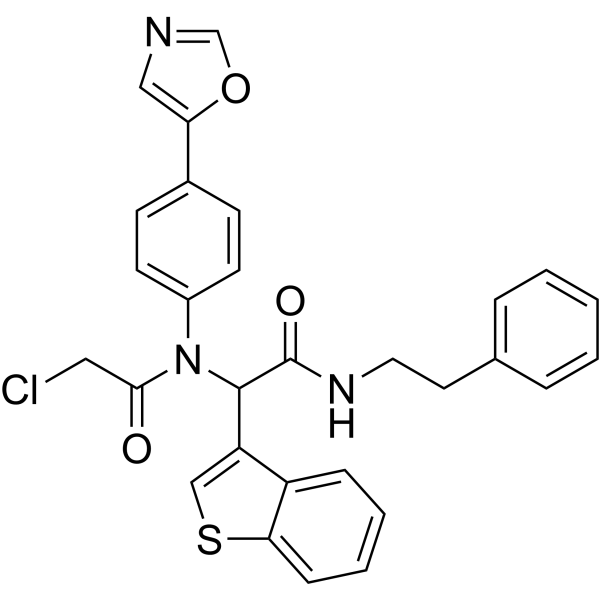
HY-141809
GPX4-IN-3GPX4 Inhibitor -
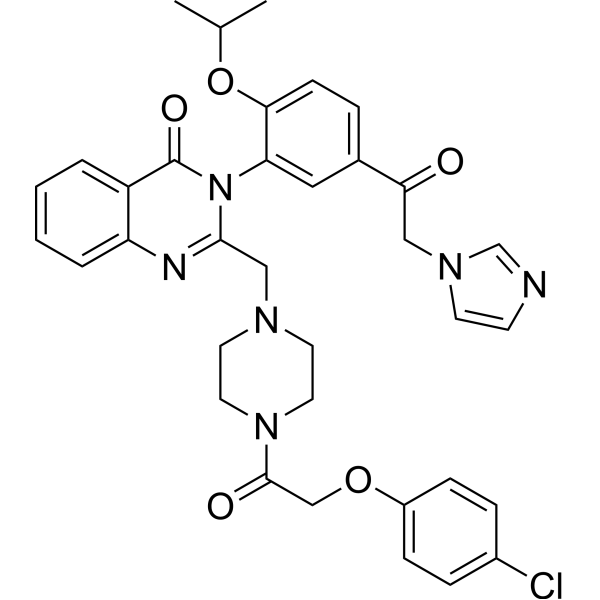
HY-114481
Imidazole ketone erastinFerroptosis Inducer -
HY-14655
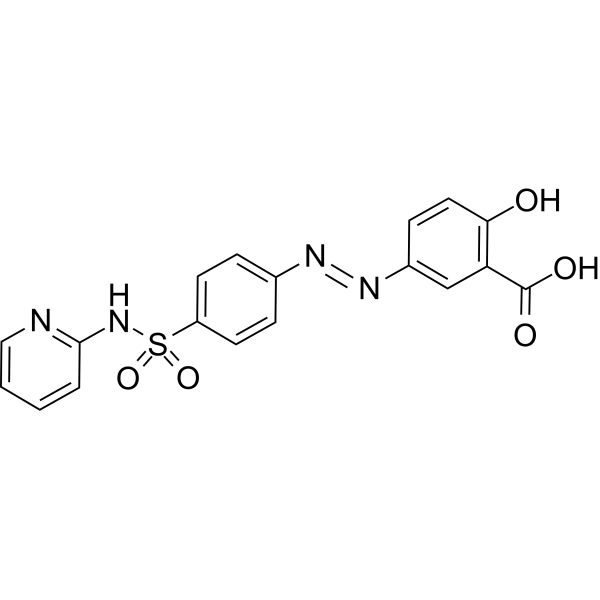
SulfasalazineAnti-rheumatic Agent
Publications Citing Use of MedChemExpress (MCE) ML-210
More- Nature. 2024 Feb;626(7998):411-418. [Abstract]
- Cancer Res. 2026 Aug 6.
- Autophagy. 2026 Feb 15:1-19. [Abstract]
- Cell Discov. 2026 Apr 28;12(1):30. [Abstract]
- Cell Discov. 2022 May 3;8(1):40. [Abstract]
- Mol Cell. 2026 Apr 16;86(8):1546-1559.e8. [Abstract]
- Nat Chem Biol. 2024 Jun;20(6):699-709. [Abstract]
- Biomark Res. 2025 Jan 23;13(1):17. [Abstract]
- Adv Sci (Weinh). 2026 Mar;13(16):e13310. [Abstract]
- Adv Sci (Weinh). 2026 Feb 17:e23198. [Abstract]
- Adv Sci (Weinh). 2025 Mar;12(12):e2408845. [Abstract]
- Sci Adv. 2026 May 29;12(22):eaeb2368. [Abstract]
- Sci Adv. 2025 Aug 15;11(33):eadx6587. [Abstract]
- Chem Eng J. 2024 Dec 15.
- Small. 2021 Nov;17(47):e2103919. [Abstract]
- J Immunother Cancer. 2024 Nov 24;12(11):e009805. [Abstract]
- Cell Death Discov. 2025 Sep 25;11(1):423. [Abstract]
- Oncogene. 2026 May;45(16):1411-1424. [Abstract]
- Oncogene. 2024 Nov;43(45):3335-3347. [Abstract]
- Cell Prolif. 2025 Nov;58(11):e70036. [Abstract]
- J Ethnopharmacol. 2026 Feb 28:357:120890. [Abstract]
- Biochem Pharmacol. 2026 Jun:248:117816. [Abstract]
- Cell Mol Life Sci. 2024 Jan 22;81(1):49. [Abstract]
- Mol Metab. 2026 May 20:102382. [Abstract]
- Eur J Pharmacol. 2024 May 15:971:176544. [Abstract]
- Int Immunopharmacol. 2025 Mar 6:149:114246. [Abstract]
- Food Chem Toxicol. 2023 Sep:179:113950. [Abstract]
- Am J Cancer Res. 2023 Feb 15;13(2):464-474. [Abstract]
- World J Surg. 2023 Feb;47(2):371-381. [Abstract]
- SSRN. 2025 Dec 2.
- Seoul National University. 2026.
- bioRxiv. 2025 Nov 14:2025.11.13.688345. [Abstract]
- bioRxiv. 2025 Sep 21.
- Ruperto Carola University Heidelberg. 2023 Jun 20.
 Customer Validation & Images

-
Cell Proliferation/Viability Assay
-
Cell Proliferation/Viability Assay
-
Cell Proliferation/Viability Assay
-
Cell Proliferation/Viability Assay
-
WB


Biologische Aktivität
Beschreibung
IC50 & Target
|
GPX4 |
Cellular Effect
|
Cell Line

|
Type | Value | Description | References |
|---|---|---|---|---|
| A-375 | IC50 |
0.3 μM
Compound: ML210; 3
|
Antiproliferative activity against human A-375 cells assessed as reduction in cell viability incubated for 24 hrs by MTT assay
Antiproliferative activity against human A-375 cells assessed as reduction in cell viability incubated for 24 hrs by MTT assay
|
[PMID: 37087895] |
| ASPC1 | IC50 |
342 nM
Compound: ML210
|
Induction of ferroptosis in human ASPC1 cells assessed as reduction in cell viability incubated for 72 hrs by CCK-8 assay
Induction of ferroptosis in human ASPC1 cells assessed as reduction in cell viability incubated for 72 hrs by CCK-8 assay
|
[PMID: 38265413] |
| BJ | IC50 |
107 nM
Compound: 2y
|
Cytotoxicity against human BJ cells expressing HRAS G12V mutant with alternative oncogenic constructs after 48 hrs by alamar blue assay
Cytotoxicity against human BJ cells expressing HRAS G12V mutant with alternative oncogenic constructs after 48 hrs by alamar blue assay
|
[PMID: 22297109] |
| Calu-1 | IC50 |
0.9 μM
Compound: ML210; 3
|
Antiproliferative activity against human Calu-1 cells assessed as reduction in cell viability incubated for 24 hrs by MTT assay
Antiproliferative activity against human Calu-1 cells assessed as reduction in cell viability incubated for 24 hrs by MTT assay
|
[PMID: 37087895] |
| Calu-1 | IC50 |
630 nM
Compound: ML210
|
Antiproliferative activity against human Calu-1 cells assessed as inhibition of cell growth incubated for 24 hrs by MTT assay
Antiproliferative activity against human Calu-1 cells assessed as inhibition of cell growth incubated for 24 hrs by MTT assay
|
[PMID: 36603510] |
| HCT-116 | IC50 |
>1 μM
Compound: ML-210
|
Cytotoxicity against human HCT-116 cells assessed as reduction in cell viability incubated for 3 days by methylene blue staining based analysis
Cytotoxicity against human HCT-116 cells assessed as reduction in cell viability incubated for 3 days by methylene blue staining based analysis
|
[PMID: 35984756] |
| HCT-116 | IC50 |
>10 nM
Compound: ML210
|
Induction of ferroptosis in human HCT-116 cells assessed as reduction in cell viability incubated for 72 hrs by CCK-8 assay
Induction of ferroptosis in human HCT-116 cells assessed as reduction in cell viability incubated for 72 hrs by CCK-8 assay
|
[PMID: 38265413] |
| HEK-293T | IC50 |
0.2 μM
Compound: ML210; 3
|
Cytotoxicity against HEK293T cells assessed as reduction in cell viability measured after 24 hrs by MTT assay
Cytotoxicity against HEK293T cells assessed as reduction in cell viability measured after 24 hrs by MTT assay
|
[PMID: 37087895] |
| HEK-293T | IC50 |
430 nM
Compound: ML210
|
Antiproliferative activity against human HEK293T cells incubated for 24 hrs
Antiproliferative activity against human HEK293T cells incubated for 24 hrs
|
[PMID: 37098297] |
| HeLa | IC50 |
0.253 μM
Compound: ML-210
|
Cytotoxicity against human HeLa cells assessed as reduction in cell viability incubated for 3 days by methylene blue staining based analysis
Cytotoxicity against human HeLa cells assessed as reduction in cell viability incubated for 3 days by methylene blue staining based analysis
|
[PMID: 35984756] |
| HT-1080 | IC50 |
0.019 μM
Compound: ML210
|
Antiproliferative activity against human HT-1080 cells assessed as cell growth inhibition incubated for 72 hrs by MTT assay
Antiproliferative activity against human HT-1080 cells assessed as cell growth inhibition incubated for 72 hrs by MTT assay
|
[PMID: 38838547] |
| HT-1080 | IC50 |
0.022 μM
Compound: ML-210
|
Cytotoxicity against human HT-1080 cells assessed as reduction in cell viability incubated for 3 days by methylene blue staining based analysis
Cytotoxicity against human HT-1080 cells assessed as reduction in cell viability incubated for 3 days by methylene blue staining based analysis
|
[PMID: 35984756] |
| HT-1080 | IC50 |
0.1 μM
Compound: ML210; 3
|
Antiproliferative activity against human HT-1080 cells assessed as reduction in cell viability incubated for 24 hrs by MTT assay
Antiproliferative activity against human HT-1080 cells assessed as reduction in cell viability incubated for 24 hrs by MTT assay
|
[PMID: 37087895] |
| HT-1080 | IC50 |
0.153 μM
Compound: ML210
|
Antiproliferative activity against human HT-1080 cells assessed as inhibition of cell growth incubated for 24 hrs by CCK-8 assay
Antiproliferative activity against human HT-1080 cells assessed as inhibition of cell growth incubated for 24 hrs by CCK-8 assay
|
[PMID: 38505849] |
| HT-1080 | IC50 |
410 nM
Compound: ML210
|
Antiproliferative activity against human HT-1080 cells assessed as inhibition of cell growth incubated for 24 hrs by MTT assay
Antiproliferative activity against human HT-1080 cells assessed as inhibition of cell growth incubated for 24 hrs by MTT assay
|
[PMID: 36603510] |
| HT-1080 | IC50 |
410 nM
Compound: ML210
|
Antiproliferative activity against human HT-1080 cells incubated for 24 hrs
Antiproliferative activity against human HT-1080 cells incubated for 24 hrs
|
[PMID: 37098297] |
| MCF7 | IC50 |
>20 μM
Compound: ML210
|
Antiproliferative activity against human MCF7 cells assessed as reduction in cell growth incubated for 48 hrs in presence of Fer-1 by CCK8 assay
Antiproliferative activity against human MCF7 cells assessed as reduction in cell growth incubated for 48 hrs in presence of Fer-1 by CCK8 assay
|
[PMID: 33725632] |
| MCF7 | IC50 |
0.076 μM
Compound: ML210
|
Antiproliferative activity against human MCF7 cells assessed as reduction in cell growth incubated for 48 hrs by CCK8 assay
Antiproliferative activity against human MCF7 cells assessed as reduction in cell growth incubated for 48 hrs by CCK8 assay
|
[PMID: 33725632] |
| MDA-MB-231 | IC50 |
0.02 μM
Compound: ML-210
|
Cytotoxicity against human MDA-MB-231 cells assessed as reduction in cell viability incubated for 3 days by methylene blue staining based analysis
Cytotoxicity against human MDA-MB-231 cells assessed as reduction in cell viability incubated for 3 days by methylene blue staining based analysis
|
[PMID: 35984756] |
| MDA-MB-231 | IC50 |
0.021 μM
Compound: ML210
|
Antiproliferative activity against human MDA-MB-231 cells assessed as cell growth inhibition incubated for 72 hrs by MTT assay
Antiproliferative activity against human MDA-MB-231 cells assessed as cell growth inhibition incubated for 72 hrs by MTT assay
|
[PMID: 38838547] |
| MDA-MB-468 | IC50 |
0.066 μM
Compound: ML-210
|
Cytotoxicity against human MDA-MB-468 cells assessed as reduction in cell viability incubated for 3 days by methylene blue staining based analysis
Cytotoxicity against human MDA-MB-468 cells assessed as reduction in cell viability incubated for 3 days by methylene blue staining based analysis
|
[PMID: 35984756] |
| MEF | IC50 |
0.016 μM
Compound: ML-210
|
Cytotoxicity against mouse MEF cells assessed as reduction in cell viability incubated for 3 days by methylene blue staining based analysis
Cytotoxicity against mouse MEF cells assessed as reduction in cell viability incubated for 3 days by methylene blue staining based analysis
|
[PMID: 35984756] |
| NCI-H520 | IC50 |
0.012 μM
Compound: ML210
|
Antiproliferative activity against human NCI-H520 cells assessed as inhibition of cell growth incubated for 72 hrs by celltiter-glo assay
Antiproliferative activity against human NCI-H520 cells assessed as inhibition of cell growth incubated for 72 hrs by celltiter-glo assay
|
[PMID: 38838547] |
| NCI-H522 | IC50 |
0.044 μM
Compound: ML-210
|
Cytotoxicity against human NCI-H522 cells assessed as reduction in cell viability incubated for 3 days by methylene blue staining based analysis
Cytotoxicity against human NCI-H522 cells assessed as reduction in cell viability incubated for 3 days by methylene blue staining based analysis
|
[PMID: 35984756] |
| NCI-H522 | IC50 |
33 nM
Compound: ML210
|
Induction of ferroptosis in human NCI-H522 cells assessed as reduction in cell viability incubated for 72 hrs by CCK-8 assay
Induction of ferroptosis in human NCI-H522 cells assessed as reduction in cell viability incubated for 72 hrs by CCK-8 assay
|
[PMID: 38265413] |
| NCI-H522 | IC50 |
34.515 μM
Compound: ML-210
|
Cytotoxicity against human NCI-H522 cells assessed as reduction in cell viability incubated for 3 days in presence of ferroptosis inhibitor, liproxstatin-1 by methylene blue staining based analysis
Cytotoxicity against human NCI-H522 cells assessed as reduction in cell viability incubated for 3 days in presence of ferroptosis inhibitor, liproxstatin-1 by methylene blue staining based analysis
|
[PMID: 35984756] |
| U2OS | IC50 |
0.822 μM
Compound: ML-210
|
Cytotoxicity against human U2OS cells assessed as reduction in cell viability incubated for 3 days by methylene blue staining based analysis
Cytotoxicity against human U2OS cells assessed as reduction in cell viability incubated for 3 days by methylene blue staining based analysis
|
[PMID: 35984756] |
| WI-38 | IC50 |
0.06 μM
Compound: ML-210
|
Cytotoxicity against human WI-38 cells assessed as reduction in cell viability incubated for 3 days by methylene blue staining based analysis
Cytotoxicity against human WI-38 cells assessed as reduction in cell viability incubated for 3 days by methylene blue staining based analysis
|
[PMID: 35984756] |
In Vitro
ML-210 exhibits cell-killing activity across a panel of 821 cancer cell lines (WM88, LOX-IMVI, CJM, U257, CAKI2, A498, HT1080, MC38, PANC02). ML-210 is a prodrug that requires cellular activation to bind GPX4[1].
ML-210 has IC50s of 71 nM, 272 nM and 107nM for BJeLR (HRASV12), BJeH-LT (without HRASV12) and DRD cell lines, respectively[2].
MedChemExpress (MCE) has not independently confirmed the accuracy of these methods. They are for reference only.


Chemical Information
-
CAS. Nr. 1360705-96-9
-
Appearance Solid
-
Molecular Weight 475.32
-
Formel C22H20Cl2N4O4
-
Color White to light yellow
-
SMILES
O=C(N1CCN(C(C2=CC=C(Cl)C=C2)C3=CC=C(Cl)C=C3)CC1)C4=NOC(C)=C4[N+]([O-])=O
-
Versand
Room temperature in continental US; may vary elsewhere.
-
Speicherung
Powder -20°C 3 years 4°C 2 years In solvent -80°C 2 years -20°C 1 year


Publications (34)
-
Journal Impact Factor
-
Most Recent
-
Nature
2024 Feb;626(7998):411-418. PMID: 38297130
ML-210 purchased from MedChemExpress. Usage Cited in: Nature. 2024 Feb;626(7998):411-418. [Abstract]
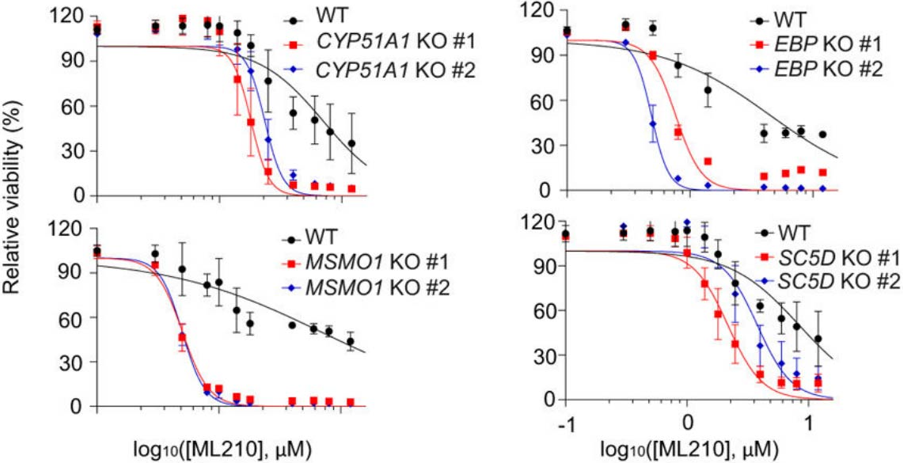
Cell viability of WT and CYP51A1, MSMO1, EBP, SC5D KO HEK293T cells treated with ML210 for 8-10 h.
-
-
Autophagy
Kitasamycin overcomes ferroptosis and immunotherapy resistance by targeting the HUWE1-NCOA4-FTH1 axis. [Abstract]2026 Feb 15:1-19. PMID: 41612599 -
Cell Discov
TGM2-mediated serotonylation of GPX4 confers ferroptosis resistance to promote gastric tumorigenesis. [Abstract]2026 Apr 28;12(1):30. PMID: 42049702 -
Cell Discov
Dynamic O-GlcNAcylation coordinates ferritinophagy and mitophagy to activate ferroptosis. [Abstract]2022 May 3;8(1):40. PMID: 35504898
ML-210 purchased from MedChemExpress. Usage Cited in: Cell Discov. 2022 May 3;8(1):40. [Abstract]
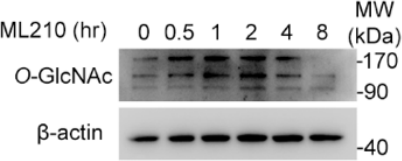
U2OS cells were treated with ML210 (10 µM; 0.5-8 h) for different time as indicated. O-GlcNAcylation levels were detected by immunoblotting with antibodies against O-GlcNAc and β-actin.
-
Mol Cell
mTORC1 activity suppresses ferroptosis through a SCARB1-dependent HDL-tocopherol uptake pathway. [Abstract]2026 Apr 16;86(8):1546-1559.e8. PMID: 41997112 -
Nat Chem Biol
2024 Jun;20(6):699-709. PMID: 38212578
ML-210 purchased from MedChemExpress. Usage Cited in: Nat Chem Biol. 2024 Jun;20(6):699-709. [Abstract]
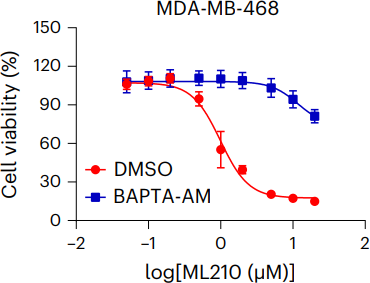
The effect of BAPTA-AM (5 μM) on ML210-induced ferroptosis in MDA-MB-468 cells for 6 h.
-
Biomark Res
2025 Jan 23;13(1):17. PMID: 39849645
ML-210 purchased from MedChemExpress. Usage Cited in: Biomark Res. 2025 Jan 23;13(1):17. [Abstract]
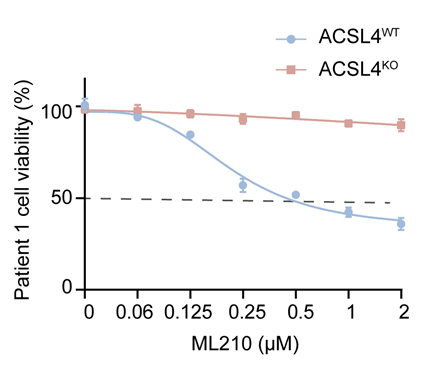
Cell viability of NCI-H1299 ACSL4WT or ACSL4KO cells treated with 2μM ML-210 at the indicated concentrations after 10 h.
-
Adv Sci (Weinh)
2026 Mar;13(16):e13310. PMID: 41589654 -
Adv Sci (Weinh)
2026 Feb 17:e23198. PMID: 41704007 -
Adv Sci (Weinh)
2025 Mar;12(12):e2408845. PMID: 39888307 -
Sci Adv
2026 May 29;12(22):eaeb2368. PMID: 42213853 -
Sci Adv
2025 Aug 15;11(33):eadx6587. PMID: 40815641
ML-210 purchased from MedChemExpress. Usage Cited in: Sci Adv. 2025 Aug 15;11(33):eadx6587. [Abstract]
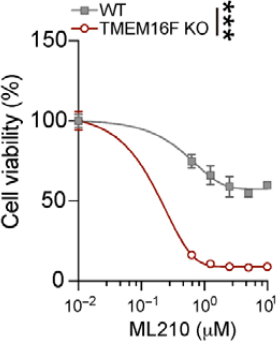
Viability of WT and TMEM16F KO RMA cells treated with ML210 for 12 hours.
-
-
Small
Metal-Polyphenol-Network Coated Prussian Blue Nanoparticles for Synergistic Ferroptosis and Apoptosis via Triggered GPX4 Inhibition and Concurrent In Situ Bleomycin Toxification. [Abstract]2021 Nov;17(47):e2103919. PMID: 34623753 -
J Immunother Cancer
Propafenone facilitates mitochondrial-associated ferroptosis and synergizes with immunotherapy in melanoma. [Abstract]2024 Nov 24;12(11):e009805. PMID: 39581704 -
Cell Death Discov
Exploiting dysregulated iron homeostasis to eradicate persistent high-grade serous ovarian cancer. [Abstract]2025 Sep 25;11(1):423. PMID: 40998801 -
Oncogene
CAPRIN1-mediated sequestration of NCOA4 mRNA into stress granules drives sorafenib resistance in hepatocellular carcinoma. [Abstract]2026 May;45(16):1411-1424. PMID: 41896589 -
Oncogene
SGK1 suppresses ferroptosis in ovarian cancer via NRF2-dependent and -independent pathways. [Abstract]2024 Nov;43(45):3335-3347. PMID: 39306614 -
Cell Prolif
Glutaminase-1 Mediated Glutaminolysis to Glutathione Synthesis Maintains Redox Homeostasis and Modulates Ferroptosis Sensitivity in Cancer Cells. [Abstract]2025 Nov;58(11):e70036. PMID: 40259435 -
J Ethnopharmacol
Paris polyphylla Smith var. yunnanensis-derived saponins potentiate the antitumor activity of GPX4 inhibitors. [Abstract]2026 Feb 28:357:120890. PMID: 41232632 -
Biochem Pharmacol
Pharmacological activation of GPX4 by selenomethionine attenuates cisplatin-induced ototoxicity and hearing loss. [Abstract]2026 Jun:248:117816. PMID: 41698483 -
Cell Mol Life Sci
Selenium-SelK-GPX4 axis protects nucleus pulposus cells against mechanical overloading-induced ferroptosis and attenuates senescence of intervertebral disc. [Abstract]2024 Jan 22;81(1):49. PMID: 38252317 -
Mol Metab
Metabolic plasticity and optimal redox homeostasis are essential for efficient metastatic colonization. [Abstract]2026 May 20:102382. PMID: 42155637 -
Eur J Pharmacol
Involvement of ferroptosis in eribulin-induced cytotoxicity in ovarian clear cell carcinoma. [Abstract]2024 May 15:971:176544. PMID: 38552939 -
Int Immunopharmacol
Puerarin triggers sensitivity to ferroptosis in glioblastoma cells by activating SIRT3/NCOA4-dependent autophagy. [Abstract]2025 Mar 6:149:114246. PMID: 39929095 -
Food Chem Toxicol
2023 Sep:179:113950. PMID: 37481227 -
Am J Cancer Res
SIRT6 drives sensitivity to ferroptosis in anaplastic thyroid cancer through NCOA4-dependent autophagy. [Abstract]2023 Feb 15;13(2):464-474. PMID: 36895980 -
World J Surg
2023 Feb;47(2):371-381. PMID: 36195678 -
-
-
bioRxiv
2025 Nov 14:2025.11.13.688345. PMID: 41292832 -
-


Lösungsmittel & Löslichkeit
In Vitro:
DMSO : 25 mg/mL (52.60 mM; Need ultrasonic; Hygroscopic DMSO has a significant impact on the solubility of product, please use newly opened DMSO)
Please refer to the solubility information to select the appropriate solvent. Once prepared, please aliquot and store the solution to prevent product inactivation from repeated freeze-thaw cycles.
Storage method and period of stock solution: -80°C, 2 years; -20°C, 1 year. When stored at -80°C, please use it within 2 years. When stored at -20°C, please use it within 1 year.
Please refer to the solubility information to select the appropriate solvent. Once prepared, please aliquot and store the solution to prevent product inactivation from repeated freeze-thaw cycles.
Storage method and period of stock solution: -80°C, 2 years; -20°C, 1 year. When stored at -80°C, please use it within 2 years. When stored at -20°C, please use it within 1 year.
Konzentration (Stammlösung) × Volumen (Stammlösung) = Konzentration (Ziellösung) × Volumen (Ziellösung)
In Vivo:
Select the appropriate dissolution method based on your experimental animal and administration route.
- For the following dissolution methods, please ensure to first prepare a clear stock solution using an In Vitro approach and then sequentially add co-solvents:
- To ensure reliable experimental results, the clarified stock solution can be appropriately stored based on storage conditions. As for the working solution for In Vivo experiments, it is recommended to prepare freshly and use it on the same day.
- The percentages shown for the solvents indicate their volumetric ratio in the final prepared solution. If precipitation or phase separation occurs during preparation, heat and/or sonication can be used to aid dissolution.
Add each solvent one by one: 10% DMSO 40% PEG300 5% Tween-80 45% Saline
Solubility: 2.5 mg/mL (5.26 mM); Suspended solution; Need ultrasonic
This protocol yields a suspended solution of 2.5 mg/mL. Suspended solution can be used for oral and intraperitoneal injection.
Taking 1 mL working solution as an example, add 100 μL DMSO stock solution (25.0 mg/mL) to 400 μL PEG300, and mix evenly; then add 50 μL Tween-80 and mix evenly; then add 450 μL Saline to adjust the volume to 1 mL.
Preparation of Saline: Dissolve 0.9 g sodium chloride in ddH₂O and dilute to 100 mL to obtain a clear Saline solution.
In Vivo Dissolution Calculator
Please enter the basic information of animal experiments:
-
-
-
-
Recommended: Prepare an additional quantity of animals to account for potential losses during experiments.
Please enter your animal formula composition:
-
%DMSO +
Recommended: Keep the proportion of DMSO in working solution below 2% if your animal is weak.
-
%+
-
+%Tween-80 + +
-
%Saline +
The co-solvents required include: DMSO, . All of co-solvents are available by MedChemExpress (MCE). , Tween 80. All of co-solvents are available by MedChemExpress (MCE).
Working solution concentration: 0.22 mg/mL
Method for preparing stock solution: mg drug dissolved in μL DMSO. Stock solution concentration: mg/mL.
1. Take μL DMSO stock solution;
2. Add μL .
μL , mix evenly;
3. Then add μL Tween 80, mix evenly;
4. Then add μL
Please ensure that the stock solution in the first step is dissolved to a clear state, and add co-solvents in sequence. You can use ultrasonic heating (ultrasonic cleaner, recommended frequency 20-40 kHz), vortexing, etc. to assist dissolution.


Reinheit & Dokumentation
-
Data Sheet (276 KB)
-
SDS (393 KB)
- English - EN (393 KB)
- Français - FR (393 KB)
- Deutsch - DE (393 KB)
- Norwegian - NO (393 KB)
- Español - ES (393 KB)
- Swedish - SV (393 KB)
- Italian - IT (393 KB)
- Korean - KR (393 KB)
- Portuguese - PT (393 KB)
-
Handling Instructions (2659 KB)
Verweise


Complete Stock Solution Preparation Table
Please refer to the solubility information to select the appropriate solvent. Once prepared, please aliquot and store the solution to prevent product inactivation from repeated freeze-thaw cycles.
Storage method and period of stock solution: -80°C, 2 years; -20°C, 1 year. When stored at -80°C, please use it within 2 years. When stored at -20°C, please use it within 1 year.
| Optional Solvent | Concentration Solvent Mass | 1 mg | 5 mg | 10 mg | 25 mg |
|---|---|---|---|---|---|
| DMSO | 1 mM | 2.1038 mL | 10.5192 mL | 21.0385 mL | 52.5961 mL |
| 5 mM | 0.4208 mL | 2.1038 mL | 4.2077 mL | 10.5192 mL | |
| 10 mM | 0.2104 mL | 1.0519 mL | 2.1038 mL | 5.2596 mL | |
| 15 mM | 0.1403 mL | 0.7013 mL | 1.4026 mL | 3.5064 mL | |
| 20 mM | 0.1052 mL | 0.5260 mL | 1.0519 mL | 2.6298 mL | |
| 25 mM | 0.0842 mL | 0.4208 mL | 0.8415 mL | 2.1038 mL | |
| 30 mM | 0.0701 mL | 0.3506 mL | 0.7013 mL | 1.7532 mL | |
| 40 mM | 0.0526 mL | 0.2630 mL | 0.5260 mL | 1.3149 mL | |
| 50 mM | 0.0421 mL | 0.2104 mL | 0.4208 mL | 1.0519 mL |


ML-210 Related Classifications
HY-100003 Related Classifications
 Powered by Bioz