



Nicosulfuron

Based on 1 Customer Validation
Nicosulfuron is efficient, harmless, antifungal and selective herbicide belonging to the sulfonylurea family. Nicosulfuron is also a photosynthetic system inhibitor and inhibits acetolactate synthase (ALS) enzyme activity. Nicosulfuron degradation by Plectosphaerella cucumerina AR1 is glucose concentration dependent in planktonic lifestyle. Nicosulfuron enhances the glycolysis pathway and tricarboxylic acid cycle to improve the adaptability of sweet maize. Nicosulfuron reduces the synthesis of branched-chain amino acids (BCAAs), which is proming for maize cultivation.
For research use only. We do not sell to patients.
- Purity : 97.27%
- CAS No.: 111991-09-4
- Formula: C15H18N6O6S
- Molecular Weight:410.41
-
Storage:
4°C, protect from light
* In solvent : -80°C, 6 months; -20°C, 1 month (protect from light)

To place orders, for customer services and technical support, please contact: MedChemExpress USA
Tel: 609-228-6898 E-mail: [email protected] [email protected]


-
 Biological Activity
-
Chemical Information
-
Solvent & Solubility
- Purity & Documentation
- References
-
 Help & FAQs


-
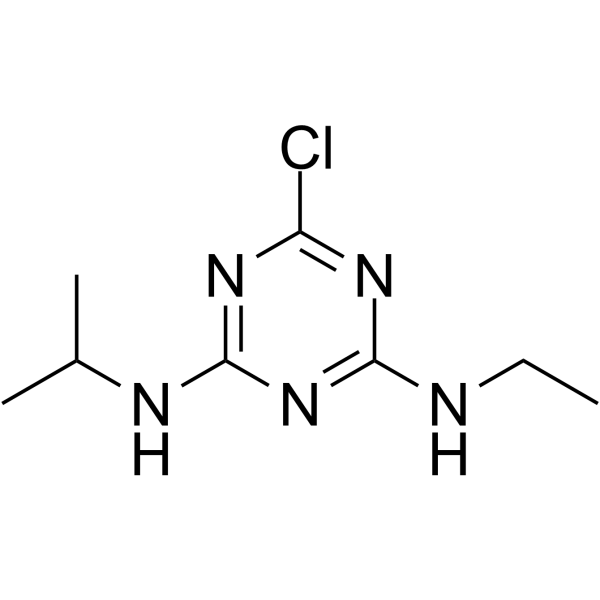
HY-N7091
AtrazinePhotophosphorylation Inhibitor -
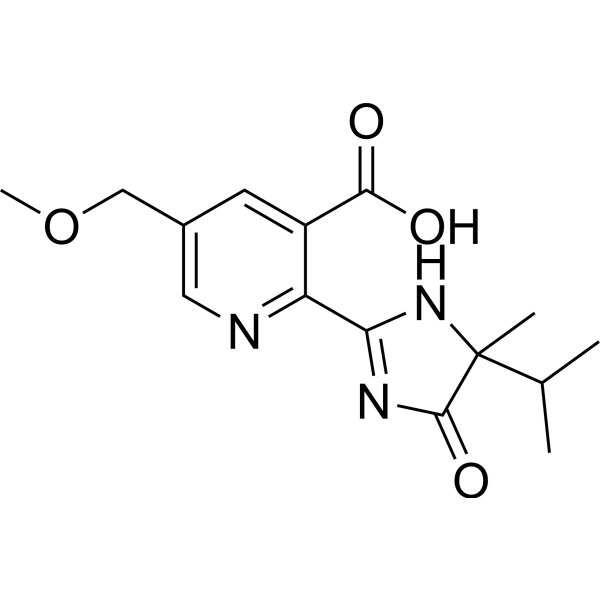
HY-100427
ImazamoxALS Inhibitor -
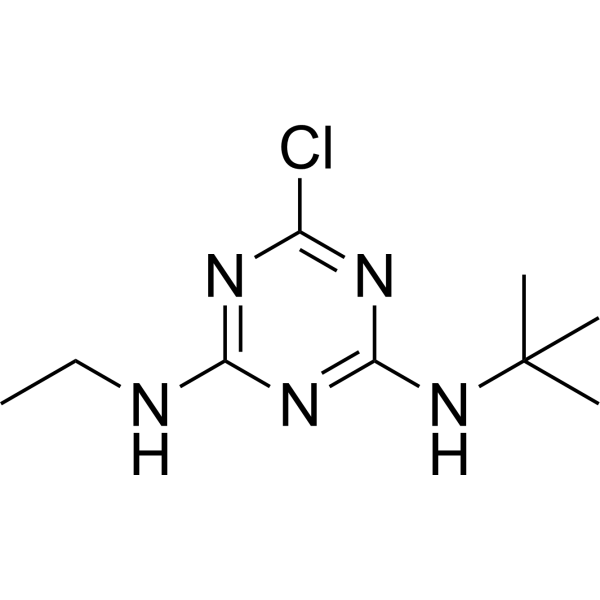
HY-B1847
TerbuthylazineHerbicide -
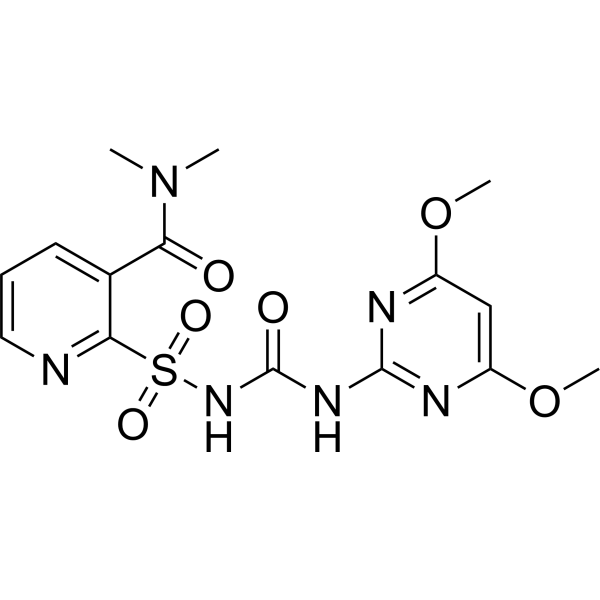
HY-B1876R
Nicosulfuron (Standard)Sulfonylurea Herbicide -
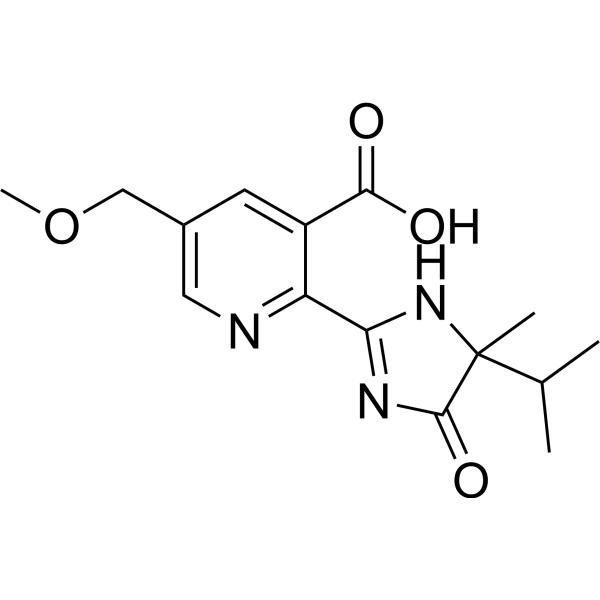
HY-100427R
Imazamox (Standard)ALS Inhibitor -
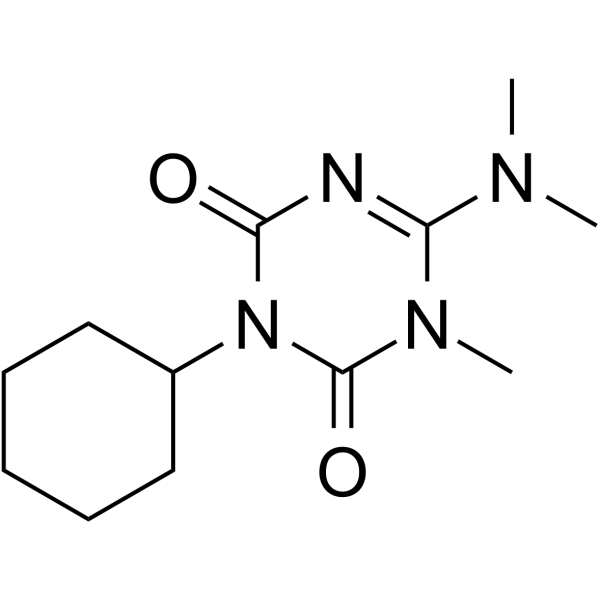
HY-B1849
HexazinoneTriazinone Herbicide -

HY-B1847R
Terbuthylazine (Standard)Analytical Standard -
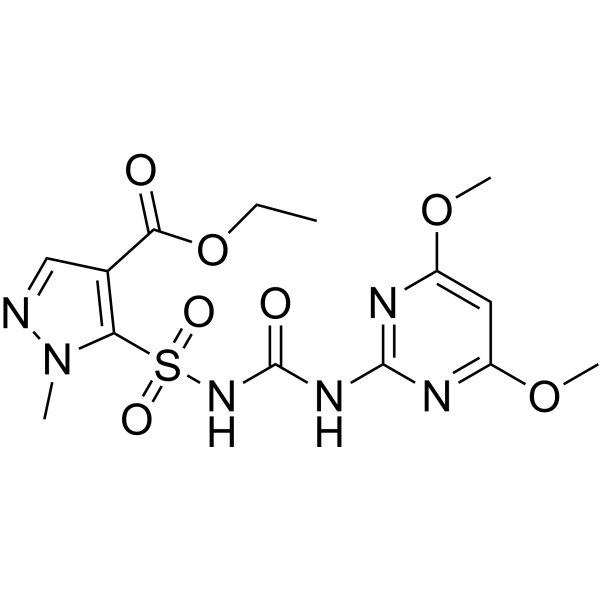
HY-B0865
Pyrazosulfuron-ethylHerbicide -

HY-B1849R
Hexazinone (Standard)Standard of Hexazinone -
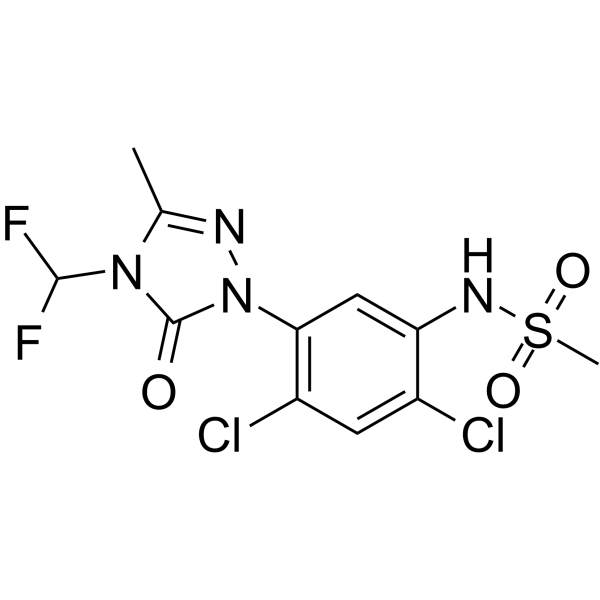
HY-135745
SulfentrazoneProtoporphyrinogen Oxidase Inhibitor -

HY-135745R
Sulfentrazone (Standard)Protoporphyrinogen Oxidase Inhibitor -

HY-B0865R
Pyrazosulfuron-ethyl (Standard)Herbicide


Biological Activity
Description
In Vitro
Nicosulfuron (100 μM, 35 days) completely disappears after 21 days of incubation for a concentration of 10 g/L of glucose cultivating Plectosphaerella cucumerina AR1 in planktonic lifestyle[1].
Nicosulfuron (80 mg/kg, 7 days) significantly increases the content of sucrose and fructose in the HK301 lines of sweet maize seedlings[2].
Nicosulfuron (80 mg/kg, 7 days) significantly increases the hexokinase (HK) and phosphofructokinase (PFK) activity in leaves of sweet maize seedlings[2].
MedChemExpress (MCE) has not independently confirmed the accuracy of these methods. They are for reference only.


Chemical Information
-
CAS No. 111991-09-4
-
Appearance Solid
-
Molecular Weight 410.41
-
Formula C15H18N6O6S
-
Color White to off-white
-
SMILES
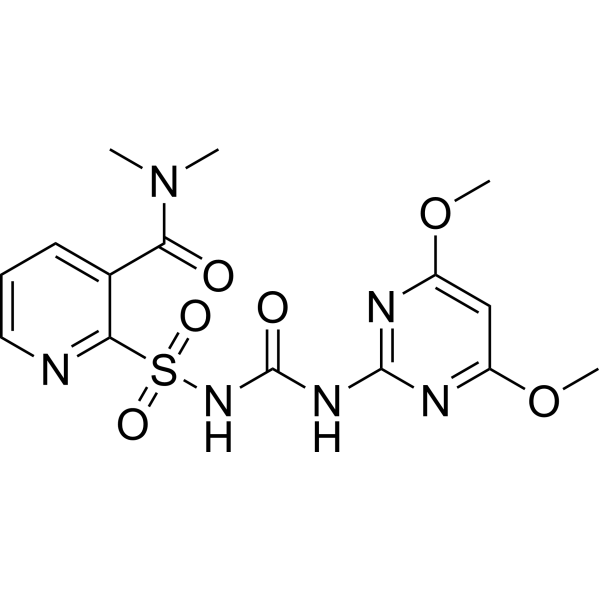
O=C(C1=CC=CN=C1S(=O)(NC(NC2=NC(OC)=CC(OC)=N2)=O)=O)N(C)C
-
Shipping
Room temperature in continental US; may vary elsewhere.
-
Storage
4°C, protect from light
* In solvent : -80°C, 6 months; -20°C, 1 month (protect from light)


Solvent & Solubility
In Vitro:
DMSO : 50 mg/mL (121.83 mM; Need ultrasonic; Hygroscopic DMSO has a significant impact on the solubility of product, please use newly opened DMSO)
Please refer to the solubility information to select the appropriate solvent. Once prepared, please aliquot and store the solution to prevent product inactivation from repeated freeze-thaw cycles.
Storage method and period of stock solution: -80°C, 6 months; -20°C, 1 month (protect from light). When stored at -80°C, please use it within 6 months. When stored at -20°C, please use it within 1 month.
Please refer to the solubility information to select the appropriate solvent. Once prepared, please aliquot and store the solution to prevent product inactivation from repeated freeze-thaw cycles.
Storage method and period of stock solution: -80°C, 6 months; -20°C, 1 month (protect from light). When stored at -80°C, please use it within 6 months. When stored at -20°C, please use it within 1 month.
Concentration (start) × Volume (start) = Concentration (final) × Volume (final)
In Vivo:
Select the appropriate dissolution method based on your experimental animal and administration route.
- For the following dissolution methods, please ensure to first prepare a clear stock solution using an In Vitro approach and then sequentially add co-solvents:
- To ensure reliable experimental results, the clarified stock solution can be appropriately stored based on storage conditions. As for the working solution for In Vivo experiments, it is recommended to prepare freshly and use it on the same day.
- The percentages shown for the solvents indicate their volumetric ratio in the final prepared solution. If precipitation or phase separation occurs during preparation, heat and/or sonication can be used to aid dissolution.
Add each solvent one by one: 10% DMSO 40% PEG300 5% Tween-80 45% Saline
Solubility: ≥ 2.5 mg/mL (6.09 mM); Clear solution
This protocol yields a clear solution of ≥ 2.5 mg/mL (saturation unknown).
Taking 1 mL working solution as an example, add 100 μL DMSO stock solution (25.0 mg/mL) to 400 μL PEG300, and mix evenly; then add 50 μL Tween-80 and mix evenly; then add 450 μL Saline to adjust the volume to 1 mL.
Preparation of Saline: Dissolve 0.9 g sodium chloride in ddH₂O and dilute to 100 mL to obtain a clear Saline solution.
In Vivo Dissolution Calculator
Please enter the basic information of animal experiments:
-
-
-
-
Recommended: Prepare an additional quantity of animals to account for potential losses during experiments.
Please enter your animal formula composition:
-
%DMSO +
Recommended: Keep the proportion of DMSO in working solution below 2% if your animal is weak.
-
%+
-
+%Tween-80 + +
-
%Saline +
The co-solvents required include: DMSO, . All of co-solvents are available by MedChemExpress (MCE). , Tween 80. All of co-solvents are available by MedChemExpress (MCE).
Working solution concentration: 0.22 mg/mL
Method for preparing stock solution: mg drug dissolved in μL DMSO. Stock solution concentration: mg/mL. * In solvent : -80°C, 6 months; -20°C, 1 month (protect from light)
1. Take μL DMSO stock solution;
2. Add μL .
μL , mix evenly;
3. Then add μL Tween 80, mix evenly;
4. Then add μL
Please ensure that the stock solution in the first step is dissolved to a clear state, and add co-solvents in sequence. You can use ultrasonic heating (ultrasonic cleaner, recommended frequency 20-40 kHz), vortexing, etc. to assist dissolution.


Purity & Documentation
-
Data Sheet (276 KB)
-
SDS (459 KB)
- English - EN (459 KB)
- Français - FR (459 KB)
- Deutsch - DE (459 KB)
- Norwegian - NO (459 KB)
- Español - ES (459 KB)
- Swedish - SV (459 KB)
- Italian - IT (459 KB)
- Korean - KR (459 KB)
- Portuguese - PT (459 KB)
-
Handling Instructions (2659 KB)
References
[1]. Louis Carles, et al. Nicosulfuron Degradation by an Ascomycete Fungus Isolated From Submerged Alnus Leaf Litter. Front Microbiol. 2018 Dec 19;9:3167. [Content Brief]
[2]. Xu N, et al. Effects of nicosulfuron on plant growth and sugar metabolism in sweet maize (Zea mays L.)[J]. PLoS One. 2022 Oct 21;17(10):e0276606. [Content Brief]
[3]. Zhong J, et al. Current insights into the microbial degradation of nicosulfuron: Strains, metabolic pathways, and molecular mechanisms[J]. Chemosphere. 2023 Jun;326:138390. [Content Brief]
[4]. Wang J, et al. Adaptation responses in C4 photosynthesis of sweet maize (Zea mays L.) exposed to nicosulfuron[J]. Ecotoxicol Environ Saf. 2021 May;214:112096. [Content Brief]


Complete Stock Solution Preparation Table
Please refer to the solubility information to select the appropriate solvent. Once prepared, please aliquot and store the solution to prevent product inactivation from repeated freeze-thaw cycles.
Storage method and period of stock solution: -80°C, 6 months; -20°C, 1 month (protect from light). When stored at -80°C, please use it within 6 months. When stored at -20°C, please use it within 1 month.
| Optional Solvent | Concentration Solvent Mass | 1 mg | 5 mg | 10 mg | 25 mg |
|---|---|---|---|---|---|
| DMSO | 1 mM | 2.4366 mL | 12.1829 mL | 24.3659 mL | 60.9147 mL |
| 5 mM | 0.4873 mL | 2.4366 mL | 4.8732 mL | 12.1829 mL | |
| 10 mM | 0.2437 mL | 1.2183 mL | 2.4366 mL | 6.0915 mL | |
| 15 mM | 0.1624 mL | 0.8122 mL | 1.6244 mL | 4.0610 mL | |
| 20 mM | 0.1218 mL | 0.6091 mL | 1.2183 mL | 3.0457 mL | |
| 25 mM | 0.0975 mL | 0.4873 mL | 0.9746 mL | 2.4366 mL | |
| 30 mM | 0.0812 mL | 0.4061 mL | 0.8122 mL | 2.0305 mL | |
| 40 mM | 0.0609 mL | 0.3046 mL | 0.6091 mL | 1.5229 mL | |
| 50 mM | 0.0487 mL | 0.2437 mL | 0.4873 mL | 1.2183 mL | |
| 60 mM | 0.0406 mL | 0.2030 mL | 0.4061 mL | 1.0152 mL | |
| 80 mM | 0.0305 mL | 0.1523 mL | 0.3046 mL | 0.7614 mL | |
| 100 mM | 0.0244 mL | 0.1218 mL | 0.2437 mL | 0.6091 mL |


Nicosulfuron Related Classifications
HY-B1876 Related Classifications
 Powered by Bioz