1. Search Result
Search Result
Results for "

5-FU precursor,oral bioavailability

" in MedChemExpress (MCE) Product Catalog:

1089

Inhibitors & Agonists

29

Screening Libraries

2

Fluorescent Dyes

20

Biochemical Assay Reagents

8

Peptides

2

Inhibitory Antibodies

43

Natural
Products

83

Isotope-Labeled Compounds

5

Click Chemistry

36

Oligonucleotides

Cat. No. Product Name Target Research Areas Chemical Structure
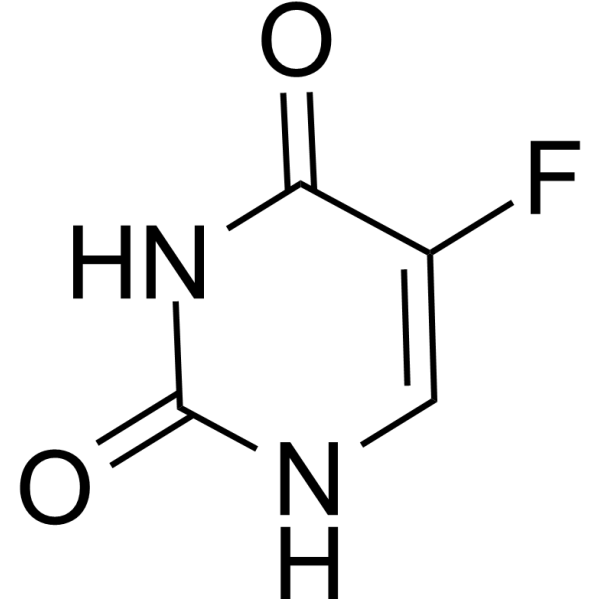
  • HY-90006
    5-Fluorouracil
    Maximum Cited Publications
    313 Publications Verification

    5-FU

    Exosomes Nucleoside Antimetabolite/Analog HIV Apoptosis Endogenous Metabolite Cancer
    5-Fluorouracil (5-FU) is an analogue of uracil and a potent antitumor agent. 5-Fluorouracil affects pyrimidine synthesis by inhibiting thymidylate synthetase thus depleting intracellular dTTP pools. 5-Fluorouracil induces apoptosis and can be used as a chemical sensitizer . 5-Fluorouracil also inhibits HIV .
    5-Fluorouracil
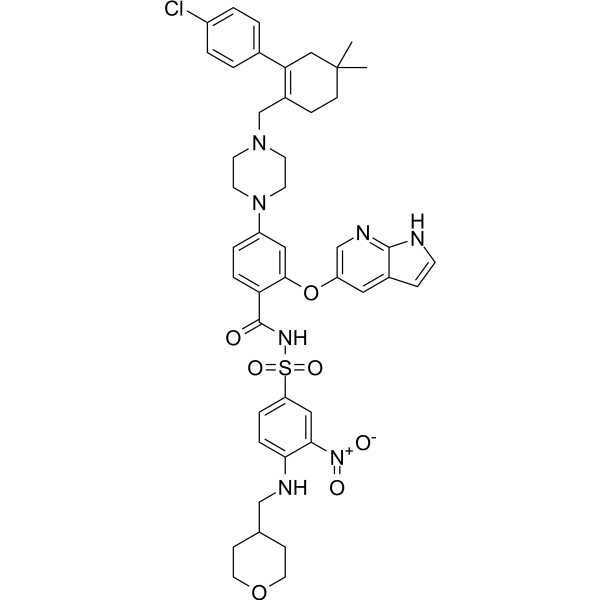
  • HY-15531
    Venetoclax
    225+ Cited Publications

    ABT-199; GDC-0199; RG7601

    Bcl-2 Family Autophagy Cancer
    Venetoclax (ABT-199; GDC-0199) is a highly potent, selective and orally bioavailable Bcl-2 inhibitor with a Ki of less than 0.01 nM. Venetoclax induces autophagy .
    Venetoclax
  • HY-10619
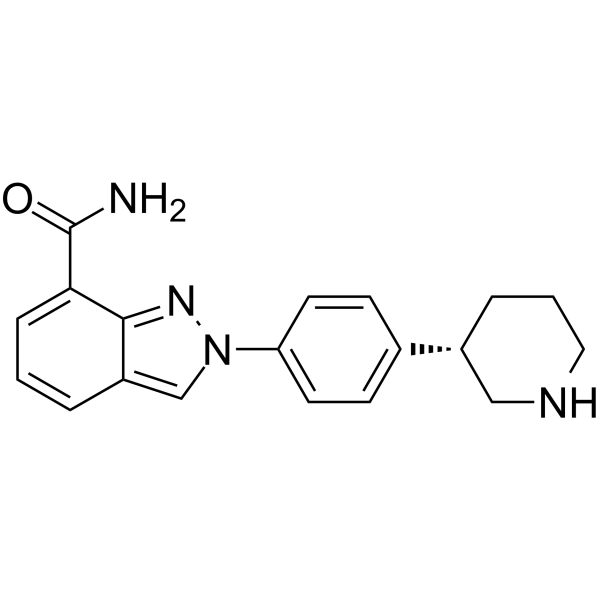
    Niraparib
    80+ Cited Publications

    MK-4827

    PARP Apoptosis Cancer
    Niraparib (MK-4827) is a highly potent and orally bioavailable PARP1 and PARP2 inhibitor with IC50s of 3.8 and 2.1 nM, respectively. Niraparib leads to inhibition of repair of DNA damage, activates apoptosis and shows anti-tumor activity .
    Niraparib
  • HY-B0016
    Capecitabine
    25+ Cited Publications

    DNA/RNA Synthesis Nucleoside Antimetabolite/Analog Apoptosis Cancer
    Capecitabine is an oral proagent that is converted to its active metabolite, 5-FU, by thymidine phosphorylase.
    Capecitabine
  • HY-17511
    Potassium oxonate
    10+ Cited Publications

    Potassium azaorotate; Potassium otastat; Oteracil potassium

    Xanthine Oxidase Metabolic Disease
    Potassium oxonate (Potassium azaorotate) is a uricase inhibitor that inhibits the phosphorylation of 5-FU to 5-fluorouridine-5'-monophosphate.
    Potassium oxonate
  • HY-14769
    Folitixorin
    2 Publications Verification

    5,10-Methylenetetrafolate; ANX-510 free acid

    Endogenous Metabolite Cancer
    Folitixorin (5,10-methylenetetrahydrofolate) is a cofactor and an analog of leucovorin. Folitixorin is a promising agent for modulation of 5-FU cytotoxicity in adjuvant cancer research .
    Folitixorin
  • HY-106406
    Benzylacyclouridine
    2 Publications Verification

    BAU; 5-Benzylacyclouridine

    Drug Derivative Cancer
    Benzylacyclouridine (BAU) is a potent and specific inhibitor of uridine phosphorylase, the first enzyme in the catabolism of uridine. Benzylacyclouridine inhibits the metabolic activity of UPP1 and the activity of UPP2. Benzylacyclouridine can modulate the cytotoxic side effects of 5-fluorouracil (5-FU) and its derivatives [5].
    Benzylacyclouridine
  • HY-17400
    Tegafur
    2 Publications Verification

    FT 207; NSC 148958

    Nucleoside Antimetabolite/Analog Cancer
    Tegafur (FT 207; NSC 148958) is a chemotherapeutic 5-FU proagent used in the treatment of cancers; is a component of tegafur-uracil.
    Tegafur
  • HY-101467
    Trilaciclib
    1 Publications Verification

    G1T28

    CDK Cancer
    Trilaciclib (G1T28) is an orally active CDK4/6 inhibitor with IC50 values of 1 nM and 4 nM for CDK4 and CDK6, respectively. . Trilaciclib can effectively inhibit tumor cell proliferation and reduce the hematological toxicity caused by chemotherapy. Trilaciclib attenuates apoptosis and myelosuppression induced by 5FU (HY-90006) chemotherapy .
    Trilaciclib
  • HY-W010450
    Thymine
    1 Publications Verification

    Endogenous Metabolite Metabolic Disease Cancer
    Thymine, one of the four bases of DNA, is a substrate for rat liver dihydropyrimidine dehydrogenase (DPD), with a Km value of 2.2 μM, Ki of 24 μM (using 5-FU as the DPD substrate), and a specific activity of 0.68 nmol/min/mg .
    Thymine
  • HY-112732B
    Sparfosic acid trisodium
    4 Publications Verification

    Apoptosis Metabolic Disease Cancer
    Sparfosic acid trisodium is a DNA antimetabolite agent and a potent inhibitor of aspartate transcarbamoyl transferase. Aspartate transcarbamoyl transferase catalyzes the second step of de novo pyrimidine biosynthesis. Sparfosic acid trisodium synergistically enhances the cytotoxicity of a combination of 5-fluorouracil (5-FU) and interferon-alpha (IFN) against human colon cancer cell lines .
    Sparfosic acid trisodium
  • HY-14905

    Tri-O-acetyl uridine

    Drug Derivative Neurological Disease
    Uridine triacetate (Tri-O-acetyl uridine) is an orally active proagent of Uridine (HY-B1449). Uridine triacetate is quickly absorbed in the gut, and is rapidly deacetylated in the circulation to yield free uridine. Uridine triacetate is used for the research of 5-fluorouracil (5-FU) and capecitabine toxicity, or early-onset cardiac or central nervous system (CNS) .
    Uridine triacetate
  • HY-90006R
    5-Fluorouracil (Standard)
    1 Publications Verification

    5-FU (Standard)

    Reference Standards Exosomes Nucleoside Antimetabolite/Analog HIV Apoptosis Endogenous Metabolite Cancer
    5-Fluorouracil (Standard) is the analytical standard of 5-Fluorouracil. This product is intended for research and analytical applications. 5-Fluorouracil (5-FU) is an analogue of uracil and a potent antitumor agent. 5-Fluorouracil affects pyrimidine synthesis by inhibiting thymidylate synthetase thus depleting intracellular dTTP pools. 5-Fluorouracil induces apoptosis and can be used as a chemical sensitizer . 5-Fluorouracil also inhibits HIV .
    5-Fluorouracil (Standard)
  • HY-10864
    URB-597
    5 Publications Verification

    KDS-4103

    FAAH Autophagy Mitophagy Neurological Disease
    URB-597 (KDS-4103) is an orally bioavailable and selective FAAH inhibitor. URB-597 inhibits FAAH activity with an IC50s of approximately 5 nM in rat brain membranes, 0.5 nM in intact rat neurons, 3 nM in human liver microsomes. Antidepressant-like effects. Analgesic activity .
    URB-597
  • HY-112732
    Sparfosic acid
    4 Publications Verification

    Apoptosis Metabolic Disease Cancer
    Sparfosic acid, a DNA antimetabolite agent, is a potent inhibitor of aspartate transcarbamoyl transferase, the enzyme catalyzing the second step of de novo pyrimidine biosynthesis. Sparfosic acid synergistically enhances the cytotoxicity of a combination of 5-fluorouracil (5-FU) and interferon-alpha (IFN) against human colon cancer cell lines .
    Sparfosic acid
  • HY-10619B
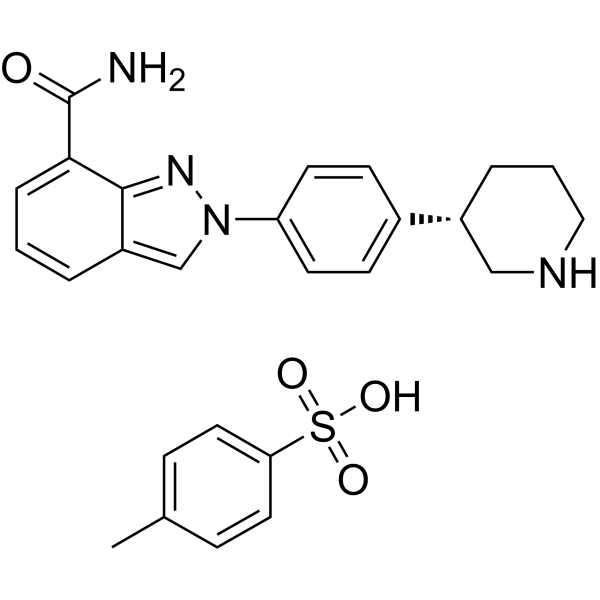
    Niraparib tosylate
    80+ Cited Publications

    MK-4827 tosylate

    PARP Apoptosis Cancer
    Niraparib tosylate (MK-4827 tosylate) is a highly potent and orally bioavailable PARP1 and PARP2 inhibitor with an IC50 of 3.8 and 2.1 nM, respectively. Niraparib tosylate leads to inhibition of repair of DNA damage, activates apoptosis and shows anti-tumor activity .
    Niraparib tosylate
  • HY-10619A
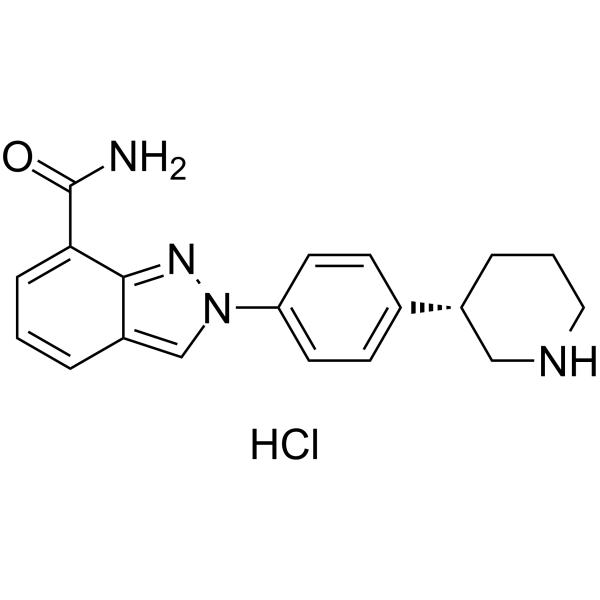
    Niraparib hydrochloride
    80+ Cited Publications

    MK-4827 hydrochloride

    PARP Apoptosis Cancer
    Niraparib hydrochloride (MK-4827 hydrochloride) is a highly potent and orally bioavailable PARP1 and PARP2 inhibitor with IC50s of 3.8 and 2.1 nM, respectively. Niraparib hydrochloride leads to inhibition of repair of DNA damage, activates apoptosis and shows anti-tumor activity .
    Niraparib hydrochloride
  • HY-100958
    4-DAMP
    4 Publications Verification

    4-DAMP methiodide

    mAChR Apoptosis MMP EGFR Interleukin Related Inflammation/Immunology Cancer
    4-DAMP (4-DAMP methiodide) is a potent and selective antagonist of M3 receptors and also has a high affinity for the closely-related M5 receptors. 4-DAMP combined with 5-Fluorouracil (5-Fu) (HY-90006) could significantly reduce the cell viability and enhance apoptosis in MKN45 and BGC823 gastric cancer cells. 4-DAMP inhibits lipopolysaccharide (LPS)- and tobacco-induced pulmonary inflammation and reduces mucin 5AC (MUC5AC), oligomeric mucus/gel-forming secretion .
    4-DAMP
  • HY-15531R

    ABT-199 (Standard); GDC-0199 (Standard); RG7601 (Standard)

    Reference Standards Bcl-2 Family Autophagy Cancer
    Venetoclax (Standard) is the analytical standard of Venetoclax. This product is intended for research and analytical applications. Venetoclax (ABT-199; GDC-0199) is a highly potent, selective and orally bioavailable Bcl-2 inhibitor with a Ki of less than 0.01 nM. Venetoclax induces autophagy .
    Venetoclax (Standard)
  • HY-B0021
    Doxifluridine
    2 Publications Verification

    Ro 21-9738; 5-Fluoro-5'-deoxyuridine; 5'-DFUR

    Thymidylate Synthase Cancer
    Doxifluridine has anticancer activity. Doxifluidine is a 5-FU prodrug. Doxifluridine is a thymidine synthase inhibitor. Doxifluridine can enhance tumor inhibition by synergizing with a variety of drugs .
    Doxifluridine
  • HY-12113
    Oprozomib
    3 Publications Verification

    ONX 0912; PR-047

    Proteasome Autophagy Apoptosis Cancer
    Oprozomib (PR-047) is an orally bioavailable and selective peptide epoxyketone proteasome inhibitor with IC50s of 36 and 82 nM for proteasome (β5) and immunoproteasome (LMP7), respectively. Oprozomib (ONX 0912) induces apoptosis in MM cells .
    Oprozomib
  • HY-10619E
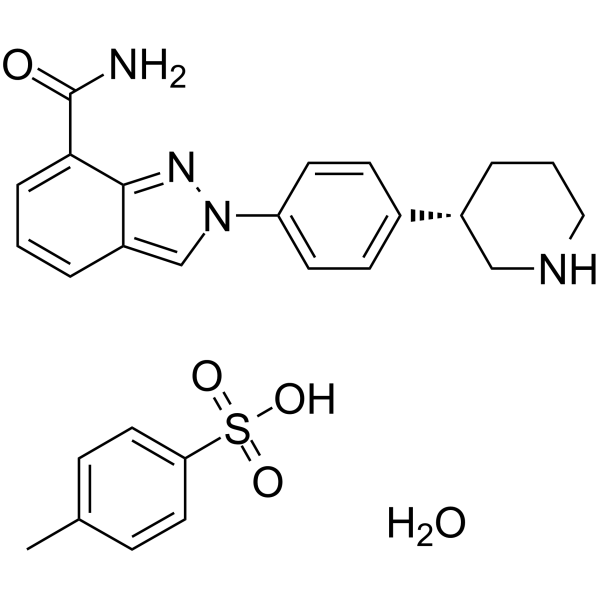
    Niraparib tosylate hydrate
    80+ Cited Publications

    MK-4827 tosylate hydrate

    PARP Apoptosis Cancer
    Niraparib (MK-4827) tosylate hydrate is a highly potent and orally bioavailable PARP1 and PARP2 inhibitor with IC50s of 3.8 and 2.1 nM, respectively. Niraparib tosylate hydrate leads to inhibition of repair of DNA damage, activates apoptosis and shows anti-tumor activity .
    Niraparib tosylate hydrate
  • HY-103363
    SB-328437
    3 Publications Verification

    CCR Thymidylate Synthase Inflammation/Immunology Cancer
    SB-328437 is a potent, selective non-peptide CCR3 antagonist with an IC50 of 4.5 nM. SB-328437 can inhibit eosinophil migration induced by eotaxin, eotaxin-2, and monocyte chemotactic protein-4. In addition, SB-328437 can sensitize 5-FU (HY-90006)-resistant gastric cancer cells. SB-328437 can also reduce the recruitment of neutrophils to the lungs and pulmonary inflammation during acute inflammation. SB-328437 can be used in the research of inflammation-related diseases .
    SB-328437
  • HY-132298

    Adenylate Cyclase Others
    TDI-10229 is a potent and orally bioavailable inhibitor of soluble adenylyl cyclase (sAC, ADCY10). TDI-10229 displays nanomolar inhibition of sAC in both biochemical and cellular assays (IC50 of 195 nM) and exhibits mouse pharmacokinetic properties sufficient to warrant its use as an in vivo tool compound .
    TDI-10229
  • HY-101467A
    Trilaciclib hydrochloride
    1 Publications Verification

    G1T28 hydrochloride

    CDK Cancer
    Trilaciclib (G1T28) hydrochloride is an orally active CDK4/6 inhibitor with IC50 values of 1 nM and 4 nM for CDK4 and CDK6, respectively. Trilaciclib hydrochloride can effectively inhibit tumor cell proliferation and reduce the hematological toxicity caused by chemotherapy. Trilaciclib hydrochloride attenuates apoptosis and myelosuppression induced by 5FU (HY-90006) chemotherapy .
    Trilaciclib hydrochloride
  • HY-90006S

    5-FU-d1

    Isotope-Labeled Compounds Exosomes Nucleoside Antimetabolite/Analog HIV Apoptosis Endogenous Metabolite Cancer
    5-Fluorouracil-d is the deuterium labeled 5-Fluorouracil. 5-Fluorouracil (5-FU) is an analogue of uracil and a potent antitumor agent. 5-Fluorouracil affects pyrimidine synthesis by inhibiting thymidylate synthetase thus depleting intracellular dTTP pools. 5-Fluorouracil induces apoptosis and can be used as a chemical sensitizer . 5-Fluorouracil also inhibits HIV .
    5-Fluorouracil-d1
  • HY-10533
    Eniluracil
    1 Publications Verification

    5-Ethynyluracil; GW776C85

    Biochemical Assay Reagents Cancer
    Eniluracil (5-Ethynyluracil) is an orally active dihydropyrimidine dehydrogenase (DPD) inhibitor. Eniluracil irreversibly inhibits DPD, increases the oral bioavailability of 5-fluorouracil to 100%, and facilitates the uniform absorption and toxicity of 5-fluorouracil. Eniluracil can be used in cancer research of combination with fluoropyrimidines (including 5-fluorouracil) . Eniluracil is a click chemistry reagent, it contains an Alkyne group and can undergo copper-catalyzed azide-alkyne cycloaddition (CuAAc) with molecules containing Azide groups.
    Eniluracil
  • HY-12839
    p38 MAPK-IN-1
    10+ Cited Publications

    p38 MAPK Autophagy Inflammation/Immunology
    p38 MAPK-IN-1 (Compound 4) is a novel potent and selective inhibitor of p38 MAPK with IC50 of 68 nM. p38 MAPK-IN-1 shows sustained levels, low clearance and good bioavailability.
    p38 MAPK-IN-1
  • HY-15010
    L-371,257
    1 Publications Verification

    Oxytocin Receptor Vasopressin Receptor Cardiovascular Disease Endocrinology
    L-371,257 is an orally bioavailable, non-blood-brain barrier penetrant, selective and competitive antagonist of oxytocin receptor (pA2=8.4) with high affinity at both the oxytocin receptor (Ki=19 nM) and vasopressin V1a receptor (Ki=3.7 nM) .
    L-371,257
  • HY-19631A
    Ilginatinib
    1 Publications Verification

    NS-018

    JAK Cancer
    Ilginatinib (NS-018) is a highly active and orally bioavailable JAK2 inhibitor, with an IC50 of 0.72 nM, 46-, 54-, and 31-fold selectivity for JAK2 over JAK1 (IC50, 33 nM), JAK3 (IC50, 39 nM), and Tyk2 (IC50, 22 nM).
    Ilginatinib
  • HY-15043

    Bradykinin Receptor Inflammation/Immunology Endocrinology
    ELN-441958 is a potent, neutral, competitive and selective bradykinin B1 receptor antagonist with a Ki of 0.26 nM against native human bradykinin B1 receptor. ELN-441958 has high oral bioavailability, and has low CNS exposure in the mouse .
    ELN-441958
  • HY-139065

    Apoptosis Cancer
    AMPC is a potent and effective TFF3 inhibitor. AMPC inhibits cell proliferation, survival, oncogenicity, and CSC-like behaviour in TFF3-positive CMS4 CRC cells. AMPC acts as a potential anti-cancer agent alone or in combination with 5-FU, and can be used for cancer research .
    AMPC
  • HY-141711

    mAChR Neurological Disease
    VU6028418 is a potent, highly selective and orally bioavailable M4 mAChR antagonist with an IC50 of 4.1 nM against hM4 .
    VU6028418
  • HY-19631B
    Ilginatinib hydrochloride
    1 Publications Verification

    NS-018 hydrochloride

    JAK Cancer
    Ilginatinib hydrochloride (NS-018 hydrochloride) is a highly active and orally bioavailable JAK2 inhibitor, with an IC50 of 0.72 nM, 46-, 54-, and 31-fold selectivity for JAK2 over JAK1 (IC50, 33 nM), JAK3 (IC50, 39 nM), and Tyk2 (IC50, 22 nM).
    Ilginatinib hydrochloride
  • HY-19631
    Ilginatinib maleate
    1 Publications Verification

    NS-018 maleate

    JAK Cancer
    Ilginatinib maleate (NS-018 maleate) is a highly active and orally bioavailable JAK2 inhibitor, with an IC50 of 0.72 nM, 46-, 54-, and 31-fold selectivity for JAK2 over JAK1 (IC50, 33 nM), JAK3 (IC50, 39 nM), and Tyk2 (IC50, 22 nM).
    Ilginatinib maleate
  • HY-132292

    PROTACs Androgen Receptor Cancer
    ARD-2128 is a highly potent, orally bioavailable PROTAC androgen receptor (AR) degrader. ARD-2128 effectively reduces AR protein, suppresses AR-regulated genes in tumor tissues, and inhibits growth of tumor without signs of toxicity. ARD-2128 has the potential for the research of the prostate cancer .
    ARD-2128
  • HY-90006S1

    5-FU-13C,15N2

    Exosomes Apoptosis Nucleoside Antimetabolite/Analog HIV Endogenous Metabolite Cancer
    5-Fluorouracil- 13C, 15N2 is the 13C and 15N labeled 5-Fluorouracil . 5-Fluorouracil (5-FU) is an analogue of uracil and a potent antitumor agent. 5-Fluorouracil affects pyrimidine synthesis by inhibiting thymidylate synthetase thus depleting intracellular dTTP pools. 5-Fluorouracil induces apoptosis and can be used as a chemical sensitizer . 5-Fluorouracil also inhibits HIV .
    5-Fluorouracil-13C,15N2
  • HY-B0016S

    Isotope-Labeled Compounds DNA/RNA Synthesis Nucleoside Antimetabolite/Analog Apoptosis Cancer
    Capecitabine-d11 is the deuterium labeled Capecitabine. Capecitabine is an oral proagent that is converted to its active metabolite, 5-FU, by thymidine phosphorylase .
    Capecitabine-d11
  • HY-B0016R

    Reference Standards DNA/RNA Synthesis Nucleoside Antimetabolite/Analog Apoptosis Cancer
    Capecitabine (Standard) is the analytical standard of Capecitabine. This product is intended for research and analytical applications. Capecitabine is an oral proagent that is converted to its active metabolite, 5-FU, by thymidine phosphorylase.
    Capecitabine (Standard)
  • HY-116804

    Histone Methyltransferase Cancer
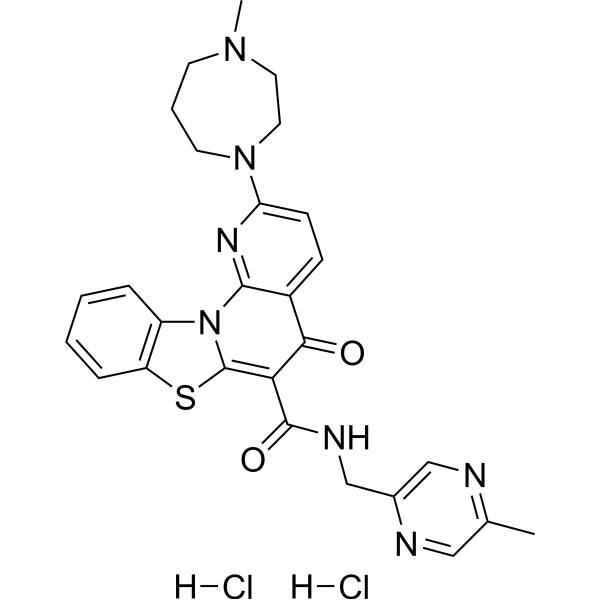
    ZLD1039 is a potent, highly selective, and orally bioavailable EZH2 inhibitor. ZLD1039 shows potent and concentration-dependent inhibition of PRC2 enzymatic activity against EZH2 wild-type as well as Y641F, and A677G mutant enzymes with IC50 values of 5.6, 15, and 4.0 nM, respectively. ZLD1039 inhibits breast tumor growth and metastasis .
    ZLD1039
  • HY-154508

    2’-Deoxy-5-Fluorouridine 5’-phosphate triethylammonium

    Nucleoside Antimetabolite/Analog Thymidylate Synthase Cancer
    FdUMP triethylammonium is the intracellular active form of 5-fluorouracil (5-FU). 5-FU is converted to FdUMP after being transported into the cell by various enzymes. FdUMP forms a ternary complex with thymidylate synthase and its cofactor 5,10-methylene tetrahydrofolate, inhibiting the activity of thymidylate synthase, which in turn leads to the suppression of DNA synthesis.
    FdUMP triethylammonium
  • HY-W010450R

    Reference Standards Endogenous Metabolite Metabolic Disease Cancer
    Thymine (Standard) is the analytical standard of Thymine. This product is intended for research and analytical applications. Thymine is one of the four nucleobases in the nucleic acid of DNA and can be a target for actions of 5-fluorouracil (5-FU) in cancer treatment, with a Km of 2.3 μM.
    Thymine (Standard)
  • HY-90006S2

    Exosomes Nucleoside Antimetabolite/Analog HIV Apoptosis Endogenous Metabolite Cancer
    5-Fluorouracil- 15N2 is the 15N-labeled 5-Fluorouracil. 5-Fluorouracil (5-FU) is an analogue of uracil and a potent antitumor agent. 5-Fluorouracil affects pyrimidine synthesis by inhibiting thymidylate synthetase thus depleting intracellular dTTP pools. 5-Fluorouracil induces apoptosis and can be used as a chemical sensitizer . 5-Fluorouracil also inhibits HIV .
    5-Fluorouracil-15N2
  • HY-153190
    W1131
    1 Publications Verification

    Oxidative Phosphorylation STAT Ferroptosis Cancer
    W1131 is a potent STAT3 inhibitor, triggering ferroptosis. W1131 suppresses cancer progression in gastric cancer cell subcutaneous xenograft model, organoids model, and PDX model. W1131 effectively alleviates chemical resistance of cancer cells to 5-FU (HY-90006). W1131 regulates cell cycle, DNA damage response, and oxidative phosphorylation, including IL6-JAK-STAT3 pathway and ferroptosis pathway .
    W1131
  • HY-16138

    CG-200745

    HDAC MDM-2/p53 Apoptosis Cancer
    Ivaltinostat (CG-200745) is an orally active, potent pan-HDAC inhibitor which has the hydroxamic acid moiety to bind zinc at the bottom of catalytic pocket. Ivaltinostat inhibits deacetylation of histone H3 and tubulin. Ivaltinostat induces the accumulation of p53, promotes p53-dependent transactivation, and enhances the expression of MDM2 and p21 (Waf1/Cip1) proteins. Ivaltinostat enhances the sensitivity of Gemcitabine-resistant cells to Gemcitabine (HY-16138) and 5-Fluorouracil (5-FU; HY-90006). Ivaltinostat induces apoptosis and has anti-tumour effects .
    Ivaltinostat
  • HY-16138A

    CG-200745 formic

    HDAC MDM-2/p53 Apoptosis Inflammation/Immunology Endocrinology Cancer
    Ivaltinostat (CG-200745) formic is an orally active, potent pan-HDAC inhibitor which has the hydroxamic acid moiety to bind zinc at the bottom of catalytic pocket. Ivaltinostat formic inhibits deacetylation of histone H3 and tubulin. Ivaltinostat formic induces the accumulation of p53, promotes p53-dependent transactivation, and enhances the expression of MDM2 and p21 (Waf1/Cip1) proteins. Ivaltinostat formic enhances the sensitivity of Gemcitabine-resistant cells to Gemcitabine (HY-16138) and 5-Fluorouracil (5-FU; HY-90006). Ivaltinostat formic induces apoptosis and has anti-tumour effects .
    Ivaltinostat formic
  • HY-145311

    Nucleoside Antimetabolite/Analog Cancer
    Bis-Pro-5FU (Compound 4) is a 5-FU precursor that confers oral bioavailability and increase the safety profile of 5-Fluorouracil (5-FU) chemotherapy regimens. 5-FU is an antineoplastic antimetabolite that is widely used for the research of colorectal and pancreatic cancer .
    Bis-Pro-5FU
  • HY-P3322

    PC 5

    Biochemical Assay Reagents Others
    Phytochelatin 5 is metal-binding compound produced by plants. Phytochelatin 5 may reduce bioavailability of dietary toxic metals such as cadmium .
    Phytochelatin 5
  • HY-133127

    Glucokinase Metabolic Disease
    AR453588 is a potent and orally bioavailable anti-diabetic glucokinase activator, with an EC50 of 42 nM. AR453588 shows anti-hyperglycemic activity .
    AR453588
  • HY-122058A

    CXCR HIV Infection Inflammation/Immunology
    KRH-3955 hydrochloride is an orally bioavailable CXCR4 antagonist. KRH-3955 hydrochloride inhibits SDF-1α binding to CXCR4 with an IC50 of 0.61 nM. KRH-3955 hydrochloride is also a highly potent and selective inhibitor of X4 HIV-1, with an EC50 of 0.3 to 1.0 nM .
    KRH-3955 hydrochloride

Inquiry Online

Your information is safe with us. * Required Fields.

Salutation


Country or Region *

Applicant Name *


Organization Name *

Department *


Email Address *


Product Name *

Cat. No.


Requested quantity *

Phone Number *


Remarks

Inquiry Online

Inquiry Information

Product Name:
Cat. No.:
Quantity:
MCE Japan Authorized Agent:

