Search Result
Results for "
Antitubercular activity
" in MedChemExpress (MCE) Product Catalog:
1
Biochemical Assay Reagents
| Cat. No. |
Product Name |
Target |
Research Areas |
Chemical Structure |
-
- HY-N0804
-
|
|
Bacterial
|
Inflammation/Immunology
|
|
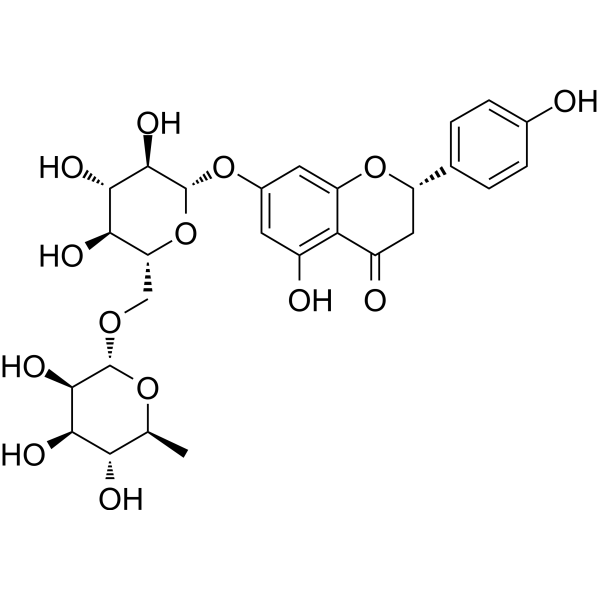
Narirutin, one of the active constituents isolated from citrus fruits, has antioxidant and anti-inflammatory activities. Narirutin is a shikimate kinase inhibitor with anti-tubercular potency .
|
-
-
- HY-N1377
-
-
-
- HY-160922
-
|
|
MDM-2/p53
Bacterial
|
Infection
Cancer
|
|
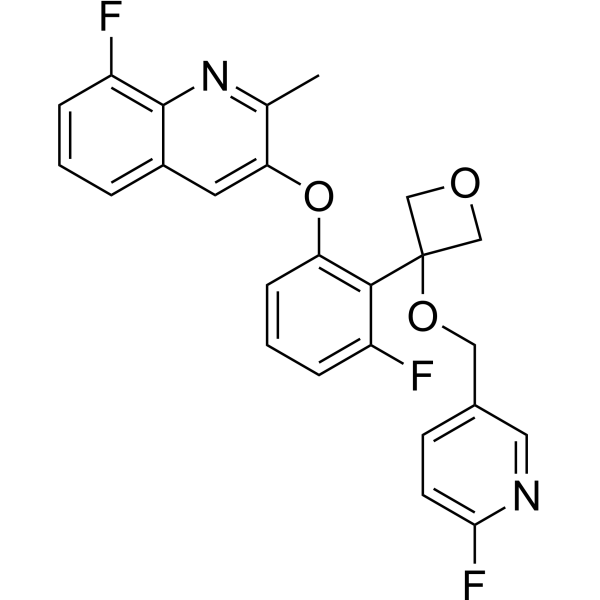
BAY 249716 stabilizes all three p53 protein variants. BAY 249716 also has antitubercular activity (IC90: <0.10 μg/mL for Tuberculosis) .
|
-
-
- HY-132910
-
|
|
Bacterial
|
Infection
|
|
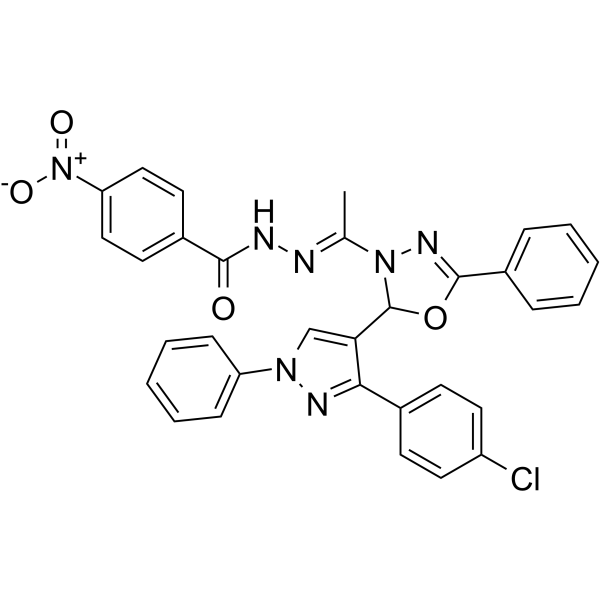
Antitubercular agent-9 shows effective antitubercular activity with a MIC value of 1.03-2.32 μM.
|
-
-
- HY-124781
-
|
|
Bacterial
Antibiotic
|
Infection
|
|
ML406 is a small molecule probe that shows anti-tubercular activity via M.tuberculosis BioA (DAPA synthase) enzyme inhibition with an IC50 of 30 nM. M.tuberculosis BioA is an enzyme involved in biotin biosynthesis in M.tuberculosis .
|
-
-
- HY-129943
-
|
|
Bacterial
|
Infection
|
|
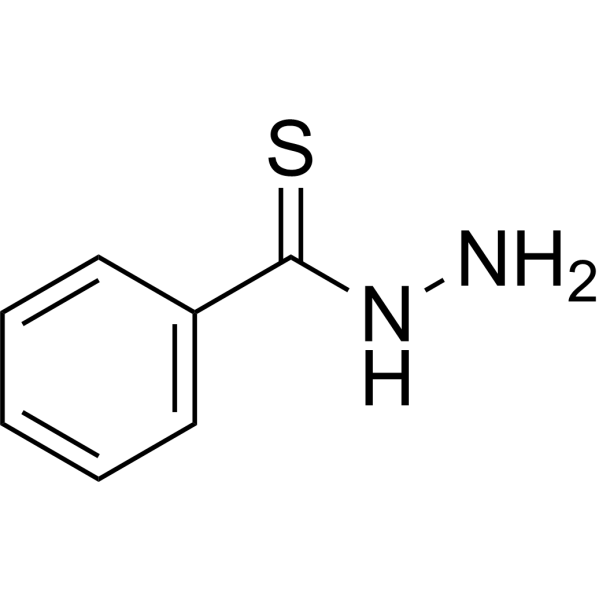
Benzothiohydrazide is an analogue of anti–tubercular agent Isoniazid. Benzothiohydrazide exhibits anti–tubercular activity, with MICs of 132 μM and 264 μM for M. tuberculosis wild type (H37Rv) and clinical mutant strains (IC1 and IC2) .
|
-
-
- HY-120555
-
|
|
Bacterial
|
Infection
|
|
Texaline is a active product that can be isolated from Amyris species of plants in the Caribbean. Texaline has antitubercular activity .
|
-
-
- HY-32806
-
|
|
Drug Intermediate
|
Infection
|
|
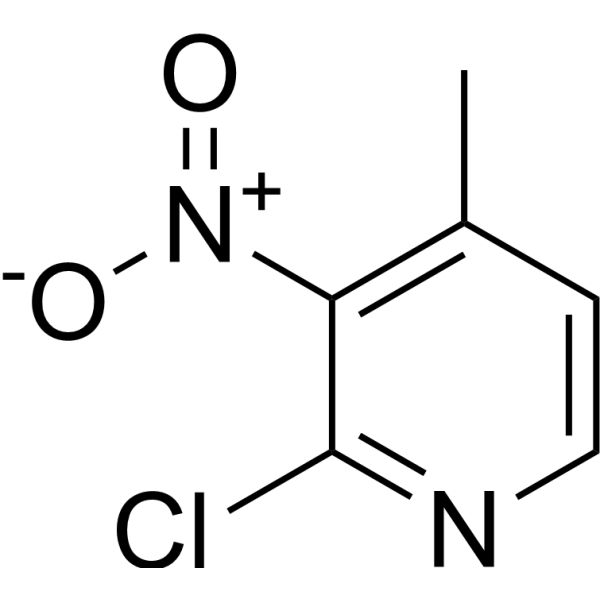
2-Chloro-4-methyl-3-nitropyridine is a pyridine derivative that can be used to synthesize 2-methoxypyridine derivatives with antibacterial and antituberculosis activities .
|
-
-
- HY-139424
-
|
|
Bacterial
|
Cancer
|
|
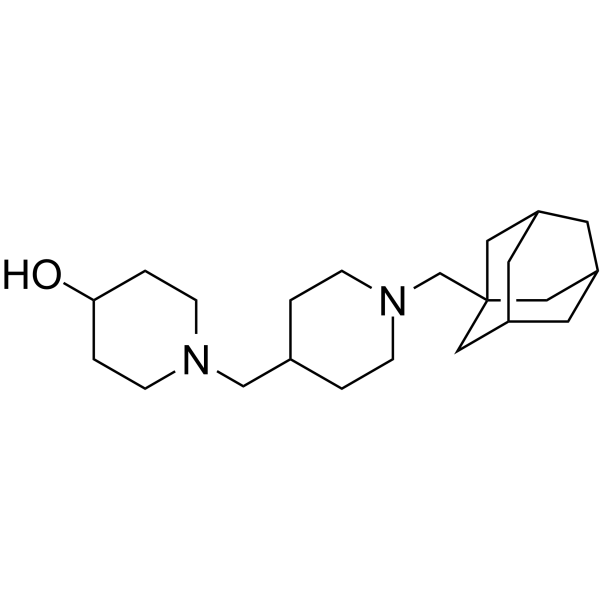
SQ609 is a lead compound from a library of dipiperidines. SQ609 inhibits more than 90% of intracellular bacterial growth at 4μg/ml and is toxic to these cells. SQ609 displays a potent antitubercular activity .
|
-
-
- HY-N0804R
-
|
|
Reference Standards
Bacterial
|
Inflammation/Immunology
|
|
Narirutin (Standard) is the analytical standard of Narirutin. This product is intended for research and analytical applications. Narirutin, one of the active constituents isolated from citrus fruits, has antioxidant and anti-inflammatory activities. Narirutin is a shikimate kinase inhibitor with anti-tubercular potency .
|
-
-
- HY-W012813
-
|
|
Bacterial
|
Infection
|
|
2-Acetyl-5-methylfuran is a growth inhibitor of Mycobacterium tuberculosis, exhibiting an in vitro anti-tubercular activity with an MIC of 322.58 μM. 2-Acetyl-5-methylfuran demonstrates high safety and can be used for research related to tuberculosis .
|
-
-
- HY-152138
-
|
|
Bacterial
Fungal
|
Infection
|
|
Antituberculosis agent-8 (Compound 9i) is an antitubercular agent with an MIC of 3.53 μM (1.6 μg/mL) against M. tuberculosis H37Rv. Antituberculosis agent-8 also shows good antifungal activity against A. niger with an MIC of 62.50 μM .
|
-
-
- HY-126640
-
|
|
Parasite
|
Infection
Cancer
|
|
Phomoxanthone A is a xanthone dimer, which can be isolated from Phomopsis. Phomoxanthone A exhibits antimalarial and antitubercular activities against Plasmodium falciparum (K1, multidrug-resistant strain, IC50 is 0.11 µg/mL) and Mycobacterium tuberculosis (H37Ra strain, MIC is 0.50 µg/mL). Phomoxanthone A exhibits cytotoxicity in cells KB, BC-1 and Vero, IC50 is 0.99, 0.51 and 1.4 µg/mL, respectively .
|
-
-
- HY-143232
-
|
|
Fungal
Bacterial
|
Infection
Cancer
|
|
Antibacterial agent 73 (compound 7a) is a potent antimicrobial agent. Antibacterial agent 73 exhibits very good antitubercular activity (MIC=0.65 µg/mL) against Mtb H37Rv. Antibacterial agent 73 shows good activity against fungal and bacterial. Antibacterial agent 73 also shows cytotoxicity in MCF-7 breast cancer cell lines, with IC50 of 8.20 μM .
|
-
-
- HY-178802
-
|
|
Bacterial
|
Infection
|
|
Antitubercular agent-53 (Compound 5b) is an antitubercular agent and antibacterial agent. Antitubercular agent-53 shows antitubercular activity against M. tuberculosis H37RV with an MIC of 4 μg/mL .
|
-
-
- HY-132928
-
|
|
Bacterial
|
Infection
|
|
Antitubercular agent-10 shows potent antitubercular activity with a MIC value of 30 nM.
|
-
-
- HY-162684
-
-
-
- HY-149857
-
|
|
Bacterial
|
Infection
|
|
Antitubercular agent-37 is an antibacterial agent. Antitubercular agent-37 has antimycobacterial activity with an MIC values of 0.16 μg/mL. Antitubercular agent-37 can be used for the research of tuberculosis .
|
-
-
- HY-147883
-
|
|
Bacterial
|
Infection
|
|
Antitubercular agent-27 (compound 1) is a potent antitubercular agent with an IC50 value of 3.2 µM, an MIC value of 7.8 µM, an IC90 value of 7.0 µM. Antitubercular agent-27 shows antimycobacterial activity for resistant isolates of Mycobacterium tuberculosis H37Rv. Antitubercular agent-27 shows effective intracellular antimycobacterial activity and low cytotoxicity .
|
-
-
- HY-147884
-
|
|
Bacterial
|
Infection
|
|
Antitubercular agent-28 (compound 2) is a potent antitubercular agent with an IC50 value of 1.5 µM, an MIC value of 4.5 µM, an IC90 value of 2.5 µM. Antitubercular agent-28 shows antimycobacterial activity for resistant isolates of Mycobacterium tuberculosis H37Rv. Antitubercular agent-28 shows effective intracellular antimycobacterial activity and low cytotoxicity .
|
-
-
- HY-146496
-
|
|
Bacterial
|
Infection
|
|
Antitubercular agent-20 (Compound 2d) is an orally active antitubercular agent. Antitubercular agent-20 shows excellent activity against MTB H37Rv and MDR-MTB strains (MIC: <0.016 µg/ml). Antitubercular agent-20 has low cytotoxicity and good tolerance in BALB/c mice .
|
-
-
- HY-147505
-
|
|
Bacterial
Fungal
|
Infection
|
|
Antitubercular agent-21 (Compound 15) is an antitubercular agent with an MIC of o.4 µg/mL against M. tuberculosis H37Rv. Antitubercular agent-21 exhibits lower activity against other microorganism such as bacteria gram-positive, gram-negative or fungi. Antitubercular agent-21 shows low cytotoxicity .
|
-
-
- HY-146495
-
|
|
Bacterial
|
Infection
|
|
Antitubercular agent-19 (Compound 1c) is an antitubercular agent. Antitubercular agent-19 shows excellent activity against MTB H37Rv and MDR-MTB strains (MIC: <0.016 µg/ml). Antitubercular agent-19 shows low cytotoxicity and relatively high acute lethal toxicity in BALB/c mice .
|
-
-
- HY-156021
-
|
|
Bacterial
|
Infection
|
|
Antitubercular agent-40 (compound 93) is a thieno[2,3-b]quinoline-2-carboxamide compound with potential antitubercular activity .
|
-
-
- HY-155067
-
|
|
Bacterial
|
Infection
|
|
Antitubercular agent-38 is an orally active Benzothiazinones (BTZs) derivate, with potent antituberculosis activity. Antitubercular agent-38 exhibits low cardiac toxicity, low cell cytotoxicity .
|
-
-
- HY-N12276
-
-
-
- HY-156361
-
|
|
Bacterial
|
Infection
|
|
Tuberculosis inhibitor 11 (Compound 14) can sensitize the antimycobacterial activity of the antitubercular agent .
|
-
-
- HY-119369
-
|
|
Bacterial
|
Infection
|
|
FadD32 Inhibitor-1 is a potent FadD32 inhibitor with anti-tubercular activity .
|
-
-
- HY-117837
-
-
-
- HY-156421
-
|
|
Bacterial
|
Infection
|
|
QST4 has antitubercular activity, with the MIC value of 6.25 μM in Mycobacterium tuberculosis H37Rv .
|
-
-
- HY-148111
-
|
|
Bacterial
|
Infection
|
|
Antitubercular agent-33 is a 2-aminothiazole derivative, shows potent antintubercular activity against Mycobacterium tuberculosis (Mtb) .
|
-
-
- HY-124301
-
|
|
Bacterial
|
Infection
|
|
Penicolinate A is a picolinic acid derivative. Penicolinate A is isolated from endophytic Penicillium sp. BCC16054. Penicolinate A exhibits antimalarial and antitubercular activities .
|
-
-
- HY-117990
-
|
|
Bacterial
|
Infection
|
|
GSK572A is a potent EchA6 inhibitor with an Kd value of 1.9 µM. GSK572A shows anti-tubercular activity .
|
-
-
- HY-146051
-
|
|
Bacterial
|
Infection
|
|
Antitubercular agent-18 (Compound 9a) is an antitubercular agent with MIC values of 2, 2, 2 and 128 µg/ml against M. tuberculosis H37Rv, Spec. 192, Spec 210 and Spec. 800, respectively. Antitubercular agent-18 shows highly selective antimycobacterial effects .
|
-
-
- HY-146050
-
|
|
Bacterial
|
Infection
|
|
Antitubercular agent-17 (Compound 8a) is an antitubercular agent with MIC values of 2, 2, 2 and 128 µg/ml against M. tuberculosis H37Rv, Spec. 192, Spec 210 and Spec. 800, respectively. Antitubercular agent-17 shows highly selective antimycobacterial effects .
|
-
-
- HY-123451
-
|
|
Bacterial
|
Infection
|
|
ACH-702 is a potent anti-tubercular agent. ACH-702 also shows broad-spectrum antibacterial activity .
|
-
-
- HY-173375
-
|
|
Bacterial
|
Infection
|
|
Mycobacterium Tuberculosis-IN-8 (Compound 6g) is a selective inhibitor of Mycobacterium tuberculosis (MTB) with an MIC value of 6.25 µg/mL against MTB H37Rv. Mycobacterium Tuberculosis-IN-8 shows potent antitubercular activities, inhibiting mycolic acid biosynthesis critical for bacterial cell wall integrity. Mycobacterium Tuberculosis-IN-8 is promising for research of antitubercular agents .
|
-
-
- HY-168123
-
|
|
Bacterial
|
Cancer
|
|
Antitubercular agent-47 (compund 5C) shows potent activity against tuberculosis and was effective against DS/MDR/XDR clinical isolates .
|
-
-
- HY-155332
-
|
|
Bacterial
|
Infection
|
|
AB131 is a MSMEG 6649 and Rv2172c inhibitor (Kd: 0.16 and 0.02 μM respectively). AB131 can sensitize the antimycobacterial activity of the antitubercular agent .
|
-
-
- HY-147819
-
|
|
Bacterial
DNA/RNA Synthesis
|
Infection
|
|
DNA Gyrase-IN-3 (Compound 28) is a bacterial DNA gyrase B inhibitor with IC50s of 5.41-15.64 µM for E. coli DNA gyrase. Anti-tubercular and antibacterial activity .
|
-
-
- HY-146374
-
|
|
Bacterial
|
Infection
|
|
Antibacterial agent 96 (compound 4k) is a potent antibacterial agent. Antibacterial agent 96 shows antitubercular activity against agent-susceptible and multidrug-resistantMycobacterium tuberculosis (M. tuberculosis) strains. Antibacterial agent 96 shows toxicity to HepG2 and Vero cells .
|
-
-
- HY-147818
-
|
|
Bacterial
DNA/RNA Synthesis
|
Infection
|
|
DNA Gyrase-IN-2 (Compound 22a) is a bacterial DNA gyrase B inhibitor with IC50s of 3.29-10.49 and 4.41-5.61 µM for E. coli DNA gyrase and M. tuberculosis DNA gyrase. Anti-tubercular and antibacterial activity .
|
-
-
- HY-177325
-
|
|
Bacterial
|
Infection
|
|
MmpL3-IN-5 (Compound 3G) is a MmpL3 inhibitor. MmpL3-IN-5 has an antitubercular activity with a pMIC of 7.0 μM for Mycobacterium tuberculosis H37Rv strain. MmpL3-IN-5 can be used for tuberculosis research .
|
-
-
- HY-151340
-
|
|
Bacterial
|
Infection
|
|
Antitubercular agent-32 is a derivate of Benzothiazinone (HY-13579A), inhibits M. tuberculosis, and shows improved metabolic stability and enhanced water solubility. Antitubercular agent-32 exerts antitubercular effect by targeting decaprenylphosphoryl-β-D-ribose 2’-oxidase (DprE1, IC50=3.9 μM) .
|
-
-
- HY-124781R
-
|
|
Reference Standards
Bacterial
Antibiotic
|
Infection
|
|
ML406 (Standard) is the analytical standard of ML406. This product is intended for research and analytical applications. ML406 is a small molecule probe that shows anti-tubercular activity via M.tuberculosis BioA (DAPA synthase) enzyme inhibition with an IC50 of 30 nM. M.tuberculosis BioA is an enzyme involved in biotin biosynthesis in M.tuberculosis[1].
|
-
-
- HY-N3661
-
|
|
Bacterial
|
Infection
|
|
(24S)-Cycloartane-3β,24,25-triol, a cycloartane, has antitubercular activity against Mycobacterium tuberculosis H37Rv (MIC: 32 μg/mL). (24S)-Cycloartane-3β,24,25-triol can be isolated from the flowers of Chrysanthemum morifolium .
|
-
-
- HY-N12230
-
|
|
Bacterial
Parasite
Fungal
|
Infection
Cancer
|
|
Penicolinate B is a picolinic acid derivative that can be isolated from Penicillium sp. Penicolinate B exhibits antimalarial activity (IC50: 1.40 μg/mL), antitubercular activity (MIC: 25.0 μg/mL), activity against Bacillus cereus (IC50: 25.0 μg/mL), and activity against Candida albicans (IC50: 1.45 μg/mL). Penicolinate B also has certain cytotoxicity against cancer cells such as MCF-7, KB, and NCI-H187. Penicolinate B can be used in research on malaria, tuberculosis, bacterial/fungal infections and tumors .
|
-
-
- HY-138958
-
|
|
Bacterial
Virus Protease
|
Infection
|
|
HT1171 is a potent and selective inhibitor of mycobacterium tuberculosis proteasome. HT1171 shows strong anti-tuberculosis activity against Mycobacterium tuberculosis H37Rv with an MIC90 of 2 μg/mL and an MIC of 4 μg/mL. When HT1171 concentration is 100 μM, the inhibition rate of human normal hepatocytes L02 is 53.8%. HT1171 can be used in the research of antitubercular agent .
|
-
-
- HY-14988
-
|
|
Bacterial
|
Infection
|
|
I-A09 and its derivatives, specifically 1,2,3-triazole-adamantylacetamide hybrids (5a–u), exhibit significant antitubercular activity. These hybrids were synthesized using copper-catalyzed click chemistry, combining bioactive fragments from antitubercular I-A09 and substituted adamantyl urea. The compound N-(1-adamantyl)-2-azido acetamide was reacted with various alkyl/aryl acetylenes to produce new analogues. Among them, N-(1-adamantan-1-yl)-2-(4-(phenanthren-2-yl)-1H-1,2,3-triazol-1-yl)acetamide (5t) showed the most promise with a minimum inhibitory concentration (MIC) of 3.12 μg/mL against Mycobacterium tuberculosis H37Rv, and a selectivity index greater than 15 .
|
-
-
- HY-N1377R
-
|
Lysionotin (Standard)
|
Carboxylesterase (CES)
Reference Standards
DNA/RNA Synthesis
Apoptosis
Bacterial
|
Infection
Metabolic Disease
Inflammation/Immunology
Endocrinology
Cancer
|
|
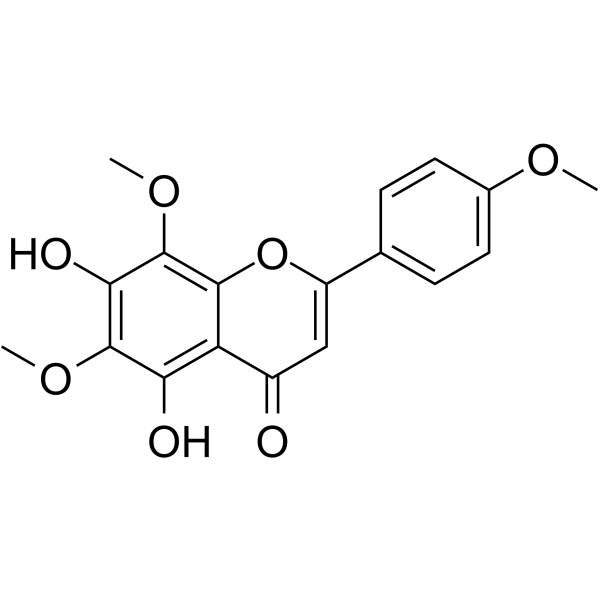
Nevadensin (Standard) (Lysionotin (Standard)) is the analytical standard of Nevadensin (HY-N1377). This product is intended for research and analytical applications. Nevadensin, a natural flavonoid, is a selective human carboxylesterase 1 (hCE1) inhibitor with an IC50 of 2.64 μM. Nevadensin is more selective for hCE1 than hCE2 (IC50 of 132.8 μM). Nevadensin can induce apoptosis and DNA damage in cancer cells. Nevadensin has a variety of pharmacological effects such as anti-inflammatory, anti-tumour, anti-hypertensive, anti-tubercular, antitussive, antioxidant and anti-microbial activities.
|
-
- HY-155846
-
|
|
Parasite
Bacterial
|
Infection
|
|
Antileishmanial agent-22 (compound 15b) is a parasite inhibitor and an antibacterial agent, with antileishmanial, antimalarial, and anti-tubercular activities. Antileishmanial agent-22 inhibits leishmanial (IC50=0.408 μM) based on antifolate mechanism. And, Antileishmanial agent-22 inhibits Folic acid and Folinic acid at 100 μM with inhibitory rates of 88% and 94%, respectively. Antileishmanial agent-22 inhibits P. berghei in vivo and in vitro, with 96.67% suppression under 48.4 μM/kg/day and 0.038 μM (IC50), respectively. Moreover, Antileishmanial agent-22 inhibits M. tuberculosis with MIC of 28.44 μM .
|
-
- HY-179673
-
|
|
Bacterial
|
Infection
|
|
Antitubercular agent-54 is an antitubercular agent with potent intramacrophage activity (EC50 = 0.68 μM). Antitubercular agent-54 shows a MIC of 0.31 μM against Mycobacterium tuberculosis (Mtb) H37Rv in cholesterol-containing medium. Antitubercular agent-54 can be used for the research of tuberculosis .
|
-
- HY-163033
-
|
|
Bacterial
|
Infection
|
|
Antitubercular agent-42(19) is a selective fatty acyl-AMP ligase (FAAL) inhibitor (MIC90 = 1.4 µg/mL for M. tuberculosis H37Rv). Antitubercular agent-42 shows antitubercular activity .
|
-
- HY-124195
-
|
|
Bacterial
|
Infection
|
|
Antitubercular agent-57 is a selective antimycobacterial agent with low in vitro toxicity against mammalian cell lines including hepatocyte cell lines. Antitubercular agent-57 exhibits activity against drug-sensitive, multidrug-resistant and extensively drug-resistant Mycobacterium tuberculosis strains, and shows no cross-resistance with first-line or second-line antitubercular agents. Antitubercular agent-57 has no activity against Gram-positive bacteria, Gram-negative bacteria and fungal strains. Antitubercular agent-57 can be used in the research of tuberculosis and multidrug-resistant tuberculosis .
|
-
- HY-181008
-
|
|
Bacterial
|
Infection
Inflammation/Immunology
|
|
Antitubercular agent-56, a Questiomycin A (HY-N8439) derivative, is a potent and orally active antitubercular agent. Antitubercular agent-56 disrupts mycobacterial envelope integrity by inhibiting FabD (Kd = 9.39 μM; IC50 = 49.60 μM). Antitubercular agent-56 exhibits good intracellular antimycobacterial activity against Mycobacterium tuberculosis (MTB) and drug-resistant MTB both in vitro and in vivo. Antitubercular agent-56 can be used for research on tuberculosis (TB) .
|
-
- HY-180854
-
|
|
Bacterial
|
Infection
|
|
Antitubercular agent-55 (Compound 2e) is an anti-tuberculous agent. Antitubercular agent-55 exhibits significant inhibitory activity against the standard strain of Mycobacterium tuberculosis H37Rv and also has moderate inhibitory activity against multidrug-resistant TB (MDR-TB). Antitubercular agent-55 has a strong affinity for the key enzyme InhA involved in the biosynthesis of mycotic acids. Antitubercular agent-55 can be used for research on tuberculosis infection caused by Mycobacterium tuberculosis.
|
-
- HY-183551
-
|
|
|
Infection
|
|
Antitubercular agent-59 is an orally active antitubercular agent with an IC50 of 51 nM against Mycobacterium tuberculosis H37Rv. Antitubercular agent-59 inhibits growth of Bedaquiline (HY-14881)-resistant Rv0678G12C mutant strains. Antitubercular agent-59 exerts bactericidal activity in chronic tuberculosis mouse models with 1-Aminobenzotriazole (HY-103389) coadministration .
|
-
- HY-N13011
-
|
|
Bacterial
|
Infection
|
|
Maniladiol is a triterpenoid that can be isolated from the flowers of Chrysanthemum morifolium. Maniladiol exhibits antitubercular activity against Mycobacterium tuberculosis strain H37Rv with a MIC of 4 mg/mL. Maniladiol can be used for Mycobacterium tuberculosis infection research .
|
-
- HY-183323
-
|
|
Bacterial
|
Infection
|
|
MmpL3-IN-6 is a mycobacterial membrane protein large 3 (MmpL3) transporter inhibitor and is an antitubercular agent. MmpL3-IN-6 exerts bactericidal activity against replicating Mycobacterium tuberculosis.MmpL3-IN-6 retains activity against drug-resistant Mycobacterium tuberculosis.MmpL3-IN-6 can be used for the research of tuberculosis .
|
-
- HY-179649
-
|
|
Bacterial
|
Infection
|
|
sALT629 is an orally active antitubercular agent with potent intramacrophage activity (EC50 = 1.5 μM). sALT629 shows broad-spectrum anti-Mycobacterium tuberculosis (Mtb) activities across four carbon sources, equipotent efficacy against drug-resistant Mtb, and activity against both slow-replicating and nonreplicating Mtb. sALT629 exhibits synergistic activity when combined with oxazolidinone drugs, such as Linezolid (HY-10394) and Sutezolid (HY-10392). sALT629 can be used for the research of tuberculosis .
|
-
- HY-181146
-
|
TBD09
|
Bacterial
|
Infection
|
|
MK-7762 is an orally active xazolidinone compound with antitubercular activity. MK-7762 inhibits MAO-B and mammalian mitochondrial protein synthesis. MK-7762 reduces lung bacterial burden in BALB/c mouse models of acute and chronic tuberculosis infection, penetrates caseous necrotic lung lesions in C3HeB/FeJ mice, and maintains concentrations above unbound MIC in lesion compartments. MK-7762 can be used for the research of tuberculosis .
|
-
| Cat. No. |
Product Name |
Type |
-
- HY-32806
-
|
|
Biochemical Assay Reagents
|
|
2-Chloro-4-methyl-3-nitropyridine is a pyridine derivative that can be used to synthesize 2-methoxypyridine derivatives with antibacterial and antituberculosis activities .
|
| Cat. No. |
Product Name |
Category |
Target |
Chemical Structure |
-
- HY-N0804
-
-
-
- HY-N1377
-
-
-
- HY-N0804R
-
-
-
- HY-W012813
-
-
-
- HY-126640
-
|
|
Quinones
Microorganisms
Anthraquinones
Source Classification
|
Parasite
|
|
Phomoxanthone A is a xanthone dimer, which can be isolated from Phomopsis. Phomoxanthone A exhibits antimalarial and antitubercular activities against Plasmodium falciparum (K1, multidrug-resistant strain, IC50 is 0.11 µg/mL) and Mycobacterium tuberculosis (H37Ra strain, MIC is 0.50 µg/mL). Phomoxanthone A exhibits cytotoxicity in cells KB, BC-1 and Vero, IC50 is 0.99, 0.51 and 1.4 µg/mL, respectively .
|
-
-
- HY-N12276
-
-
-
- HY-124301
-
-
-
- HY-N3661
-
-
-
- HY-N12230
-
|
|
Microorganisms
Ketones, Aldehydes, Acids
Source Classification
|
Bacterial
Parasite
Fungal
|
|
Penicolinate B is a picolinic acid derivative that can be isolated from Penicillium sp. Penicolinate B exhibits antimalarial activity (IC50: 1.40 μg/mL), antitubercular activity (MIC: 25.0 μg/mL), activity against Bacillus cereus (IC50: 25.0 μg/mL), and activity against Candida albicans (IC50: 1.45 μg/mL). Penicolinate B also has certain cytotoxicity against cancer cells such as MCF-7, KB, and NCI-H187. Penicolinate B can be used in research on malaria, tuberculosis, bacterial/fungal infections and tumors .
|
-
-
- HY-N1377R
-
-
-
- HY-N13011
-
-
Your information is safe with us. * Required Fields.
Inquiry Information
- Product Name:
- Cat. No.:
- Quantity:
- MCE Japan Authorized Agent:

