Search Result
Results for "
BxPC-3
" in MedChemExpress (MCE) Product Catalog:
| Cat. No. |
Product Name |
Target |
Research Areas |
Chemical Structure |
-
- HY-N0326
-
-
-
- HY-18597
-
|
|
Phosphatase
|
Cancer
|
|
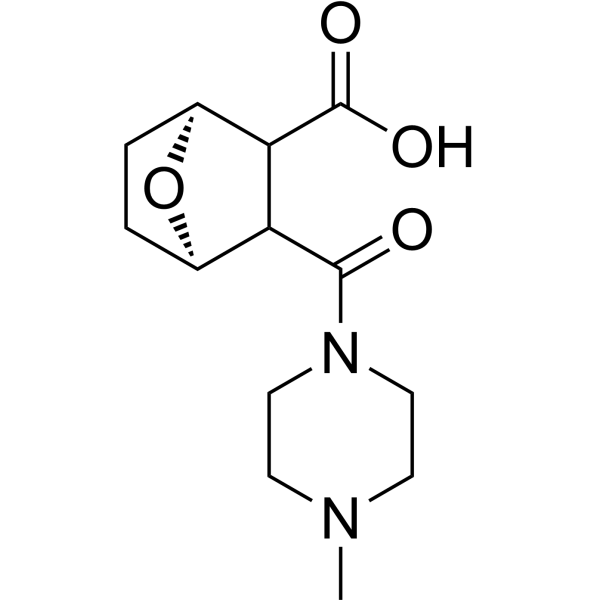
LB-100 is a protein phosphatase 2A (PP2A) inhibitor, with IC50 of 0.85 μM and 3.87 μM in BxPc-3 and Panc-1 cells [3].
|
-
-
- HY-100367
-
|
|
Quinone Reductase
NF-κB
|
Cancer
|
|
ES 936 is a potent and specific NQO1 inhibitor. ES 936 inhibits the growth of MIA PaCa-2 and BxPC-3 cells, with IC50 values of 108 nM and 365 nM, respectively. ES936 significantly inhitbits the growth rate of MIA PaCa-2 xenograft tumors in mice. ES 936 can be used for the study of pancreatic cancer [3].
|
-
-
- HY-164899
-
|
2-aminopyridine-3-carboxylic acid imidazolide
|
Transmembrane Glycoprotein
|
Cancer
|
|
2A3 (2-aminopyridine-3-carboxylic acid imidazolide) is a T cell activator that specifically binds to CEACAM6 and CEACAM5. 2A3 exhibits enzymatic activity that catalyzes the glucuronidation of specific substrates (e.g., 1-naphthol), and possesses significant cytotoxic activity. When integrated into CAR T cells or used alone, 2A3 acts by inducing cytokine release, degranulation, and direct cytotoxicity. 2A3 kills pancreatic and breast cancer cells with high target antigen expression in vitro, and significantly inhibits the growth of pancreatic cancer xenografts in vivo. 2A3 broadly targets malignant tumors with overexpressed CEACAM5, CEACAM6, or co-expressed both, and shows high expression mainly in tissues such as the liver and colon. 2A3 serves as an important research tool for the immunotherapy of pancreatic and breast cancer . 2A3 is a novel SHAPE reagent, which can be used for the analysis of RNA structure both in vitro and in vivo [3]. 2A3 is an electrophilic chemical probe that acylates the 2'-OH in the RNA backbone. 2A3 can be used for RNA SHAPE-MaP experiments and is capable of analyzing the RNA secondary structures at single nucleotide resolution.
|
-
-
- HY-148012
-
|
QN-302
|
G-quadruplex
|
Cancer
|
|
SOP1812 (QN-302) is a naphthalene diimide (ND) derivative with anti-tumor activity. SOP1812 binds to quadruplex arrangements (G4s), and down-regulates several cancer gene pathways. SOP1812 shows great affinity to hTERT G4 and HuTel21 G4 with KD values of 4.9 and 28.4 nM, respectively. SOP1812 can be used for the research of cancer .
|
-
-
- HY-402237
-
|
|
NAMPT
|
Neurological Disease
Cancer
|
|
Nampt-IN-15 (Example 3) is an Nampt inhibitor. Nampt-IN-15 shows cytotoxicity against BxPC-3, HepG2, L540cy and MOLM-13, with IC50s of 38.5 nM, 8 nM, 8.5 nM, 7 nM respectively .
|
-
-
- HY-N1410
-
|
|
STAT
NF-κB
|
Cancer
|
|
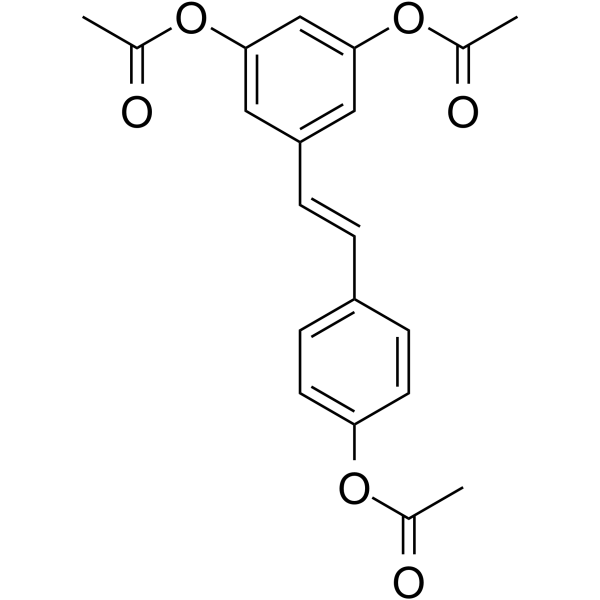
Triacetylresveratrol, an acetylated analog of Resveratrol. Triacetylresveratrol decreases the phosphorylation of STAT3 and NF-κB in a dose- and time- dependent manner in PANC-1 and BxPC-3 cells. Anticancer effects .
|
-
-
- HY-148712
-
|
|
Apoptosis
Sirtuin
|
Cancer
|
|
SIRT6 activator 12q is potent, selective and orally active SIRT6 activator with IC50 values of 171.20, >200, >200, >200, 0.58 μM for SIRT1, SIRT2, SIRT3, SIRT5, SIRT6, respectively. SIRT6 activator 12q inhibits cell growth and migration. SIRT6 activator 12q induces Apoptosis and cell cycle arrest at G2 phase. SIRT6 activator 12q shows anticancer activity .
|
-
-
- HY-174304
-
|
|
Drug-Linker Conjugates for ADC
|
Cancer
|
|
Bis (vinylsulfonyl) piperazine-triazole-PEG3-O-diisopropylsilyl-triptolide is a drug-linker conjugates for ADC. Bis (vinylsulfonyl) piperazine-triazole-PEG3-O-diisopropylsilyl-triptolide consists of Triptolide (HY-32735) and a stable cleavable linker (Bis (vinylsulfonyl) piperazine-triazole-PEG3-O-diisopropylsilyl-Cl) (HY-174810). Bis (vinylsulfonyl) piperazine-triazole-PEG3-O-diisopropylsilyl-triptolide can be used for the synthesis of antibody-drug conjugates (ADCs) .
|
-
-
- HY-168489
-
|
|
Drug-Linker Conjugates for ADC
|
Cancer
|
|
OBI-992 drug-linker is a drug-linker conjugate composed of a TOP I inhibitor Exatecan (HY-13631) and a linker. OBI-992 drug-linker exhibits antitumor property in mouse models and can be used for synthesis of ADC OBI-992 .
|
-
-
- HY-160496
-
|
|
STAT
|
Cancer
|
|
STAT3-IN-25 (Compound 2p) is a potent STAT3 inhibitor with a p-trifluoroethoxy benzyl substituent. STAT3-IN-25 shows STAT3 luciferase inhibition activity using HEK293T cells with an IC50 of 22.3 nM and ATP production inhibition activity using BxPC-3 cells with an IC50 of 32.5 nM. STAT3-IN-25 has the potential for pancreatic cancer research .
|
-
-
- HY-N0326R
-
|
|
Reference Standards
Endogenous Metabolite
Keap1-Nrf2
Apoptosis
|
Inflammation/Immunology
Cancer
|
|
L-Methionine (Standard) is the analytical standard of L-Methionine. This product is intended for research and analytical applications. L-Methionine is an L-isomer of orally active Methionine, an essential amino acid. Methionine is a strong liver antidote that acts as a liver protector. L-Methionine can inhibit cell proliferation and induce cell apoptosis. L-Methionine has antitumor and antioxidant activity [3].
|
-
-
- HY-149814
-
|
|
PDHK
HSP
|
Cancer
|
|
PDK-IN-1 (compound 7o) is a pyruvate dehydrogenase kinase (PDK) inhibitor. PDK-IN-1 shows IC50 values of 0.03 and 0.1 μM for PDK1 and HSP90, respectively. PDK-IN-1 targets PDH/PDK axis thus reducing efficiently the tumor mass .
|
-
-
- HY-14653
-
|
TAC-101; Am 555S
|
RAR/RXR
Apoptosis
|
Cancer
|
|
Amsilarotene (TAC-101; Am 555S), an orally active synthetic retinoid, has selective affinity for retinoic acid receptor α (RAR-α) binding with Ki of 2.4, 400 nM for RAR-α and RAR-β. Amsilarotene induces the apoptotic of human gastric cancer, hepatocellular carcinoma and ovarian carcinoma cells. Amsilarotene can be used for the research of cancer [3].
|
-
-
- HY-169369
-
|
XJZ-06-462
|
MDM-2/p53
Apoptosis
|
Cancer
|
|
TRAP-1 (XJZ-06-462) is a non-covalent regulated induced proximity targeting chimera (RIPTAC) with JQ-1 carboxylic acid (HY-78695) as its target protein ligand. TRAP-1 forms a ternary complex with p53 Y220C and BRD4, potently activates p53 transcription, and inhibits the growth and proliferation of tumor cells. TRAP-1 upregulates p21 and other p53 target genes in pancreatic cell lines carrying p53 Y220C, and induces cellular senescence and apoptosis. TRAP-1 can be used in cancer research involving p53 Y220C-carrying tumors .
|
-
-
- HY-152204
-
|
|
Cathepsin
|
Cancer
|
|
Cathepsin L/S-IN-1 is a dual inhibitor of Cathepsin L and Cathepsin S with IC50s of 4.10 μM and 1.79 μM, respectively. Cathepsin L/S-IN-1 shows a significant antimetastatic and invasive effects on pancreatic cancer BxPC-3 and PANC-1 cells .
|
-
-
- HY-146695
-
|
|
Drug Derivative
|
Cancer
|
|
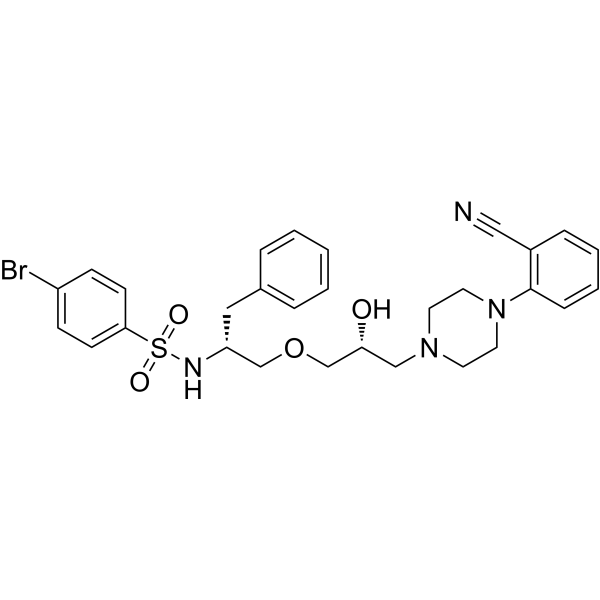
S100P-IN-1 (Compound 4) is a S100P inhibitor with an IC50 of 22.7 nM. S100P-IN-1 shows anti-metastatic effects on pancreatic cancer cells .
|
-
-
- HY-18641
-
|
|
LPL Receptor
|
Cancer
|
|
Ki16198 is a potent and orally active LPA receptor antagonist, the methyl ester of Ki16425 (HY-13285). Ki16198 inhibits LPA1 and LPA3-induced inositol phosphate production with?Ki?values of 0.34 μM and 0.93 μM, respectively. Ki16198 is effective for pancreatic cancer tumorigenesis and metastasis in vivo .
|
-
-
- HY-131203
-
|
|
PROTACs
Epigenetic Reader Domain
Apoptosis
c-Myc
Caspase
|
Cancer
|
|
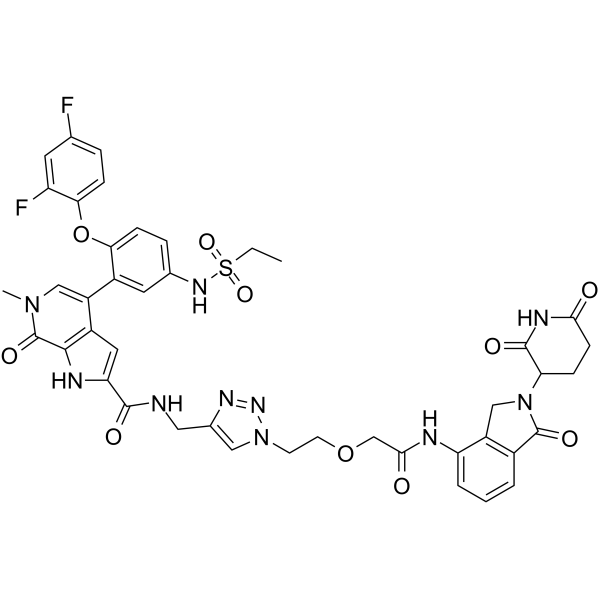
PROTAC BRD4 Degrader-6 (compound 32a) is a potent small-molecule BRD4PROTAC degrader with IC50 value of 2.7 nM for BRD4 BD1. PROTAC BRD4 Degrader-6 potently degrades BRD4 protein and inhibits the expression of c-Myc. PROTAC BRD4 Degrader-6 inhibits the proliferation of pancreatic cancer cell line BxPC3 and induces apoptosis. PROTAC BRD4 Degrader-6 can be used for human pancreatic cancer research (Pink:
Mivebresib (HY-100015); Black: linker, Azido-PEG1-CH2CO2H (HY-108369); Blue: Lenalidomide (HY-A0003)) .
|
-
-
- HY-178522
-
|
|
Cadherin
|
Cancer
|
|
BAS00093476 is an E-cadherin inhibitor. BAS00093476 exhibits inhibitory activity against E-cadherin-mediated cell-cell adhesion in human pancreatic tumor BxPC-3 cells. BAS00093476 can be applied to the research on the modulation of E-cadherin-mediated cell-cell adhesion in solid tumors expressing cadherins .
|
-
-
- HY-153067
-
|
|
Drug-Linker Conjugates for ADC
Topoisomerase
|
Cancer
|
|
Mal-cyclohexane-Gly-Gly-Phe-Gly-Exatecan (Compound 11) is a bioactive compound-linker conjugate for ADC. Mal-cyclohexane-Gly-Gly-Phe-Gly-Exatecan can conjugate with antibodies to form ADC (C-11) with anti-tumor activity. Exatecan is a DNA Topoisomerase I inhibitor. Mal-cyclohexane-Gly-Gly-Phe-Gly-Exatecan can be used in the research of squamous cell carcinoma, pancreatic adenocarcinoma and colorectal cancer .
|
-
-
- HY-157762
-
|
|
Glutathione Peroxidase
Ferroptosis
|
Cancer
|
|
GPX4-IN-9 (Compound A16) is a glutathione peroxidase 4 (GPX4) inhibitor that specifically targets GPX4 under both in vitro and in vivo conditions, inducing ferroptosis. GPX4-IN-9 exhibits cytotoxicity against pancreatic cancer cells and can be used in cancer research .
|
-
-
- HY-178910
-
|
|
Bcl-2 Family
Apoptosis
|
Cancer
|
|
Mcl-1-IN-20 (Compound 26d) is a Mcl-1 inhibitor with Kis of 0.59, 6.6 and 3.6 μM against Mcl-1, Bcl-xL and Bcl-2. Mcl-1-IN-20 exhibits significant anti-proliferative activity against pancreatic cancer cells and can induce apoptosis in BxPC-3 cells. Mcl-1-IN-20 can be used for the study of pancreatic cancer .
|
-
-
- HY-174243
-
|
|
Ras
|
Cancer
|
|
KRASG12D-IN-5 (Compound 241) is an orally active KRAS(G12D) inhibitor with an IC50 of 11 nM. KRASG12D-IN-5 has potent anticancer activity with no significant cytotoxicity against BxPC-3 (WT), KRAS mutation AsPC-1 (G12D) and MIAPaCa-2 cells (G12C) with CC50s of 10.37, 0.76 and 0.3 μM, respectively. KRASG12D-IN-5 can be used for cancer research, such as lung, pancreatic and colorectal cancer .
|
-
-
- HY-125135
-
|
β-Peltatin
|
Apoptosis
Bcl-2 Family
Caspase
PARP
|
Cancer
|
|
(-)-β-Peltatin is an aryltetrahydronaphthalene lignan. (-)-β-Peltatin exhibits antitumor activity and cytotoxicity against pancreatic cancer cells. (-)-β-Peltatin induces G2/M cell cycle arrest and apoptosis in pancreatic cancer cells. (-)-β-Peltatin inhibits the growth of subcutaneous xenografts of pancreatic cancer cells in nude mice. (-)-β-Peltatin can be used in pancreatic cancer-related research .
|
-
-
- HY-170776
-
|
|
PDGFR
VEGFR
FGFR
Apoptosis
|
Cancer
|
|
AXL/Angiokinase-IN-1 (compound 11b) is an AXL/triple angiokinase inhibitor, IC50=3.75 nM (AXL expression). AXL/Angiokinase-IN-1 inhibits epithelial-mesenchymal transition (EMT) in Bxpc-3, blocking lung cancer cell metastasis. AXL/Angiokinase-IN-1 also inhibits vascular and fibroblast functions, promoting apoptosis (apoptosis) in cancer cells and fibroblasts. AXL/Angiokinase-IN-1 features low toxicity and good metabolic stability .
|
-
-
- HY-176284
-
|
|
Oxidative Phosphorylation
Mitochondrial Metabolism
Apoptosis
Reactive Oxygen Species (ROS)
AMPK
Keap1-Nrf2
|
Cancer
|
|
OXPHOS-IN-2 is an orally active OXPHOS inhibitor. OXPHOS-IN-2 exhibits potent inhibitory activity in PC9 (IC50 = 12.3 nM) and Bxpc-3 cells (IC50 = 250 nM in glucose medium, IC50 = 17.5 nM in galactose medium). OXPHOS-IN-2 decreases the NADH/NAD + ratio and reduces ATP levels. OXPHOS-IN-2 induces tumor cells apoptosis by activating reactive oxygen species (ROS) and downregulating the level of Nrf2. OXPHOS-IN-2 can be used for research on cancer such as non-small cell lung cancer and pancreatic cancer .
|
-
-
- HY-164445
-
|
|
STAT
|
Cancer
|
|
STAT3-IN-32 (compound 2p) is an orally active, potent STAT3 dual phosphorylation inhibitor with an indole-containing tetra-aromatic heterocycle scaffold. STAT3-IN-32 exhibits STAT3 luciferase inhibition activity using HEK293T cells with an IC50 of 5.3 nM and ATP production inhibition activity using BxPC-3 cells with an IC50 of 4.2 nM. STAT3-IN-32 significantly blocks p-Tyr705 and p-Ser727 and causes the abrogation of the corresponding nuclear transcription and mitochondrial oxidative phosphorylation functions of STAT3 by targeting the STAT3 SH2 domain (KD=21.3 nM). STAT3-IN-32 exhibits significant suppressive effects in a pancreatic cancer xenograft model .
|
-
-
- HY-N1410R
-
|
|
Reference Standards
STAT
NF-κB
|
Cancer
|
|
Triacetylresveratrol, an acetylated analog of Resveratrol. Triacetylresveratrol decreases the phosphorylation of STAT3 and NF-κB in a dose- and time- dependent manner in PANC-1 and BxPC-3 cells. Anticancer effects .
|
-
-
- HY-161614
-
|
|
Microtubule/Tubulin
|
Cancer
|
|
Tubulin inhibitor 44 (Compound 26r) is an inhibitor for tubullin. Tubulin inhibitor 44 exhibits cytotoxicity in cancer cells NCI-H460, BxPC-3 and HT-29, with IC50s of 0.96, 0.66 and 0.61 nM, respectively .
|
-
-
- HY-156328
-
|
|
Apoptosis
|
Cancer
|
|
NSC 48160 inhibits the growth of the pancreatic cancer cells with IC50s of 84.3 μM for CPFAC-1 and 94.5 μM for BxPC-3. NSC 48160 also induces pancreatic cancer cell apoptosis. NSC 48160 can improve metabolic syndromes, such as NASH, obesity and lipid metabolism disorders .
|
-
-
- HY-147725
-
|
|
Microtubule/Tubulin
|
Cancer
|
|
Microtubule inhibitor 4 (compound 2) is a potent microtubule inhibitor. Microtubule inhibitor 4 shows cytotoxicity with IC50s of 4.0, 3.2, 2.1 nM for NCI-H460, BxPC-3, HT-29 cells, respectively. Microtubule inhibitor 4 shows the inhibition of tubulin polymerization .
|
-
-
- HY-147727
-
|
|
Microtubule/Tubulin
|
Cancer
|
|
Microtubule inhibitor 6 (compound 17o) is a potent microtubule inhibitor. Microtubule inhibitor 6 shows cytotoxicity with IC50s of 14.0, 6.6, 7.0 nM for NCI-H460, BxPC-3, HT-29 cells, respectively. Microtubule inhibitor 6 efficiently inhibits microtubule polymerization .
|
-
-
- HY-173074
-
|
|
Microtubule/Tubulin
MDM-2/p53
Apoptosis
|
Cancer
|
|
Microtubulin-IN-1 (Compound 8g) is the inhibitor for microtubulin that targets colchicine-binding site, disrupts the microtubulin integrity, and induces the upregulation of p53. Microtubulin-IN-1 exhibits antiproliferative activity in a variety of cancer cell lines (IC50 for NCI-H460, BxPC-3 and HT-29 is 2.4, 1.6 and 2.07 nM, respectively), arrests the cell cycle at G2/M phase, and induces apoptosis in NCI-H460 .
|
-
-
- HY-163715
-
|
|
FAK
|
Cancer
|
|
Antitumor agent-165 (Compound 10l) is a potent focal adhesion kinase (FAK) inhibitor. Antitumor agent-165 exhibits effective antiproliferative activity against CAPAN-1, PANC-1, PATU-T, SUIT-2, BxPC-3, PDAC-3 and PANC-1 GR with IC50s in the range of 1.04-3.44 μM .
|
-
-
- HY-154313
-
|
Clospirazine
|
Ras
|
Cancer
|
|
Spiclomazine (Clospirazine) is a potent mutant KRAS(G12C) inhibitor that selectively inhibits mutant KRAS-driven pancreatic cancer. Spiclomazine can eliminate KRas-GTP levels in KRAS-driven pancreatic cancer and effectively inhibit RAS-mediated signaling. Spiclomazine significantly inhibits tumor progression in mouse renal capsule xenotransplantation models .
|
-
-
- HY-147838
-
|
|
NAMPT
|
Cancer
|
|
Nampt-IN-9 (Compound 8) is a potent NAMPT inhibitor with anticancer activities. Nampt-IN-9 can be used for pancreatic ductal adenocarcinoma research .
|
-
-
- HY-144311
-
-
-
- HY-158726
-
|
|
Fluorescent Dye
Apoptosis
|
Cancer
|
|
Complex 3 is a fluorescent dithiocarbazate-copper complex with anticancer activity, which localizes to mitochondria. Complex 3 displays excitation/emission maxima of 455-495/535 nm, respectively. Complex 3 inhibits the growth of BxPC-3, AsPC-1, PANC-1, and WI38 pancreatic cancer cells with IC50 values of 0.74, 0.41, 0.62, and 2.06 µM, respectively. Complex 3 induces lipid peroxidation and mitochondrial rupture and shrinkage in AsPC-1 cells. Complex 3 also induces mitochondrial apoptosis and cytokine-cytokine receptor interaction dysfunction in AsPC-1 cells. Complex 3 reduces tumor volume in an AsPC-1 mouse xenograft model .
|
-
-
- HY-120561
-
|
|
Trk Receptor
IRAK
Pim
Apoptosis
|
Cancer
|
|
PC-046 is a multi-target inhibitor for tyrosine receptor kinase B (TrkB), IRAK-4 and Pim-1, with IC50 of 13.4 μM, 15.4 μM and 19.1 μM, respectively. PC-046 exhibits cytotoxicity against pancreatic cancer cell BxPC3 with IC50 of 7.5-130 nM. PC-046 induces apoptosis and arrests cell cycle at G2/M phase in BxPC3. PC-046 exhibits antitumor efficacy and exhibits good pharmacokinetic characteristics in mice .
|
-
-
- HY-161353
-
|
|
P-glycoprotein
c-Met/HGFR
|
Cancer
|
|
c-Met-IN-23 (Compound 12g) is a c-Met inhibitor (IC50 = 0.052 μM for c-Met). c-Met-IN-23 also inhibits MDR1 and MRP1/2 pumps in the cancerous HepG2 and BxPC3 cells. c-Met-IN-23 is an anticancer agent .
|
-
-
- HY-123597
-
|
DDUG; NCI C04808
|
Autophagy
Checkpoint Kinase (Chk)
|
Cancer
|
|
NSC 109555 is an ATP-competitive inhibitor of checkpoint kinase 2 (Chk2; IC50=200 nM in a cell-free kinase assay). It is selective for Chk2 over Chk1 and 16 kinases in a panel but does inhibit Brk, c-Met, IGFR, and LCK with IC50 values of 210, 6,000, 7,400, and 7,100 nM, respectively. NSC 109555 inhibits Chk2 autophosphorylation and phosphorylation of the Chk2 substrate histone H1 in vitro (IC50=240 nM). It inhibits the growth of, and induces autophagy in, L1210 leukemia cells in vitro.2 NSC 109555 (1,250 nM) potentiates gemcitabine-induced cytotoxicity in MIA PaCa-2, CFPAC-1, PANC-1, and BxPC-3 pancreatic cancer cells, as well as reduces gemcitabine-induced increases in Chk2 phosphorylation and enhances gemcitabine-induced production of reactive oxygen species (ROS) in MIA PaCa-2 cells.
|
-
-
- HY-172150
-
|
|
Biochemical Assay Reagents
|
Cancer
|
|
XH02 is a compound based on L6 modification. XH02 ( 177Lu labeled) displays exceptional tumor growth inhibition in BxPC-3 tumors .
|
-
-
- HY-139090
-
|
28-O-Acetyl-3-Oxobetulin; 3-oxo-28-O-Acetylbetulin
|
Bacterial
HIV
Drug Derivative
|
Cancer
|
|
3-Oxobetulin acetate (28-O-Acetyl-3-Oxobetulin; 3-oxo-28-O-Acetylbetulin) is a derivative of betulin (HY-N0083), a cholesterol biosynthesis inhibitor. 3-Oxobetulin acetate inhibits the growth of P388 murine lymphocytic leukemia cells (EC50=0.12 μg/mL) and human MCF-7 breast cancer, SF-268 CNS cancer, H460 lung cancer, and KM20L2 colon cancer cells (GI50s=8, 10.6, 5.2, and 12.7 μg/mL), but not BxPC-3 pancreatic cancer cells or DU145 prostate cancer cells (GI50s=>10 μg/mL for both). 3-Oxobetulin acetate inhibits the replication of X4-tropic recombinant HIV (NL4.3-Ren) in MT-2 lymphoblastoid cells (IC50=13.4 μM). 3-Oxobetulin acetate is also effective against Listeria donovani amastigotes.
|
-
-
- HY-163401
-
-
-
- HY-149927
-
|
|
Drug Derivative
|
Cancer
|
|
Antitumor agent-91 is a cyclic phosphate ester derivative with anticancer and anti-proliferative activities. Antitumor agent-91 has potential application in human castration resistant prostate cancer and pancreatic cancer .
|
-
-
- HY-173477
-
|
|
Apoptosis
|
Cancer
|
|
JR5-26B is an orally active apoptosis inducer. JR5-26B induces cell death through copper-mediated apoptosis and necroptosis. JR5-26B exhibits antiproliferative activity on MIA PaCa-2, PANC-1, PAN02, SU.86.86, and KPC-2 cells with IC50s of 0.6, 4.4, 8.0, 1.1, and 3.4μM, respectively .
|
-
-
- HY-14389
-
|
|
Microtubule/Tubulin
|
Cancer
|
|
LP-261 is a potent and orally active anti-mitotic agent and shows an inhibition of in vitro tubulin polymerization with an EC50 of 3.2 μM . LP-261 inhibits growth of a human non-small-cell lung tumor (NCI-H522) in vivo and can be used for cancer research .
|
-
-
- HY-173145
-
|
|
Aminopeptidase
|
Cancer
|
|
CD13-IN-1 (Compound 5f) is a CD13 inhibitor with an IC50 of 1.71 μM. CD13-IN-1 can inhibit the proliferation of multiple tumor cells and has anti-tumor activity .
|
-
-
- HY-119408
-
|
|
MDM-2/p53
Bcl-2 Family
|
Cancer
|
|
MB725 is an ethylamide analogue of MB710 (HY-120373). MB725 increases mRNA levels of a range of p53 target genes, notably PUMA, p21, MDM2, NOXA and BAX. MB725 shows selective anticancer activity against p53-Y220C cancer .
|
-
- HY-183123
-
|
|
FAK
EGFR
|
Cancer
|
|
EGFR T790M/FAK-IN-1 is a dual inhibitor of EGFR T790M and FAK, with an IC50 of 99.1 nM against EGFR T790M and an IC50 of 117.7 nM against FAK. EGFR T790M/FAK-IN-1 can be used for research on pancreatic cancer, drug-resistant breast cancer, and drug-resistant lung cancer .
|
-
- HY-186148
-
|
|
Hippo (MST)
YAP
Apoptosis
|
Cancer
|
|
YL-602 is an orally active Hippo pathway activator. YL-602 activates the Hippo pathway via MST1/2, with downstream pathway activation. YL-602 inhibits YAP and CTGF expression in cells irrespective of cell density and serum presence. YL-602 induces tumor cell apoptosis and inhibits colony formation. YL-602 suppresses tumor growth in mice. YL-602 can be used for the research of cancer, such as breast cancer .
|
-
- HY-12440
-
|
|
IAP
Apoptosis
|
Cancer
|
|
HM90822 is an orally active IAP antagonist. HM90822 induces ubiquitination and proteasome-dependent degradation of XIAP, cIAP1 and cIAP2 in sensitive pancreatic cancer cells. HM90822 induces Apoptotic cell death. HM90822 inhibits tumor growth in Panc-1 pancreatic cancer xenograft and orthotopic mouse models. HM90822 can be used for the research of pancreatic cancer .
|
-
- HY-P992488
-
|
ZV0501 Antibody
|
Transmembrane Glycoprotein
ADC Antibody
|
Cancer
|
|
ZV05 (ZV0501 Antibody) is an anti-5T4 monoclonal antibody with an EC50 of 4.3 ng/mL against h5T4. ZV05 does not induce apoptosis or interfere with cell cycle progression. ZV05 accumulates specifically in 5T4-positive tumor xenografts. ZV05 can serve as the antibody component of antibody-active molecule conjugates (ADCs) to bind the 5T4 glycoprotein, thereby enabling targeted delivery of toxins. ZV05 is used in studies of 5T4-positive cancers, including triple-negative breast cancer .
|
-
- HY-P991922
-
|
|
Fc Receptor (FcR)
Complement System
Radionuclide-Drug Conjugates (RDCs)
|
Cancer
|
|
AKIR001 is a high-affinity human IgG1 antibody targeting CD44v6. AKIR001 carries LALA-silencing mutations in its FcγR-binding domain to reduce FcγR and C1q interactions, minimizing tissue interactions and limiting CDC and ADCC risks. [ 177Lu] radiolabeled AKIR001, namely [ 177Lu]Lu-AKIR001, has anticancer activity against epidermoid carcinoma .
|
-
- HY-184027
-
|
|
Indoleamine 2,3-Dioxygenase (IDO)
TNF Receptor
Interleukin Related
|
Inflammation/Immunology
|
|
IDO1/TDO-IN-12 is an IDO1/TDO2 inhibitor with IC50 values of 0.825 and 4.04 μM, respectively. IDO1/TDO-IN-12 interacts with the ferrous heme cofactor in IDO1 as a non-competitive tryptophan inhibitor. IDO1/TDO-IN-12 inhibits nitric oxide production in LPS (HY-D1056)-stimulated immune cells. IDO1/TDO-IN-12 relieves pulmonary edema and lung injury in LPS-induced mouse models. IDO1/TDO-IN-12 can be used for the research of acute lung injury (ALI) .
|
-
- HY-183120
-
|
|
FAK
EGFR
Apoptosis
|
Cancer
|
|
EGFR T790M/FAK-IN-2 is an orally active dual FAK and EGFR T790M kinase inhibitor, with an IC50 of 1.03 nM against FAK and an IC50 of 3.89 nM against EGFR T790M. EGFR T790M/FAK-IN-2 exerts antiproliferative effects in drug-resistant cancer cells overexpressing FAK, inducing apoptosis and cell cycle arrest. EGFR T790M/FAK-IN-2 exhibits antitumor activity in a pancreatic cancer xenograft mouse model. EGFR T790M/FAK-IN-2 can be used for the research of pancreatic cancer, breast cancer and non-small cell lung cancer .
|
-
- HY-181561
-
|
|
RAD51
|
Cancer
|
|
BRCA2-RAD51-IN-3 is a RAD51-BRCA2 protein-protein interaction inhibitor with an EC50 of 29.35 μM and a Kd of 75.14 μM. BRCA2-RAD51-IN-3 blocks RAD51-BRCA2 binding, impairs homologous recombination in cancer cells, and induces synthetic lethality. BRCA2-RAD51-IN-3 acts in human pancreatic cancer cells and shows no activity in normal pancreatic cells. BRCA2-RAD51-IN-3 can be used for the research of pancreatic cancer .
|
-
- HY-120825
-
|
|
Apoptosis
DNA/RNA Synthesis
Reactive Oxygen Species (ROS)
Keap1-Nrf2
|
Cancer
|
|
QD 232 is a quinazolinedione-based ROS inducer and an apoptosis inducer with cytotoxicity and redox regulatory activity. QD 232 promotes ROS accumulation, activates the NRF2-mediated oxidative stress response and unfolded protein response pathways, and upregulates downstream antioxidant and stress response genes. QD 232 inhibits mtDNA transcription driven by HSP2 and LSP promoters, and impairs mitochondrial oxidative phosphorylation function. QD 232 induces apoptosis of pancreatic ductal adenocarcinoma cells and exerts cytotoxicity against gemcitabine (HY-17026)-resistant pancreatic ductal adenocarcinoma cells. QD 232 delays tumor growth in a mouse pancreatic cancer xenograft model .
|
-
- HY-112385
-
|
|
SphK
PERK
|
Cancer
|
|
ABC294735 is an orally active SK1/SK2 inhibitor. Combination of ABC294735 with Sorafenib (HY-10201) reduces pERK. ABC294735 exhibits anticancer activity against pancreatic adenocarcinoma and renal cell carcinoma. ABC294735 can be used in research related to pancreatic adenocarcinoma and renal cell carcinoma .
|
-
| Cat. No. |
Product Name |
Type |
-
- HY-158726
-
|
|
Fluorescent Dye
|
|
Complex 3 is a fluorescent dithiocarbazate-copper complex with anticancer activity, which localizes to mitochondria. Complex 3 displays excitation/emission maxima of 455-495/535 nm, respectively. Complex 3 inhibits the growth of BxPC-3, AsPC-1, PANC-1, and WI38 pancreatic cancer cells with IC50 values of 0.74, 0.41, 0.62, and 2.06 µM, respectively. Complex 3 induces lipid peroxidation and mitochondrial rupture and shrinkage in AsPC-1 cells. Complex 3 also induces mitochondrial apoptosis and cytokine-cytokine receptor interaction dysfunction in AsPC-1 cells. Complex 3 reduces tumor volume in an AsPC-1 mouse xenograft model .
|
| Cat. No. |
Product Name |
Target |
Research Area |
Image |
-
- HY-P992488
-
|
ZV0501 Antibody
|
Transmembrane Glycoprotein
ADC Antibody
|
Cancer
|
|
ZV05 (ZV0501 Antibody) is an anti-5T4 monoclonal antibody with an EC50 of 4.3 ng/mL against h5T4. ZV05 does not induce apoptosis or interfere with cell cycle progression. ZV05 accumulates specifically in 5T4-positive tumor xenografts. ZV05 can serve as the antibody component of antibody-active molecule conjugates (ADCs) to bind the 5T4 glycoprotein, thereby enabling targeted delivery of toxins. ZV05 is used in studies of 5T4-positive cancers, including triple-negative breast cancer .
|
-
(5)
-
- HY-P991922
-
|
|
Fc Receptor (FcR)
Complement System
Radionuclide-Drug Conjugates (RDCs)
|
Cancer
|
|
AKIR001 is a high-affinity human IgG1 antibody targeting CD44v6. AKIR001 carries LALA-silencing mutations in its FcγR-binding domain to reduce FcγR and C1q interactions, minimizing tissue interactions and limiting CDC and ADCC risks. [ 177Lu] radiolabeled AKIR001, namely [ 177Lu]Lu-AKIR001, has anticancer activity against epidermoid carcinoma .
|
-
(5)
| Cat. No. |
Product Name |
Category |
Target |
Chemical Structure |
Your information is safe with us. * Required Fields.
Inquiry Information
- Product Name:
- Cat. No.:
- Quantity:
- MCE Japan Authorized Agent:

