1. Search Result
Search Result
Results for "

CA3

" in MedChemExpress (MCE) Product Catalog:

17

Inhibitors & Agonists

3

Peptides

1

Recombinant Proteins

1

Isotope-Labeled Compounds

1

Oligonucleotides

Cat. No. Product Name Target Research Areas Chemical Structure
  • HY-B1154
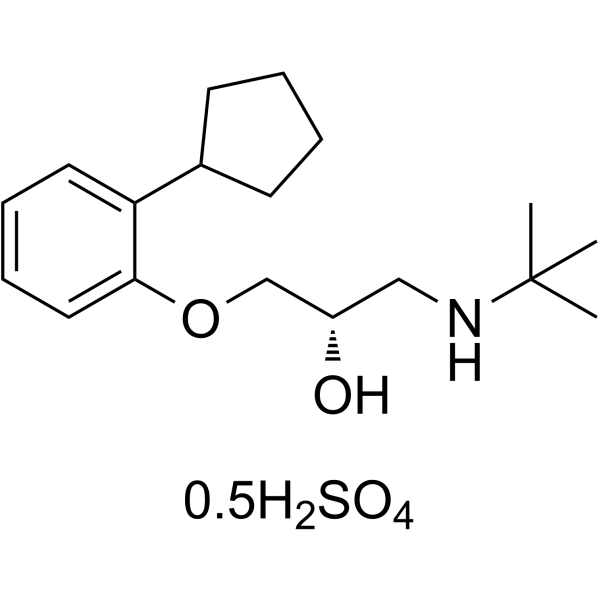
    Penbutolol sulfate
    1 Publications Verification

    (-)-Terbuclomine

    Adrenergic Receptor 5-HT Receptor Neurological Disease
    Penbutolol sulfate ((-)-Terbuclomine) is a potent β-adrenoceptor and 5-HT receptor antagonist with Ki of 11.6 nM and 11.9 nM for 5-HT in rat cornu ammonis 1 (CA1) and human CA3 .
    Penbutolol sulfate
  • HY-100606

    (-)-Pindolol; (S)-(-)-Pindolol; S-Pindolol

    5-HT Receptor Adrenergic Receptor Neurological Disease
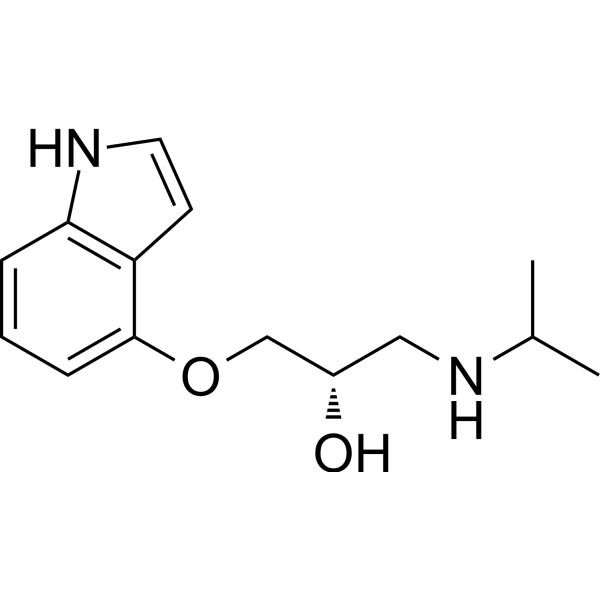
    l-Pindolol ((-)-pindolol) is a reversible, competitive and orally active 5-HT1A/1B antagonist. l-Pindolol is a partial β-adrenoceptor agonist. l-Pindolol can be used for the research of neurological disease [3].
    l-Pindolol
  • HY-110023

    Serotonin Transporter Neurological Disease
    Zimelidine dihydrochloride is an orally active selective serotonin reuptake inhibitor. Zimelidine dihydrochloride competitively inhibits central 5-HT uptake and desensitizes 5-HT autoreceptors in dorsal raphe nucleus. Zimelidine dihydrochloride time-dependently modulates 5-HT neuronal firing and hippocampal CA3 responses. Zimelidine dihydrochloride strengthens central serotonergic neurotransmission and produces related behavioral changes. Zimelidine dihydrochloride exerts anxiolytic, analgesic, feeding-suppressive and tolerance-attenuating effects. Zimelidine dihydrochloride is used for the study of depressive disorders and analgesic tolerance [3] .
    Zimelidine dihydrochloride
  • HY-176550

    Sodium Channel Neurological Disease
    ASIC1a antagonist-1 (Compound 5b) is an orthosteric noncompetitive Acid sensing ion channels 1a (ASIC1a) antagonist with an IC50 of 27 nM (pH 6.7). ASIC1a antagonist-1 shifts pH dependence of ASIC1a activation and inhibits its maximal evoked response. ASIC1a antagonist-1 completely inhibits long-term potentiation (LTP) induction in CA3-CA1 pathway. ASIC1a antagonist-1 can be used for brain diseases and pathologies research .
    ASIC1a antagonist-1
  • HY-116790
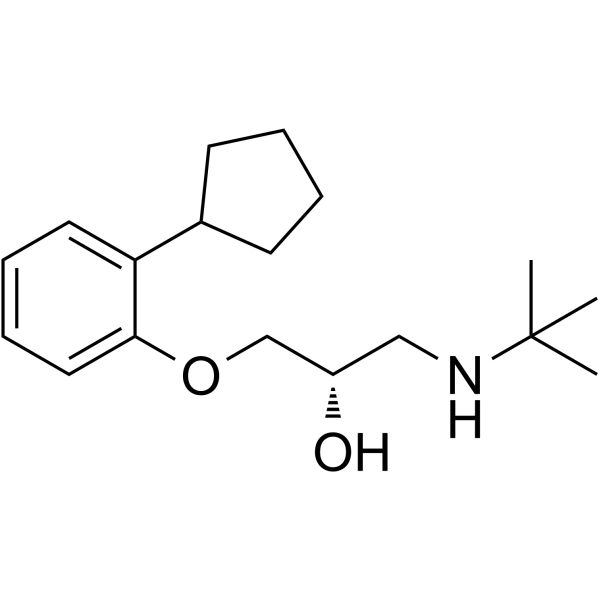
    (-)-Penbutolol
    1 Publications Verification

    (S)-Penbutolol; (-)-Isopenbutolol

    Adrenergic Receptor 5-HT Receptor Neurological Disease
    (-)-Penbutolol ((S)-Penbutolol) is a potent β-adrenoceptor and 5-HT receptor antagonist with Ki values of 11.6 nM and 11.9 nM for 5-HT in rat cornu ammonis 1 (CA1) and human CA3 .
    (-)-Penbutolol
  • HY-P3089A

    Potassium Channel Others
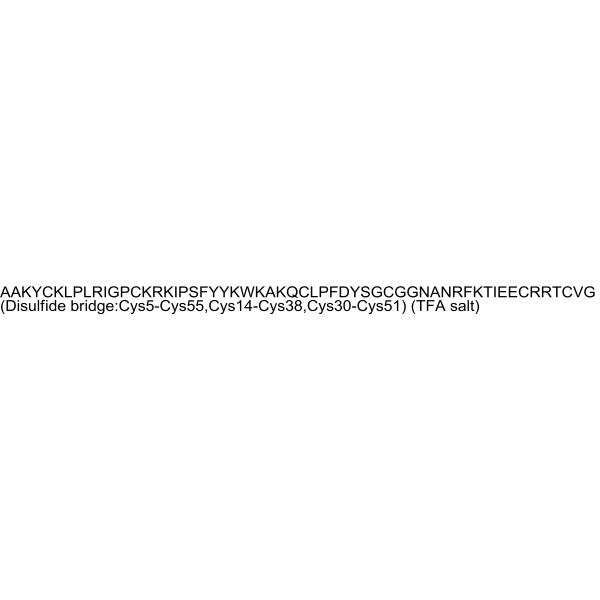
    Dendrotoxin K TFA is a Kv1.1 channel blocker. Dendrotoxin K TFA determines glutamate release in CA3 neurons in a time-dependent manner through the control of the presynaptic spike waveform .
    Dendrotoxin K TFA
  • HY-RS01769

    Small Interfering RNA (siRNA) Others

    CA3 Human Pre-designed siRNA Set A contains three designed siRNAs for CA3 gene (Human), as well as a negative control, a positive control, and a FAM-labeled negative control.

    CA3 Human Pre-designed siRNA Set A
    CA3 Human Pre-designed siRNA Set A
  • HY-118835

    Serotonin Transporter Neurological Disease
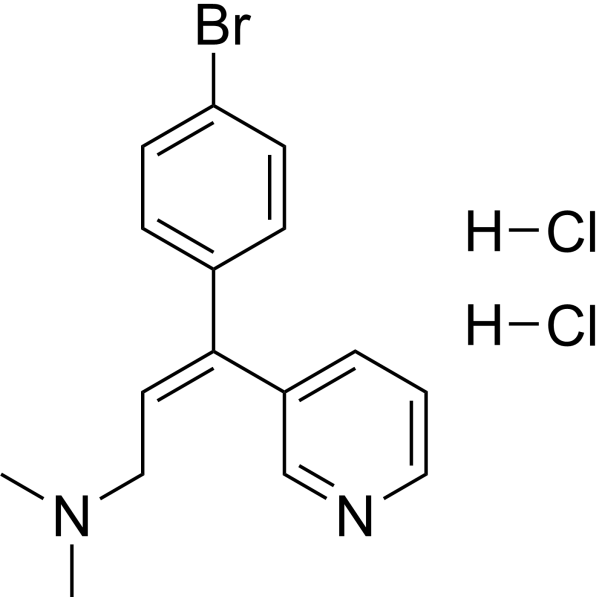
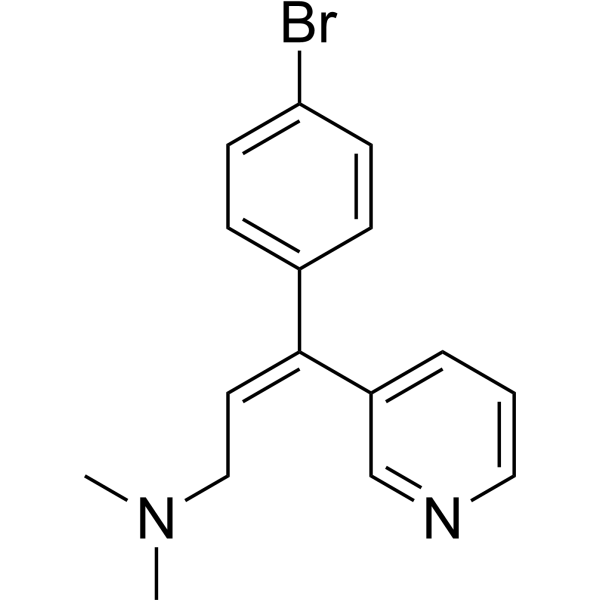
    Zimelidine is an orally active selective serotonin reuptake inhibitor. Zimelidine competitively inhibits central 5-HT uptake and desensitizes 5-HT autoreceptors in dorsal raphe nucleus. Zimelidine time-dependently modulates 5-HT neuronal firing and hippocampal CA3 responses. Zimelidine strengthens central serotonergic neurotransmission and produces related behavioral changes. Zimelidine exerts anxiolytic, analgesic, feeding-suppressive and tolerance-attenuating effects. Zimelidine is used for the study of depressive disorders and analgesic tolerance [3] .
    Zimelidine
  • HY-P3089

    Potassium Channel Others
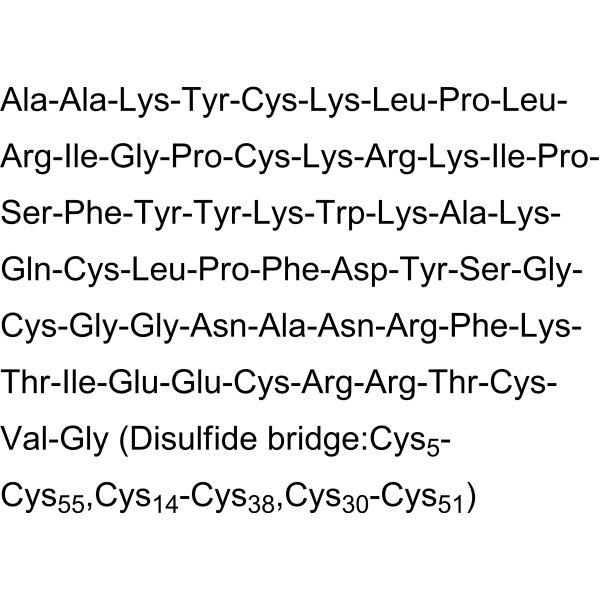
    Dendrotoxin K is a Kv1.1 channel blocker. Dendrotoxin K determines glutamate release in CA3 neurons in a time-dependent manner through the control of the presynaptic spike waveform .
    Dendrotoxin K
  • HY-P3679

    Neuropeptide Y Receptor Neurological Disease
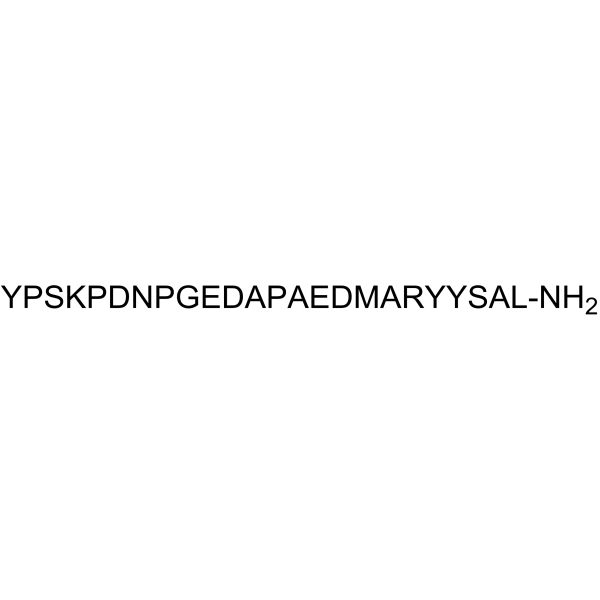
    Neuropeptide Y (1-24) (human) is a neuropeptide with potencies in inhibiting the electricity stimulated twitch response of rat vas deferens. Neuropeptide Y (1-24) (human) stimulates N-methyl-D-aspartate (NMDA)-induced neuronal activation in the rat CA3 region of the dorsal hippocampus in vivo .
    Neuropeptide Y (1-24) (human)
  • HY-B1154R

    (-)-Terbuclomine (Standard)

    Reference Standards Adrenergic Receptor 5-HT Receptor Neurological Disease
    Penbutolol (sulfate) (Standard) is the analytical standard of Penbutolol (sulfate). This product is intended for research and analytical applications. Penbutolol sulfate ((-)-Terbuclomine) is a potent β-adrenoceptor and 5-HT receptor antagonist with Ki of 11.6 nM and 11.9 nM for 5-HT in rat cornu ammonis 1 (CA1) and human CA3 .
    Penbutolol sulfate (Standard)
  • HY-121299

    mCPBG

    5-HT Receptor Neurological Disease
    m-Chlorophenylbiguanide (mCPBG) is a potent high-affinity agonist of the 5-HT3 receptor, exhibiting an inhibitory effect on long-term potentiation (LTP) in the mossy fiber-CA3 system. mCPBG attenuates the magnitude of LTP at concentrations of 0.3-1 microM, demonstrating its role in modulating synaptic plasticity. Additionally, the impact of mCPBG on LTP is reversible by the GABAA receptor antagonist bicuculline, indicating a connection between its action and GABAergic neurotransmission.
    m-Chlorophenylbiguanide
  • HY-110023R

    Reference Standards Serotonin Transporter Neurological Disease
    Zimelidine dihydrochloride (Standard) is the analytical standard of Zimelidine dihydrochloride (HY-110023). This product is intended for research and analytical applications. Zimelidine dihydrochloride is an orally active selective serotonin reuptake inhibitor. Zimelidine dihydrochloride competitively inhibits central 5-HT uptake and desensitizes 5-HT autoreceptors in dorsal raphe nucleus. Zimelidine dihydrochloride time-dependently modulates 5-HT neuronal firing and hippocampal CA3 responses. Zimelidine dihydrochloride strengthens central serotonergic neurotransmission and produces related behavioral changes. Zimelidine dihydrochloride exerts anxiolytic, analgesic, feeding-suppressive and tolerance-attenuating effects. Zimelidine dihydrochloride is used for the study of depressive disorders and analgesic tolerance [3] .
    Zimelidine dihydrochloride (Standard)
  • HY-118835S

    Isotope-Labeled Compounds Serotonin Transporter Neurological Disease
    Zimeldine-d6 is the deuterium labeled Zimeldine (HY-118835) . Zimelidine is an orally active selective serotonin reuptake inhibitor. Zimelidine competitively inhibits central 5-HT uptake and desensitizes 5-HT autoreceptors in dorsal raphe nucleus. Zimelidine time-dependently modulates 5-HT neuronal firing and hippocampal CA3 responses. Zimelidine strengthens central serotonergic neurotransmission and produces related behavioral changes. Zimelidine exerts anxiolytic, analgesic, feeding-suppressive and tolerance-attenuating effects. Zimelidine is used for the study of depressive disorders and analgesic tolerance [3] .
    Zimeldine-d6
  • HY-165492

    Reactive Oxygen Species (ROS) NF-κB Apoptosis Neurological Disease Inflammation/Immunology
    OPC-14117 is an orally active superoxide radical scavenger that can cross the blood-brain barrier. OPC-14117 inhibits the oxidative stress cascade reaction, significantly reducing the increase in tissue osmotic pressure and alleviating brain edema in the brain contusion model. OPC-14117 blocks the NF-κB-dependent apoptotic pathway in the striatum neuron apoptosis model induced by Quinolinic acid (HY-100807). OPC-14117 can reduce the necrotic volume, protect hippocampal CA3 neurons and restore cognitive function. OPC-14117 can be used to study secondary brain injury and improve neurological prognosis .
    Opc 14117
  • HY-W714853

    Akt Src STAT EGFR Drug Isomer Neurological Disease Inflammation/Immunology
    (+)-Theta-cypermethrin is a stereoisomer of Cypermethrin (HY-B0829) that possesses blood-brain barrier penetration ability and binds to AKT1, SRC, STAT3 and EGFR with high affinity. (+)-Theta-cypermethrin reduces the amplitude of delayed rectifier potassium channel currents, shifts the steady-state activation curve to negative potentials, and shifts the steady-state inactivation curve to negative potentials at higher concentrations. (+)-Theta-cypermethrin induces abnormal electrical activity in rat hippocampal neurons. (+)-Theta-cypermethrin causes chronic respiratory system damage and exhibits neurotoxicity .
    (+)-Theta-cypermethrin
  • HY-Y0282

    NSC 77384; Sanibrom 40

    Environmental Pollutants Neurological Disease
    Sodium bromide (NSC 77384; Sanibrom 40) is a GABA-ergic system modulator that crosses the blood-brain barrier, and it effectively reduces and blocks epileptiform discharges. Sodium bromide exerts significant anticonvulsant effects by enhancing GABA-ergic inhibitory functions, such as increasing the amplitude of inhibitory postsynaptic currents and paired-pulse inhibition. Sodium bromide specifically enhances stimulation-induced extracellular alkalosis without affecting baseline pH or subsequent acidosis processes. Sodium bromide exhibits species-specific pharmacokinetic characteristics, competes with chloride ions for renal tubular reabsorption sites, and serves as a marker for extracellular fluid volume. Sodium bromide can be used in the research of epilepsy and related neurological diseases .
    Sodium bromide

Inquiry Online

Your information is safe with us. * Required Fields.

Salutation


Country or Region *

Applicant Name *


Organization Name *

Department *


Email Address *


Product Name *

Cat. No.


Requested quantity *

Phone Number *


Remarks

Inquiry Online

Inquiry Information

Product Name:
Cat. No.:
Quantity:
MCE Japan Authorized Agent:

