1. Search Result
Search Result
Isoforms Recommended: CBR1
Results for "

CBR1

" in MedChemExpress (MCE) Product Catalog:

23

Inhibitors & Agonists

8

Natural
Products

1

Recombinant Proteins

3

Antibodies

3

Oligonucleotides

Cat. No. Product Name Target Research Areas Chemical Structure
  • HY-N0148
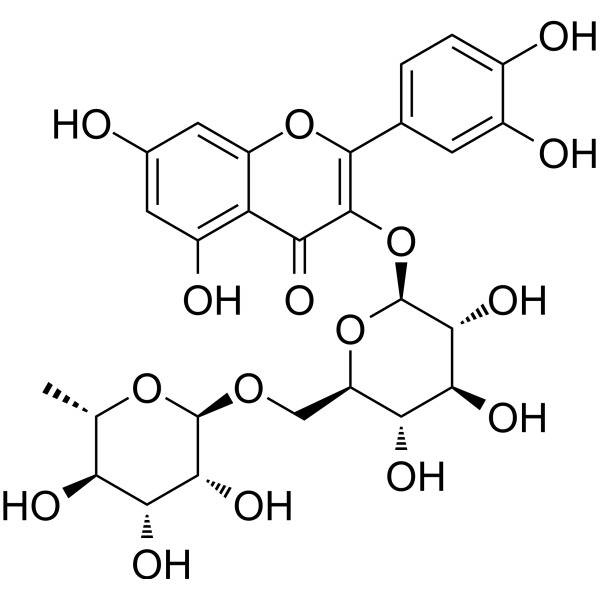
    Rutin
    Maximum Cited Publications
    30 Publications Verification

    Rutoside; Quercetin 3-O-rutinoside

    Amyloid-β Autophagy Apoptosis Endogenous Metabolite Inflammation/Immunology Cancer
    Rutin (Rutoside) is a flavonoid found in many plants and shows a wide range of biological activities including anti-inflammatory, antidiabetic, antioxidant, neuroprotective, nephroprotective, hepatoprotective and reducing Aβ oligomer activities. Rutin is also a CBR1 inhibitor, which can cross the blood brain barrier. Rutin attenuates vancomycin-induced renal tubular cell apoptosis via suppression of apoptosis, mitochondrial dysfunction, and oxidative stress [1] .
    Rutin
  • HY-13930
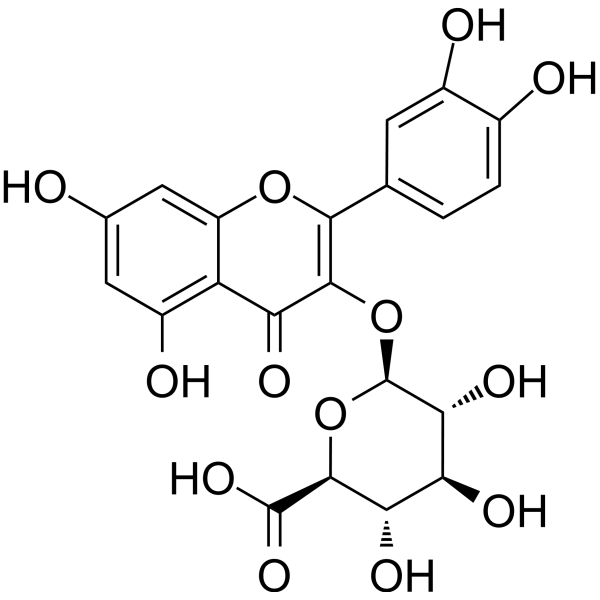
    Miquelianin
    10+ Cited Publications

    Quercetin 3-O-glucuronide; Quercetin 3-glucuronide

    Endogenous Metabolite Neurological Disease Cancer
    Miquelianin (Quercetin 3-O-glucuronide) is a metabolite of quercetin and a type of natural flavonoid. Miquelianin is also a CBR1 inhibitor. Miquelianin is permeable to the blood-brain barrier [1] .
    Miquelianin
  • HY-N2609
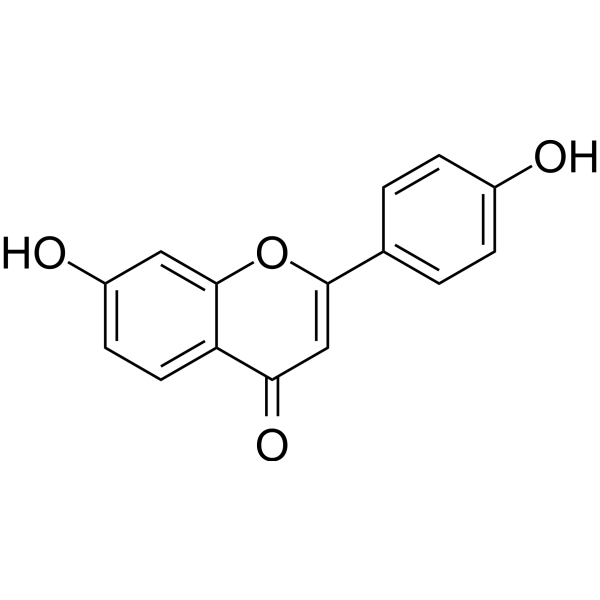
    7,4'-Dihydroxyflavone
    4 Publications Verification

    COX CCR NF-κB Inflammation/Immunology Endocrinology
    7,4'-Dihydroxyflavone (7,4'-DHF) is a flavonoid, which can be isolated from Glycyrrhiza uralensis. 7,4'-Dihydroxyflavone is eotaxin/CCL11 inhibitor and CBR1 inhibitor (IC50=0.28 μM). 7,4'-Dihydroxyflavone has the ability to consistently suppress eotaxin production and prevent dexamethasone (Dex)‐paradoxical adverse effects on eotaxin production [1]. 7,4'-Dihydroxyflavone (7,4'-DHF) inhibits MUC5AC gene expression, mucus production and secretion via regulation of NF-κB, STAT6 and HDAC2.7,4'-Dihydroxyflavone (7,4'-DHF) decreases phorbol 12-myristate 13-acetate (PMA) stimulated NCI-H292 human airway epithelial cell MUC5AC gene expression and mucus production with IC50 value of 1.4 µM [1].
    7,4'-Dihydroxyflavone
  • HY-N0148R

    Rutoside (Standard); Quercetin 3-O-rutinoside (Standard)

    Reference Standards Amyloid-β Autophagy Apoptosis Endogenous Metabolite Inflammation/Immunology Cancer
    Rutin (Standard) is the analytical standard of Rutin. This product is intended for research and analytical applications. Rutin (Rutoside) is a flavonoid found in many plants and shows a wide range of biological activities including anti-inflammatory, antidiabetic, antioxidant, neuroprotective, nephroprotective, hepatoprotective and reducing Aβ oligomer activities. Rutin is also a CBR1 inhibitor, which can cross the blood brain barrier. Rutin attenuates vancomycin-induced renal tubular cell apoptosis via suppression of apoptosis, mitochondrial dysfunction, and oxidative stress [1] .
    Rutin (Standard)
  • HY-156694

    Apoptosis NADPH Oxidase Reactive Oxygen Species (ROS) Inflammation/Immunology Cancer
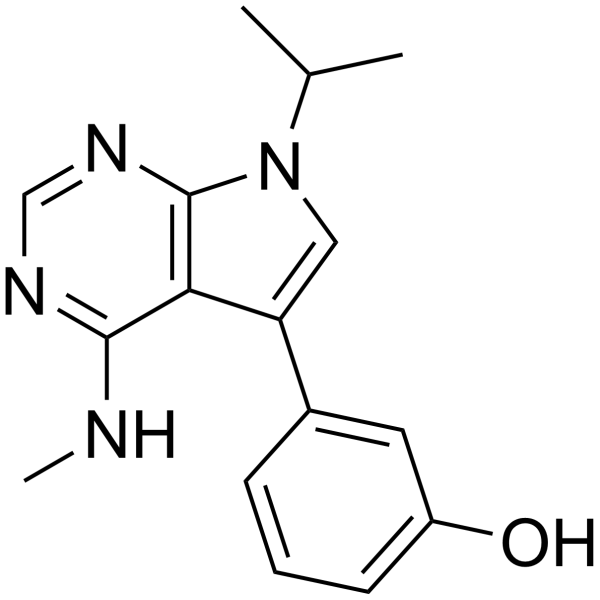
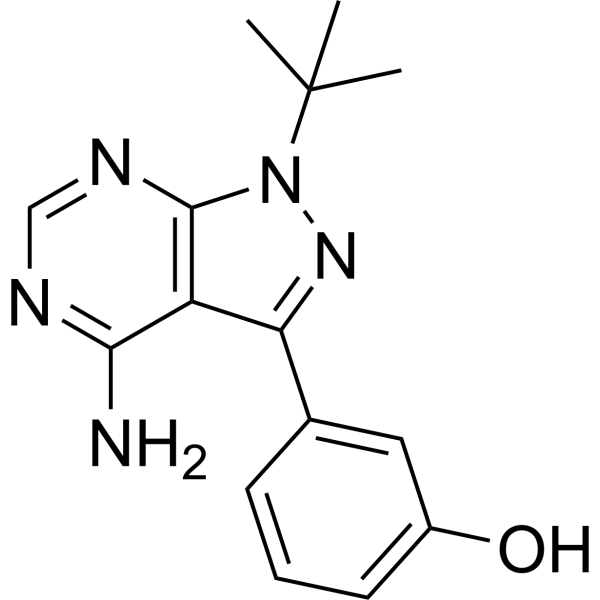
    Hydroxy-PP-Me is a selective CBR1 inhibitor with an IC50 of 759 nM. Hydroxy-PP-Me can inhibit serum starvation-induced apoptosis. Hydroxy-PP-Me can enhance the cytotoxic effects of Daunorubicin (HY-13062A) and As2O3 on tumor cells. Hydroxy-PP-Me can be used in the research of cancer such as leukemia [1] .
    Hydroxy-PP-Me
  • HY-N0566

    Anemosapogenin

    Apoptosis Autophagy Bcl-2 Family Caspase Survivin p38 MAPK MMP Cancer
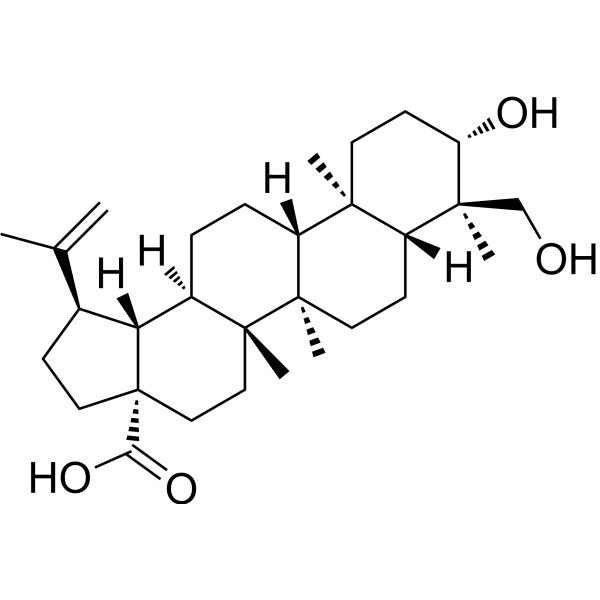
    23-Hydroxybetulinic acid (Anemosapogenin) is an orally active triterpenoid with broad-spectrum anticancer activity. 23-Hydroxybetulinic acid reduces the levels of Bcl-2 and survivin, elevates the level of Bax, promotes the cleavage/activation of caspase-3 and caspase-9, and induces apoptosis via the endogenous mitochondrial pathway involving cytochrome C release and mitochondrial membrane potential disruption. 23-Hydroxybetulinic acid arrests the cell cycle at S and G1 phases, inhibits cancer cell proliferation, blocks the MAPK signaling pathway, regulates MMP2, and induces autophagic apoptosis by upregulating beclin-1. 23-Hydroxybetulinic acid inhibits the activity and efflux function of P-gp, increases the intracellular accumulation of chemotherapeutic drugs, and synergistically enhances cytotoxicity with Doxorubicin (HY-15142). 23-Hydroxybetulinic acid inhibits the phosphorylation and nuclear translocation of STAT6, blocks M2 macrophage polarization, and reduces M2 macrophage-mediated apoptosis resistance of colon cancer cells. 23-Hydroxybetulinic acid can be used in related studies on chronic myeloid leukemia, hepatocellular carcinoma, sarcoma 180, multidrug-resistant breast cancer, leukemia, Doxorubicin-induced cardiotoxicity, and colorectal cancer [1] .
    23-Hydroxybetulinic acid
  • HY-157445

    NADPH Oxidase Metabolic Disease
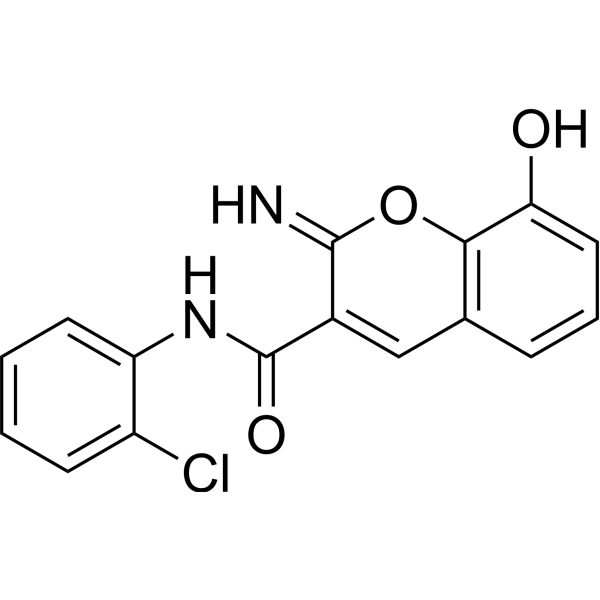
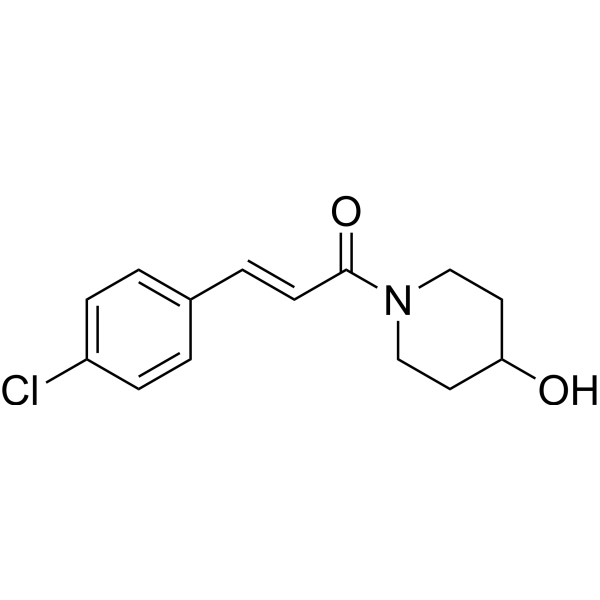
    CBR1-IN-3 (compound 13h) is a potent inhibitor of carbonyl reductase 1 (CBR1), with IC50 value of 0.034 μM [1].
    CBR1-IN-3
  • HY-155587

    Carbonyl Reductase Src Cancer
    Hydroxy-PP is a potent carbonyl reductase 1 (CBR1) inhibitor with an IC50 value of 0.78 μM. Hydroxy-PP also potently inhibits the cytoplasmic tyrosine kinase Fyn with an IC50 value of 5 nM [1].
    Hydroxy-PP
  • HY-121710

    7-Monohydroxyethylrutoside

    Carbonyl Reductase Cardiovascular Disease
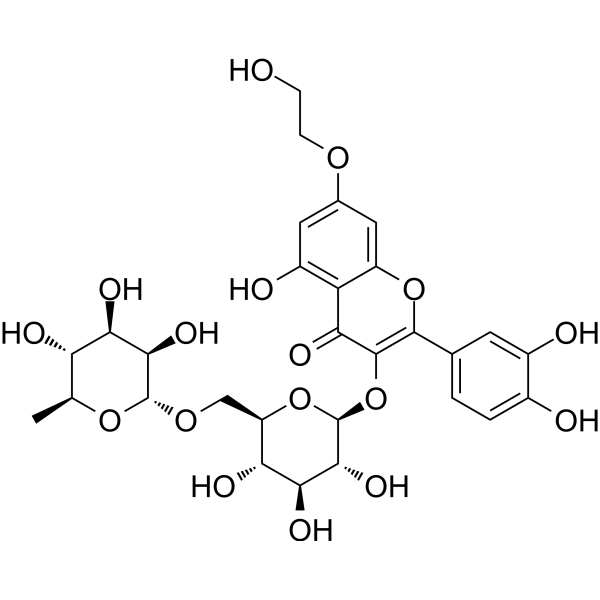
    MonoHER (7-Monohydroxyethylrutoside) is a Carbonyl reductase 1 (CBR1) inhibitor and can be used as a cardioprotective agent. MonoHER inhibits the activity of CBR1 V88 and CBR1 I88 in a concentration-dependent manner [1].
    MonoHER
  • HY-RS18341

    Small Interfering RNA (siRNA) Others

    Cbr1 Mouse Pre-designed siRNA Set A contains three designed siRNAs for Cbr1 gene (Mouse), as well as a negative control, a positive control, and a FAM-labeled negative control.

    Cbr1 Mouse Pre-designed siRNA Set A
    Cbr1 Mouse Pre-designed siRNA Set A
  • HY-157448

    Apoptosis Cancer
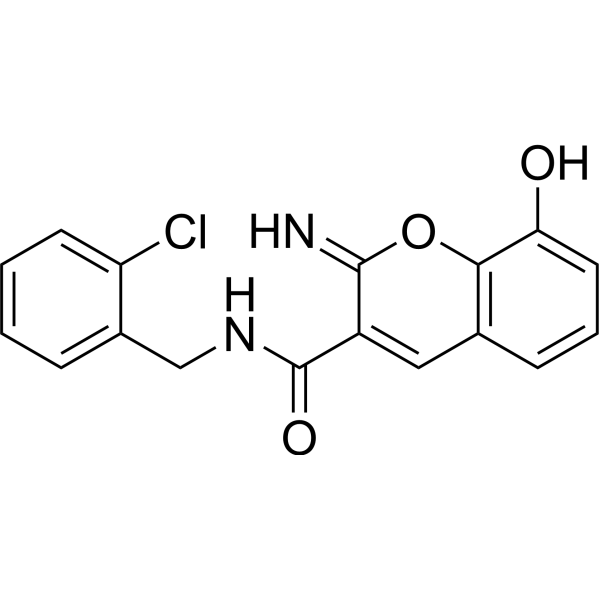
    CBR1-IN-6 (compound 1a) is a CBR1 inhibitor with chemosensitizing and cardioprotective activities [1].
    CBR1-IN-6
  • HY-157449

    Others Cancer
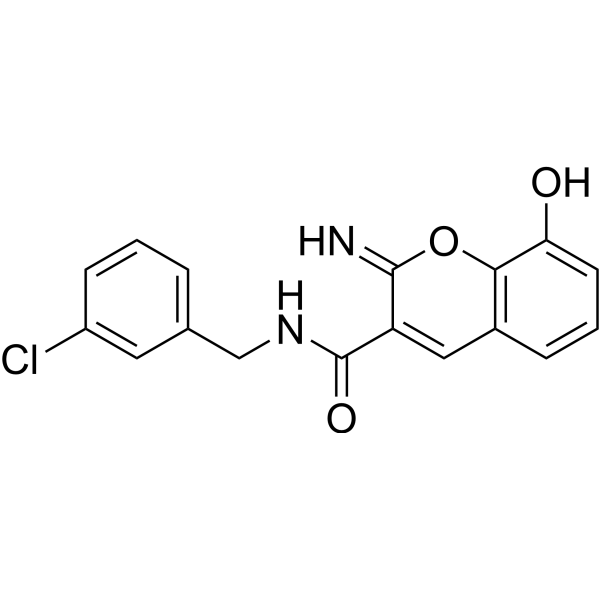
    CBR1-IN-5 (compound 13o) is a potent inhibitor of CBR1 with an IC50 of 0.1 μM [1].
    CBR1-IN-5
  • HY-RS02004

    Small Interfering RNA (siRNA) Others

    CBR1 Human Pre-designed siRNA Set A contains three designed siRNAs for CBR1 gene (Human), as well as a negative control, a positive control, and a FAM-labeled negative control.

    CBR1 Human Pre-designed siRNA Set A
    CBR1 Human Pre-designed siRNA Set A
  • HY-RS24820

    Small Interfering RNA (siRNA) Others

    Cbr1 Rat Pre-designed siRNA Set A contains three designed siRNAs for Cbr1 gene (Rat), as well as a negative control, a positive control, and a FAM-labeled negative control.

    Cbr1 Rat Pre-designed siRNA Set A
    Cbr1 Rat Pre-designed siRNA Set A
  • HY-157451

    Carbonyl Reductase Cancer
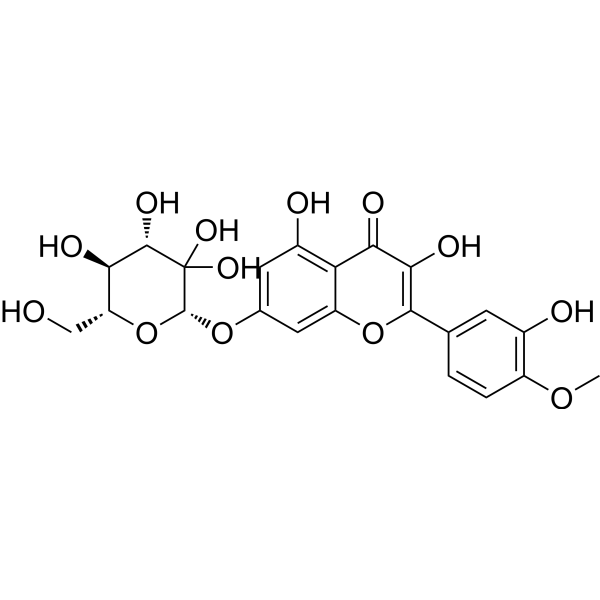
    CBR1-IN-7 (Compound JV-2) is a human CBR1 inhibitor (IC50=8 μM). CBR1-IN-7 can be used in cancer research [1].
    CBR1-IN-7
  • HY-157447

    Carbonyl Reductase Cancer
    CBR1-IN-4 (Compound 13p) is a human carbonyl reductase 1 (CBR1) inhibitor (IC50=0.09 μM). CBR1-IN-4 can be used in cancer research [1].
    CBR1-IN-4
  • HY-W744549

    20β-DHF

    Glucocorticoid Receptor Drug Metabolite Metabolic Disease
    20β-Dihydrocortisol (20β-DHF) is a metabolite of Hydrocortisone (Cortisol) (HY-N0583). 20β-Dihydrocortisol is a weak endogenous agonist of the glucocorticoid receptor (GR). 20β-Dihydrocortisol can be converted from Hydrocortisone via CBR1 catalysis, a process dependent on NADPH. 20β-Dihydrocortisol can be used for the study of obesity [1].
    20β-Dihydrocortisol
  • HY-157450

    NADPH Oxidase Cancer
    YF-Mo1 (compound 9) is a CBR1 inhibitor with an IC50 value of 1.1 μM [1].
    YF-Mo1
  • HY-N2609R

    COX Reference Standards CCR NF-κB Inflammation/Immunology Endocrinology
    7,4'-Dihydroxyflavone (7,4'-DHF) is a flavonoid, which can be isolated from Glycyrrhiza uralensis. 7,4'-Dihydroxyflavone is eotaxin/CCL11 inhibitor and CBR1 inhibitor (IC50=0.28 μM). 7,4'-Dihydroxyflavone has the ability to consistently suppress eotaxin production and prevent dexamethasone (Dex)‐paradoxical adverse effects on eotaxin production [1]. 7,4'-Dihydroxyflavone (7,4'-DHF) inhibits MUC5AC gene expression, mucus production and secretion via regulation of NF-κB, STAT6 and HDAC2.7,4'-Dihydroxyflavone (7,4'-DHF) decreases phorbol 12-myristate 13-acetate (PMA) stimulated NCI-H292 human airway epithelial cell MUC5AC gene expression and mucus production with IC50 value of 1.4 µM [1].
    7,4'-Dihydroxyflavone (Standard)
  • HY-157452

    Carbonyl Reductase Cancer
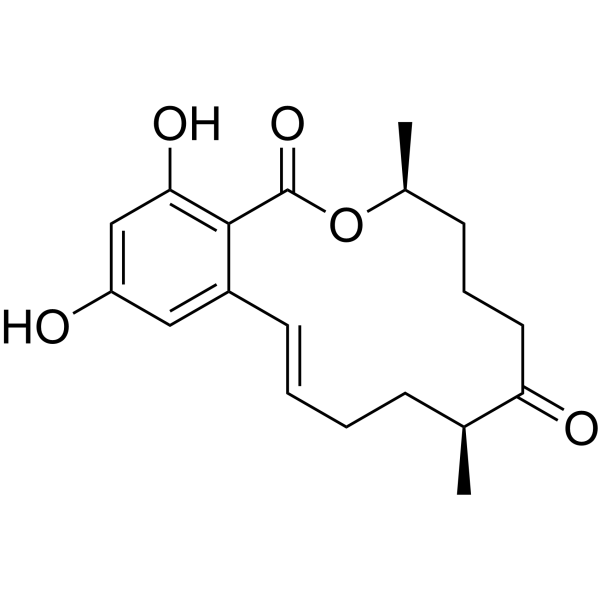
    (8S)-Methyl zearalenone (ZEA analogue 5) is a selective CBR1 (carbonyl reductase 1) inhibitor, with an IC50 of 0.21 μM [1].
    (8S)-Methyl zearalenone
  • HY-13930R

    Quercetin 3-O-glucuronide (Standard); Quercetin 3-glucuronide (Standard)

    Reference Standards Endogenous Metabolite Cancer
    Miquelianin (Standard) is the analytical standard of Miquelianin. This product is intended for research and analytical applications. Miquelianin (Quercetin 3-O-glucuronide) is a metabolite of quercetin and a type of natural flavonoid. Miquelianin is also a CBR1 inhibitor.
    Miquelianin (Standard)
  • HY-157444

    HIF/HIF Prolyl-Hydroxylase Cancer
    5,3',4',3'',4'',5''-6-O-Ethyl-EGCG (Y6) is a potent adjuvant obtained by optimization of the structure of EGCG. 5,3',4',3'',4'',5''-6-O-Ethyl-EGCG (Y6) decreases the expression of HIF-1α and CBR1 at both the mRNA and protein levels [1].
    5,3',4',3'',4'',5''-6-O-Ethyl-EGCG
  • HY-181670

    Androgen Receptor c-Myc Akt mTOR ERK PDK-1 PI3K Apoptosis Metabolic Disease Cancer
    WH23 is a dehydrogenase/reductase SDR family member 11 (DHRS11) inhibitor with IC50 values of 0.037 μM. WH23 binds to DHRS11, forming a hydrogen bond with the enzyme’s His210 residue. WH23 suppresses androgen receptor mRNA and protein expression, reduces c-Myc expression, and inhibits cancer cell proliferation. WH23 inhibits PI3K/AKT signaling by reducing phosphorylation of PDK1, AKT, mTOR, and ERK. WH23 enhances Capivasertib (HY-15431)-induced cytotoxicity and apoptosis. WH23 can be used for the research of luminal androgen receptor-positive triple-negative breast cancer [1].
    WH23

Inquiry Online

Your information is safe with us. * Required Fields.

Salutation


Country or Region *

Applicant Name *


Organization Name *

Department *


Email Address *


Product Name *

Cat. No.


Requested quantity *

Phone Number *


Remarks

Inquiry Online

Inquiry Information

Product Name:
Cat. No.:
Quantity:
MCE Japan Authorized Agent:

