



7,4'-Dihydroxyflavone
Based on 4 publication(s) in Google Scholar
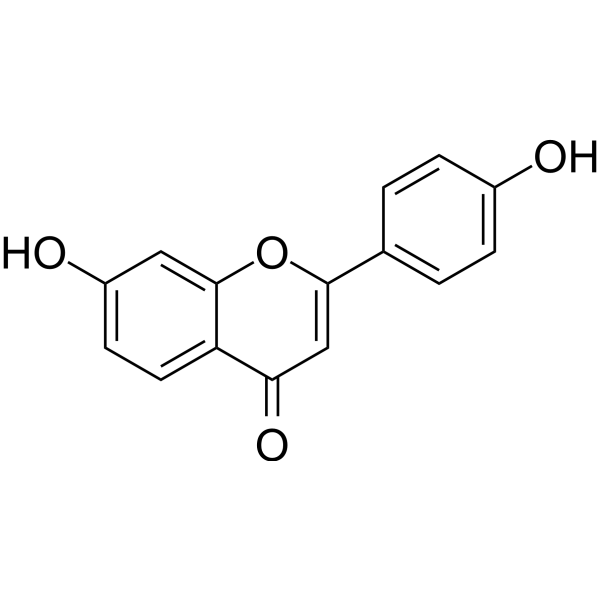
7,4'-Dihydroxyflavone (7,4'-DHF) is a flavonoid, which can be isolated from Glycyrrhiza uralensis. 7,4'-Dihydroxyflavone is eotaxin/CCL11 inhibitor and CBR1 inhibitor (IC50=0.28 μM). 7,4'-Dihydroxyflavone has the ability to consistently suppress eotaxin production and prevent dexamethasone (Dex)‐paradoxical adverse effects on eotaxin production. 7,4'-Dihydroxyflavone (7,4'-DHF) inhibits MUC5AC gene expression, mucus production and secretion via regulation of NF-κB, STAT6 and HDAC2.7,4'-Dihydroxyflavone (7,4'-DHF) decreases phorbol 12-myristate 13-acetate (PMA) stimulated NCI-H292 human airway epithelial cell MUC5AC gene expression and mucus production with IC50 value of 1.4 µM.
For research use only. We do not sell to patients.
- Purity : 99.64%
- CAS No.: 2196-14-7
- Formula: C15H10O4
- Molecular Weight:254.24
-
Storage:Powder -20°C, 3 years , 4°C, 2 years ; In solvent -80°C, 2 years , -20°C, 1 year

To place orders, for customer services and technical support, please contact: MedChemExpress USA
Tel: 609-228-6898 E-mail: [email protected] [email protected]


-
 Biological Activity
-
Chemical Information
-
Solvent & Solubility
- Protocols
- Purity & Documentation
- References
-
 Help & FAQs


-
HY-Y0320
Dimethyl sulfoxide, meets analytical specification of Ch.P.Aprotic Solvent -
HY-N0168
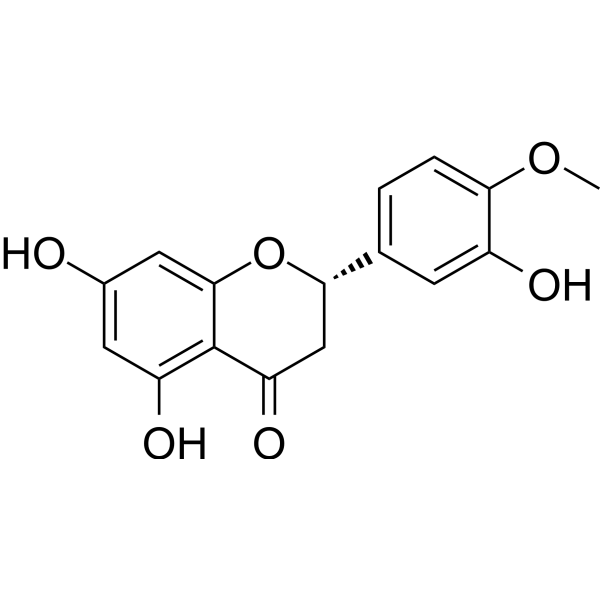
HesperetinUGT Inhibitor -
HY-N0236
CorylinAnti-inflammatory Agent -
HY-P1362
β-Amyloid (42-1), humanInactive Form of Aβ(1-42) -
HY-N8481
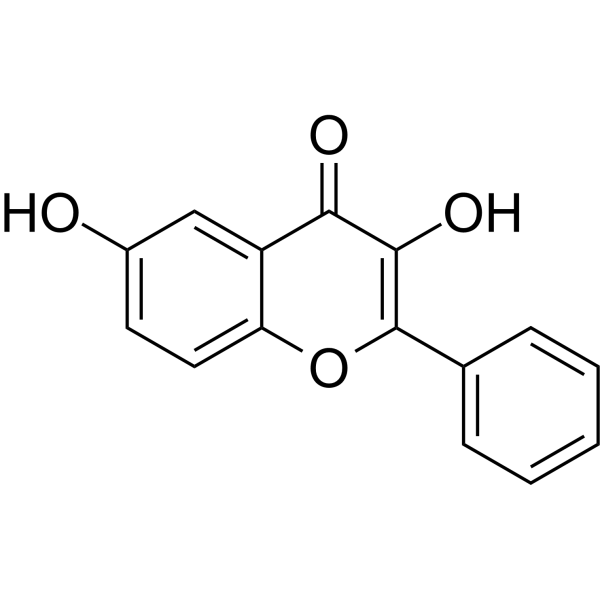
3,6-DihydroxyflavoneAnti-cancer Agent -
HY-127167
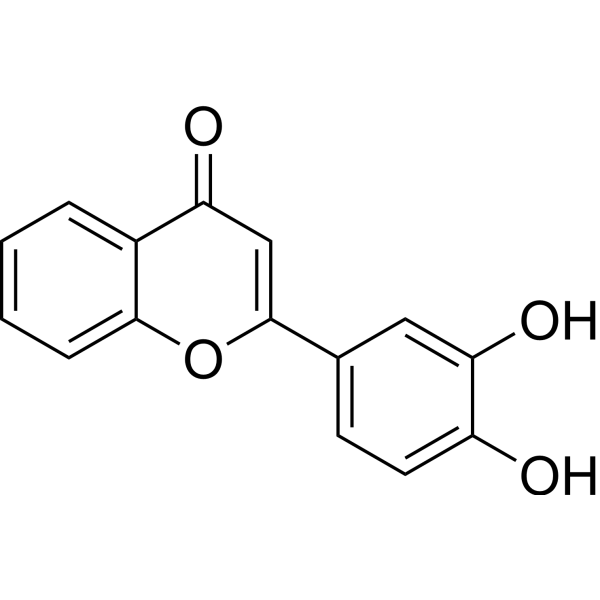
3',4'-DihydroxyflavoneAntioxidant -

HY-N2609R
7,4'-Dihydroxyflavone (Standard)CCL11/CBR1 Inhibitor -
HY-W013372
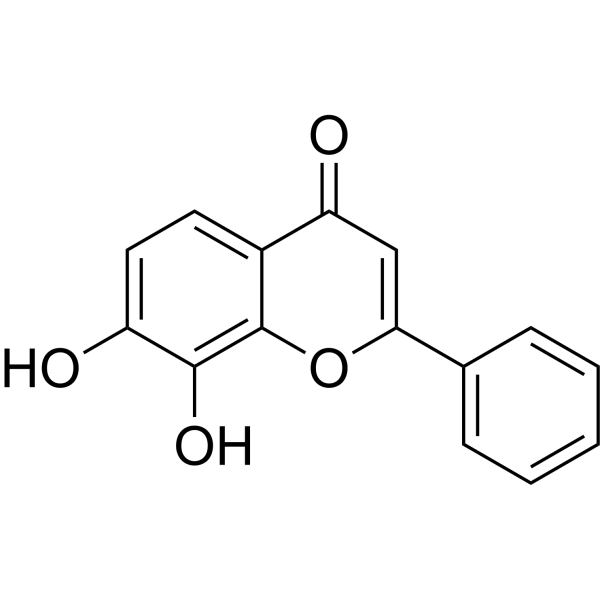
7,8-Dihydroxyflavone -
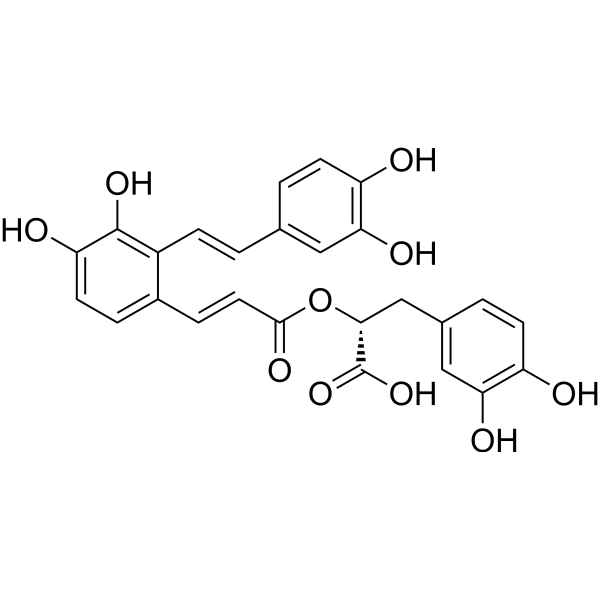
HY-N0318
Salvianolic acid AMMP-9 Inhibitor -
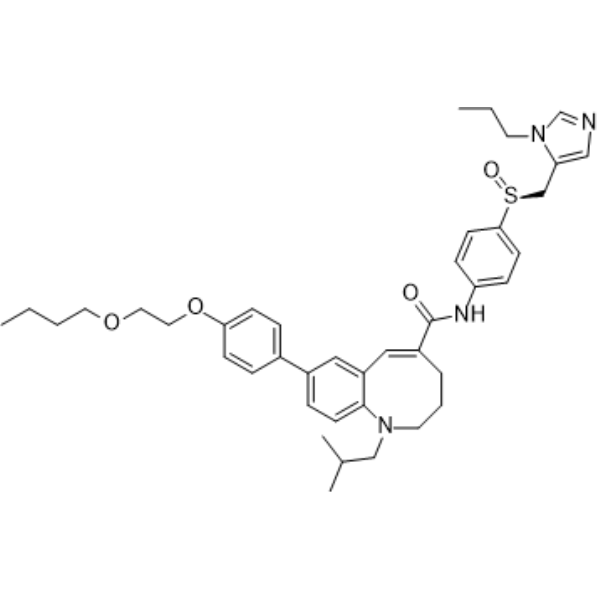
HY-14882
CenicrivirocCCR2/5 Antagonist -
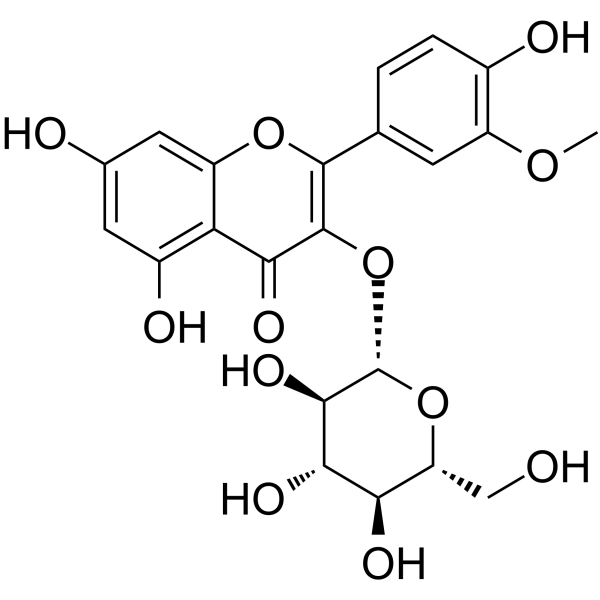
HY-N0777
Isorhamnetin-3-O-glucosideNatural Product -
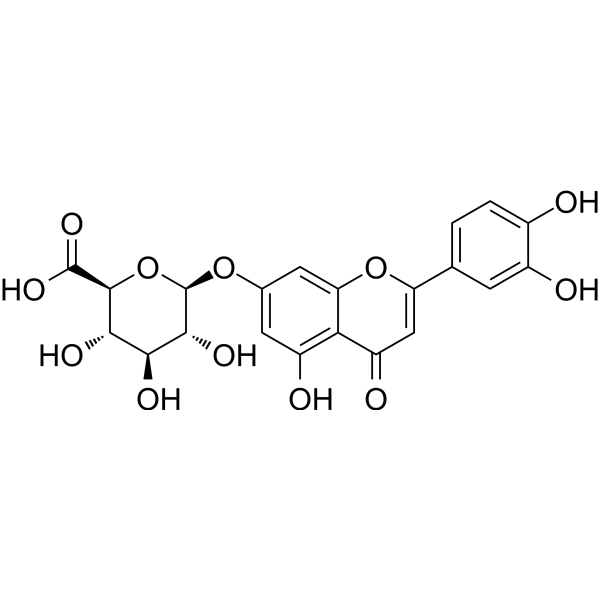
HY-N1463
Luteolin 7-O-glucuronideMMP Inhibitor
Publications Citing Use of MedChemExpress (MCE) 7,4'-Dihydroxyflavone
More

Biological Activity
Description
IC50 & Target
IC50: 1.4 μM (NCI-H292 human airway epithelial cell) (7,4'-Dihydroxyflavone)[1]; 0.28 μM CBR1[2]
Cellular Effect
|
Cell Line

|
Type | Value | Description | References |
|---|---|---|---|---|
| N9 | IC50 |
>30 μM
Compound: 6
|
Inhibitory effect of compound on the accumulation of NO2 in the culture media of N9 cells in response to LPS/IFN-gamma
Inhibitory effect of compound on the accumulation of NO2 in the culture media of N9 cells in response to LPS/IFN-gamma
|
[PMID: 15013012] |
| Neutrophil | IC50 |
26.9 μM
Compound: 3c
|
Inhibition of oxidative burst in PMA-stimulated human neutrophils assessed as inhibition of superoxide anion radical-induced lucigenin oxidation incubated for 5 mins prior to PMA challenge by chemiluminescence assay
Inhibition of oxidative burst in PMA-stimulated human neutrophils assessed as inhibition of superoxide anion radical-induced lucigenin oxidation incubated for 5 mins prior to PMA challenge by chemiluminescence assay
|
[PMID: 23871908] |
| Peritoneal macrophage | IC50 |
14 μM
Compound: kp14
|
Inhibition of LPS-stimulated nitric oxide production in ddy mouse peritoneal macrophages measured after 20 hrs by Greiss method
Inhibition of LPS-stimulated nitric oxide production in ddy mouse peritoneal macrophages measured after 20 hrs by Greiss method
|
[PMID: 27955927] |
| RAW | IC50 |
>30 μM
Compound: 6
|
Inhibitory effect of compound on the accumulation of NO2 in the culture media of RAW 264.7 cells in response to LPS
Inhibitory effect of compound on the accumulation of NO2 in the culture media of RAW 264.7 cells in response to LPS
|
[PMID: 15013012] |
| RAW264.7 | IC50 |
>50 μM
Compound: 8
|
Antiinflammatory activity in mouse RAW264.7 cells assessed as inhibition of LPS-induced NO production after 24 hrs by Griess assay
Antiinflammatory activity in mouse RAW264.7 cells assessed as inhibition of LPS-induced NO production after 24 hrs by Griess assay
|
[PMID: 25592708] |
In Vitro
7,4'-Dihydroxyflavone (10 μM, 72-120 h) inhibits constitutive eotaxin production in HFL-1 cells[1].
7,4'-Dihydroxyflavone (10 μM, 72 h) decreases IL-4/TNF-α stimulated p-STAT6, p-IκBα, and p-Akt expression in HFL-1 cells[1].
7,4'-Dihydroxyflavone (10 μM, 30 min) inhibits Phorbol 12-myristate 13-acetate (HY-18739) (10 ng/mL for 24 h)-induced MUC5AC production and gene expression in NCI-H292 cells[2].
MedChemExpress (MCE) has not independently confirmed the accuracy of these methods. They are for reference only.
-
Cell Line:NCI-H292 cells stimulated with 10 ng/mL PMA for 30 min
-
Concentration:2 and 10 μM
-
Incubation Time:24 h
-
Result:Inhibited PMA-stimulated NF-κB (p65) activation and STAT6 phosphorylation.
In Vivo


Chemical Information
-
CAS No. 2196-14-7
-
Appearance Solid
-
Molecular Weight 254.24
-
Formula C15H10O4
-
Color Light yellow to yellow
-
SMILES
O=C1C=C(C2=CC=C(O)C=C2)OC3=CC(O)=CC=C13
-
Structure Classification
-
Initial Source
-
Shipping
Room temperature in continental US; may vary elsewhere.
-
Storage
Powder -20°C 3 years 4°C 2 years In solvent -80°C 2 years -20°C 1 year


Publications (4)
-
Journal Impact Factor
-
Most Recent
-
J Adv Res
Scutellarein attenuates cancer cachexia-induced muscle atrophy via targeted inhibition of the JAK/STAT pathway. [Abstract]2026 Apr:82:1083-1098. PMID: 40617409 -
Food Chem
Effects of sun drying combined with baking processes on the flavor quality of Chongqing Tuocha raw tea. [Abstract]2025 Dec 30:497:146992. PMID: 41285060 -
Food Chem
Flavonoid-mediated metabolic underpinning quality variation in red bud-sport pear mutants. [Abstract]2025 Oct 15:489:144992. PMID: 40466530 -
Diabetologia
MicroRNA-193b impairs muscle growth in mouse models of type 2 diabetes by targeting the PDK1/Akt signalling pathway. [Abstract]2022 Mar;65(3):563-581. PMID: 34913989


Solvent & Solubility
In Vitro:
DMSO : 100 mg/mL (393.33 mM; Need ultrasonic; Hygroscopic DMSO has a significant impact on the solubility of product, please use newly opened DMSO)
Please refer to the solubility information to select the appropriate solvent. Once prepared, please aliquot and store the solution to prevent product inactivation from repeated freeze-thaw cycles.
Storage method and period of stock solution: -80°C, 2 years; -20°C, 1 year. When stored at -80°C, please use it within 2 years. When stored at -20°C, please use it within 1 year.
Please refer to the solubility information to select the appropriate solvent. Once prepared, please aliquot and store the solution to prevent product inactivation from repeated freeze-thaw cycles.
Storage method and period of stock solution: -80°C, 2 years; -20°C, 1 year. When stored at -80°C, please use it within 2 years. When stored at -20°C, please use it within 1 year.
Concentration (start) × Volume (start) = Concentration (final) × Volume (final)
In Vivo:
Select the appropriate dissolution method based on your experimental animal and administration route.
- For the following dissolution methods, please ensure to first prepare a clear stock solution using an In Vitro approach and then sequentially add co-solvents:
- To ensure reliable experimental results, the clarified stock solution can be appropriately stored based on storage conditions. As for the working solution for In Vivo experiments, it is recommended to prepare freshly and use it on the same day.
- The percentages shown for the solvents indicate their volumetric ratio in the final prepared solution. If precipitation or phase separation occurs during preparation, heat and/or sonication can be used to aid dissolution.
Add each solvent one by one: 10% DMSO 40% PEG300 5% Tween-80 45% Saline
Solubility: ≥ 2.08 mg/mL (8.18 mM); Clear solution
This protocol yields a clear solution of ≥ 2.08 mg/mL (saturation unknown).
Taking 1 mL working solution as an example, add 100 μL DMSO stock solution (20.8 mg/mL) to 400 μL PEG300, and mix evenly; then add 50 μL Tween-80 and mix evenly; then add 450 μL Saline to adjust the volume to 1 mL.
Preparation of Saline: Dissolve 0.9 g sodium chloride in ddH₂O and dilute to 100 mL to obtain a clear Saline solution.
Add each solvent one by one: 10% DMSO 90% (20% SBE-β-CD in Saline)
Solubility: ≥ 2.08 mg/mL (8.18 mM); Clear solution
This protocol yields a clear solution of ≥ 2.08 mg/mL (saturation unknown).
Taking 1 mL working solution as an example, add 100 μL DMSO stock solution (20.8 mg/mL) to 900 μL 20% SBE-β-CD in Saline, and mix evenly.
Preparation of 20% SBE-β-CD in Saline (4°C, storage for one week): 2 g SBE-β-CD powder is dissolved in 10 mL Saline, completely dissolve until clear.
In Vivo Dissolution Calculator
Please enter the basic information of animal experiments:
-
-
-
-
Recommended: Prepare an additional quantity of animals to account for potential losses during experiments.
Please enter your animal formula composition:
-
%DMSO +
Recommended: Keep the proportion of DMSO in working solution below 2% if your animal is weak.
-
%+
-
+%Tween-80 + +
-
%Saline +
The co-solvents required include: DMSO, . All of co-solvents are available by MedChemExpress (MCE). , Tween 80. All of co-solvents are available by MedChemExpress (MCE).
Working solution concentration: 0.22 mg/mL
Method for preparing stock solution: mg drug dissolved in μL DMSO. Stock solution concentration: mg/mL.
1. Take μL DMSO stock solution;
2. Add μL .
μL , mix evenly;
3. Then add μL Tween 80, mix evenly;
4. Then add μL
Please ensure that the stock solution in the first step is dissolved to a clear state, and add co-solvents in sequence. You can use ultrasonic heating (ultrasonic cleaner, recommended frequency 20-40 kHz), vortexing, etc. to assist dissolution.


Purity & Documentation
-
Data Sheet (275 KB)
-
SDS (393 KB)
- English - EN (393 KB)
- Français - FR (393 KB)
- Deutsch - DE (393 KB)
- Norwegian - NO (393 KB)
- Español - ES (393 KB)
- Swedish - SV (393 KB)
- Italian - IT (393 KB)
- Korean - KR (393 KB)
- Portuguese - PT (393 KB)
-
Handling Instructions (2659 KB)
References
[1]. Liu C, et al. The Flavonoid 7,4'-Dihydroxyflavone Prevents Dexamethasone Paradoxical Adverse Effect on Eotaxin Production by Human Fibroblasts. Phytother Res. 2017 Mar;31(3):449-458. [Content Brief]
[2]. Arai Y, et al. Structure-activity relationship of flavonoids as potent inhibitors of carbonyl reductase 1 (CBR1). Fitoterapia. 2015 Mar;101:51-6. [Content Brief]


Complete Stock Solution Preparation Table
Please refer to the solubility information to select the appropriate solvent. Once prepared, please aliquot and store the solution to prevent product inactivation from repeated freeze-thaw cycles.
Storage method and period of stock solution: -80°C, 2 years; -20°C, 1 year. When stored at -80°C, please use it within 2 years. When stored at -20°C, please use it within 1 year.
| Optional Solvent | Concentration Solvent Mass | 1 mg | 5 mg | 10 mg | 25 mg |
|---|---|---|---|---|---|
| DMSO | 1 mM | 3.9333 mL | 19.6665 mL | 39.3329 mL | 98.3323 mL |
| 5 mM | 0.7867 mL | 3.9333 mL | 7.8666 mL | 19.6665 mL | |
| 10 mM | 0.3933 mL | 1.9666 mL | 3.9333 mL | 9.8332 mL | |
| 15 mM | 0.2622 mL | 1.3111 mL | 2.6222 mL | 6.5555 mL | |
| 20 mM | 0.1967 mL | 0.9833 mL | 1.9666 mL | 4.9166 mL | |
| 25 mM | 0.1573 mL | 0.7867 mL | 1.5733 mL | 3.9333 mL | |
| 30 mM | 0.1311 mL | 0.6555 mL | 1.3111 mL | 3.2777 mL | |
| 40 mM | 0.0983 mL | 0.4917 mL | 0.9833 mL | 2.4583 mL | |
| 50 mM | 0.0787 mL | 0.3933 mL | 0.7867 mL | 1.9666 mL | |
| 60 mM | 0.0656 mL | 0.3278 mL | 0.6555 mL | 1.6389 mL | |
| 80 mM | 0.0492 mL | 0.2458 mL | 0.4917 mL | 1.2292 mL | |
| 100 mM | 0.0393 mL | 0.1967 mL | 0.3933 mL | 0.9833 mL |


7,4'-Dihydroxyflavone Related Classifications
HY-N2609 Related Classifications
 Powered by Bioz