1. Search Result
Search Result
Pathways Recommended: Stem Cell/Wnt Cell Cycle/DNA Damage
Results for "

CML cell

" in MedChemExpress (MCE) Product Catalog:

31

Inhibitors & Agonists

2

Biochemical Assay Reagents

2

Peptides

3

Natural
Products

1

Isotope-Labeled Compounds

1

Oligonucleotides

Cat. No. Product Name Target Research Areas Chemical Structure
  • HY-N0678
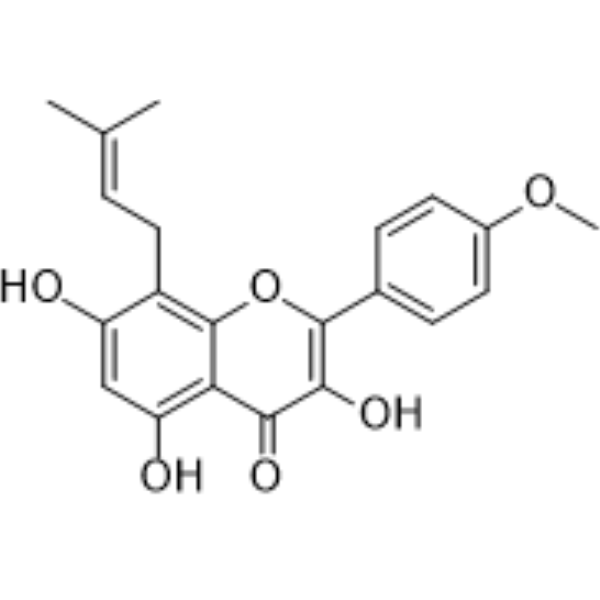
    Icaritin
    5+ Cited Publications

    Anhydroicaritin

    JAK Autophagy Apoptosis Cancer
    Icaritin (Anhydroicaritin) is a prenylflavonoid derivative from Epimedium brevicornuMaxim. and potently inhibits proliferation of K562 cells (IC50 of 8 µM) and primary CML cells (IC50 of 13.4 µM for CML-CP and 18 µM for CML-BC). Icaritin can regulate MAPK/ERK/JNK and JAK2/STAT3 /AKT signalings, also enhances osteogenesis [3.
    Icaritin
  • HY-125771

    18:0 Lyso-PC; LPC(18:0)

    Endogenous Metabolite HDAC STAT Apoptosis Cancer
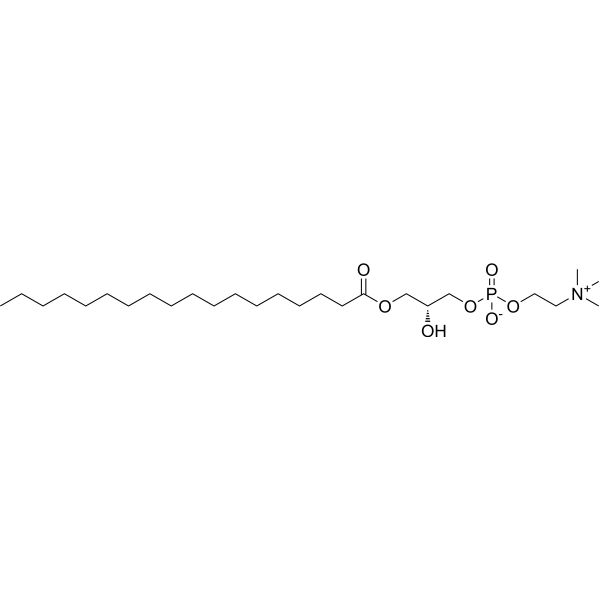
    1-Stearoyl-sn-glycero-3-phosphocholine is a lysophosphatidylcholine that inhibits HDAC3 activity and phosphorylation of STAT3 in K562 cells. 1-Stearoyl-sn-glycero-3-phosphocholine induces apoptosis and exhibits anticancer activity in chronic myelogenous leukemia (CML) K562 cells .
    1-Stearoyl-sn-glycero-3-phosphocholine
  • HY-W286743
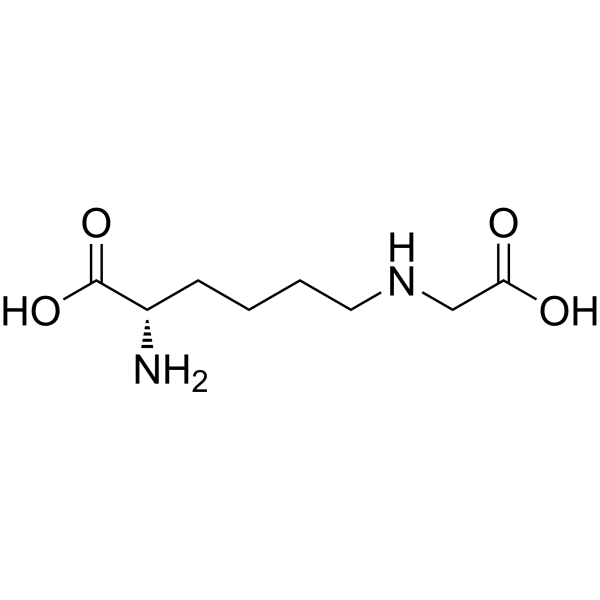
    Nε-(Carboxymethyl)-L-lysine
    1 Publications Verification

    CML; N6-(Carboxymethyl)-L-lysine; Nε-(1-Carboxymethyl)-L-lysine

    Polo-like Kinase (PLK) ERK NF-κB Cancer
    Nε-(Carboxymethyl)-L-lysine (CML) is an orally active advanced glycation end product. Nε-(Carboxymethyl)-L-lysine upregulates the expression of PLK1 and CEP20, and induces the activation of RAGE and ERK/NFκB. Nε-(Carboxymethyl)-L-lysine drives centrosome amplification. Nε-(Carboxymethyl)-L-lysine induces malignant transformation of hepatocytes and promotes the development of hepatocellular carcinoma. Nε-(Carboxymethyl)-L-lysine induces epithelial-mesenchymal transition in osteosarcoma cells and enhances their migration and invasion properties .
    Nε-(Carboxymethyl)-L-lysine
  • HY-13468
    KW-2478
    4 Publications Verification

    HSP Apoptosis Bcr-Abl p38 MAPK CDK STAT Cancer
    KW-2478 is an HSP90 inhibitor (IC50 = 3.8 nM). KW-2478 inhibits the growth and induces apoptosis in chronic myeloid leukemia (CML) cells and liver cancer cells. KW-2478 weakens the BCR/ABL and MAPK signaling pathways, leading to increased p27 and p21 expression and decreased cyclin B1 expression. KW-2478 downregulates STAT3 expression. KW-2478 may be used in research on cancers such as CML and liver cancer .
    KW-2478
  • HY-19527
    IST5-002
    1 Publications Verification

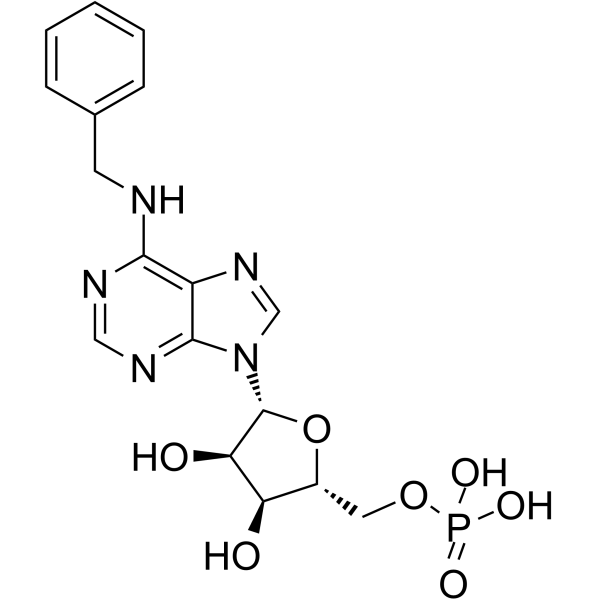
    N6-Benzyladenosine-5'-phosphate

    STAT Apoptosis Cancer
    IST5-002, a potent Stat5a/b inhibitor, selectively inhibits transcriptional activity of Stat5a/b (IC50s: 1.5 μM for Stat5a, 3.5 μM for Stat5b). IST5-002 inducs cell apoptotic and death of prostate cancer cells and chronic myeloid leukemia (CML) cells. IST5-002 can be used in the research of prostate cancer and chronic myeloid leukemia (CML) .
    IST5-002
  • HY-164393

    JAK Bcr-Abl Apoptosis Cancer
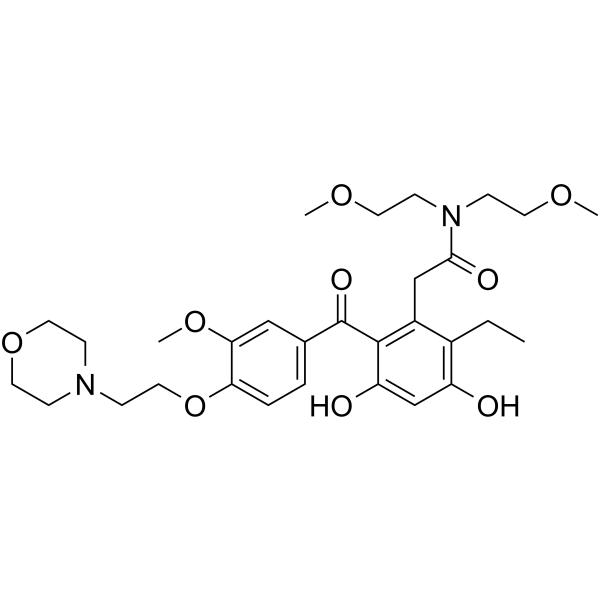
    ON044580, an α-benzoyl styryl benzyl sulfide, is a potent and non-ATP-competitive JAK2 kinase inhibitor with IC50s of 1.23 μM, 1.09 μM for WT and V617F mutant JAK2, respectively. ON044580 inhibits the JAK2 kinase activity either by binding to the STAT-5 binding domain of JAK2 or by binding to an allosteric site. ON044580 exerts its antiproliferative effect in JAK2 V617F-positive leukemic cells. ON044580 effectively induces apoptosis of Imatinib (HY-15463)-resistant chronic myelogenous leukemia (CML) cells. ON044580 also inhibits both WT and T315I mutant forms of the BCR-ABL kinase. ON044580 has the potential for myeloproliferative disorders typified by aberrant JAK/STAT signaling .
    ON044580
  • HY-12083

    Bcr-Abl Cancer
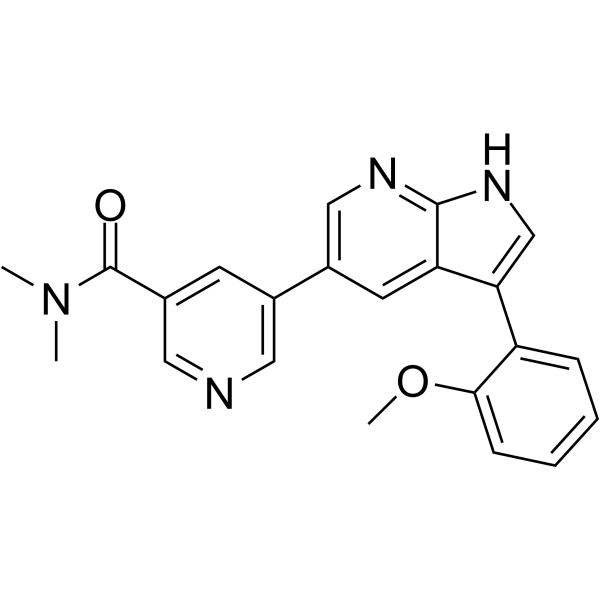
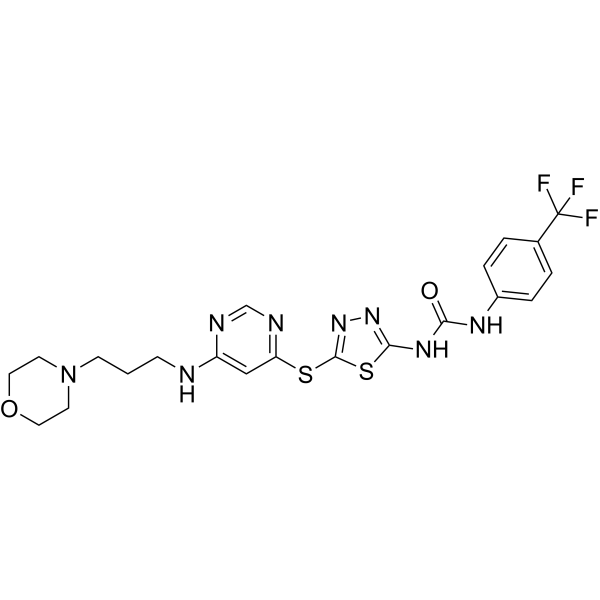
    PPY-A is a potent T315I mutant and wild-type Abl kinases inhibitor with IC50s of 9 and 20 nM, respectively. PPY-A inhibits Ba?F3 cells transformed with wild-type Abl and Abl T315I mutantl with IC50s of 390 and 180 nM, respectively. PPY-A can be used for the research of chronic myeloid leukemia (CML) .
    PPY-A
  • HY-50733A

    Casein Kinase Ras Apoptosis Cancer
    CX-5011 is a CK2 inhibitor. CX-5011 also induces Rac1 activation. CX-5011 induces apoptosis and induces cancer cell death .
    CX-5011
  • HY-150109A

    HDAC Cancer
    Purinostat is a selective inhibitor of HDAC I/IIb with anti-leukemic activity. Purinostat mesylate (HY-150109), the mesylate salt of Purinostat, inhibits the survival of Ph+ leukemic cells and CD34+ leukemic cells derived from CML patients. Purinostat mesylate targets HDAC I/IIb to inhibit several important factors for leukemic stem cell (LSC) survival, including c-Myc, β-Catenin, E2f, Ezh2, Alox5, and mTOR. Purinostat mesylate increases glutamate metabolism in LSC by increasing GLS1 .
    Purinostat
  • HY-163854

    HSP Bcl-2 Family Apoptosis Cancer
    HSP70-IN-6 (Compound JL-15) is an inhibitor of Hsp70-Bim protein-protein interaction (PPI) (IC50: 70 nM). HSP70-IN-6 induces apoptosis in chronic myeloid leukemia (CML) cells, with EC50s of 0.43 μM(BV173), 0.88 μM (K562), 0.19 μM (K562-R3) .
    HSP70-IN-6
  • HY-13468A

    HSP Apoptosis Bcr-Abl p38 MAPK CDK STAT Cancer
    KW-2478 hydrochloride is an HSP90 inhibitor (IC50 = 3.8 nM). KW-2478 hydrochloride inhibits the growth and induces apoptosis in chronic myeloid leukemia (CML) cells and liver cancer cells. KW-2478 hydrochloride weakens the BCR/ABL and MAPK signaling pathways, leading to increased p27 and p21 expression and decreased cyclin B1 expression. KW-2478 hydrochloride downregulates STAT3 expression. KW-2478 hydrochloride may be used in research on cancers such as CML and liver cancer .
    KW-2478 hydrochloride
  • HY-125771S

    18:0 Lyso-PC-d35; LPC(18:0)-d35

    Isotope-Labeled Compounds Endogenous Metabolite HDAC STAT Apoptosis Cancer
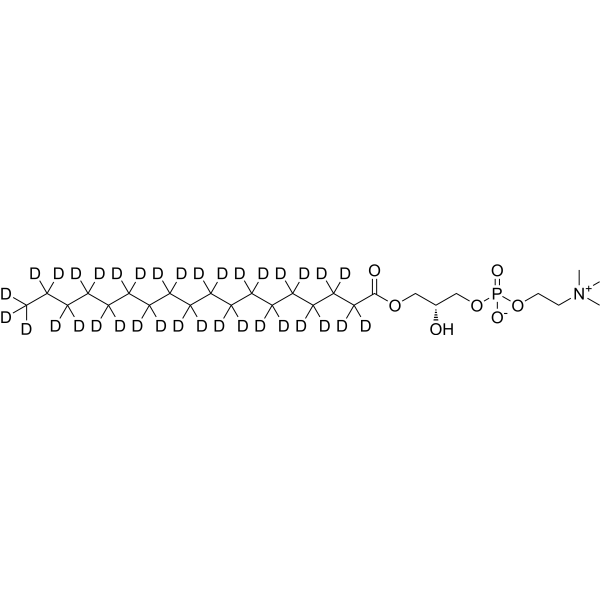
    1-Stearoyl-sn-glycero-3-phosphocholine-d35 is deuterium labeled 1-Stearoyl-sn-glycero-3-phosphocholine (HY-125771). 1-Stearoyl-sn-glycero-3-phosphocholine is a lysophosphatidylcholine that inhibits HDAC3 activity and phosphorylation of STAT3 in K562 cells. 1-Stearoyl-sn-glycero-3-phosphocholine induces apoptosis and exhibits anticancer activity in chronic myelogenous leukemia (CML) K562 cells .
    1-Stearoyl-sn-glycero-3-phosphocholine-d35
  • HY-171184

    PARP Bcr-Abl Apoptosis Mitosis Cancer
    EAPB0503 is a quinoline compound with anti-tumor activity, showing strong cytotoxicity against melanoma cells in vitro (IC50=200 nM). EAPB0503 can induce specific cell cycle arrest in mitosis of CML cells and directly activate apoptosis, leading to an increase in the G0 cell population, disruption of mitochondrial membrane potential, PARP cleavage, and DNA fragmentation. EAPB0503 also reduces the levels of BCR-ABL protein .
    EAPB0503
  • HY-176269

    Bcr-Abl ERK STAT PARP Caspase Apoptosis Cancer
    VS1150 (Compound 11) is a BCR-ABL-targeting phosphorylation-inducing chimeric small molecule (PHICS). VS1150 significantly inhibits oncogenic kinase BCR-ABL signaling by inducing inhibitory phosphorylation at its Y253 (EC50: 69 nM), subsequently triggering cell apoptosis. VS1150 also inhibits other oncogenic ABL fusions and drug-resistant mutants like T315I. VS1150 can be used for chronic myeloid leukemia (CML) and other ABL fusion-driven cancers research .
    VS1150
  • HY-N0678R

    Anhydroicaritin (Standard)

    JAK Reference Standards Autophagy Apoptosis Cancer
    Icaritin (Standard) is the analytical standard of Icaritin. This product is intended for research and analytical applications. Icaritin (Anhydroicaritin) is a prenylflavonoid derivative from Epimedium brevicornuMaxim. and potently inhibits proliferation of K562 cells (IC50 of 8 μM) and primary CML cells (IC50 of 13.4 μM for CML-CP and 18 μM for CML-BC). Icaritin can regulate MAPK/ERK/JNK and JAK2/STAT3 /AKT signalings, also enhances osteogenesis [3.
    Icaritin (Standard)
  • HY-W700620

    Bcr-Abl Drug Metabolite Apoptosis Src Inflammation/Immunology
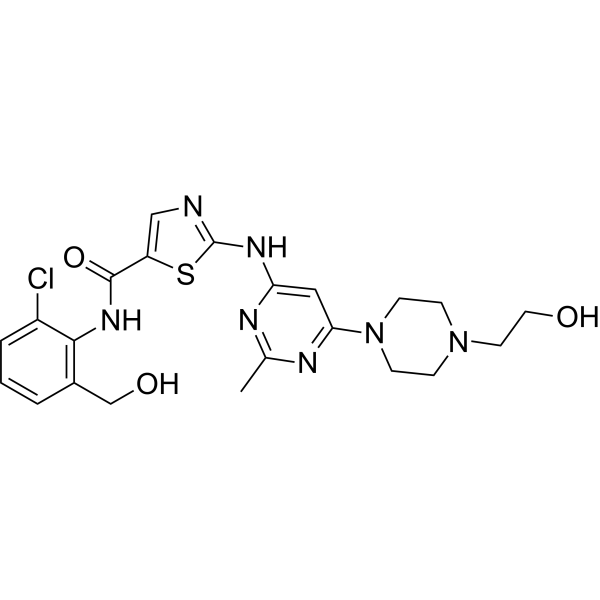
    Hydroxymethyl dasatinib (M24), a benzylhydroxy metabolite of Dasatinib (HY-10181), exhibits an IC50 of 46.7nM in K562 CML cells .
    Hydroxymethyl dasatinib
  • HY-123365

    Carbonic Anhydrase Cancer
    GV2-20 is a potent inhibitor ofcarbonic anhydrase 2.GV2-20shows antiproliferative effects in CML cell .
    GV2-20
  • HY-169608

    Bcr-Abl Cancer
    BCR-ABL-IN-11 (Compound 2) is a BCR-ABL inhibitor. BCR-ABL-IN-11 shows anticancer activity against chronic myelogenous leukemia (CML) (IC50 of 129.61 μM for K562 cells) .
    BCR-ABL-IN-11
  • HY-128634

    Apoptosis PI3K MEK Cancer
    CML-IN-1 (compound 7) is a potent anticancer agent. CML-IN-1 displays very good induced-apoptosis effect for human chronic myeloid leukemia (CML) cell line K562. CML-IN-1 exerts its effect via a significantly reduced protein phosphorylation of PI3K/Akt signal pathway. CML-IN-1 (compound 4) also inhibits cell proliferation by suppressing the MEK/ERK signaling pathway in colorectal cancer .
    Anticancer agent 164
  • HY-10212A

    CNF2024 mesylate

    HSP β-catenin c-Myc Autophagy Cancer
    BIIB021 (CNF2024) mesylate is the mesylate of BIIB021 (HY-10212). BIIB021 is an orally active Hsp90 inhibitor. BIIB021 inhibits the proliferation of chronic myeloid leukemia (CML) cells, with IC50 values of K562, K562/G, 32Dp210, and 32Dp210-T315I cells are 513.99, 603.53, 110.08, and 148.07 nM, respectively. BIIB021 degrades BCR-ABL protein and inhibits the β-catenin/c-Myc pathway. BIIB021 can also induce autophagy in CML cells. BIIB021 can be used for the research of CML .
    BIIB021 mesylate
  • HY-162489

    Bcr-Abl Others
    Tyrosine kinase-IN-8 (compound 4e) is a BCR‐ABL1 tyrosine kinase inhibitor (TKI). Tyrosine kinase-IN-8 shows anti-proliferative activity against K562 cells, a chronic myeloid leukemia (CML) cell line (CC50=0.8 µM). Tyrosine kinase-IN-8 can be used in the study of chronic leukemia .
    Tyrosine kinase-IN-8
  • HY-111158

    c-Met/HGFR Cancer
    BMS-748730 is an oral tyrosine kinase inhibitor. BMS-748730 inhibits tyrosine kinase activity by competing with the ATP binding site of the tyrosine kinase, which prevents the kinase from phosphorylating the substrate protein, thereby inhibiting signaling pathways associated with cell proliferation and tumor growth. BMS-748730 can be used in the study of certain types of cancer, including chronic myeloid leukemia (CML) .
    BMS-748730
  • HY-170604

    MMP Cardiovascular Disease Cancer
    MMP-2 Inhibitor-4 (Compound 5g) is an MMP-2 inhibitor with an IC50 of 152.62 nM. MMP-2 Inhibitor-4 can reduce the levels of MMP-2 in the K562 cell line through stable binding at the MMP-2 active site, and it demonstrates strong antiangiogenic effects in the ACHN cell line. MMP-2 Inhibitor-4 holds promise for research in chronic myeloid leukemia (CML) .
    MMP-2 Inhibitor-4
  • HY-123486

    Apoptosis Bcr-Abl Cancer
    HS-438 is a potent and selective BCR-ABL inhibitor. HS-438 shows antiproliferative activity. HS-438 decreases the expression of phosphorylation of BCR-ABL (Tyr177). HS-438 induces apoptosis and cell cycle arrest at G0/G1 phase. HS-438 shows antitumor activity. HS-438 has the potential for the research of chronic myeloid leukemia (CML) .
    HS-438
  • HY-164469

    Bcr-Abl Apoptosis STAT Cancer
    CHMFL-48 is an orally active BCR-ABL kinase inhibitor targeting both wild-type (wt) and various imatinib-resistant mutants. The IC50 values for CHMFL-48 against ABL wild-type and ABL T315I mutant are 1 nM and 0.8 nM, respectively. CHMFL-48 exerts its effects by blocking the autophosphorylation of BCR-ABL wild-type and mutant forms, which impacts downstream signaling mediators such as STAT5 and CRKL, leading to cell cycle arrest and induction of apoptosis. CHMFL-48 holds potential for research into chronic myeloid leukemia (CML) .
    CHMFL-48
  • HY-186013

    Apoptosis Cancer
    CML-07-119 is a selective inhibitor of GGPP synthase (GGPPS) with an IC50 of ~27 nM. CML-07-119 induces apoptosis and exhibits anticancer activity against acute myeloid leukemia (AML) cells, including those harbouring TP53 mutations. CML-07-119 inhibits tumor growth in an AML mouse xenograft model. CML-07-119 can be used for AML research .
    CML-07-119
  • HY-180925

    PROTACs Bcr-Abl Cancer
    Leu-PEG1-Dasa is a potent BCR-ABL PROTAC degrader with a DC50 of 0.48 nM. Leu-PEG1-Dasa uses a single amino acid as the E3 ligand and belongs to a mini-PROTAC, functioning through the N-terminal canonical pathway. Leu-PEG1-Dasa exhibits potent anti-proliferative activity against K562 cells. Leu-PEG1-Dasa can be used for the study of chronic myeloid leukemia (CML) .
    Leu-PEG1-Dasa
  • HY-177273

    Bcr-Abl Cancer
    Kinase modulator-1 (P142, MS: m/z445) is a kinase modulator. Kinase modulator-1 can inhibit Bcr-Abl activity, especially against drug-resistant mutant kinases (such as T315I Bcr-Abl). Kinase modulator-1 can be used for cancers like chronic myelogenous leukemia (CML) research .
    Kinase modulator-1
  • HY-180967

    Bcr-Abl PROTACs Apoptosis Cancer
    PROTAC BCR-ABL Degrader-2 is a selective Bcr-Abl T315 PROTAC degrader with a DC50 of 108.7 nM in Ba/F3 Bcr-Abl T315I cells. PROTAC BCR-ABL Degrader-2 exhibits the most potent degradation efficacy with DR of 69.89% and 94.23% at 100 and 300 nM, respectively. PROTAC BCR-ABL Degrader-2 demonstrates high plasma exposure, and induces significant tumor regression and induces tumor cell apoptosis with a good safety profile in vivo. PROTAC BCR-ABL Degrader-2 can be used for chronic myeloid leukemia (CML) research .
    PROTAC BCR-ABL Degrader-2
  • HY-165532

    SGX70393

    Bcr-Abl Cancer
    SGX393 (SGX70393) is a Bcr-Abl kinase inhibitor. SGX393 binds to the active conformation of the kinase domains of both wild-type and T315I mutant Bcr-Abl, thereby inhibiting kinase activity. SGX393 exhibits antiproliferative effects in cells expressing wild-type or T315I mutant Bcr-Abl, and suppresses T315I-driven tumor growth. SGX393 can be used for the research of chronic myeloid leukemia .
    SGX393
  • HY-P11705

    Biochemical Assay Reagents Cancer
    PUMA2A is a PUMA BH3-only peptide. PUMA2A can be used as a negative control in Cytochrome C release assays and BH3 profiling. PUMA2A can be used in the research of chronic myeloid leukemia .
    PUMA2A

Inquiry Online

Your information is safe with us. * Required Fields.

Salutation


Country or Region *

Applicant Name *


Organization Name *

Department *


Email Address *


Product Name *

Cat. No.


Requested quantity *

Phone Number *


Remarks

Inquiry Online

Inquiry Information

Product Name:
Cat. No.:
Quantity:
MCE Japan Authorized Agent:

