


1. Search Result
Search Result
Results for "

Cell-permeable peptide

" in MedChemExpress (MCE) Product Catalog:

54

Inhibitors & Agonists

4

Screening Libraries

51

Peptides

2

Natural
Products

Cat. No. Product Name Target Research Areas Chemical Structure
  • HY-100529
    PD150606
    10+ Cited Publications

    Proteasome Cancer
    PD 150606 is a selective, cell-permeable non-peptide calpain inhibitor with Ki values of 0.21 μM and 0.37 μM for μ- and m-calpains respectively, which is neuroprotective .
    PD150606
  • HY-12048
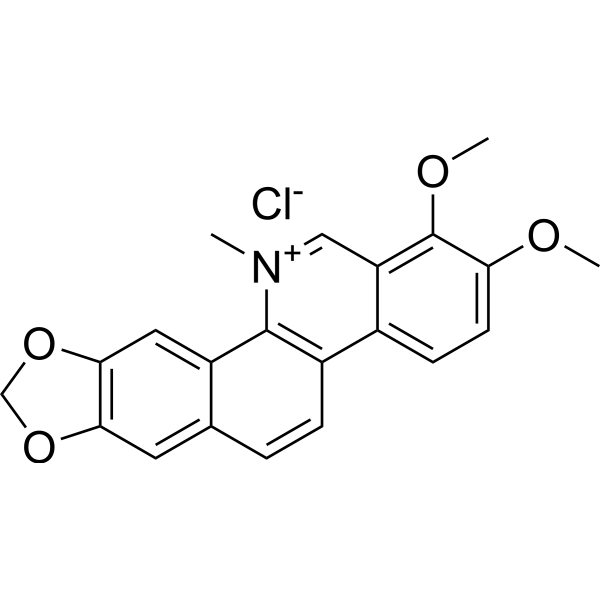
    Chelerythrine chloride
    15+ Cited Publications

    PKC Bcl-2 Family Apoptosis Autophagy Metabolic Disease Inflammation/Immunology Cancer
    Chelerythrine chloride is a potent, cell-permeable inhibitor of protein kinase C, with an IC50 of 660 nM. Chelerythrine chloride inhibits the Bcl-XL-Bak BH3 peptide binding with IC50 of 1.5 μM and displaces Bax from Bcl-XL. Chelerythrine chloride induces apoptosis and autophagy.
    Chelerythrine chloride
  • HY-P0069
    D-JNKI-1
    Maximum Cited Publications
    11 Publications Verification

    AM-111; XG-102

    JNK Others
    D-JNKI-1 (AM-111) is a highly potent and cell-permeable peptide inhibitor of JNK.
    D-JNKI-1
  • HY-P4157

    MDM-2/p53 Apoptosis Metabolic Disease
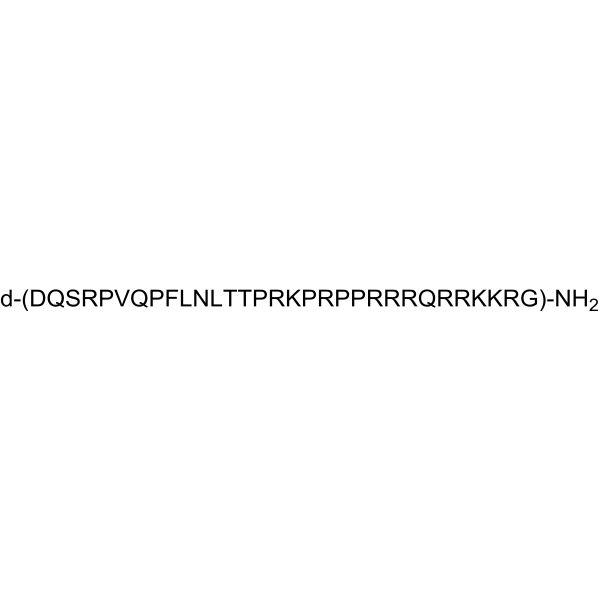
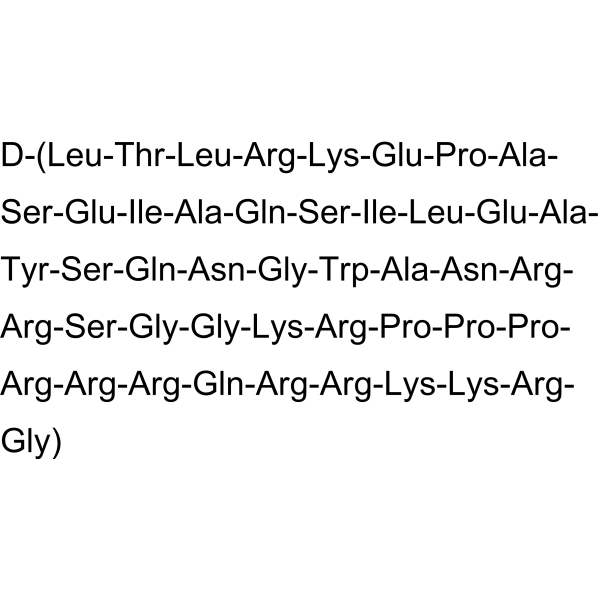
    FOXO4-DRI is a cell-permeable peptide antagonist that blocks the interaction of FOXO4 and p53. FOXO4-DRI is a senolytic peptide that induces apoptosis of senescent cells .
    FOXO4-DRI
  • HY-18962
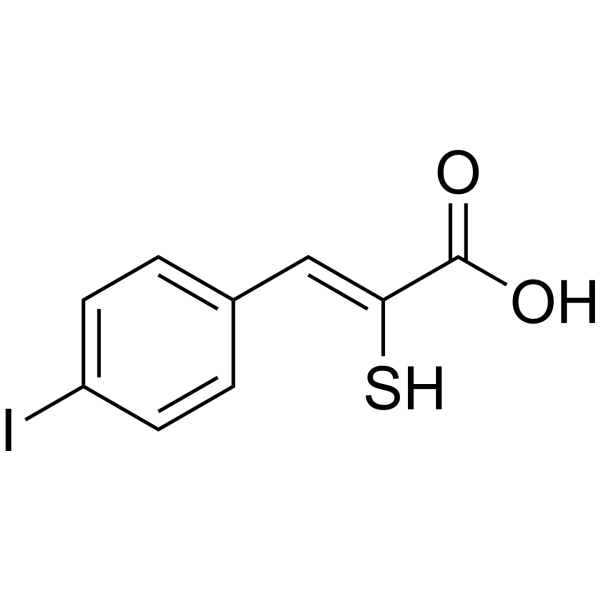
    AMI-1
    5+ Cited Publications

    Histone Methyltransferase Cancer
    AMI-1 is a potent, cell-permeable and reversible inhibitor of protein arginine N-methyltransferases (PRMTs), with IC50s of 8.8 μM and 3.0 μM for human PRMT1 and yeast-Hmt1p, respectively. AMI-1 exerts PRMTs inhibitory effects by blocking peptide-substrate binding .
    AMI-1
  • HY-P3229
    SN52
    2 Publications Verification

    NF-κB Cancer
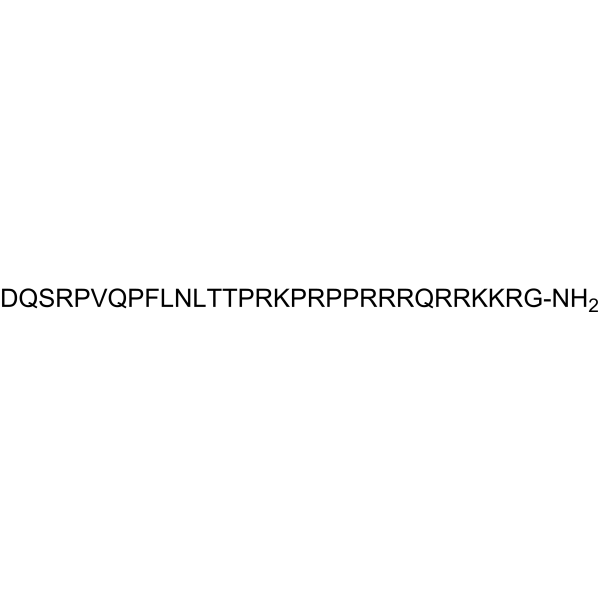
    SN52 is a potent, competitive, and cell-permeable inhibitor of NF-κB2. SN52 is a variant of the SN50 peptide and inhibits the nuclear translocation of p52-RelB heterodimers. SN52 has a strong radiosensitization effect on prostate cancer cells. SN52 can be used for cancer research .
    SN52
  • HY-P5985
    mSIRK
    2 Publications Verification

    ERK Others
    mSIRK (G-Protein βγ Binding Peptide) is an cell-permeable activator of ERK1/2, with EC50 of 2.5-5 μM. mSIRK disrupts the interaction between α and βγ subunits and promotes α subunit dissociation without stimulating nucleotide exchange .
    mSIRK
  • HY-P10108

    Hxk2VBD peptide, Cell-permeable

    Hexokinase Neurological Disease
    Hexokinase II VDAC binding domain peptide (Hxk2VBD peptide) is a cell-permeable hexokinase II VDAC binding domain. Hexokinase II VDAC binding domain peptide inhibits mitochondrial localization of hexokinase 2 (HXK2). Hexokinase II VDAC binding domain peptide inhibits neurotrophic factor-directed axon outgrowth .
    Hexokinase II VDAC binding domain peptide, cell-permeable
  • HY-P1111

    Src Interleukin Related Inflammation/Immunology
    Lyn peptide inhibitor (YGYRLRRKWEEKIPNP-NH2) is a potent, cell-permeable Lyn kinase inhibitor that inhibits Lyn-coupled signaling pathways associated with the IL-5 receptor while preserving the integrity of other signals. Lyn peptide inhibitor blocks the activation of Lyn and inhibits the binding of Lyn tyrosine kinase to the βc subunit of the IL-3/GM-CSF/IL-5 receptor. Lyn peptide inhibitor can be used in the research of eosinophilic diseases such as asthma and allergy .
    Lyn peptide inhibitor
  • HY-P10114

    PpYLKTK-mts; STAT3 PI

    STAT Cancer
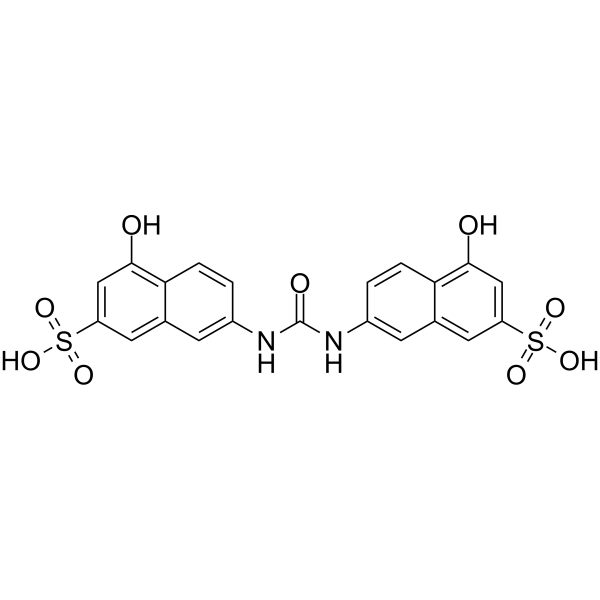
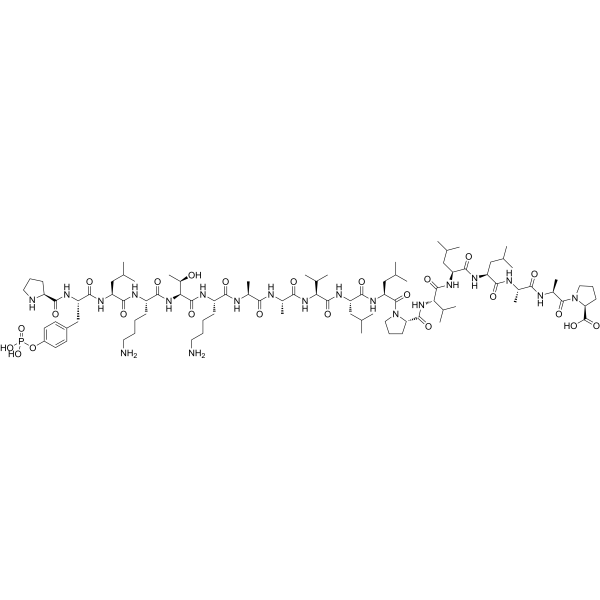
    STAT3-IN-24, cell-permeable (PpYLKTK-mts) is a STAT3 peptide inhibitor. STAT3-IN-24, cell-permeable inhibits recruitment of STAT3 to Jak2 and phosphorylation of Y705, thus preventing the dimerization and the nuclear translocation of STAT3 .
    STAT3-IN-24, cell-permeable
  • HY-P3245A

    Apoptosis Cancer
    HXR9 hydrochloride is a cell-permeable peptide and a competitive antagonist of HOX/PBX interaction. HXR9 hydrochloride antagonizes the interaction between HOX and a second transcrip-tion factor (PBX), which binds to HOX proteins in paralogue groups1 to 8. HXR9 hydrochloride selectively decreases cell proliferation and promotes apoptosis in cells with a high level of expression of the HOXA/PBX3 genes, such as MLL-rearranged leukemic cells .
    HXR9 hydrochloride
  • HY-16129

    Calmodulin Checkpoint Kinase (Chk) MAPKAPK2 (MK2) MAP3K Cancer
    CBP-501, a cell-permeable calmodulin-binding peptide and a G2-abrogating drug candidate, inhibits the activity of multiple Ser 216-specific kinases, such as MAPKAP-K2, C-Tak1, CHK1 and CHK2, with IC50 values of 0.9 μM, 1.4 μM 3.4 μM and 6.5 μM, respectively. CBP-501 is used for various types of cancer .
    CBP-501
  • HY-18962A
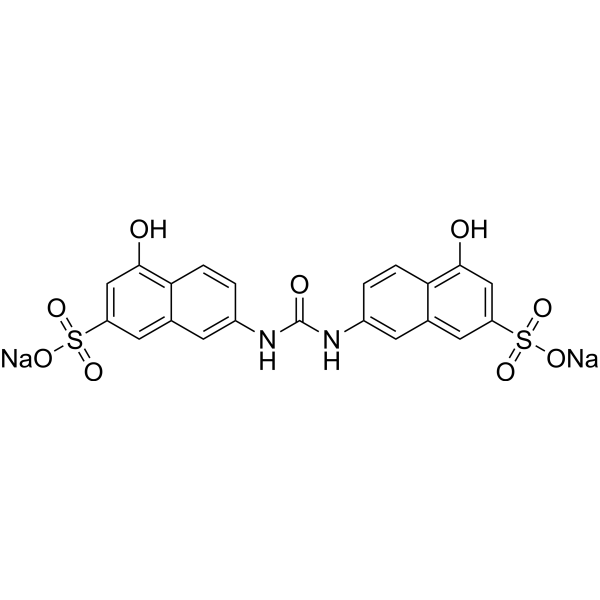
    AMI-1 free acid
    5+ Cited Publications

    Histone Methyltransferase Cancer
    AMI-1 free acid is a potent, cell-permeable and reversible inhibitor of protein arginine N-methyltransferases (PRMTs), with IC50s of 8.8 μM and 3.0 μM for human PRMT1 and yeast-Hmt1p, respectively. AMI-1 free acid exerts PRMTs inhibitory effects by blocking peptide-substrate binding .
    AMI-1 free acid
  • HY-146127

    MEK Cancer
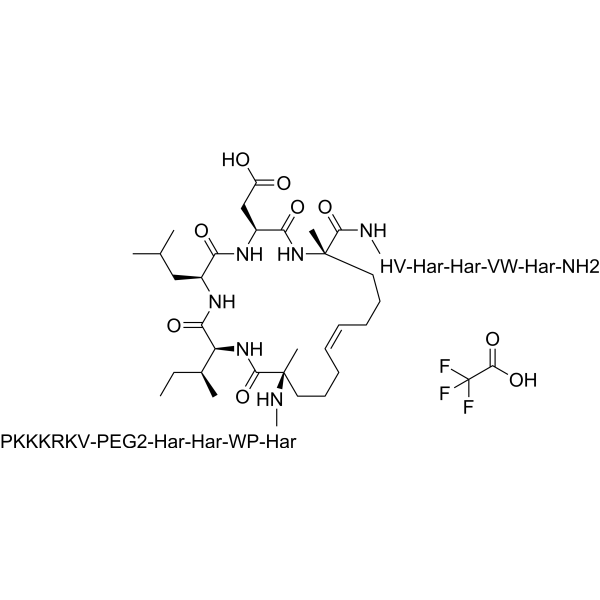
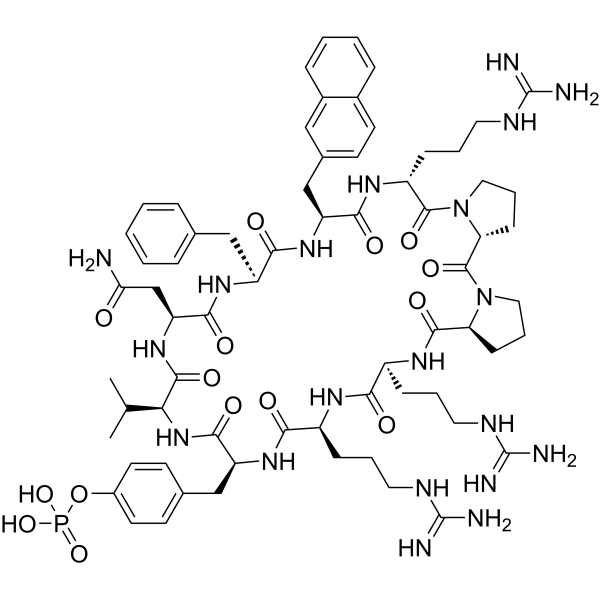
    Grb2 SH2 domain inhibitor 1 is an inhibitor of the Grb2 SH2 domain with an IC50 of 0.40 μM. Grb2 SH2 domain inhibitor 1 is also a cell-permeable cyclic peptide that can enter the cytosol of mammalian cells. Grb2 SH2 domain inhibitor 1 downregulates the expression level of p-MEK. Grb2 SH2 domain inhibitor 1 can be used in the research of breast cancer .
    Grb2 SH2 domain inhibitor 1
  • HY-P4083

    Fluorescent Dye Others
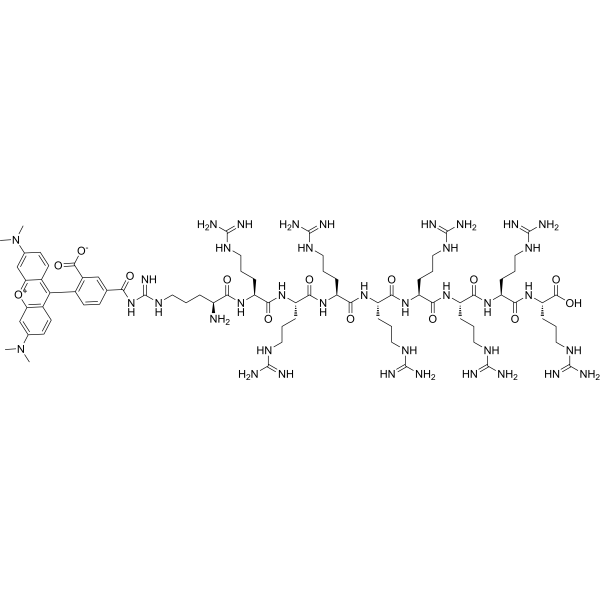
    (Arg)9,TAMRA-labeled is a TAMRA-labeled cell permeable peptide. (Arg)9 is a cell-permeable peptide used for drug delivery .
    (Arg)9,TAMRA-labeled
  • HY-P1190

    JNK Apoptosis Inflammation/Immunology
    c-JUN peptide is a cell-permeable c-JUN-JNK interaction inhibitor. c-JUN peptide inhibits serum-induced c-Jun phosphorylation. c-JUN peptide induces apoptosis .
    c-JUN peptide
  • HY-P4133

    ERK MEK Cancer
    MEK1 Derived Peptide Inhibitor 1 is a peptide inhibitor. MEK1 Derived Peptide Inhibitor 1 can inhibit the in vitro activation of ERK2 by MEK1 with an IC50 value of 30 μM. MEK1 Derived Peptide Inhibitor 1 can be used for the research of cell-permeable .
    MEK1 Derived Peptide Inhibitor 1
  • HY-P10553

    Apoptosis Cancer
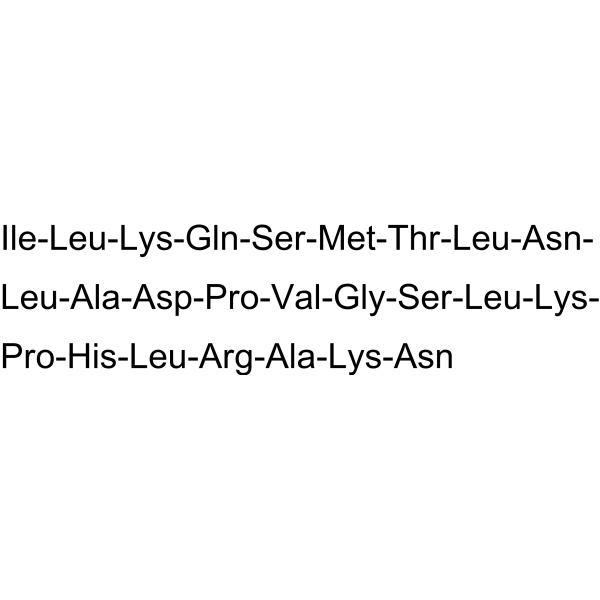
    ARF(26–44), cell-permeable is a cell-penetrating peptide derived from a specific amino acid sequence of the p14ARF tumor suppressor protein. As a functional inhibitor of FoxM1, ARF(26–44) cell-permeable shows significant anti-tumor activity in the treatment of mouse hepatocellular carcinoma (HCC), significantly increasing tumor cell apoptosis and reducing tumor cell proliferation and angiogenesis. ARF(26–44), cell-permeable can be used in research on tumor therapy .
    ARF(26–44), cell-permeable
  • HY-P1575

    HIV Infection
    TAT (48-57) is a cell-permeable peptide, derived from HIV-1 transactivator of transcription (Tat) protein residue 48-57.
    TAT (48-57)
  • HY-P4157A

    MDM-2/p53 Apoptosis Metabolic Disease
    FOXO4-DRI acetate is a cell-permeable peptide antagonist that blocks the interaction of FOXO4 and p53. FOXO4-DRI acetate is a senolytic peptide that induces apoptosis of senescent cells .
    FOXO4-DRI acetate
  • HY-P3245

    Apoptosis Cancer
    HXR9 is a cell-permeable peptide and a competitive antagonist of HOX/PBX interaction. HXR9 antagonizes the interaction between HOX and a second transcrip-tion factor (PBX), which binds to HOX proteins in paralogue groups1 to 8. HXR9 selectively decreases cell proliferation and promotes apoptosis in cells with a high level of expression of the HOXA/PBX3 genes, such as MLL-rearranged leukemic cells .
    HXR9
  • HY-P2272

    Wnt β-catenin Cancer
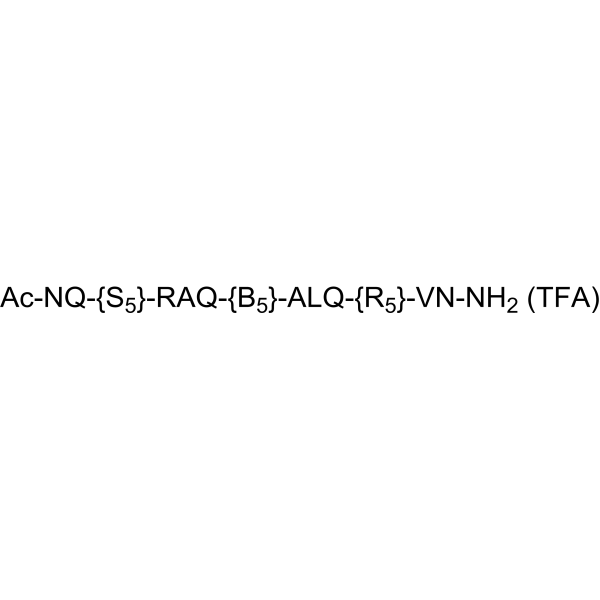
    NLS-StAx-h is a selective, cell permeable, stapled peptide Wnt signaling inhibitor with an IC50 of 1.4 μM. NLS-StAx-h efficiently inhibits β-catenin-transcription factor interactions. NLS-StAx-h shows anti-proliferation of cancer cells .
    NLS-StAx-h
  • HY-P3429

    PKC Cardiovascular Disease
    SAMβA is conjugated to the cell permeable peptide TAT47-57. SAMβA, a rationally designed selective antagonist of Mfn1-βIIPKC association. SAMβA is a selective inhibitor of mitofusin 1-βIIPKC association improves heart failure outcome in rats .
    SAMβA
  • HY-P2272A
    NLS-StAx-h TFA
    1 Publications Verification

    Wnt β-catenin Cancer
    NLS-StAx-h TFA is a selective, cell permeable, stapled peptide Wnt signaling inhibitor with an IC50 of 1.4 μM. NLS-StAx-h TFA efficiently inhibits β-catenin-transcription factor interactions. NLS-StAx-h TFA shows anti-proliferation of cancer cells .
    NLS-StAx-h TFA
  • HY-P10553A

    Apoptosis Cancer
    ARF(26–44), cell-permeable acetate is a cell-penetrating peptide derived from a specific amino acid sequence of the p14ARF tumor suppressor protein. As a functional inhibitor of FoxM1, ARF(26–44) cell-permeable acetate shows significant anti-tumor activity in the treatment of mouse hepatocellular carcinoma (HCC), significantly increasing tumor cell apoptosis and reducing tumor cell proliferation and angiogenesis. ARF(26–44), cell-permeable acetate can be used in research on tumor therapy .
    ARF(26–44), cell-permeable acetate
  • HY-P10051

    Ras Raf Cancer
    Cyclorasin 9A5 is an 11-residue cell-permeable cyclic peptide that orthosterically inhibits the Ras-Raf protein interaction with an IC50 of 120 nM .
    Cyclorasin 9A5
  • HY-P1575A

    HIV Infection
    TAT (48-57) (TFA) is a cell-permeable peptide, derived from HIV-1 transactivator of transcription (Tat) protein residue 48-57 .
    TAT (48-57) TFA
  • HY-P1111A

    Src Interleukin Related Inflammation/Immunology
    Lyn peptide inhibitor TFA is a potent and cell-permeable inhibitor of Lyn-coupled IL-5 receptor signaling pathway, while keeping other signals intact. Lyn peptide inhibitor TFA blocks Lyn activation and inhibits the binding of Lyn tyrosine kinase to βc subunit of IL-3/GM-CSF/IL-5 receptors. Lyn peptide inhibitor TFA can be used for study of  asthma, allergic, and other eosinophilic disorders .
    Lyn peptide inhibitor TFA
  • HY-P10889

    Phosphatase Inflammation/Immunology
    CNI103 is a highly potent and metabolically stable cell-permeable peptide inhibitor of calcineurin. CNI103 selectively blocks the interaction between calcineurin and NFATc3 (KD=16 nM), thereby preventing NFATc3 activation in vitro and in vivo. CNI103 can be used to study acute respiratory distress syndrome (ARDS) and other inflammatory diseases .
    CNI103
  • HY-P10356

    TRP Channel Others
    T100-Mut is a cell-permeable peptide whose N-terminus is conjugated with a myristoylated group to enable T100-Mut to penetrate and localize to the inner side of the plasma membrane, thus mimicking the topology of Tmem100-3Q. T100-Mut can alleviate TRPA1-mediated pain .
    T100-Mut
  • HY-16129A

    Calmodulin MAP3K MAPKAPK2 (MK2) Checkpoint Kinase (Chk) Cancer
    CBP-501 acetate, a cell-permeable calmodulin-binding peptide and a G2-abrogating drug candidate, inhibits the activity of multiple Ser 216-specific kinases, such as MAPKAP-K2, C-Tak1, CHK1 and CHK2, with IC50 values of 0.9 μM, 1.4 μM 3.4 μM and 6.5 μM, respectively. CBP-501 acetate is used for various types of cancer .
    CBP-501 acetate
  • HY-P11311

    Proteasome Cancer
    NC-002, a cell-permeable peptide, is a Trypsin-like proteasome inhibitor without inhibition of lysosomal cysteine proteases. NC-002 is the epoxyketone derivative of Leupeptin (HY-18234). NC-002 sensitizes myeloma cells to Bortezomib (HY-10227) and Carfilzomib (HY-10455). NC-002 can be used for cancers research .
    NC-002
  • HY-P0069A
    L-JNKI-1
    2 Publications Verification

    JNK Neurological Disease
    L-JNKI-1 is a cell-permeable peptide inhibitor specific for JNK.
    L-JNKI-1
  • HY-P10099

    STAT Cancer
    STAT3-IN-21, cell-permeable, negative control, a peptide, is a negative control for Stat3 activity detection .
    STAT3-IN-21, cell-permeable, negative control
  • HY-P10051A

    Ras Raf Cancer
    Cyclorasin 9A5 TFA is an 11-residue cell-permeable cyclic peptide that orthosterically inhibits the Ras-Raf protein interaction with an IC50 of 120 nM .
    Cyclorasin 9A5 TFA
  • HY-P1404

    Pim Cancer
    R8-T198wt is a cell-permeable carboxyl-terminal p27 Kip1 peptide exhibits anti-tumor activity by inhibiting Pim-1 kinase .
    R8-T198wt
  • HY-P5986

    ERK Others
    mSIRK (L9A) is a cell-permeable, N-myristoylated G-Protein Binding Peptide (mSIRK). mSIRK (L9A) contains a single point mutation (Leu9 to Ala). mSIRK (L9A) cannot enhance ERK1/2 phosphorylation. mSIRK (L9A) can be used as a control peptide .
    mSIRK (L9A)
  • HY-12048R

    Reference Standards PKC Bcl-2 Family Apoptosis Autophagy Metabolic Disease Inflammation/Immunology Cancer
    Chelerythrine (chloride) (Standard) is the analytical standard of Chelerythrine (chloride). This product is intended for research and analytical applications. Chelerythrine chloride is a potent, cell-permeable inhibitor of protein kinase C, with an IC50 of 660 nM. Chelerythrine chloride inhibits the Bcl-XL-Bak BH3 peptide binding with IC50 of 1.5 μM and displaces Bax from Bcl-XL. Chelerythrine chloride induces apoptosis and autophagy.
    Chelerythrine chloride (Standard)
  • HY-P10797

    NF-κB HIF/HIF Prolyl-Hydroxylase VEGFR TNF Receptor Interleukin Related Cardiovascular Disease Inflammation/Immunology
    TAT-N24 is a cell-permeable TAT peptide as a p55PIK signaling inhibitor. TAT-N24 is effective for corneal neovascularization (CNV) and ocular inflammation by inhibiting the HIF-1α/NF-κB signaling pathway in corneal suture (CS). TAT-N24 also inhibits corneal neovascularization .
    TAT-N24
  • HY-P10058

    Biochemical Assay Reagents Cancer
    cpm-1285m is a cell-permeable mutated peptide analogue of cpm-1285 (Bcl-2 inhibitory peptide). cpm-1285m contains a single substitution of alanine for Leu-151, and exhibits a decrease in Bcl-2 binding affinity with a reduction in IC50 of ∼15-fold. cpm-1285m can be used as a control of cpm-1285 .
    cpm-1285m
  • HY-P10843

    Estrogen Receptor/ERR Cancer
    R4K1 is a cell-permeable stapled peptide. R4K1 binds to the estrogen receptor (ER) α with high affinity and inhibits its interaction with coactivators. R4K1 can enter breast cancer cells to regulate gene transcription and inhibit cell proliferation. R4K1 can be used in the study of cancer .
    R4K1
  • HY-P1399

    Myr-Pep2m

    PKC Neurological Disease
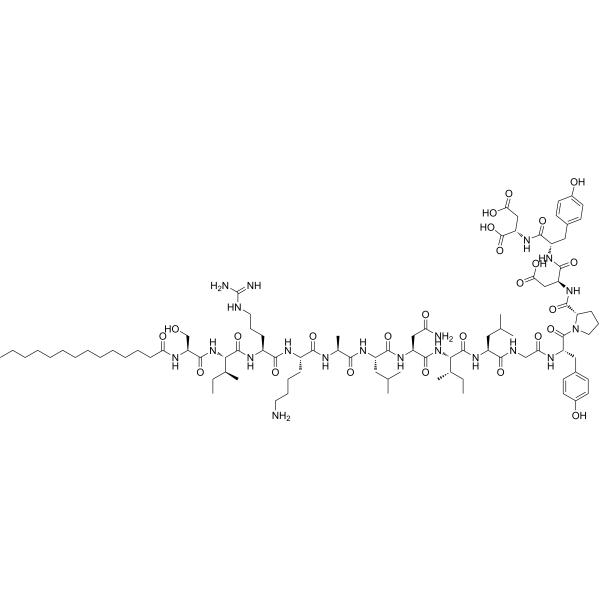
    Pep2m, myristoylated (Myr-Pep2m) is a cell-permeable peptide. Pep2m, myristoylated can disrupt the protein kinase ζ (PKMζ) downstream targets, N-ethylmaleimide-sensitive factor/glutamate receptor subunit 2 (NSF/GluR2) interactions. PKMζ is an autonomously active isozyme of protein kinase C (PKC) .
    Pep2m, myristoylated
  • HY-P1399A

    Myr-Pep2m TFA

    PKC Neurological Disease
    Pep2m, myristoylated TFA (Myr-Pep2m TFA) is a cell-permeable peptide. Pep2m, myristoylated TFA can disrupt the protein kinase ζ (PKMζ) downstream targets, N-ethylmaleimide-sensitive factor/glutamate receptor subunit 2 (NSF/GluR2) interactions. PKMζ is an autonomously active isozyme of protein kinase C (PKC) .
    Pep2m, myristoylated TFA
  • HY-18962R

    Histone Methyltransferase Cancer
    AMI-1 (Standard) is the analytical standard of AMI-1. This product is intended for research and analytical applications. AMI-1 is a potent, cell-permeable and reversible inhibitor of protein arginine N-methyltransferases (PRMTs), with IC50s of 8.8 μM and 3.0 μM for human PRMT1 and yeast-Hmt1p, respectively. AMI-1 exerts PRMTs inhibitory effects by blocking peptide-substrate binding .
    AMI-1 (Standard)
  • HY-18962AR

    Histone Methyltransferase Cancer
    AMI-1 (free acid) (Standard) is the analytical standard of AMI-1 (free acid). This product is intended for research and analytical applications. AMI-1 free acid is a potent, cell-permeable and reversible inhibitor of protein arginine N-methyltransferases (PRMTs), with IC50s of 8.8 μM and 3.0 μM for human PRMT1 and yeast-Hmt1p, respectively. AMI-1 free acid exerts PRMTs inhibitory effects by blocking peptide-substrate binding .
    AMI-1 free acid (Standard)
  • HY-P5888

    Myr‐PKCɛ-

    PKC Inflammation/Immunology
    PKCε inhibitor peptide,myristoylated (Myr‐PKC -) is a cell permeable myristic acid conjugated PKC peptide inhibitor that attenuates NO release in cultured human umbilical vein endothelial cells (HUVECs) .
    PKCε inhibitor peptide,myristoylated
  • HY-P10081

    NF-κB Inflammation/Immunology
    CTP-NBD is a cell permeable specific NFκB peptide inhibitor. CTP-NBD could be used in colitis study
    CTP-NBD
  • HY-P5329

    NADPH Oxidase Others
    r8-Gly-Noxa A BH3 is a biological active peptide. (This cell permeable peptide is derived from the BH3 domain (a death domain) of Noxa A, amino acid residues 17 to 36. Eight D-Arginine residues and a Glycine linker residue are added to the amino terminal of the peptide.)
    r8-Gly-Noxa A BH3
  • HY-P5877

    PKC Inflammation/Immunology
    PKC(85–92),Myristoylated is a cell permeable myristic acid conjugated PKC peptide activator that enhances NO release in cultured human umbilical vein endothelial cells (HUVECs) .
    ɛPKC(85–92),Myristoylated
  • HY-P10821

    PKC Reactive Oxygen Species (ROS) Cardiovascular Disease
    Myr-Tat-PKCβII is a cell permeable protein kinase C β II peptide inhibitor. Myr-Tat-PKCβII mitigates the generation of reactive oxygen species in rat ex-vivo and porcine in-vivo ischemia-reperfusion injury .
    Myr-Tat-PKCβII

Inquiry Online

Your information is safe with us. * Required Fields.

Salutation


Country or Region *

Applicant Name *


Organization Name *

Department *


Email Address *


Product Name *

Cat. No.


Requested quantity *

Phone Number *


Remarks

Inquiry Online

Inquiry Information

Product Name:
Cat. No.:
Quantity:
MCE Japan Authorized Agent:

