1. Search Result
Search Result
Results for "

Cocci

" in MedChemExpress (MCE) Product Catalog:

25

Inhibitors & Agonists

4

Natural
Products

Cat. No. Product Name Target Research Areas Chemical Structure
  • HY-A0241
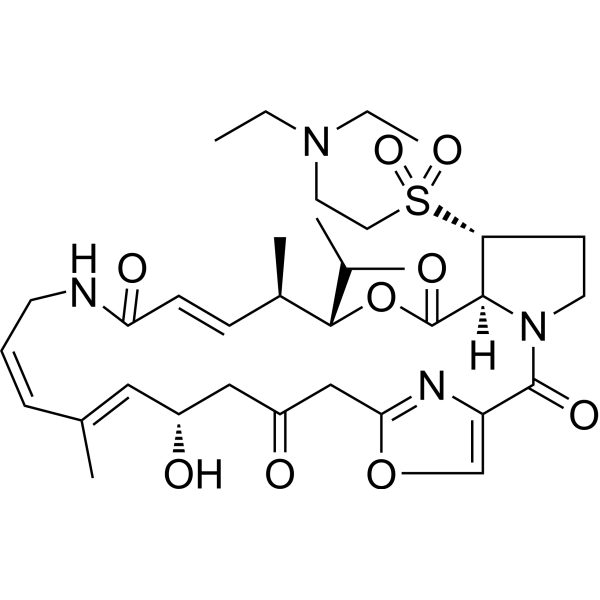
    Dalfopristin
    2 Publications Verification

    RP54476

    Antibiotic Bacterial Infection
    Dalfopristin (RP54476) is a semisynthetic sulfone antibiotic. Dalfopristin alone has limited antibacterial activity, but synergistically with Quinupristin it has significant bactericidal activity against many pathogenic Gram-positive cocci .
    Dalfopristin
  • HY-B2174
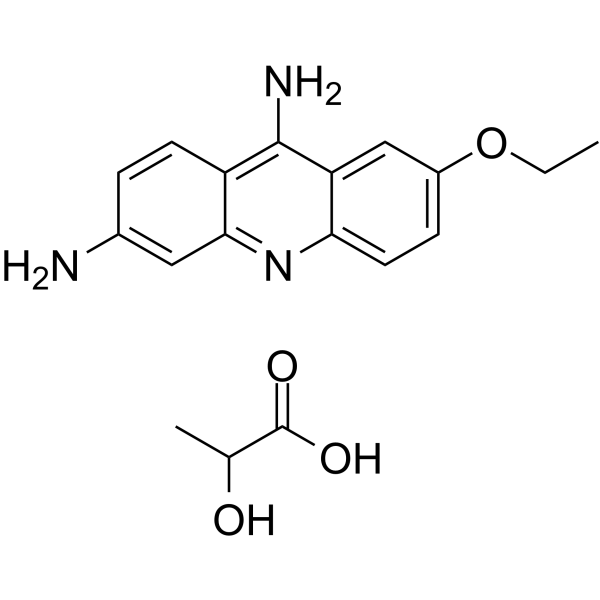
    Ethacridine lactate
    2 Publications Verification

    Acrinol

    Bacterial Infection
    Ethacridine lactate (Acrinol) is a widely used antiseptic and abortifacient. Ethacridine lactate is effective against Staphylococcus aureus and other gram-positive cocci. Ethacridine lactate is also a poly(ADP-ribose) glycohydrolase (PARG) inhibitor .
    Ethacridine lactate
  • HY-B0889
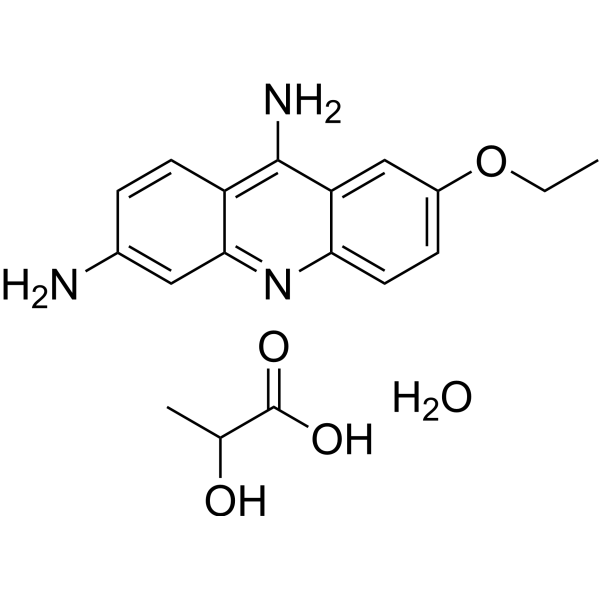
    Ethacridine lactate monohydrate
    2 Publications Verification

    Acrinol monohydrate

    Bacterial Infection
    Ethacridine lactate (Acrinol) monohydrate is a widely used antiseptic and abortifacient. Ethacridine lactate monohydrate is effective against Staphylococcus aureus and other gram-positive cocci. Ethacridine lactate monohydrate is also a poly(ADP-ribose) glycohydrolase (PARG) inhibitor .
    Ethacridine lactate monohydrate
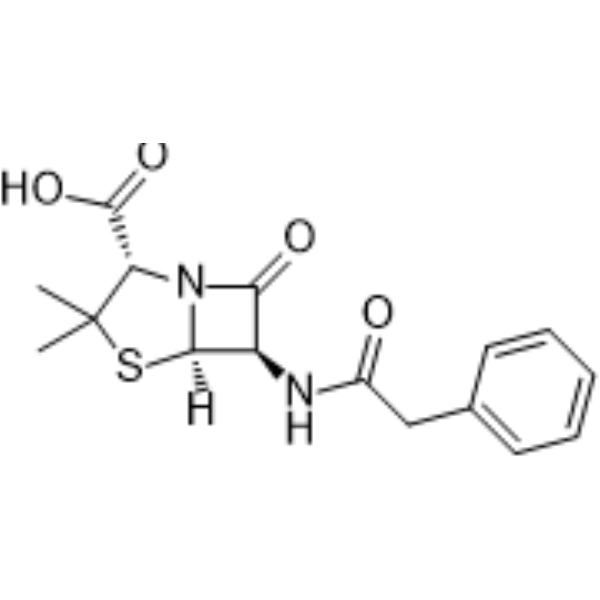
  • HY-N7139

    Benzylpenicillin

    Antibiotic Bacterial Infection
    Penicillin G is a potent penicillinantibiotic. Penicillin G can be used for bacterial infection. Penicillin G has potent activity against all Gram-positive bacteria and Gram-negative cocci .
    Penicillin G
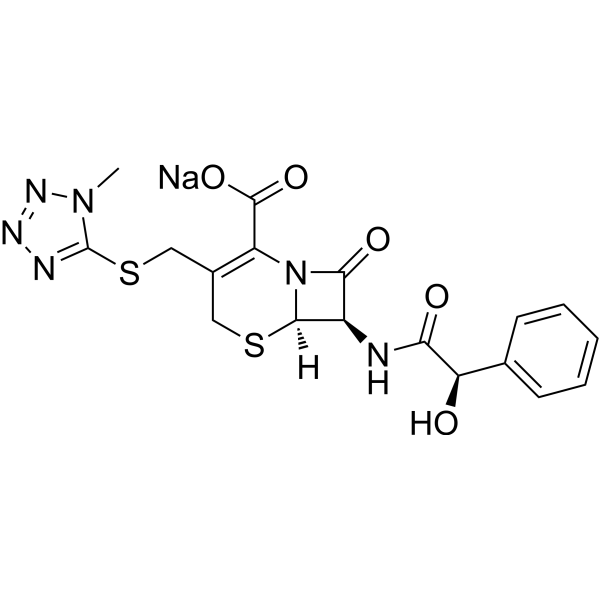
  • HY-B1128A

    Cephamandole sodium

    Antibiotic Bacterial Infection
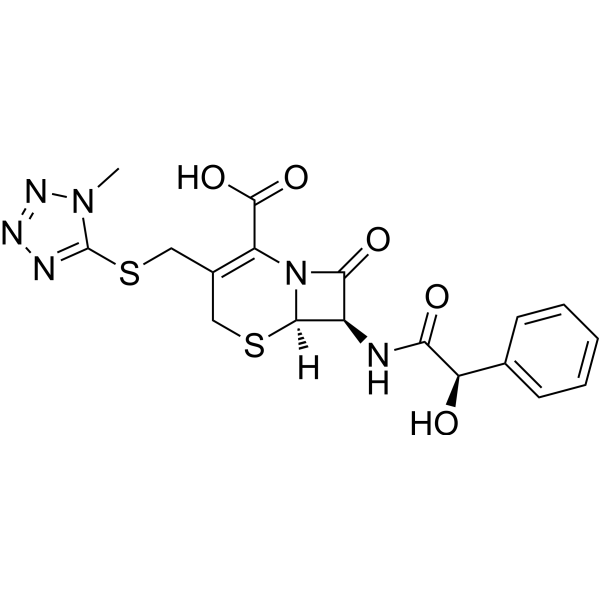
    Cefamandole (Cephamandole) sodium is a semi-synthetic second-generation cephalosporin antibiotic with broad-spectrum antimicrobial activity. Cefamandole sodium is resistant to hydrolysis by β-lactamases produced by some Gram-negative bacteria. Cefamandole sodium kills Gram-positive cocci and various Gram-negative bacilli mainly by inhibiting cell wall synthesis, but it is inactive against Pseudomonas, Proteus vulgaris and Providencia stuartii, and its efficacy is affected by inoculum size. The plasma elimination half-life of Cefamandole sodium in rats is only 0.4 h, it is mainly excreted in urine in biologically active form, and it hardly penetrates the non-inflamed blood-brain barrier. Cefamandole sodium is widely used in studies related to bacterial infections .
    Cefamandole sodium
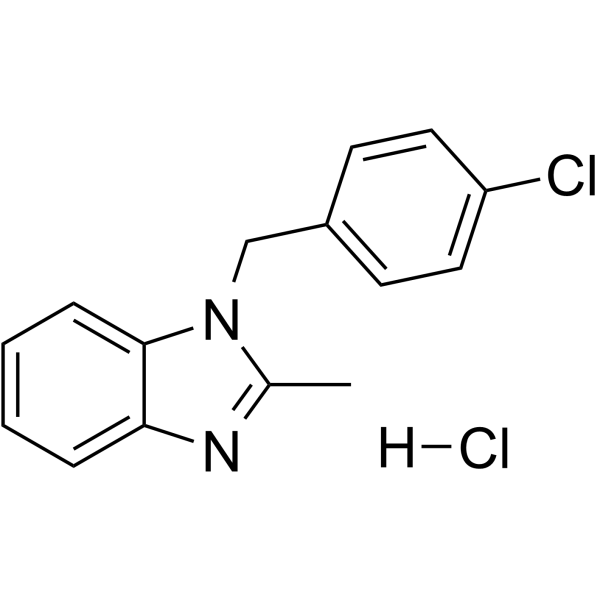
  • HY-B1144A

    Clomidazole hydrochloride

    Fungal Infection
    Chlormidazole hydrochloride is an antifungal agent and has inhibitory activity against many fungi and some gram-positive cocci. Chlormidazole hydrochloride can be applied in fungal and bacterial infections of nails and skin, including interdigital and periungual mycoses .
    Chlormidazole hydrochloride
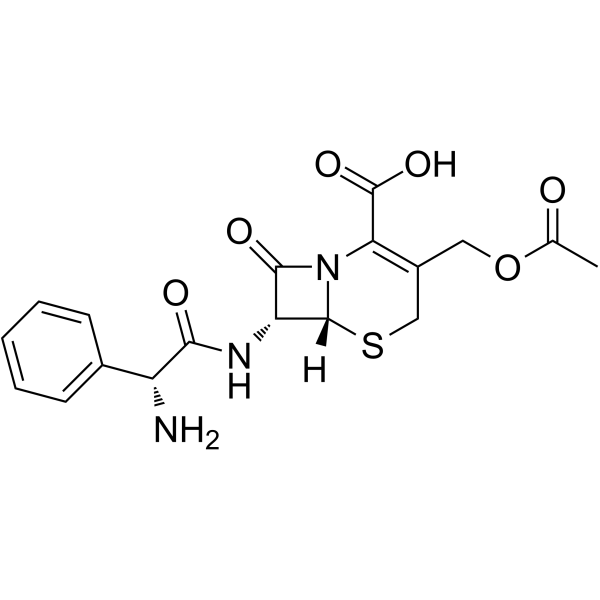
  • HY-16137

    Cephaloglycin

    Bacterial Infection
    Cefaloglycin (Cephaloglycin) is an orally active nephrotoxic β-lactam cephalosporin antibiotic with antibacterial activity. Cefaloglycin is activity against Gram-Positive cocci other than enterococci. Cefaloglycin is toxic to mitochondrial substrate uptake and respiration .
    Cefaloglycin
  • HY-B1128

    Cephamandole

    Antibiotic Bacterial Infection
    Cefamandole (Cephamandole) is a semi-synthetic second-generation cephalosporin antibiotic with broad-spectrum antimicrobial activity. Cefamandole is resistant to hydrolysis by β-lactamases produced by some Gram-negative bacteria. Cefamandole kills Gram-positive cocci and various Gram-negative bacilli mainly by inhibiting cell wall synthesis, but it is inactive against Pseudomonas, Proteus vulgaris and Providencia stuartii, and its efficacy is affected by inoculum size. The plasma elimination half-life of Cefamandole in rats is only 0.4 h, it is mainly excreted in urine in biologically active form, and it hardly penetrates the non-inflamed blood-brain barrier. Cefamandole is widely used in studies related to bacterial infections .
    Cefamandole
  • HY-139805

    Antibiotic Bacterial Infection
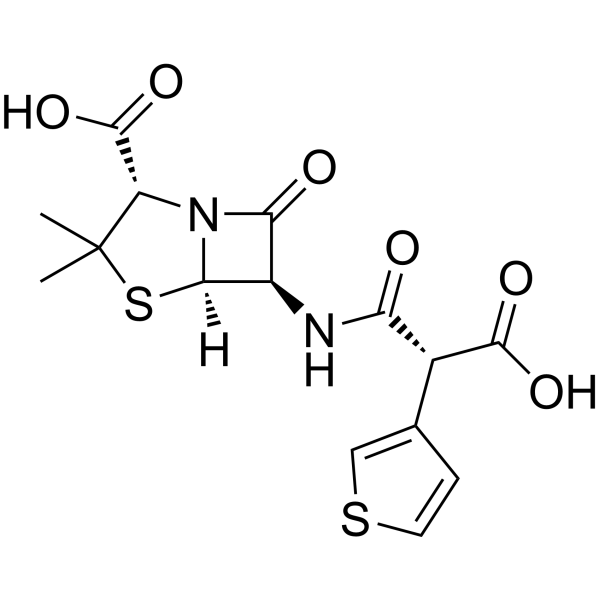
    Ticarcillin is a semisynthetic, extended-spectrum, carboxypenicillin antibacterial agent, and is active against gram-positive cocci, including streptococci and staphylococci. Ticarcillin is also effective against most gram-negative organisms, including Pseudomonas aeruginosa. Ticarcillin can be used in lower respiratory tract infections, skin and skin structure infections, urinary tract infections, and intraabdominal infections research .
    Ticarcillin
  • HY-W055872

    Antibiotic Infection
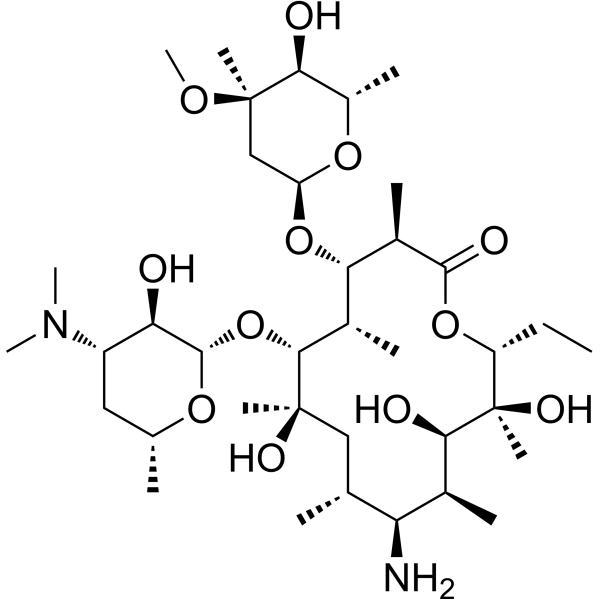
    Erythromycylamine is a macrolide antibiotic. Erythromycylamine has antibacterial activity against most Gram-positive cocci and M. catarrhalis .
    Erythromycylamine
  • HY-W023253

    Bacterial Fungal Infection Inflammation/Immunology
    Biclotymol is an antimicrobial agent against gram-positive cocci. Biclotymol inhibits Streptococcus pneumoniae and Haemophilus influenzae, with MIC of 150 and 150 μM. Biclotymol exhibits anti-inflammatory and analgesic activity and ameliorates the otolaryngology infection and throat sore .
    Biclotymol
  • HY-102008

    NVP-PDF 713; VIC-104959

    Bacterial Antibiotic Infection
    LBM-415 (NVP-PDF 713) is a peptide deformylase (PDF) inhibitor that exhibits inhibitory activity against various antimicrobial-resistant gram-positive cocci, with a MIC90 range of 0.12-8 µg/ml. Additionally, inhibiting efflux pump activity can enhance bacterial sensitivity to LBM415, thereby improving its antibacterial efficacy .
    LBM-415
  • HY-117845

    LL-E19085α

    Antibiotic Bacterial Infection
    Citreamicin alpha (LL-E 19085-alpha) is an antibiotic whose in vitro antimicrobial activity against 429 clinical isolates of Gram-positive cocci has been tested by the agar dilution method. These microorganisms included 313 strains of Staphylococci and 116 strains of Streptococci. The in vitro activity of Citreamicin alpha was compared with that of ampicillin, amoxicillin, ceftriaxone, erythromycin, and vancomycin. For Staphylococci, the MIC values of Citreamicin alpha ranged from 0.12-4.0 μg/ml, and for Streptococcus pyogenes of the genus Streptococcus, it was 0.03-0.12 μg/ml. However, enterococci were relatively resistant, requiring 2.0 μg/ml of the agent to inhibit 64% of the 62 tested strains. The in vitro activity of this antibiotic was much better than that of ampicillin, amoxicillin, ceftriaxone, and erythromycin, but comparable or slightly inferior to that of vancomycin.
    Citreamicin alpha
  • HY-122328

    Antibiotic Bacterial Infection
    Flambamycin is an antibiotic found in Streptomyces hygroscopicus DS 23230 strain, active against Gram-positive and Gram-negative cocci and some Gram-positive rods. Flambamycin can be used in research on antibiotic screening .
    Flambamycin
  • HY-B0889R

    Acrinol monohydrate (Standard)

    Reference Standards Bacterial Infection
    Ethacridine (lactate monohydrate) (Standard) is the analytical standard of Ethacridine (lactate monohydrate). This product is intended for research and analytical applications. Ethacridine lactate (Acrinol) monohydrate is a widely used antiseptic and abortifacient. Ethacridine lactate monohydrate is effective against Staphylococcus aureus and other gram-positive cocci. Ethacridine lactate monohydrate is also a poly(ADP-ribose) glycohydrolase (PARG) inhibitor .
    Ethacridine lactate monohydrate (Standard)
  • HY-N14699

    Ancillin free acid; 2-Biphenylyl penicillin free acid; SKF-12141 free acid

    Penicillin-binding protein (PBP) Bacterial Infection
    Diphenicillin (Ancillin (free acid); 2-Biphenylyl penicillin (free acid); SKF-12141 (free acid)) is a Penicillinase (HY-E70012)- resistant penicillin with antibacterial activity. Diphenicillin shows good antibacterial effects against Gram-positive cocci. Diphenicillin is promising for research of infectious diseases caused by Gram-positive cocci such as staphylococci, pneumococci, and group A streptococci .
    Diphenicillin
  • HY-W743988

    Antibiotic Bacterial Infection
    Cilastatin ammonium salt is an antibiotic that is relatively effective against Gram-positive cocci with a half-life of 3-4 h .
    Cilastatin ammonium salt
  • HY-A0241A

    RP54476 mesylate

    Antibiotic Bacterial Infection
    Dalfopristin (RP54476) mesylate is a semisynthetic sulfone antibiotic. Dalfopristin mesylate alone has limited antibacterial activity, but synergistically with Quinupristin it has significant bactericidal activity against many pathogenic Gram-positive cocci .
    Dalfopristin mesylate
  • HY-112175R

    N-Omega-acetylhistamine (Standard)

    Reference Standards Histamine Receptor Endogenous Metabolite Inflammation/Immunology Endocrinology
    Ethacridine (lactate monohydrate) (Standard) is the analytical standard of Ethacridine (lactate monohydrate). This product is intended for research and analytical applications. Ethacridine lactate (Acrinol) monohydrate is a widely used antiseptic and abortifacient. Ethacridine lactate monohydrate is effective against Staphylococcus aureus and other gram-positive cocci. Ethacridine lactate monohydrate is also a poly(ADP-ribose) glycohydrolase (PARG) inhibitor .
    N-Acetylhistamine (Standard)
  • HY-U00092

    Bacterial Infection
    BAY-Y 3118 is a quinolone antibacterial agent. BAY-Y 3118 has a broad antibacterial spectrum in vitro. BAY-Y 3118 exhibits high activity against gram-positive cocci and anaerobes. BAY-Y 3118 shows moderate activity against Enterobacteriaceae and Pseudomonas aeruginosa. BAY-Y 3118 can be used in the research of infectious diseases .
    BAY-Y 3118
  • HY-139805A

    Bacterial Antibiotic Cancer
    Ticarcillin monosodium is a semisynthetic, extended-spectrum, carboxypenicillin antibacterial agent, and is active against gram-positive cocci, including streptococci and staphylococci. Ticarcillin monosodium is also effective against most gram-negative organisms, including Pseudomonas aeruginosa. Ticarcillin monosodium can be used in lower respiratory tract infections, skin and skin structure infections, urinary tract infections, and intraabdominal infections research .
    Ticarcillin monosodium
  • HY-B1128B

    Cephamandole lithium

    Antibiotic Bacterial Infection
    Cefamandole (Cephamandole) lithium is a semi-synthetic second-generation cephalosporin antibiotic with broad-spectrum antimicrobial activity. Cefamandole lithium is resistant to hydrolysis by β-lactamases produced by some Gram-negative bacteria. Cefamandole lithium kills Gram-positive cocci and various Gram-negative bacilli mainly by inhibiting cell wall synthesis, but it is inactive against Pseudomonas, Proteus vulgaris and Providencia stuartii, and its efficacy is affected by inoculum size. The plasma elimination half-life of Cefamandole lithium in rats is only 0.4 h, it is mainly excreted in urine in biologically active form, and it hardly penetrates the non-inflamed blood-brain barrier. Cefamandole lithium is widely used in studies related to bacterial infections .
    Cefamandole lithium
  • HY-B1128AR

    Cephamandole sodium (Standard)

    Reference Standards Antibiotic Bacterial Infection
    Cefamandole (sodium) (Standard) is the analytical standard of Cefamandole (sodium). This product is intended for research and analytical applications. Cefamandole (Cephamandole) sodium is a semi-synthetic second-generation cephalosporin antibiotic with broad-spectrum antimicrobial activity. Cefamandole sodium is resistant to hydrolysis by β-lactamases produced by some Gram-negative bacteria. Cefamandole sodium kills Gram-positive cocci and various Gram-negative bacilli mainly by inhibiting cell wall synthesis, but it is inactive against Pseudomonas, Proteus vulgaris and Providencia stuartii, and its efficacy is affected by inoculum size. The plasma elimination half-life of Cefamandole sodium in rats is only 0.4 h, it is mainly excreted in urine in biologically active form, and it hardly penetrates the non-inflamed blood-brain barrier. Cefamandole sodium is widely used in studies related to bacterial infections .
    Cefamandole sodium (Standard)
  • HY-106946

    Bacterial
    E 5065 is an orally active antibacterial agent. E 5065 exhibits potent in vitro activity against Gram-negative microorganisms, Gram-positive cocci, and anaerobes. E 5065 exhibits an MIC90 of 0.5 μg/mL against Clostridium spp. E 5065 provides protection against experimental infections caused by P. aeruginosa .
    E 5065
  • HY-U00092A

    Bacterial Infection
    BAY-Y 3118 hydrochloride is a quinolone antibacterial agent. BAY-Y 3118 hydrochloride has a broad antibacterial spectrum in vitro. BAY-Y 3118 hydrochloride exhibits high activity against gram-positive cocci and anaerobes. BAY-Y 3118 hydrochloride shows moderate activity against Enterobacteriaceae and Pseudomonas aeruginosa. BAY-Y 3118 hydrochloride can be used in the research of infectious diseases .
    BAY-Y 3118 hydrochloride

Inquiry Online

Your information is safe with us. * Required Fields.

Salutation


Country or Region *

Applicant Name *


Organization Name *

Department *


Email Address *


Product Name *

Cat. No.


Requested quantity *

Phone Number *


Remarks

Inquiry Online

Inquiry Information

Product Name:
Cat. No.:
Quantity:
MCE Japan Authorized Agent:

