Search Result
Results for "
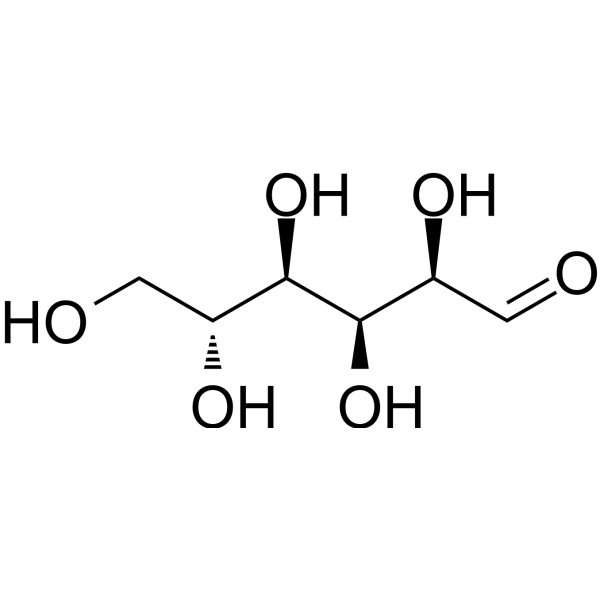
D-glucose
" in MedChemExpress (MCE) Product Catalog:
47
Biochemical Assay Reagents
86
Isotope-Labeled Compounds
| Cat. No. |
Product Name |
Target |
Research Areas |
Chemical Structure |
-
- HY-B0389
-
-
-
- HY-B0389A
-
D-Glucose-13C6
Maximum Cited Publications
17 Publications Verification
glucose-13C6; D-(+)-glucose-13C6; Dextrose-13C6
|
Endogenous Metabolite
|
Metabolic Disease
|
|
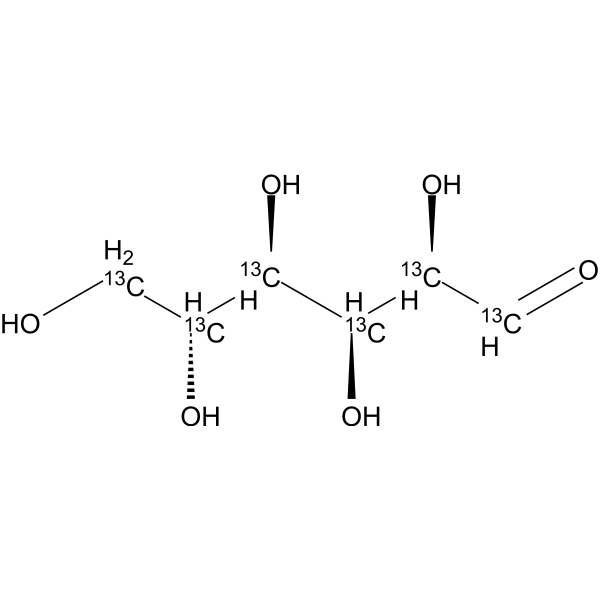
D-Glucose- 13C6 is a stable isotope-labeled counterpart of D-glucose (HY-B0389). D-Glucose- 13C6 can be used as a metabolic tracer to trace glucose-related synthetic catabolism or as synthesis ingredient, minimal media reagent, and internal standard .
|
-
-
- HY-112537
-
|
|
Endogenous Metabolite
mTOR
|
Cardiovascular Disease
Metabolic Disease
|
|
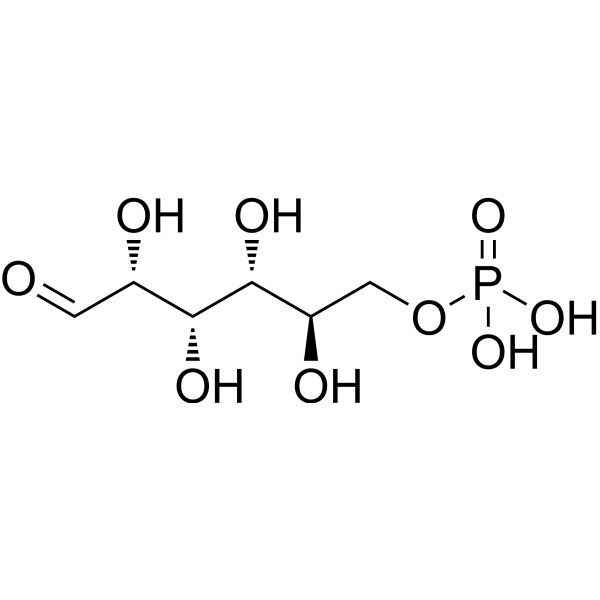
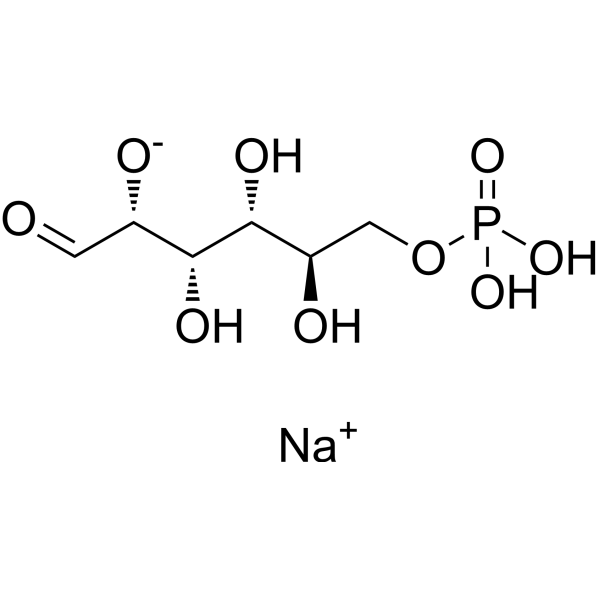
D-Glucose 6-phosphate is a key central node metabolite in glucose metabolism. It serves as the initiating metabolite for glycolysis and the pentose phosphate pathway, as well as a substrate for glycogen synthesis. D-Glucose 6-phosphate acts as a metabolic stress signal, which activates the mTOR pathway to promote protein synthesis, especially when phosphoglucose isomerase (PGI) is inhibited, thereby participating in cardiac remodeling processes. D-Glucose 6-phosphate can be used in research related to non-insulin-dependent diabetes mellitus and heart failure .
|
-
-
- HY-128374
-
-
-
- HY-B0389S10
-
|
glucose-13C; D-(+)-glucose-13C; Dextrose-13C
|
Endogenous Metabolite
|
Metabolic Disease
|
|
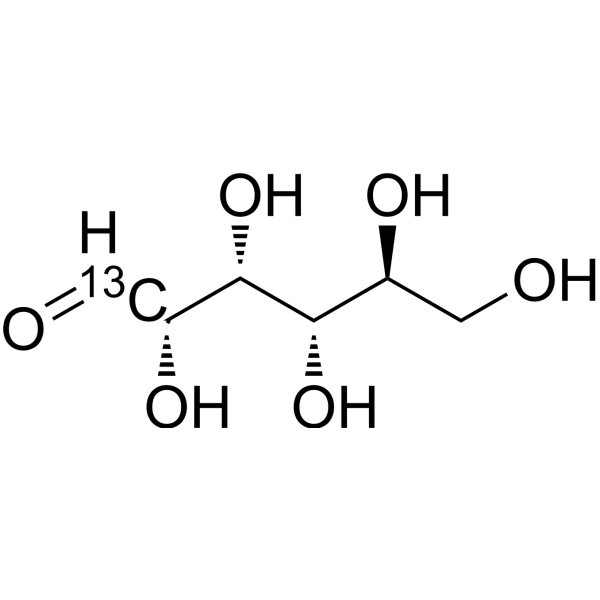
D-Glucose- 13C is the 13C labeled D-Glucose. D-Glucose (Glucose), a monosaccharide, is an important carbohydrate in biology. D-Glucose is a carbohydrate sweetener and critical components of the general metabolism, and serve as critical signaling molecules in relation to both cellular metabolic status and biotic and abiotic stress response .
|
-
-
- HY-121965
-
|
|
Biochemical Assay Reagents
Endogenous Metabolite
|
Others
|
|
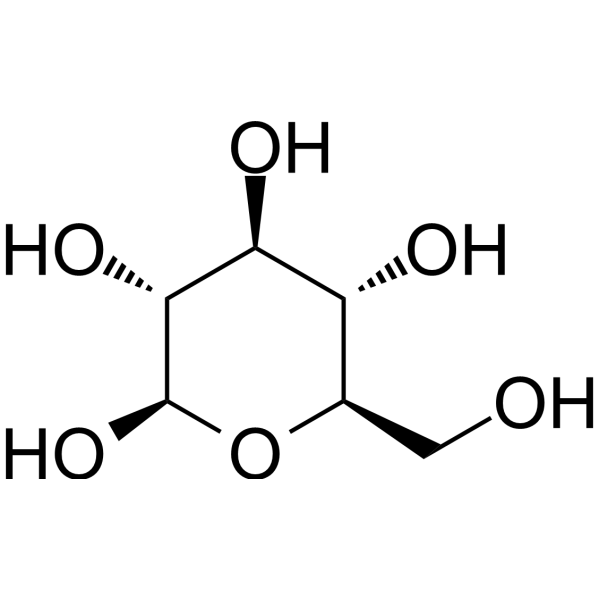
β-D-Glucose, also known as glucose, is a monosaccharide, the most important carbohydrate in biological systems, the main energy source of cells, and plays a key role in various metabolic processes. β-D-Glucose has unique chemical properties that make it an abundant component in plant and animal tissues and is readily metabolized by organisms to produce cellular energy. It is commonly used to improve hypoglycemia and dehydration, and as a sweetener and preservative in food and beverage production.
|
-
-
- HY-112537B
-
-
-
- HY-128417
-
-
-
- HY-141637
-
|
2-Fluoro-2-deoxy-D-glucose; 2-Deoxy-2-fluoro-D-glucopyranose; Fluorodeoxyglucose
|
Biochemical Assay Reagents
|
Cancer
|
|
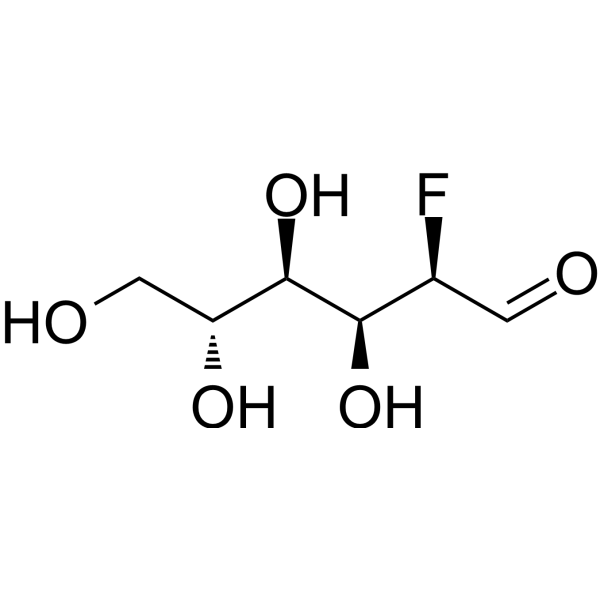
2-Deoxy-2-fluoro-D-glucose (2-Fluoro-2-deoxy-D-glucose) is a glucose analog that can be absorbed by cells. 2-Deoxy-2-fluoro-D-glucose is capable of being labelled with 18F for positron emission tomography (PET) imaging. 18F-2-Deoxy-2-fluoro-D-glucose can be used to detect breast cancer and gastric cancer .
|
-
-
- HY-112537S1
-
|
|
Isotope-Labeled Compounds
Endogenous Metabolite
mTOR
|
Cardiovascular Disease
Metabolic Disease
|
|
D-Glucose 6-Phosphate- 13C6 disodium xhydrate is a 13C-labeled D-Glucose 6-phosphate disodium xhydrate. D-Glucose 6-phosphate disodium xhydrate is a key central node metabolite in sugar metabolism, serving as the initial metabolite of glycolysis and pentose phosphate pathway, and also a substrate for glycogen synthesis. D-Glucose 6-phosphate disodium xhydrate can act as a metabolic stress signal, especially when phosphoglucomutase (PGI) is inhibited, activating the mTOR pathway, promoting protein synthesis, and thereby participating in the remodeling process of the heart. D-Glucose 6-phosphate disodium xhydrate can be used in research related to non-insulin-dependent diabetes and heart failure.
|
-
-
- HY-B0389S16
-
|
glucose-1-13C; D-(+)-glucose-1-13C; Dextrose-1-13C
|
Endogenous Metabolite
|
Metabolic Disease
|
|
D-Glucose-1- 13C is the 13C labeled D-Glucose. D-Glucose (Glucose), a monosaccharide, is an important carbohydrate in biology. D-Glucose is a carbohydrate sweetener and critical components of the general metabolism, and serve as critical signaling molecules in relation to both cellular metabolic status and biotic and abiotic stress response .
|
-
-
- HY-128417A
-
|
|
Biochemical Assay Reagents
|
Others
|
|
alpha-D-glucose hydrate is a monosaccharide and the most common form of glucose. It is a monosaccharide, which means it cannot be broken down into simpler sugars. alpha-D-glucose plays a vital role in energy metabolism and is the primary source of energy for many cells in the body. It is also a building block of larger carbohydrates such as starch and glycogen. The "α" prefix refers to the orientation of the hydroxyl group attached to the first carbon atom. Alpha-D-glucose exists in solution as a hydrate, which means it is bound to water molecules.
|
-
-
- HY-B0389R
-
|
glucose (Standard); D-(+)-glucose (Standard); Dextrose (Standard)
|
Reference Standards
Endogenous Metabolite
|
Cardiovascular Disease
Others
Metabolic Disease
Endocrinology
Cancer
|
|
D-Glucose (Standard) is the analytical standard of D-Glucose. This product is intended for research and analytical applications. D-Glucose is the naturally occurring form of glucose and the most abundant monosaccharide. D-Glucose is a critical components of the general metabolism, and serve as critical signaling molecules in relation to both cellular metabolic status and biotic or abiotic stress response .
|
-
-
- HY-112624O
-
|
Dextran 100; Dextran D100; Dextran T100(MW 90000-110000)
|
Biochemical Assay Reagents
|
Others
|
|
Dextran T100 (MW 100,000) (Dextran 100; Dextran D100) is a dehydrated glucose polymer with an average molecular weight of 100,000. Dextran T100 (MW 100,000) has an α-(1→6)-linked D-glucose backbone and α-(1→4)-, α-(1→3)- or α-(1→2)-linked D-glucose side chains, and it is synthesized by lactic acid bacteria or their enzymes. Dextran T100 (MW 100,000) possesses favorable biodegradability and biocompatibility, and it can be used in the fields of food, pharmaceuticals, cosmetics and research .
|
-
-
- HY-B0389S6
-
|
glucose-d7; D-(+)-glucose-d7; Dextrose-d7
|
Isotope-Labeled Compounds
Endogenous Metabolite
|
Metabolic Disease
|
|
D-Glucose-d77 is the deuterium labeled D-Glucose. D-Glucose (Glucose), a monosaccharide, is an important carbohydrate in biology. D-Glucose is a carbohydrate sweetener and critical components of the general metabolism, and serve as critical signaling molecules in relation to both cellular metabolic status and biotic and abiotic stress response .
|
-
-
- HY-B0389S5
-
|
glucose-d2; D-(+)-glucose-d2; Dextrose-d2
|
Isotope-Labeled Compounds
Endogenous Metabolite
|
Metabolic Disease
|
|
D-Glucose-d2 is the deuterium labeled D-Glucose. D-Glucose (Glucose), a monosaccharide, is an important carbohydrate in biology. D-Glucose is a carbohydrate sweetener and critical components of the general metabolism, and serve as critical signaling molecules in relation to both cellular metabolic status and biotic and abiotic stress response .
|
-
-
- HY-B0389S15
-
|
glucose-13C2-4; D-(+)-glucose-13C2-4; Dextrose-13C2-4
|
Endogenous Metabolite
|
Metabolic Disease
|
|
D-Glucose- 13C2-4 is the 13C labeled D-Glucose. D-Glucose (Glucose), a monosaccharide, is an important carbohydrate in biology. D-Glucose is a carbohydrate sweetener and critical components of the general metabolism, and serve as critical signaling molecules in relation to both cellular metabolic status and biotic and abiotic stress response .
|
-
-
- HY-113629
-
|
D-Glucosone; D-Arabino-hexos-2-ulose
|
Drug Metabolite
|
Infection
|
|
2-Keto-D-Glucose (D-Glucosone) is a key intermediate in a secondary metabolic pathway leading to the antibiotic Cortalcerone. 2-Keto-D-Glucose is also an intermediate in the conversion of D-glucose into D-fructose. 2-Keto-D-Glucose is found in various natural sources, including fungi, algae, and shellfish .
|
-
-
- HY-128747A
-
|
|
Drug Derivative
Drug Intermediate
Antibiotic
|
Cardiovascular Disease
Inflammation/Immunology
|
|
α-D-Glucose-1-phosphate disodium hydrate is a derivative of D-glucose (HY-B0389). α-D-Glucose-1-phosphate disodium hydrate serves as a starting material for glucuronic acid synthesis. Glucuronic acid acts as a Ca 2+ chelator and also functions as a biosynthetic substrate for the production of linear maltooligosaccharides or α,α-trehalose. α-D-Glucose-1-phosphate disodium hydrate can be used as a cytostatic compound, Antibiotic, and immunosuppressant essential for heart disease management. α-D-Glucose-1-phosphate disodium hydrate is applicable to the research of heart disease .
|
-
-
- HY-N9429
-
|
|
Others
|
Metabolic Disease
|
|
6-Deoxy-D-glucose is an inhibitor of glucose oxidation. 6-Deoxy-D-glucose is a structural homomorph of D-glucose, and can be used for study of D-glucose transport .
|
-
-
- HY-B0389F
-
-
-
- HY-137261
-
-
-
- HY-139409A
-
|
|
Hexokinase
Glucose-6-Phosphate Isomerase (GPI)
|
Cancer
|
|
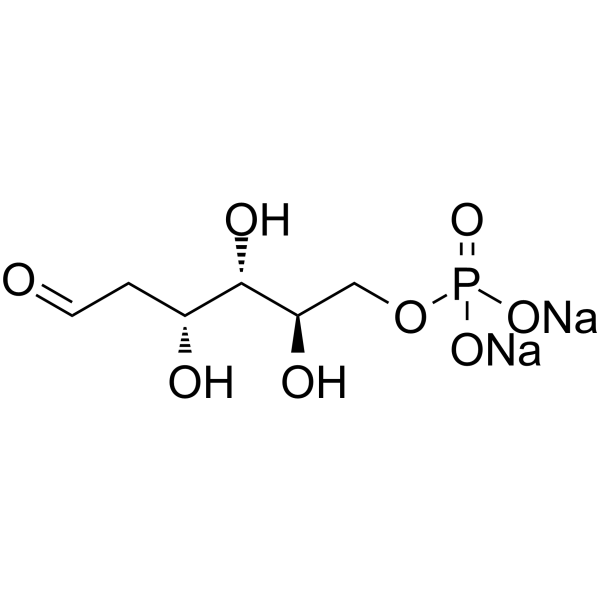
2-Deoxy-D-glucose 6-phosphate disodium is an ATP-competitive, 2-deoxy-D-glucose non-competitive Hexokinase inhibitor, with a Ki value of 1.45 mM against bovine heart hexokinase. 2-Deoxy-D-glucose 6-phosphate disodium exerts ATP-competitive and 2-deoxy-D-glucose non-competitive inhibitory effects on bovine heart hexokinase. 2-DG inhibits glycolysis via the production and intracellular accumulation of 2-Deoxy-D-glucose 6-phosphate disodium, thereby inhibiting the functions of hexokinase and Glucose-6-phosphate isomerase, and inducing cell death. 2-Deoxy-D-glucose 6-phosphate disodium can be used in cancer-related research .
|
-
-
- HY-128747
-
-
-
- HY-W719041
-
|
|
HIV
Reverse Transcriptase
|
Infection
|
|
1,6-Di-O-galloyl-β-D-glucose is a compound found in the fruit of Phyllanthus emblica. 1,6-Di-O-galloyl-β-D-glucose has HIV-1 reverse transcriptase (RT) inhibitory activity with an IC50 value of 270 μM. The inhibitory mechanism of 1,6-Di-O-galloyl-β-D-glucose is competitive inhibition of the template primer and non-competitive inhibition of the substrate (dTTP). 1,6-Di-O-galloyl-β-D-glucose can be used in anti-HIV research .
|
-
-
- HY-112537S2
-
|
|
Isotope-Labeled Compounds
Endogenous Metabolite
mTOR
|
Others
|
|
D-Glucose 6-phosphate- 13C is 13C labeled D-Glucose 6-phosphate (HY-112537). D-Glucose 6-phosphate is a key central node metabolite in glucose metabolism. It serves as the initiating metabolite for glycolysis and the pentose phosphate pathway, as well as a substrate for glycogen synthesis. D-Glucose 6-phosphate acts as a metabolic stress signal, which activates the mTOR pathway to promote protein synthesis, especially when phosphoglucose isomerase (PGI) is inhibited, thereby participating in cardiac remodeling processes. D-Glucose 6-phosphate can be used in research related to non-insulin-dependent diabetes mellitus and heart failure.
|
-
-
- HY-B0389S1
-
|
glucose-d1; D-(+)-glucose-d1; Dextrose-d1
|
Isotope-Labeled Compounds
Endogenous Metabolite
|
Metabolic Disease
Cancer
|
|
D-Glucose-d is the deuterium labeled D-Glucose. D-Glucose (Glucose), a monosaccharide, is an important carbohydrate in biology. D-Glucose is a carbohydrate sweetener and critical components of the general metabolism, and serve as critical signaling molec
|
-
-
- HY-41984
-
|
D-glucose diacetonide; 1,2:5,6-Diisopropylidene-D-glucose
|
Biochemical Assay Reagents
Drug Intermediate
|
Others
|
|
Diacetone-D-glucose (D-Glucose diacetonide) is a sugar-derived secondary alcohol that serves as an important pharmaceutical intermediate for the synthesis of other active compounds .
|
-
-
- HY-E70308
-
|
|
Endogenous Metabolite
|
Others
|
|
Glucose isomerase (immobilized) is glucose isomerase, which catalyzes the reversible isomerization of D-glucose and D-xylose into D-fructose and D-xylulose, respectively. Glucose isomerase (immobilized) can be used to produce fructose syrup under high-temperature conditions above 90 ℃. Glucose isomerase (immobilized) is widely distributed in prokaryotes .
|
-
-
- HY-167805
-
|
|
Biochemical Assay Reagents
|
|
|
D-Glucose 6-phosphate potassium is a biologically active compound that has the activity of being a substrate for glucose-6-phosphate isomerase. D-Glucose 6-phosphate potassium can participate in the sugar metabolism process and promote the production and utilization of energy in cells.
|
-
-
- HY-128374R
-
|
|
Reference Standards
Endogenous Metabolite
|
Metabolic Disease
|
|
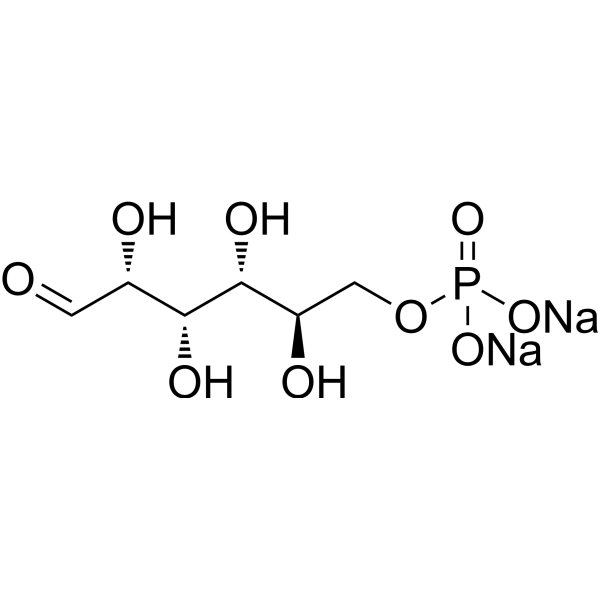
D-Glucose 6-phosphate disodium salt (Standard) is the analytical standard of D-Glucose 6-phosphate disodium salt (HY-128374). This product is intended for research and analytical applications. D-Glucose-6-phosphate disodium salt is a glucose sugar phosphorylated at the hydroxy group on carbon 6.
|
-
-
- HY-B0389S29
-
|
glucose-18O; D-(+)-glucose-18O; Dextrose-18O
|
Endogenous Metabolite
|
Metabolic Disease
Cancer
|
|
D-Glucose- 18O is the 18O labeled D-Glucose. D-Glucose (Glucose), a monosaccharide, is an important carbohydrate in biology. D-Glucose is a carbohydrate sweetener and critical components of the general metabolism, and serve as critical signaling molecules
|
-
-
- HY-W010042S3
-
-
-
- HY-128417S3
-
-
-
- HY-B0389S24
-
|
glucose-d4; D-(+)-glucose-d4; Dextrose-d4
|
Endogenous Metabolite
|
Metabolic Disease
Cancer
|
|
D-Glucose-d4 is the deuterium labeled D-Glucose. D-Glucose (Glucose), a monosaccharide, is an important carbohydrate in biology. D-Glucose is a carbohydrate sweetener and critical components of the general metabolism, and serve as critical signaling molec
|
-
-
- HY-B0389S8
-
|
glucose-d1-4; D-(+)-glucose-d1-4; Dextrose-d1-4
|
Isotope-Labeled Compounds
Endogenous Metabolite
|
Metabolic Disease
|
|
D-Glucose-d-44 is the deuterium labeled D-Glucose. D-Glucose (Glucose), a monosaccharide, is an important carbohydrate in biology. D-Glucose is a carbohydrate sweetener and critical components of the general metabolism, and serve as critical signaling molecules in relation to both cellular metabolic status and biotic and abiotic stress response .
|
-
-
- HY-B0389S2
-
|
glucose-d12-1; D-(+)-glucose-d12-1; Dextrose-d12-1
|
Isotope-Labeled Compounds
Endogenous Metabolite
|
Metabolic Disease
|
|
D-Glucose-d12-12 is the deuterium labeled D-Glucose. D-Glucose (Glucose), a monosaccharide, is an important carbohydrate in biology. D-Glucose is a carbohydrate sweetener and critical components of the general metabolism, and serve as critical signaling molecules in relation to both cellular metabolic status and biotic and abiotic stress response .
|
-
-
- HY-B0389S
-
-
-
- HY-128417R
-
|
|
Reference Standards
Endogenous Metabolite
|
Metabolic Disease
|
|
alpha-D-glucose (Standard) is the analytical standard of alpha-D-glucose. This product is intended for research and analytical applications. \alpha-D-glucose is a monosaccharide that has a more significant insulin stimulating effect than beta-D-glucose[1][2].
|
-
-
- HY-128417S1
-
-
-
- HY-115419
-
|
|
Liposome
|
Others
|
|
1-Thio-β-D-glucose sodium is the sodium salt form of 1-Thio-β-D-glucose. 1-Thio-β-D-glucose forms hydrophilic self-assembled monolayer with metal, stablizes the lipid bilayer and protects the proteins from denaturation .
|
-
-
- HY-115709
-
|
|
Drug Derivative
|
Cancer
|
|
4,6-O-Benzylidene-D-glucose is a benzaldehyde derivative. 4,6-O-Benzylidene-D-glucose exerts anticancer effects without causing side effects .
|
-
-
- HY-128747R
-
|
|
Reference Standards
Endogenous Metabolite
|
Cardiovascular Disease
Metabolic Disease
Inflammation/Immunology
|
|
α-D-Glucose-1-phosphate disodium (Standard) is the analytical standard of α-D-Glucose-1-phosphate disodium (HY-128747). This product is intended for research and analytical applications.
α-D-Glucose-1-phosphate disodium is used as a starting material for synthesis of glucuronic acid. α-D-Glucose-1-phosphate disodium can be used as a cytostatic compound essential for cardiopathic therapy, as an antibiotic, as an immunosuppressive agent, and as a circulatory system therapy element.
|
-
-
- HY-W039865
-
|
|
Biochemical Assay Reagents
|
Cancer
|
|
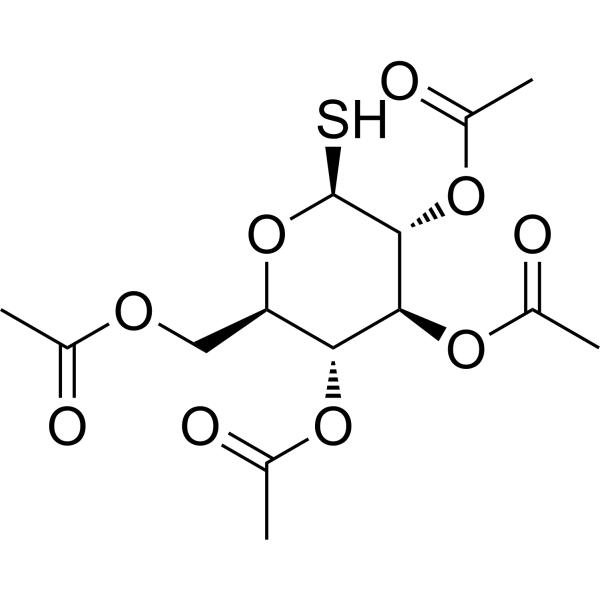
1-Thio-beta-D-glucose tetraacetate exhibits cytotoxicity in cells HeLa and human ocular lens epithelium CECH with IC50s of >250 and >200 μM. 1-Thio-beta-D-glucose tetraacetate reveals moderate anticancer property .
|
-
-
- HY-112537A
-
|
|
Endogenous Metabolite
mTOR
|
Cardiovascular Disease
Metabolic Disease
|
|
D-Glucose 6-phosphate dipotassium is a key central node metabolite in glucose metabolism. It serves as the initiating metabolite for glycolysis and the pentose phosphate pathway, as well as a substrate for glycogen synthesis. D-Glucose 6-phosphate dipotassium acts as a metabolic stress signal, which activates the mTOR pathway to promote protein synthesis, especially when phosphoglucose isomerase (PGI) is inhibited, thereby participating in cardiac remodeling processes. D-Glucose 6-phosphate dipotassium can be used in research related to non-insulin-dependent diabetes mellitus and heart failure .
|
-
-
- HY-B0389S20
-
|
glucose-13C,d-1; D-(+)-glucose-13C,d-1; Dextrose-13C,d-1
|
Endogenous Metabolite
|
Metabolic Disease
Cancer
|
|
D-Glucose- 13C,d-1 is the deuterium and 13C labeled D-Glucose. D-Glucose (Glucose), a monosaccharide, is an important carbohydrate in biology. D-Glucose is a carbohydrate sweetener and critical components of the general metabolism, and serve as critical si
|
-
-
- HY-B0389S4
-
|
glucose-d1-2; D-(+)-glucose-d1-2; Dextrose-d1-2
|
Isotope-Labeled Compounds
Endogenous Metabolite
|
Metabolic Disease
|
|
D-Glucose-d1-2 is the deuterium labeled D-Glucose. D-Glucose (Glucose), a monosaccharide, is an important carbohydrate in biology. D-Glucose is a carbohydrate sweetener and critical components of the general metabolism, and serve as critical signaling molecules in relation to both cellular metabolic status and biotic and abiotic stress response .
|
-
-
- HY-B0389S13
-
|
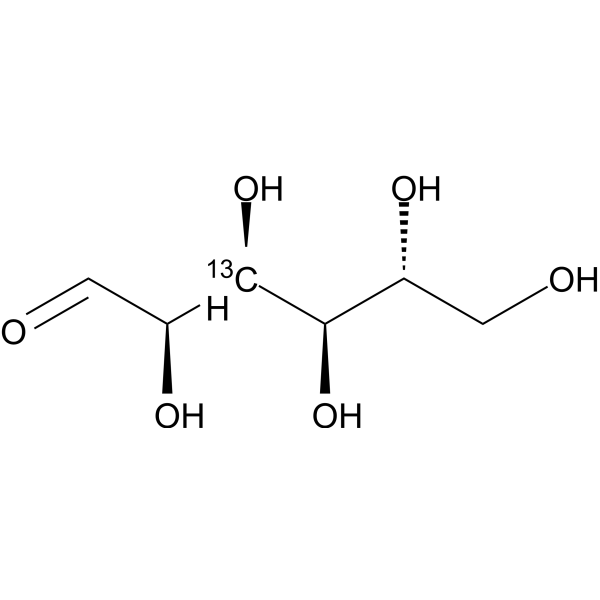
glucose-2-13C; D-(+)-glucose-2-13C; Dextrose-2-13C
|
Isotope-Labeled Compounds
Endogenous Metabolite
|
Metabolic Disease
|
|
D-Glucose-2- 13C is the 13C labeled D-Glucose. D-Glucose (Glucose), a monosaccharide, is an important carbohydrate in biology. D-Glucose is a carbohydrate sweetener and critical components of the general metabolism, and serve as critical signaling molecules in relation to both cellular metabolic status and biotic and abiotic stress response .
|
-
-
- HY-B0389S11
-
|
glucose-4-13C; D-(+)-glucose-4-13C; Dextrose-4-13C
|
Endogenous Metabolite
|
Metabolic Disease
|
|
D-Glucose-4- 13C is the 13C labeled D-Glucose. D-Glucose (Glucose), a monosaccharide, is an important carbohydrate in biology. D-Glucose is a carbohydrate sweetener and critical components of the general metabolism, and serve as critical signaling molecules in relation to both cellular metabolic status and biotic and abiotic stress response .
|
-
-
- HY-B0389S12
-
|
glucose-5-13C; D-(+)-glucose-5-13C; Dextrose-5-13C
|
Isotope-Labeled Compounds
Endogenous Metabolite
|
Metabolic Disease
|
|
D-Glucose-5- 13C is the 13C labeled D-Glucose. D-Glucose (Glucose), a monosaccharide, is an important carbohydrate in biology. D-Glucose is a carbohydrate sweetener and critical components of the general metabolism, and serve as critical signaling molecules in relation to both cellular metabolic status and biotic and abiotic stress response[1].
|
-
- HY-B0389S14
-
|
glucose-13C2; D-(+)-glucose-13C2; Dextrose-13C2
|
Isotope-Labeled Compounds
Endogenous Metabolite
|
Metabolic Disease
|
|
D-Glucose- 13C2 is the 13C labeled D-Glucose. D-Glucose (Glucose), a monosaccharide, is an important carbohydrate in biology. D-Glucose is a carbohydrate sweetener and critical components of the general metabolism, and serve as critical signaling molecules in relation to both cellular metabolic status and biotic and abiotic stress response[1].
|
-
- HY-B0389S9
-
|
glucose-13C3-2; D-(+)-glucose-13C3-2; Dextrose-13C3-2
|
Isotope-Labeled Compounds
Endogenous Metabolite
|
Metabolic Disease
|
|
D-Glucose- 13C3-2 is the 13C labeled D-Glucose. D-Glucose (Glucose), a monosaccharide, is an important carbohydrate in biology. D-Glucose is a carbohydrate sweetener and critical components of the general metabolism, and serve as critical signaling molecules in relation to both cellular metabolic status and biotic and abiotic stress response .
|
-
- HY-139409
-
|
|
Hexokinase
Glucose-6-Phosphate Isomerase (GPI)
|
Cancer
|
|
2-Deoxy-D-glucose 6-phosphate disodium is an ATP-competitive and 2-deoxy-D-glucose non-competitive Hexokinase inhibitor, with a Ki value of 1.45 mM against bovine heart hexokinase. 2-Deoxy-D-glucose 6-phosphate disodium exerts ATP-competitive and 2-deoxy-D-glucose non-competitive inhibitory effects on bovine heart hexokinase. 2-DG inhibits glycolysis via the generation and intracellular accumulation of 2-Deoxy-D-glucose 6-phosphate disodium, thereby inhibiting the functions of hexokinase and Glucose-6-phosphate isomerase, and inducing cell death. 2-Deoxy-D-glucose 6-phosphate disodium can be used in cancer-related research .
|
-
- HY-N8365
-
|
|
Others
|
Others
|
|
Alpha-D-Glucose 1,6-bisphosphate (tetrapotassium) is a negative stain. Alpha-D-Glucose 1,6-bisphosphate (tetrapotassium) as an accuracy of 86???and has a somewhat higher image contrast .
|
-
- HY-W654206
-
-
- HY-B0389S26
-
|
glucose-d2-2; D-(+)-glucose-d2-2; Dextrose-d2-2
|
Endogenous Metabolite
|
Metabolic Disease
Cancer
|
|
D-Glucose-d2-2 is the deuterium labeled D-Glucose. D-Glucose (Glucose), a monosaccharide, is an important carbohydrate in biology. D-Glucose is a carbohydrate sweetener and critical components of the general metabolism, and serve as critical signaling mol
|
-
- HY-B0389S19
-
|
glucose-13C,d; D-(+)-glucose-13C,d; Dextrose-13C,d
|
Endogenous Metabolite
|
Metabolic Disease
Cancer
|
|
D-Glucose- 13C,d is the deuterium and 13C labeled D-Glucose. D-Glucose (Glucose), a monosaccharide, is an important carbohydrate in biology. D-Glucose is a carbohydrate sweetener and critical components of the general metabolism, and serve as critical sign
|
-
- HY-41587
-
-
- HY-B0389S17
-
|
glucose-6-13C; D-(+)-glucose-6-13C; Dextrose-6-13C
|
Isotope-Labeled Compounds
Endogenous Metabolite
|
Metabolic Disease
|
|
D-Glucose-6- 13C is the 13C labeled D-Glucose. D-Glucose (Glucose), a monosaccharide, is an important carbohydrate in biology. D-Glucose is a carbohydrate sweetener and critical components of the general metabolism, and serve as critical signaling molecules in relation to both cellular metabolic status and biotic and abiotic stress response .
|
-
- HY-W779002
-
|
|
Isotope-Labeled Compounds
|
|
|
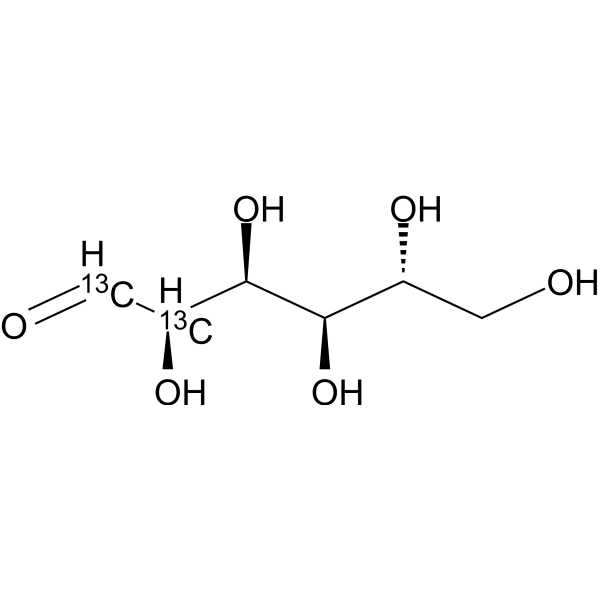
alpha-D-glucose-13C2-1 is a 13C labeled alpha-D-glucose. alpha-D-glucose is an endogenous metabolite.
|
-
- HY-B0389S31
-
|
glucose-18O-2; D-(+)-glucose-18O-2; Dextrose-18O-2
|
Endogenous Metabolite
|
Metabolic Disease
Cancer
|
|
D-Glucose- 18O-2 is the 18O labeled D-Glucose. D-Glucose (Glucose), a monosaccharide, is an important carbohydrate in biology. D-Glucose is a carbohydrate sweetener and critical components of the general metabolism, and serve as critical signaling molecule
|
-
- HY-B0389S30
-
|
glucose-18O-1; D-(+)-glucose-18O-1; Dextrose-18O-1
|
Endogenous Metabolite
|
Metabolic Disease
Cancer
|
|
D-Glucose- 18O-1 is the 18O labeled D-Glucose. D-Glucose (Glucose), a monosaccharide, is an important carbohydrate in biology. D-Glucose is a carbohydrate sweetener and critical components of the general metabolism, and serve as critical signaling molecule
|
-
- HY-B0389S32
-
|
glucose-18O-3; D-(+)-glucose-18O-3; Dextrose-18O-3
|
Endogenous Metabolite
|
Metabolic Disease
Cancer
|
|
D-Glucose- 18O-3 is the 18O labeled D-Glucose. D-Glucose (Glucose), a monosaccharide, is an important carbohydrate in biology. D-Glucose is a carbohydrate sweetener and critical components of the general metabolism, and serve as critical signaling molecule
|
-
- HY-B0389S7
-
|
glucose-d1-3; D-(+)-glucose-d1-3; Dextrose-d1-3
|
Endogenous Metabolite
|
Metabolic Disease
|
|
D-Glucose-d-33 is the deuterium labeled D-Glucose. D-Glucose (Glucose), a monosaccharide, is an important carbohydrate in biology. D-Glucose is a carbohydrate sweetener and critical components of the general metabolism, and serve as critical signaling molecules in relation to both cellular metabolic status and biotic and abiotic stress response .
|
-
- HY-128417S2
-
-
- HY-B0389S25
-
|
glucose-13C,d1; D-(+)-glucose-13C,d1; Dextrose-13C,d1
|
Endogenous Metabolite
|
Metabolic Disease
Cancer
|
|
D-Glucose- 13C,d is the deuterium and 13C labeled D-Glucose. D-Glucose (Glucose), a monosaccharide, is an important carbohydrate in biology. D-Glucose is a carbohydrate sweetener and critical components of the general metabolism, and serve as critical sig
|
-
- HY-B0389S18
-
|
glucose-13C3-1; D-(+)-glucose-13C3-1; Dextrose-13C3-1
|
Isotope-Labeled Compounds
Endogenous Metabolite
|
Metabolic Disease
|
|
D-Glucose- 13C3-1 is the 13C labeled D-Glucose. D-Glucose (Glucose), a monosaccharide, is an important carbohydrate in biology. D-Glucose is a carbohydrate sweetener and critical components of the general metabolism, and serve as critical signaling molecules in relation to both cellular metabolic status and biotic and abiotic stress response .
|
-
- HY-B0389S22
-
|
glucose-13C2,d2; D-(+)-glucose-13C2,d2; Dextrose-13C2,d2
|
Endogenous Metabolite
|
Metabolic Disease
Cancer
|
|
D-Glucose- 13C2,d2 is the deuterium and 13C labeled D-Glucose. D-Glucose (Glucose), a monosaccharide, is an important carbohydrate in biology. D-Glucose is a carbohydrate sweetener and critical components of the general metabolism, and serve as critical si
|
-
- HY-W145606
-
|
|
Biochemical Assay Reagents
|
Others
|
|
D-Glucose 6-Phosphate Barium Salt Heptahydrate is a biochemical reagent that can be used as a biological material or organic compound for life science related research.
|
-
- HY-W039863
-
|
|
Biochemical Assay Reagents
|
|
|
D-Glucose-6-phosphate (dipotassium hydrate) is a biochemical reagent used in glycobiology research. Glycobiology studies the structure, synthesis, biology, and evolution of sugars. It deals with carbohydrate chemistry, glycan formation and degradation enzymology, protein-glycan recognition, and the role of glycans in biological systems. The field is closely related to basic research, biomedicine and biotechnology .
|
-
- HY-W768275
-
-
- HY-128417S
-
-
- HY-128417S4
-
-
- HY-146993S
-
-
- HY-22306S
-
|
|
Isotope-Labeled Compounds
|
Others
|
|
β-D-Glucose pentaacetate- 13C6 is the 13C labeled β-D-Glucose pentaacetate[1]. β-D-Glucose Pentaacetate (Penta-O-acetyl-β-D-glucopyranose) is used in biochemical reaction.
|
-
- HY-N9525
-
|
|
Others
|
Others
|
|
Limocitrin 3-β-D-glucose is a flavonoid glycoside .
|
-
- HY-N6006R
-
|
1,3,6-Tri-O-galloyl-β-D-glucose (Standard)
|
Reference Standards
Others
|
Others
|
|
1,3,6-Tri-O-galloyl-beta-D-glucose (Standard) is the analytical standard of 1,3,6-Tri-O-galloyl-beta-D-glucose. This product is intended for research and analytical applications. 1,3,6-Tri-O-galloyl-beta-D-glucose (1,3,6-Tri-O-galloyl-β-D-glucose) is a phenolic compound in Black Walnut Kernels .
|
-
- HY-W748418
-
|
|
Isotope-Labeled Compounds
Liposome
|
Others
|
|
1-Thio-β-D-glucose Sodium Salt Dihydrate- 13C6 is the 13C-labeled 1-Thio-β-D-glucose sodium (HY-115419). 1-Thio-β-D-glucose sodium is the sodium salt form of 1-Thio-β-D-glucose. 1-Thio-β-D-glucose forms hydrophilic self-assembled monolayer with metal, stablizes the lipid bilayer and protects the proteins from denaturation .
|
-
- HY-141637S
-
|
|
Isotope-Labeled Compounds
Biochemical Assay Reagents
|
Cancer
|
|
2-Deoxy-2-fluoro-D-glucose- 13C is the 13C labeled 2-Deoxy-2-fluoro-D-glucose (HY-141637). 2-Deoxy-2-fluoro-D-glucose (2-Fluoro-2-deoxy-D-glucose) is a glucose analog that can be absorbed by cells. 2-Deoxy-2-fluoro-D-glucose is capable of being labelled with 18F for positron emission tomography (PET) imaging. 18F-2-Deoxy-2-fluoro-D-glucose can be used to detect breast cancer and gastric cancer .
|
-
- HY-128417S5
-
-
- HY-177708
-
|
|
Nucleoside Antimetabolite/Analog
|
Infection
Cancer
|
|
N-Acetyltryptamine α-D-Glucose-3-phosphate (Compound 30) a nucleotide analogue. N-Acetyltryptamine α-D-Glucose-3-phosphate can modify RNA and enhance its stability.by covalently connecting modular glucose nucleotides. N-Acetyltryptamine α-D-Glucose-3-phosphate can be used for the researches of cancer and infection .
|
-
- HY-146990S
-
-
- HY-113002
-
|
|
Phosphomannose Isomerase (PMI)
|
Infection
Metabolic Disease
|
|
α-D-Glucose 1,6-bisphosphate is an activator of PMM2 and phosphoglucomutase. α-D-Glucose 1,6-bisphosphate regulates glycogen metabolism, glycolysis, amino sugar synthesis, as well as the formation of bacterial cell walls and capsules. α-D-Glucose 1,6-bisphosphate can be used in studies related to pmm2-cdg (cdg-1a or Jaeken syndrome) .
|
-
- HY-B0389S23
-
|
glucose-d2-1; D-(+)-glucose-d2-1; Dextrose-d2-1
|
Endogenous Metabolite
|
Metabolic Disease
Cancer
|
|
D-Glucose-d2-1 is the deuterium labeled D-Glucose. D-Glucose (Glucose), a monosaccharide, is an important carbohydrate in biology. D-Glucose is a carbohydrate sweetener and critical components of the general metabolism, and serve as critical signaling mol
|
-
- HY-B0389S3
-
|
glucose-d1-1; D-(+)-glucose-d1-1; Dextrose-d1-1
|
Endogenous Metabolite
|
Metabolic Disease
|
|
D-Glucose-d-11 is the deuterium labeled D-Glucose. D-Glucose (Glucose), a monosaccharide, is an important carbohydrate in biology. D-Glucose is a carbohydrate sweetener and critical components of the general metabolism, and serve as critical signaling molecules in relation to both cellular metabolic status and biotic and abiotic stress response .
|
-
- HY-W854345
-
-
- HY-B0389S21
-
|
glucose-13C,d2; D-(+)-glucose-13C,d2; Dextrose-13C,d2
|
Endogenous Metabolite
|
Metabolic Disease
Cancer
|
|
D-Glucose- 13C,d2 is the deuterium and 13C labeled D-Glucose. D-Glucose (Glucose), a monosaccharide, is an important carbohydrate in biology. D-Glucose is a carbohydrate sweetener and critical components of the general metabolism, and serve as critical sig
|
-
- HY-W706302
-
|
|
Biochemical Assay Reagents
|
Others
|
|
D-Glucose,2-(acetylamino)-2-deoxy,3-acetate is a class of biochemical reagents used in glycobiology research. Glycobiology studies the structure, synthesis, biology, and evolution of sugars. It involves carbohydrate chemistry, enzymology of glycan formation and degradation, protein-glycan recognition, and the role of glycans in biological systems. This field is closely related to basic research, biomedicine, and biotechnology .
|
-
- HY-B0389F1
-
|
|
Fluorescent Dye
Bacterial
|
Infection
|
|
FITC-D-Glucose is a fluorescently labeled glucose derivative and an orally effective bacterial metabolic activity detection probe. FITC-D-Glucose is applicable to the research of cholera .
|
-
- HY-128417AR
-
|
|
Biochemical Assay Reagents
Reference Standards
|
Others
|
|
alpha-D-glucose (hydrate) (Standard) is the analytical standard of alpha-D-glucose (hydrate). This product is intended for research and analytical applications. alpha-D-glucose hydrate is a monosaccharide and the most common form of glucose. It is a monosaccharide, which means it cannot be broken down into simpler sugars. alpha-D-glucose plays a vital role in energy metabolism and is the primary source of energy for many cells in the body. It is also a building block of larger carbohydrates such as starch and glycogen. The "α" prefix refers to the orientation of the hydroxyl group attached to the first carbon atom. Alpha-D-glucose exists in solution as a hydrate, which means it is bound to water molecules.
|
-
- HY-W392246
-
-
- HY-139409B
-
|
|
Drug Derivative
|
Metabolic Disease
|
|
2-Deoxy-D-glucose 6-phosphate sodium, a derivative of 2-Deoxy-D-glucose (HY-13966), is produced in mammalian cells by the action of hexokinase on 2-DG. 2-Deoxy-D-glucose is a glucose analog that acts as a competitive inhibitor of glucose metabolism, inhibiting glycolysis via its actions on hexokinase .
|
-
- HY-177903
-
|
|
Drug Derivative
GLUT
DNA/RNA Synthesis
|
Cancer
|
|
Triptolide-6-succinate-β-D-glucose (Compound 2) is a glucose-conjugated derivative of Triptolide (HY-32735). Triptolide-6-succinate-β-D-glucose is a tumor-selective prodrug targeting glucose transporters ( GLUT). Triptolide-6-succinate-β-D-glucose can induce the degradation of the RPB subunit of RNA polymerase II. Triptolide-6-succinate-β-D-glucose inhibits the proliferation of HEK293T cells with an IC50 value of 268 nM. Triptolide-6-succinate-β-D-glucose can be used for the research of cancer, such as prostatic cancer .
|
-
- HY-W357093
-
|
|
Parasite
|
Infection
|
|
2-Chloro-2-deoxy-D-glucose is a 2-substituted glucose analog. 2-Chloro-2-deoxy-D-glucose inhibits the in vitro growth of P. falciparum. 2-Chloro-2-deoxy-D-glucose against a CQR strain with an IC50 value of 8.5 nM at the glucose concentration 5 mM .
|
-
- HY-177884
-
|
|
Drug Derivative
|
Cancer
|
|
Triptolide-6-β-D-glucose (Compound 5) is a glucose-conjugated derivative of Triptolide (HY-32735). Triptolide-6-β-D-glucose has no effective anti-tumor activity and is mainly used for studying the structural-activity relationship (SAR) of derivatives .
|
-
- HY-177885
-
|
|
Drug Derivative
|
Cancer
|
|
Triptolide-6-methoxy-β-D-glucose (Compound 6) is a glucose-conjugated derivative of Triptolide (HY-32735). Triptolide-6-methoxy-β-D-glucose has no effective anti-tumor activity and is mainly used for studying the structural-activity relationship (SAR) of derivatives .
|
-
- HY-W768211
-
-
- HY-145536
-
-
- HY-B0389S39
-
|
glucose-13C2-8; D-(+)-glucose-13C2-8; Dextrose-13C2-8
|
|
|
|
|
-
- HY-B0389S37
-
|
glucose-13C2-6; D-(+)-glucose-13C2-6; Dextrose-13C2-6
|
|
|
|
|
-
- HY-141637S1
-
|
|
Isotope-Labeled Compounds
Biochemical Assay Reagents
|
Cancer
|
|
2-Deoxy-2-fluoro-D-glucose- 13C6,d7 is the 13C-labeled and deuterium labeled 2-Deoxy-2-fluoro-D-glucose (HY-141637). 2-Deoxy-2-fluoro-D-glucose (2-Fluoro-2-deoxy-D-glucose) is a glucose analog that can be absorbed by cells. 2-Deoxy-2-fluoro-D-glucose is capable of being labelled with 18F for positron emission tomography (PET) imaging. 18F-2-Deoxy-2-fluoro-D-glucose can be used to detect breast cancer and gastric cancer .
|
-
- HY-141132
-
|
|
PROTAC Linkers
|
Cancer
|
|
Propargyl-PEG4-beta-D-glucose is a PEG-based PROTAC linker that can be used in the synthesis of PROTACs .
|
-
- HY-141131
-
|
|
PROTAC Linkers
|
Cancer
|
|
Propargyl-PEG2-beta-D-glucose is a PEG-based PROTAC linker that can be used in the synthesis of PROTACs .
|
-
- HY-W049706R
-
|
Penta-O-acetyl-α-D-glucopyranose (Standard)
|
Biochemical Assay Reagents
Reference Standards
|
Others
|
|
α-D-Glucose pentaacetate (Standard) is the analytical standard of α-D-Glucose pentaacetate. This product is intended for research and analytical applications. α-D-Glucose pentaacetate (Penta-O-acetyl-α-D-glucopyranose) is a synthetic sugar compound.
|
-
- HY-W401056
-
-
- HY-N7433
-
|
Ethylidene-glucose
|
GLUT
Endogenous Metabolite
|
Metabolic Disease
|
|
4,6-O-ethylidene-α-D-glucose (Ethylidene-glucose), a glucose derivative, is a competitive exofacial binding-site inhibitor on glucose transporter 1 (GLUT1) with a Ki of 12 mM for wild-type 2-deoxy-D-glucose transport .
|
-
- HY-W400427
-
|
|
Biochemical Assay Reagents
|
Others
|
|
α-D-Glucose-1-phosphate is an important intermediate in sugar metabolism, functioning as a glycosyl donor in glycosyl transfer reactions and participating in glycogen synthesis and degradation through the action of phosphorylases .
|
-
- HY-W674039
-
-
- HY-140012
-
|
|
PROTAC Linkers
|
Cancer
|
|
Azido-PEG4-beta-D-glucose is a PEG-based PROTAC linker that can be used in the synthesis of PROTACs . Azido-PEG4-beta-D-glucose is a click chemistry reagent, it contains an Azide group and can undergo copper-catalyzed azide-alkyne cycloaddition reaction (CuAAc) with molecules containing Alkyne groups. It can also undergo strain-promoted alkyne-azide cycloaddition (SPAAC) reactions with molecules containing DBCO or BCN groups.
|
-
- HY-N15572
-
|
|
SOD
|
Inflammation/Immunology
|
|
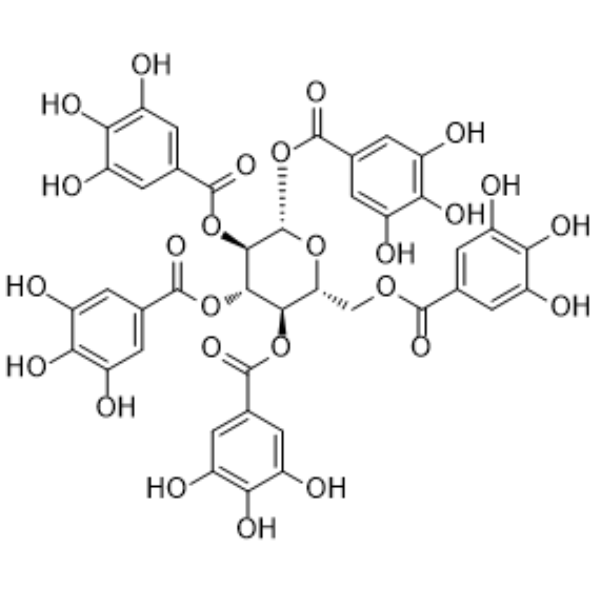
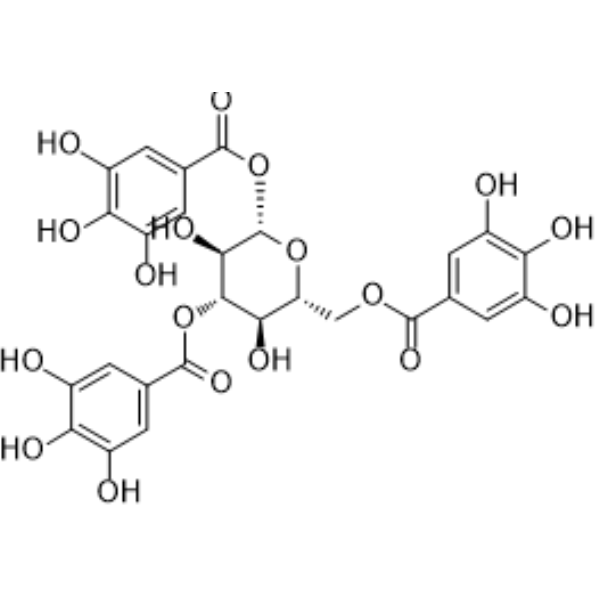
1,2,4,6-Tetra-O-galloyl-β-D-glucose is an antioxidant found in Eucalyptus globulus. 1,2,4,6-Tetra-O-galloyl-β-D-glucose has significant superoxide dismutase (SOD)-like antioxidant activity (EC50: 1.55 μM). 1,2,4,6-Tetra-O-galloyl-β-D-glucose can inhibit tyrosinase (IC50: 0.59 mM) and hyaluronidase (IC50: 0.68 mM). 1,2,4,6-Tetra-O-galloyl-β-D-glucose can be used in food antioxidants, cosmetics anti-melanogenesis and anti-allergy/anti-inflammatory research .
|
-
- HY-W039939
-
|
2-ADG, 98%
|
Biochemical Assay Reagents
OGT
|
Cancer
|
|
2-Azido-2-deoxy-D-glucose, 98% (2-ADG, 98%) is a substrate of O-GlcNAc transferase (OGT). 2-Azido-2-deoxy-D-glucose, 98% can be transferred from UDP-GlcAz to proteins in vitro via OGT mediation. When delivered as AcGlcAz, 2-Azido-2-deoxy-D-glucose, 98% enables the labeling and investigation of O-GlcNAc-modified nuclear and cytoplasmic proteins in cells. 2-Azido-2-deoxy-D-glucose, 98% undergoes strain-promoted [3+2] azide-alkyne cycloaddition (SPAAC) with technetium- 99m-labeled dibenzocyclooctyne derivatives in vivo. 2-Azido-2-deoxy-D-glucose, 98% can be used in sarcoma-related research .
|
-
- HY-N6006
-
|
1,3,6-Tri-O-galloyl-β-D-glucose
|
Others
|
Others
|
|
1,3,6-Tri-O-galloyl-beta-D-glucose is a non-covalent inhibitor of tyrosinase (TYR), which can block the rate-limiting step of melanin synthesis and inhibit melanin deposition. 1,3,6-Tri-O-galloyl-beta-D-glucose has antioxidant and anti-inflammatory activities and can be used as a natural active ingredient to develop anti-freckle and whitening skin care products .
|
-
- HY-W039950
-
-
- HY-N1968
-
|
Quercetin-3-O-beta-D-glucose-7-O-beta-D-gentiobioside
|
Parasite
|
Infection
|
|
Quercetin-3-O-β-D-glucose-7-O-β-D-gentiobiosiden (Quercetin-3-O-beta-D-glucose-7-O-beta-D-gentiobioside) is a flavonoid compound. In Cylas formicarius, Quercetin-3-O-β-D-glucose-7-O-β-D-gentiobioside can bind to chemosensory proteins such as CforCSP5 (Ki: 1.429 μM) and CforOBP3 (Ki: 3.697 μM), potentially participating in the recognition process of insect host plant volatiles. Quercetin-3-O-β-D-glucose-7-O-β-D-gentiobiosiden is also an inhibitor of Sb28GST (IC50: 0.13 mM) and can be used in the research of anti-schistosome agents .
|
-
- HY-N7433R
-
|
Ethylidene-glucose (Standard)
|
Reference Standards
GLUT
Endogenous Metabolite
|
Metabolic Disease
|
|
4,6-O-ethylidene-α-D-glucose (Ethylidene-glucose), a glucose derivative, is a competitive exofacial binding-site inhibitor on glucose transporter 1 (GLUT1) with a Ki of 12 mM for wild-type 2-deoxy-D-glucose transport .
|
-
- HY-141133
-
|
|
PROTAC Linkers
|
Cancer
|
|
Propargyl-PEG4-tetra-Ac-beta-D-glucose is a PEG-based PROTAC linker that can be used in the synthesis of PROTACs .
|
-
- HY-N11285
-
|
|
Others
|
Cardiovascular Disease
|
|
1,2,6-Tri-O-galloyl-β-D-glucose is a polygalloylglucose found in the roots and rhizomes of Sanguisorba officinalis .
|
-
- HY-N11573
-
|
|
Others
|
Others
|
|
Kaempferol 3,7-bis(α-L-rhamnose-D-glucose) (compound 1) is a flavonoid glycoside that can be found in Euonymus fortune.
|
-
- HY-W411439
-
|
|
GLUT
|
Metabolic Disease
|
|
1-O-p-Coumaroyl-β-D-glucose can promote glucose uptake in HuH7 cells, and be be extracted from Luffa cylindrica (L.) Roem (sponge gourds) .
|
-
- HY-W049706
-
-
- HY-141127
-
|
|
PROTAC Linkers
|
Cancer
|
|
Azido-PEG4-tetra-Ac-beta-D-glucose is a PEG-based PROTAC linker that can be used in the synthesis of PROTACs . Azido-PEG4-tetra-Ac-beta-D-glucose is a click chemistry reagent, it contains an Azide group and can undergo copper-catalyzed azide-alkyne cycloaddition reaction (CuAAc) with molecules containing Alkyne groups. It can also undergo strain-promoted alkyne-azide cycloaddition (SPAAC) reactions with molecules containing DBCO or BCN groups.
|
-
- HY-W357103
-
|
|
Biochemical Assay Reagents
|
Others
|
|
3-O-(Phenylmethyl)-D-glucose is a class of biochemical reagents used in glycobiology research. Glycobiology studies the structure, synthesis, biology, and evolution of sugars. It involves carbohydrate chemistry, enzymology of glycan formation and degradation, protein-glycan recognition, and the role of glycans in biological systems. This field is closely related to basic research, biomedicine, and biotechnology .
|
-
- HY-W803822
-
|
|
Biochemical Assay Reagents
|
Others
|
|
6-O-(Triphenylmethyl)-D-glucose is a class of biochemical reagents used in glycobiology research. Glycobiology studies the structure, synthesis, biology, and evolution of sugars. It involves carbohydrate chemistry, enzymology of glycan formation and degradation, protein-glycan recognition, and the role of glycans in biological systems. This field is closely related to basic research, biomedicine, and biotechnology .
|
-
- HY-W415946
-
|
|
Biochemical Assay Reagents
|
Others
|
|
2-Deoxy-D-glucose-tetraacetate is a class of biochemical reagents used in glycobiology research. Glycobiology studies the structure, synthesis, biology, and evolution of sugars. It involves carbohydrate chemistry, enzymology of glycan formation and degradation, protein-glycan recognition, and the role of glycans in biological systems. This field is closely related to basic research, biomedicine, and biotechnology .
|
-
- HY-N8214
-
|
|
Others
|
Cardiovascular Disease
|
|
Isorhamnetin 3-O-β-D-glucose-7-O-β-D-gentiobioside is a bioactive constituent that can be found in the seeds of Lepidium apetalum Willd. Isorhamnetin 3-O-β-D-glucose-7-O-β-D-gentiobioside exhibits significant triglyceride (TG)-lowering effects in HepG2 cells .
|
-
- HY-E70898
-
|
|
Endogenous Metabolite
|
Metabolic Disease
|
|
Trehalose-6-phosphate hydrolase, Escherichia coli (EC 3.2.1.93), belongs to the hydrolase family and is a glycosidase that hydrolyzes O- and S-glycoside compounds. Trehalose-6-phosphate hydrolase participates in the metabolism of starch and sucrose. Its substrates are α,α'-trehalose-6-phosphate and water, and its products are D-glucose and D-glucose-6-phosphate.
|
-
- HY-E70898A
-
|
|
Endogenous Metabolite
|
Metabolic Disease
|
|
Trehalose-6-phosphate hydrolase, Bacillus subtilis (EC 3.2.1.93), belongs to the hydrolase family and is a glycosidase that hydrolyzes O- and S-glycoside compounds. Trehalose-6-phosphate hydrolase participates in the metabolism of starch and sucrose. Its substrates are α,α'-trehalose-6-phosphate and water, and its products are D-glucose and D-glucose-6-phosphate.
|
-
- HY-107785R
-
|
D-Glucosamine-2-N-sulfate sodium (Standard)
|
Reference Standards
Endogenous Metabolite
|
Metabolic Disease
|
|
2-Deoxy-2-sulfoamino-D-glucose (sodium) (Standard) is the analytical standard of 2-Deoxy-2-sulfoamino-D-glucose (sodium). This product is intended for research and analytical applications. 2-Deoxy-2-sulfoamino-D-glucose sodium (D-Glucosamine-2-N-sulfate sodium) is an endogenous metabolite. The main regulatory mechanism of 2-Deoxy-2-sulfoamino-D-glucose sodium involves the interaction of sulfuric acid groups with biomolecules. Sulfate groups can influence the charge density and configuration of polysaccharides, thereby regulating their ability to bind to proteins such as antithrombin. This combination can enhance the activity of antithrombin, which in turn inhibits key enzymes in the blood clotting process to achieve anti-clotting effects. 2-Deoxy-2-sulfoamino-D-glucose sodium can be used to study the selective removal of n-sulfate groups from Heparin (HY-17567) which has important implications for understanding the biological activity of heparin and developing related drugs .
|
-
- HY-N17215
-
|
3,4,6-Trigalloylglucose
|
Amylases
Glycosidase
|
Metabolic Disease
Inflammation/Immunology
|
|
3,4,6-Tri-O-galloyl-D-glucose (3,4,6-Trigalloylglucose) is an α-amylase (porcine α-amylase IC50 = 334.6 μM; Ki = 307.5 μM) and α-glucosidase (yeast α-glucosidase IC50 = 46.5 μM; Ki = 39.9 μM) mixed type inhibitor. 3,4,6-Tri-O-galloyl-D-glucose exhibits free radical scavenging ability, ferric-reducing power, and antioxidant activity. 3,4,6-Tri-O-galloyl-D-glucose can be used for the research of diabetes .
|
-
- HY-160247
-
|
|
Drug-Linker Conjugates for ADC
|
Others
|
|
Boc-Lys-PEG8-N-bis(D-glucose) (compound 89-5) is a drug linker that can be used in the synthesis of antibody-drug conjugates (ADCs) extracted from patent WO2023280227A2 .
|
-
- HY-W556338
-
|
|
Biochemical Assay Reagents
|
|
|
α-D-Glucose 1-phosphate (dipotassium) is a biochemical reagent used in the study of glycobiology. Glycobiology studies the structure, synthesis, biology, and evolution of sugars. It deals with carbohydrate chemistry, glycan formation and degradation enzymology, protein-glycan recognition, and the role of glycans in biological systems. The field is closely related to basic research, biomedicine and biotechnology .
|
-
- HY-22306
-
|
Penta-O-acetyl-β-D-glucopyranose
|
Others
|
Metabolic Disease
|
|
β-D-Glucose Pentaacetate (Penta-O-acetyl-β-D-glucopyranose) is a glucose derivative, which is mainly used to explore the mechanism of insulin secretion .
|
-
- HY-W603111
-
|
|
Biochemical Assay Reagents
|
Others
|
|
5-Thio-D-glucose-6-phosphate diammonium salt is a class of biochemical reagents used in glycobiology research. Glycobiology studies the structure, synthesis, biology, and evolution of sugars. It involves carbohydrate chemistry, enzymology of glycan formation and degradation, protein-glycan recognition, and the role of glycans in biological systems. This field is closely related to basic research, biomedicine, and biotechnology .
|
-
- HY-W357096
-
|
|
Biochemical Assay Reagents
|
Others
|
|
4-Deoxy-4-fluoro-D-glucose is a class of biochemical reagents used in glycobiology research. Glycobiology studies the structure, synthesis, biology, and evolution of sugars. It involves carbohydrate chemistry, enzymology of glycan formation and degradation, protein-glycan recognition, and the role of glycans in biological systems. This field is closely related to basic research, biomedicine, and biotechnology .
|
-
- HY-W854349
-
|
|
Biochemical Assay Reagents
|
Others
|
|
3-Chloro-3-deoxy-D-glucose is a class of biochemical reagents used in glycobiology research. Glycobiology studies the structure, synthesis, biology, and evolution of sugars. It involves carbohydrate chemistry, enzymology of glycan formation and degradation, protein-glycan recognition, and the role of glycans in biological systems. This field is closely related to basic research, biomedicine, and biotechnology .
|
-
- HY-W650834
-
|
|
Biochemical Assay Reagents
|
Others
|
|
3-Acetamido-3-deoxy-D-glucose is a class of biochemical reagents used in glycobiology research. Glycobiology studies the structure, synthesis, biology, and evolution of sugars. It involves carbohydrate chemistry, enzymology of glycan formation and degradation, protein-glycan recognition, and the role of glycans in biological systems. This field is closely related to basic research, biomedicine, and biotechnology .
|
-
- HY-N18023
-
|
|
Others
|
Others
|
|
Kaempferol-3-O-β-D-Glucose-7-O-β-D-Gentianoside is a kaempferol glycoside found in the seeds of Lepidium apetalum Willd. Kaempferol-3-O-β-D-Glucose-7-O-β-D-Gentianoside shows no obvious inhibitory effect on Sodium oleate (HY-N1446B)-induced triglyceride overloading in liver cells .
|
-
- HY-100582
-
Ribitol
3 Publications Verification
Adonitol; Adonite
|
Endogenous Metabolite
|
Others
|
|
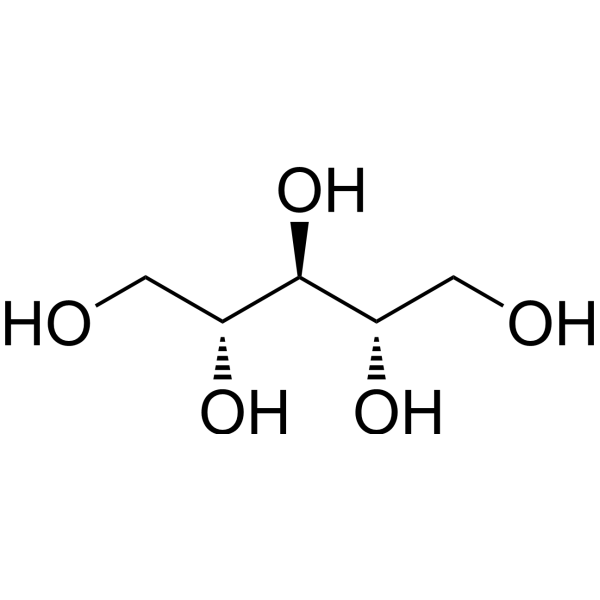
Ribitol is a crystalline pentose alcohol formed by the reduction of ribose. Enhancing the flux of D-glucose to the pentose phosphate pathway in Saccharomyces cerevisiae for the production of D-ribose and ribitol.
|
-
- HY-N1915
-
|
|
Endogenous Metabolite
|
Metabolic Disease
|
|
Cellohexaose is a glucose polymer with two or more glucose monomers produced from the breakdown of cellulose, consisting of a condensation of beta (1-4) linked D-glucose monomers .
|
-
- HY-13966S
-
|
2-DG-d1; 2-Deoxy-D-arabino-hexose-d1; D-Arabino-2-deoxyhexose-d1
|
Isotope-Labeled Compounds
Apoptosis
Hexokinase
HSV
|
Cancer
|
|
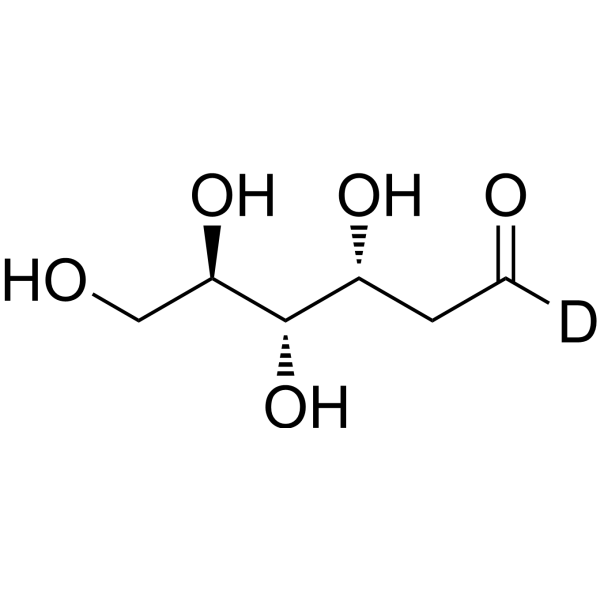
2-Deoxy-D-glucose-d is the deuterium labeled 2-Deoxy-D-glucose. 2-Deoxy-D-glucose is a glucose analog that acts as a competitive inhibitor of glucose metabolism, inhibiting glycolysis via its actions on hexokinase .
|
-
- HY-43747
-
|
Acetobromo-α-D-glucose, contains 1% CaCO3 as stabilizer; Acetobromo-alpha-D-glucose, contains 1% CaCO3 as stabilizer
|
Biochemical Assay Reagents
Drug Intermediate
|
Others
|
|
α-Acetobromoglucose, contains 1% CaCO3 as stabilizer (Acetobromo-α-D-glucose, contains 1% CaCO3 as stabilizer) is a glycosyl donor that can be used for the synthesis of other active compounds .
|
-
- HY-13966
-
|
2-DG; 2-Deoxy-D-arabino-hexose; D-Arabino-2-deoxyhexose
|
Hexokinase
HSV
Apoptosis
|
Cancer
|
|
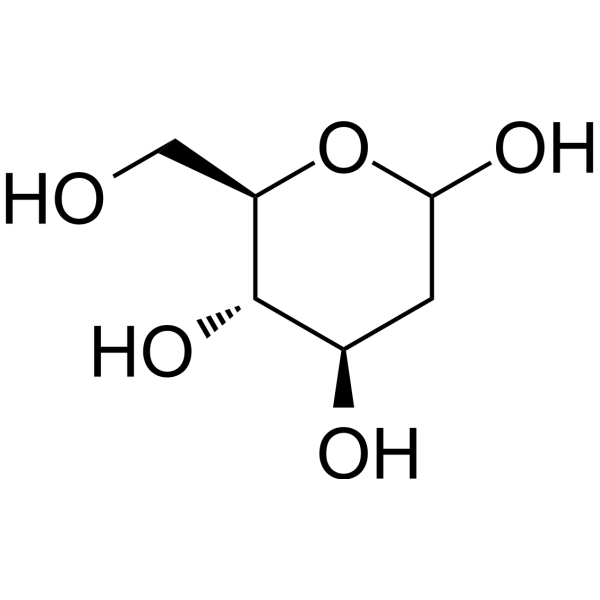
2-Deoxy-D-glucose is a glucose analog that acts as a competitive inhibitor of glucose metabolism, inhibiting glycolysis via its actions on hexokinase .
|
-
- HY-113002A
-
|
|
Biochemical Assay Reagents
|
Others
|
|
α-D-Glucose 1,6-bisphosphate (cyclohexanamine)is a class of biochemical reagents used in glycobiology research. Glycobiology studies the structure, synthesis, biology, and evolution of sugars. It involves carbohydrate chemistry, enzymology of glycan formation and degradation, protein-glycan recognition, and the role of glycans in biological systems. This field is closely related to basic research, biomedicine, and biotechnology .
|
-
- HY-13966S2
-
|
2-DG-13C; 2-Deoxy-D-arabino-hexose-13C; D-Arabino-2-deoxyhexose-13C
|
Isotope-Labeled Compounds
Apoptosis
Hexokinase
HSV
|
Cancer
|
|
2-Deoxy-D-glucose- 13C is the 13C labeled 2-Deoxy-D-glucose. 2-Deoxy-D-glucose is a glucose analog that acts as a competitive inhibitor of glucose metabolism, inhibiting glycolysis via its actions on hexokinase .
|
-
- HY-W739643
-
|
|
Biochemical Assay Reagents
|
Others
|
|
Methyl 4-deoxy-4-fluoro-α-D-glucose is a class of biochemical reagents used in glycobiology research. Glycobiology studies the structure, synthesis, biology, and evolution of sugars. It involves carbohydrate chemistry, enzymology of glycan formation and degradation, protein-glycan recognition, and the role of glycans in biological systems. This field is closely related to basic research, biomedicine, and biotechnology .
|
-
- HY-W010042S
-
-
- HY-W009078
-
|
|
Biochemical Assay Reagents
|
Others
|
|
4-S-β-D-Glucopyranosyl-4-thio-D-glucose is a class of biochemical reagents used in glycobiology research. Glycobiology studies the structure, synthesis, biology, and evolution of sugars. It involves carbohydrate chemistry, enzymology of glycan formation and degradation, protein-glycan recognition, and the role of glycans in biological systems. This field is closely related to basic research, biomedicine, and biotechnology .
|
-
- HY-W134328
-
|
Dextran blue (MW 2000000)
|
Biochemical Assay Reagents
|
Others
|
|
Blue dextran (Dextran blue) (MW 2000000) is a high-molecular-weight long-chain polymer of D-glucose. Blue dextran (MW 2000000) serves as an important model macromolecular drug and molecular weight estimation marker, and can be used as a standard for gel permeation chromatography. The release of Blue dextran (MW 2000000) from alginate microspheres is regulated by preparation conditions; its release rate in a pH 6.8 environment is significantly faster than that in pH 1.2, and it exhibits release characteristics close to zero-order kinetics under this condition .
|
-
- HY-13966S4
-
|
2-DG-13C-1; 2-Deoxy-D-arabino-hexose-13C-1; D-Arabino-2-deoxyhexose-13C-1
|
Isotope-Labeled Compounds
Apoptosis
Hexokinase
HSV
|
Cancer
|
|
2-Deoxy-D-glucose- 13C-1 is the 13C labeled 2-Deoxy-D-glucose. 2-Deoxy-D-glucose is a glucose analog that acts as a competitive inhibitor of glucose metabolism, inhibiting glycolysis via its actions on hexokinase .
|
-
- HY-W010042S2
-
-
- HY-W010042S1
-
-
- HY-P2918D
-
|
|
Endogenous Metabolite
|
Metabolic Disease
|
|
Phosphoglucose isomerase, E.coli (EC 5.3.1.9) is an enzyme crucial for the interconversion of D-glucose 6-phosphate and D-fructose 6-phosphate. Phosphoglucose isomerase is responsible for the second step of glycolysis and is involved in glucogenesis.
|
-
- HY-P2918E
-
|
|
Endogenous Metabolite
|
Metabolic Disease
|
|
Phosphoglucose isomerase, Bacillus subtilis (EC 5.3.1.9) is an enzyme crucial for the interconversion of D-glucose 6-phosphate and D-fructose 6-phosphate. Phosphoglucose isomerase is responsible for the second step of glycolysis and is involved in glucogenesis.
|
-
- HY-P2918C
-
|
|
Endogenous Metabolite
|
Metabolic Disease
|
|
Phosphoglucose isomerase, Saccharomyces cerevisiae (EC 5.3.1.9) is an enzyme crucial for the interconversion of D-glucose 6-phosphate and D-fructose 6-phosphate. Phosphoglucose isomerase is responsible for the second step of glycolysis and is involved in glucogenesis.
|
-
- HY-E70447
-
|
|
Biochemical Assay Reagents
|
Others
|
|
UDP-4-Keto-6-deoxy-D-glucose 3,5-epimerase/4-reductase (ApmUGER) is an epimerase/reductase. Enzymes have high catalytic efficiency, high specificity, and mild operating conditions. It can be applied in industries such as pharmaceuticals, industrial production, food manufacturing, and aquaculture .
|
-
- HY-W416179
-
|
Acetobromolaminaribiose
|
Biochemical Assay Reagents
|
Others
|
|
2,3,4,6-Tetra-O-acetyl-β-D-glucose (Acetobromolaminaribiose) is a class of biochemical reagents used in glycobiology research. Glycobiology studies the structure, synthesis, biology, and evolution of sugars. It involves carbohydrate chemistry, enzymology of glycan formation and degradation, protein-glycan recognition, and the role of glycans in biological systems. This field is closely related to basic research, biomedicine, and biotechnology .
|
-
- HY-100582S1
-
|
Adonitol-2-13C; Adonite-2-13C
|
Isotope-Labeled Compounds
Endogenous Metabolite
|
Others
|
Ribitol-2- 13C is the 13C labeled Ribitol. Ribitol is a crystalline pentose alcohol formed by the reduction of ribose. Enhancing the flux of D-glucose to the pentose phosphate pathway in Saccharomyces cerevisiae for the production of D-ribose and ribitol
|
-
- HY-100582S3
-
|
Adonitol-5-13C; Adonite-5-13C
|
Isotope-Labeled Compounds
Endogenous Metabolite
|
Others
|
Ribitol-5- 13C is the 13C labeled Ribitol. Ribitol is a crystalline pentose alcohol formed by the reduction of ribose. Enhancing the flux of D-glucose to the pentose phosphate pathway in Saccharomyces cerevisiae for the production of D-ribose and ribitol
|
-
- HY-100582S2
-
|
Adonitol-3-13C; Adonite-3-13C
|
Isotope-Labeled Compounds
Endogenous Metabolite
|
Others
|
Ribitol-3- 13C is the 13C labeled Ribitol. Ribitol is a crystalline pentose alcohol formed by the reduction of ribose. Enhancing the flux of D-glucose to the pentose phosphate pathway in Saccharomyces cerevisiae for the production of D-ribose and ribitol
|
-
- HY-A0132R
-
|
N-Acetyl-2-amino-2-deoxy-D-glucose (Standard)
|
Reference Standards
Endogenous Metabolite
|
Metabolic Disease
|
|
N-Acetyl-D-glucosamine (Standard) is the analytical standard of N-Acetyl-D-glucosamine. This product is intended for research and analytical applications. N-Acetyl-D-Glucosamine (N-Acetyl-2-amino-2-deoxy-D-glucose) is a monosaccharide derivative of glucose.
|
-
- HY-W699037
-
|
|
Biochemical Assay Reagents
|
Others
|
|
2-(Acetylamino)-2-deoxy-4-O-β-D-mannopyranosyl-D-glucose is a class of biochemical reagents used in glycobiology research. Glycobiology studies the structure, synthesis, biology, and evolution of sugars. It involves carbohydrate chemistry, enzymology of glycan formation and degradation, protein-glycan recognition, and the role of glycans in biological systems. This field is closely related to basic research, biomedicine, and biotechnology .
|
-
- HY-A0132S12
-
|
N-Acetyl-2-amino-2-deoxy-D-glucose-13C6
|
Isotope-Labeled Compounds
|
Metabolic Disease
|
|
N-Acetyl-D-glucosamine- 13C6 (N-Acetyl-2-amino-2-deoxy-D-glucose- 13C6) is the 13C labled N-Acetyl-D-glucosamine (HY-A0132) . N-Acetyl-D-Glucosamine (N-Acetyl-2-amino-2-deoxy-D-glucose) is a monosaccharide derivative of glucose.
|
-
- HY-P2889
-
|
|
Biochemical Assay Reagents
|
Others
|
|
Pyranose oxidase, Coriolus sp. is an oxidoreductase targeting monosaccharides (e.g., D-glucose, D-galactose). Pyranose oxidase, Coriolus sp. is promising for research of biosensors (glucose, 1,5-anhydroglucitol detection) and biofuel cells .
|
-
- HY-100582S
-
|
Adonitol-1-13C; Adonite-1-13C
|
Isotope-Labeled Compounds
Endogenous Metabolite
|
Others
|
|
Ribitol-1- 13C is the 13C labeled Ribitol. Ribitol is a crystalline pentose alcohol formed by the reduction of ribose. Enhancing the flux of D-glucose to the pentose phosphate pathway in Saccharomyces cerevisiae for the production of D-ribose and ribitol .
|
-
- HY-100582R
-
|
Adonitol (Standard); Adonite (Standard)
|
Reference Standards
Endogenous Metabolite
|
Others
|
|
Ribitol (Standard) is the analytical standard of Ribitol. This product is intended for research and analytical applications. Ribitol is a crystalline pentose alcohol formed by the reduction of ribose. Enhancing the flux of D-glucose to the pentose phosphate pathway in Saccharomyces cerevisiae for the production of D-ribose and ribitol.
|
-
- HY-W286946
-
|
|
Biochemical Assay Reagents
|
Others
|
|
2-(Acetylamino)-2-deoxy-4,6-O-(1-methylethylidene)-D-glucose is a class of biochemical reagents used in glycobiology research. Glycobiology studies the structure, synthesis, biology, and evolution of sugars. It involves carbohydrate chemistry, enzymology of glycan formation and degradation, protein-glycan recognition, and the role of glycans in biological systems. This field is closely related to basic research, biomedicine, and biotechnology .
|
-
- HY-13966S3
-
|
2-DG-13C6; 2-Deoxy-D-arabino-hexose-13C6; D-Arabino-2-deoxyhexose-13C6
|
Isotope-Labeled Compounds
Apoptosis
Hexokinase
HSV
|
Cancer
|
|
2-Deoxy-D-glucose- 13C6 (2-DG- 13C6) is 13C labeled 2-Deoxy-D-glucose. 2-Deoxy-D-glucose is a glucose analog that acts as a competitive inhibitor of glucose metabolism, inhibiting glycolysis via its actions on hexokinase .
|
-
- HY-N3018
-
|
6-O-α-D-Glucopyranosyl-D-glucose; D-Isomaltose
|
Endogenous Metabolite
Parasite
|
Infection
Metabolic Disease
|
|
Isomaltose (6-O-α-D-Glucopyranosyl-D-glucose) is a glucose disaccharide. Isomaltose induces G-CSF secretion via heat-induced oxidative polymerization of glucose groups into high-molecular-weight compounds. Isomaltose modulates cecal bacterial cluster structure in mice. Isomaltose exhibits low glycemic index, slow hydrolysis, and prebiotic properties. Isomaltose reduces in vivo Cryptosporidium parvum colonization in neonatal mice. Isomaltose can be used for the research of Cryptosporidium parvum infection .
|
-
- HY-P2770A
-
-
- HY-E71145
-
|
|
Biochemical Assay Reagents
|
Others
|
|
1,2-β-Oligoglucan phosphorylase (EC 2.4.1.333) catalyses the reversible phosphorolysis of β-(1→2)-D-glucans. The minimum length of the substrate for the phosphorolytic reaction is 3 D-glucose units.
|
-
- HY-113044R
-
|
UDP-D-glucose (Standard)
|
Reference Standards
Endogenous Metabolite
P2Y Receptor
|
Cardiovascular Disease
Metabolic Disease
Inflammation/Immunology
|
|
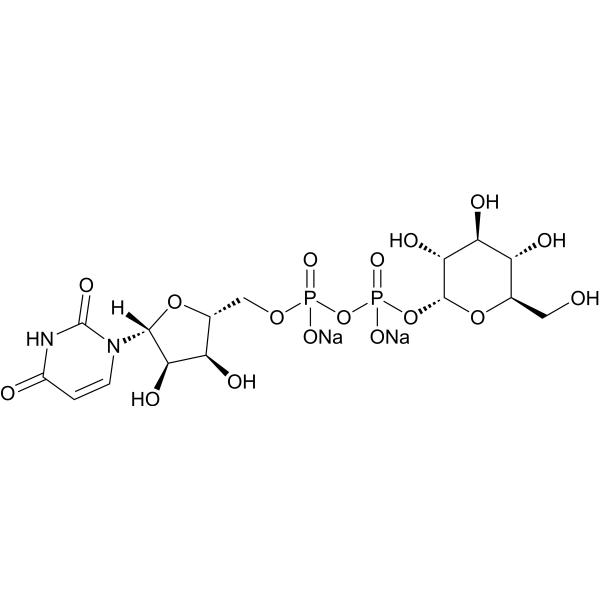
Uridine 5′-diphosphoglucose (Standard) (UDP-D-Glucose (Standard)) is the analytical standard of Uridine 5′-diphosphoglucose (HY-113044). This product is intended for research and analytical applications. Uridine 5’-diphosphoglucose (UDP-glucose), secreted by cardiomyocytes during ischemia and reperfu, is a potent agonist of the proinflammatory P2Y14 receptor. It acts an important role in the regulation of inflammation and neutrophil polarization in neutrophils. Uridine 5’-diphosphoglucose is also the precursor of glucose-containing oligosaccharides, polysaccharides, glycoproteins, and glycolipids in animal tissues and in some microorganisms. Uridine 5’-diphosphoglucose is promising for research in counteracting myocardial infarction/reperfusion (MIR)-induced inflammation in the heart tissue.
|
-
- HY-A0132S7
-
-
- HY-A0132S4
-
-
- HY-A0132S1
-
-
- HY-166967
-
|
|
Biochemical Assay Reagents
|
Others
|
|
1,3,4,6-Tetra-O-acetyl-2-deoxy-2-trifluoracetamido-D-glucose is a class of biochemical reagents used in glycobiology research. Glycobiology studies the structure, synthesis, biology, and evolution of sugars. It involves carbohydrate chemistry, enzymology of glycan formation and degradation, protein-glycan recognition, and the role of glycans in biological systems. This field is closely related to basic research, biomedicine, and biotechnology .
|
-
- HY-W698571
-
|
4-O-(3-O-Sulfo-β-D-galactopyranosyl)-D-glucose
|
Biochemical Assay Reagents
|
Others
|
|
Lactose-3'-sulfate (4-O-(3-O-Sulfo-β-D-galactopyranosyl)-D-glucose) is a class of biochemical reagents used in glycobiology research. Glycobiology studies the structure, synthesis, biology, and evolution of sugars. It involves carbohydrate chemistry, enzymology of glycan formation and degradation, protein-glycan recognition, and the role of glycans in biological systems. This field is closely related to basic research, biomedicine, and biotechnology .
|
-
- HY-W768295
-
-
- HY-W768296
-
-
- HY-A0132S14
-
|
N-Acetyl-2-amino-2-deoxy-D-glucose-d3
|
Isotope-Labeled Compounds
Endogenous Metabolite
Drug Derivative
Interleukin Related
Drug Isomer
|
Metabolic Disease
Inflammation/Immunology
Cancer
|
|
N-Acetyl-D-glucosamine-d3 (N-Acetyl-2-amino-2-deoxy-D-glucose-d3) is deuterium labeled N-Acetyl-D-glucosamine. N-Acetyl-D-Glucosamine (N-Acetyl-2-amino-2-deoxy-D-glucose), the D isomer of N-acetylglucosamine, is an orally active monosaccharide derivative of glucose with anti-tumor and anti-inflammation properties. N-Acetyl-D-Glucosamine is also a bacterial metabolite, which is found in Escherichia coli. N-Acetyl-D-Glucosamine can induce yeast-mycelial conversion in Candida albicans. N-Acetyl-D-Glucosamine also enhances healing of cartilaginous injuries in rabbits .
|
-
- HY-A0132
-
|
N-Acetyl-2-amino-2-deoxy-D-glucose
|
Endogenous Metabolite
Drug Derivative
Drug Isomer
Interleukin Related
|
Metabolic Disease
Inflammation/Immunology
Cancer
|
|
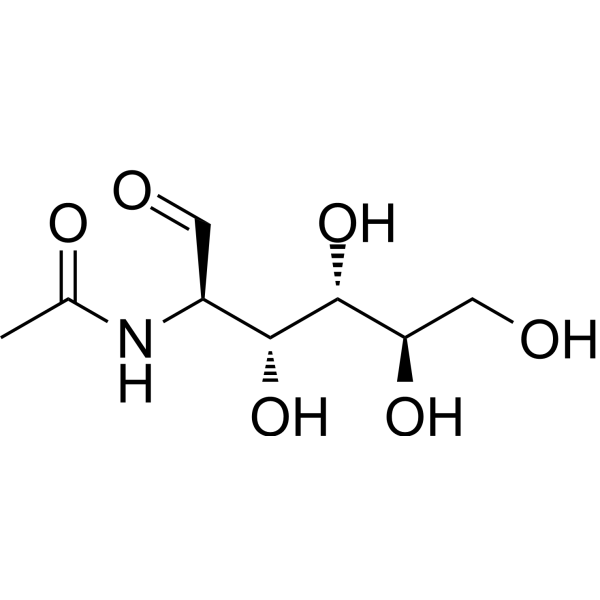
N-Acetyl-D-Glucosamine (N-Acetyl-2-amino-2-deoxy-D-glucose), the D isomer of N-acetylglucosamine, is an orally active monosaccharide derivative of glucose with anti-tumor and anti-inflammation properties. N-Acetyl-D-Glucosamine is also a bacterial metabolite, which is found in Escherichia coli. N-Acetyl-D-Glucosamine can induce yeast-mycelial conversion in Candida albicans. N-Acetyl-D-Glucosamine also enhances healing of cartilaginous injuries in rabbits .
|
-
- HY-W768324
-
|
Adonitol-13C5; Adonite-13C5
|
Isotope-Labeled Compounds
Endogenous Metabolite
|
Others
|
|
Ribitol- 13C5 (Adonitol- 13C5) is the 13C-labeled Ribitol (HY-100582). Ribitol is a crystalline pentose alcohol formed by the reduction of ribose. Enhancing the flux of D-glucose to the pentose phosphate pathway in Saccharomyces cerevisiae for the production of D-ribose and ribitol.
|
-
- HY-A0132S3
-
-
- HY-A0132S2
-
-
- HY-A0132S5
-
-
- HY-157347
-
|
YNB Medium
|
Biochemical Assay Reagents
|
Others
|
|
Yeast Nitrogen Base Medium (YNB Medium) is a yeast-specific medium. Yeast Nitrogen Base Medium can be used for microbial culture. The composition of 100 mL of the medium is as follows: 6.7 g Yeast Nitrogen Base Medium and 5 g D-Glucose (HY-B0389) or other carbohydrates .
|
-
- HY-N7032S
-
|
UDP-D-glucose-13C disodium
|
Isotope-Labeled Compounds
Endogenous Metabolite
P2Y Receptor
|
Cardiovascular Disease
Metabolic Disease
Inflammation/Immunology
|
|
Uridine 5′-diphosphoglucose- 13C (UDP-D-Glucose- 13C) disodium is the 13C labeled Uridine 5′-diphosphoglucose disodium (HY-N7032) . Uridine 5’-diphosphoglucose (UDP-glucose) disodium, secreted by cardiomyocytes during ischemia and reperfu, is a potent agonist of the proinflammatory P2Y14 receptor. It acts an important role in the regulation of inflammation and neutrophil polarization in neutrophils. Uridine 5’-diphosphoglucose disodium is also the precursor of glucose-containing oligosaccharides, polysaccharides, glycoproteins, and glycolipids in animal tissues and in some microorganisms. Uridine 5’-diphosphoglucose disodium is promising for research in counteracting myocardial infarction/reperfusion (MIR)-induced inflammation in the heart tissue .
|
-
- HY-E71287
-
|
|
Biochemical Assay Reagents
|
Others
|
|
β-D-Galactosyl-(1-4)-L-rhamnose phosphorylase (EC 2.4.1.247) from Clostridium phytofermentans is also active towards towards β-D-Galactosyl derivatives of L-mannose, L-lyxose, D-glucose, 2-deoxy-D-glucose, and D-galactose in this order. Differs from 1,3-β-Galactosyl-N-acetylhexosamine phosphorylase (EC 2.4.1.211) in being active towards L-rhamnose and inactive towards N-acetyl hexosamine derivatives.
|
-
- HY-A0132S8
-
-
- HY-N0527
-
|
Penta-O-galloyl-β-D-glucose; 1,2,3,4,6-Pentagalloyl glucose
|
JAK
Keap1-Nrf2
Apoptosis
β-catenin
Reactive Oxygen Species (ROS)
E1/E2/E3 Enzyme
|
Neurological Disease
Inflammation/Immunology
Cancer
|
|
Pentagalloylglucose (Penta-O-galloyl-β-D-glucose) is an orally active gallic tannin compound and an inducer of apoptosis and autophagy. Pentagalloglucose induces cell apoptosis and autophagy through the GSK3β/β-catenin pathway. Pentagalloylglucose inhibits UBE2T-mediated p53 ubiquitination, upregulates p53, downregulates RRM1/RRM2 in pancreatic cancer organoids. Pentagalloglucose has antioxidant, anti mutagenic, anti-inflammatory, anticonvulsant, cardioprotective, anti allergic, cholesterol lowering, and anti-tumor activities .
|
-
- HY-U00462
-
|
|
Hexokinase
|
Metabolic Disease
Cancer
|
|
D-Mannoheptulose is a 7-carbon keto sugar found in avocado. D-mannoheptulose is a specific inhibitor of D-glucose phosphorylation by hexokinase isoenzymes. D-Mannoheptulose can block insulin release and utilization of carbohydrate in rat. D-Mannoheptulose has various functions as anti-oxidants, anticancer effects and energy sources .
|
-
- HY-161755
-
|
|
Endogenous Metabolite
|
Cancer
|
|
Anticancer agent 232 (compound 12f) is a glycohybrid designed using 1-azidoglycosides derived from d-glucose, d-galactose, and d-mannose. The IC50 values of anticancer agent 232 against MCF-7 and MDA-MB231 cells are 1.05 μM and 18.03 μM, respectively .
|
-
- HY-W355093
-
|
Fuc-α-2-4-GlcNAc
|
Biochemical Assay Reagents
|
Others
|
|
2-(Acetylamino)-2-deoxy-4-O-(6-deoxy-α-L-galactopyranosyl)-D-glucose (Fuc-α-2-4-GlcNAc) is a class of biochemical reagents used in glycobiology research. Glycobiology studies the structure, synthesis, biology, and evolution of sugars. It involves carbohydrate chemistry, enzymology of glycan formation and degradation, protein-glycan recognition, and the role of glycans in biological systems. This field is closely related to basic research, biomedicine, and biotechnology .
|
-
- HY-E71166
-
|
|
Biochemical Assay Reagents
|
Others
|
|
1,5-Anhydro-D-fructose reductase (1,5-Anhydro-D-mannitol-forming) (EC 1.1.1.292) belongs to the GFO/IDH/MocA protein family. It can also reduce 1,5-Anhydro-D-fructose-2,3-diketooses and 2-keto aldoses (called ketones), such as D-glucose ketone (D-arabino-hexose-2-ketoose) and 6-deoxy-D-glucose ketone. It cannot reduce common aldoses and ketoses, nor can it reduce non-glucose aldehydes and ketones.
|
-
- HY-N7032S1
-
|
UDP-D-glucose-13C6 disodium
|
Isotope-Labeled Compounds
Endogenous Metabolite
P2Y Receptor
|
Cardiovascular Disease
Metabolic Disease
Inflammation/Immunology
|
|
Uridine 5′-diphosphoglucose- 13C6 (UDP-D-Glucose- 13C6) disodium is the 13C labeled Uridine 5′-diphosphoglucose disodium (HY-N7032) . Uridine 5’-diphosphoglucose (UDP-glucose) disodium, secreted by cardiomyocytes during ischemia and reperfu, is a potent agonist of the proinflammatory P2Y14 receptor. It acts an important role in the regulation of inflammation and neutrophil polarization in neutrophils. Uridine 5’-diphosphoglucose disodium is also the precursor of glucose-containing oligosaccharides, polysaccharides, glycoproteins, and glycolipids in animal tissues and in some microorganisms. Uridine 5’-diphosphoglucose disodium is promising for research in counteracting myocardial infarction/reperfusion (MIR)-induced inflammation in the heart tissue .
|
-
- HY-A0132S11
-
-
- HY-A0132S9
-
-
- HY-A0132S10
-
-
- HY-W010042
-
|
L-(-)-glucose
|
Fluorescent Dye
|
Metabolic Disease
Cancer
|
|
L-Glucose (L-(-)-Glucose) is a stereoisomer of D-Glucose (HY-B0389), which does not readily enter the brain. L-Glucose can promote food intake. L-glucose is combined with a fluorescence detector to produce a fluorescent probe that can be used to visualize and characterize cancer cells. L-Glucose also can be used in the research to enhance memory in mice .
|
-
- HY-N0527R
-
|
Penta-O-galloyl-β-D-glucose (Standard); 1,2,3,4,6-Pentagalloyl glucose (Standard)
|
Reference Standards
JAK
Keap1-Nrf2
Apoptosis
β-catenin
Reactive Oxygen Species (ROS)
|
Neurological Disease
Inflammation/Immunology
Cancer
|
|
Pentagalloylglucose (Standard) is the analytical standard of Pentagalloylglucose. This product is intended for research and analytical applications. Pentagalloylglucose (Penta-O-galloyl-β-D-glucose) is an orally active gallic tannin compound and an inducer of apoptosis and autophagy. Pentagalloglucose induces cell apoptosis and autophagy through the GSK3β/β-catenin pathway. Pentagalloylglucose inhibits UBE2T-mediated p53 ubiquitination, upregulates p53, downregulates RRM1/RRM2 in pancreatic cancer organoids. Pentagalloglucose has antioxidant, anti mutagenic, anti-inflammatory, anticonvulsant, cardioprotective, anti allergic, cholesterol lowering, and anti-tumor activities .
|
-
- HY-W767186
-
|
|
Isotope-Labeled Compounds
Hexokinase
|
Metabolic Disease
Cancer
|
|
D-Mannoheptulose- 13C7 is the 13C-labeled D-Mannoheptulose. D-Mannoheptulose is a 7-carbon keto sugar found in avocado. D-mannoheptulose is a specific inhibitor of D-glucose phosphorylation by hexokinase isoenzymes. D-Mannoheptulose can block insulin release and utilization of carbohydrate in rat. D-Mannoheptulose has various functions as anti-oxidants, anticancer effects and energy sources .
|
-
- HY-137873
-
|
4-Methylumbelliferyl-α-D-glucose; 4-Methylumbelliferyl-α-D-Glucoside; 4-MU-α-D-Glucopyranoside
|
Fluorescent Dye
Glycosidase
|
Others
|
|
4-Methylumbelliferyl-α-D-Glucopyranoside (4-Methylumbelliferyl-α-D-Glucose) is a fluorescent substrate for α-glucosidase, which releases the fluorescent moiety 4-methylumbelliferyl (4-MU) upon cleavage. 4-MU has pH-dependent fluorescence excitation activity, with excitation wavelengths of 320 nm at low pH (1.97-6.72) and 360 nm at high pH (7.12-10.3), respectively. The emission wavelength of 4-Methylumbelliferyl-α-D-Glucopyranoside increases with decreasing pH, ranging from 445-455 nm. 4-Methylumbelliferyl-α-D-Glucopyranoside can be used as a biomarker for Fabry and Pompe diseases to quantify α-glucosidase activity in infant blood spot samples.
|
-
- HY-U00462S
-
|
|
Isotope-Labeled Compounds
Hexokinase
|
Metabolic Disease
Cancer
|
|
D-Mannoheptulose- 13C is the 13C labeled D-Mannoheptulose (HY-U00462) . D-Mannoheptulose is a 7-carbon keto sugar found in avocado. D-mannoheptulose is a specific inhibitor of D-glucose phosphorylation by hexokinase isoenzymes. D-Mannoheptulose can block insulin release and utilization of carbohydrate in rat. D-Mannoheptulose has various functions as anti-oxidants, anticancer effects and energy sources .
|
-
- HY-W725496
-
|
|
Endogenous Metabolite
|
Neurological Disease
Metabolic Disease
|
|
D-Fructose 6-phosphate dipotassium is an endogenous metabolite in saliva that affects cell growth and autophagy; it can be hydrolyzed by Fructose-1,6-bisphosphatase (FBPase). D-Fructose 6-phosphate dipotassium can be converted into D-glucose 6-phosphate (HY-112537) by the action of phosphoglucose isomerase. D-Fructose 6-phosphate dipotassium is a sugar intermediate in the glycolysis pathway and the pentose phosphate pathway. D-Fructose 6-phosphate dipotassium can be used to study Lewy body dementia .
|
-
- HY-113044
-
|
UDP-D-glucose
|
Endogenous Metabolite
P2Y Receptor
|
Cardiovascular Disease
Metabolic Disease
Inflammation/Immunology
|
|
Uridine 5’-diphosphoglucose (UDP-glucose), secreted by cardiomyocytes during ischemia and reperfu, is a potent agonist of the proinflammatory P2Y14 receptor. It acts an important role in the regulation of inflammation and neutrophil polarization in neutrophils. Uridine 5’-diphosphoglucose is also the precursor of glucose-containing oligosaccharides, polysaccharides, glycoproteins, and glycolipids in animal tissues and in some microorganisms. Uridine 5’-diphosphoglucose is promising for research in counteracting myocardial infarction/reperfusion (MIR)-induced inflammation in the heart tissue .
|
-
- HY-W587796
-
|
6-PGδL; 6-Phosphonoglucono-D-lactone
|
Endogenous Metabolite
|
Cardiovascular Disease
Metabolic Disease
Cancer
|
|
6-Phosphoglucono-δ-lactone (6-PGδL), a reversal substrate of glucose-6-phosphate dehydrogenase (G6PD), is an intermediate compound in the oxidative branch of the pentose phosphate pathway (PPP). 6-Phosphoglucono-δ-lactone produced from D-glucose-6-phosphate by glucose-6-phosphate dehydrogenase (G6PDH) and is converted to 6-phosphoglutonate by lactonase. 6-Phosphoglucono-δ-lactone can be used for heart failure, type 2 diabetes and cancers research .
|
-
- HY-138111
-
|
p-Nitopheyl β-D-cellotetaoside
|
Fluorescent Dye
|
Others
|
|
4-Nitrophenyl β-D-cellotetraoside (p-Nitopheyl β-D-cellotetaoside) is a small molecule cellulose mimetic consisting of a tetramer of D-glucose units linked by β-1-4 glycosidic bonds. The fragmentation pattern of 4-Nitrophenyl β-D-cellotetraoside after enzymatic hydrolysis can be analyzed by TLC or by the release of 4-nitrophenol, which has a strong absorbance at 395 nm in alkaline solutions. 4-Nitrophenyl β-D-cellotetraoside can be used in cellulose degradation studies to determine the specificity of cellulases .
|
-
- HY-N7032
-
|
UDP-D-glucose disodium
|
Endogenous Metabolite
P2Y Receptor
|
Cardiovascular Disease
Metabolic Disease
Inflammation/Immunology
|
|
Uridine 5’-diphosphoglucose (UDP-glucose) disodium, secreted by cardiomyocytes during ischemia and reperfu, is a potent agonist of the proinflammatory P2Y14 receptor. It acts an important role in the regulation of inflammation and neutrophil polarization in neutrophils. Uridine 5’-diphosphoglucose disodium is also the precursor of glucose-containing oligosaccharides, polysaccharides, glycoproteins, and glycolipids in animal tissues and in some microorganisms. Uridine 5’-diphosphoglucose disodium is promising for research in counteracting myocardial infarction/reperfusion (MIR)-induced inflammation in the heart tissue.
|
-
- HY-164367
-
-
- HY-P2857B
-
|
|
Endogenous Metabolite
|
Cardiovascular Disease
|
|
Amyloglucosidase, Rhizopus sp. (EC 3.2.1.3) is an enzyme located on the brush border of the small intestine that hydrolyzes terminal (1→4) linked α-D-glucose residues to release β-D-glucose.
|
-
- HY-W740723
-
-
- HY-133708
-
|
Glucogallin; 1-O-Galloyl-β-D-glucose
|
Aldose Reductase
Reactive Oxygen Species (ROS)
NF-κB
PDGFR
SOD
|
Neurological Disease
Metabolic Disease
|
|
β-Glucogallin is an orally active and selective aldose reductase (AKR1B1) inhibitor with an IC50 value of 58 μM when using Glyceraldehyde (HY-128748) as AKR1B1 substrate. β-Glucogallin reduces ROS, PDGF, RAGE, and NF-κB. β-Glucogallin increases SOD. β-Glucogallin has antioxidant and hepatoprotective effects. β-Glucogallin can be used in retinal research .
|
-
- HY-W145596
-
|
2-Deoxy-2-trifluoroacetamido-D-glucose
|
Biochemical Assay Reagents
|
Others
|
|
N-Trifluoroacetyl-D-glucosamine is a biochemical reagent that can be used as a biological material or organic compound for life science related research.
|
-
- HY-P2820B
-
|
|
Biochemical Assay Reagents
|
Metabolic Disease
|
|
β-Phosphoglucomutase, E. coli (EC 5.4.2.6), belongs to the isomerase family and catalyzes the conversion of β-D-glucose-1-phosphate to β-D-glucose-6-phosphate. β-Phosphoglucomutase is involved in the metabolism of starch and sucrose.
|
-
- HY-P2820A
-
|
|
Biochemical Assay Reagents
|
Metabolic Disease
|
|
β-Phosphoglucomutase, Lactococcus sp. (EC 5.4.2.6), belongs to the isomerase family and catalyzes the conversion of β-D-glucose-1-phosphate to β-D-glucose-6-phosphate. β-Phosphoglucomutase is involved in the metabolism of starch and sucrose.
|
-
- HY-W347825
-
|
|
Biochemical Assay Reagents
|
Others
|
|
4-O-[4,6-O-(Phenylmethylene)-α-D-glucopyranosyl]-D-glucoseis a class of biochemical reagents used in glycobiology research. Glycobiology studies the structure, synthesis, biology, and evolution of sugars. It involves carbohydrate chemistry, enzymology of glycan formation and degradation, protein-glycan recognition, and the role of glycans in biological systems. This field is closely related to basic research, biomedicine, and biotechnology .
|
-
- HY-P2763
-
|
|
Glycosidase
Fungal
|
Infection
Cardiovascular Disease
|
|
beta-Glucanase belongs to glycosyl hydrolase family that hydrolyzes β-glucan polysaccharide, producing 3-O-cellotriosyl-d-glucose and 3-O-cellobiosyl-d-glucose. beta-Glucanase is capable of protecting plants against different fungal pathogens .
|
-
- HY-N3018R
-
|
6-O-α-D-Glucopyranosyl-D-glucose (Standard); D-Isomaltose (Standard)
|
Reference Standards
Endogenous Metabolite
Parasite
|
Infection
Metabolic Disease
|
|
Isomaltose (Standard) is the analytical standard of Isomaltose (HY-N3018). This product is intended for research and analytical applications. Isomaltose induces G-CSF secretion via heat-induced oxidative polymerization of glucose groups into high-molecular-weight compounds. Isomaltose modulates cecal bacterial cluster structure in mice. Isomaltose exhibits low glycemic index, slow hydrolysis, and prebiotic properties. Isomaltose reduces in vivo Cryptosporidium parvum colonization in neonatal mice. Isomaltose can be used for the research of Cryptosporidium parvum infection .
|
-
- HY-W050145
-
|
1,6-Anhydro-β-D-glucopyranose; 1,6-Anhydro-β-D-glucose
|
Endogenous Metabolite
|
Metabolic Disease
|
|
Levoglucosan (1,6-Anhydro-β-D-glucopyranose) is an anhydrosugar produced through glucan pyrolysis and is widely found in nature .
|
-
- HY-P2753
-
|
SP
|
Endogenous Metabolite
|
Others
Cancer
|
|
Sucrose phosphorylase is a bacterial transglucosidase that catalyzes the conversion of sucrose and phosphate into α-D-glucose-1-phosphate and D-fructose. The glucosylated Sucrose phosphorylase can also be hydrolyzed into α-D-glucose, or transfer the glucoyl to the hydroxyl group of the receptor, and then decomposed into new α-D-glucoside products. The enzymatic activity of base phosphorylase to substrate and product is weak .
|
-
- HY-113629R
-
|
D-Glucosone (Standard); D-Arabino-hexos-2-ulose (Standard)
|
Drug Metabolite
Reference Standards
|
Infection
|
|
Cefixime (trihydrate) (Standard) is the analytical standard of Cefixime (trihydrate). This product is intended for research and analytical applications. Cefixime trihydrate (FR-17027 trihydrate) is an antibiotic and a third generation cephalosporin antibiotic, useful for the treatment of a number of bacterial infections .
|
-
- HY-402089
-
-
- HY-N17900
-
|
|
Others
|
Others
|
|
Secologanoside 7-methyl ester (compound 2) is an iridoid glycoside. Secologanoside 7-methyl ester can be found in the leaves of Syringa reticulata .
|
-
- HY-113407A
-
|
|
Endogenous Metabolite
FBPase
|
Neurological Disease
Metabolic Disease
|
|
D-Fructose 6-phosphate disodium is an endogenous metabolite. D-Fructose 6-phosphate disodium can be obtained by hydrolysis of Fructose-1,6-bisphosphatase (FBPase). D-Fructose-6-phosphate disodium is a sugar intermediate in the glycolysis pathway and the pentose phosphate pathway. D-Fructose-6-phosphate disodium can be used to detect glucosamine-6-phosphate synthase and TAL activities. D-Fructose 6-phosphate disodium can be used to study Lewy body dementia .
|
-
- HY-N8009
-
|
|
Biochemical Assay Reagents
|
Others
|
|
Rebaudioside O is a heptapyranosyl diterpene glycoside that occurs in the leaves of Stevia rebaudiana Bertoni. Rebaudioside O serves as a sweetener .
|
-
- HY-P2741A
-
-
- HY-W050145R
-
|
1,6-Anhydro-β-D-glucopyranose (Standard); 1,6-Anhydro-β-D-glucose (Standard)
|
Reference Standards
Endogenous Metabolite
|
Metabolic Disease
|
|
Levoglucosan (Standard) is the analytical standard of Levoglucosan. This product is intended for research and analytical applications. Levoglucosan (1,6-Anhydro-β-D-glucopyranose) is an anhydrosugar produced through glucan pyrolysis and is widely found in nature .
|
-
- HY-147115
-
|
|
Fluorescent Dye
|
Others
|
|
4-Azidophlorizin is a high affinity probe and photoaffinity label for the glucose transporter in brush border membranes . 4-Azidophlorizin is a click chemistry reagent, it contains an Azide group and can undergo copper-catalyzed azide-alkyne cycloaddition reaction (CuAAc) with molecules containing Alkyne groups. It can also undergo strain-promoted alkyne-azide cycloaddition (SPAAC) reactions with molecules containing DBCO or BCN groups.
|
-
- HY-P2741
-
|
E.C. 2.4.1.8
|
Endogenous Metabolite
|
Metabolic Disease
|
|
Maltose phosphorylase is a dimerase which catalyzes the transformation of maltose and inorganic phosphate into β-D-glucose-1-phosphate and glucose. Maltose phosphorylases have been classified in family 65 of the glycoside hydrolases .
|
-
- HY-156860
-
|
|
Drug Derivative
|
Cancer
|
|
WP 1122 is a 2-deoxy-D-glucose (HY-13966) analog that is a potent cytotoxic agent. WP 1122 is a glycolysis inhibitor. WP 1122 can be used for the research of cancer .
|
-
- HY-P2820D
-
|
|
Biochemical Assay Reagents
|
Others
|
|
β-Phosphoglucomutase (EC 5.4.2.6) requires Mg2+ and phosphorylation of an aspartate residue at the active site. The enzyme is able to autophosphorylate itself with its substrate β-D-glucose 1-phosphate.
|
-
- HY-112624H
-
|
Dextran 2; Dextran D2; Dextran T2(MW 1600-2400)
|
Biochemical Assay Reagents
|
Others
|
|
Dextran T2 (Dextran 2; Dextran T2(MW 1600-2400)) is a natural high molecular weight polysaccharide, the glycosidic bonds in its structure can be recognized by endo-dextranase and exo-dextranase. Dextran T2 (MW 2,000) breaks the glycosidic bonds in the enzymatic hydrolysis mechanism, releasing products such as D-glucose, Isomaltose (IM2), and Isomaltotriose (IM3). Dextran T2 (MW 2,000) can be used as a model substrate to characterize the catalytic properties of dextranase (such as optimal pH, temperature and product specificity), and to study enzymatic mechanism research and polysaccharide degradation pathways in glycobiology. The Dextran series of compounds are also a natural polysaccharide drug carrier, which can be connected to drugs through covalent bonding methods such as ester bonds, amide bonds or click chemistry, or self-assembled to form carriers such as nanoparticles and hydrogels. Dextran is biodegradable and biocompatible, and can achieve targeted delivery and controlled release of drugs. Dextran derivatives can prolong drug half-life, increase local concentration and reduce immune clearance activity .
|
-
- HY-E71205
-
|
|
Biochemical Assay Reagents
|
Others
|
|
α,α-Trehalose (EC 3.2.1.28) is an anomer-inverting glucosidase that catalyses the hydrolysis of the α-glucosidic O-linkage of α,α-Trehalose, releasing initially equimolar amounts of α-and β-D-glucose.
|
-
- HY-116930
-
|
|
Melatonin Receptor
|
Metabolic Disease
|
|
S-20928 is an antagonist for melatonin receptor through inhibition of binding of melatonin to its receptors. S-20928 enhances the 2-Deoxy-D-glucose (2DG) (HY-13966)-induced increase in blood glucose and glucagon levels in rats brain .
|
-
- HY-W050145S
-
-
- HY-N11598
-
|
|
Others
|
Metabolic Disease
|
|
α-GLU stands for α-glucosidase. α-GLU hydrolyzes starch and disaccharides via targeting to terminal, non-reducing (1→4)-linked α-D-glucose residues to produce α-glucose. α-GLU is substrate selective .
|
-
- HY-N18017
-
|
|
Drug Derivative
|
Others
|
|
Shinjuglycoside C (Compound 3) is a quassinoid glycoside that can be isolated from the seeds of Ailanthus altissima. Shinjuglycoside C exhibits a bitter taste .
|
-
- HY-P2820C
-
|
|
Biochemical Assay Reagents
|
Metabolic Disease
|
|
Phosphoglucomutase, Chicken (EC 5.4.2.2) is an enzyme that transfers a phosphate group on an α-D-glucose monomer from the 1' to the 6' position in the forward direction or the 6' to the 1' position in the reverse direction. Phosphoglucomutase, Chicken (EC 5.4.2.2) facilitates the interconversion of glucose 1-phosphate and glucose 6-phosphate.
|
-
- HY-N2040
-
|
|
Bacterial
Interleukin Related
|
Infection
Inflammation/Immunology
Cancer
|
|
(20R)-Protopanaxadiol is a metabolite of ginsenosides. (20R)-Protopanaxadiol has anti-inflammatory and antibacterial activities, but shows no significant cytotoxicity against tumor cell lines. In addition, (20R)-Protopanaxadiol can inhibit the uptake of 2-deoxy-D-glucose (2-DG) .
|
-
- HY-N19427A
-
|
|
Others
|
Others
|
|
Anguivioside XV is a steroidal saponin. Anguivioside XV can be isolated from the fruits of Solanum anguivi .
|
-
- HY-E71155
-
|
|
Glycosyltransferase
|
Metabolic Disease
|
|
1,3-β-Oligoglucan phosphorylase (EC 2.4.1.30) belongs to the family of glycosyltransferases, specifically the hexosyltransferases. The two substrates of this enzyme are (1,3-beta-D-glucosyl) n and phosphate, whereas its two products are (1,3-beta-D-glucosyl) n-1 and alpha-D-glucose 1-phosphate.
|
-
- HY-P3186B
-
|
|
Endogenous Metabolite
|
Metabolic Disease
|
|
Glucose dehydrogenase, Pseudomonas sp. (EC 1.1.1.47) is an oxidoreductase that acts on the CH-OH group of a donor molecule and uses NAD + or NADP + as an acceptor. The three substrates of glucose dehydrogenase are β-D-glucose, NAD +, and NADP +, while its four products are D-gluconic acid-1,5-lactone, NADH, NADPH, and H +.
|
-
- HY-A0132S13
-
|
N-Acetyl-2-amino-2-deoxy-D-glucose-13C8,15N
|
Isotope-Labeled Compounds
|
Others
|
|
N-Acetyl-D-glucosamine- 13C8, 15N is 13C and 15N labeled N-Acetyl-D-glucosamine (HY-A0132). N-Acetyl-D-glucosamine is a monosaccharide derivative of glucose.
|
-
- HY-N19793
-
|
|
Drug Derivative
|
Cardiovascular Disease
Metabolic Disease
|
|
Derrisaponin B is an oleanane-type triterpenoid saponin and sweetener found in the stems of Derris eriocarpa How, with sweetness intensity approximately 2 times that of Sucrose (HY-B1779) at 1% concentration. Derrisaponin B exhibits sweet taste activity. Derrisaponin B can be used for research on hypertension, hyperglycemia, and obesity .
|
-
- HY-115738
-
|
|
Drug Derivative
|
Metabolic Disease
|
|
2-Acetamido-2,4-dideoxy-4-fluoro-α-D-glucopyranose (Compound 13) is a 2-acetamido-2-deoxy-D-glucose analog. 2-Acetamido-2,4-dideoxy-4-fluoro-α-D-glucopyranose is applicable to research related to glycosaminoglycan biosynthesis .
|
-
- HY-P3186
-
|
|
Endogenous Metabolite
|
Metabolic Disease
|
|
Glucose dehydrogenase, recombinant Microorganisms is a FDA-dependent oxidoreductase. Glucose dehydrogenase (GDH) catalyzes the oxidation of β-D-glucose to β-D-glucono-1,5-lactone with simultaneous reduction of the cofactor NADP + to NADPH or, to a lesser extent, NAD + to NADH. Glucose dehydrogenase (GDH) accepts both NAD + and NADP + as cofactors and can be used for the regeneration of NADH and NADPH .
|
-
- HY-W050145S2
-
|
1,6-Anhydro-β-D-glucopyranose-13C6; 1,6-Anhydro-β-D-glucose-13C6
|
Endogenous Metabolite
|
Metabolic Disease
|
|
Levoglucosan- 13C6 is the 13C labeled Levoglucosan . Levoglucosan (1,6-Anhydro-β-D-glucopyranose) is an anhydrosugar produced through glucan pyrolysis and is widely found in nature .
|
-
- HY-N18047
-
|
|
Others
|
Cancer
|
|
Quinquefoloside Lc is a dammarane-type saponin that can be isolated from the leaves of Panax quinquefolium. Quinquefoloside Lc exhibits no significant inhibitory activity against human breast cancer cells. Quinquefoloside Lc can be used in studies related to human breast cancer .
|
-
- HY-N19794
-
|
|
Drug Derivative
|
Cardiovascular Disease
Metabolic Disease
|
|
Derrisaponin A is an oleanane-type triterpenoid saponin and sweetener found in the stems of Derris eriocarpa, with sweetness intensity approximately 80 times that of Sucrose (HY-B1779) at 1% concentration. Derrisaponin A shows no acute toxic activity. Derrisaponin A can be used for research on hypertension, hyperglycemia, and obesity .
|
-
- HY-N18177
-
|
|
Others
|
Others
|
|
Apigenin 6-C-β-boivinopyranosyl-7-O-β-glucopyranoside is a C-glycosylflavone that can be found in the whole plant of Pogonatherum crinitum (Thunb.) Kunth .
|
-
- HY-N17987
-
|
|
Others
|
Others
|
|
Hemsloside G1 is a saponin that found in the rhizome of Hemsleya graciliflora .
|
-
- HY-P2820
-
|
|
Endogenous Metabolite
|
Metabolic Disease
|
|
Phosphoglucomutase, Rabbit muscle is often used in biochemical studies. Phosphoglucomutase is an enzyme that can transfer the phosphate group on the α-D-glucose monomer forward from the 1-position to the 6-position or reversely transfer from the 6-position to the 1-position, and promote the glucose-1-phosphate and glucose-6-phosphate Transform each other. Phosphoglucomutase is a key enzyme in glycolysis and gluconeogenesis, and plays an important role in the metabolism of proteins, lipids and nucleic acids .
|
-
- HY-N19942
-
|
|
Drug Intermediate
|
Cancer
|
|
Scrophuloside A is a phenylpropanoid glycoside identified from the rhizome of Neopicrorhiza scrophulariiflora. Scrophuloside A induces cytotoxicity in leukemia cells with a IC50 of 0.58 μg/mL. Scrophuloside A is applicable to leukemia-related research .
|
-
- HY-N17139
-
|
|
Others
|
Inflammation/Immunology
|
|
6'-O-Glucopyranosylalbiflorin is a monoterpene glycoside compound containing two β-D-glucose units, which has bone formation-promoting effects. 0.01-10 μM 6'-O-Glucopyranosylalbiflorin shows significant activity against osteoblast MC3T3-E1 cells, promoting alkaline phosphatase activity and calcium deposition to stimulate osteoblast differentiation. 6'-O-Glucopyranosylalbiflorin can be used in research of osteoporosis. 6'-O-Glucopyranosylalbiflorin can be naturally extracted from the dried roots of Paeonia lactiflora Pall. (peony) from Vinh Phuc province, Vietnam .
|
-
- HY-D3410
-
|
|
Fluorescent Dye
GLUT
|
Others
|
|
CDr17 is a GLUT1 substrate and selective fluorescent dye staining M1 microphages. CDr17 utilizes the Gating-Oriented Live-cell Distinction (GOLD) mechanism to enter M1 macrophages (Ex/Em = 646/662 nm) .
|
-
- HY-N17505
-
|
|
Others
|
Others
|
|
(1S,2R,4S)-Borneol β-D-glucopyranoside (Compound 10) is a monoterpenoid glucoside.(1S,2R,4S)-Borneol β-D-glucopyranoside can be found in the leaf of Thymus vulgaris .
|
-
- HY-N17997
-
|
|
Others
|
Infection
|
|
Pilosulyne D is a polyyne found in the roots of Codonopsis pilosula .
|
-
- HY-W726070
-
|
|
Drug Intermediate
Endogenous Metabolite
|
Others
|
|
Sedoheptulose is a heptulose. Sedoheptulose, in the form of phosphate esters, functions as a metabolic intermediate in the pentose phosphate pathway. Sedoheptulose serves as a starting material for the chemical synthesis of pseudoaminosugars and chiral substituted furans .
|
-
- HY-181430
-
|
|
TGF-beta/Smad
|
Metabolic Disease
Inflammation/Immunology
|
|
PXS 25 is a cation-independent mannose 6-phosphate receptor (CI-M6PR) inhibitor that inhibits CI-M6PR-mediated activation of latent TGF-β1. PXS 25 inhibits conversion of high glucose-induced latent TGF-β1 to active TGF-β1 in proximal tubule cells under normoxic conditions. PXS 25 suppresses high glucose-induced fibronectin, collagen IV production, and phosphorylated Smad 2 in proximal tubule cells under normoxic conditions. PXS 25 has antifibrotic properties in skin fibroblasts. PXS 25 can be used for the research of diabetic nephropathy .
|
-
| Cat. No. |
Product Name |
Type |
-
- HY-B0389F
-
-
- HY-138111
-
|
p-Nitopheyl β-D-cellotetaoside
|
Fluorescent Dyes
|
|
4-Nitrophenyl β-D-cellotetraoside (p-Nitopheyl β-D-cellotetaoside) is a small molecule cellulose mimetic consisting of a tetramer of D-glucose units linked by β-1-4 glycosidic bonds. The fragmentation pattern of 4-Nitrophenyl β-D-cellotetraoside after enzymatic hydrolysis can be analyzed by TLC or by the release of 4-nitrophenol, which has a strong absorbance at 395 nm in alkaline solutions. 4-Nitrophenyl β-D-cellotetraoside can be used in cellulose degradation studies to determine the specificity of cellulases .
|
-
- HY-B0389F1
-
|
|
Fluorescent Dyes
|
|
FITC-D-Glucose is a fluorescently labeled glucose derivative and an orally effective bacterial metabolic activity detection probe. FITC-D-Glucose is applicable to the research of cholera .
|
-
- HY-D3410
-
|
|
Fluorescent Dyes
|
|
CDr17 is a GLUT1 substrate and selective fluorescent dye staining M1 microphages. CDr17 utilizes the Gating-Oriented Live-cell Distinction (GOLD) mechanism to enter M1 macrophages (Ex/Em = 646/662 nm) .
|
| Cat. No. |
Product Name |
Type |
-
- HY-121965
-
|
|
Biochemical Assay Reagents
|
|
β-D-Glucose, also known as glucose, is a monosaccharide, the most important carbohydrate in biological systems, the main energy source of cells, and plays a key role in various metabolic processes. β-D-Glucose has unique chemical properties that make it an abundant component in plant and animal tissues and is readily metabolized by organisms to produce cellular energy. It is commonly used to improve hypoglycemia and dehydration, and as a sweetener and preservative in food and beverage production.
|
-
- HY-141637
-
|
2-Fluoro-2-deoxy-D-glucose; 2-Deoxy-2-fluoro-D-glucopyranose; Fluorodeoxyglucose
|
Biochemical Assay Reagents
|
|
2-Deoxy-2-fluoro-D-glucose (2-Fluoro-2-deoxy-D-glucose) is a glucose analog that can be absorbed by cells. 2-Deoxy-2-fluoro-D-glucose is capable of being labelled with 18F for positron emission tomography (PET) imaging. 18F-2-Deoxy-2-fluoro-D-glucose can be used to detect breast cancer and gastric cancer .
|
-
- HY-128417A
-
|
|
Biochemical Assay Reagents
|
|
alpha-D-glucose hydrate is a monosaccharide and the most common form of glucose. It is a monosaccharide, which means it cannot be broken down into simpler sugars. alpha-D-glucose plays a vital role in energy metabolism and is the primary source of energy for many cells in the body. It is also a building block of larger carbohydrates such as starch and glycogen. The "α" prefix refers to the orientation of the hydroxyl group attached to the first carbon atom. Alpha-D-glucose exists in solution as a hydrate, which means it is bound to water molecules.
|
-
- HY-43747
-
|
Acetobromo-α-D-glucose, contains 1% CaCO3 as stabilizer; Acetobromo-alpha-D-glucose, contains 1% CaCO3 as stabilizer
|
Biochemical Assay Reagents
|
|
α-Acetobromoglucose, contains 1% CaCO3 as stabilizer (Acetobromo-α-D-glucose, contains 1% CaCO3 as stabilizer) is a glycosyl donor that can be used for the synthesis of other active compounds .
|
-
- HY-112624O
-
|
Dextran 100; Dextran D100; Dextran T100(MW 90000-110000)
|
Biochemical Assay Reagents
|
|
Dextran T100 (MW 100,000) (Dextran 100; Dextran D100) is a dehydrated glucose polymer with an average molecular weight of 100,000. Dextran T100 (MW 100,000) has an α-(1→6)-linked D-glucose backbone and α-(1→4)-, α-(1→3)- or α-(1→2)-linked D-glucose side chains, and it is synthesized by lactic acid bacteria or their enzymes. Dextran T100 (MW 100,000) possesses favorable biodegradability and biocompatibility, and it can be used in the fields of food, pharmaceuticals, cosmetics and research .
|
-
- HY-W134328
-
|
Dextran blue (MW 2000000)
|
Biochemical Assay Reagents
|
|
Blue dextran (Dextran blue) (MW 2000000) is a high-molecular-weight long-chain polymer of D-glucose. Blue dextran (MW 2000000) serves as an important model macromolecular drug and molecular weight estimation marker, and can be used as a standard for gel permeation chromatography. The release of Blue dextran (MW 2000000) from alginate microspheres is regulated by preparation conditions; its release rate in a pH 6.8 environment is significantly faster than that in pH 1.2, and it exhibits release characteristics close to zero-order kinetics under this condition .
|
-
- HY-112624H
-
|
Dextran 2; Dextran D2; Dextran T2(MW 1600-2400)
|
Biochemical Assay Reagents
|
|
Dextran T2 (Dextran 2; Dextran T2(MW 1600-2400)) is a natural high molecular weight polysaccharide, the glycosidic bonds in its structure can be recognized by endo-dextranase and exo-dextranase. Dextran T2 (MW 2,000) breaks the glycosidic bonds in the enzymatic hydrolysis mechanism, releasing products such as D-glucose, Isomaltose (IM2), and Isomaltotriose (IM3). Dextran T2 (MW 2,000) can be used as a model substrate to characterize the catalytic properties of dextranase (such as optimal pH, temperature and product specificity), and to study enzymatic mechanism research and polysaccharide degradation pathways in glycobiology. The Dextran series of compounds are also a natural polysaccharide drug carrier, which can be connected to drugs through covalent bonding methods such as ester bonds, amide bonds or click chemistry, or self-assembled to form carriers such as nanoparticles and hydrogels. Dextran is biodegradable and biocompatible, and can achieve targeted delivery and controlled release of drugs. Dextran derivatives can prolong drug half-life, increase local concentration and reduce immune clearance activity .
|
-
- HY-41984
-
|
D-glucose diacetonide; 1,2:5,6-Diisopropylidene-D-glucose
|
Biochemical Assay Reagents
|
|
Diacetone-D-glucose (D-Glucose diacetonide) is a sugar-derived secondary alcohol that serves as an important pharmaceutical intermediate for the synthesis of other active compounds .
|
-
- HY-167805
-
|
|
Biochemical Assay Reagents
|
|
D-Glucose 6-phosphate potassium is a biologically active compound that has the activity of being a substrate for glucose-6-phosphate isomerase. D-Glucose 6-phosphate potassium can participate in the sugar metabolism process and promote the production and utilization of energy in cells.
|
-
- HY-W674039
-
-
- HY-W039865
-
|
|
Biochemical Assay Reagents
|
|
1-Thio-beta-D-glucose tetraacetate exhibits cytotoxicity in cells HeLa and human ocular lens epithelium CECH with IC50s of >250 and >200 μM. 1-Thio-beta-D-glucose tetraacetate reveals moderate anticancer property .
|
-
- HY-W039939
-
|
2-ADG, 98%
|
Biochemical Assay Reagents
|
|
2-Azido-2-deoxy-D-glucose, 98% (2-ADG, 98%) is a substrate of O-GlcNAc transferase (OGT). 2-Azido-2-deoxy-D-glucose, 98% can be transferred from UDP-GlcAz to proteins in vitro via OGT mediation. When delivered as AcGlcAz, 2-Azido-2-deoxy-D-glucose, 98% enables the labeling and investigation of O-GlcNAc-modified nuclear and cytoplasmic proteins in cells. 2-Azido-2-deoxy-D-glucose, 98% undergoes strain-promoted [3+2] azide-alkyne cycloaddition (SPAAC) with technetium- 99m-labeled dibenzocyclooctyne derivatives in vivo. 2-Azido-2-deoxy-D-glucose, 98% can be used in sarcoma-related research .
|
-
- HY-W556338
-
|
|
Biochemical Assay Reagents
|
|
α-D-Glucose 1-phosphate (dipotassium) is a biochemical reagent used in the study of glycobiology. Glycobiology studies the structure, synthesis, biology, and evolution of sugars. It deals with carbohydrate chemistry, glycan formation and degradation enzymology, protein-glycan recognition, and the role of glycans in biological systems. The field is closely related to basic research, biomedicine and biotechnology .
|
-
- HY-112537A
-
|
|
Biochemical Assay Reagents
|
|
D-Glucose 6-phosphate dipotassium is a key central node metabolite in glucose metabolism. It serves as the initiating metabolite for glycolysis and the pentose phosphate pathway, as well as a substrate for glycogen synthesis. D-Glucose 6-phosphate dipotassium acts as a metabolic stress signal, which activates the mTOR pathway to promote protein synthesis, especially when phosphoglucose isomerase (PGI) is inhibited, thereby participating in cardiac remodeling processes. D-Glucose 6-phosphate dipotassium can be used in research related to non-insulin-dependent diabetes mellitus and heart failure .
|
-
- HY-157347
-
|
YNB Medium
|
Biochemical Assay Reagents
|
|
Yeast Nitrogen Base Medium (YNB Medium) is a yeast-specific medium. Yeast Nitrogen Base Medium can be used for microbial culture. The composition of 100 mL of the medium is as follows: 6.7 g Yeast Nitrogen Base Medium and 5 g D-Glucose (HY-B0389) or other carbohydrates .
|
-
- HY-41587
-
-
- HY-W039950
-
-
- HY-W049706
-
|
Penta-O-acetyl-α-D-glucopyranose
|
Biochemical Assay Reagents
|
|
α-D-Glucose pentaacetate (Penta-O-acetyl-α-D-glucopyranose) is a synthetic sugar compound.
|
-
- HY-W145606
-
|
|
Biochemical Assay Reagents
|
|
D-Glucose 6-Phosphate Barium Salt Heptahydrate is a biochemical reagent that can be used as a biological material or organic compound for life science related research.
|
-
- HY-W039863
-
|
|
Biochemical Assay Reagents
|
|
D-Glucose-6-phosphate (dipotassium hydrate) is a biochemical reagent used in glycobiology research. Glycobiology studies the structure, synthesis, biology, and evolution of sugars. It deals with carbohydrate chemistry, glycan formation and degradation enzymology, protein-glycan recognition, and the role of glycans in biological systems. The field is closely related to basic research, biomedicine and biotechnology .
|
-
- HY-W401056
-
-
- HY-W357103
-
|
|
Biochemical Assay Reagents
|
|
3-O-(Phenylmethyl)-D-glucose is a class of biochemical reagents used in glycobiology research. Glycobiology studies the structure, synthesis, biology, and evolution of sugars. It involves carbohydrate chemistry, enzymology of glycan formation and degradation, protein-glycan recognition, and the role of glycans in biological systems. This field is closely related to basic research, biomedicine, and biotechnology .
|
-
- HY-W803822
-
|
|
Biochemical Assay Reagents
|
|
6-O-(Triphenylmethyl)-D-glucose is a class of biochemical reagents used in glycobiology research. Glycobiology studies the structure, synthesis, biology, and evolution of sugars. It involves carbohydrate chemistry, enzymology of glycan formation and degradation, protein-glycan recognition, and the role of glycans in biological systems. This field is closely related to basic research, biomedicine, and biotechnology .
|
-
- HY-W415946
-
|
|
Biochemical Assay Reagents
|
|
2-Deoxy-D-glucose-tetraacetate is a class of biochemical reagents used in glycobiology research. Glycobiology studies the structure, synthesis, biology, and evolution of sugars. It involves carbohydrate chemistry, enzymology of glycan formation and degradation, protein-glycan recognition, and the role of glycans in biological systems. This field is closely related to basic research, biomedicine, and biotechnology .
|
-
- HY-W603111
-
|
|
Biochemical Assay Reagents
|
|
5-Thio-D-glucose-6-phosphate diammonium salt is a class of biochemical reagents used in glycobiology research. Glycobiology studies the structure, synthesis, biology, and evolution of sugars. It involves carbohydrate chemistry, enzymology of glycan formation and degradation, protein-glycan recognition, and the role of glycans in biological systems. This field is closely related to basic research, biomedicine, and biotechnology .
|
-
- HY-W357096
-
|
|
Biochemical Assay Reagents
|
|
4-Deoxy-4-fluoro-D-glucose is a class of biochemical reagents used in glycobiology research. Glycobiology studies the structure, synthesis, biology, and evolution of sugars. It involves carbohydrate chemistry, enzymology of glycan formation and degradation, protein-glycan recognition, and the role of glycans in biological systems. This field is closely related to basic research, biomedicine, and biotechnology .
|
-
- HY-W650834
-
|
|
Biochemical Assay Reagents
|
|
3-Acetamido-3-deoxy-D-glucose is a class of biochemical reagents used in glycobiology research. Glycobiology studies the structure, synthesis, biology, and evolution of sugars. It involves carbohydrate chemistry, enzymology of glycan formation and degradation, protein-glycan recognition, and the role of glycans in biological systems. This field is closely related to basic research, biomedicine, and biotechnology .
|
-
- HY-113002A
-
|
|
Biochemical Assay Reagents
|
|
α-D-Glucose 1,6-bisphosphate (cyclohexanamine)is a class of biochemical reagents used in glycobiology research. Glycobiology studies the structure, synthesis, biology, and evolution of sugars. It involves carbohydrate chemistry, enzymology of glycan formation and degradation, protein-glycan recognition, and the role of glycans in biological systems. This field is closely related to basic research, biomedicine, and biotechnology .
|
-
- HY-W416179
-
|
Acetobromolaminaribiose
|
Biochemical Assay Reagents
|
|
2,3,4,6-Tetra-O-acetyl-β-D-glucose (Acetobromolaminaribiose) is a class of biochemical reagents used in glycobiology research. Glycobiology studies the structure, synthesis, biology, and evolution of sugars. It involves carbohydrate chemistry, enzymology of glycan formation and degradation, protein-glycan recognition, and the role of glycans in biological systems. This field is closely related to basic research, biomedicine, and biotechnology .
|
-
- HY-166967
-
|
|
Biochemical Assay Reagents
|
|
1,3,4,6-Tetra-O-acetyl-2-deoxy-2-trifluoracetamido-D-glucose is a class of biochemical reagents used in glycobiology research. Glycobiology studies the structure, synthesis, biology, and evolution of sugars. It involves carbohydrate chemistry, enzymology of glycan formation and degradation, protein-glycan recognition, and the role of glycans in biological systems. This field is closely related to basic research, biomedicine, and biotechnology .
|
-
- HY-W698571
-
|
4-O-(3-O-Sulfo-β-D-galactopyranosyl)-D-glucose
|
Biochemical Assay Reagents
|
|
Lactose-3'-sulfate (4-O-(3-O-Sulfo-β-D-galactopyranosyl)-D-glucose) is a class of biochemical reagents used in glycobiology research. Glycobiology studies the structure, synthesis, biology, and evolution of sugars. It involves carbohydrate chemistry, enzymology of glycan formation and degradation, protein-glycan recognition, and the role of glycans in biological systems. This field is closely related to basic research, biomedicine, and biotechnology .
|
-
- HY-W854345
-
-
- HY-W725496
-
|
|
Biochemical Assay Reagents
|
|
D-Fructose 6-phosphate dipotassium is an endogenous metabolite in saliva that affects cell growth and autophagy; it can be hydrolyzed by Fructose-1,6-bisphosphatase (FBPase). D-Fructose 6-phosphate dipotassium can be converted into D-glucose 6-phosphate (HY-112537) by the action of phosphoglucose isomerase. D-Fructose 6-phosphate dipotassium is a sugar intermediate in the glycolysis pathway and the pentose phosphate pathway. D-Fructose 6-phosphate dipotassium can be used to study Lewy body dementia .
|
-
- HY-W145596
-
|
2-Deoxy-2-trifluoroacetamido-D-glucose
|
Biochemical Assay Reagents
|
|
N-Trifluoroacetyl-D-glucosamine is a biochemical reagent that can be used as a biological material or organic compound for life science related research.
|
-
- HY-W347825
-
|
|
Biochemical Assay Reagents
|
|
4-O-[4,6-O-(Phenylmethylene)-α-D-glucopyranosyl]-D-glucoseis a class of biochemical reagents used in glycobiology research. Glycobiology studies the structure, synthesis, biology, and evolution of sugars. It involves carbohydrate chemistry, enzymology of glycan formation and degradation, protein-glycan recognition, and the role of glycans in biological systems. This field is closely related to basic research, biomedicine, and biotechnology .
|
-
- HY-W706302
-
|
|
Biochemical Assay Reagents
|
|
D-Glucose,2-(acetylamino)-2-deoxy,3-acetate is a class of biochemical reagents used in glycobiology research. Glycobiology studies the structure, synthesis, biology, and evolution of sugars. It involves carbohydrate chemistry, enzymology of glycan formation and degradation, protein-glycan recognition, and the role of glycans in biological systems. This field is closely related to basic research, biomedicine, and biotechnology .
|
-
- HY-128417AR
-
|
|
Biochemical Assay Reagents
|
|
alpha-D-glucose (hydrate) (Standard) is the analytical standard of alpha-D-glucose (hydrate). This product is intended for research and analytical applications. alpha-D-glucose hydrate is a monosaccharide and the most common form of glucose. It is a monosaccharide, which means it cannot be broken down into simpler sugars. alpha-D-glucose plays a vital role in energy metabolism and is the primary source of energy for many cells in the body. It is also a building block of larger carbohydrates such as starch and glycogen. The "α" prefix refers to the orientation of the hydroxyl group attached to the first carbon atom. Alpha-D-glucose exists in solution as a hydrate, which means it is bound to water molecules.
|
-
- HY-W392246
-
-
- HY-W049706R
-
|
Penta-O-acetyl-α-D-glucopyranose (Standard)
|
Biochemical Assay Reagents
|
|
α-D-Glucose pentaacetate (Standard) is the analytical standard of α-D-Glucose pentaacetate. This product is intended for research and analytical applications. α-D-Glucose pentaacetate (Penta-O-acetyl-α-D-glucopyranose) is a synthetic sugar compound.
|
-
- HY-107785R
-
|
D-Glucosamine-2-N-sulfate sodium (Standard)
|
Biochemical Assay Reagents
|
|
2-Deoxy-2-sulfoamino-D-glucose (sodium) (Standard) is the analytical standard of 2-Deoxy-2-sulfoamino-D-glucose (sodium). This product is intended for research and analytical applications. 2-Deoxy-2-sulfoamino-D-glucose sodium (D-Glucosamine-2-N-sulfate sodium) is an endogenous metabolite. The main regulatory mechanism of 2-Deoxy-2-sulfoamino-D-glucose sodium involves the interaction of sulfuric acid groups with biomolecules. Sulfate groups can influence the charge density and configuration of polysaccharides, thereby regulating their ability to bind to proteins such as antithrombin. This combination can enhance the activity of antithrombin, which in turn inhibits key enzymes in the blood clotting process to achieve anti-clotting effects. 2-Deoxy-2-sulfoamino-D-glucose sodium can be used to study the selective removal of n-sulfate groups from Heparin (HY-17567) which has important implications for understanding the biological activity of heparin and developing related drugs .
|
-
- HY-W854349
-
|
|
Biochemical Assay Reagents
|
|
3-Chloro-3-deoxy-D-glucose is a class of biochemical reagents used in glycobiology research. Glycobiology studies the structure, synthesis, biology, and evolution of sugars. It involves carbohydrate chemistry, enzymology of glycan formation and degradation, protein-glycan recognition, and the role of glycans in biological systems. This field is closely related to basic research, biomedicine, and biotechnology .
|
-
- HY-W739643
-
|
|
Biochemical Assay Reagents
|
|
Methyl 4-deoxy-4-fluoro-α-D-glucose is a class of biochemical reagents used in glycobiology research. Glycobiology studies the structure, synthesis, biology, and evolution of sugars. It involves carbohydrate chemistry, enzymology of glycan formation and degradation, protein-glycan recognition, and the role of glycans in biological systems. This field is closely related to basic research, biomedicine, and biotechnology .
|
-
- HY-W009078
-
|
|
Biochemical Assay Reagents
|
|
4-S-β-D-Glucopyranosyl-4-thio-D-glucose is a class of biochemical reagents used in glycobiology research. Glycobiology studies the structure, synthesis, biology, and evolution of sugars. It involves carbohydrate chemistry, enzymology of glycan formation and degradation, protein-glycan recognition, and the role of glycans in biological systems. This field is closely related to basic research, biomedicine, and biotechnology .
|
-
- HY-W699037
-
|
|
Biochemical Assay Reagents
|
|
2-(Acetylamino)-2-deoxy-4-O-β-D-mannopyranosyl-D-glucose is a class of biochemical reagents used in glycobiology research. Glycobiology studies the structure, synthesis, biology, and evolution of sugars. It involves carbohydrate chemistry, enzymology of glycan formation and degradation, protein-glycan recognition, and the role of glycans in biological systems. This field is closely related to basic research, biomedicine, and biotechnology .
|
-
- HY-W286946
-
|
|
Biochemical Assay Reagents
|
|
2-(Acetylamino)-2-deoxy-4,6-O-(1-methylethylidene)-D-glucose is a class of biochemical reagents used in glycobiology research. Glycobiology studies the structure, synthesis, biology, and evolution of sugars. It involves carbohydrate chemistry, enzymology of glycan formation and degradation, protein-glycan recognition, and the role of glycans in biological systems. This field is closely related to basic research, biomedicine, and biotechnology .
|
-
- HY-W355093
-
|
Fuc-α-2-4-GlcNAc
|
Biochemical Assay Reagents
|
|
2-(Acetylamino)-2-deoxy-4-O-(6-deoxy-α-L-galactopyranosyl)-D-glucose (Fuc-α-2-4-GlcNAc) is a class of biochemical reagents used in glycobiology research. Glycobiology studies the structure, synthesis, biology, and evolution of sugars. It involves carbohydrate chemistry, enzymology of glycan formation and degradation, protein-glycan recognition, and the role of glycans in biological systems. This field is closely related to basic research, biomedicine, and biotechnology .
|
-
- HY-W740723
-
-
- HY-K3025
-
|
|
|
MCE D-Glucose Solution (200 g/L) can be used as a serum-free supplement for cell culture media and is suitable for a variety of culture systems, including but not limited to DMEM, RPMI 1640, DMEM/F-12, IMDM, and MEM.
|
| Cat. No. |
Product Name |
Category |
Target |
Chemical Structure |
-
- HY-B0389
-
-
-
- HY-13966
-
-
-
- HY-N0527
-
|
Penta-O-galloyl-β-D-glucose; 1,2,3,4,6-Pentagalloyl glucose
|
Infection
other families
Classification of Application Fields
Anti-aging
Phenols
Polyphenols
Plants
Disease Research Fields
Source Classification
|
JAK
Keap1-Nrf2
Apoptosis
β-catenin
Reactive Oxygen Species (ROS)
E1/E2/E3 Enzyme
|
|
Pentagalloylglucose (Penta-O-galloyl-β-D-glucose) is an orally active gallic tannin compound and an inducer of apoptosis and autophagy. Pentagalloglucose induces cell apoptosis and autophagy through the GSK3β/β-catenin pathway. Pentagalloylglucose inhibits UBE2T-mediated p53 ubiquitination, upregulates p53, downregulates RRM1/RRM2 in pancreatic cancer organoids. Pentagalloglucose has antioxidant, anti mutagenic, anti-inflammatory, anticonvulsant, cardioprotective, anti allergic, cholesterol lowering, and anti-tumor activities .
|
-
-
- HY-112537
-
-
-
- HY-A0132
-
-
-
- HY-N7032
-
|
UDP-D-glucose disodium
|
Natural Products
Endogenous metabolite
Source Classification
|
Endogenous Metabolite
P2Y Receptor
|
|
Uridine 5’-diphosphoglucose (UDP-glucose) disodium, secreted by cardiomyocytes during ischemia and reperfu, is a potent agonist of the proinflammatory P2Y14 receptor. It acts an important role in the regulation of inflammation and neutrophil polarization in neutrophils. Uridine 5’-diphosphoglucose disodium is also the precursor of glucose-containing oligosaccharides, polysaccharides, glycoproteins, and glycolipids in animal tissues and in some microorganisms. Uridine 5’-diphosphoglucose disodium is promising for research in counteracting myocardial infarction/reperfusion (MIR)-induced inflammation in the heart tissue.
|
-
-
- HY-113407A
-
-
-
- HY-128374
-
-
-
- HY-133708
-
-
-
- HY-121965
-
-
-
- HY-N6006
-
-
-
- HY-112537B
-
-
-
- HY-N3018
-
-
-
- HY-W050145
-
-
-
- HY-128417
-
-
-
- HY-N1968
-
-
-
- HY-B0389R
-
-
-
- HY-22306
-
-
-
- HY-100582
-
-
-
- HY-U00462
-
-
-
- HY-113044R
-
|
UDP-D-glucose (Standard)
|
Natural Products
Human Gut Microbiota Metabolites
Microorganisms
Endogenous metabolite
Source Classification
|
Reference Standards
Endogenous Metabolite
P2Y Receptor
|
|
Uridine 5′-diphosphoglucose (Standard) (UDP-D-Glucose (Standard)) is the analytical standard of Uridine 5′-diphosphoglucose (HY-113044). This product is intended for research and analytical applications. Uridine 5’-diphosphoglucose (UDP-glucose), secreted by cardiomyocytes during ischemia and reperfu, is a potent agonist of the proinflammatory P2Y14 receptor. It acts an important role in the regulation of inflammation and neutrophil polarization in neutrophils. Uridine 5’-diphosphoglucose is also the precursor of glucose-containing oligosaccharides, polysaccharides, glycoproteins, and glycolipids in animal tissues and in some microorganisms. Uridine 5’-diphosphoglucose is promising for research in counteracting myocardial infarction/reperfusion (MIR)-induced inflammation in the heart tissue.
|
-
-
- HY-113629
-
-
-
- HY-128747A
-
-
-
- HY-N2040
-
-
-
- HY-N9429
-
-
-
- HY-128747
-
-
-
- HY-W719041
-
-
-
- HY-100582R
-
-
-
- HY-N7433
-
-
-
- HY-N1915
-
-
-
- HY-113044
-
-
-
- HY-N8009
-
-
-
- HY-128417R
-
-
-
- HY-N11285
-
-
-
- HY-N8365
-
-
-
- HY-N15572
-
|
|
Phenols
Polyphenols
Myrtaceae
Plants
Eucalyptus globulus Labill.
Source Classification
|
SOD
|
|
1,2,4,6-Tetra-O-galloyl-β-D-glucose is an antioxidant found in Eucalyptus globulus. 1,2,4,6-Tetra-O-galloyl-β-D-glucose has significant superoxide dismutase (SOD)-like antioxidant activity (EC50: 1.55 μM). 1,2,4,6-Tetra-O-galloyl-β-D-glucose can inhibit tyrosinase (IC50: 0.59 mM) and hyaluronidase (IC50: 0.68 mM). 1,2,4,6-Tetra-O-galloyl-β-D-glucose can be used in food antioxidants, cosmetics anti-melanogenesis and anti-allergy/anti-inflammatory research .
|
-
-
- HY-N0527R
-
|
Penta-O-galloyl-β-D-glucose (Standard); 1,2,3,4,6-Pentagalloyl glucose (Standard)
|
Structural Classification
other families
Phenols
Polyphenols
Plants
Source Classification
|
Reference Standards
JAK
Keap1-Nrf2
Apoptosis
β-catenin
Reactive Oxygen Species (ROS)
|
|
Pentagalloylglucose (Standard) is the analytical standard of Pentagalloylglucose. This product is intended for research and analytical applications. Pentagalloylglucose (Penta-O-galloyl-β-D-glucose) is an orally active gallic tannin compound and an inducer of apoptosis and autophagy. Pentagalloglucose induces cell apoptosis and autophagy through the GSK3β/β-catenin pathway. Pentagalloylglucose inhibits UBE2T-mediated p53 ubiquitination, upregulates p53, downregulates RRM1/RRM2 in pancreatic cancer organoids. Pentagalloglucose has antioxidant, anti mutagenic, anti-inflammatory, anticonvulsant, cardioprotective, anti allergic, cholesterol lowering, and anti-tumor activities .
|
-
-
- HY-113629R
-
|
D-Glucosone (Standard); D-Arabino-hexos-2-ulose (Standard)
|
Endogenous metabolite
Saccharides
Source Classification
|
Drug Metabolite
Reference Standards
|
|
Cefixime (trihydrate) (Standard) is the analytical standard of Cefixime (trihydrate). This product is intended for research and analytical applications. Cefixime trihydrate (FR-17027 trihydrate) is an antibiotic and a third generation cephalosporin antibiotic, useful for the treatment of a number of bacterial infections .
|
-
-
- HY-W050145R
-
-
-
- HY-N9525
-
-
-
- HY-N6006R
-
|
1,3,6-Tri-O-galloyl-β-D-glucose (Standard)
|
other families
Phenols
Polyphenols
Plants
Source Classification
|
Reference Standards
Others
|
|
1,3,6-Tri-O-galloyl-beta-D-glucose (Standard) is the analytical standard of 1,3,6-Tri-O-galloyl-beta-D-glucose. This product is intended for research and analytical applications. 1,3,6-Tri-O-galloyl-beta-D-glucose (1,3,6-Tri-O-galloyl-β-D-glucose) is a phenolic compound in Black Walnut Kernels .
|
-
-
- HY-N7433R
-
-
-
- HY-N11573
-
-
-
- HY-W411439
-
-
-
- HY-N8214
-
-
-
- HY-A0132R
-
-
-
- HY-N3018R
-
-
-
- HY-N11598
-
-
-
- HY-N17215
-
|
3,4,6-Trigalloylglucose
|
Structural Classification
Natural Products
Euphorbia fischeriana Steud.
Euphorbiaceae
Plants
Source Classification
|
Amylases
Glycosidase
|
|
3,4,6-Tri-O-galloyl-D-glucose (3,4,6-Trigalloylglucose) is an α-amylase (porcine α-amylase IC50 = 334.6 μM; Ki = 307.5 μM) and α-glucosidase (yeast α-glucosidase IC50 = 46.5 μM; Ki = 39.9 μM) mixed type inhibitor. 3,4,6-Tri-O-galloyl-D-glucose exhibits free radical scavenging ability, ferric-reducing power, and antioxidant activity. 3,4,6-Tri-O-galloyl-D-glucose can be used for the research of diabetes .
|
-
-
- HY-N18023
-
-
- HY-N17900
-
-
- HY-N18017
-
-
- HY-N19427A
-
-
- HY-N19793
-
-
- HY-N18047
-
-
- HY-N19794
-
-
- HY-N18177
-
-
- HY-N17987
-
-
- HY-N19942
-
-
- HY-N17139
-
|
|
Structural Classification
Flavonoids
Paeonia lactiflora Pall.
Flavones
Plants
Paeoniaceae
Source Classification
|
Others
|
|
6'-O-Glucopyranosylalbiflorin is a monoterpene glycoside compound containing two β-D-glucose units, which has bone formation-promoting effects. 0.01-10 μM 6'-O-Glucopyranosylalbiflorin shows significant activity against osteoblast MC3T3-E1 cells, promoting alkaline phosphatase activity and calcium deposition to stimulate osteoblast differentiation. 6'-O-Glucopyranosylalbiflorin can be used in research of osteoporosis. 6'-O-Glucopyranosylalbiflorin can be naturally extracted from the dried roots of Paeonia lactiflora Pall. (peony) from Vinh Phuc province, Vietnam .
|
-
- HY-N17505
-
-
- HY-N17997
-
-
- HY-W726070
-
-
| Cat. No. |
Product Name |
Chemical Structure |
-
- HY-B0389A
-
Maximum Cited Publications
17 Publications Verification
|
|
D-Glucose- 13C6 is a stable isotope-labeled counterpart of D-glucose (HY-B0389). D-Glucose- 13C6 can be used as a metabolic tracer to trace glucose-related synthetic catabolism or as synthesis ingredient, minimal media reagent, and internal standard .
|
-
-
- HY-B0389S10
-
1 Publications Verification
|
|
D-Glucose- 13C is the 13C labeled D-Glucose. D-Glucose (Glucose), a monosaccharide, is an important carbohydrate in biology. D-Glucose is a carbohydrate sweetener and critical components of the general metabolism, and serve as critical signaling molecules in relation to both cellular metabolic status and biotic and abiotic stress response .
|
-
-
- HY-112537S1
-
|
|
|
D-Glucose 6-Phosphate- 13C6 disodium xhydrate is a 13C-labeled D-Glucose 6-phosphate disodium xhydrate. D-Glucose 6-phosphate disodium xhydrate is a key central node metabolite in sugar metabolism, serving as the initial metabolite of glycolysis and pentose phosphate pathway, and also a substrate for glycogen synthesis. D-Glucose 6-phosphate disodium xhydrate can act as a metabolic stress signal, especially when phosphoglucomutase (PGI) is inhibited, activating the mTOR pathway, promoting protein synthesis, and thereby participating in the remodeling process of the heart. D-Glucose 6-phosphate disodium xhydrate can be used in research related to non-insulin-dependent diabetes and heart failure.
|
-
-
- HY-B0389S16
-
|
|
|
D-Glucose-1- 13C is the 13C labeled D-Glucose. D-Glucose (Glucose), a monosaccharide, is an important carbohydrate in biology. D-Glucose is a carbohydrate sweetener and critical components of the general metabolism, and serve as critical signaling molecules in relation to both cellular metabolic status and biotic and abiotic stress response .
|
-
-
- HY-B0389S6
-
|
|
|
D-Glucose-d77 is the deuterium labeled D-Glucose. D-Glucose (Glucose), a monosaccharide, is an important carbohydrate in biology. D-Glucose is a carbohydrate sweetener and critical components of the general metabolism, and serve as critical signaling molecules in relation to both cellular metabolic status and biotic and abiotic stress response .
|
-
-
- HY-B0389S5
-
|
|
|
D-Glucose-d2 is the deuterium labeled D-Glucose. D-Glucose (Glucose), a monosaccharide, is an important carbohydrate in biology. D-Glucose is a carbohydrate sweetener and critical components of the general metabolism, and serve as critical signaling molecules in relation to both cellular metabolic status and biotic and abiotic stress response .
|
-
-
- HY-B0389S15
-
1 Publications Verification
|
|
D-Glucose- 13C2-4 is the 13C labeled D-Glucose. D-Glucose (Glucose), a monosaccharide, is an important carbohydrate in biology. D-Glucose is a carbohydrate sweetener and critical components of the general metabolism, and serve as critical signaling molecules in relation to both cellular metabolic status and biotic and abiotic stress response .
|
-
-
- HY-W050145S
-
|
|
|
Levoglucosan-d7 is the deuterium labeled Levoglucosan. Levoglucosan (1,6-Anhydro-β-D-glucopyranose) is an anhydrosugar produced through glucan pyrolysis and is widely found in nature .
|
-
-
- HY-112537S2
-
|
|
|
D-Glucose 6-phosphate- 13C is 13C labeled D-Glucose 6-phosphate (HY-112537). D-Glucose 6-phosphate is a key central node metabolite in glucose metabolism. It serves as the initiating metabolite for glycolysis and the pentose phosphate pathway, as well as a substrate for glycogen synthesis. D-Glucose 6-phosphate acts as a metabolic stress signal, which activates the mTOR pathway to promote protein synthesis, especially when phosphoglucose isomerase (PGI) is inhibited, thereby participating in cardiac remodeling processes. D-Glucose 6-phosphate can be used in research related to non-insulin-dependent diabetes mellitus and heart failure.
|
-
-
- HY-13966S
-
1 Publications Verification
|
|
2-Deoxy-D-glucose-d is the deuterium labeled 2-Deoxy-D-glucose. 2-Deoxy-D-glucose is a glucose analog that acts as a competitive inhibitor of glucose metabolism, inhibiting glycolysis via its actions on hexokinase .
|
-
-
- HY-B0389S1
-
|
|
|
D-Glucose-d is the deuterium labeled D-Glucose. D-Glucose (Glucose), a monosaccharide, is an important carbohydrate in biology. D-Glucose is a carbohydrate sweetener and critical components of the general metabolism, and serve as critical signaling molec
|
-
-
- HY-W010042S
-
1 Publications Verification
|
|
L-Glucose- 13C is the 13C labeled L-Glucose. L-Glucose (L-(-)-Glucose) is an enantiomer of D-glucose. L-Glucose can promote food intake .
|
-
-
- HY-B0389S29
-
|
|
|
D-Glucose- 18O is the 18O labeled D-Glucose. D-Glucose (Glucose), a monosaccharide, is an important carbohydrate in biology. D-Glucose is a carbohydrate sweetener and critical components of the general metabolism, and serve as critical signaling molecules
|
-
-
- HY-W010042S3
-
|
|
|
L-Glucose- 13C6 (L-(-)-Glucose- 13C6) is C13-labeled L-Glucose. L-Glucose is an enantiomer of D-glucose. L-Glucose enhances food intake .
|
-
-
- HY-128417S3
-
|
|
|
alpha-D-glucose-d7 is the deuterium labeled alpha-D-glucose . alpha-D-glucose is an endogenous metabolite.
|
-
-
- HY-13966S2
-
|
|
|
2-Deoxy-D-glucose- 13C is the 13C labeled 2-Deoxy-D-glucose. 2-Deoxy-D-glucose is a glucose analog that acts as a competitive inhibitor of glucose metabolism, inhibiting glycolysis via its actions on hexokinase .
|
-
-
- HY-100582S
-
|
|
|
Ribitol-1- 13C is the 13C labeled Ribitol. Ribitol is a crystalline pentose alcohol formed by the reduction of ribose. Enhancing the flux of D-glucose to the pentose phosphate pathway in Saccharomyces cerevisiae for the production of D-ribose and ribitol .
|
-
-
- HY-B0389S24
-
|
|
|
D-Glucose-d4 is the deuterium labeled D-Glucose. D-Glucose (Glucose), a monosaccharide, is an important carbohydrate in biology. D-Glucose is a carbohydrate sweetener and critical components of the general metabolism, and serve as critical signaling molec
|
-
-
- HY-B0389S8
-
|
|
|
D-Glucose-d-44 is the deuterium labeled D-Glucose. D-Glucose (Glucose), a monosaccharide, is an important carbohydrate in biology. D-Glucose is a carbohydrate sweetener and critical components of the general metabolism, and serve as critical signaling molecules in relation to both cellular metabolic status and biotic and abiotic stress response .
|
-
-
- HY-B0389S2
-
|
|
|
D-Glucose-d12-12 is the deuterium labeled D-Glucose. D-Glucose (Glucose), a monosaccharide, is an important carbohydrate in biology. D-Glucose is a carbohydrate sweetener and critical components of the general metabolism, and serve as critical signaling molecules in relation to both cellular metabolic status and biotic and abiotic stress response .
|
-
-
- HY-B0389S
-
|
|
|
D-Glucose- 13C6,d7 is the deuterium and 13C labeled D-Glucose .
|
-
-
- HY-128417S1
-
|
|
|
Alpha-D-glucose- 13C is the 13C labeled alpha-D-glucose. alpha-D-glucose is an endogenous metabolite .
|
-
-
- HY-A0132S1
-
|
|
|
N-Acetyl-D-glucosamine- 13C is the 13C labeled N-Acetyl-D-glucosamine. N-Acetyl-D-Glucosamine (N-Acetyl-2-amino-2-deoxy-D-glucose) is a monosaccharide derivative of gluc .
|
-
-
- HY-B0389S20
-
|
|
|
D-Glucose- 13C,d-1 is the deuterium and 13C labeled D-Glucose. D-Glucose (Glucose), a monosaccharide, is an important carbohydrate in biology. D-Glucose is a carbohydrate sweetener and critical components of the general metabolism, and serve as critical si
|
-
-
- HY-B0389S4
-
|
|
|
D-Glucose-d1-2 is the deuterium labeled D-Glucose. D-Glucose (Glucose), a monosaccharide, is an important carbohydrate in biology. D-Glucose is a carbohydrate sweetener and critical components of the general metabolism, and serve as critical signaling molecules in relation to both cellular metabolic status and biotic and abiotic stress response .
|
-
-
- HY-B0389S13
-
|
|
|
D-Glucose-2- 13C is the 13C labeled D-Glucose. D-Glucose (Glucose), a monosaccharide, is an important carbohydrate in biology. D-Glucose is a carbohydrate sweetener and critical components of the general metabolism, and serve as critical signaling molecules in relation to both cellular metabolic status and biotic and abiotic stress response .
|
-
-
- HY-B0389S11
-
|
|
|
D-Glucose-4- 13C is the 13C labeled D-Glucose. D-Glucose (Glucose), a monosaccharide, is an important carbohydrate in biology. D-Glucose is a carbohydrate sweetener and critical components of the general metabolism, and serve as critical signaling molecules in relation to both cellular metabolic status and biotic and abiotic stress response .
|
-
-
- HY-B0389S12
-
|
|
|
D-Glucose-5- 13C is the 13C labeled D-Glucose. D-Glucose (Glucose), a monosaccharide, is an important carbohydrate in biology. D-Glucose is a carbohydrate sweetener and critical components of the general metabolism, and serve as critical signaling molecules in relation to both cellular metabolic status and biotic and abiotic stress response[1].
|
-
-
- HY-B0389S14
-
|
|
|
D-Glucose- 13C2 is the 13C labeled D-Glucose. D-Glucose (Glucose), a monosaccharide, is an important carbohydrate in biology. D-Glucose is a carbohydrate sweetener and critical components of the general metabolism, and serve as critical signaling molecules in relation to both cellular metabolic status and biotic and abiotic stress response[1].
|
-
-
- HY-B0389S9
-
|
|
|
D-Glucose- 13C3-2 is the 13C labeled D-Glucose. D-Glucose (Glucose), a monosaccharide, is an important carbohydrate in biology. D-Glucose is a carbohydrate sweetener and critical components of the general metabolism, and serve as critical signaling molecules in relation to both cellular metabolic status and biotic and abiotic stress response .
|
-
-
- HY-W654206
-
|
|
|
D-Glucose 6-Phosphate Sodium Salt Hydrate- 13C6 is the 13C-labeled D-Glucose 6-Phosphate Sodium Salt Hydrate.
|
-
-
- HY-A0132S7
-
|
|
|
N-Acetyl-D-glucosamine- 15N is the 15N labeled N-Acetyl-D-glucosamine. N-Acetyl-D-Glucosamine (N-Acetyl-2-amino-2-deoxy-D-glucose) is a monosaccharide derivative of gluc .
|
-
-
- HY-B0389S26
-
|
|
|
D-Glucose-d2-2 is the deuterium labeled D-Glucose. D-Glucose (Glucose), a monosaccharide, is an important carbohydrate in biology. D-Glucose is a carbohydrate sweetener and critical components of the general metabolism, and serve as critical signaling mol
|
-
-
- HY-B0389S19
-
|
|
|
D-Glucose- 13C,d is the deuterium and 13C labeled D-Glucose. D-Glucose (Glucose), a monosaccharide, is an important carbohydrate in biology. D-Glucose is a carbohydrate sweetener and critical components of the general metabolism, and serve as critical sign
|
-
-
- HY-N7032S1
-
|
|
|
Uridine 5′-diphosphoglucose- 13C6 (UDP-D-Glucose- 13C6) disodium is the 13C labeled Uridine 5′-diphosphoglucose disodium (HY-N7032) . Uridine 5’-diphosphoglucose (UDP-glucose) disodium, secreted by cardiomyocytes during ischemia and reperfu, is a potent agonist of the proinflammatory P2Y14 receptor. It acts an important role in the regulation of inflammation and neutrophil polarization in neutrophils. Uridine 5’-diphosphoglucose disodium is also the precursor of glucose-containing oligosaccharides, polysaccharides, glycoproteins, and glycolipids in animal tissues and in some microorganisms. Uridine 5’-diphosphoglucose disodium is promising for research in counteracting myocardial infarction/reperfusion (MIR)-induced inflammation in the heart tissue .
|
-
-
- HY-B0389S17
-
|
|
|
D-Glucose-6- 13C is the 13C labeled D-Glucose. D-Glucose (Glucose), a monosaccharide, is an important carbohydrate in biology. D-Glucose is a carbohydrate sweetener and critical components of the general metabolism, and serve as critical signaling molecules in relation to both cellular metabolic status and biotic and abiotic stress response .
|
-
-
- HY-W779002
-
|
|
|
alpha-D-glucose-13C2-1 is a 13C labeled alpha-D-glucose. alpha-D-glucose is an endogenous metabolite.
|
-
-
- HY-13966S4
-
|
|
|
2-Deoxy-D-glucose- 13C-1 is the 13C labeled 2-Deoxy-D-glucose. 2-Deoxy-D-glucose is a glucose analog that acts as a competitive inhibitor of glucose metabolism, inhibiting glycolysis via its actions on hexokinase .
|
-
-
- HY-W010042S1
-
|
|
|
L-Glucose- 13C-1 is the 13C labeled L-Glucose. L-Glucose (L-(-)-Glucose) is an enantiomer of D-glucose. L-Glucose can promote food intake .
|
-
-
- HY-13966S3
-
|
|
|
2-Deoxy-D-glucose- 13C6 (2-DG- 13C6) is 13C labeled 2-Deoxy-D-glucose. 2-Deoxy-D-glucose is a glucose analog that acts as a competitive inhibitor of glucose metabolism, inhibiting glycolysis via its actions on hexokinase .
|
-
-
- HY-W768324
-
|
|
|
Ribitol- 13C5 (Adonitol- 13C5) is the 13C-labeled Ribitol (HY-100582). Ribitol is a crystalline pentose alcohol formed by the reduction of ribose. Enhancing the flux of D-glucose to the pentose phosphate pathway in Saccharomyces cerevisiae for the production of D-ribose and ribitol.
|
-
-
- HY-A0132S3
-
|
|
|
N-Acetyl-D-glucosamine-2- 13C is the 13C labeled N-Acetyl-D-glucosamine. N-Acetyl-D-Glucosamine (N-Acetyl-2-amino-2-deoxy-D-glucose) is a monosaccharide derivative of gluc .
|
-
-
- HY-A0132S2
-
|
|
|
N-Acetyl-D-glucosamine- 13C-1 is the 13C labeled N-Acetyl-D-glucosamine. N-Acetyl-D-Glucosamine (N-Acetyl-2-amino-2-deoxy-D-glucose) is a monosaccharide derivative of gluc .
|
-
-
- HY-B0389S31
-
|
|
|
D-Glucose- 18O-2 is the 18O labeled D-Glucose. D-Glucose (Glucose), a monosaccharide, is an important carbohydrate in biology. D-Glucose is a carbohydrate sweetener and critical components of the general metabolism, and serve as critical signaling molecule
|
-
-
- HY-B0389S30
-
|
|
|
D-Glucose- 18O-1 is the 18O labeled D-Glucose. D-Glucose (Glucose), a monosaccharide, is an important carbohydrate in biology. D-Glucose is a carbohydrate sweetener and critical components of the general metabolism, and serve as critical signaling molecule
|
-
-
- HY-B0389S32
-
|
|
|
D-Glucose- 18O-3 is the 18O labeled D-Glucose. D-Glucose (Glucose), a monosaccharide, is an important carbohydrate in biology. D-Glucose is a carbohydrate sweetener and critical components of the general metabolism, and serve as critical signaling molecule
|
-
-
- HY-N7032S
-
|
|
|
Uridine 5′-diphosphoglucose- 13C (UDP-D-Glucose- 13C) disodium is the 13C labeled Uridine 5′-diphosphoglucose disodium (HY-N7032) . Uridine 5’-diphosphoglucose (UDP-glucose) disodium, secreted by cardiomyocytes during ischemia and reperfu, is a potent agonist of the proinflammatory P2Y14 receptor. It acts an important role in the regulation of inflammation and neutrophil polarization in neutrophils. Uridine 5’-diphosphoglucose disodium is also the precursor of glucose-containing oligosaccharides, polysaccharides, glycoproteins, and glycolipids in animal tissues and in some microorganisms. Uridine 5’-diphosphoglucose disodium is promising for research in counteracting myocardial infarction/reperfusion (MIR)-induced inflammation in the heart tissue .
|
-
-
- HY-A0132S8
-
|
|
|
N-Acetyl-D-glucosamine- 13C, 15N is the 13C and 15N labeled N-Acetyl-D-glucosamine. N-Acetyl-D-Glucosamine (N-Acetyl-2-amino-2-deoxy-D-glucose) is a monosaccharide derivative of gluc .
|
-
-
- HY-B0389S7
-
|
|
|
D-Glucose-d-33 is the deuterium labeled D-Glucose. D-Glucose (Glucose), a monosaccharide, is an important carbohydrate in biology. D-Glucose is a carbohydrate sweetener and critical components of the general metabolism, and serve as critical signaling molecules in relation to both cellular metabolic status and biotic and abiotic stress response .
|
-
-
- HY-128417S2
-
|
|
|
D-Glucose-1,6- 13C2 is the 13C-labeled D-Glucose (HY-B0389). D-Glucose is the naturally occurring form of glucose and the most abundant monosaccharide. D-Glucose is a critical components of the general metabolism, and serve as critical signaling molecules in relation to both cellular metabolic status and biotic or abiotic stress response .
|
-
- HY-A0132S10
-
|
|
|
N-Acetyl-D-glucosamine- 13C2, 15N is the 13C and 15N labeled N-Acetyl-D-glucosamine. N-Acetyl-D-Glucosamine (N-Acetyl-2-amino-2-deoxy-D-glucose) is a monosaccharide derivative of gluc .
|
-
- HY-B0389S25
-
|
|
|
D-Glucose- 13C,d is the deuterium and 13C labeled D-Glucose. D-Glucose (Glucose), a monosaccharide, is an important carbohydrate in biology. D-Glucose is a carbohydrate sweetener and critical components of the general metabolism, and serve as critical sig
|
-
- HY-B0389S18
-
|
|
|
D-Glucose- 13C3-1 is the 13C labeled D-Glucose. D-Glucose (Glucose), a monosaccharide, is an important carbohydrate in biology. D-Glucose is a carbohydrate sweetener and critical components of the general metabolism, and serve as critical signaling molecules in relation to both cellular metabolic status and biotic and abiotic stress response .
|
-
- HY-B0389S22
-
|
|
|
D-Glucose- 13C2,d2 is the deuterium and 13C labeled D-Glucose. D-Glucose (Glucose), a monosaccharide, is an important carbohydrate in biology. D-Glucose is a carbohydrate sweetener and critical components of the general metabolism, and serve as critical si
|
-
- HY-W768275
-
|
|
|
Glucopyranose- 13C5 (D-Glucose-2,3,4,5,6- 13C5) is the 13C-labeled Glucopyranose (HY-W854449).
|
-
- HY-128417S
-
|
|
|
alpha-D-glucose-d12 is the deuterium labeled alpha-D-glucose. alpha-D-glucose is an endogenous metabolite.
|
-
- HY-128417S4
-
|
|
|
alpha-D-glucose- 13C6 is 13C-labeled alpha-D-glucose (HY-128417). alpha-D-glucose is an endogenous metabolite.
|
-
- HY-146993S
-
|
|
|
3-O-Methyl-D-glucose- 13C is the 13C labeled 3-O-Methyl-D-glucose .
|
-
- HY-22306S
-
|
|
|
β-D-Glucose pentaacetate- 13C6 is the 13C labeled β-D-Glucose pentaacetate[1]. β-D-Glucose Pentaacetate (Penta-O-acetyl-β-D-glucopyranose) is used in biochemical reaction.
|
-
- HY-W748418
-
|
|
|
1-Thio-β-D-glucose Sodium Salt Dihydrate- 13C6 is the 13C-labeled 1-Thio-β-D-glucose sodium (HY-115419). 1-Thio-β-D-glucose sodium is the sodium salt form of 1-Thio-β-D-glucose. 1-Thio-β-D-glucose forms hydrophilic self-assembled monolayer with metal, stablizes the lipid bilayer and protects the proteins from denaturation .
|
-
- HY-141637S
-
|
|
|
2-Deoxy-2-fluoro-D-glucose- 13C is the 13C labeled 2-Deoxy-2-fluoro-D-glucose (HY-141637). 2-Deoxy-2-fluoro-D-glucose (2-Fluoro-2-deoxy-D-glucose) is a glucose analog that can be absorbed by cells. 2-Deoxy-2-fluoro-D-glucose is capable of being labelled with 18F for positron emission tomography (PET) imaging. 18F-2-Deoxy-2-fluoro-D-glucose can be used to detect breast cancer and gastric cancer .
|
-
- HY-128417S5
-
|
|
|
alpha-D-glucose- 13C6,d7 is deuterium and 13C-labeled alpha-D-glucose (HY-128417). alpha-D-glucose is an endogenous metabolite.
|
-
- HY-146990S
-
|
|
|
3-Deoxy-3-fluoro-D-glucose- 13C is the 13C labeled 3-Deoxy-3-fluoro-D-glucose .
|
-
- HY-141637S1
-
|
|
|
2-Deoxy-2-fluoro-D-glucose- 13C6,d7 is the 13C-labeled and deuterium labeled 2-Deoxy-2-fluoro-D-glucose (HY-141637). 2-Deoxy-2-fluoro-D-glucose (2-Fluoro-2-deoxy-D-glucose) is a glucose analog that can be absorbed by cells. 2-Deoxy-2-fluoro-D-glucose is capable of being labelled with 18F for positron emission tomography (PET) imaging. 18F-2-Deoxy-2-fluoro-D-glucose can be used to detect breast cancer and gastric cancer .
|
-
- HY-W010042S2
-
|
|
|
L-Glucose- 13C-2 is the 13C labeled L-Glucose. L-Glucose (L-(-)-Glucose) is an enantiomer of D-glucose. L-Glucose can promote food intake .
|
-
- HY-100582S1
-
|
|
Ribitol-2- 13C is the 13C labeled Ribitol. Ribitol is a crystalline pentose alcohol formed by the reduction of ribose. Enhancing the flux of D-glucose to the pentose phosphate pathway in Saccharomyces cerevisiae for the production of D-ribose and ribitol
|
-
- HY-100582S2
-
|
|
Ribitol-3- 13C is the 13C labeled Ribitol. Ribitol is a crystalline pentose alcohol formed by the reduction of ribose. Enhancing the flux of D-glucose to the pentose phosphate pathway in Saccharomyces cerevisiae for the production of D-ribose and ribitol
|
-
- HY-100582S3
-
|
|
Ribitol-5- 13C is the 13C labeled Ribitol. Ribitol is a crystalline pentose alcohol formed by the reduction of ribose. Enhancing the flux of D-glucose to the pentose phosphate pathway in Saccharomyces cerevisiae for the production of D-ribose and ribitol
|
-
- HY-A0132S12
-
|
|
|
N-Acetyl-D-glucosamine- 13C6 (N-Acetyl-2-amino-2-deoxy-D-glucose- 13C6) is the 13C labled N-Acetyl-D-glucosamine (HY-A0132) . N-Acetyl-D-Glucosamine (N-Acetyl-2-amino-2-deoxy-D-glucose) is a monosaccharide derivative of glucose.
|
-
- HY-A0132S4
-
|
|
|
N-Acetyl-D-glucosamine- 18O is the 18O labeled N-Acetyl-D-glucosamine. N-Acetyl-D-Glucosamine (N-Acetyl-2-amino-2-deoxy-D-glucose) is a monosaccharide derivative of gluc .
|
-
- HY-W768296
-
|
|
|
D-Lactose monohydrate- 13C12 is the 13C-labeled D-Lactose (hydrate) (HY-W115740). D-Lactose monohydrate is a type of lactose. D-Lactose is composed of D-galactose and D-glucose. D-Lactose monohydrate can be used as sweetener or excipient .
|
-
- HY-W768295
-
|
|
|
D-Lactose monohydrate- 13C6 is the 13C-labeled D-Lactose (hydrate) (HY-W115740). D-Lactose monohydrate is a type of lactose. D-Lactose is composed of D-galactose and D-glucose. D-Lactose monohydrate can be used as sweetener or excipient .
|
-
- HY-A0132S14
-
|
|
|
N-Acetyl-D-glucosamine-d3 (N-Acetyl-2-amino-2-deoxy-D-glucose-d3) is deuterium labeled N-Acetyl-D-glucosamine. N-Acetyl-D-Glucosamine (N-Acetyl-2-amino-2-deoxy-D-glucose), the D isomer of N-acetylglucosamine, is an orally active monosaccharide derivative of glucose with anti-tumor and anti-inflammation properties. N-Acetyl-D-Glucosamine is also a bacterial metabolite, which is found in Escherichia coli. N-Acetyl-D-Glucosamine can induce yeast-mycelial conversion in Candida albicans. N-Acetyl-D-Glucosamine also enhances healing of cartilaginous injuries in rabbits .
|
-
- HY-A0132S5
-
|
|
|
N-Acetyl-D-glucosamine- 13C-3 is the 13C labeled N-Acetyl-D-glucosamine. N-Acetyl-D-Glucosamine (N-Acetyl-2-amino-2-deoxy-D-glucose) is a monosaccharide derivative of gluc .
|
-
- HY-B0389S23
-
|
|
|
D-Glucose-d2-1 is the deuterium labeled D-Glucose. D-Glucose (Glucose), a monosaccharide, is an important carbohydrate in biology. D-Glucose is a carbohydrate sweetener and critical components of the general metabolism, and serve as critical signaling mol
|
-
- HY-A0132S11
-
|
|
|
N-Acetyl-D-glucosamine- 13C, 15N-1 is the 13C and 15N labeled N-Acetyl-D-glucosamine. N-Acetyl-D-Glucosamine (N-Acetyl-2-amino-2-deoxy-D-glucose) is a monosaccharide derivative of gluc .
|
-
- HY-B0389S3
-
|
|
|
D-Glucose-d-11 is the deuterium labeled D-Glucose. D-Glucose (Glucose), a monosaccharide, is an important carbohydrate in biology. D-Glucose is a carbohydrate sweetener and critical components of the general metabolism, and serve as critical signaling molecules in relation to both cellular metabolic status and biotic and abiotic stress response .
|
-
- HY-A0132S9
-
|
|
|
N-Acetyl-D-glucosamine- 13C3, 15N is the 13C and 15N labeled N-Acetyl-D-glucosamine. N-Acetyl-D-Glucosamine (N-Acetyl-2-amino-2-deoxy-D-glucose) is a monosaccharide derivative of gluc .
|
-
- HY-B0389S21
-
|
|
|
D-Glucose- 13C,d2 is the deuterium and 13C labeled D-Glucose. D-Glucose (Glucose), a monosaccharide, is an important carbohydrate in biology. D-Glucose is a carbohydrate sweetener and critical components of the general metabolism, and serve as critical sig
|
-
- HY-W767186
-
|
|
|
D-Mannoheptulose- 13C7 is the 13C-labeled D-Mannoheptulose. D-Mannoheptulose is a 7-carbon keto sugar found in avocado. D-mannoheptulose is a specific inhibitor of D-glucose phosphorylation by hexokinase isoenzymes. D-Mannoheptulose can block insulin release and utilization of carbohydrate in rat. D-Mannoheptulose has various functions as anti-oxidants, anticancer effects and energy sources .
|
-
- HY-U00462S
-
|
|
|
D-Mannoheptulose- 13C is the 13C labeled D-Mannoheptulose (HY-U00462) . D-Mannoheptulose is a 7-carbon keto sugar found in avocado. D-mannoheptulose is a specific inhibitor of D-glucose phosphorylation by hexokinase isoenzymes. D-Mannoheptulose can block insulin release and utilization of carbohydrate in rat. D-Mannoheptulose has various functions as anti-oxidants, anticancer effects and energy sources .
|
-
- HY-A0132S13
-
|
|
|
N-Acetyl-D-glucosamine- 13C8, 15N is 13C and 15N labeled N-Acetyl-D-glucosamine (HY-A0132). N-Acetyl-D-glucosamine is a monosaccharide derivative of glucose.
|
-
- HY-W050145S2
-
|
|
|
Levoglucosan- 13C6 is the 13C labeled Levoglucosan . Levoglucosan (1,6-Anhydro-β-D-glucopyranose) is an anhydrosugar produced through glucan pyrolysis and is widely found in nature .
|
-
- HY-W768211
-
|
|
|
2-Deoxy-2-fluoro-D-glucose- 13C6 is the 13C-labeled 2-Deoxy-2-fluoro-D-glucose.
|
-
- HY-B0389S39
-
-
- HY-B0389S37
-
-
| Cat. No. |
Product Name |
|
Classification |
-
- HY-140012
-
|
|
|
PROTAC Synthesis
Azide
|
|
Azido-PEG4-beta-D-glucose is a PEG-based PROTAC linker that can be used in the synthesis of PROTACs . Azido-PEG4-beta-D-glucose is a click chemistry reagent, it contains an Azide group and can undergo copper-catalyzed azide-alkyne cycloaddition reaction (CuAAc) with molecules containing Alkyne groups. It can also undergo strain-promoted alkyne-azide cycloaddition (SPAAC) reactions with molecules containing DBCO or BCN groups.
|
-
- HY-W674039
-
|
|
|
Azide
|
|
6-Azido-6-deoxy-D-glucose, 95% is used for visualizing protein-specific glycosylation in living cells.
|
-
- HY-141131
-
|
|
|
Alkynes
|
|
Propargyl-PEG2-beta-D-glucose is a PEG-based PROTAC linker that can be used in the synthesis of PROTACs .
|
-
- HY-141132
-
|
|
|
Alkynes
|
|
Propargyl-PEG4-beta-D-glucose is a PEG-based PROTAC linker that can be used in the synthesis of PROTACs .
|
-
- HY-W401056
-
|
|
|
Azide
|
|
2-Azido-2-deoxy-D-glucose tetraacetate can be used in glycobiology research.
|
-
- HY-141133
-
|
|
|
Alkynes
|
|
Propargyl-PEG4-tetra-Ac-beta-D-glucose is a PEG-based PROTAC linker that can be used in the synthesis of PROTACs .
|
-
- HY-141127
-
|
|
|
Azide
PROTAC Synthesis
|
|
Azido-PEG4-tetra-Ac-beta-D-glucose is a PEG-based PROTAC linker that can be used in the synthesis of PROTACs . Azido-PEG4-tetra-Ac-beta-D-glucose is a click chemistry reagent, it contains an Azide group and can undergo copper-catalyzed azide-alkyne cycloaddition reaction (CuAAc) with molecules containing Alkyne groups. It can also undergo strain-promoted alkyne-azide cycloaddition (SPAAC) reactions with molecules containing DBCO or BCN groups.
|
-
- HY-147115
-
|
|
|
Azide
|
|
4-Azidophlorizin is a high affinity probe and photoaffinity label for the glucose transporter in brush border membranes . 4-Azidophlorizin is a click chemistry reagent, it contains an Azide group and can undergo copper-catalyzed azide-alkyne cycloaddition reaction (CuAAc) with molecules containing Alkyne groups. It can also undergo strain-promoted alkyne-azide cycloaddition (SPAAC) reactions with molecules containing DBCO or BCN groups.
|
Your information is safe with us. * Required Fields.
Inquiry Information
- Product Name:
- Cat. No.:
- Quantity:
- MCE Japan Authorized Agent:

