35 Results for "

DNA breakage

" in MedChemExpress (MCE) Product Catalog:
Products (35)

35 Results for "DNA breakage" in MCE Product Catalog:

37
37 Publications Verification
Cat. No.: HY-18174
CAS No.: 1234015-52-1
Synonyms: LY2606368
Research Areas:  

Cancer

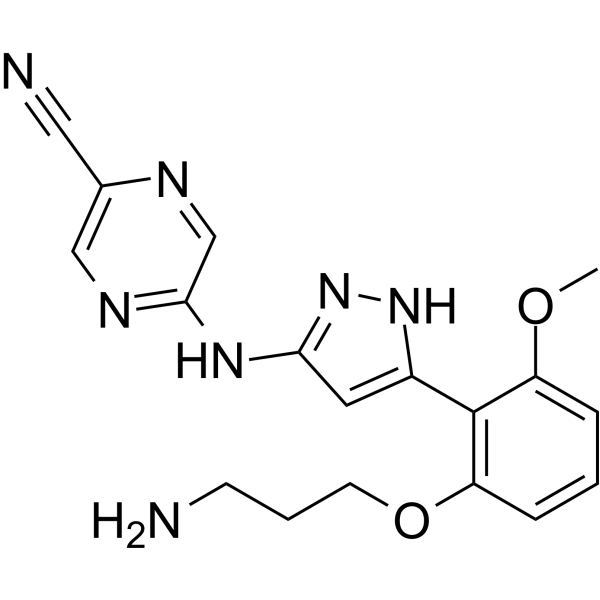
Prexasertib (LY2606368) is a selective, ATP-competitive second-generation checkpoint kinase 1 (CHK1) inhibitor with a Ki of 0.9 nM and an IC50 of <1 nM. Prexasertib inhibits CHK2 (IC50=8 nM) and RSK1 (IC50=9 nM). Prexasertib causes double-stranded DNA breakage and replication catastrophe resulting in apoptosis. Prexasertib shows potent anti-tumor activity .
loading...
    loading...
37
37 Publications Verification
Cat. No.: HY-18174A
CAS No.: 1234015-54-3
Synonyms: LY2606368 dihydrochloride
Research Areas:  

Cancer

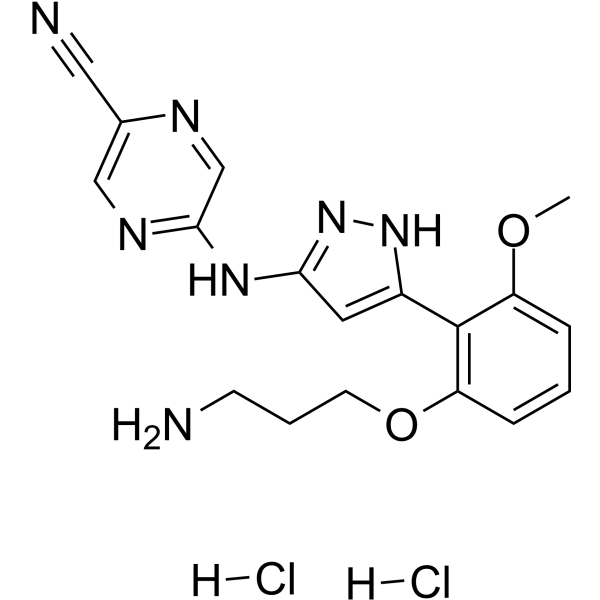
Prexasertib dihydrochloride (LY2606368 dihydrochloride) is a selective, ATP-competitive second-generation checkpoint kinase 1 (CHK1) inhibitor with a Ki of 0.9 nM and an IC50 of <1 nM. Prexasertib dihydrochloride inhibits CHK2 (IC50=8 nM) and RSK1 (IC50=9 nM). Prexasertib dihydrochloride causes double-stranded DNA breakage and replication catastrophe resulting in apoptosis. Prexasertib dihydrochloride shows potent anti-tumor activity .
loading...
    loading...
37
37 Publications Verification
Cat. No.: HY-18174E
CAS No.: 1234015-58-7
Synonyms: LY2606368 dimesylate
Research Areas:  

Cancer

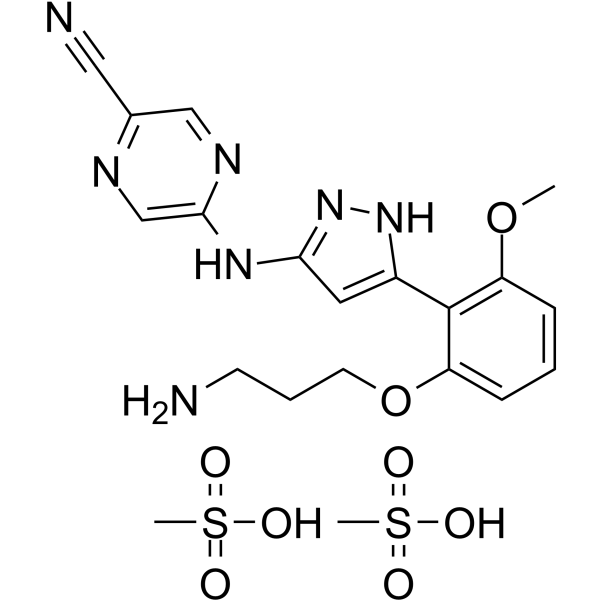
Prexasertib dimesylate (LY2606368 dimesylate) is a selective, ATP-competitive second-generation checkpoint kinase 1 (CHK1) inhibitor with a Ki of 0.9 nM and an IC50 of <1 nM. Prexasertib dimesylate inhibits CHK2 (IC50=8 nM) and RSK1 (IC50=9 nM). Prexasertib dimesylate causes double-stranded DNA breakage and replication catastrophe resulting in apoptosis. Prexasertib dimesylate shows potent anti-tumor activity .
loading...
    loading...
4
4 Cited Publications
Cat. No.: HY-N6779
CAS No.: 149-29-1
Synonyms: Terinin
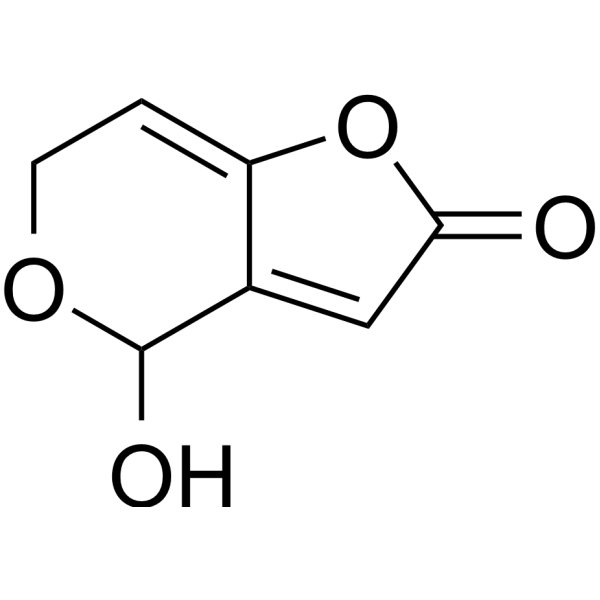
Patulin (Terinin) is a mycotoxin produced by fungi including the Aspergillus, Penicillium, and Byssochlamys species, causes chromosome breakage, mutation, teratogenic and cytotoxic. Patulin induces autophagy-dependent apoptosis through lysosomal-mitochondrial axis, and causes DNA damage .
loading...
    loading...
3
3 Cited Publications
Cat. No.: HY-15673
CAS No.: 1374996-60-7
Purity:  99.75%
KP372-1 is an Akt inhibitor that inhibits proliferation and induces apoptosis and anoikis. KP372-1 is also an NQO1 redox cycling agent that causes DNA damage (including DNA breakage) by generating ROS. KP372-1 can be used in cancer research (such as head and neck squamous cell carcinoma (HNSCC) and pancreatic cancer) .
loading...
    loading...
Cat. No.: HY-112817
CAS No.: 139307-94-1
Synonyms: 8-Oxo-Deoxyguanosine triphosphate
Category:  

Microorganisms

Target:  

Apoptosis

8-Oxo-dGTP (8-Oxo-Deoxyguanosine triphosphate) is an oxidized guanine nucleotide formed by ROS-mediated oxidative modification of dGTP, and it also serves as a key substrate for 8-oxo-dGTP pyrophosphohydrolases (such as hMTH1 and E. coli MutT). 8-Oxo-dGTP acts as a DNA mutagen, inserts into nascent DNA and pairs with adenine and cytosine, inducing A:T to C:G transversion mutations. Furthermore, 8-Oxo-dGTP causes oxidative DNA base modification, strand breakage and S-phase arrest, and ultimately triggers AIF-mediated apoptosis and promotes spontaneous carcinogenesis in mth1-deficient mice. Accumulation of 8-Oxo-dGTP in cells induces genomic instability, but it exhibits a tumor-suppressive effect that reduces tumor incidence in mouse models instead. 8-Oxo-dGTP is widely used in studies related to spontaneous carcinogenesis, Parkinson's disease, Alzheimer's disease, heart failure and tumor mechanisms .
loading...
    loading...
Cat. No.: HY-173703
CAS No.: 3025108-11-3
Research Areas:  

Cancer

β-Glu-PAB(CH2NH2)-Exatecan (Compound 9a) is a topoisomerase I inhibitor. β-Glu-PAB(CH2NH2)-Exatecan binds to the topoisomerase I-DNA complex to prevent DNA strand reconnection, thereby inducing DNA breakage and cell apoptosis. β-Glu-PAB(CH2NH2)-Exatecan can be specifically cleaved by β-glucuronidase highly expressed in the tumor microenvironment to release Exatecan for cytotoxic effect. β-Glu-PAB(CH2NH2)-Exatecan is also an intermediate of Mal((3S,3aR,6S,6aR) -hexahydrofuro [3, 2-B]furan-3,6-diamine-PEG12)-β -Glu-Pab-Exatecan. β-Glu-PAB(CH2NH2)-Exatecan is promising for research of cancers .
loading...
    loading...
Cat. No.: HY-W015205
CAS No.: 2240-25-7
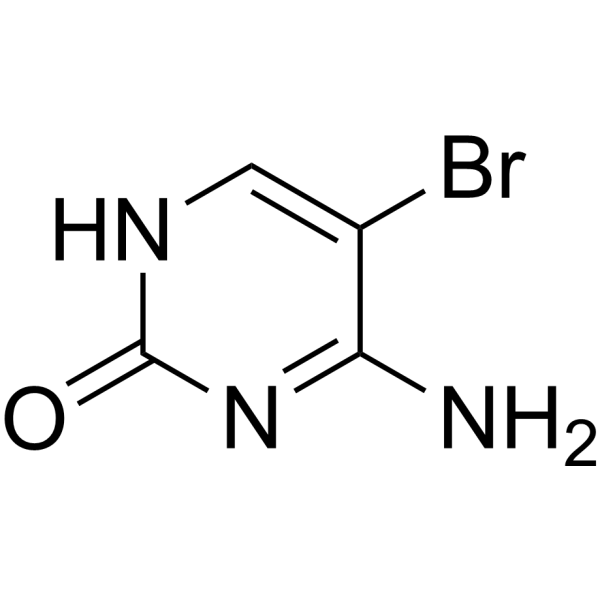
5-Bromocytosine is a Cytosine (HY-I0626) derivative. 5-Bromocytosine can be incorporated into cellular DNA and promote DNA chain breakage and cross-linking under ultraviolet irradiation .
loading...
    loading...
Cat. No.: HY-W001187S
CAS No.: 205679-68-1
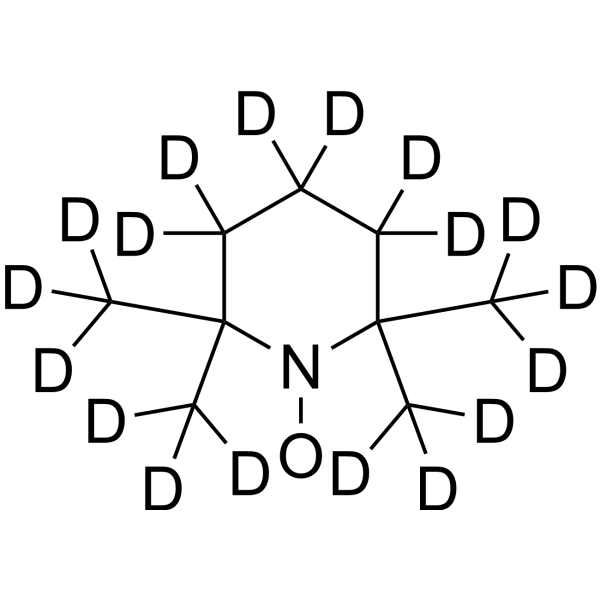
Tempo-d18 is the deuterium labeled Tempo . Tempo is a classic nitroxide radical and is a selective scavenger of ROS that dismutases superoxide in the catalytic cycle. Tempo induces DNA-strand breakage. Tempo can be used as an organocatalyst for the oxidation of primary alcohols to aldehydes. Tempo has mutagenic and antioxidant effects .
loading...
    loading...
Cat. No.: HY-N6779R
CAS No.: 149-29-1
Synonyms: Terinin (Standard)
Patulin (Standard) is the analytical standard of Patulin. This product is intended for research and analytical applications. Patulin (Terinin) is a mycotoxin produced by fungi including the Aspergillus, Penicillium, and Byssochlamys species, causes chromosome breakage, mutation, teratogenic and cytotoxic. Patulin induces autophagy-dependent apoptosis through lysosomal-mitochondrial axis, and causes DNA damage .
loading...
    loading...
Cat. No.: HY-134013
CAS No.: 3564-96-3
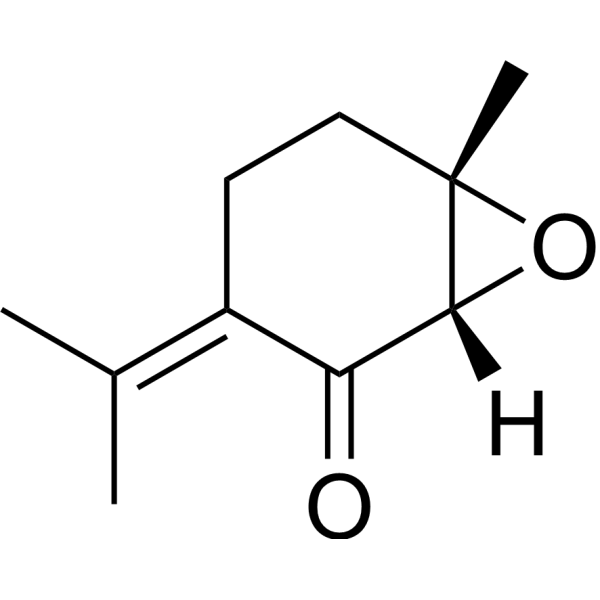
Piperitenone oxide is an orally active monoterpene ketone. Piperitenone oxide can be isolated from the essential oils of plants belonging to Mentha x villosa and Ziziphora clinopodioides. Piperitenone oxide induces differentiation. Piperitenone oxide induces chromosome breakage damage, aneuploidy damage and DNA single-strand breaks. Piperitenone oxide reduces ET-1 levels. Piperitenone oxide exerts antihypertensive effects. Piperitenone oxide can be used in studies related to colon cancer .
loading...
    loading...
Cat. No.: HY-18174H
CAS No.: 2781996-46-9
Synonyms: LY2606368 lactate
Research Areas:  

Cancer

Prexasertib lactate (LY2606368 lactate) is the lactate form of Prexasertib (HY-18174). Prexasertib lactate is a selective, ATP-competitive second-generation checkpoint kinase 1 (CHK1) inhibitor with a Ki of 0.9 nM and an IC50 of <1 nM. Prexasertib lactate inhibits CHK2 (IC50=8 nM) and RSK1 (IC50=9 nM). Prexasertib lactate causes double-stranded DNA breakage and replication catastrophe resulting in apoptosis. Prexasertib lactate shows potent anti-tumor activity .
loading...
    loading...
Cat. No.: HY-133646
CAS No.: 83463-62-1
Target:  

DNA/RNA Synthesis

Research Areas:  

Others

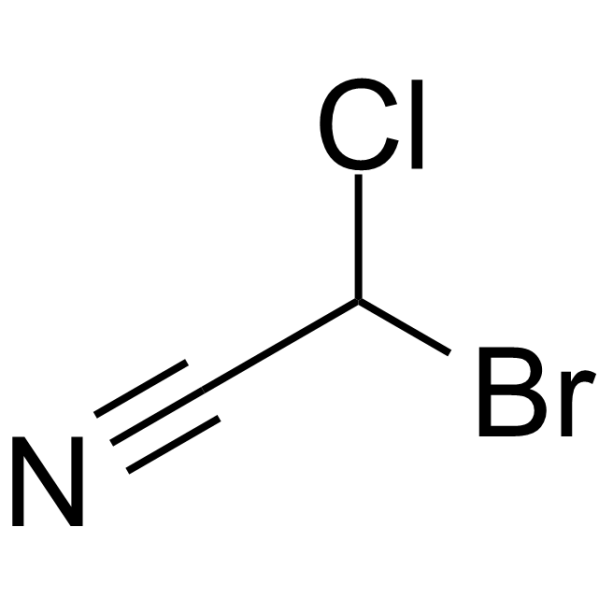
Bromochloroacetonitrile is a by-product of the chlorine disinfection of water containing natural organic material. Bromochloroacetonitrile possesses direct acting mutagenic activity and is capable of inducing DNA strand breakage .
loading...
    loading...
Cat. No.: HY-W142194
CAS No.: 87905-98-4
Target:  

DNA/RNA Synthesis

Research Areas:  

Cancer

Benzyl (5-hydroxypentyl)carbamate is a linker capable of repairing damaged DNA by binding to the 5'-hydroxyl group on the sugar backbone. Benzyl (5-hydroxypentyl)carbamate can also bind to DNA ligands and can inhibit cell proliferation in resistant cell lines. However, Benzyl (5-hydroxypentyl)carbamate is toxic to cells and can also cause DNA damage and strand breakage.
loading...
    loading...
Cat. No.: HY-18174B
CAS No.: 1234015-57-6
Synonyms: LY2606368 Mesylate Hydrate; LY2940930
Research Areas:  

Cancer

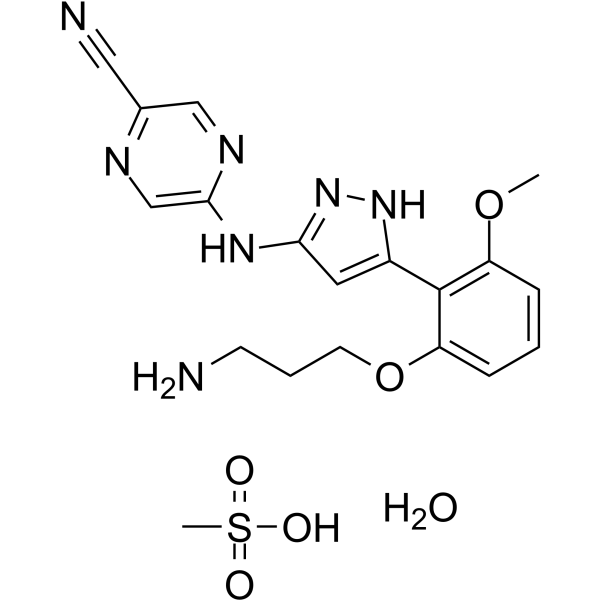
Prexasertib Mesylate Hydrate (LY2606368 Mesylate Hydrate) is a selective, ATP-competitive second-generation checkpoint kinase 1 (CHK1) inhibitor with a Ki of 0.9 nM and an IC50 of <1 nM. Prexasertib Mesylate Hydrate inhibits CHK2 (IC50=8 nM) and RSK1 (IC50=9 nM). Prexasertib Mesylate Hydrate causes double-stranded DNA breakage and replication catastrophe resulting in apoptosis. Prexasertib Mesylate Hydrate shows potent anti-tumor activity .
loading...
    loading...
Cat. No.: HY-18174C
CAS No.: 1234015-55-4
Synonyms: LY2606368 mesylate
Research Areas:  

Cancer

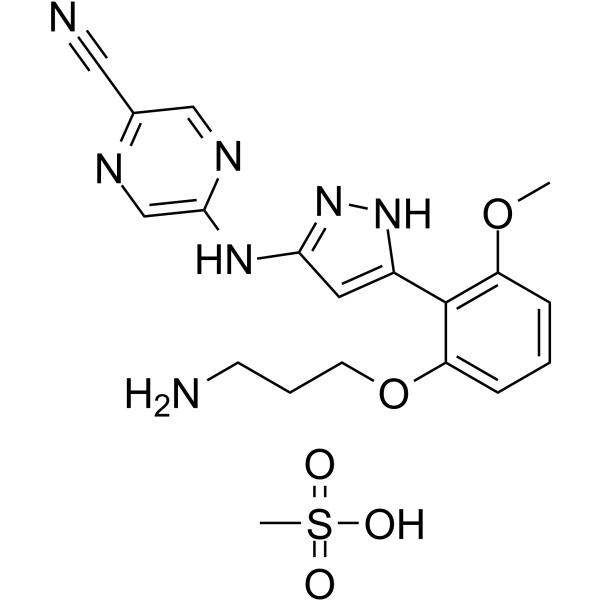
Prexasertib mesylate (LY2606368 mesylate) is a selective, ATP-competitive second-generation checkpoint kinase 1 (CHK1) inhibitor with a Ki of 0.9 nM and an IC50 of <1 nM. Prexasertib mesylate inhibits CHK2 (IC50=8 nM) and RSK1 (IC50=9 nM). Prexasertib mesylate causes double-stranded DNA breakage and replication catastrophe resulting in apoptosis. Prexasertib mesylate shows potent anti-tumor activity .
loading...
    loading...
Cat. No.: HY-155122
CAS No.: 2999661-74-2
Target:  

PARP

Research Areas:  

Cancer

PARP-1-IN-13 (Compound 19c) is a PARP-1 inhibitor (IC50: 26 nM). PARP-1-IN-13 inhibits DNA single-strand breakage repair and aggravates DNA double-strand breakage. PARP-1-IN-13 promotes the apoptosis of cancer cells through the mitochondrial apoptosis pathway .
loading...
    loading...
Cat. No.: HY-135078
CAS No.: 17460-13-8
Synonyms: NSC 270912
Target:  

DNA/RNA Synthesis

Research Areas:  

Others

2,5-Deoxyfructosazine is a pyrazine derivative that can be found in cured tobacco and is used as a flavoring agent in the food and tobacco industry. Pyrazines, including 2,5-deoxyfructosazine, can be produced either by pyrolytic decomposition of natural compounds or by the reaction of sugars with alcoholic ammonia. 2,5-Deoxyfructosazine is also formed by the breakdown of D-glucosamine at neutral pH. Like glucosamine, 2,5-deoxyfructosazine has DNA strand breakage activity and strongly inhibits IL-2 production by Jurkat cells stimulated with phytohemagglutinin (IC50=~1.25 mM).
loading...
    loading...
Cat. No.: HY-W587784
CAS No.: 542-40-5
Norbixin is an orally active natural product with multiple activities such as retinal protection and oxidative stress regulation. Norbixin scavenges ROS, chelates metal ions, regulates plasmid and genomic DNA breakage, inhibits H2O2-induced mutagenesis, activates PPAR-α, modulates lipid levels, restores or regulates antioxidant enzyme activity, and alters NO levels. Norbixin prevents A2E accumulation and protects photoreceptor cells and retinal pigment epithelial cells. Norbixin is a derivative of Bixin (HY-N6884). Norbixin can be used in research related to diseases such as macular degeneration and diabetes, and also serves as a natural textile dye .
loading...
    loading...
Cat. No.: HY-120747
CAS No.: 135906-72-8
Research Areas:  

Infection

A-65282 is an antibacterial agent. A-65282 inhibits P4 DNA unknotting with an IC50 value of 8 µg/mL. A 65281 induces DNA breakage mediated by calf thymus topoisomerase II .
loading...
    loading...

