Search Result
Results for "
EGFR-T790M
" in MedChemExpress (MCE) Product Catalog:
1
Isotope-Labeled Compounds
| Cat. No. |
Product Name |
Target |
Research Areas |
Chemical Structure |
-
- HY-19816
-
|
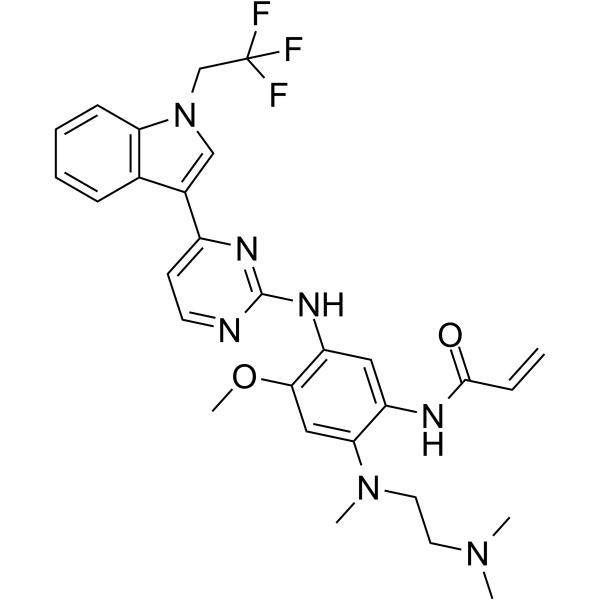
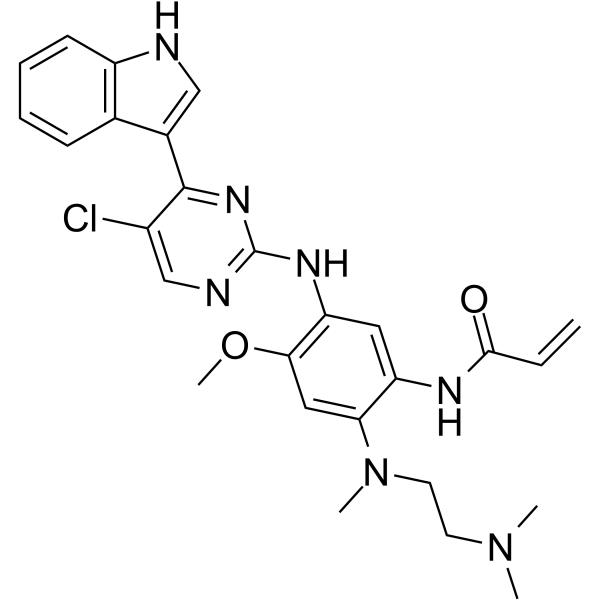
Abivertinib; AC0010
|
EGFR
Btk
Apoptosis
|
Cancer
|
|
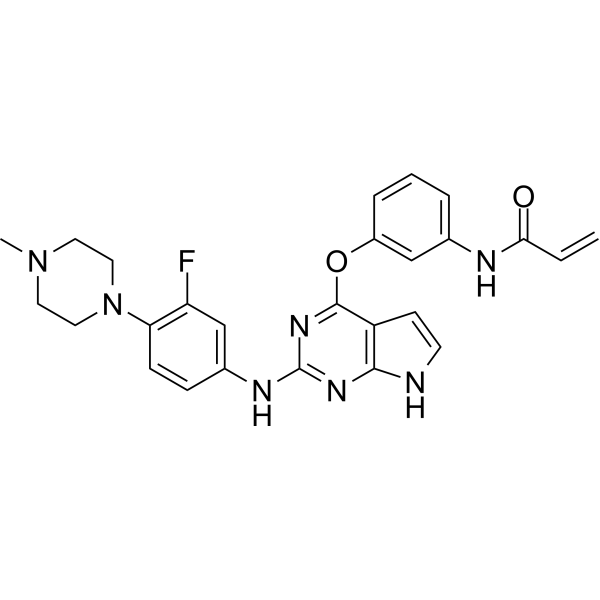
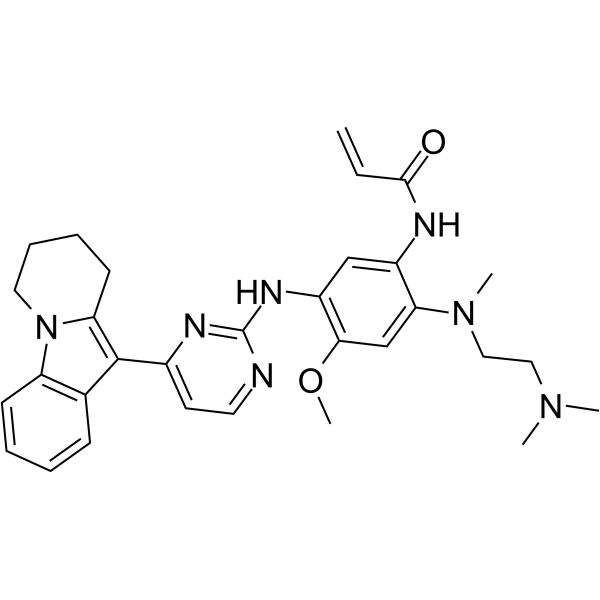
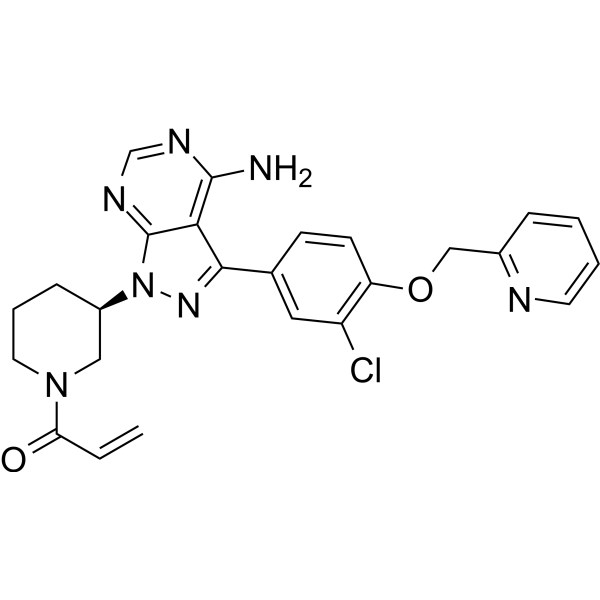
Avitinib (Abivertinib) is a third-generation, irreversible and orally active selective EGFR inhibitor, with IC50 values of 0.18 nM, 0.18 nM, 7.68 nM and against EGFR L858R, EGFR T790M and wild-type EGFR. Avitinib is also a BTK inhibitor that induces apoptosis and inhibits phosphorylation of BTK in mantle cell lymphoma. Avitinib shows anticancer effects .
|
-
-
- HY-19816A
-
|
Abivertinib maleate; AC0010 maleate
|
EGFR
Btk
Apoptosis
|
Cancer
|
|
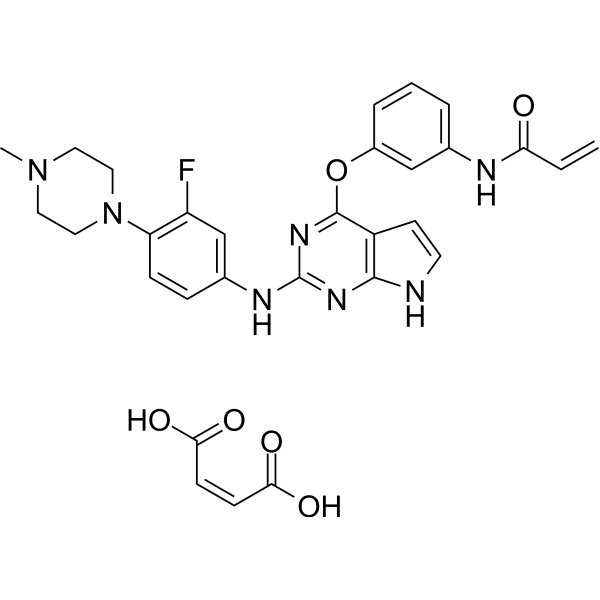
Avitinib (Abivertinib) maleate is a third-generation, irreversible and orally active selective EGFR inhibitor, with IC50 values of 0.18 nM, 0.18 nM, 7.68 nM and against EGFR L858R, EGFR T790M and wild-type EGFR. Avitinib maleate is also a BTK inhibitor that induces apoptosis and inhibits phosphorylation of BTK in mantle cell lymphoma. Avitinib maleate shows anticancer effects .
|
-
-
- HY-15164A
-
|
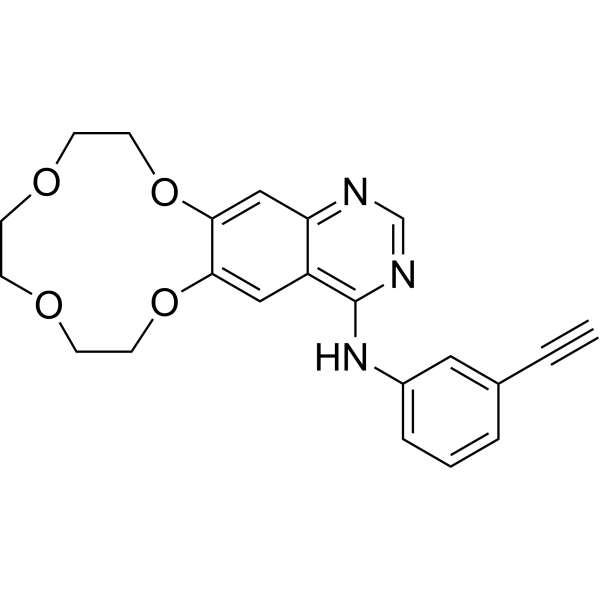
BPI-2009
|
EGFR
|
Infection
Neurological Disease
Metabolic Disease
Cancer
|
|
Icotinib (BPI-2009) is a potent, CNS-penetrant and specific EGFR inhibitor with an IC50 of 5 nM; also inhibits mutant EGFR L858R, EGFR L858R/T790M, EGFR T790M and EGFR L861Q. Icotinib is a click chemistry reagent, it contains an Alkyne group and can undergo copper-catalyzed azide-alkyne cycloaddition (CuAAc) with molecules containing Azide groups.
|
-
-
- HY-15730
-
|
HM781-36B; NOV120101
|
EGFR
Apoptosis
|
Cancer
|
|
Poziotinib (HM781-36B) is an orally active, irreversible pan-HER inhibitor, which effectively inhibits EGFR wt, HER-2 and HER-4 with IC50s of 3.2, 5.3 and 23.5 nM, respectively. Poziotinib (HM781-36B) also shows excellent inhibitory activities against mutated EGFRs, including EGFR T790M and EGFR L858R/T790M, with IC50s of 4.2 and 2.2 nM, respectively. Excellent antitumor activity .
|
-
-
- HY-138751
-
|
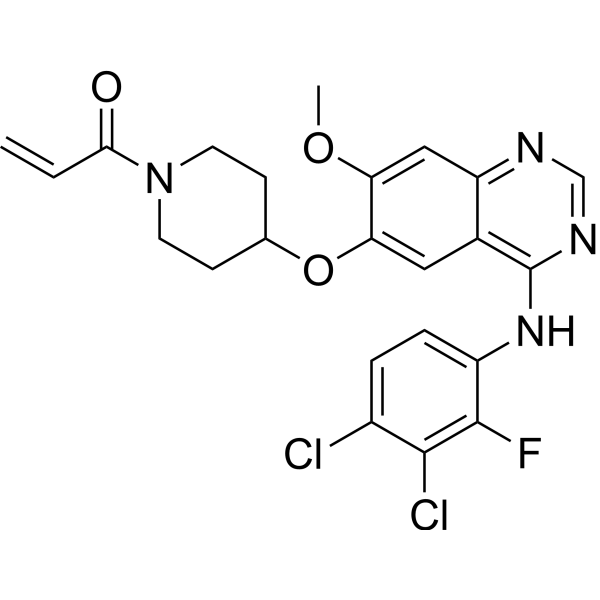
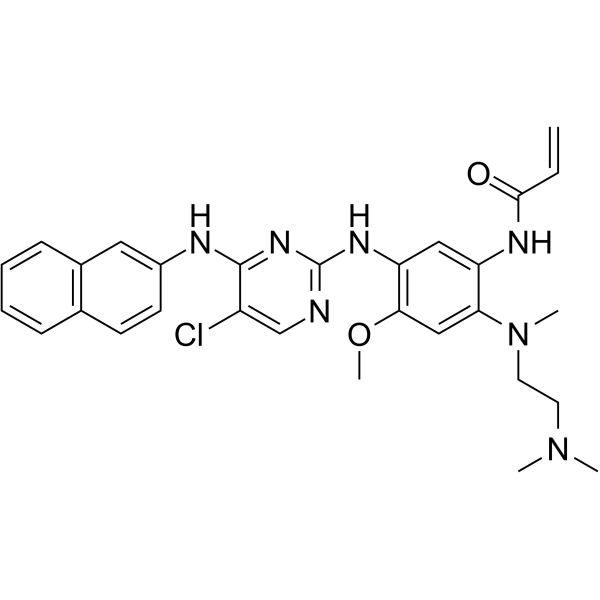
ASK120067
|
EGFR
|
Cancer
|
|
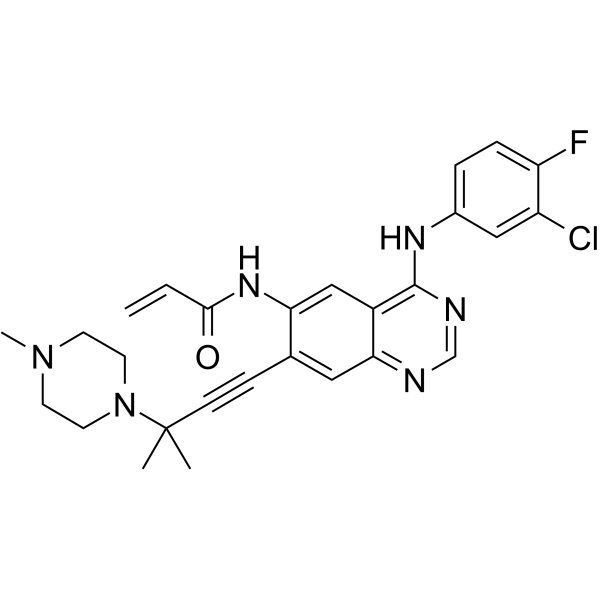
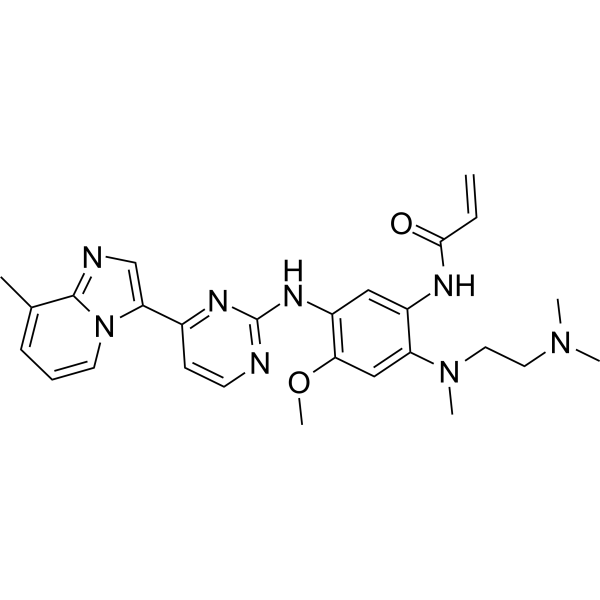
limertinib (ASK120067) is a potent and orally active inhibitor of EGFR T790M (IC50:0.3 nM) with selectivity over EGFR WT (IC50:6.0 nM). limertinib is a third-generation EGFR-TKI for the research of non-small cell lung cancer (NSCLC) .
|
-
-
- HY-100213
-
EAI045
3 Publications Verification
|
EGFR
|
Cancer
|
|
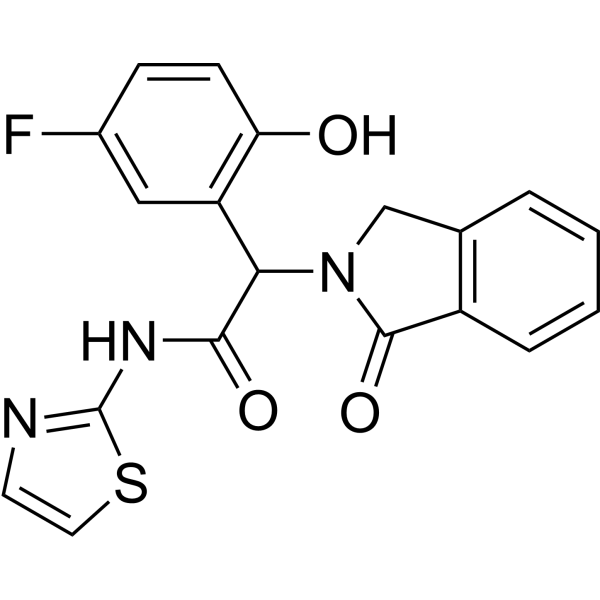
EAI045 is an allosteric and the fourth-generation inhibitor of mutant EGFR with IC50s of 1.9, 0.019, 0.19 and 0.002 μM for EGFR, EGFR L858R, EGFR T790M and EGFR L858R/T790M at 10 μM ATP, respectively.
|
-
-
- HY-12029
-
|
|
EGFR
|
Cancer
|
|
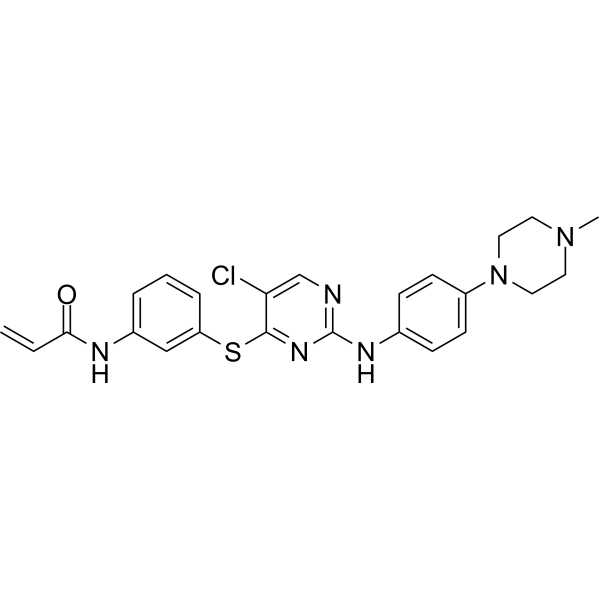
WZ8040 is an irreversible mutated EGFR T790M inhibitor and inhibits EGFR phosphorylation. WZ8040 displays 100-fold greater activity against the mutated EGFR than the normal .
|
-
-
- HY-15164
-
|
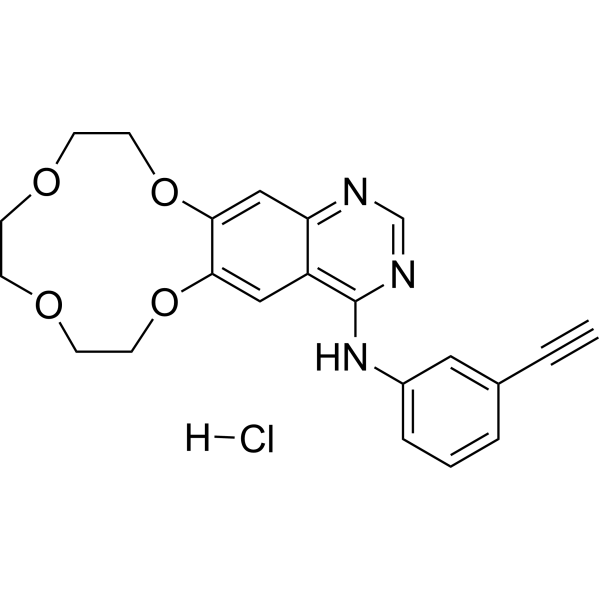
BPI-2009H
|
EGFR
|
Infection
Neurological Disease
Metabolic Disease
Cancer
|
|
Icotinib Hydrochloride (BPI-2009) is a potent, CNS-penetrant and specific EGFR inhibitor with an IC50 of 5 nM; also inhibits mutant EGFR L858R, EGFR L858R/T790M, EGFR T790M and EGFR L861Q. Icotinib (Hydrochloride) is a click chemistry reagent, it contains an Alkyne group and can undergo copper-catalyzed azide-alkyne cycloaddition (CuAAc) with molecules containing Azide groups.
|
-
-
- HY-137433
-
|
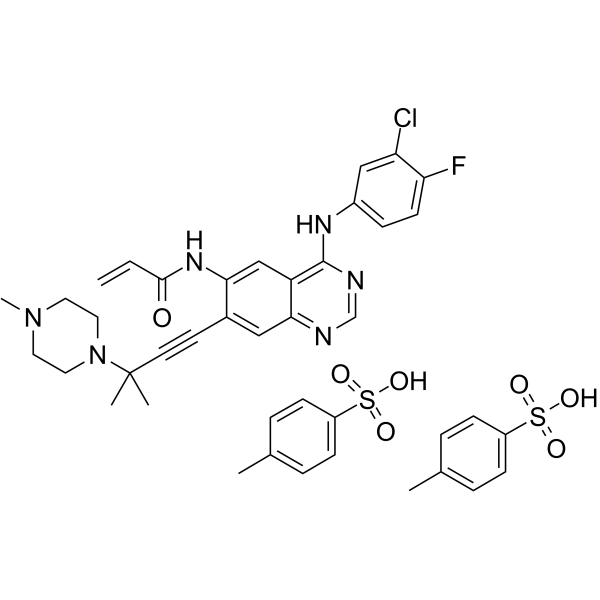
D-0316
|
EGFR
P-glycoprotein
Apoptosis
|
Cancer
|
|
Befotertinib (D-0316) is an orally active EGFR inhibitor and ABCB1 inhibitor. Befotertinib selectively targets EGFR mutations including EGFR T790M, EGFR L858R and delE746-A750, forms covalent bonds with EGFR C797, inhibits oncogenic signaling pathways, and exerts antiproliferative effects. Befotertinib inhibits ABCB1-mediated drug efflux, activates the ATPase activity of ABCB1, acts as a chemosensitizer and apoptosis enhancer, and restores the sensitivity of multidrug-resistant cancer cells. Befotertinib can be used in research related to multidrug-resistant cancers and non-small cell lung cancer .
|
-
-
- HY-13897
-
|
|
EGFR
|
Cancer
|
|
CNX-2006 is a mutant-selective and irreversible EGFR inhibitor with an IC50 below 20 nM for EGFR T790M.
|
-
-
- HY-10346
-
AV-412
5 Publications Verification
MP412
|
EGFR
|
Cancer
|
|
AV-412 (MP412) is an EGFR inhibitor with IC50s of 0.75, 0.5, 0.79, 2.3, 19 nM for EGFR, EGFR L858R, EGFR T790M, EGFR L858R/T790M and ErbB2, respectively.
|
-
-
- HY-13984
-
NT-1
1 Publications Verification
EGFR mutant-IN-3
|
EGFR
ERK
Apoptosis
Drug Derivative
|
Cancer
|
|
NT-1 (EGFR mutant-IN-3) is a potent mutant EGFR inhibitor and an analog of Osimertinib (HY-15772). This mutant EGFR inhibitor suppresses FGFR WT with an IC50 of 0.4 nM. NT-1 also inhibits EGFR L858R, EGFR Exon 19 deletion and EGFR T790M. NT-1 exerts deeper inhibition on p-EGFR and p-ERK, and induces tumor cell apoptosis. NT-1 can be used in colorectal cancer research .
|
-
-
- HY-139920
-
|
SH-1028
|
EGFR
|
Cancer
|
|
Oritinib (SH-1028), an irreversible third-generation EGFR TKI, overcomes T790M-mediated resistance in non-small cell lung cancer. Oritinib (SH-1028), a mutant-selective inhibitor of EGFR kinase activity, inhibits EGFR WT, EGFR L858R, EGFR L861Q, EGFR L858R/T790M, EGFR d746-750 and EGFR d746-750/T790M kinases, with IC50s of 18, 0.7, 4, 0.1, 1.4 and 0.89 nM, respectively .
|
-
-
- HY-155537
-
|
YK-029A
|
EGFR
|
Cancer
|
|
YK-029A is an orally active inhibitor of mutant EGFR,targeting to both the T790M mutations (EGFR T790M) and exon 20 insertion of EGFR (EGFRex20ins). YK-029A exhibits significant antitumor activity,and results tumor regression in EGFRex20ins-driven PDX models .
|
-
-
- HY-138751A
-
|
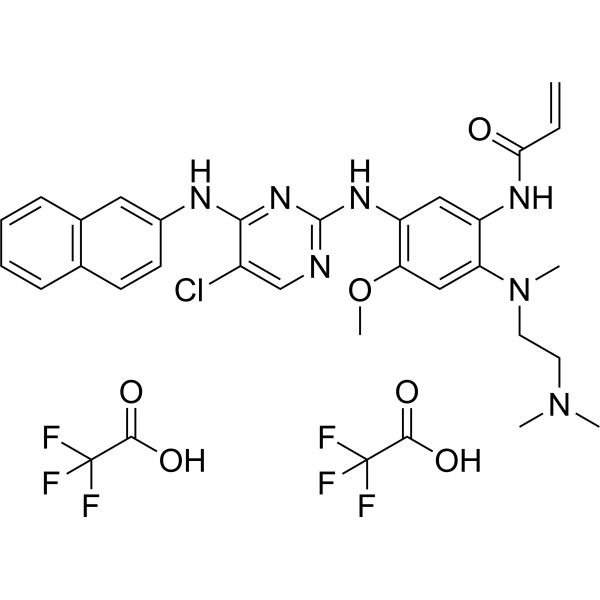
ASK120067 diTFA
|
EGFR
|
Cancer
|
|
limertinib (ASK120067) diTFA is a potent and orally active inhibitor of EGFR T790M (IC50: 0.3 nM) with selectivity over EGFR WT (IC50: 6.0 nM). limertinib diTFA is a third-generation EGFR-TKI for the research of non-small cell lung cancer (NSCLC) .
|
-
-
- HY-155736
-
|
|
p38 MAPK
EGFR
Raf
CDK
c-Met/HGFR
|
Cancer
|
|
MAPK-IN-2 (compound 3h) is a potent MAPK inhibitor with antineoplastic activity. MAPK-IN-2 inhibits cancer cell proliferation among serval cancer cell lines, and suppresses MAPK pathway with potant efficacy (EGFR WT IC50=281 nM, c-MET IC50=205 nM, B-RAF WT IC50=112 nM, and CDK4/6 IC50=95 and 184 nM, respectively). MAPK-IN-2 even shows a remarkable potency against mutated EGFR and B-RAF (EGFR T790M IC50=69 nM and B-RAF V600E IC50=83 nM) .
|
-
-
- HY-156912
-
|
|
EGFR
|
Cancer
|
|
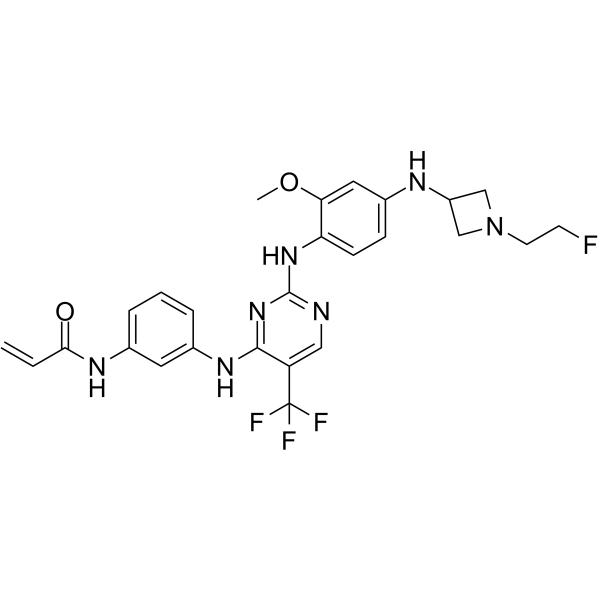
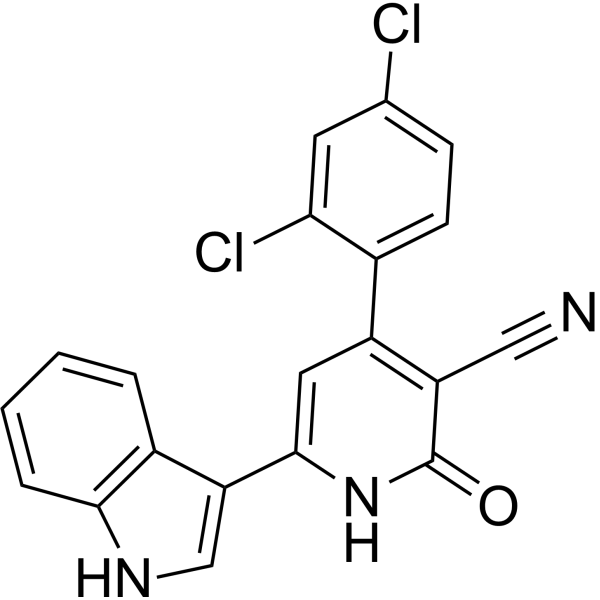
Tyrosine kinase-IN-7 (compound 13h) is an inhibitor of the tyrosine kinase EGFR. The IC50s for inhibiting EGFR(WT) and EGFR(T790M) are 0.630 μM and 0.956 μM respectively. Tyrosine kinase-IN-7 has antitumor activity against four cancer cell lines (HepG2, HCT-116, MCF-7, and A431) with IC50s of 13.02 μM, 10.14 μM, 12.68 μM, and 47.05 μM, respectively .
|
-
-
- HY-10346A
-
|
MP-412 free base
|
EGFR
|
Cancer
|
|
AV-412 free base (MP-412 free base) is an EGFR inhibitor with IC50s of 0.75, 0.5, 0.79, 2.3, 19 nM for EGFR, EGFR L858R, EGFR T790M, EGFR L858R/T790M and ErbB2, respectively.
|
-
-
- HY-101522
-
|
|
EGFR
BMX Kinase
Btk
MEK
|
Cancer
|
|
CHMFL-EGFR-202 is a potent, irreversible inhibitor of epidermal growth factor receptor (EGFR) mutant kinase, with IC50s of 5.3 nM and 8.3 nM for drug-resistant mutant EGFR T790M and WT EGFR kinases, respectively. CHMFL-EGFR-202 exhibits ~10-fold selectivity for EGFR L858R/T790M against the EGFR wild-type in cells. CHMFL-EGFR-202 adopts a covalent “DFG-in-C-helix-out” inactive binding conformation with EGFR, with strong antiproliferative effects against EGFR mutant-driven nonsmall-cell lung cancer (NSCLC) cell lines .
|
-
-
- HY-164476
-
|
|
EGFR
GSK-3
PD-1/PD-L1
|
Cancer
|
|
ES-072 is an orally effective selective EGFR mutant (EGFR-T790M) inhibitor. ES-072 activates GSK3α by inhibiting EGFR-T790M activity, which promotes phosphorylation of PD-L1 at Ser279 and Ser283. The phosphorylated PD-L1 recruits the E3 ubiquitin ligase ARIH1, leading to ubiquitination and proteasomal degradation of PD-L1. This mechanism not only reduces cancer cell growth but also enhances anti-tumor immune response by lowering PD-L1 levels. ES-072 can be used to inhibit proliferation in non-small cell lung cancer (NSCLC) cells .
|
-
-
- HY-158178
-
|
|
EGFR
|
Cancer
|
|
EGFR T790M/L858R-IN-7 (Compound 72) is a novel pyrimidine compound that inhibits the EGFR T790M and L858R mutation with a high efficacy (93% inhibition rate at 0.05 μM). EGFR T790M/L858R-IN-7 functions by specifically binding to the kinase domain of EGFR, thereby inhibiting its phosphorylation activity .
|
-
-
- HY-E70709
-
|
|
EGFR
|
Cancer
|
|
EGFR is a driver of tumorigenesis. EGFR is mainly found in an auto-inhibited, dimerization-incompetent, state at the plasma membrane (PM). Ligand binding promotes receptor dimerization, which determines a series of structural rearrangements that are conveyed to the cytoplasmic domain allowing the formation of asymmetric dimers between the two juxtaposed catalytic domains. EGFR has multiple mutants. EGFR T790M Recombinant Human Active Protein Kinase is a recombinant EEGFR T790M protein that can be used to study EGFR T790M-related functions .
|
-
-
- HY-150552
-
-
-
- HY-162360
-
|
|
Apoptosis
EGFR
Caspase
Bcl-2 Family
|
Cancer
|
|
EGFR-IN-109 (compound 4) is an EGFR inhibitor, with the IC50 values of 25.8 and 182.3 nM for EGFR WT and EGFR T790M, respectively. EGFR-IN-109 arrests the cancer cells’ growth at the G2/M phase and induces both early and late apoptosis. EGFR-IN-109 can be used in cancer research .
|
-
-
- HY-149824
-
|
|
EGFR
Apoptosis
|
Cancer
|
|
EGFR T790M/L858R-IN-2 is a potent and selective EGFRT790M/L858R inhibitor with IC50 values of 3.5, 1290 nM for EGFRT790M/L858R, EGFR WT, respectively. EGFR T790M/L858R-IN-2 decreases the expression of p-EGFR, P-AKT, P-ERK1/2. EGFR T790M/L858R-IN-2 induces Apoptosis and cell cycle arrest in the G1 phase. EGFR T790M/L858R-IN-2 shows anti-cancer activity .
|
-
-
- HY-175297
-
|
|
VEGFR
EGFR
|
Cancer
|
|
EGFR T790M/VEGFR-2-IN-1 (Compound 6) is a dual EGFR T790M mutant (IC50=0.26 μM) and VEGFR-2 (IC50=0.95 μM) inhibitor. EGFR T790M/VEGFR-2-IN-1 blocks tumor cell proliferation and angiogenesis signaling pathways. EGFR T790M/VEGFR-2-IN-1 exhibits potent cytotoxicity against multiple cancer cell lines (HCT116, MCF-7, HepG2, A549; IC50=5.35-9.90 μM). EGFR T790M/VEGFR-2-IN-1 is promising for research of non-small cell lung cancer and solid tumors .
|
-
-
- HY-W740378
-
|
AFN-941
|
EGFR
JAK
|
Others
|
|
1,2,3,4-Tetrahydrostaurosporine is a derivative of Staurosporine (HY-15141) and an inhibitor of mutant EGFR (IC50=74 nM for EGFRT790M). It is selective for EGFRT790M over wild-type EGFR (IC50=390 nM). It also binds to Janus kinase 3 (JAK3).
|
-
-
- HY-137433A
-
|
D-0316 mesylate
|
EGFR
P-glycoprotein
Apoptosis
|
Inflammation/Immunology
Cancer
|
|
Befotertinib (D-0316) mesylate is an orally active EGFR inhibitor and ABCB1 inhibitor. Befotertinib mesylate selectively targets EGFR mutations including EGFR T790M, EGFR L858R and delE746-A750, forms covalent bonds with EGFR C797, inhibits oncogenic signaling pathways, and exerts antiproliferative effects. Befotertinib mesylate inhibits ABCB1-mediated drug efflux, activates the ATPase activity of ABCB1, acts as a chemosensitizer and apoptosis enhancer, and restores the sensitivity of multidrug-resistant cancer cells. Befotertinib mesylate can be used in research related to multidrug-resistant cancers and non-small cell lung cancer .
|
-
-
- HY-158313
-
|
|
EGFR
PROTACs
|
Cancer
|
|
PROTAC EGFR degrader 13 (compound 106) is an EGFR PROTAC degrader with a DC50 of <0.1 μM. PROTAC EGFR degrader 13 has proliferation inhibitory activity on cell Ba/F3-TEL-EGFR-T790M-L858R-C797S with an IC50 of 15.6 nM. PROTAC EGFR degrader 13 can be used for the study of EGFR-related diseases such as cancer (Pink: Target protein ligand; Blue: E3 ligand (HY-14658); Black: linker (HY-W262798); E3 ligand + linker: HY-W998306) .
|
-
-
- HY-183123
-
|
|
FAK
EGFR
|
Cancer
|
|
EGFR T790M/FAK-IN-1 is a dual inhibitor of EGFR T790M and FAK, with an IC50 of 99.1 nM against EGFR T790M and an IC50 of 117.7 nM against FAK. EGFR T790M/FAK-IN-1 can be used for research on pancreatic cancer, drug-resistant breast cancer, and drug-resistant lung cancer .
|
-
-
- HY-183120
-
|
|
FAK
EGFR
Apoptosis
|
Cancer
|
|
EGFR T790M/FAK-IN-2 is an orally active dual FAK and EGFR T790M kinase inhibitor, with an IC50 of 1.03 nM against FAK and an IC50 of 3.89 nM against EGFR T790M. EGFR T790M/FAK-IN-2 exerts antiproliferative effects in drug-resistant cancer cells overexpressing FAK, inducing apoptosis and cell cycle arrest. EGFR T790M/FAK-IN-2 exhibits antitumor activity in a pancreatic cancer xenograft mouse model. EGFR T790M/FAK-IN-2 can be used for the research of pancreatic cancer, breast cancer and non-small cell lung cancer .
|
-
-
- HY-164056
-
|
|
EGFR
|
Cancer
|
|
EGFR T790M/L858R-IN-8 (Compound 9) is a selective EGFR T790M/L858R mutant kinase inhibitor with a IC50 of 56.8 μM, and it shows no inhibitory activity against wild-type EGFR. EGFR T790M/L858R-IN-8 can be used for the research of non-small cell lung cancer .
|
-
-
- HY-158175
-
|
|
EGFR
|
Cancer
|
|
EGFR T790M/L858R-IN-4 (Example 14) is a potent EGFR T790M/L858R inhibitor with anticancer effects .
|
-
-
- HY-158176
-
|
|
EGFR
|
Cancer
|
|
EGFR T790M/L858R-IN-5 (example 52) is a potent inhibitor of EGFR T790M/L858R with the inhibition percentage of 92.9% in the concerntration of 0.05 μM .
|
-
-
- HY-157398
-
|
|
EGFR
|
Cancer
|
|
EGFR T790M/L858R-IN-3 (compound B1) is a EGFR L858R/T790M inhibitor with IC50 value of 13?nM. EGFR T790M/L858R-IN-3 shows anti-tumour activity in H1975 cells with an IC50 value of 0.087 μΜ. EGFR T790M/L858R-IN-3 inhibits cell migration in A549 cells and induces apoptosis in H1975 cells .
|
-
-
- HY-158177
-
|
|
EGFR
|
Cancer
|
|
EGFR T790M/L858R-IN-6 (compound 53), a pyrimidine compound, is a potent EGFR T790M/L858R inhibitor. EGFR T790M/L858R-IN-6 shows 90.88% enzyme activity inhibition with 0.05 μM .
|
-
-
- HY-170665
-
|
|
EGFR
|
Cancer
|
|
EGFR T790M/L858R-IN-9 (Compound 8) is an EGFR-L858R/T790M inhibitor that demonstrates potent inhibitory phosphorylation effects against the EGFR-L858R/T790M mutant kinase, with an IC50 value of 0.0064µM. EGFR T790M/L858R-IN-9 also inhibits the proliferation of non-small cell lung cancer (NSCLC) cells and can be utilized in cancer research .
|
-
-
- HY-E70711
-
|
|
EGFR
|
Cancer
|
|
EGFR is a driver of tumorigenesis. EGFR is mainly found in an auto-inhibited, dimerization-incompetent, state at the plasma membrane (PM). Ligand binding promotes receptor dimerization, which determines a series of structural rearrangements that are conveyed to the cytoplasmic domain allowing the formation of asymmetric dimers between the two juxtaposed catalytic domains. EGFR has multiple mutants. EGFR T790M/L858R Recombinant Human Active Protein Kinase is a recombinant EGFR T790M/L858R protein that can be used to study EGFR T790M/L858R-related functions .
|
-
-
- HY-153111
-
|
|
EGFR
|
Cancer
|
|
EGFR/HER2-IN-9 (Compound 1) is an EGFR and HER2 inhibitor with IC50s of 3.2, 8.3 and 14 nM against EGFR, EGFR T790M and HER2, respectively .
|
-
-
- HY-161045
-
|
|
EGFR
Apoptosis
|
Cancer
|
|
T-1-DOCA ia a EGFR inhibitor, with the IC50 of 56.94 and 269.01?nM for EGFR WT and EGFR T790M, respectively. T-1-DOCA can induces cell apoptosis of HCT-116 cells .
|
-
-
- HY-147826
-
|
|
EGFR
Apoptosis
|
Cancer
|
|
EGFR-IN-60 (Compound 7d) shows obvious inhibition of EGFR WT, EGFR T790M, EGFR L858R and JAK3 with IC50s of 83, 26, 53, and 69 nM, respectively. EGFR-IN-60 potently inhibits the growth of H1975 cells harboring EGFR T790M mutation (IC50=1.32 µM) over A431 cells overexpressing EGFR WT (IC50=4.96 µM). EGFR-IN-60 exhibits good oral absorption, potent and safe antitumor activity. EGFR-IN-60 induces cell death through apoptosis supported by increased Bax/Bcl-2 ratio .
|
-
-
- HY-138627B
-
|
|
EGFR
Drug Metabolite
|
Cancer
|
|
AST5902 mesylate is a principal metabolite of Alflutinib, exhibiting significant antineoplastic activity. AST5902 mesylate contributes to the overall pharmacological effects in the treatment of non-small cell lung cancer. AST5902 mesylate is involved in the response to activating EGFR mutations and can help overcome EGFR T790M drug-resistant mutations.
|
-
-
- HY-146782
-
|
|
EGFR
|
Cancer
|
|
EGFR-IN-49 is a potent and selective EGFR inhibitor with IC50s of 65.0 nM and 13.6 nM for EGFR T790M and EGFR T790M/L858R, respectively. EGFR-IN-49 induces late apoptosis in a dose-dependent manner .
|
-
-
- HY-172179
-
|
|
EGFR
VEGFR
|
Cancer
|
|
EGFR/VEGFR2-IN-5 (Compound 14) is an orally active dual inhibitor of EGFR and VEGFR2 with an IC50 value of 1.15 µM for VEGFR2 and an IC50 value of 0.28 μM for EGFR T790M. EGFR/VEGFR2-IN-5 has significant anticancer activity .
|
-
-
- HY-161067
-
|
|
EGFR
Apoptosis
|
Cancer
|
|
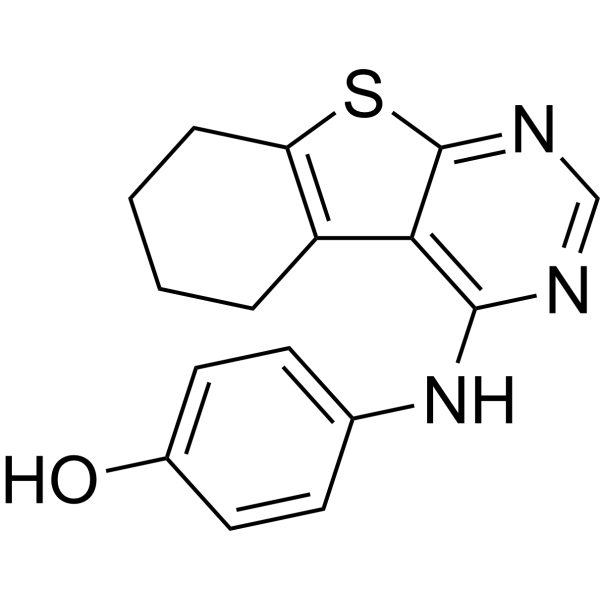
EGFR-IN-96 (compound 7a) is a thieno[2,3-d]pyrimidine EGFR inhibitor that can induce apoptosis. EGFR-IN-96 arrests the growth of HepG2 cells in the S phase and G2/M phase, and inhibits the growth of cancer cells bearing EGFR wild-type and EGFR T790M .
|
-
-
- HY-146136
-
|
|
EGFR
Apoptosis
|
Cancer
|
|
EGFR-IN-56 (Compound 13a) is a potent EGFR inhibitor with IC50 values of 541.7 nM and 132.1 nM against EGFR T790M and EGFR T790M/L858R, respectively. EGFR-IN-56 blocks cancer cells in G2/M phase and induce into late apoptosis .
|
-
-
- HY-168427
-
|
Abivertinib maleate dihydrate; AC0010 maleate dihydrate
|
EGFR
Btk
Apoptosis
|
Cancer
|
|
Avitinib (Abivertinib) maleate dihydrate is a third-generation, irreversible and orally active selective EGFR inhibitor, with IC50 values of 0.18 nM, 0.18 nM, 7.68 nM and against EGFR L858R, EGFR T790M and wild-type EGFR. Avitinib maleate dihydrate is also a BTK inhibitor that induces apoptosis and inhibits phosphorylation of BTK in mantle cell lymphoma. Avitinib maleate dihydrate shows anticancer effects .
|
-
-
- HY-162062
-
|
|
EGFR
|
Cancer
|
|
EGFR WT/T790M/L858R-IN-1 (compound 10d) is a potent EGFR inhibitor, with IC50s of 0.097, 0.280, and 0.051?μM for EGFR WT, EGFR T790M, and EGFR L858R, respectively. EGFR WT/T790M/L858R-IN-1 can be used for the research of cancer .
|
-
-
- HY-146210
-
|
|
EGFR
|
Cancer
|
|
EGFR-IN-50 (Compound 9h) is a potent EGFR inhibitor against L858R resistance mutation (TEL-EGFR-L858R-BaF3: GI50=8 nM, TEL-EGFR-T790M-L858R-BaF3: GI50=6.03 μM). EGFR-IN-50 shows anti-proliferative activity to cancer cells .
|
-
-
- HY-15164AR
-
|
BPI-2009 (Standard)
|
Reference Standards
EGFR
|
Cancer
|
|
Icotinib (Standard) is the analytical standard of Icotinib. This product is intended for research and analytical applications. Icotinib (BPI-2009) is a potent and specific EGFR inhibitor with an IC50 of 5 nM; also inhibits mutant EGFR L858R, EGFR L858R/T790M, EGFR T790M and EGFR L861Q. Icotinib is a click chemistry reagent, it contains an Alkyne group and can undergo copper-catalyzed azide-alkyne cycloaddition (CuAAc) with molecules containing Azide groups.
|
-
- HY-15164AS
-
|
BPI-2009-d4
|
Isotope-Labeled Compounds
|
Others
|
|
Icotinib-d4 is the deuterium-labeled Icotinib (HY-15164A). Icotinib-d4 (BPI-2009) is a potent and specific EGFR inhibitor with an IC50 of 5 nM; also inhibits mutant EGFR L858R, EGFR L858R/T790M, EGFR T790M and EGFR L861Q. Icotinib-d4 is a click chemistry reagent, itcontains an Alkyne group and can undergo copper-catalyzed azide-alkyne cycloaddition (CuAAc) with molecules containing Azide groups.
|
-
- HY-149517
-
|
|
EGFR
Raf
Caspase
Bcl-2 Family
Apoptosis
|
Inflammation/Immunology
Cancer
|
|
EGFR/BRAFV600E-IN-2 (compound 3g) is a potential multi-target inhibitor of EGFR, BRAF V600E, and EGFR T790M, and an inducer of apoptosis. EGFR/BRAFV600E-IN-2 can activate caspase-3, 8, and Bax, and downregulate the anti-apoptotic protein Bcl2, inducing apoptosis. EGFR/BRAF V600E-IN-2 also has antioxidant activity and DPPH free radical scavenging potency .
|
-
- HY-173500
-
|
|
MMP
Apoptosis
EGFR
STAT
|
Cancer
|
|
MG-3C is a potent matrix metalloproteinase 9 (MMP-9) inhibitor. MG-3C can selectively kill non-small-cell lung cancer (NSCLC) cells harboring the EGFR T790M mutation. MG-3C blocks the EGFR/STAT3 signaling pathway, inducing G2/M phase arrest, growth inhibition, and apoptosis of cancer cells. MG-3C is promising for research of lung cancer .
|
-
- HY-128860
-
|
|
EGFR
|
Cancer
|
|
Mutated EGFR-IN-2 (compound 91) is a mutant-selective EGFR inhibitor extracted from patent WO2017036263A1, which potently inhibits single-mutant EGFR (T790M) and double-mutant EGFR (including L858R/T790M (IC50=<1nM) and ex19del/T790M), and can suppress activity of single gain-of-function mutant EGFR (including L858R and ex19del) as well. Mutated EGFR-IN-2 shows anti-tumor antivity .
|
-
- HY-164503
-
|
NEP010
|
EGFR
|
Cancer
|
|
Neptinib (NEP010) is an orally active derivative of Afatinib (HY-10261) that has stronger antitumor activity than Afatinib (HY-10261) by improving pharmacokinetics. Neptinib has a significant inhibitory effect on tumor growth in mouse non-small cell lung cancer models with different EGFR mutations. Neptinib has a certain inhibitory effect on the EGFR kinase family, with IC50 values ??of 0.24 nM, 7.25 nM, 0.46 nM and 1.79 nM for EGFR wt, EGFR L858R/T790M, EGFR L858R and EGFR T790M, respectively .
|
-
- HY-173619
-
|
|
EGFR
|
Cancer
|
|
EGFR-IN-160 (Compound R12) is an EGFR inhibitor (IC50 values are 1.62, 0.49 and 0.98 μM for EGFR WT, EGFR T790M and EGFR L858R/T790M/C797S, respectively). EGFR-IN-160 induces G2/M and S phase arrest and apoptosis in NCI-H522 cells, and has anticancer activity. EGFR-IN-160 has antioxidant effects against DPPH (IC50: 12.11 µM) and H2O2 (IC50: 8.89 µM) .
|
-
- HY-149518
-
|
|
EGFR
Apoptosis
|
Others
|
|
EGFR/BRAFV600E-IN-3 is a EGFR, BRAFV600E and EGFRT790M inhibitor with IC50 value of 57 nM, 68 nM and 9.70 nM. EGFR/BRAFV600E-IN-3 is an apoptotic inducer and also displays promising antioxidant activity .
|
-
- HY-175292
-
|
|
EGFR
Microtubule/Tubulin
|
Cancer
|
|
EGFR WT/T790M-IN-3 is an irreversible covalent EGFR WT and EGFR T790M inhibitor with IC50s value of 28.1 and 24.6 nM. EGFR WT/T790M-IN-3 hampers tubulin polymerization through IC50 value of 5.1 μM. EGFR WT/T790M-IN-3 shows significant anti-proliferative effects on HCT116 and T47D cells, with IC50 values of 3.12 and 4.12 μM, respectively. EGFR WT/T790M-IN-3 can be used for the study of cancers such as non-small cell lung cancer, colon cancer and breast cancer .
|
-
- HY-15164R
-
|
BPI-2009H (Standard)
|
EGFR
Reference Standards
|
Cancer
|
|
Icotinib (Hydrochloride) (Standard) is the analytical standard of Icotinib (Hydrochloride). This product is intended for research and analytical applications. Icotinib Hydrochloride (BPI-2009) is a potent and specific EGFR inhibitor with an IC50 of 5 nM; also inhibits mutant EGFRL858R, EGFRL858R/T790M, EGFRT790M and EGFRL861Q. Icotinib (Hydrochloride) is a click chemistry reagent, it contains an Alkyne group and can undergo copper-catalyzed azide-alkyne cycloaddition (CuAAc) with molecules containing Azide groups.
|
-
- HY-170932
-
|
|
EGFR
COX
Apoptosis
|
Cancer
|
|
EGFR/COX-2-IN-1 is an EGFR/COX-2 inhibitor. EGFR/COX-2-IN-1 inhibits EGFR WT, EGFR T790M, COX-1 and COX-2 with IC50s of 0.12, 0.076, 20.1 and 1.52 μM respectively. EGFR/COX-2-IN-1 inhibits and with IC50s of , respectively. EGFR/COX-2-IN-1 inhibits MCF-7, HT-29 and A-549 with IC50s of 1.20, 5.14 and 14.81 μM, respectively. EGFR/COX-2-IN-1 displays Apoptosis induction by up-regulating Bax and down-regulating Bcl-2 protein levels. EGFR/COX-2-IN-1 results in a significant increase in the percentage of cells at the G2/M in MFC-7 cells. EGFR/COX-2-IN-1 exhibits broad-spectrum antitumor effects .
|
-
- HY-173492
-
|
|
EGFR
Apoptosis
|
Cancer
|
|
EGFR-IN-156 (Compound 7f) is an EGFR inhibitor that also has inhibitory activity against mutations EGFRL858R and EGFRT790M (IC50 values are 0.186, 0.131, and 0.107 μM, respectively). EGFR-IN-156 has significant anticancer activity against human cancer cell lines HepG-29 (liver cancer), MCF-7 (breast cancer), and HCT-116 (colon cancer) (IC50 values are 1.67, 5.32, and 6.56 μM, respectively). EGFR-IN-156 inhibits cancer cell proliferation by inducing cell cycle arrest at the G/G1 phase and triggering apoptosis. EGFR-IN-156 shows promise in EGFR-related cancers .
|
-
- HY-116091
-
|
|
EGFR
Akt
ERK
|
Cancer
|
|
EGFR-IN-451 is an EGFR inhibitor with an IC50 value of 0.02 nM. EGFR-IN-451 also inhibits mutant EGFR L858R, EGFR T790M, and EGFR L858R/T790M with IC50 values of 0.26-34 nM. EGFR-IN-451 inhibits AKT and ERK activation and inhibits proliferation of EGFR-mutant cancer cells. EGFR-IN-451 can be used for the research of EGFR-driven cancer .
|
-
- HY-179522
-
|
|
EGFR
Apoptosis
Bcl-2 Family
Caspase
|
Cancer
|
|
EGFR-IN-186 is a potent inhibitor of EGFR with an IC50 of 0.065 µM. EGFR-IN-186 also exhibits inhibitory activity against EGFR L858R (IC50 = 0.528 µM) and EGFR T790M (IC50 = 0.465 µM). EGFR-IN-186 induces apoptosis by increasing Bax and caspase-3 levels and down-regulating Bcl-2 expression level. EGFR-IN-186 can be used for the research of non-small cell lung cancer (NSCLC) .
|
-
- HY-180242
-
|
|
EGFR
CDK
Apoptosis
Caspase
Bcl-2 Family
|
Cancer
|
|
EGFR/CDK2-IN-5 is a potent dual EGFR and CDK2 inhibitor with IC50s of 17.30 and 212.10 nM, respectively. EGFR/CDK2-IN-5 also inhibits EGFR T790M with an IC50 of 123.8 nM. EGFR/CDK2-IN-5 exhibits potent anticancer activity. EGFR/CDK2-IN-5 induces G1 and S cell cycle arrest and apoptosis, accompanied by increased levels of caspase-3/9 and Bax, as well as decreased Bcl-2 levels. EGFR/CDK2-IN-5 can be used for the research of cancers, such as lung cancer, breast cancer, and leukemia .
|
-
- HY-181659
-
|
|
EGFR
Apoptosis
Akt
ERK
Caspase
Bcl-2 Family
|
Cancer
|
|
EGFR-IN-201 is a potent EGFR inhibitor, with an IC50 of 0.091 μM against wild-type EGFR; for mutant EGFR variants, the IC50 values of EGFR T790M, EGFR L858R and EGFR C797S are 0.147 μM, 0.221 μM and 0.703 μM, respectively. EGFR-IN-201 inhibits EGFR downstream signaling proteins AKT1 (IC50 = 0.225 μg/mL) and ERK1 (IC50 = 0.705 μg/mL). EGFR-IN-201 induces G0/G1 cell cycle arrest, apoptosis and low-level necrosis in cancer cells. EGFR-IN-201 is applicable to research on cancers such as colon cancer .
|
-
- HY-119396
-
|
|
Endogenous Metabolite
|
Cancer
|
|
DY3002 is a selective and highly potent EGFR inhibitor with activity in overcoming T790M-mediated drug resistance in non-small cell lung cancer. DY3002 exhibited superior inhibitory effects against EGFR T790M mutants in kinase assays (IC50 = 0.71 nM), compared to weaker inhibitory effects against wild-type EGFR (IC50 = 448.7 nM). DY3002 was significantly superior to rociletinib and osimertinib in selectivity, showing an extremely high selectivity index (SI = 632.0). In cell experiments, DY3002 had an IC50 value of 0.037 μM against H1975 cells, showing enhanced inhibitory potency. In addition, DY3002 was superior to other alternative compounds in terms of biological properties and did not cause hyperglycemia .
|
-
- HY-181099
-
|
|
Apoptosis
PI3K
mTOR
EGFR
|
Cancer
|
|
EGFR WT/T790M-IN-4 is an anticancer agent. EGFR WT/T790M-IN-4 acts as an inhibitor of EGFR WT and EGFR T790M , with an IC50 of 0.133 μM and 0.043 μM, respectively. EGFR WT/T790M-IN-4 also inhibits PI3K and mTOR kinases, with IC50 values of 0.22 μM and 0.35 μM, respectively. EGFR WT/T790M-IN-4 induces cell cycle arrest and apoptosis in cancer cells, and inhibits cancer cell proliferation. EGFR WT/T790M-IN-4 can be used in research related to prostate cancer, colon cancer and breast cancer .
|
-
- HY-100213R
-
|
|
EGFR
Reference Standards
|
Cancer
|
|
EAI045 (Standard) is the analytical standard of EAI045 (HY-100213). This product is intended for research and analytical applications. EAI045 is an allosteric and the fourth-generation inhibitor of mutant EGFR with IC50s of 1.9, 0.019, 0.19 and 0.002 μM for EGFR, EGFRL858R, EGFRT790M and EGFRL858R/T790M at 10 μM ATP, respectively.
|
-
- HY-10346AR
-
|
MP-412 free base (Standard)
|
Reference Standards
EGFR
|
Cancer
|
|
AV-412 free base (Standard) is the analytical standard of AV-412 free base (HY-10346A). This product is intended for research and analytical applications. AV-412 free base (MP-412 free base) is an EGFR inhibitor with IC50s of 0.75, 0.5, 0.79, 2.3, 19 nM for EGFR, EGFRL858R, EGFRT790M, EGFRL858R/T790M and ErbB2, respectively.
|
-
| Cat. No. |
Product Name |
Chemical Structure |
-
- HY-15164AS
-
|
|
|
Icotinib-d4 is the deuterium-labeled Icotinib (HY-15164A). Icotinib-d4 (BPI-2009) is a potent and specific EGFR inhibitor with an IC50 of 5 nM; also inhibits mutant EGFR L858R, EGFR L858R/T790M, EGFR T790M and EGFR L861Q. Icotinib-d4 is a click chemistry reagent, itcontains an Alkyne group and can undergo copper-catalyzed azide-alkyne cycloaddition (CuAAc) with molecules containing Azide groups.
|
-
| Cat. No. |
Product Name |
|
Classification |
-
- HY-15164A
-
|
BPI-2009
|
|
Alkynes
|
|
Icotinib (BPI-2009) is a potent, CNS-penetrant and specific EGFR inhibitor with an IC50 of 5 nM; also inhibits mutant EGFR L858R, EGFR L858R/T790M, EGFR T790M and EGFR L861Q. Icotinib is a click chemistry reagent, it contains an Alkyne group and can undergo copper-catalyzed azide-alkyne cycloaddition (CuAAc) with molecules containing Azide groups.
|
-
- HY-15164
-
|
BPI-2009H
|
|
Alkynes
|
|
Icotinib Hydrochloride (BPI-2009) is a potent, CNS-penetrant and specific EGFR inhibitor with an IC50 of 5 nM; also inhibits mutant EGFR L858R, EGFR L858R/T790M, EGFR T790M and EGFR L861Q. Icotinib (Hydrochloride) is a click chemistry reagent, it contains an Alkyne group and can undergo copper-catalyzed azide-alkyne cycloaddition (CuAAc) with molecules containing Azide groups.
|
Your information is safe with us. * Required Fields.
Inquiry Information
- Product Name:
- Cat. No.:
- Quantity:
- MCE Japan Authorized Agent:

