1. Search Result
Search Result
Results for "

Fluorescence quantification

" in MedChemExpress (MCE) Product Catalog:

25

Inhibitors & Agonists

12

Fluorescent Dye

2

Biochemical Assay Reagents

6

Peptides

1

Oligonucleotides

Cat. No. Product Name Target Research Areas Chemical Structure
  • HY-D0974
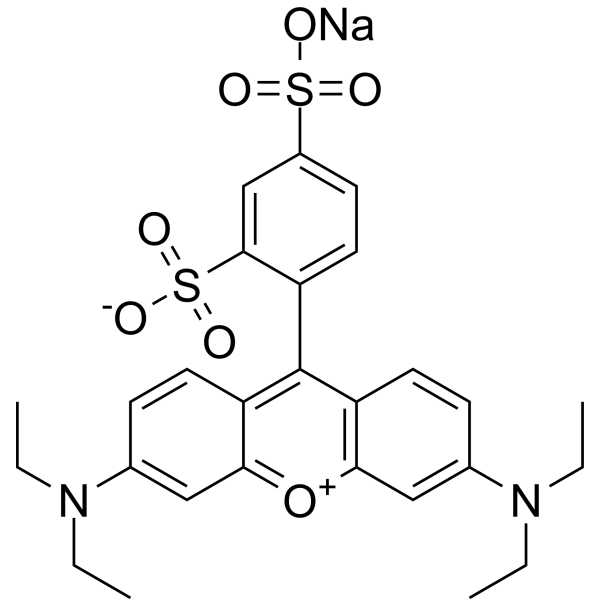
    Sulforhodamine B sodium salt
    5+ Cited Publications

    Acid Red 52; Kiton Red 620

    Environmental Pollutants Fluorescent Dye Others
    Sulforhodamine B sodium salt is a fluorescent dye with uses spanning from laser-induced fluorescence (LIF) to the quantification of cellular proteins of cultured cells.
    Sulforhodamine B sodium salt
  • HY-D1462
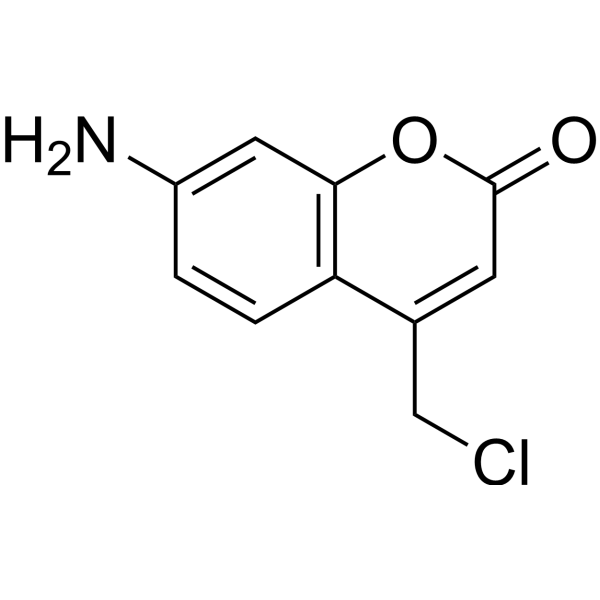
    CellTracker Blue CMAC
    Maximum Cited Publications
    7 Publications Verification

    Fluorescent Dye Others
    CellTracker Blue CMAC is a non-fluorescent cell membrane permeable dye. The chloromethyl groups of CellTracker Blue CMAC are enzymatically cleaved by intracellular glutathione (GSH) to generate a fluorescent product (blue fluorescence, Ex/Em: 360/460 nm). CellTracker Blue CMAC is suitable for long-term cell tracking (up to 72 hours) and cell proliferation studies, and can also quantify GSH levels .
    CellTracker Blue CMAC
  • HY-W751238

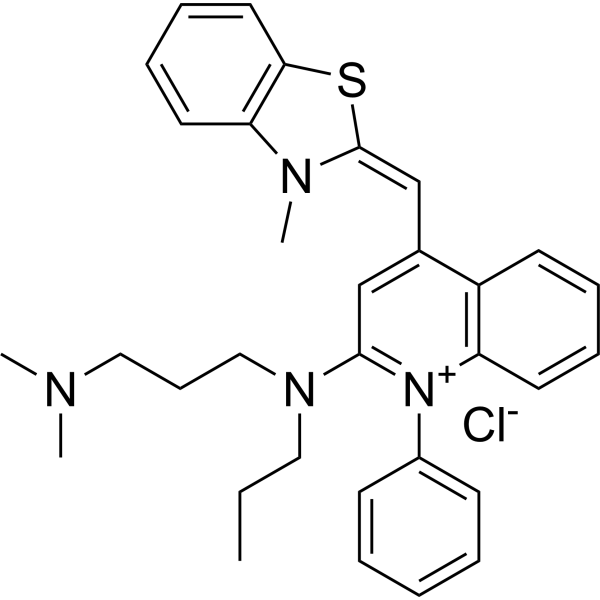
    DMMB

    Fluorescent Dye Others
    Dimethyl methylene blue zinc chloride double salt (DMMB) is a cationic dye. Dimethyl methylene blue zinc chloride double salt competitively binds to the active site of the PANI-Benz-Ag nanocomposite with endotoxin, releasing DMMB and increasing the fluorescence intensity. Dimethyl methylene blue zinc chloride double salt can be used as a fluorescent probe for the detection of bacteria (such as E. Coli) endotoxin . Dimethyl methylene blue zinc chloride double salt can be used for the quantification of sulfated glycosaminoglycans .
    Dimethyl methylene blue zinc chloride double salt
  • HY-43520

    Fluorescent Dye Others
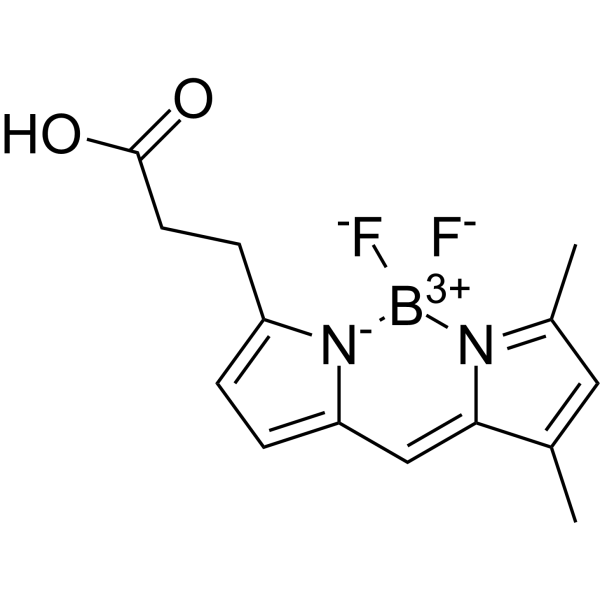
    BODIPY-FL is a green fluorescent dye that can be used to label probes or primers. BODIPY-FL fluorescence can be quenched after interacting with uniquely positioned guanine, making it useful for quantifying specific DNA or RNA molecules. The maximum absorption wavelength of BODIPY-FL is 505 nm, and the maximum emission wavelength is 513 nm .
    BODIPY-FL
  • HY-D1428
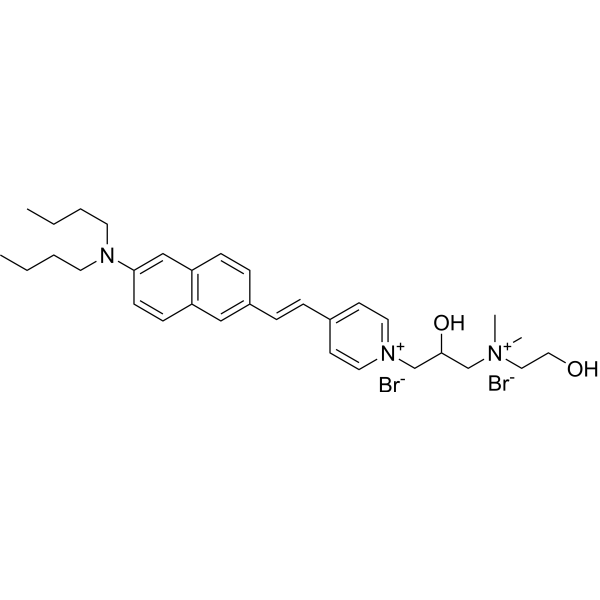
    Di-4-ANEPPDHQ
    1 Publications Verification

    Fluorescent Dye Inflammation/Immunology
    Di-4-ANEPPDHQ is a polarity-sensitive membrane probe with a doubly positive charge that can be used to visualize membrane microdomains in living Arabidopsis cells. Di-4-ANEPPDHQ produces a fluorescence spectrum shift by changing the polarity of the lipid environment after embedding into the cell membrane, thereby quantifying the degree of lipid accumulation. The excitation wavelength of Di-4-ANEPPDHQ is 488 nm, and the emission wavelengths are 560 nm and 650 nm in the liquid ordered and disordered phases, respectively. Di-4-ANEPPDHQ is often used for fluorescence imaging studies of membrane microstructure, lipid order, and membrane tension response in living cells[1][2][3].
    Di-4-ANEPPDHQ
  • HY-NP035
    Ovalbumin-FITC
    1 Publications Verification

    OVA-FITC

    Fluorescent Dye Biochemical Assay Reagents Others
    Ovalbumin-FITC is an ovalbumin conjugated to FITC (Ex=495 nm; Em=525 nm). Ovalbumin-FITC can be internalized by cells via endocytosis .
    Ovalbumin-FITC
  • HY-137873

    4-Methylumbelliferyl-α-D-Glucose; 4-Methylumbelliferyl-α-D-Glucoside; 4-MU-α-D-Glucopyranoside

    Fluorescent Dye Glycosidase Others
    4-Methylumbelliferyl-α-D-Glucopyranoside (4-Methylumbelliferyl-α-D-Glucose) is a fluorescent substrate for α-glucosidase, which releases the fluorescent moiety 4-methylumbelliferyl (4-MU) upon cleavage. 4-MU has pH-dependent fluorescence excitation activity, with excitation wavelengths of 320 nm at low pH (1.97-6.72) and 360 nm at high pH (7.12-10.3), respectively. The emission wavelength of 4-Methylumbelliferyl-α-D-Glucopyranoside increases with decreasing pH, ranging from 445-455 nm. 4-Methylumbelliferyl-α-D-Glucopyranoside can be used as a biomarker for Fabry and Pompe diseases to quantify α-glucosidase activity in infant blood spot samples.
    4-Methylumbelliferyl-α-D-Glucopyranoside
  • HY-135070

    Ac-Arg-Leu-Arg-AMC

    Proteasome Others
    Ac-RLR-AMC (Ac-Arg-Leu-Arg-AMC) is a fluorogenic substrate for the 26S proteasome (Ex/Em: 380/440-460 nm). AMC is released upon cleavage, and its fluorescence can be used to quantify the trypsin-like activity of 26S proteasomes .
    Ac-RLR-AMC
  • HY-D1191
    SYBR green I chloride
    3 Publications Verification

    Fluorescent Dye DNA/RNA Synthesis Others
    SYBR Green I chloride is a highly sensitive fluorescent nucleic acid dye that binds specifically to the minor groove of double-stranded DNA or intercalates between base pairs. SYBR Green I chloride exhibits weak fluorescence in the unbound state but emits bright fluorescence upon binding, and it preferentially binds to large-fragment DNA and DNA with high G+C content. SYBR Green I chloride is suitable for real-time PCR technology; its fluorescence intensity correlates with the amount and size of amplification products, enabling accurate quantification of gene expression and discrimination of amplicons via melting curve analysis without additional post-processing. SYBR Green I chloride is widely used in preclinical in vitro nucleic acid detection .
    SYBR green I chloride
  • HY-137855

    Biochemical Assay Reagents Others
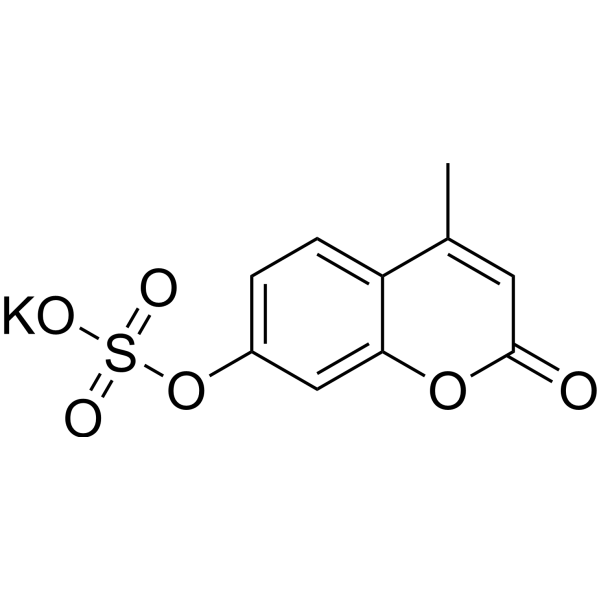
    4-Methylumbelliferyl sulfate (potassium), a fluorescent substrate, is commonly used to detect sulfatase activity in biochemical and biomedical research. It consists of a sulfate group attached to a fluorescent molecule, which can be cleaved by sulfatase enzymes. Upon cleavage, 4-Methylumbelliferyl sulfate releases a highly fluorescent product that can be detected using fluorescence microscopy or spectroscopy. The use of 4-Methylumbelliferyl sulfate as a substrate for sulfatase enzymes allows accurate detection and quantification of these enzymes in a variety of biological samples.
    4-Methylumbelliferyl sulfate potassium
  • HY-D1652

    Caspase Others
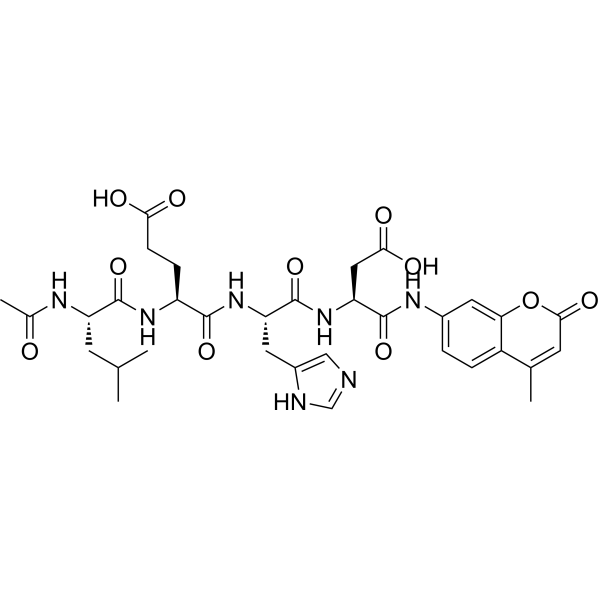
    Ac-LEHD-AMC is a fluorogenic substrate for caspase-9 (Excitation: 341 nm; Emission: 441 nm). Caspase-9 can induce hydrolysis of Ac-LEHD-AMC, resulting in the release of AMC fluorophore and its fluorescence can be used to quantify caspase-9 activity .
    Ac-LEHD-AMC
  • HY-D1261
    Naph-EA-mal
    1 Publications Verification

    Thiol-green 1

    Fluorescent Dye Others
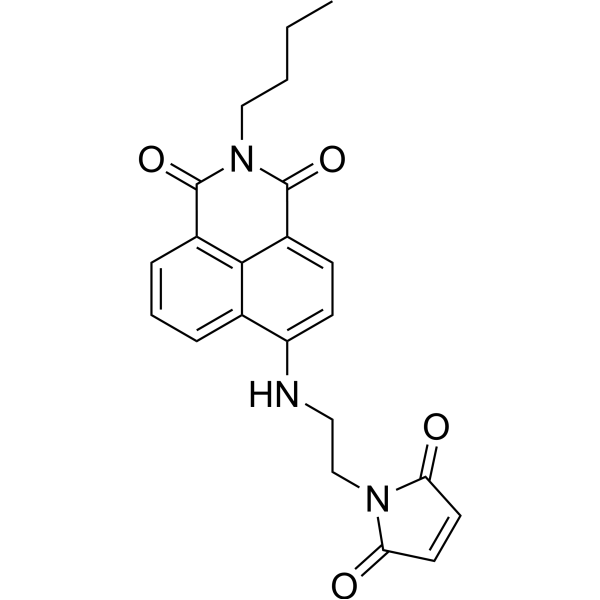
    Naph-EA-mal (Thiol-green 1) is a rapid detect and ultrafast turn-on thiol fluorescence probe for protein labeling and bioimaging. Naph-EA-mal (Thiol-green 1) can be used to detect thiols in living cells, label the protein thiols, quantify the concentration of total thiols in cell lysate, and determine the reversible protein thiols oxidation in fixed cells . Ex: 488 nM; Em: 540 nM.
    Naph-EA-mal
  • HY-D1603

    Fluorescent Dye Others
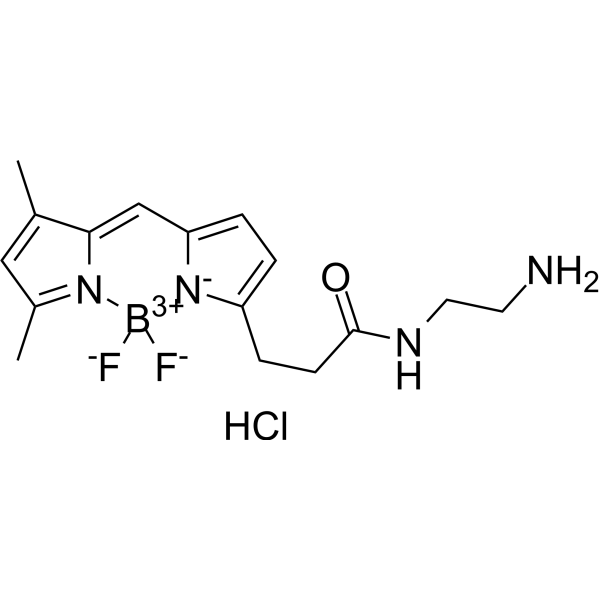
    BODIPY FL-EDA is a widely used fluorescent dye for quantitative analysis of nucleotides. BODIPY FL-EDA is an aliphatic amine analog that can react with aldehydes and ketones. BODIPY FL-EDA can be used to detect both modified and unmodified deoxynucleotides and to determine DNA damage and genomic DNA methylation through capillary electrophoresis with laser-induced fluorescence (CE-LIF). Additionally, it can be used for quantifying intracellular ATP levels. The excitation wavelength is 500 nm, and the emission wavelength is 510 nm .
    BODIPY FL-EDA
  • HY-169491

    Fluorescent Dye Metabolic Disease
    Pantothenate-AMC is a fluorogenic substrate used for detecting the enzymatic activity of vanin-1, an enzyme involved in the recycling of L-pantothenic acid. Upon enzymatic cleavage by vanin-1, 7-amino-7-methylcoumarin (AMC) is released, and its fluorescence can be used to quantify vanin-1 activity. The excitation/emission maxima of AMC are 340-360 nm and 440-460 nm, respectively .
    Pantothenate-AMC
  • HY-DY1041

    Fluorescent Dye Others
    CellTracker Blue CMAC (solution) is a non-fluorescent cell membrane permeable dye. The chloromethyl groups of CellTracker Blue CMAC are enzymatically cleaved by intracellular glutathione (GSH) to generate a fluorescent product (blue fluorescence, Ex/Em: 360/460 nm). CellTracker Blue CMAC is suitable for long-term cell tracking (up to 72 hours) and cell proliferation studies, and can also quantify GSH levels .
    Solvent and concentration: DMSO: 10 mM
    CellTracker Blue CMAC (solution)
  • HY-P5280

    Ser/Thr Protease Others
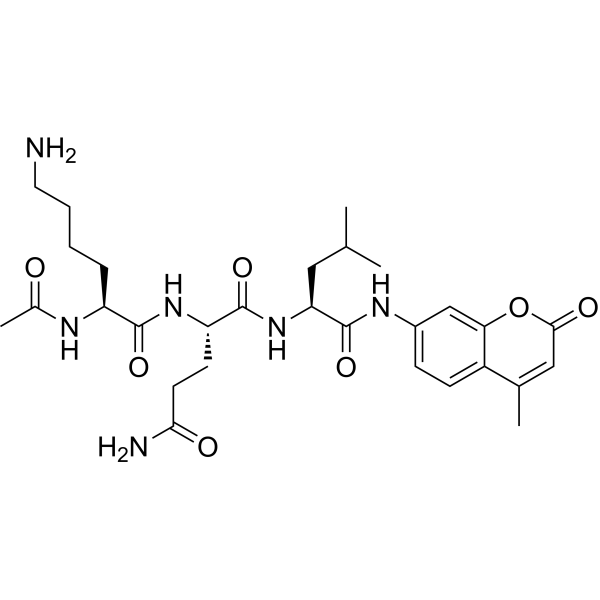
    Ac-KQL-AMC is a fluorogenic substrate that can be used to quantify Trypsin-like activity, resulting in detectable fluorescence when cleaved by the proteasome .
    Ac-KQL-AMC
  • HY-148947

    Fluorescent Dye Phosphoramidites Others
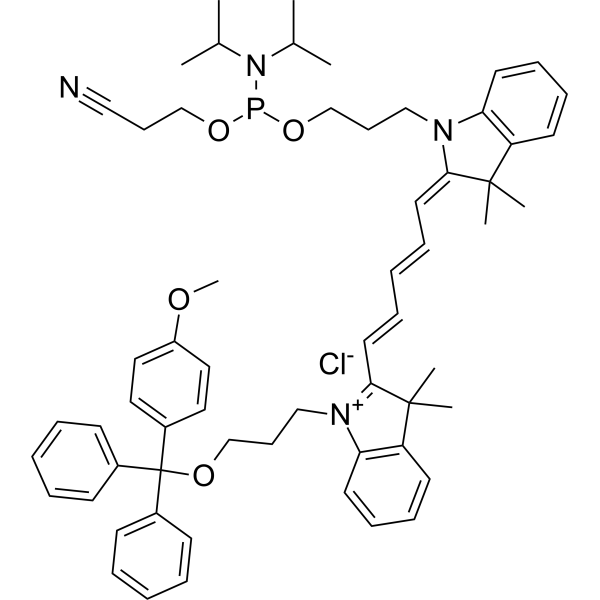
    Cy5 Phosphoramidite is a fluorescent labeling reagent . Cy5 Phosphoramidite serves as a fluorescent tag for 3' terminal labeling of single-stranded DNA, enabling fluorescence-based nucleic acid detection, monitoring, quantification, and in vitro study .
    Cy5 Phosphoramidite
  • HY-D3010

    Fluorescent Dye Others
    VF dsDNA Green Dye is a fluorescent dye for detecting and quantifying double-stranded DNA (dsDNA). VF dsDNA Green Dye fluoresces only when bound to dsDNA, and the fluorescence intensity is proportional to the DNA concentration. VF dsDNA Green Dye does not fluoresce when bound to ssDNA, RNA, or free nucleotides. VF dsDNA Green Dye can detect dsDNA within the range of 25 pg/mL to 1000 ng/mL (Ex/Em = 480/520 nm).
    VF dsDNA Green Dye
  • HY-P4931A

    Fluorescent Dye Others
    Mca-KPLGL-Dap(Dnp)-AR-NH2 TFA is a fluorogenic substrate for matrix metalloproteinases (MMPs). 7-methoxycoumarin-4 acetyl (Mac) is released and its fluorescence can be used to quantify MMP activity. Mac displays Ex/Em of 328/420 nm .
    Mca-KPLGL-Dap(Dnp)-AR-NH2 TFA
  • HY-149028

    Fluorescent Dye Others
    Mem-C1C18 is a polarity-sensitive fluorescent probe with excellent plasma membrane anchoring, high brightness and a sensitive response to environmental polarity by altering the fluorescence lifetime. Mem-C1C18 can be used to quantify changes in the polarity of the plasma membrane during iron death .
    Mem-C1C18
  • HY-D1769

    Fluorescent Dye Others
    N-hydroxy Rhodamine B amide is a ClO - indicator, which is hydrolyzed to prduce fluorescence in the presence of ClO -. The fluorescence intensity of N-hydroxy Rhodamine B amide is proportional to the product, thus can be used to quantify ClO -.
    N-hydroxy Rhodamine B amide
  • HY-135070B

    Ac-Arg-Leu-Arg-AMC TFA

    Proteasome Others
    Ac-RLR-AMC (Ac-Arg-Leu-Arg-AMC) TFA is a fluorogenic substrate for the 26S proteasome (Ex/Em: 380/440-460 nm). AMC is released upon cleavage, and its fluorescence can be used to quantify the trypsin-like activity of 26S proteasomes .
    Ac-RLR-AMC TFA
  • HY-P2176A

    Z-Leu-Arg-Gly-Gly-AMC TFA

    Fluorescent Dye Others
    Z-LRGG-AMC TFA is the trifluoroacetate salt of Z-LRGG-AMC (HY-P2176). Z-LRGG-AMC TFA is a fluorogenic substrate for isopeptidase T. Upon cleavage of Z-LRGG-AMC TFA by isopeptidase T, 7-amino-4-methylcoumarin (AMC) is released, and its fluorescence can be used to quantify isopeptidase T activity (Ex/Em : 360/460 nm) .
    Z-LRGG-AMC TFA
  • HY-P4401A

    Fluorescent Dye Caspase Others
    Z-VEID-AFC TFA is the trifluoroacetate salt of Z-VEID-AFC (HY-P4401). Z-VEID-AFC TFA is a fluorescent substrate for caspase-6. When Z-VEID-AFC TFA is cleaved by caspase-6, 7-amino-4-trifluoromethylcoumarin (AFC) is released, and its fluorescence can be used to quantify caspase-6 activity (Ex/Em: 400/505 nm) .
    Z-VEID-AFC TFA
  • HY-DY1089

    Fluorescent Dye Others
    Di-4-ANEPPDHQ (solution) is a polarity-sensitive membrane probe with a doubly positive charge that can be used to visualize membrane microdomains in living Arabidopsis cells. Di-4-ANEPPDHQ produces a fluorescence spectrum shift by changing the polarity of the lipid environment after embedding into the cell membrane, thereby quantifying the degree of lipid accumulation. The excitation wavelength of Di-4-ANEPPDHQ is 488 nm, and the emission wavelengths are 560 nm and 650 nm in the liquid ordered and disordered phases, respectively. Di-4-ANEPPDHQ is often used for fluorescence imaging studies of membrane microstructure, lipid order, and membrane tension response in living cells[1][2][3].
    Solvent and concentration: DMSO: 5 mM
    Di-4-ANEPPDHQ (solution)

Inquiry Online

Your information is safe with us. * Required Fields.

Salutation


Country or Region *

Applicant Name *


Organization Name *

Department *


Email Address *


Product Name *

Cat. No.


Requested quantity *

Phone Number *


Remarks

Inquiry Online

Inquiry Information

Product Name:
Cat. No.:
Quantity:
MCE Japan Authorized Agent:

