
1. Search Result
Search Result
Pathways Recommended: Stem Cell/Wnt Cell Cycle/DNA Damage
Results for "

HCC827 cells

" in MedChemExpress (MCE) Product Catalog:

33

Inhibitors & Agonists

1

Natural
Products

1

Click Chemistry

Cat. No. Product Name Target Research Areas Chemical Structure
  • HY-123921
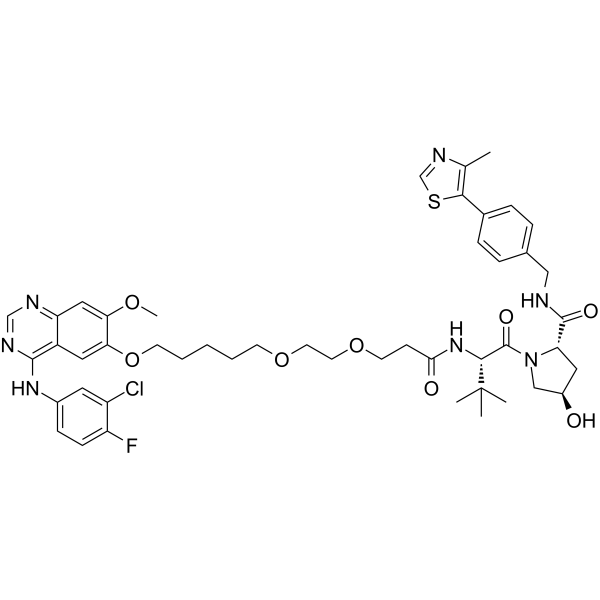
    Gefitinib-based PROTAC 3
    3 Publications Verification

    PROTACs EGFR Cancer
    Gefitinib-based PROTAC 3, conjugating an EGFR binding element to a von Hippel-Lindau ligand via a linker, induces EGFR degradation with DC50s of 11.7 nM and 22.3 nM in HCC827(exon 19 del) and H3255 (L858R mutantion) cells, respectively .
    Gefitinib-based PROTAC 3
  • HY-157581

    EGFR PROTACs Cancer
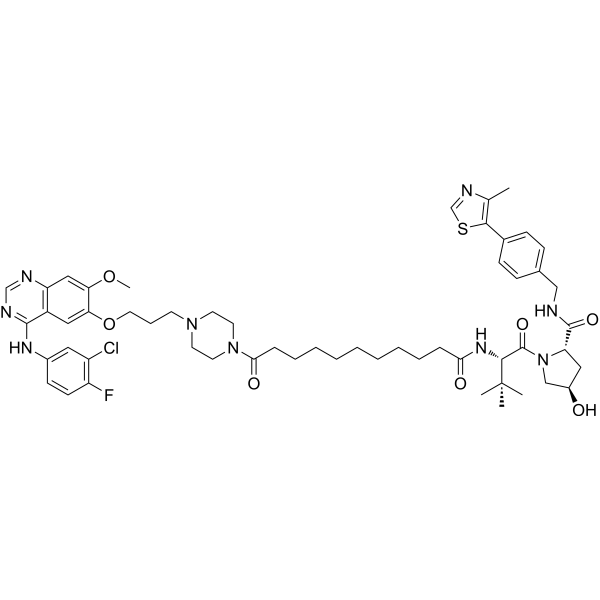
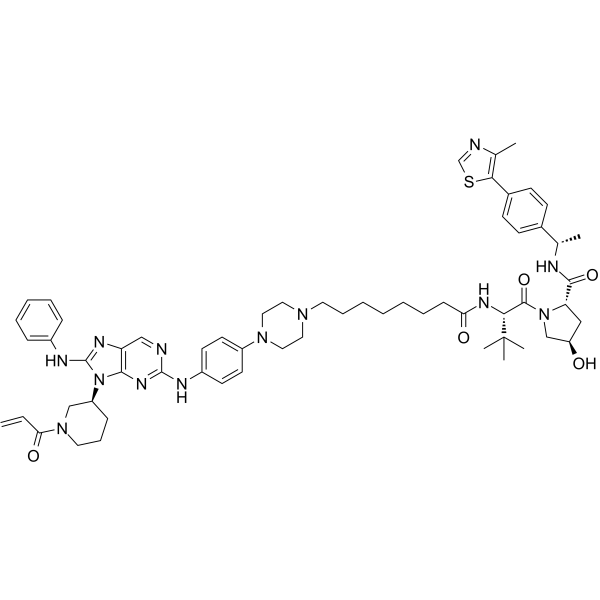
    MS39 (compound 6) is a PROTAC targeting EGFR. MS39 reduces the expression of EGFR and downstream signaling in HCC-827 and H3255 cells. MS39 inhibits the proliferation of H3255 cells .
    MS39
  • HY-147858

    PROTACs EGFR Apoptosis Cancer
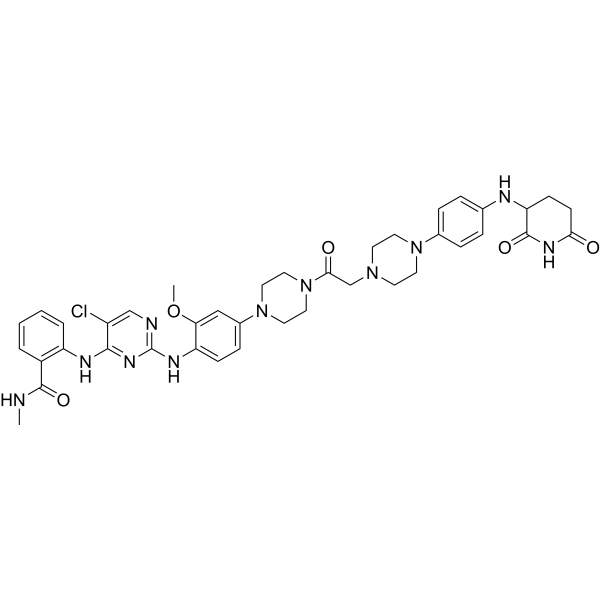
    PROTAC EGFR degrader 7 (compound 13b) is a potent and selective CRBN-recruiting PROTAC EGFR L858R/T790M degrader, with a DC50 of 13.2 nM. PROTAC EGFR degrader 7 inhibits NCI–H1975 cells proliferation, with an IC50 of 46.82 nM. PROTAC EGFR degrader 7 significantly induces apoptosis and G2/M phase arrest in NCI–H1975 cell. PROTAC EGFR degrader 7 shows antitumor activity, and can be used for non-small cell lung cancer (NSCLC) research . PROTAC EGFR degrader 7 is a click chemistry reagent, it contains an Alkyne group and can undergo copper-catalyzed azide-alkyne cycloaddition (CuAAc) with molecules containing Azide groups.
    PROTAC EGFR degrader 7
  • HY-146349

    PROTACs EGFR Autophagy Cancer
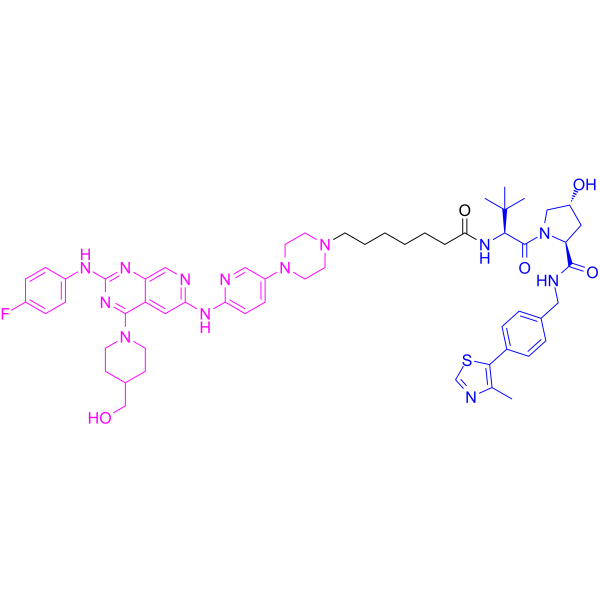
    PROTAC EGFR degrader 4 is a potent PROTAC targeting mutant EGFR.PROTAC EGFR degrader 4 induces EGFR del19 and EGFR L858R/T790M degradation with DC50s of 0.51 and 126 nM, respectively. PROTAC EGFR degrader 4 significantly inhibits growth of HCC827 and H1975 cell lines with IC50s of 0.83 and 203.1 nM, respectively. Induced EGFR degradation is related to autophagy .
    PROTAC EGFR degrader 4
  • HY-175839

    PROTACs EGFR ATP Synthase Cancer
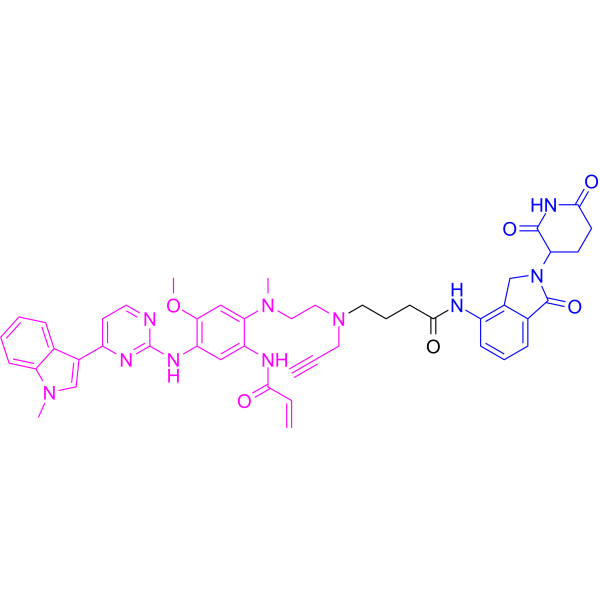
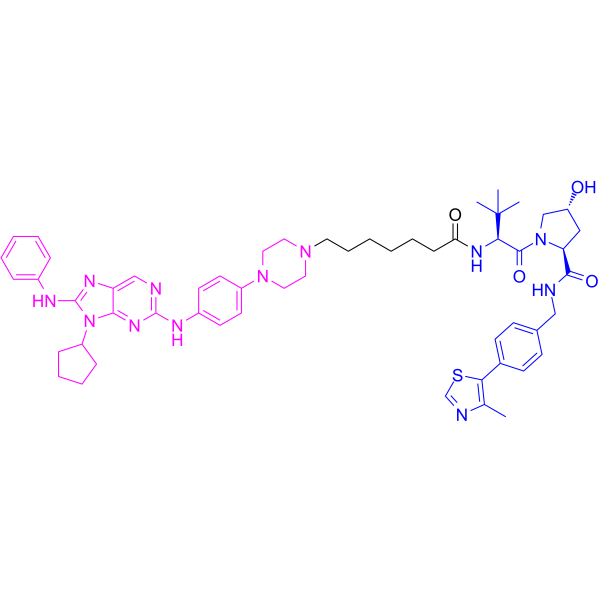
    PROTAC EGFR degrader 15 is a Pomalidomide (HY-10984)-based Gefitinib (HY-50895) EGFR PROTAC degrader. PROTAC EGFR degrader 15 triggers EGFR degradation via ubiquitin-proteasome-dependent proteolysis and autophagy-lysosome activation pathways. PROTAC EGFR degrader 15 targets ETFA to enhance ATP production. PROTAC EGFR degrader 15 significantly suppresses tumor growth in a Gefitinib-acquired resistant HCC-827 xenograft model. PROTAC EGFR degrader 15 can be used for the study of non-small cell lung cancer (NSCLC) (Pink: EGFR ligand (HY-W109039); Blue: CRBN ligand (HY-10984); Black: Linker (HY-W679737)) .
    PROTAC EGFR degrader 15
  • HY-153901

    EGFR PROTACs Cancer
    PROTAC EGFR degrader 8 (T-184) is a PROTAC EGFR degrader. PROTAC EGFR degrader 8 degrades EGFR in HCC827 cell with a DC50 of 15.56 nM. PROTAC EGFR degrader 8 inhibits H1975, PC-9, HCC827 cell growth with IC50s of 7.72 nM, 121.9 nM, 14.21 nM. PROTAC EGFR degrader 8 can be used for research of cancer, especially NSCLC .
    PROTAC EGFR degrader 8
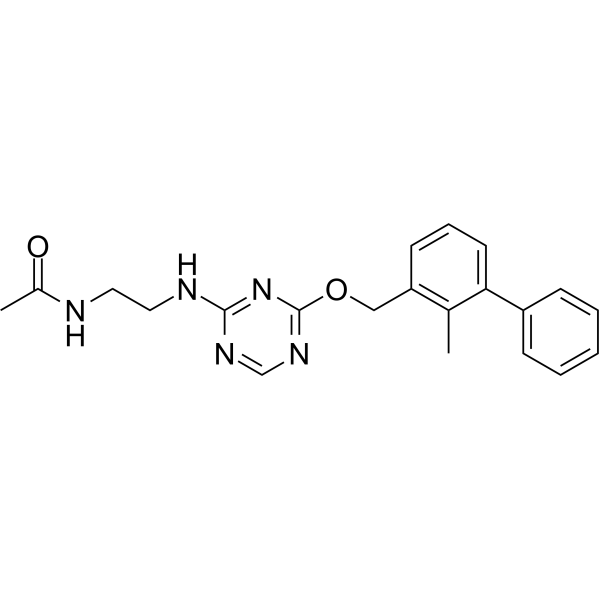
  • HY-139781
    PD-L1-IN-1
    1 Publications Verification

    PD-1/PD-L1 Apoptosis Cancer
    PD-L1-IN-1 (Compound 10) is a potent PD-L1 inhibitor with an IC50 of 115 nM. PD-L1-IN-1 strongly binds with the PD-L1 protein and challenged it in a co-culture of PD-L1 expressing cancer cells and peripheral blood mononuclear cells enhanced antitumor immune activity of the latter. PD-L1-IN-1 significantly exhibits low cytotoxicity in healthy cells .
    PD-L1-IN-1
  • HY-17654

    EGFR mTOR Cancer
    BIEGi-1 is an EGFR inhibitor. BIEGi-1 effectively disrupts the EGFR-Rheb interaction in cells. BIEGi-1 robustly inhibits EGFR kinase activity (reduces p-Y1068-EGFR) as well as mTORC1 activation (reduces p-T389-S6K1) in EGFR-mutant cells. BIEGi-1 shows strong antiproliferative effects on EGFR-mutant PC9 and HCC827 cells with IC50 values of 17 nM and 20 nM, respectively. BIEGi-1 can be used for the study of cancers harboring EGFR mutations, such as non-small cell lung cancer (NSCLC) .
    BIEGi-1
  • HY-164384

    PI3K Akt mTOR Apoptosis Cancer
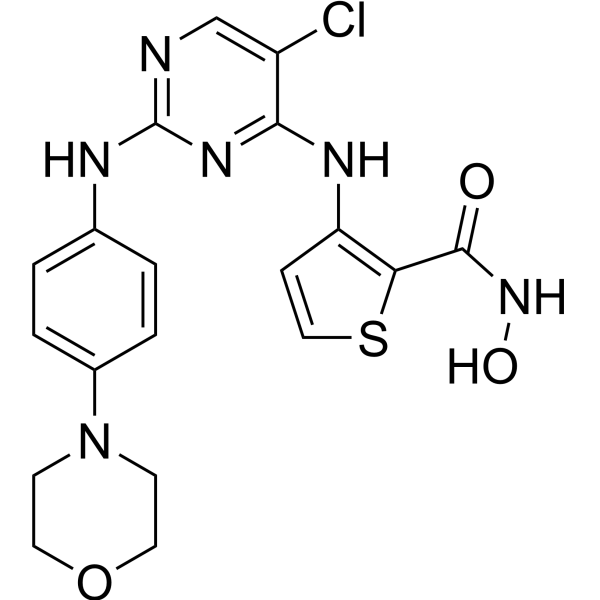
    DFX117 is a selective, orally active inhibitor for PI3Kα and c-Met tyrosine kinase. DFX117 inhibits PI3K/Akt/mTOR pathway, inhibits the proliferation of NCI-H1975, NCI-H1993, and HCC827 with IC50s 0.02-0.08 µM. DFX117 arrests cell cycle at G0/G1 phase, induces apoptosis in A549 and NCI-H1975. DFX117 exhibits antitumor efficacy in mice .
    DFX117
  • HY-144605

    EGFR PROTACs Cancer
    PROTAC EGFR degrader 3 is a potent PROTAC EGFR degrader. PROTAC EGFR degrader 3 shows excellent cellular activity against the H1975 and HCC827 cells with high selectively. PROTAC EGFR degrader 3 shows that the lysosome is involved in the degradation process of EGFR mutant degradation .
    PROTAC EGFR degrader 3
  • HY-175806

    TrxR Reactive Oxygen Species (ROS) Ferroptosis Cancer
    CS47 is a Thioredoxin Reductase 1 (TRXR1) inhibitor and ferroptosis inducer. CS47 binds non-covalently to sites between the FAD and NADPH pockets of TRXR1. CS47 drives glutathione depletion, lipid reactive oxygen species accumulation, HMOX1-dependent iron overload, and selective cytotoxicity in lung cancer cells. CS47 can be used for the research of lung cancer .
    CS47
  • HY-N4309

    Amylases Glycosidase Neurological Disease Metabolic Disease Cancer
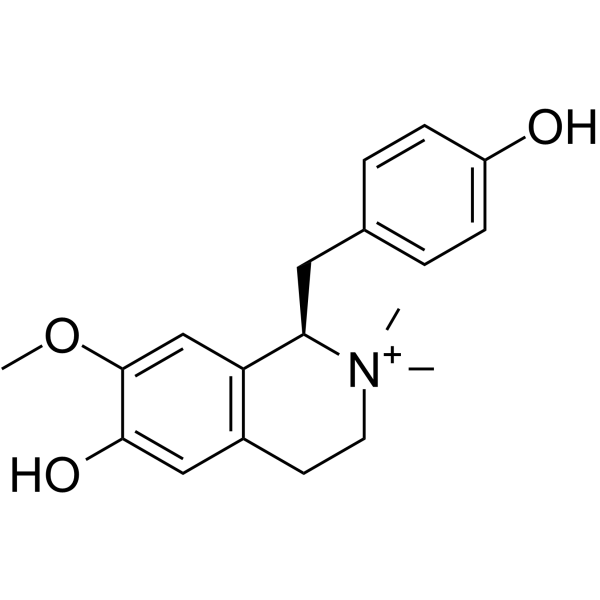
    Lotusine is an orally active signaling pathway modulator and enzyme inhibitor, with an IC50 of 30.60 μg/mL against α-amylase and an IC50 of 36.15 μg/mL against α-glucosidase. Lotusine inhibits the EGFR-Akt-ERK signaling pathway by reducing the levels of phosphorylated EGFR, Akt and ERK. Lotusine induces apoptosis, triggers G0/G1 cell cycle arrest and inhibits cancer cell proliferation. Lotusine reduces lipid peroxidation and increases the activities of SOD, CAT and GPx. Lotusine is applicable to researches related to non-small cell lung cancer, type 2 diabetes and autism spectrum disorder .
    Lotusine
  • HY-146423

    PROTACs EGFR Apoptosis Cancer
    PROTAC EGFR degrader 6, a PROTAC EGFR degrader, potently degrades EGFR Del19 in HCC827 cells with the DC50 of 45.2 nM. PROTAC EGFR degrader 6 significantly induces the apoptosis of HCC827 cells and arrest the cells in G1 phase .
    PROTAC EGFR degrader 6
  • HY-146422

    PROTACs EGFR Apoptosis Cancer
    PROTAC EGFR degrader 5 (Compound 10), a PROTAC EGFR degrader, potently degrades EGFR Del19 in HCC827 cells with the DC50 of 34.8 nM. PROTAC EGFR degrader 5 significantly induces the apoptosis of HCC827 cells and arrest the cells in G1 phase .
    PROTAC EGFR degrader 5
  • HY-164548

    HSP Apoptosis PI3K Akt NF-κB Inflammation/Immunology Cancer
    WK88-1 is an apoptosis inducer and Hsp90 client protein inhibitor with antiproliferative and immunomodulatory activities. WK88-1 inhibits signaling pathways such as PI3K/Akt and NF-κB, and induces mitochondrial dysfunction and cell cycle arrest. WK88-1 effectively suppresses cancer cell migration and invasion, and reverses various EGFR mutations and resistance to Gefitinib (HY-50895). WK88-1 also regulates the differentiation of monocytes and dendritic cells, blocks the expression of multiple chemokines, inhibits immune cell migration and M1 marker transcription, and restores impaired endocytic activity. WK88-1 has been used in studies of breast cancer, non-small cell lung cancer with various EGFR mutations or Met amplification, and atherosclerosis and other related diseases .
    WK88-1
  • HY-130133

    PI3K mTOR Akt Apoptosis Paraptosis p38 MAPK Mitochondrial Metabolism P-glycoprotein CDK MMP HIF/HIF Prolyl-Hydroxylase VEGFR Cancer
    DHW-221 is a potent orally active dual PI3K/mTOR inhibitor, exhibiting low nanomolar potency against all four Class I PI3K isoforms and mTOR (PI3Kα, IC50 = 0.50 nM; PI3Kβ, IC50 = 1.9 nM; PI3Kγ, IC50 = 1.8 nM; PI3Kδ, IC50 = 0.74 nM; mTOR, IC50 = 3.9 nM). DHW-221 exerts antitumor effects by blocking the PI3K/Akt/mTOR pathway and inducing mitochondrial apoptosis and paraptosis (via Endoplasmic Reticulum (ER) stress and MAPK signaling) and arrests cell cycle, thereby inhibiting cell migration, invasion and angiogenesis. DHW-221 inhibits tumor growth in both the A549/Taxol (HY-B0015) and the HCC827 xenograft mouse models. DHW-221 can be used for non-small cell lung cancer (NSCLC), colon and breast cancer research .
    DHW-221
  • HY-19617A

    EGFR Cancer
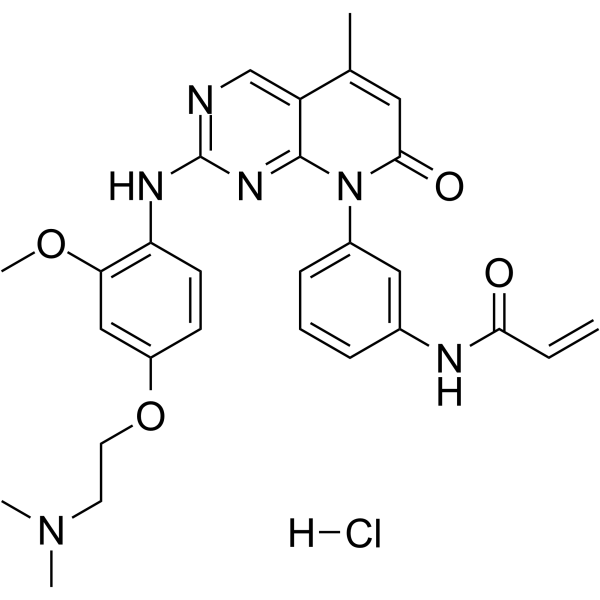
    EGFR-IN-1 hydrochloride is an orally active and irreversible L858R/T790M mutant selective EGFR inhibitor. EGFR-IN-1 hydrochloride potently inhibits Gefitinib-resistant EGFR L858R, T790M with 100-fold selectivity over wild-type EGFR. EGFR-IN-1 hydrochloride displays strong antiproliferative activity against the H1975 cells and the first line mutant HCC827 cells. Antitumor activity .
    EGFR-IN-1 hydrochloride
  • HY-162890

    EGFR Cancer
    EGFR-IN-122 (compound Yfq07) is a potent EGFR inhibitor. EGFR-IN-122 suppresses the proliferation of PC-9GR and HCC827GR cells .
    EGFR-IN-122
  • HY-178114

    Histone Methyltransferase Apoptosis Cancer
    SKLB-0124 is a selective PRMT6 degrader with DC50s of 15.4 μM and a 16.4 μM in HCC827 and MDA-MB-435 cells. SKLB-0124 does not degrade PRMT1 or PRMT8. SKLB-0124 exhibits an IC50 on PRMT6 of 1.6 μM. SKLB-0124 induces proteasome dependent degradation of PRMT6 and significantly inhibits the proliferation. SKLB-0124 effectively induces apoptosis and cell cycle arrest. SKLB-0124 can be used for the studies of lung cancer and breast cancer .
    SKLB-0124
  • HY-162099

    EGFR Cancer
    VEGFR-IN-4 (Compound 6e) is an epidermal growth factor receptor (EGFR) inhibitor. VEGFR-IN-4 has potent antiproliferative activity with an IC50 value of 24.6nM against HCC827 cells .
    VEGFR-IN-4
  • HY-19617B

    EGFR Cancer
    EGFR-IN-1 TFA is an orally active and irreversible L858R/T790M mutant selective EGFR inhibitor. EGFR-IN-1 TFA potently inhibits Gefitinib-resistant EGFR L858R, T790M with 100-fold selectivity over wild-type EGFR. EGFR-IN-1 TFA displays strong antiproliferative activity against the H1975 cells and the first line mutant HCC827 cells. Antitumor activity .
    EGFR-IN-1 TFA
  • HY-19617

    EGFR Cancer
    EGFR-IN-1 (compound 24) is an orally active and irreversible L858R/T790M mutant selective EGFR inhibitor. EGFR-IN-1 potently inhibits Gefitinib-resistant EGFR L858R, T790M with 100-fold selectivity over wild-type EGFR. EGFR-IN-1 displays strong antiproliferative activity against the H1975 cells and the first line mutant HCC827 cells. Antitumor activity .
    EGFR-IN-1
  • HY-161824

    Drug Intermediate Cancer
    Antiproliferative agent-52 (Compound 4a) is an antiproliferative agent that exhibits significant antiproliferative activity against four human tumor cell lines (A549, A2780, SKOV3, HCC827), with IC50 values ranging from 5.83 to 8.63 nM. Antiproliferative agent-52 can be used in cancer research .
    Antiproliferative agent-52
  • HY-173038

    EGFR ERK STAT Apoptosis Cancer
    EGFR-IN-151 (Compound 10) inhibits EGFR and its downstream signaling pathways ERK/STAT3. EGFR-IN-151 inhibits the proliferation of a variety lung cancer cells (IC50s for NCI-H1781, HCC827, NCI-H3255 and NCI-H1975 is 11.7, 5.19, 7.32 and 1.53 μM, respectively), inhibits the colony formation and migration of H1975, arrests the cell cycle at G1 phase, and induces apoptosis in H1975 .
    EGFR-IN-151
  • HY-161825

    Microtubule/Tubulin Apoptosis Cancer
    Tubulin polymerization-IN-66 (Compound 13) inhibits colony formation and tubulin polymerization. Tubulin polymerization-IN-66 induces apoptosis. Tubulin polymerization-IN-66 inhibits cell viability of A549, A2780, SKOV3, HCC827 cells, with IC50s of 0.84, 0.38, 0.31, 0.34 nM respectively. Tubulin polymerization-IN-66 is also active against the Paclitaxel (HY-B0015)-resistant cancer cell line A2780/T and its parental cell line A2780 .
    Tubulin polymerization-IN-66
  • HY-155178

    EGFR Cancer
    Antiproliferative agent-34 (Compound A14) is a multi-target kinase inhibitor, with an IC50 of 177 nM and 1567 nM for EGFR L858R/T790M and EGFR WT. Antiproliferative agent-34 also inhibits JAK2, ROS1, FLT3, FLT4, PDGFRα with IC50 of 30.93, 106.90, 108.00, 226.60, 42.53 nM. Antiproliferative agent-34 inhibits H1975 and HCC827 cells proliferation with IC50 values below 40 nM under normoxic condition, and the anti-proliferation potency achieves 4–6-fold improvement (IC50 values < 10 nM) under hypoxic condition .
    Antiproliferative agent-34
  • HY-179385

    Microtubule/Tubulin Phosphatase Apoptosis Cancer
    Tubulin-IN-62 is a tubulin inhibitor targeting the colchicine-binding site. Tubulin-IN-62 exhibits IC50 values of 17.2 nM and 19.3 nM against SKOV3 and HCC827 cells, respectively. Tubulin-IN-62 inhibits microtubule polymerization, arrests the cell cycle at the G2/M phase, and induces apoptosis. Tubulin-IN-62 demonstrates significant antitumor efficacy in vivo with good tolerability. Tubulin-IN-62 can be used in ovarian cancer and non-small cell lung cancer (NSCLC) research .
    Tubulin-IN-62
  • HY-149824

    EGFR Apoptosis Cancer
    EGFR T790M/L858R-IN-2 is a potent and selective EGFRT790M/L858R inhibitor with IC50 values of 3.5, 1290 nM for EGFRT790M/L858R, EGFR WT, respectively. EGFR T790M/L858R-IN-2 decreases the expression of p-EGFR, P-AKT, P-ERK1/2. EGFR T790M/L858R-IN-2 induces Apoptosis and cell cycle arrest in the G1 phase. EGFR T790M/L858R-IN-2 shows anti-cancer activity .
    EGFR T790M/L858R-IN-2
  • HY-176485

    Ferroptosis Mitophagy Reactive Oxygen Species (ROS) Cancer
    Antiproliferative agent-70 (compound 23) is a potent antiproliferative agent. Antiproliferative agent-70 shows antiproliferative activities and induces MMP depolarization. Antiproliferative agent-70 induces mitochondrial dysfunction. Antiproliferative agent-70 induces mitophagy and ferroptosis. Antiproliferative agent-70 increases the protein expression of PINK1, p-Parkin, p53 and p21. Antiproliferative agent-70 increases intracellular ROS levels. Antiproliferative agent-70 shows anticancer activity .
    Antiproliferative agent-70
  • HY-173118

    EGFR Apoptosis Cancer
    EGFR-IN-152 (compound D4) is a potent EGFR tyrosine kinase inhibitor, exhibiting potent EGFR L858R/T790M/C797S inhibition activity (IC50 = 40 nM). EGFR-IN-152 induces G0/G1 phase cell cycle arrest and apoptosis, thereby inhibiting colony formation and cell proliferation of non-small cell lung cancer (NSCLC) cells. EGFR-IN-152 can be used for NSCLC research .
    EGFR-IN-152
  • HY-181815

    ULK Beclin1 Autophagy MHC Caspase Apoptosis Cancer
    SBP-5147 is an orally active ULK1/ULK2 inhibitor, with an IC50 of 2 nM against ULK1 and an IC50 of 53 nM against ULK2. SBP-5147 inhibits the phosphorylation of Beclin-1 and Vps34, reduces autophagy flux, downregulates the expression of ATG13 and ATG101, upregulates the expression of MHC-I, induces caspase-dependent apoptosis, and decreases the viability of non-small cell lung cancer cells. SBP-5147 is applicable to research related to non-small cell lung cancer [1] .
    SBP-5147
  • HY-116091

    EGFR Akt ERK Cancer
    EGFR-IN-451 is an EGFR inhibitor with an IC50 value of 0.02 nM. EGFR-IN-451 also inhibits mutant EGFR L858R, EGFR T790M, and EGFR L858R/T790M with IC50 values of 0.26-34 nM. EGFR-IN-451 inhibits AKT and ERK activation and inhibits proliferation of EGFR-mutant cancer cells. EGFR-IN-451 can be used for the research of EGFR-driven cancer .
    EGFR-IN-451
  • HY-181502

    EGFR ERK PARP Caspase Bcl-2 Family Apoptosis Cancer
    EGFR-IN-197 is an EGFR inhibitor with IC50 values of 19.5 nM and 12.0 nM against EGFR L858R/T790M and EGFR L858R/T790M/C797S, respectively. EGFR-IN-197 arrests the cell cycle of NCI-H1975 cells at the G2/M phase, while inhibiting their proliferation, colony formation and migration; it also inhibits mitochondrial translocation and upregulates mitochondrial H2S levels. EGFR-IN-197 disrupts anti-apoptotic signaling pathways by regulating apoptosis-related proteins; it induces DNA damage and activates pro-apoptotic pathways to trigger apoptosis. EGFR-IN-197 can be used in studies related to non-small cell lung cancer (NSCLC) .
    EGFR-IN-197

Inquiry Online

Your information is safe with us. * Required Fields.

Salutation


Country or Region *

Applicant Name *


Organization Name *

Department *


Email Address *


Product Name *

Cat. No.


Requested quantity *

Phone Number *


Remarks

Inquiry Online

Inquiry Information

Product Name:
Cat. No.:
Quantity:
MCE Japan Authorized Agent:

