



WK88-1
WK88-1 is an apoptosis inducer and Hsp90 client protein inhibitor with antiproliferative and immunomodulatory activities. WK88-1 inhibits signaling pathways such as PI3K/Akt and NF-κB, and induces mitochondrial dysfunction and cell cycle arrest. WK88-1 effectively suppresses cancer cell migration and invasion, and reverses various EGFR mutations and resistance to Gefitinib (HY-50895). WK88-1 also regulates the differentiation of monocytes and dendritic cells, blocks the expression of multiple chemokines, inhibits immune cell migration and M1 marker transcription, and restores impaired endocytic activity. WK88-1 has been used in studies of breast cancer, non-small cell lung cancer with various EGFR mutations or Met amplification, and atherosclerosis and other related diseases.
Nur für Forschungszwecke. Wir verkaufen nicht an Patienten.
- CAS. Nr.: 958888-32-9
- Formel: C28H42N2O6
- Molecular Weight:502.64
-
Speicherung:
Please store the product under the recommended conditions in the Certificate of Analysis.


To place orders, for customer services and technical support, please contact: MedChemExpress USA
Tel: 609-228-6898 E-mail: [email protected] [email protected]


-
 Biologische Aktivität
-
Chemical Information
- Protokoll
- Reinheit & Dokumentation
- Verweise
-
 Help & FAQs


-
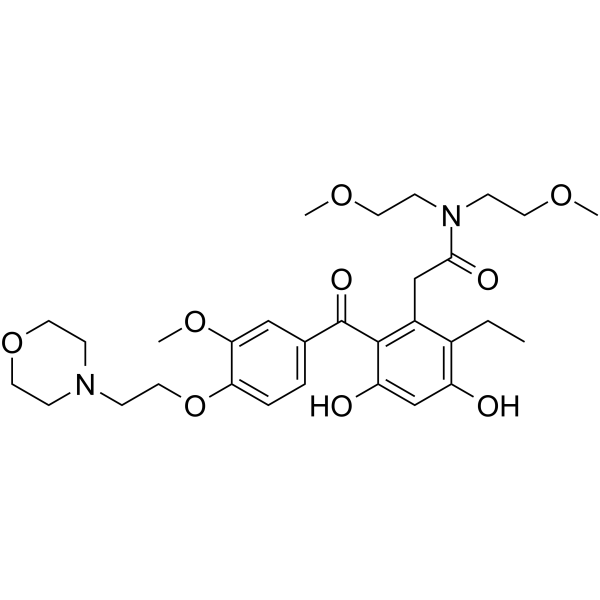
HY-13468
KW-2478 -
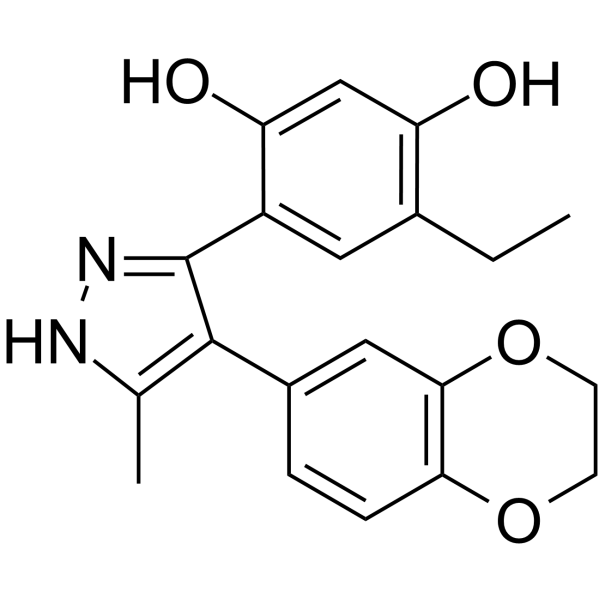
HY-110042
CCT018159HSP90β Inhibitor -
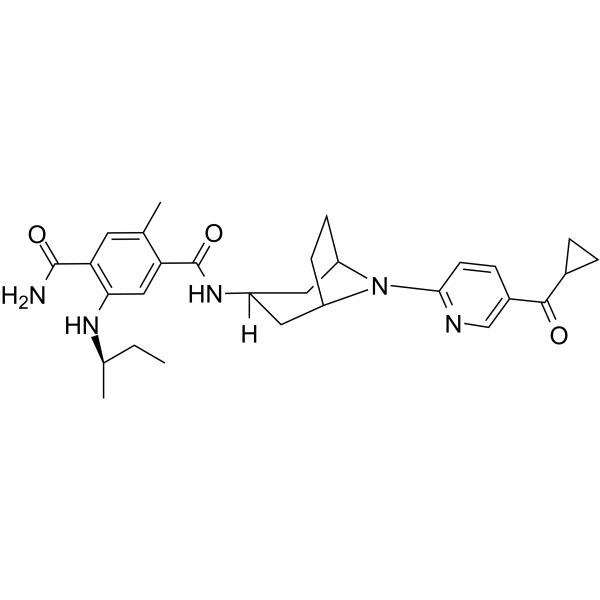
HY-13313
XL888HSP90 Inhibitor -
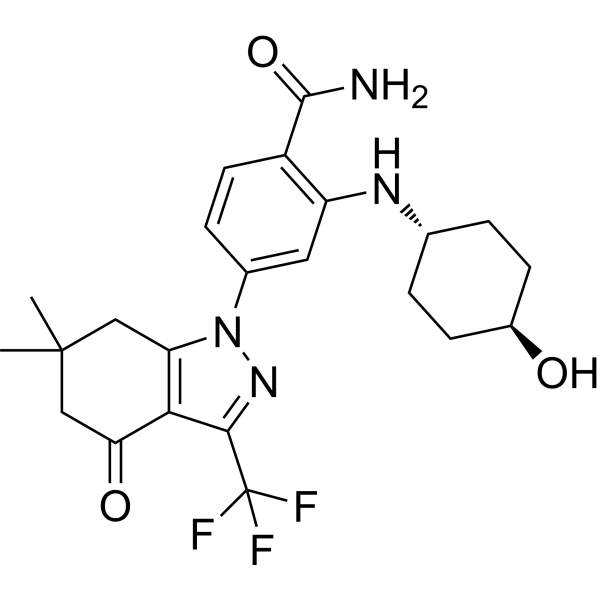
HY-10214
SNX-2112 -
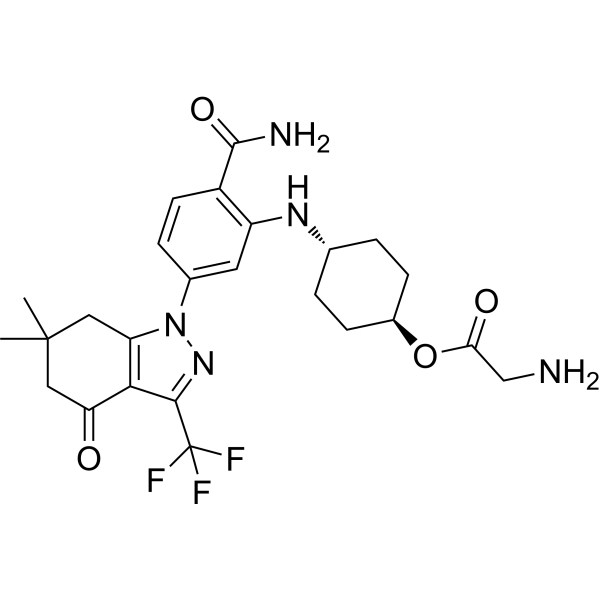
HY-10213
SNX-5422 -

HY-W109754
2',4'-DihydroxylchalconeAntibacterial Compound -
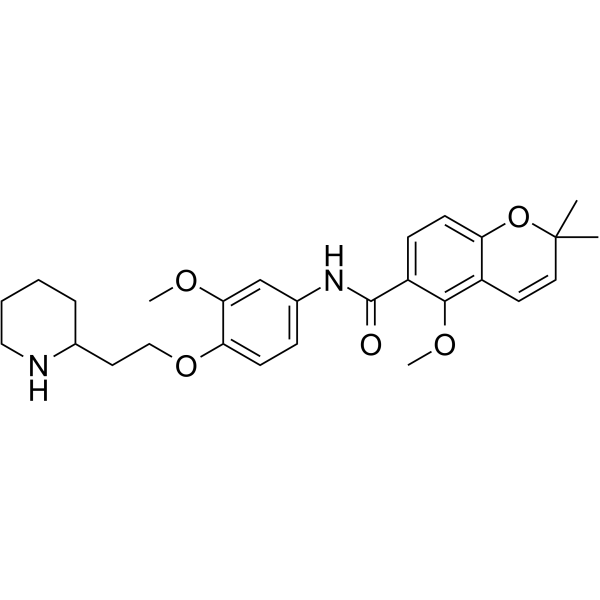
HY-145102
NCT-58HSP90 C-terminal Inhibitor -
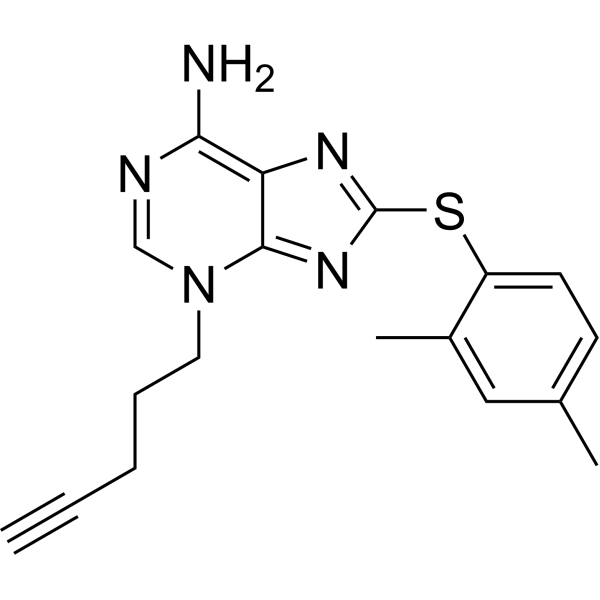
HY-117395
PU-H54Grp94 Inhibitor -

HY-10214R
SNX-2112 (Standard)Reference Standard -

HY-10213A
SNX-5422 mesylate -
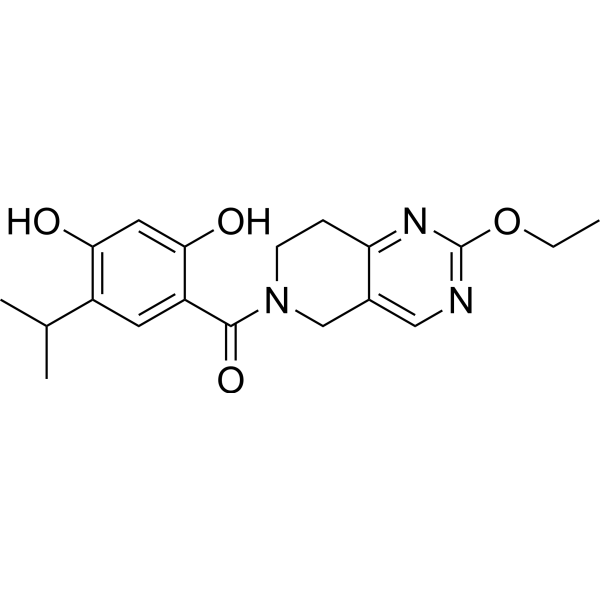
HY-111524
CPUY201112Hsp90 Inhibitor


Biologische Aktivität
Beschreibung
IC50 & Target
[1]|
HSP90 |
In Vitro
WK88-1 (0.078-100 μM; 24-72 h) potently inhibits proliferation of human ER-positive MCF-7 breast cancer cells[1].
WK88-1 (50.0 μM; 48 h) induces G2/M phase cell cycle arrest in human ER-positive MCF-7 breast cancer cells and human ER-negative MDA-MB-231 breast cancer cells, associated with downregulation of CDK1 and cyclin B1 proteins[1].
WK88-1 (0.1-5 μM; 24 h) inhibits Hsp90 function in gefitinib-resistant H1975 (EGFRL858R/T790M) cells, inducing dose-dependent degradation of oncogenic receptor tyrosine kinases (EGFR, ErbB2, ErbB3, Met) and downstream signaling proteins (Akt), while upregulating Hsp70[2].
WK88-1 (0.5-1 μM; 24 h) induces dose-dependent early apoptosis in gefitinib-resistant H1975 (EGFRL858R/T790M) cells, with early apoptosis reaching 22.23% at 1 μM[2].
WK88-1 (1-5 μM; 24 h) potently suppresses the migration of gefitinib-sensitive HCC827 and gefitinib-resistant Met-amplified HCC827GR non-small cell lung cancer cells[3].
WK88-1 (1-5 μM; 48 h) potently suppresses the invasion of gefitinib-sensitive HCC827 and gefitinib-resistant Met-amplified HCC827GR non-small cell lung cancer cells[3].
WK88-1 (1 μg/mL; 48 h) inhibits 27-hydroxycholesterol-induced transcription of M1 cytokines CXCL10, CXCL11, and TNF-α in THP-1 human monocytic cells[4].
WK88-1 (1 μg/mL; 4 h) inhibits 27-hydroxycholesterol-induced Akt phosphorylation in THP-1 human monocytic cells[4].
MedChemExpress (MCE) has not independently confirmed the accuracy of these methods. They are for reference only.
-
Cell Line:human ER-positive MCF-7 breast cancer cells, human ER-negative MDA-MB-231 breast cancer cells
-
Concentration:1.25-50 μM (flow cytometry); 3.125-50 μM (western blot analysis)
-
Incubation Time:48 h (flow cytometry)
-
Result:Increased the proportion of cells in the G2/M phase by 37.2% in MCF-7 cells and 39.4% in MDA-MB-231 cells at 50.0 μM compared to vehicle controls.
Downregulated the levels of cell cycle regulatory proteins CDK1 and cyclin B1 in both cell lines.
-
Cell Line:human ER-positive MCF-7 breast cancer cells, human ER-negative MDA-MB-231 breast cancer cells
-
Concentration:3.125-50 μM (DAPI staining); 50 μM (PI flow cytometry); 3.125-50 μM (Annexin V/PI dual staining)
-
Incubation Time:48 h
-
Result:Induced concentration-dependent nuclear condensation and apoptotic bodies in both cell lines via DAPI staining.
Detected apoptosis rates of 43.8% in MCF-7 cells and 31.6% in MDA-MB-231 cells at 50.0 μM.
Showed late apoptotic cell proportions of 34.9% in MCF-7 cells and 27.9% in MDA-MB-231 cells at 25.0 μM.
Caused no obvious change in early apoptotic cell proportions across tested concentrations compared to controls.
-
Cell Line:gefitinib-sensitive HCC827 non-small cell lung cancer cells, gefitinib-resistant HCC827GR (Met-amplified) non-small cell lung cancer cells
-
Concentration:1 μM, 5 μM
-
Incubation Time:24 h
-
Result:Strongly abrogated the migratory capacity of both HCC827 and HCC827GR cells in a concentration-dependent manner.
Caused statistically significant inhibition of migration at both 1 μM and 5 μM compared to vehicle controls.
-
Cell Line:gefitinib-sensitive HCC827 non-small cell lung cancer cells, gefitinib-resistant HCC827GR (Met-amplified) non-small cell lung cancer cells
-
Concentration:1 μM, 5 μM
-
Incubation Time:48 h
-
Result:Potently inhibited the invasive capacity of both HCC827 and HCC827GR cells in a concentration-dependent manner.
Caused statistically significant inhibition of invasion at both 1 μM and 5 μM compared to vehicle controls.
In Vivo
WK88-1 (1 mg/kg; injection; 3 times/week) produces significant antitumor efficacy in athymic nude mice bearing H1975 xenografts, with reductions in tumor volume and weight[2].
WK88-1 (1 mg/kg; i.p.; three times per week) significantly inhibits the growth of gefitinib-resistant non-small cell lung cancer xenografts in nude mice, reducing tumor weight by 50%[3].
WK88-1 (10-30 mg/kg; i.v.; twice at 24 h intervals) does not induce hepatotoxicity in healthy C57BL/6 mice, as indicated by stable body weight and normal plasma GOT and GPT levels[3].
MedChemExpress (MCE) has not independently confirmed the accuracy of these methods. They are for reference only.
-
Animal Model:BALB/c-nu athymic nude mice (male, 5 weeks old, subcutaneous xenograft with gefitinib-resistant HCC827GR cells)[3]
-
Dosage:1 mg/kg
-
Administration:i.p.; three times per week
-
Result:Caused a significant decrease in tumor volume relative to controls, with statistically significant differences observed on day 7, day 10, and day 13.
Reduced tumor weight to ~0.5 g, representing a significant 50% reduction compared to ~1.0 g in control mice.
- Scratch/Wound-Healing Migration Assay
- RNA extraction experimental
- Annexin V plus membrane-impermeant dye apoptosis staining
- BrdU Incorporation Assay
- Cell migration
- Neural Crest/Neuronal Cell Migration Explant Assay
- Protocol for Cell Cycle
- Research Protocol for Cardiovascular Diseases
- Research Protocol for Inflammation-related Diseases
- Breast Cancer Modeling
- Cell Viability Determination by MTT Colorimetric Assay
- Detection of Apoptosis
- TUNEL staining for apoptotic DNA fragmentation
- Flow cytometric DNA-content cell-cycle staining
- Zigmond Chamber Chemotaxis Assay
- Under-Agarose Cell Migration Assay
- Transwell/Boyden Chamber Migration Assay
- Mitochondrial membrane-potential and mitochondrial mass staining
- Apoptosis Solutions
- 3D Collagen/Hydrogel Matrix Migration Assay
- Cell invasion
- Monocyte-derived dendritic cell differentiation
- Cell-Exclusion Zone Migration Assay
- Dunn/Insall Chamber Chemotaxis Assay


Chemical Information
-
CAS. Nr. 958888-32-9
-
Molecular Weight 502.64
-
Formel C28H42N2O6
-
SMILES
C/C(C(NC1=CC2=CC=C1)=O)=C/CC[C@H](OC)[C@@H](OC(N)=O)/C(C)=C/[C@H](C)[C@H]([C@@H](OC)C[C@@H](C2)C)O
-
Versand
Room temperature in continental US; may vary elsewhere.
-
Speicherung
Please store the product under the recommended conditions in the Certificate of Analysis.


Reinheit & Dokumentation
Verweise
[1]. Zhao YR, et al. Non-Benzoquinone Geldanamycin Analog, WK-88-1, Induces Apoptosis in Human Breast Cancer Cell Lines. J Microbiol Biotechnol. 2018;28(4):542-550. [Content Brief]
[2]. Hong YS, et al. Hsp90 inhibition by WK88-1 potently suppresses the growth of gefitinib-resistant H1975 cells harboring the T790M mutation in EGFR. Oncol Rep. 2014;31(6):2619-2624. [Content Brief]
[3]. Jang WJ, et al. Anti-tumor activity of WK88-1, a novel geldanamycin derivative, in gefitinib-resistant non-small cell lung cancers with Met amplification. Cancer Sci. 2014;105(10):1245-1253. [Content Brief]
[4]. Choi J, et al. Reblastatins Inhibit Phenotypic Changes of Monocytes/Macrophages in a Milieu Rich in 27-Hydroxycholesterol. Immune Netw. 2020;20(2):e17. Published 2020 Apr 23. [Content Brief]

Calculators
Konzentration (Stammlösung) × Volumen (Stammlösung) = Konzentration (Ziellösung) × Volumen (Ziellösung)


WK88-1 Related Classifications
HY-164548 Related Classifications
 Powered by Bioz