10 Results for "

Hepatitis C viral RNA

" in MedChemExpress (MCE) Product Catalog:
Products (10)

10 Results for "Hepatitis C viral RNA" in MCE Product Catalog:

1
1 Cited Publications
Cat. No.: HY-N0620
CAS No.: 102841-43-0
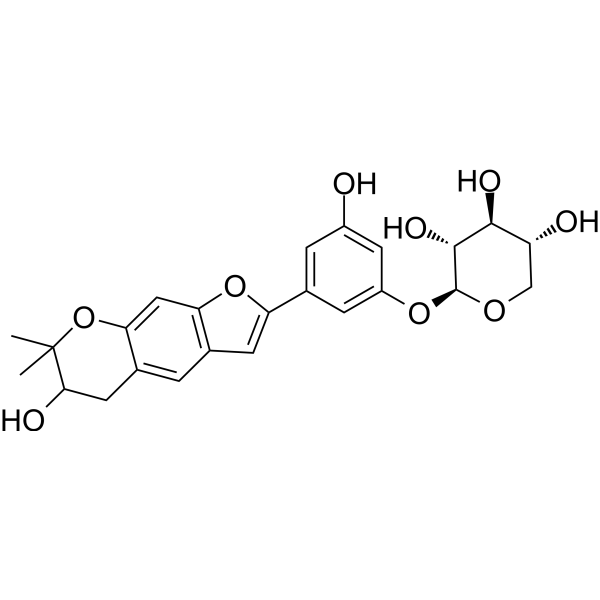
Mulberroside C is one of the main bioactive components in white mulberry (Morus alba L.). Mulberroside C exhibits antiplatelet, antiviral and neutrophil-regulating activities, and binds to EV-A71 VP1 with a Kd value of 1.289 nM. Mulberroside C reduces the phosphorylation level of ERK, promotes the phosphorylation of IP3RI at the Ser 1756 site, and decreases calcium influx and calcium mobilization. Mulberroside C inhibits the expression of P-selectin (P-selectin). Mulberroside C upregulates the cyclic nucleotide signaling pathway in human platelets. Mulberroside C binds to IL-23R, upregulates the expression of G-CSF, GM-CSF and RASGRP1, and activates the RAS/ERK signaling pathway. Mulberroside C promotes neutrophil maturation, accelerates the recovery of leukopenia, and enhances the antibacterial activity of neutrophils. Mulberroside C inhibits the replication of hepatitis C virus in replicon cells. Mulberroside C prevents the uncoating and genome release of EV-A71, and inhibits the synthesis of viral proteins and RNA. Mulberroside C can be used in studies related to thrombosis-mediated cardiovascular diseases, chemotherapy- and radiotherapy-induced leukopenia, hepatitis C virus infection, and hand, foot and mouth disease .
loading...
    loading...
Cat. No.: HY-E70529
Research Areas:  

Infection

Ribonucleoside vanadyl complexes are a class of potent RNase and Taq polymerase inhibitors. Ribonucleoside vanadyl complexes protect RNA during RNA isolation by inhibiting ribonucleases, and also reduce the viability of bacteria and eukaryotic cells by interfering with ribosomal subunit assembly. Ribonucleoside vanadyl complexes block PCR and reverse transcription reactions templated by viral nucleic acids and enhance the effects of antibiotics against Staphylococcus aureus, but do not directly inhibit protein synthesis. Ribonucleoside vanadyl complexes can be effectively removed by phenol-chloroform extraction, thus enabling subsequent PCR analysis. Ribonucleoside vanadyl complexes can be applied in research related to chronic hepatitis C (HCV) and Staphylococcus aureus infection .
loading...
    loading...
Cat. No.: HY-W013403
CAS No.: 784-71-4
Target:  

IFNAR

Research Areas:  

Infection

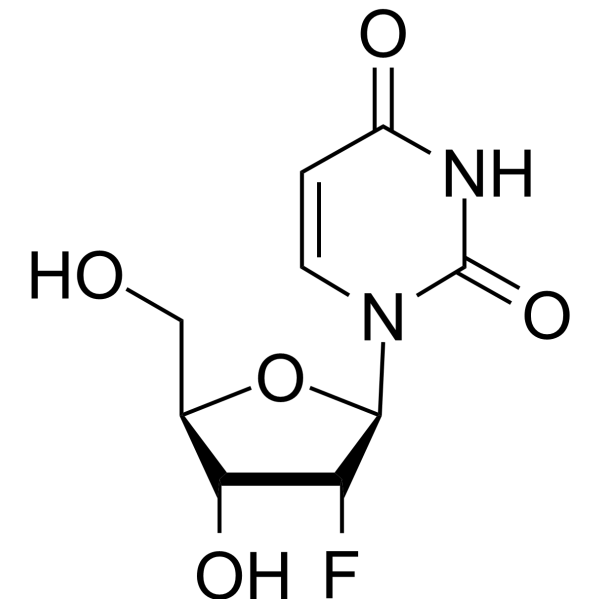
2'-Deoxy-2'-fluorouridine is a derivative of the pyrimidine nucleoside uridine. 2'-Deoxy-2'-fluorouridine is a nucleoside analog that inhibits the replication of wild-type viruses by binding to the viral RNA. Hepatitis C polyU/UC RNA strands containing 2'-Deoxy-2'-fluorouridine, bind to RIG-I but do not activate RIG-I signaling in a reporter assay using Huh7 cells. 2'-Deoxy-2'-fluorouridine also has been used as a starting material in the synthesis of respiratory syncytial virus (RSV) polymerase inhibitors. 2'-Deoxy-2'-fluorouridine can incorporate into DNA and RNA in rat and woodchuck model upon administration. 2'-Deoxy-2'-fluorouridine can be studied in anti-viral research .
loading...
    loading...
Cat. No.: HY-126113
CAS No.: 610753-87-2
Purity:  99.44%
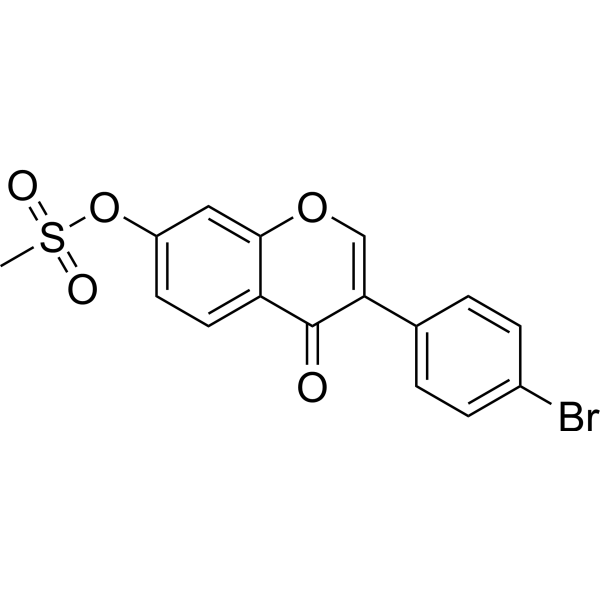
KIN101 is a potent RNA viral inhibitor with IC50s of 2 μM, >5 μM for influenza virus and Dengue virus (DNV), respectively. KIN101, an isoflavone agonist of IRF-3 dependent signaling, induces IRF-3 nuclear translocation. KIN101 has broad-spectrum activity against RNA viruses .
loading...
    loading...
Cat. No.: HY-19643
CAS No.: 480462-62-2
Target:  

HCV Protease

Research Areas:  

Infection

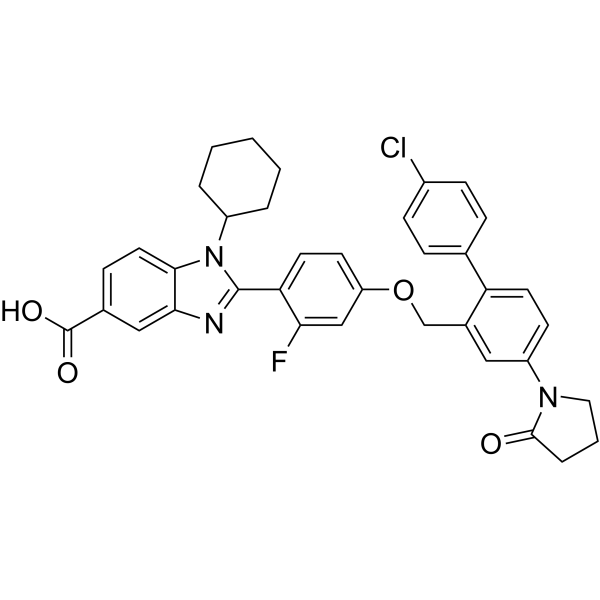
JTK-109 is a potent inhibitor of hepatitis C virus NS5B RNA-dependent RNA polymerase. JTK-109 has NS5B inhibitory activity with IC50 value of 0.017μM. JTK-109 can be used for the research of hepatitis C virus (HCV) .
loading...
    loading...
Cat. No.: HY-P10974
Target:  

HCV Enterovirus

Research Areas:  

Infection

La peptide (LAP) is an internal ribosome entry site (IRES) inhibitor. La peptide efficiently enters cells, blocks binding of cellular transacting factors to viral IRES, followed by inhibiting IRES-mediated translation. La peptide can be used for RNA viruses research, such as hepatitis C (HCV) and poliovirus (PV) .
loading...
    loading...
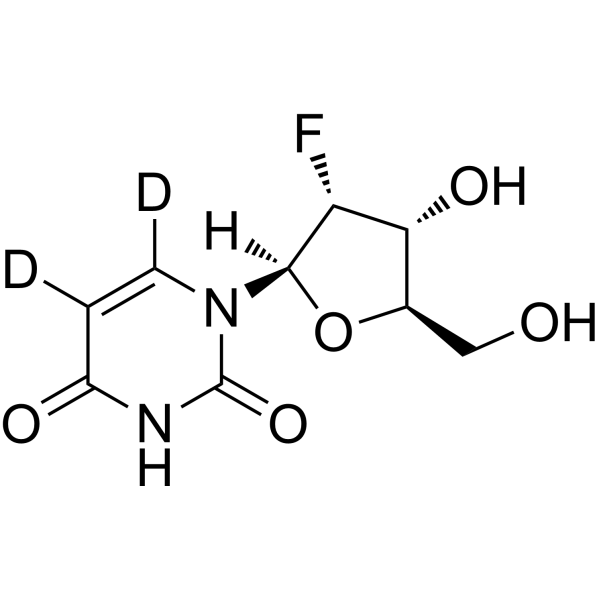
Cat. No.: HY-W013403S
CAS No.: 362049-50-1
2'-Deoxy-2'-fluorouridine-d2 is the deuterium labeled 2'-Deoxy-2'-fluorouridine . 2'-Deoxy-2'-fluorouridine is a derivative of the pyrimidine nucleoside uridine. 2'-Deoxy-2'-fluorouridine is a nucleoside analog that inhibits the replication of wild-type viruses by binding to the viral RNA. Hepatitis C polyU/UC RNA strands containing 2'-Deoxy-2'-fluorouridine, bind to RIG-I but do not activate RIG-I signaling in a reporter assay using Huh7 cells. 2'-Deoxy-2'-fluorouridine also has been used as a starting material in the synthesis of respiratory syncytial virus (RSV) polymerase inhibitors. 2'-Deoxy-2'-fluorouridine can incorporate into DNA and RNA in rat and woodchuck model upon administration. 2'-Deoxy-2'-fluorouridine can be studied in anti-viral research .
loading...
    loading...
Cat. No.: HY-182691
CAS No.: 1890171-61-5
Target:  

HCV

Research Areas:  

Infection

Amphihevir is an orally active HCV NS4B inhibitor. Amphihevir exhibits activity against HCV genotype 1a and 1b replicons and reduces HCV RNA levels. Amphihevir can be used in the research of chronic hepatitis C .
loading...
    loading...
Cat. No.: HY-138198A
Target:  

Acyltransferase

Research Areas:  

Infection

YIC-C8-434 is an orally active ACAT inhibitor. YIC-C8-434 selectively blocks cholesterol esterification in intestinal epithelial cells and hepatocytes without affecting the production of triglycerides or phospholipids. YIC-C8-434 effectively reduces intracellular cholesteryl ester levels and induces an increase in lipid droplet volume, exhibiting excellent cholesterol-lowering activity and safety. YIC-C8-434 disrupts the assembly of hepatitis C virus (HCV) virions, reduces HCV RNA synthesis and viral particle release. YIC-C8-434 can be used in studies related to hepatitis C virus infection .
loading...
    loading...
Cat. No.: HY-L073
396 compounds

Hepatitis C virus (HCV) is a hepatotropic enveloped positive- strand RNA virus (family Flaviviridae) that infects the parenchymal cells of the liver. HCV infection is a significant public health burden. Globally, an estimated 71 million people have chronic hepatitis C virus infection. A significant number of those who are chronically infected will develop cirrhosis or liver cancer. To date, there is no vaccine against HCV, and combination pegylated alpha interferon (pIFN-) and ribavirin, the main standard-of-care treatment for HCV, is effective in only a subset of patients and is associated with a wide spectrum of toxic side effects and complications. More recently, new therapeutic approaches that target essential components of the HCV life cycle have been developed, including direct-acting antiviral (DAA) that specifically block a viral enzyme or functional protein and host-targeted agents (HTA) that block interactions between host proteins and viral components that are essential to the viral life cycle. However, the genetic diversity of HCV viruses and the stage of liver disease (i.e., cirrhosis) are revealing themselves as obstacles for effective, pan-genotypic treatments. There still exists a need for the discovery and development of new HCV inhibitors. In particular, since the future of HCV therapy will likely consist of a cocktail approach using multiple inhibitors that target different steps of infection, new antivirals targeting all steps of the viral infection cycle.

MCE offers a unique collection of 396 compounds with identified and potential anti-HCV activity. MCE Anti- Hepatitis C Virus Compound Library is a useful tool for discovery new anti-HCV drugs and other anti-infection research.

