Search Result
Results for "
Hsp-targeting Chimeras
" in MedChemExpress (MCE) Product Catalog:
| Cat. No. |
Product Name |
Target |
Research Areas |
Chemical Structure |
-
- HY-145388
-
AU-15330
Maximum Cited Publications
11 Publications Verification
|
PROTACs
SWI/SNF Complex
|
Cancer
|
|
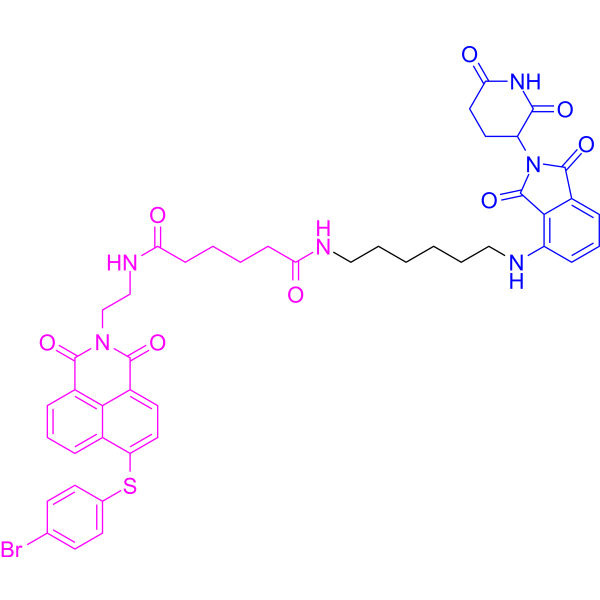
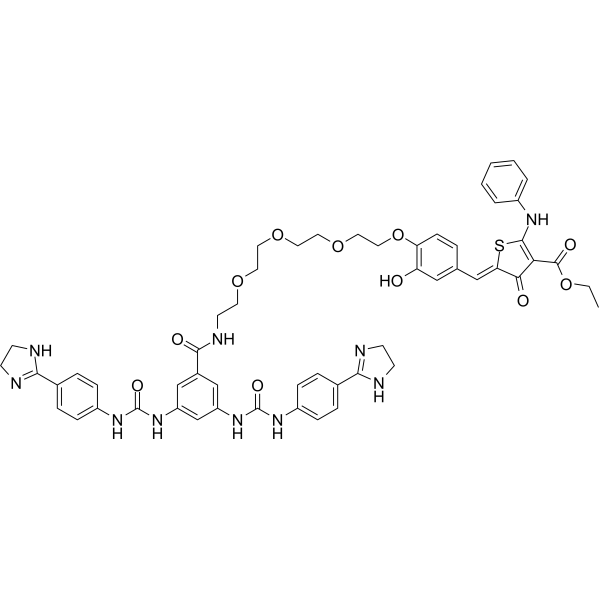
AU-15330 is a proteolysis-targeting chimera (PROTAC) degrader of the SWI/SNF ATPase subunits, SMARCA2 and SMARCA4. AU-15330 induces potent inhibition of tumour growth in xenograft models of prostate cancer and synergizes with the AR antagonist enzalutamide. AU-15330 induces disease remission in castration-resistant prostate cancer (CRPC) models without toxicity .
|
-
-
- HY-148118A
-
|
|
LYTACs
|
Cancer
|
|
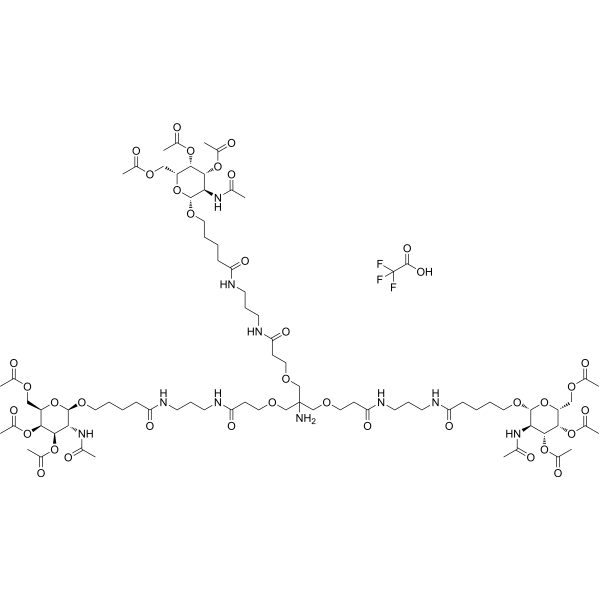
Tri-GalNAc(OAc)3 TFA is a trivalent N-acetylgalactosamine (GalNAc) derivative that can be used to synthesize GalNAc-LYTAC. Tri-GalNAc is a specific ligand targeting the asialoglycoprotein receptor (ASGPR), mediating the endocytosis and transport of cell surface proteins (such as EGFR, HER2) to lysosomes for degradation by lysosomal targeting chimeras (LYTACs). Tri-GalNAc significantly reduces the level of target proteins and inhibits downstream signaling pathways (such as EGFR-mediated Akt and MAPK signals). Tri-GalNAc(OAc)3 TFA can be used for hepatocyte targeting studies, and can degrade carcinogenic membrane proteins and inhibit tumor cell proliferation in liver cancer cell models .
|
-
-
- HY-139156
-
SK-575
5 Publications Verification
|
PROTACs
PARP
|
Cancer
|
|
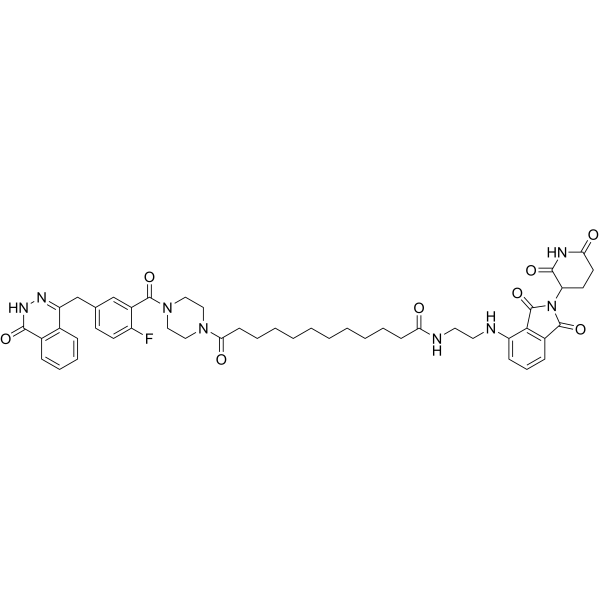
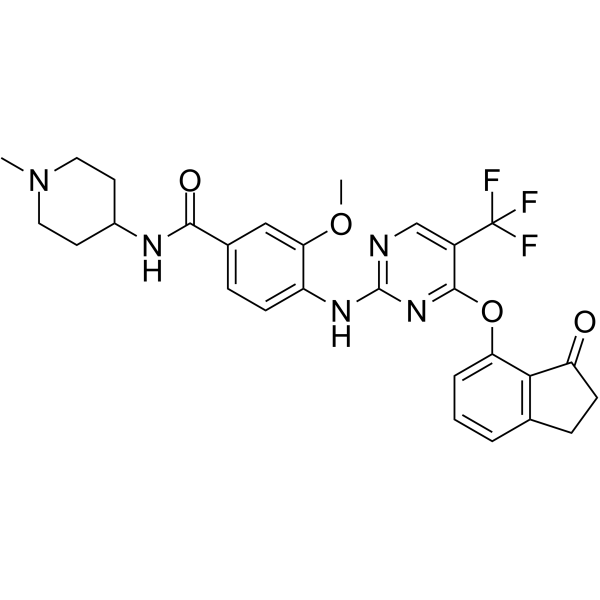
SK-575 is a highly potent and specific proteolysis-targeting chimera (PROTAC) degrader of PARP1, with an IC50 of 2.30 nM. SK-575 potently inhibits the growth of cancer cells bearing BRCA1/2 mutations .
|
-
-
- HY-13260
-
|
|
Akt
Autophagy
Apoptosis
|
Cancer
|
|
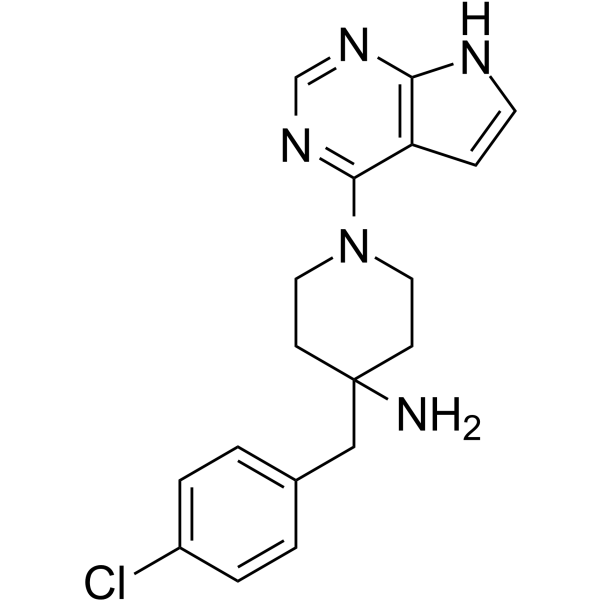
CCT128930 is a ATP-competitive and selective inhibitor of AKT (IC50=6 nM for AKT2). CCT128930 has 28-fold selectivity over the closely related PKA kinase (IC50=168 nM) through the targeting of Met282 of AKT (Met173 of PKA-AKT chimera), as well as 20-fold selectivity over p70S6K (IC50=120 nM). Antitumor activity.
|
-
-
- HY-125877
-
|
|
PROTACs
Bcl-2 Family
|
Cancer
|
|
PROTAC Mcl1 degrader-1 (compound C3), a proteolysis targeting chimera (PROTAC) based on Cereblon ligand, is a potently and selectively Mcl-1 (Bcl-2 family member) inhibitor with an IC50 of 0.78 μM. PROTAC Mcl1 degrader-1 inhibits Bcl-2 with an IC50 of 0.54 μM .
|
-
-
- HY-124625
-
|
|
FAK
Target Protein Ligand-Linker Conjugates
|
Infection
Cancer
|
|
BI-4464 is a highly selective, ATP competitive PTK2/FAK protein kinase inhibitor with an IC50 value of 17 nM. BI-4464 is a FAK (HY-43760) ligand and linker conjugate. BI-4464 can be used to construct proteolysis targeting chimeras (PROTACs), such as PROTAC FAK degrader 4 (HY-178467). PROTAC FAK degrader 4 is a highly potent and selective FAK PROTAC degrader .
|
-
-
- HY-148381
-
|
|
Epigenetic Reader Domain
PROTACs
Apoptosis
|
Cancer
|
|
A947 is a potent and selective SMARCA2 proteolysis-targeting chimera molecule (PROTAC). A947 also is a potent and moderately selective SMARCA2 degrader. A947 has binding affinity to the SMARCA2 bromodomain with a Kd value of 93 nM. A947 can be used for the research of cancer .
|
-
-
- HY-139482
-
|
|
LYTACs
|
Cancer
|
|
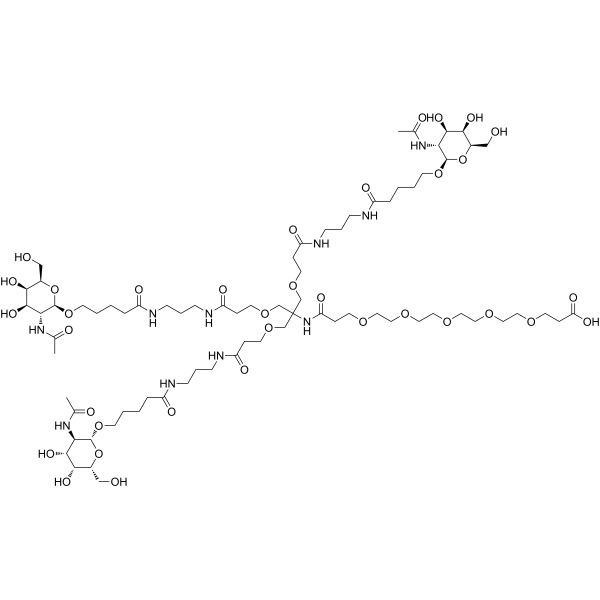
tri-GalNAc-COOH is an asialoglycoprotein receptor (ASGPR) ligand that can be used for LYsosome TArgeting Chimera (LYTAC) research .
|
-
-
- HY-126147
-
|
|
HDAC
|
Cancer
|
|
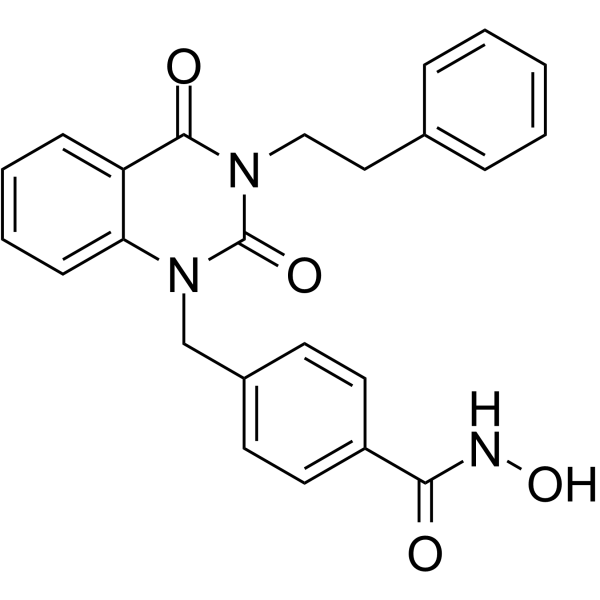
J22352 is a PROTAC (proteolysis-targeting chimeras)-like and highly selective HDAC6 inhibitor with an IC50 value of 4.7 nM. J22352 promotes HDAC6 degradation and induces anticancer effects by inhibiting autophagy and eliciting the antitumor immune response in glioblastoma cancers, and leading to the restoration of host antitumor activity by reducing the immunosuppressive activity of PD-L1 .
|
-
-
- HY-145232
-
|
OGTAC-3
|
PhosTACs
Phosphatase
Tau Protein
|
Neurological Disease
Cancer
|
|
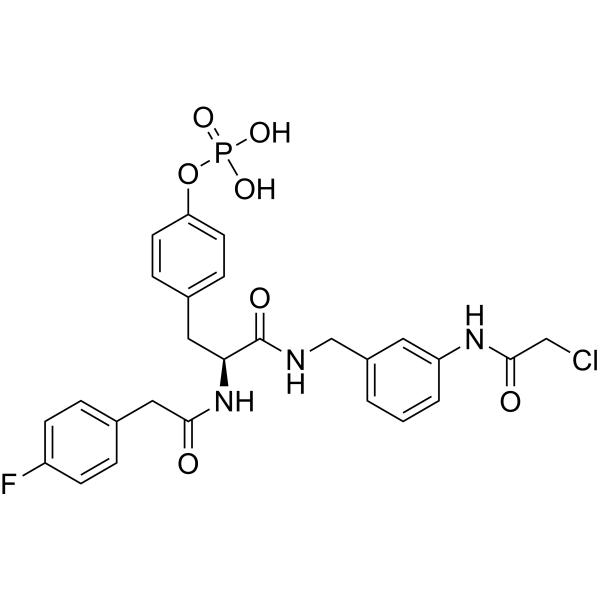
PhosTAC7 is a heterobifunctional molecule named as a Phosphorylation Targeting Chimera (PhosTAC). PhosTAC7 can dephosphorylate the PDCD4 protein, FOXO3a protein, and tau protein by recruiting serine/threonine protein phosphatase 2A (PP2A). PhosTAC7 offers the advantage of selectively modulating the phosphorylation state of individual target proteins, making it a promising tool for research in cancer and tau protein-related neurodegenerative diseases (Alzheimer's disease) .
|
-
-
- HY-161408
-
GePhos1
1 Publications Verification
|
PhosTACs
EGFR
Apoptosis
|
Cancer
|
GePhos1, a EGFR-targeting PhosTAC (phosphorylation targeting chimera), induces EGFR dephosphorylation. GePhos1 induces apoptosis .
|
-
-
- HY-129652
-
|
|
AUTACs
|
Cancer
|
|
HaloAUTAC tt15 is an autophagy-targeting chimera (AUTAC), that targets the Halo Tag carrying proteins, and degrades via the autophagy mechanism .
|
-
-
- HY-134640
-
AUTAC4
4 Publications Verification
|
AUTACs
Mitophagy
|
Neurological Disease
Cancer
|
|
AUTAC4 is a mitochondria-targeting autophagy-targeting chimera (AUTAC). AUTAC4 downregulates cytosolic proteins and promotes targeted mitochondrial turnover via mitophagy .
|
-
-
- HY-156820
-
|
|
Epigenetic Reader Domain
|
Cancer
|
|
HLDA-221 is a non-covalent regulated induced proximity targeting chimeras (RIPTAC). The binding of HLDA-221 to BRD4-BD1 is significantly increased after pre-incubation with FKBP. HLDA-221 can be used in cancer research .
|
-
-
- HY-161743
-
|
|
AUTOTACs
Autophagy
|
Neurological Disease
Cancer
|
|
PBA-1105 is an autophagy-targeting chimera (AUTOTAC) that induces p62 self-oligomerization. PBA-1105 selectively binds to exposed hydrophobic regions of misfolded proteins, facilitating their degradation via the autophagic pathway. PBA-1105 increases the autophagic flux of Ub-conjugated aggregates .
|
-
-
- HY-152261
-
|
|
PROTACs
|
Cancer
|
|
MS6105 is an LDH protein hydrolysis-targeted chimera (PROTAC) that effectively degrades LDHA and LDHB in a time- and ubiquitin-proteasome system-dependent manner and has anticancer activity . MS6105 is a click chemistry reagent, it contains an Alkyne group and can undergo copper-catalyzed azide-alkyne cycloaddition (CuAAc) with molecules containing Azide groups.
|
-
-
- HY-152227
-
|
|
PROTACs
JAK
|
Inflammation/Immunology
|
|
PROTAC TYK2 degradation agent1 is a potent and subtype-selective TYK2 degrader. PROTAC TYK2 degradation agent1 has TYK2 degradation activity with DC50 value of 14 nM. PROTAC TYK2 degradation agent1 can be used for the research of autoimmune disease .
|
-
-
- HY-140902A
-
|
|
PROTAC Linkers
|
Cancer
|
|
Biotin-PEG3-C3-NH2 is a PEG-based PROTAC linker, with NH2 functional group, that can be used in the synthesis of PROTACs .
|
-
-
- HY-143344
-
|
|
PROTACs
CFTR
|
Inflammation/Immunology
|
|
NJH-2-056 is a deubiquitinase-targeting chimera (DUBTAC) linking the OTUB1 recruiter EN523 to the CFTR chaperone lumacaftor. NJH-2-056 can be used for cystic fibrosis research .
|
-
-
- HY-101460
-
|
|
E3 Ligase Ligand-Linker Conjugates
Drug Derivative
|
Cancer
|
|
Tz-Thalidomide is a tetrazine-tagged Thalidomide (HY-14658), an E3 ligase ligand. Tz-Thalidomide self-assembles with TCO-labeled target protein inhibitors, forming a CLIP-TAC (targeted protein degradation chimera) via click chemistry. This chimera recruits the E3 ubiquitin ligase CRBN to the target protein, thereby inducing ubiquitination and subsequent degradation of the target protein. When used in combination with JQ1-TCO (HY-148864), Tz-Thalidomide induces concentration-dependent degradation of BRD4 in cells. When combined with ERK-targeting protein inhibitors, Tz-Thalidomide induces degradation of ERK1/2 in cells. Tz-Thalidomide can be used in cancer-related research .
|
-
-
- HY-111758
-
|
|
PROTACs
Raf
|
Cancer
|
|
PROTAC B-Raf degrader 1 (compound 2) is a proteolysis targeting chimera (PROTAC) for the degradation of B-Raf based on Cereblon ligand with anti-cancer activity .
|
-
-
- HY-148508
-
|
|
PhosTACs
Phosphatase
|
Cancer
|
|
PhosTAC3 is a phosphorylation targeting chimera (PhosTAC) molecule composed of a linker with three PEG groups. PhosTAC3 induces dephosphorylation of PDCD4 and FOXO3a .
|
-
-
- HY-161739
-
|
|
p62
|
Cancer
|
|
YOK-1304 is a ligand of p62-ZZ domain. YOK-1304 can activate p62-dependent selective macroautophagy. YOK-1304 can be used for AUTOTAC design .
|
-
-
- HY-156395
-
MN551
1 Publications Verification
|
E1/E2/E3 Enzyme
|
Cancer
|
|
MN551 is a potent inhibitor of cysteine-directed electrophilic covalent that plays important roles in the biology of SOCS2 and its CRL5 complex, and as E3 ligase handles in proteolysis targeting chimera (PROTACs) to induce targeted protein degradation .
|
-
-
- HY-147102
-
|
|
LYTACs
|
Metabolic Disease
|
|
tri-GalNAc biotin is a biotinylated ASGPR (Asialoglycoprotein receptor) ligand. tri-GalNAc biotin promotes cellular uptake of neutravidin (NA) via ASGPR. tri-GalNAc biotin delivers neutravidin to lysosomes for degradation. tri-GalNAc biotin can be used for research of LYsosome TArgeting Chimera (LYTAC) .
|
-
-
- HY-145819
-
|
|
HDAC
PROTACs
|
Cancer
|
|
JPS036 is a benzamide-based Von Hippel-Lindau (VHL) E3-ligase proteolysis targeting chimeras (PROTAC). JPS036 degrades class I histone deacetylase (HDAC). JPS036 is potent HDAC1/2 degrader correlated with greater total differentially expressed genes and enhanced apoptosis in HCT116 cells .
|
-
-
- HY-149428
-
AD4
1 Publications Verification
|
PROTACs
|
Cancer
|
|
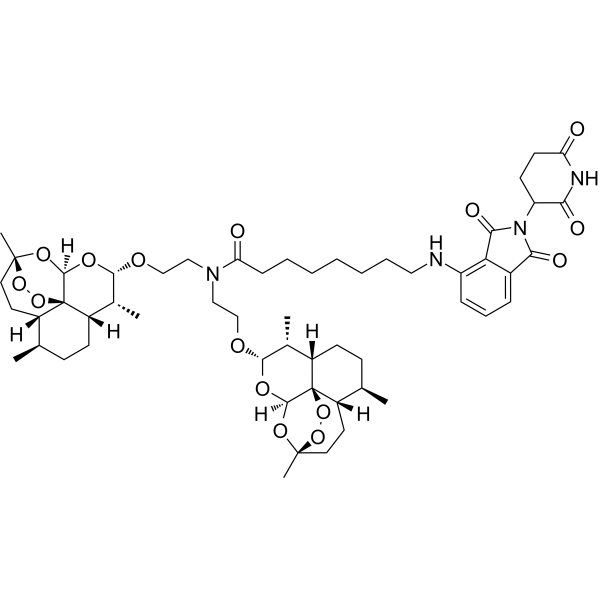
AD4 is an artemisinin derivative that is a proteolytic targeting chimera (PROTAC) targeting PCLAF. AD4 can effectively degrade PCLAF in RS4;11 cells (IC50: 0.6 nM), thereby activating the p21/Rb axis and exerting anti-tumor activity. AD4 also prolonged survival of RS4;11-transplanted NOD/SCID mice, with in vivo efficacy .
|
-
-
- HY-P10446
-
|
|
Epigenetic Reader Domain
PROTACs
|
Cancer
|
|
TAT-PiET-PROTAC is a proteolysis-targeting chimera (PROTAC)-modified TAT-PiET (HY-P10445), which is a cell-penetrating peptide targeting the extra-terminal (ET) domain of BRD4. TAT-PiET-PROTAC can reduce BRD4 and JMJD6 levels and inhibit cell proliferation. TAT-PiET-PROTAC also resists the endocrine resistance of ERα-positive breast cancer cells. TAT-PiET-PROTAC can be used for the research of cancer, such as breast cancer .
|
-
-
- HY-135312
-
|
|
Estrogen Receptor/ERR
PROTACs
|
Cancer
|
|
AZ'6421 acts as Protcolysis Targeting Chimera (PROTAC) to selectively degrade estrogen receptor alpha. AZ'6421 has a potent anti-tumour effect to inhibit the uncontrolled cellular proliferation which arises from malignant disease. AZ'6421 can be used for the research of cancer such as breast cancer .
|
-
-
- HY-155356
-
|
|
PROTACs
Ras
|
Cancer
|
|
YN14 is a KRASG12C proteolysis targeting chimera (PROTAC). YN14 is highly potent and selective KRASG12C degrader and induces a stable KRASG12C: YN14: VHL ternary complex with low binding free energy (ΔG). YN14 has antiproliferative effects and significantly inhibits KRASG12C-mutant cancer cell growth. YN14 leads to tumor regression with tumor growth inhibition (TGI%) rates more than 100 % in the MIA PaCa-2 xenograft model.
|
-
-
- HY-148509
-
|
|
PhosTACs
Phosphatase
|
Cancer
|
|
PhosTAC5 is a phosphorylation targeting chimera (PhosTAC) molecule composed of a linker with fivePEG groups. PhosTAC5 induces dephosphorylation of PDCD4 and FOXO3a .
|
-
-
- HY-171910
-
|
|
Asialoglycoprotein Receptor (ASGPR)
LYTACs
|
Others
|
|
tri(GalNAc-PEG2)-PEG4-cyclo(Ac-DCAW-{Arg(3F-Ph)-PEG2}-LGELVWCT) (Cys2-Cys12) is an asialoglycoprotein receptor (ASGPR) ligand that can be used for LYsosome TArgeting Chimera (LYTAC) research .
|
-
-
- HY-145815A
-
|
|
PROTACs
HDAC
Apoptosis
|
Cancer
|
|
JPS014 TFA is a benzamide-based Von Hippel-Lindau (VHL) E3-ligase proteolysis targeting chimeras (PROTAC). JPS014 TFA degrades class I histone deacetylase (HDAC). JPS014 TFA is potent HDAC1/2 degrader correlated with greater total differentially expressed genes and enhanced apoptosis in HCT116 cells .
|
-
-
- HY-144999
-
|
|
Wee1
|
Cancer
|
|
LEB-03-146 is a WEE1 DUBTAC (deubiquitinase-targeting chimera) linking AZD1775 (Adavosertib) to the OTUB1 recruiter EN523 through a PEG2 linker. LEB-03-146 shows significant WEE1 stabilization in HEP3B hepatoma cancer cells .
|
-
-
- HY-163445
-
|
|
NAMPT
|
Cancer
|
|
NAMPT activator-6 is a NAMPT activator, a regulatory molecule for the optical control system of NAMPT and NAD+. NAMPT activator-6 can be used to design efficient photoswitchable proteolysis-targeting chimeras (PS-PROTACs) to achieve up-down reversible regulation of NAMPT and NAD+ in a light-dependent manner and reduce the toxicity associated with inhibitor-based PS-PROTACs. PS-PROTAC can be used to achieve antitumor activity, NAMPT, and NAD+ modulation in vivo via optical manipulation .
|
-
-
- HY-133869
-
|
cGMP-HaloTag-ligand
|
Autophagy
|
Cancer
|
|
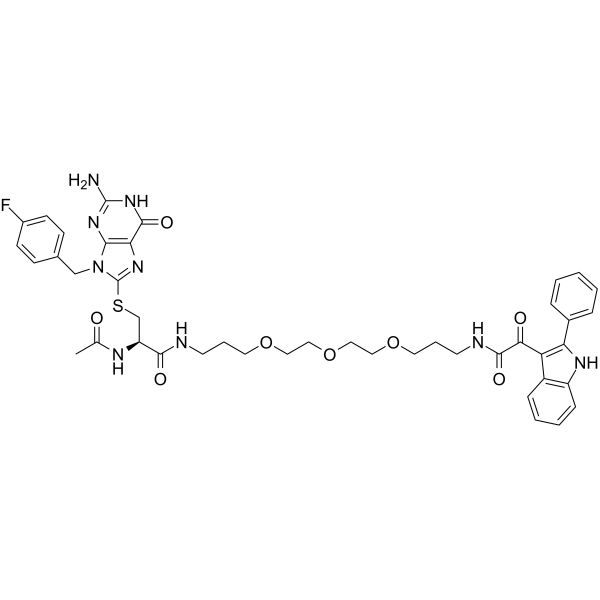
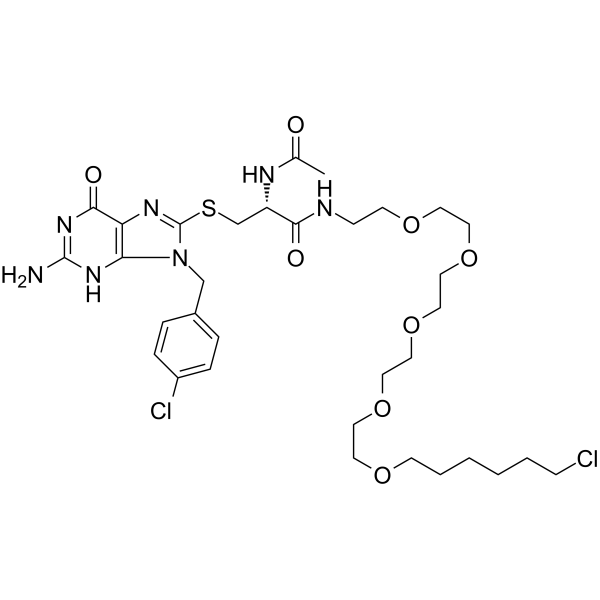
cGMP-HTL contains a HT-ligand, a linker and the Cys-S-cGMP (autophagy tag). cGMP-HTL increases the K63-linked ubiquitination of mitochondria. AUTAC (autophagy-targeting chimera) is a novel targeted-clearance strategy that contains a degradation tag (guanine derivatives) and a warhead to provide target specificity .
|
-
-
- HY-158408
-
|
|
ULK
Mitophagy
|
Neurological Disease
|
|
NZ-66 is a UNC-51-like kinase 1 (ULK1) targeting chimera, which is used to achieve proximity-induced and ULK1-dependent degradation of mitochondria. NZ-66 induces mitophagy. NZ-66 is potential for attenuating neurodegenerative disorders .
|
-
-
- HY-161745
-
|
|
AUTOTACs
p62
Autophagy
|
Cancer
|
|
PBA-1105b is an autophagy-targeting chimera (AUTOTAC) that induces p62 self-oligomerization. PBA-1105b increases the autophagic flux of Ub-conjugated aggregates. PBA-1105b is a drastically longer PEG-based linker than PBA-1105 .
|
-
-
- HY-160902
-
|
|
Autophagy
AUTACs
|
Others
|
|
2G-HaloAUTAC (Compound tt44) is a Autophagy-targeting chimera (2G-HaloAUTAC) that improves the activity of AUTACs by replacing the L-Cysteine (L-Cys) linker with other structures. 2G-HaloAUTAC exhibits degradation activity against EGFP-HaloTag protein through an Autophagic mechanism .
|
-
-
- HY-W877989
-
|
|
Ligands for E3 Ligase
|
Cancer
|
|
BWA-522 intermediate-1 is an intermediate in the synthesis of PROTAC BWA-522 (HY-149433) and serves as a ligand molecule for cereblon E3 ubiquitin ligase. BWA-522 is an orally active small molecule protein-targeting chimera (PROTAC) that has significant degradation effects on AR-FL and AR-V7 .
|
-
-
- HY-147225
-
|
|
AUTACs
Mitophagy
|
Neurological Disease
Metabolic Disease
Cancer
|
|
TSPO Ligand-Linker Conjugates 1 contains a ligand for translocator protein (TSPO) and a linker, which is used for the synthesis of mitochondria-targeting autophagy-targeting chimera (AUTAC). AUTAC can bind the TSPO on the outer mitochondrial membrane (OMM) of mitochondria and degrades impaired mitochondria and proteins via mitophagy, and improves mitochondrial activity. TSPO Ligand-Linker Conjugates 1 can be used in mitochondrial dysfunction related research, including neurodegenerative diseases, cancer, and diabetes .
|
-
-
- HY-161740
-
|
|
AUTOTACs
Estrogen Receptor/ERR
Autophagy
|
Cancer
|
|
PHTPP-1304 is a PHTPP-based autophagy targeting chimera (AUTOTAC). PHTPP-1304 induces the degradation of estrogen receptor ERβ through the autophagy pathway, rather than ubiquitination (DC50 ≈ 2 nM, in HEK293T cells; < 100 nM in ACHN renal carcinoma and MCF-7 breast cancer cells). PHTPP-1304 can induce the self-oligomerization of p62. PHTPP-1304 can be used to study various cancers mediated by ERβ .
|
-
-
- HY-143342
-
|
|
Wee1
|
Cancer
|
|
LEB-03-144 is a WEE1 DUBTAC (deubiquitinase-targeting chimera) linking AZD1775 (Adavosertib) to the OTUB1 recruiter EN523 through a C3 alkyl linker. LEB-03-144 shows significant WEE1 stabilization in HEP3B hepatoma cancer cells .
|
-
-
- HY-163019
-
-
-
- HY-400766
-
|
|
Drug Intermediate
|
Cancer
|
|
BWA-522 intermediate-2 is a BWA-522 intermediate. BWA-522 is an orally available small molecule protein-targeting chimera (PROTACs) with significant degradation effect on AR-FL and AR-V7 .
|
-
-
- HY-146397
-
|
|
PROTACs
Androgen Receptor
|
Cancer
|
|
TD-802 (Compound 33c) is an androgen receptor (AR) PROTAC degrader with good microsomal stability. TD-802 has good antitumor efficacy in vivo and can be used for metastatic castration-resistant prostate cancer research .
|
-
-
- HY-145818
-
|
|
HDAC
PROTACs
|
Cancer
|
|
JPS035 is a benzamide-based Von Hippel-Lindau (VHL) E3-ligase proteolysis targeting chimeras (PROTAC). JPS035 degrades class I histone deacetylase (HDAC). JPS035 is potent HDAC1/2 degrader correlated with greater total differentially expressed genes and enhanced apoptosis in HCT116 cells .
|
-
-
- HY-162966
-
|
|
Cyclic GMP-AMP Synthase
PROTACs
STING
|
Cancer
|
|
MS7829 is a deubiquitinase-targeting chimera (DUBTAC) that targets cGAS. MS7829 recruits OTUB1 to cGAS, binds covalently to OTUB1, stabilizes the protein abundance of cGAS, and activates the cGAS-STING-IRF3 innate immune signaling pathway in an OTUB1-dependent manner. MS7829 is applicable to cancer-related research .
|
-
-
- HY-145815
-
|
|
HDAC
PROTACs
|
Cancer
|
|
JPS014 is a benzamide-based Von Hippel-Lindau (VHL) E3-ligase proteolysis targeting chimeras (PROTAC). JPS014 degrades class I histone deacetylase (HDAC). JPS014 is potent HDAC1/2 degrader correlated with greater total differentially expressed genes and enhanced apoptosis in HCT116 cells .
|
-
-
- HY-179717
-
|
|
PROTACs
Microphthalmia Associated Transcription Factor (MITF)
|
Cancer
|
|
WZS0347 is a MITF PROTAC degrader. WZS0347 effectively reduces the MITF protein levels in several melanoma cell lines, including B16F10, A375, and GAK. WZS0347 significantly inhibits the proliferation, migration, and invasion of melanoma cells. WZS0347 can be used for research on melanoma (Pink: MITF ligand: (HY-179718); Blue: CRBN ligand: (HY-131717); Black: linker: (HY-22391)) .
|
-
- HY-P1556
-
|
|
PKG
|
Cardiovascular Disease
|
|
Vasonatrin Peptide (VNP) is a chimera of atrial natriuretic peptide (ANP) and C-type natriuretic peptide (CNP). Vasonatrin peptide possesses the venodilating actions of CNP, the natriuretic actions of ANP, and unique arterial vasodilating actions not associated with either ANP or CNP. Vasonatrin Peptide protects the diabetic heart against ischemia-reperfusion injury by inhibiting ER stress via the cGMP-PKG signaling pathway .
|
-
- HY-178777
-
|
|
PROTACs
BCL6
|
Cancer
|
|
BCL6-760 is an orally active BCL-6 PROTAC degrader with an EC50 of 0.8 nM. BCL6-760 only degrades BCL6 and has no effect on other CRBN substrates. BCL6-760 demonstrates significant efficacy in the orthotopic xenograft mouse model of OCI-LY-1 tumors. BCL6-760 can be used in the research of diffuse Large B-cell Lymphoma (DLBCL) (Pink: BCL-6 ligand (HY-179317); Blue: CRBN ligand (HY-179305); Black: Linker) .
|
-
- HY-157213
-
|
|
Apoptosis
PROTACs
FLT3
|
Cancer
|
|
LWY713 is a PROTAC-class FLT3 degrader (DC50=0.64 nM), which selectively induces FLT3 degradation via cereblon and proteasome-dependent pathways. LWY713 inhibits cell proliferation and induces G0/G1 phase arrest and apoptosis in MV4-11 cells. LWY713 shows effective in vivo antitumor activity in MV4-11 xenograft models . LWY713 consists of a target protein ligand (red part) Gilteritinib (HY-12432), an E3 ubiquitin ligase ligand (blue part) Lenalidomide-F (HY-W039233), and a PROTAC linker (black part) Glycolic acid (HY-W015967). E3 ubiquitin ligase and linker can form Lenalidomide-Glycolic acid (HY-169373); the active control for the target protein ligand is Naproxen Gilteritinib (HY-169374).
|
-
- HY-174877
-
|
|
PROTACs
HDAC
|
Cancer
|
|
PROTAC HDAC6 degrader 6 (Compound 12) is a selective HDAC6-targeting photochemically targeting chimeras (PHOTACs) (subset of PROTAC) degrader with a ∼50% Dmax only upon activation to its cis-state with 390 nm light irradiation . Pink: HDAC6 ligand; Blue: CRBN ligase ligand (HY-A0003); Black: linker
|
-
- HY-P2548
-
|
|
EGFR
|
Others
|
|
pp60 (v-SRC) Autophosphorylation Site, Phosphorylated is the phosphorylated peptide of an EGFR substrate. pp60 (v-SRC) Autophosphorylation Site, Phosphorylated can be used for the screening of EGFR Kinase inhibitors via phosphorylated-substrate quantification .
|
-
- HY-155356A
-
|
|
PROTACs
|
Cancer
|
|
YN14 mixture of diastereomers is the diastereomers of YN14 (HY-155356).
YN14 is a KRASG12C proteolysis targeting chimera (PROTAC). YN14 is highly potent and selective KRASG12C degrader and induces a stable KRASG12C: YN14: VHL ternary complex with low binding free energy (ΔG). YN14 has antiproliferative effects and significantly inhibits KRASG12C-mutant cancer cell growth .
|
-
- HY-152247
-
|
|
MAP3K
|
Cancer
|
|
DDO3711, a PP5-recruiting phosphatase recruitment chimeras (PHORCs), is formed by connecting a small molecular apoptosis signal-regulated kinase 1 (ASK1) inhibitor to a PP5 activator through a chemical linker. DDO3711 specifically inhibits ASK1 (IC50 =164.1 nM) not ASK2 (IC50>20 μM). DDO3711 significantly dephosphorylates p-ASK1 T838 by recruiting PP5 and shows the ASK1-dependent antiproliferative activity. DDO3711 has anti-cancer activity and has the potential for abnormally phosphorylated oncoproteins research .
|
-
- HY-161744
-
|
|
AUTOTACs
Autophagy
|
Cancer
|
|
PBA-1106 is an autophagy-targeting chimera (AUTOTAC) that induces p62 self-oligomerization. PBA-1106 increases the autophagic flux of Ub-conjugated aggregates .
|
-
- HY-156814
-
|
|
Hedgehog
|
Cancer
|
|
HPP-9 is a Proteolysis-Targeting Chimeras (PROTACs) based on Hedgehog Pathway Inhibitor-1 (HPI-1), with the pIC50 of 6.71, that can degrade BET bromodomains. HPP-9 has antitumor activity [1[.
|
-
- HY-170453
-
|
|
Epigenetic Reader Domain
|
Cancer
|
|
iHAC is an inhibitor HSP90-anchoring chimera, that covalently binds BRD4 ligand (+)-JQ-1 to HSP90, and inhibits the proliferation of cancer cells. iHAC activates the anti-tumor immune response, inhibits the recurrence and metastasis of 4T1 breast cancer in mouse models .
|
-
- HY-158985
-
|
|
AUTACs
Autophagy
|
Cancer
|
|
Amino-PEG3-2G degrader-1 (compound ) is a conjugate of a PEG Linker and a pyrazole-linked FBnG tag for ubiquitin-proteasome system (UPS) induction. Amino-PEG3-2G degrader-1 can be used to synthesize autophagy-targeting chimeras (AUTACs) .
|
-
- HY-146422
-
|
|
PROTACs
EGFR
Apoptosis
|
Cancer
|
|
PROTAC EGFR degrader 5 (Compound 10), a PROTAC EGFR degrader, potently degrades EGFR Del19 in HCC827 cells with the DC50 of 34.8 nM. PROTAC EGFR degrader 5 significantly induces the apoptosis of HCC827 cells and arrest the cells in G1 phase .
|
-
- HY-146423
-
|
|
PROTACs
EGFR
Apoptosis
|
Cancer
|
|
PROTAC EGFR degrader 6, a PROTAC EGFR degrader, potently degrades EGFR Del19 in HCC827 cells with the DC50 of 45.2 nM. PROTAC EGFR degrader 6 significantly induces the apoptosis of HCC827 cells and arrest the cells in G1 phase .
|
-
- HY-162106
-
|
|
Ferroptosis
PROTACs
Glutathione Peroxidase
|
Cancer
|
|
PROTAC GPX4 degrader-2 (compound 18a) is a proteolysis targeting chimeras (PROTACs) that can degrade glutathione peroxidase 4 (GPX4), with the DC50, 48h value of 1.68 μM. PROTAC GPX4 degrader-2 induces the accumulation of lipid peroxides and mitochondrial depolarization, subsequently triggering ferroptosis. PROTAC GPX4 degrader-2 has anti-proliferative effect .
|
-
- HY-176071
-
|
|
ByeTAC
Epigenetic Reader Domain
|
Cancer
|
|
TEC 4 is a ByeTAC (Bypassing E-Ligase-Targeting Chimera) BRD4 degrader, with 33% BRD4 remaining at 500 nM in Ramos B-cells. TEC 4 shows toxicity for Ramos B-cells, with an IC50 of 30.5 nM. ByeTACs directly recruits a protein to the proteasome via interactions with Rpn-13 for degradation. Pink: BRD4 lignad (HY-78695); Blue: Rpn-13 ligand (HY-159808); Black: linker (HY-W008352) .
|
-
- HY-141486A
-
-
- HY-168456
-
|
|
RIBOTAC
DNA/RNA Synthesis
|
Infection
|
|
RNA recruiter 1 is the RNA ligand of RNAse L RIBOTAC (HY-168456), an RNA-degrading chimera which binds to a four-way RNA helix called SL5 in the 5’ UTR of the SARS-CoV-2 RNA genome and inhibits the virus replication in lung epithelial carcinoma cells. RNA recruiter 1 can be utilized in the synthesis of RIBOTAC .
|
-
- HY-143343
-
|
|
Wee1
|
Cancer
|
|
LEB-03-153 is a WEE1 DUBTAC (deubiquitinase-targeting chimera) linking AZD1775 (Adavosertib) to the OTUB1 recruiter EN523 through no linker .
|
-
- HY-168457
-
|
|
RIBOTAC
DNA/RNA Synthesis
|
Infection
|
|
RNase L ligand 2 (compound 6) is the Rnase L ligand part of RNAse L RIBOTAC (HY-168455), an RNA-degrading chimera which binds to a four-way RNA helix called SL5 in the 5’ UTR of the SARS-CoV-2 RNA genome and inhibits the virus replication in lung epithelial carcinoma cells. RNase L ligand 2 can be used in the synthesis of RIBOTAC .
|
-
- HY-143340
-
|
|
Wee1
|
Cancer
|
|
LEB-03-145 is a WEE1 DUBTAC (deubiquitinase-targeting chimera) linking AZD1775 (Adavosertib) to the OTUB1 recruiter EN523 through a C5 alkyl linker .
|
-
- HY-168458
-
|
|
RIBOTAC
DNA/RNA Synthesis
|
Infection
|
|
RNA recruiter-linker 1 is the RNA ligand-linker part of RNAse L RIBOTAC (HY-168455), an RNA-degrading chimera which binds to a four-way RNA helix called SL5 in the 5’ UTR of the SARS-CoV-2 RNA genome and inhibits the virus replication in lung epithelial carcinoma cells. RNA recruiter-linker 1 can be utilized in the synthesis of RIBOTAC .
|
-
- HY-168455
-
|
|
RIBOTAC
DNA/RNA Synthesis
|
Infection
|
|
RNAse L RIBOTAC (compound C64) is an RNA-degrading chimera which binds to a four-way RNA helix called SL5 in the 5’ UTR of the SARS-CoV-2 RNA genome and inhibits the virus replication in lung epithelial carcinoma cells. (Blue: RNA ligand (HY-168456); Black: linker (HY-130591); Pink: Rnase L ligand (HY-168457))
|
-
- HY-162241
-
|
|
PROTACs
|
Others
|
|
SJH1-62B is a proteolysis targeting chimera (PROTAC) that can target the androgen receptor (AR) .
|
-
- HY-168139
-
|
|
P2Y Receptor
|
Cancer
|
|
MRS4865 (compund 7a) is a chimera of a P2Y14 receptor antagonist and a UDP-glucose agonist that protects against neuropathic pain .
|
-
- HY-401056
-
|
|
Drug Intermediate
|
Cancer
|
|
BWA-522 intermediate-3 is a BWA-522 intermediate. BWA-522 is an orally available small molecule protein-targeting chimera (PROTACs) with significant degradation effect on AR-FL and AR-V7 .
|
-
- HY-149328
-
|
|
PROTACs
|
Cancer
|
|
phoBET1 is a photocaged-PROTAC. phoBET1 can achieve BRD4 degradation and effectively suppress tumor growth .
|
-
- HY-161093
-
|
|
PROTACs
|
Cancer
|
|
PROTAC BRD4 Degrader-23 (compound 17) is an
effective visible-light-controlled degrader. PROTAC BRD4 Degrader-23 can
inhibit tumor cell proliferation under 405 nm light irradiation .
|
-
- HY-162967
-
|
|
PROTACs
Cyclic GMP-AMP Synthase
STING
|
Inflammation/Immunology
Cancer
|
|
MS8588 is a deubiquitinase-targeting chimera (DUBTAC) against cGAS. MS8588 induces targeted stabilization of cGAS, thereby activating downstream signaling pathways. MS8588 activates the cGAS/STING/IRF3 innate immune signaling pathway. MS8588 exhibits antitumor activity .
|
-
- HY-162504
-
|
|
RIBOTAC
SARS-CoV
|
Infection
|
|
2'-RIBOTAC-U is a ribonuclease (RNase) targeting chimeras (RIBOTACs) and SARS-CoV-2 replication inhibitor. 2'-RIBOTAC-U is composed of a metabolic
handle (Blue), a linker (Black) and a
RNase L recruiter (Pink). RIBOTACs recruits cellular RNases to specific RNA targets, thereby leading to the degradation of these RNAs .
|
-
- HY-161743A
-
|
|
AUTOTACs
Autophagy
|
Neurological Disease
Cancer
|
|
PBA-1105 TFA is an autophagy-targeting chimera (AUTOTAC) that induces p62 self-oligomerization. PBA-1105 TFA selectively binds to exposed hydrophobic regions of misfolded proteins, facilitating their degradation via the autophagic pathway. PBA-1105 TFA increases the autophagic flux of Ub-conjugated aggregates .
|
-
- HY-155371
-
|
|
PROTACs
|
Others
|
|
BT-PROTAC is a bioorthogonally activatable prodrug. BT-PROTAC can accurately control the activity of PROTAC .
|
-
- HY-P1556A
-
|
|
PKG
|
Metabolic Disease
|
|
Vasonatrin Peptide (VNP) TFA is a chimera of atrial natriuretic peptide (ANP) and C-type natriuretic peptide (CNP). Vasonatrin peptide TFA possesses the venodilating actions of CNP, the natriuretic actions of ANP, and unique arterial vasodilating actions not associated with either ANP or CNP. Vasonatrin Peptide TFA protects the diabetic heart against ischemia-reperfusion injury by inhibiting ER stress via the cGMP-PKG signaling pathway .
|
-
- HY-171148
-
|
|
RIBOTAC
DNA/RNA Synthesis
|
Cancer
|
|
F1-RIBOTAC is a ribonuclease-targeting chimeras (RIBOTACs). F1-RIBOTAC decreases QSOX1-a mRNA expression level in an RNase L-dependent manner. F1-RIBOTAC can be used for the research of cancer . (Pink: RNA ligand (HY-168460); Black: linker (HY-W008005); Blue: RNase L ligand (HY-168452))
|
-
- HY-183725
-
|
|
DUBTACs
Deubiquitinase
CFTR
|
Inflammation/Immunology
|
|
MS5128 is an OTUB1-based deubiquitinase-targeting chimera (DUBTAC) targeting CFTR. MS5128 recruits OTUB1 to CFTR to induce deubiquitination and stabilization of CFTR. MS5128 can be used for the research of cystic fibrosis . (Blue: CFTR Ligand (HY-183724); Pink: OTUB1 Ligand (HY-13262); Black: Linker)
|
-
- HY-W947273
-
|
|
Ligands for E3 Ligase
|
Cancer
|
|
CRBN ligand-898 is a CRBN ligand with a Kd of 216 nM. CRBN ligand-898 binds to CRBN, and when incorporated into proteolysis targeting chimeras (PROTACs), mediates degradation of intended target proteins. CRBN ligand-898 does not induce degradation of IMiD-associated neosubstrates Ikaros (IKZF1) and Aiolos (IKZF3). CRBN ligand-898 can be used to synthesize PROTACs .
|
-
- HY-130646
-
|
|
PROTACs
PARP
|
Cancer
|
|
iVeliparib-AP6 is a proteolysis-targeting chimera (PROTAC) molecule designed based on Veliparib (HY-10129), which targets PARP1/2. The DC50s of iVeliparib-AP6 for inducing the degradation of PARP1 and PARP2 are 36 nM and 63 nM, respectively, and its IC50s are 69 nM and 21 nM, respectively. iVeliparib-AP6 contains a Veliparib-based PARP inhibitor warhead linked to a CRBN E3 ligase binder; it uses Thalidomide (HY-14658) as a ligand to recruit CRBN E3 ubiquitin ligase and exerts the PARP2 degradation mechanism .
|
-
- HY-181523
-
|
|
Proteasome
|
Cancer
|
|
RA183 is a proteasome ligand that can be used to synthesize CAP-TAC (proteasome cap-targeted chimera), such as RAPRMT5 (HY-181521) .
|
-
- HY-103455
-
|
|
Estrogen Receptor/ERR
|
Others
|
|
ZK164015 is an estrogen-glucocorticoid receptor chimera that can be used as a compound screening tool to evaluate tissue-selective estrogen activity. ZK164015 was used to evaluate its effects on ER function in osteoblasts in studies based on green fluorescent protein (GFP)-receptor chimeras. In osteoblast-like (ROS and U2OS) and breast cancer (MCF7) cells, ZK164015 showed different effects in response to ER agonists, including modulation of ERE-luc activity and effects on nuclear mobility.
|
-
- HY-173378
-
|
|
Ligands for E3 Ligase
|
Cancer
|
|
E3 ligase Ligand 59 (Compound 20e) is the E3 ubiquitin ligase ligand of FDU73 (HY-173125). E3 ligase Ligand 59 can be used to synthesize PROTACs .
|
-
- HY-182982
-
|
|
PROTAC Linkers
|
Cancer
|
|
7-[(2-Aminoethyl)carbamoyl]heptanoic acid is a PROTAC linker that can be used to synthesize PROTAC molecules, such as PROTAC PD-L1 Degrader-3 (HY-182959) .
|
-
- HY-181500
-
|
|
Target Protein Ligand-Linker Conjugates
FKBP
|
Cancer
|
|
AP1867-NH-PEG3-acid (Compound S15) is a Target Protein Ligand-Linker Conjugate that contains the FKBP12 F36V ligand AP1867 (HY-114434) and a PROTAC linker, and recruits E3 ligase. JQ-1-Azidopropylamine is available for the synthesis of PROTAC RAFKBP12 (HY-181498) .
|
-
- HY-181524
-
|
|
Proteasome
|
Cancer
|
|
RA183-CO-C6-NHCO-NH-Boc is a proteasome ligand-linker conjugate that can be used for the synthesis of CAP-TAC (proteasome cap-targeted chimera), such as RAPRMT5 (HY-181521) .
|
-
- HY-181498
-
|
|
Proteasome Cap Targeting Chimeras
FKBP
Proteasome
|
Others
|
|
RAFKBP12 is a FKBP12 CAP-TAC (proteinase complex cap-targeted chimera) degrader. RAFKBP12 demonstrates the feasibility of the CAP-TAC strategy, which enables proteasome-dependent degradation of FKBP12 that is independent of E3 ubiquitin ligases and protein ubiquitination .
|
-
- HY-183724
-
|
|
Deubiquitinase
|
Inflammation/Immunology
|
|
MS8572 is a selective OTUB1 covalent ligand. MS8572 covalently modifies the noncatalytic cysteine 23 residue of OTUB1 and does not inhibit OTUB1 deubiquitinase activity. MS8572 can be used for development of deubiquitinase-targeting chimeras for targeted protein stabilization .
|
-
- HY-164396
-
|
|
Drug Intermediate
LYTACs
|
Cancer
|
|
Allyl-mannose-6-phosphonate (M6Pn; Compound 6) is a stable analogue of mannose-6-phosphate (M6P). Allyl-mannose-6-phosphonate can be used to synthesize M6Pn-peptide conjugates and construct lysosome-targeting chimeras (LYTAC) .
|
-
- HY-182979
-
|
|
HSP
|
Cancer
|
|
HSP70 ligand 2 is an HSP70 ligand and serves as a ligand for PROTAC target proteins. HSP70 ligand 2 can be used to synthesize Hsp70TAC BRD4 Degrader-1 (HY-182958) and Hsp70TAC PD-1 Degrader-2 (HY-182959) .
|
-
- HY-185122
-
|
|
CFTR
Deubiquitinase
|
Cancer
|
|
MS6178 is a MS5105-based CFTR deubiquitinase-targeted chimera (DUBTAC) that recruits OTUB1 to stabilize ΔF508-CFTR mutant protein in a concentration- and time-dependent manner, with an OTUB1-dependent effect and no impact on CFTR mRNA level. MS6178 can be used for the research of cancer .
|
-
- HY-181830
-
|
|
PD-1/PD-L1
PSMA
LYTACs
|
Cancer
|
|
Atz-L5 is a PD-L1 PTAC (PSMA-targeted chimera) degrader (DC50: 18 pM in PC3-PIP cells; 2 pM in LNCaP cells) and LYTAC. Atz-L5 promotes lysosomal degradation of PD-L1 in PSMA-positive prostate cancer cells. Atz-L5 is applicable to the research of prostate cancer .
|
-
- HY-181532
-
|
|
Ligands for E3 Ligase
IAP
|
Cancer
|
|
IAP ligand 8 is an ASX-series, non-peptidic SMAC mimetic and IAP binder with high cell permeability. IAP ligand 8 selectively targets cIAP1-BIR3, XIAP-BIR2 (with a KD of 15.8 nM for both). IAP ligand 8 serves as an IAP ligand moiety to synthesize IAP-recruiting protein degrader (IPD) (HY-181590). This IPD simultaneously forms two ternary complexes, cIAP1-A538-TEAD1 and XIAP-A538-TEAD1, and efficiently degrades TEAD1 via a dual E3 recruitment mechanism, while inducing the autodegradation of cIAP1. IAP ligand 8 and its series of degraders are applicable to targeted research on Hippo pathway-dysregulated cancers such as NF2-mutant mesothelioma .
|
-
- HY-181521
-
-
- HY-175179
-
|
|
Epigenetic Reader Domain
E1/E2/E3 Enzyme
|
Cancer
|
|
LO-3-61, a JQ-1 (HY-13030) analog bearing a truncated fumaramide handle, is a PROTAC (proteolysis-targeting chimeras)-like BRD4 degrader. LO-3-61 degrades both the long and short isoforms of BRD4 CUL4DcAr16-dependently in cells. LO-3-61 shows selectivity for BRD3 and BRD4 degradation in MDA-MB-231 cells .
|
-
- HY-161742
-
|
|
AUTOTACs
MetAP
Autophagy
p62
|
Cancer
|
|
Fumagilin-105 is an autophagy-targeting chimera (AUTOTAC) that degrades MetAP2 via p62-mediated macroautophagy in a ubiquitination-independent manner. Fumagilin-105 can inhibit the migration of tumor cells and induce programmed cell death. Fumagilin-105 has anti-tumor activity. (p62-ZZ ligand (HY-W489121); target-binding ligand (HY-B0751); linker (HY-W245803)) .
|
-
- HY-181495
-
|
|
Proteasome Cap Targeting Chimeras
PROTACs
Proteasome
Epigenetic Reader Domain
|
Cancer
|
|
RAJQ14 is a BRD4 PROTAC-like CAP-TAC (Proteasome Cap Targeting Chimeras) degrader. RAJQ14 binds to 19S proteasome cap subunits RPN1, RPN10, RPN13, and USP14 to recruit target proteins to the proteasome for ubiquitination-independent, proteasome-dependent degradation. RAJQ14 can be used for the research of cancer (Pink: BRD4 Ligand (HY-181496); Blue: Proteasome Ligand (HY-128978); Black: Linker).
|
-
- HY-183061
-
|
|
LYTACs
Epigenetic Reader Domain
|
Neurological Disease
Cancer
|
|
MrTAC-8, methylarginine-targeting chimera (MrTAC), is a BRD4 degrader with DC50 values of 46 nM in HeLa cells. MrTAC-8 recruits PRMT1, PRMT3, PRMT4, PRMT5, and PRMT7 to target proteins, inducing arginine methylation that triggers lysosomal degradation. MrTAC-8 degrades proteins across diverse subcellular localizations and independent of native proteolytic routes. MrTAC-8 can be used for the research of cervical cancer, glioblastoma .
|
-
- HY-181829
-
|
|
EGFR
PSMA
LYTACs
|
Cancer
|
|
Ctx-L3 is a selective EGFR PTAC (PSMA-targeted chimera) degrader (DC50: 4.3 pM in LNCaP cells) and LYTAC. Ctx-L3 recruits prostate-specific membrane antigen (PSMA) and mediates lysosomal degradation of EGFR in PSMA-positive prostate cancer cells. Ctx-L3 exhibits degrading activity against EGFR in prostate cancer cells. Ctx-L3 is applicable to related research on prostate cancer .
|
-
- HY-149862
-
|
|
PROTACs
Androgen Receptor
|
Cancer
|
|
ARD-2051 is a selective and orally active androgen receptor (AR) proteolysis-targeting chimera degrader. ARD-2051 achieves DC50 values of 0.6 nM for AR protein degradation in both the LNCaP and VCaP prostate cancer cell lines. ARD-2051 exhibits effective anti-tumor activity in VCaP xenograft mice model. ARD-2051 can be used for the research of prostate cancer (Pink: AR ligand (HY-400666), Blue: CRBN Ligand (HY-14658), Black: Linker) .
|
-
- HY-158985A
-
|
|
Autophagy
AUTACs
|
Cancer
|
|
Amino-PEG3-2G degrader-1 hydrochloride is the hydrochloride salt form of Amino-PEG3-2G degrader-1 (HY-158985). Amino-PEG3-2G degrader-1 hydrochloride is a conjugate of a PEG Linker and a pyrazole-linked FBnG tag for ubiquitin-proteasome system (UPS) induction. Amino-PEG3-2G degrader-1 hydrochloride can be used to synthesize autophagy-targeting chimeras (AUTACs) .
|
-
- HY-13260A
-
|
|
Akt
Autophagy
Apoptosis
|
Cancer
|
|
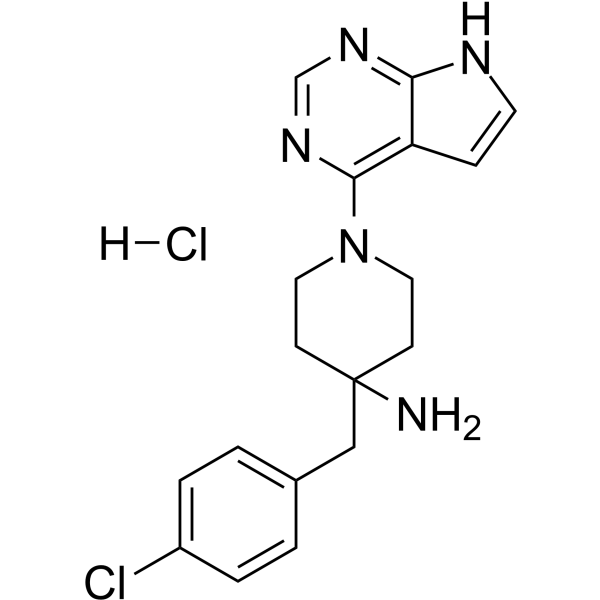
CCT128930 hydrochloride is a potent and selective inhibitor of AKT (IC50=6 nM). CCT128930 hydrochloride has 28-fold selectivity over the closely related PKA kinase (IC50=168 nM) through the targeting of Met282 of AKT (Met173 of PKA-AKT chimera), as well as 20-fold selectivity over p70S6K (IC50=120 nM). CCT128930 hydrochloride induces cell cycle arrest, DNA damage, and autophagy. Antitumor activity .
|
-
- HY-13597
-
|
|
Opioid Receptor
|
Neurological Disease
|
|
CJ-15161 is a κ-opioid receptor agonist. CJ-15161 can be used to study physiological functions such as pain relief and emotional regulation .
|
-
- HY-182978
-
|
|
E3 Ligase Ligand-Linker Conjugates
|
Others
|
|
Pomalidomide-C3-O-C4-O-C3-NH2 is an E3 ligase ligand-linker conjugate that contains Pomalidomide (HY-10984). Pomalidomide-C3-O-C4-O-C3-NH2 can be used for the synthesis of PROTACs targeting glycogen synthase kinase 3β (GSK-3β), such as PROTAC GSK-3β Degrader-1 (HY-149845) .
|
-
- HY-130604
-
DT2216
2 Publications Verification
|
Bcl-2 Family
PROTACs
Apoptosis
|
Cancer
|
|
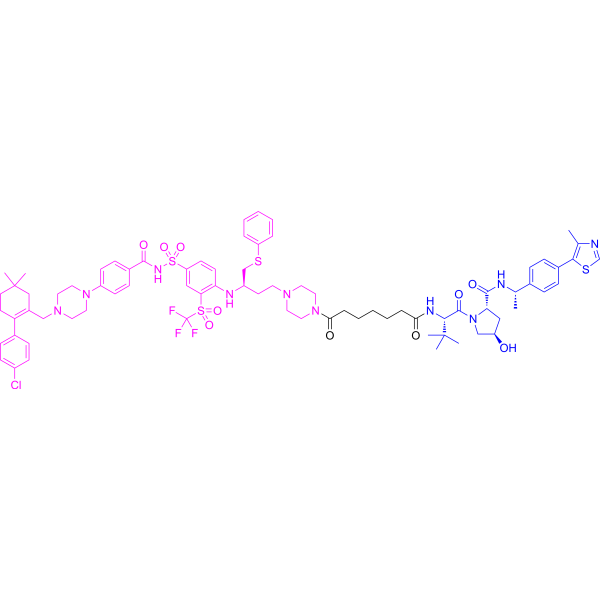
DT2216 is a potent and selective BCL-XL (Bcl-2 family member) degrader based on PROTAC technology. DT2216 causes effective degradation of BCL-XL protein by recruiting Von Hippel-Lindau (VHL) E3 ubiquitin ligase. DT2216 inhibits various BCL-XL-dependent leukemia and cancer cells but considerably less toxic to platelets. DT2216 is composed of the Bcl-2 family protein inhibitor Navitoclax-piperazine (HY-44432), a linker, and a VHL E3 ubiquitin ligase (Pink: Navitoclax-piperazine; Blue: VHL ligand; Black: linker) .
|
-
- HY-149434
-
|
|
Androgen Receptor
PROTACs
Apoptosis
|
Cancer
|
|
PROTAC AR-NTD antagonist 1 (compound 18) is a small molecule protein-targeting chimera (PROTACs) targeting the Androgen Receptor AR-V7. PROTAC AR-NTD antagonist 1 antagonizes the N-terminal domain of AR (AR-NTD), degrades AR-V7 protein, and induces apoptosis in prostate cancer (PC) cells. The efficiencies of PROTAC AR-NTD antagonist 1 in degrading AR-V7 in VCaP cells were 62.2% (1 μM) and 71.1% (5 μM), respectively .
|
-
- HY-176521
-
|
|
Androgen Receptor
Epigenetic Reader Domain
|
Cancer
|
|
AR/BRD4 RIPTAC-1 (Compound II-5) is an orally active Regulatory-inducible proximity-targeting chimera (RIPTAC). AR/BRD4 RIPTAC-1 induces the formation of a stable ternary complex between the androgen receptor (AR) and BRD4, thereby blocking BRD4 function. AR/BRD4 RIPTAC-1 inhibits the growth and proliferation of tumor cells. AR/BRD4 RIPTAC-1 holds promise for use in prostate cancer research .
|
-
- HY-176521A
-
|
|
Androgen Receptor
Epigenetic Reader Domain
|
Cancer
|
|
AR/BRD4 RIPTAC-1 (Compound II-5) TFA is an orally active Regulatory-inducible proximity-targeting chimera (RIPTAC). AR/BRD4 RIPTAC-1 TFA induces the formation of a stable ternary complex between the androgen receptor (AR) and BRD4, thereby blocking BRD4 function. AR/BRD4 RIPTAC-1 TFA inhibits the growth and proliferation of tumor cells. AR/BRD4 RIPTAC-1 TFA holds promise for use in prostate cancer research .
|
-
- HY-156104
-
|
|
PROTACs
CaMK
|
Neurological Disease
|
|
CaMKIIα-PHOTAC is a photochemically targeted chimera (PHOTAC) targeting Ca2+/calmodulin-dependent protein kinase II α (CaMKIIα). Molecules such as PHOTAC can catalyze the ubiquitination and degradation of target proteins through the endogenous proteasome under specific wavelengths of light. CaMKIIα-PHOTAC reduces synaptic function under light conditions, and it attenuates the intensity of evoked field excitatory postsynaptic potentials in the mouse hippocampus in response to physiological stimuli. CaMKIIα-PHOTAC plays a critical role in maintaining long-term potentiation and memory capacity in subcellular dendritic domains .
|
-
- HY-161746
-
|
|
AUTOTACs
Autophagy
|
Neurological Disease
|
|
Anle138b-F105 is an autophagy-targeting chimera (AUTOTAC) that targets p62/Sequestosome-1/SQSTM1. Anle138b-F105 binds to the ZZ domain of p62, induces conformational activation, self-oligomerization, interaction with LC3, and formation of autophagosomes. Anle138b-F105 induces autophagic flux of ubiquitin-conjugated aggregated proteins, leading to their lysosomal degradation. Anle138b-F105 is applicable for the research of neurodegenerative proteinopathies .
|
-
- HY-146393
-
|
|
PROTACs
Cytochrome P450
|
Cancer
|
|
PROTAC CYP1B1 degrader-1 (Compound 6C), a α-naphthoflavone chimera derivative, is able to eliminate cytochrome P450 (CYP)1B1-mediated agent resistance via targeted CYP1B1 degradation, with IC50s of 95.1 and 9838.6 nM for CYP1B1 and CYP1A2, respectively. PROTAC CYP1B1 degrader-1 can be used for the research of CYP1B1-overexpressing prostate cancer .
|
-
- HY-155361
-
|
|
PROTACs
Epigenetic Reader Domain
|
Cancer
|
|
PROTAC BRD9 Degrader-7 is an orally active, selective BRD9 PROTAC degrader (DC50 = 1.02 nM). PROTAC BRD9 Degrader-7 mediates BRD9 degradation via the ubiquitin-proteasome system. PROTAC BRD9 Degrader-7 exhibits proliferation inhibitory activity in the MV4-11 cells. PROTAC BRD9 Degrader-7 can be used in the research of acute myeloid leukemia and other related malignancies. (Pink: BI 7271: HY-123616, Blue: 5-Aminothalidomide: HY-W023573, Blue + Black: Thalidomide-5-piperazine: HY-W834174, Black: N,N'-Dimethylpiperazine: HY-W539783) .
|
-
- HY-132971
-
|
|
Ligands for E3 Ligase
Apoptosis
Autophagy
|
Cancer
|
|
Thalidomide-piperazine hydrochloride is a synthetic E3 ligase ligand-linker conjugate, comprising a cereblon ligand based on Thalidomide (HY-14658) and one linker. Thalidomide-piperazine hydrochloride can be used in studies related to PROTAC synthesis .
|
-
- HY-176261
-
|
|
PROTACs
|
Cancer
|
|
DDD2 is a selective and potent VHL-mediated PROTAC NUDT5 degrader. DDD2 induces robust NUDT5 degradation. DDD2 can be used in cancer research, such as lymphocytic leukemia and osteosarcoma . (Structure Note: Pink: NUDT5 inhibitor (HY-176262); Blue: E3 (HY-125845); Black: linker (HY-W001958))
|
-
- HY-178825B
-
|
|
PROTACs
Histone Demethylase
Apoptosis
|
Cancer
|
|
LD-110 trihydrochloride is a highly efficient and effective LSD1 PROTAC degrader (DC50 = 0.44 μM). LD-110 trihydrochloride promotes LSD1 degradation and increases the level of H3K4 dimethylation in a ubiquitin-proteasome-dependent manner. LD-110 trihydrochloride inhibits the growth and survival of multiple esophagus squamous cancer cell (ESCC) lines by inducing apoptosis. LD-110 trihydrochloride can be used for the study of esophagus squamous cancer .
|
-
- HY-178825
-
|
|
PROTACs
Histone Demethylase
Apoptosis
|
Cancer
|
|
LD-110 is a highly efficient and effective LSD1 PROTAC degrader (DC50 = 0.44 μM). LD-110 promotes LSD1 degradation and increases the level of H3K4 dimethylation in a ubiquitin-proteasome-dependent manner. LD-110 inhibits the growth and survival of multiple esophagus squamous cancer cell (ESCC) lines by inducing apoptosis. LD-110 can be used for the study of esophagus squamous cancer .
|
-
- HY-178826
-
-
- HY-153713
-
|
|
RIBOTAC
c-Myc
Apoptosis
|
Cancer
|
|
MYC-RIBOTAC is a nucleic acid-targeting degrader (ribonuclease-targeting chimera, RIBOTAC) that targets the MYC internal ribosome entry site (IRES). MYC-RIBOTAC contains a MYC mRNA binding component and a small molecule that recruits and locally activates RNAse L1. MYC-RIBOTAC reduces MYC mRNA and protein expression levels, induces cell apoptosis, and can be used for antitumor research . MYC-RIBOTAC consists of pre-miR-155 binder Anticancer agent 167 (HY-156839), RNA binder NCI-B16 (HY-156215), and Linker Amino-PEG4-alcohol (HY-W008005).
|
-
- HY-153735
-
|
|
PROTACs
ERK
|
Cancer
|
|
ERK-CLIPTAC is a ERK CLIPTAC (click chemistry-synthesized proteolysis-targeting chimera) degrader. ERK-CLIPTAC forms intracellularly via click chemistry from ERK1/2-IN-14 (HY-175578) and Tz-thalidomide (HY-101460). The formed ERK-CLIPTAC recruits the E3 ubiquitin ligase CRBN to ERK1/2, thereby inducing ubiquitination and subsequent degradation of ERK1/2. Due to its lack of cell permeability, ERK-CLIPTAC cannot induce ERK1/2 degradation in cells. ERK-CLIPTAC can be used in research related to melanoma and colorectal cancer .
|
-
- HY-151071
-
|
|
Ligands for Target Protein for PROTAC
CDK
|
Cancer
|
|
TMX-3013 is a CDK inhibitor capable of inhibiting the activity of CDK1, CDK2, CDK4, CDK5, and CDK6, with IC50 values of 0.9 nM, <0.5 nM, 24.5 nM, 0.5 nM, and 15.6 nM, respectively. TMX-3013 can be used as a target protein ligand, conjugated with the PROTAC linker and the CRBN ligand Thalidomide (HY-14658) for the synthesis of PROTAC TMX-2138 (HY-164906). TMX-3013 can also act as an effector ligand, binding to target proteins HaloTag or FKBP, and can be used in the synthesis of regulated induced proximity targeting chimeras (RIPTACs) .
|
-
- HY-114312
-
|
|
PROTACs
MDM-2/p53
E1/E2/E3 Enzyme
|
Cancer
|
|
MD-224 is a first-in-class and highly potent small-molecule human murine double minute 2 (MDM2) degrader based on the proteolysistargeting chimera (PROTAC) concept. MD-224 consists of ligands for Cereblon and MDM2. MD-224 induces rapid degradation of MDM2 at concentrations <1 nM in human leukemia cells, and achieves an IC50 value of 1.5 nM in inhibition of growth of RS4;11 cells. MD-224 has the potential to be a new class of anticancer agent . MD-224 is a click chemistry reagent, it contains an Alkyne group and can undergo copper-catalyzed azide-alkyne cycloaddition (CuAAc) with molecules containing Azide groups.
|
-
- HY-173320
-
|
|
Hsp-targeting Chimeras
Wee1
HSP
|
Cancer
|
|
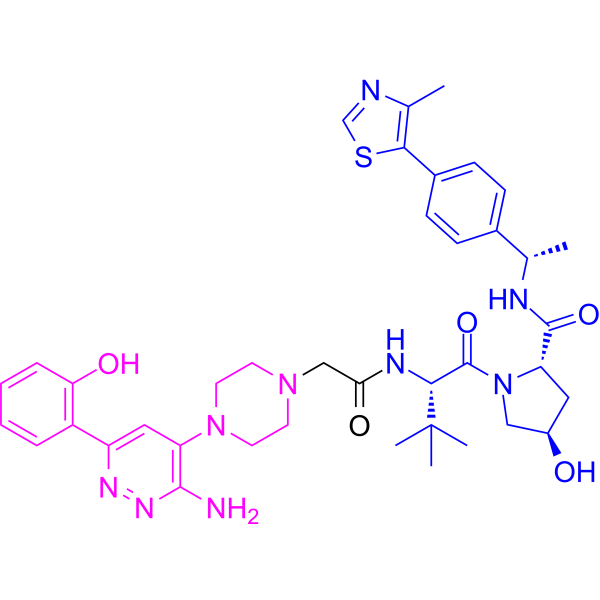
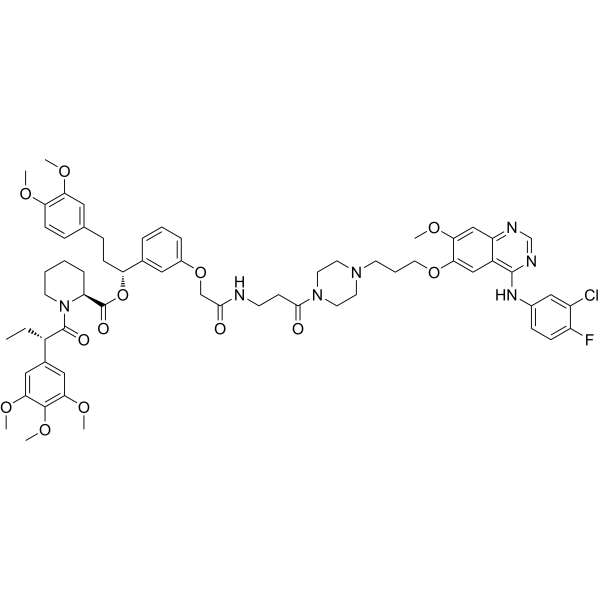
HEMTAC WEE1 degrader-1 is a HSP90-mediated targeting chimera (HEMTAC) degrader of WEE1 (HSP90 enzyme inhibitory activity is IC50: 16.76 nM). HEMTAC WEE1 degrader-1 promotes the ubiquitination and degradation of WEE1. HEMTAC WEE1 degrader-1 blocks the G2/M cell cycle. HEMTAC WEE1 degrader-1 has anticancer activity in acute myeloid leukemia (AML) patient-derived xenograft (PDX) models. HEMTAC WEE1 degrader-1 can be used in AML research. (Pink: HSP90 binder; Blue: WEE1 ligand; Black: linker) .
|
-
- HY-169369
-
|
XJZ-06-462
|
MDM-2/p53
Apoptosis
|
Cancer
|
|
TRAP-1 (XJZ-06-462) is a non-covalent regulated induced proximity targeting chimera (RIPTAC) with JQ-1 carboxylic acid (HY-78695) as its target protein ligand. TRAP-1 forms a ternary complex with p53 Y220C and BRD4, potently activates p53 transcription, and inhibits the growth and proliferation of tumor cells. TRAP-1 upregulates p21 and other p53 target genes in pancreatic cell lines carrying p53 Y220C, and induces cellular senescence and apoptosis. TRAP-1 can be used in cancer research involving p53 Y220C-carrying tumors .
|
-
- HY-148334
-
|
|
PROTACs
Histone Methyltransferase
|
Cancer
|
|
MS8815 is a selective enhancer of zeste homolog 2 (EZH2) PROTAC degrader. MS8815 has inhibition activity for EZH2 with an IC50 value of 8.6 nM. MS8815 can be used for the research of triple-negative breast cancer (TNBC) .
|
-
- HY-142021
-
|
|
Cathepsin
Parasite
|
Infection
Inflammation/Immunology
|
|
Z-Leu-Arg-AMC is a fluorogenic peptide substrate for cysteine proteases (e.g., Cathepsin) (Ex=350 nm,Em=460 nm). Z-Leu-Arg-AMC is preferentially cleaved by Cathepsin K and S under weakly acidic conditions, while its hydrolysis relies on residual Cathepsin S activity at neutral pH. Z-Leu-Arg-AMC serves as a substrate for recombinant Sphenophorus levis Cathepsin L, falcipain-2, falcipain-3, berghepain-2, knowlepain-2, vivapain-2, as well as falcipain-2 chimeras and constructs. It enables quantitative detection of cysteine protease activity in human inflammatory bronchoalveolar lavage fluid via fluorescence generation. Z-Leu-Arg-AMC can be used in research related to pulmonary inflammatory diseases and malaria .
|
-
- HY-136420
-
|
|
PROTACs
Raf
Apoptosis
|
Inflammation/Immunology
Cancer
|
|
SJF-0628 is a RAF PROTAC degrader. SJF-0628 induces targeted degradation of BRAF in various cancer cell lines (colorectal cancer cell lines (Colo-205, LS-411N, HT-29, RKO) and triple-negative breast cancer cell line DU-4475). SJF-0628 decreases pMEK and pErk levels in DU-4475 cells. SJF-0628 has anti-tumor activity. SJF-0628 can be used for research of colorectal cancer and triple-negative breast cancer. (Pink: RAF ligand (HY-12057), Blue: VHL Ligand ( HY-125845), Black: Linker (HY-B0912)) .
|
-
- HY-178161
-
|
|
HDAC
Apoptosis
|
Cancer
|
|
HDAC degrader-2 is a selective HDAC degrader with a DC50 values of 2.55 μM against HDAC1. HDAC degrader-2 effectively induces the degradation of HDAC1 and HDAC2, but has no significant effect on the degradation of HDAC3, 4, 6 and 8. HDAC degrader-2 exerts potent antiproliferative effects against MM.1S and MCF-7 cells. HDAC degrader-2 induces apoptosis in myeloma cells. HDAC degrader-2 can be used for the study of myeloma .
|
-
- HY-181897
-
|
|
Huntingtin
Ligands for Target Protein for PROTAC
|
Neurological Disease
|
|
mHTT ligand-1 is an mHTT ligand. As a Ligand for Target Protein for PROTAC, mHTT ligand-1 can be used to develop and design PROTAC-based mHTT degraders, such as PROTAC mHTT Degrader-1 (HY-181879). mHTT ligand-1 is applicable to research related to Huntington's disease .
|
-
- HY-141878
-
|
|
RIBOTAC
DNA/RNA Synthesis
|
Neurological Disease
|
|
di-Ellipticine-RIBOTAC is a RNase recruiting chimera (RIBOTAC) degrader, capable of specifically binding and degrading expanded G4C2 RNA repeat (r(G4C2) exp). di-Ellipticine-RIBOTAC selectively binds the three-dimensional (3D) structure formed by r(G4C2) exp and that recruits an endogenous ribonuclease (RNase) to cleave r(G4C2) exp. di-Ellipticine-RIBOTAC selectively degrades the mutant chromosome 9 open reading frame 72 (C9orf72) allele and reduces quantities of toxic dipeptide repeat proteins (DPRs) translated from r(G4C2) exp. di-Ellipticine-RIBOTAC significantly improves the pathological phenotype of amyotrophic lateral sclerosis/ frontotemporal dementia (c9ALS/FTD) in cells and mouse models. di-Ellipticine-RIBOTAC can be used for the study of amyotrophic lateral sclerosis (ALS) and frontotemporal dementia (FTD) .
|
-
- HY-181906
-
|
|
PROTACs
Reactive Oxygen Species (ROS)
CDK
|
Cancer
|
|
ZnPc-PEG2-VH032 is a VHL-pathway-dependent photodegradation targeting chimera (PDTAC) and cytotoxic agent. ZnPc-PEG2-VH032 (HY-120217) binds to the VHL ligand domain, and then specifically degrades VHL under light irradiation, a process independent of non-specific ROS-mediated protein damage. ZnPc-PEG2-VH032 uses Zinc phthalocyanine (HY-19204) as a photosensitizer, and generates ROS via type I and type II photodynamic pathways under 680 nm LED irradiation. On one hand, it targets and degrades the bound VHL protein through ROS; on the other hand, it exerts direct photodynamic cytotoxicity. Meanwhile, the degradation of VHL downregulates the phosphorylation level of CDK2/4, induces cell cycle arrest in tumor cells, further enhances the sensitivity of tumor cells to oxidative damage caused by ROS, and achieves a synergistic anti-tumor effect. ZnPc-PEG2-VH032 exerts significant in vivo efficacy in an orthotopic mouse model of non-muscle invasive bladder cancer (NMIBC) .
|
-
- HY-141878A
-
|
|
RIBOTAC
DNA/RNA Synthesis
|
Neurological Disease
|
|
di-Ellipticine-RIBOTAC TFA is a RNase recruiting chimera (RIBOTAC) degrader, capable of specifically binding and degrading expanded G4C2 RNA repeat (r(G4C2) exp). di-Ellipticine-RIBOTAC TFA selectively binds the three-dimensional (3D) structure formed by r(G4C2) exp and that recruits an endogenous ribonuclease (RNase) to cleave r(G4C2) exp. di-Ellipticine-RIBOTAC TFA selectively degrades the mutant chromosome 9 open reading frame 72 (C9orf72) allele and reduces quantities of toxic dipeptide repeat proteins (DPRs) translated from r(G4C2) exp. di-Ellipticine-RIBOTAC TFA significantly improves the pathological phenotype of amyotrophic lateral sclerosis/ frontotemporal dementia (c9ALS/FTD) in cells and mouse models. di-Ellipticine-RIBOTAC TFA can be used for the study of amyotrophic lateral sclerosis (ALS) and frontotemporal dementia (FTD) .
|
-
- HY-169385
-
|
|
AUTOTACs
Androgen Receptor
|
Cancer
|
|
ATC-324 is an bivalent AR (Androgen Receptor) degrader based on the protein degradation technology platform AUTOphagy-TArgeting Chimera (AUTOTAC). ATC-324 induces the formation of AR/p62 complex, leading to autophagy-lysosomal degradation of AR. ATC-324 can reduce nuclear AR levels and downregulate target gene expression of AR and AR-v7, and also has a degradation effect on common AR mutants in PCa . ATC-324 is composed of target-binding ligand (TBL) Enzalutamide (HY-70002) and p62/SQSTM1 autophagy-targeting ligand (ATL) YT 6-2 analog-1 (HY-169386), connected by Boc-NH-PEG4-CH2CH2NH2 (HY-W008352). Among them, the active control of the target protein ligand is Enzalutamide carboxylic acid (HY-70002B), and the conjugate composed of the autophagy-targeting ligand and the linker is YT 6-2-PEG3-C2-NH2 (HY-169387).
|
-
- HY-182959
-
|
|
Hsp-targeting Chimeras
LYTACs
PD-1/PD-L1
HSP
|
Cancer
|
|
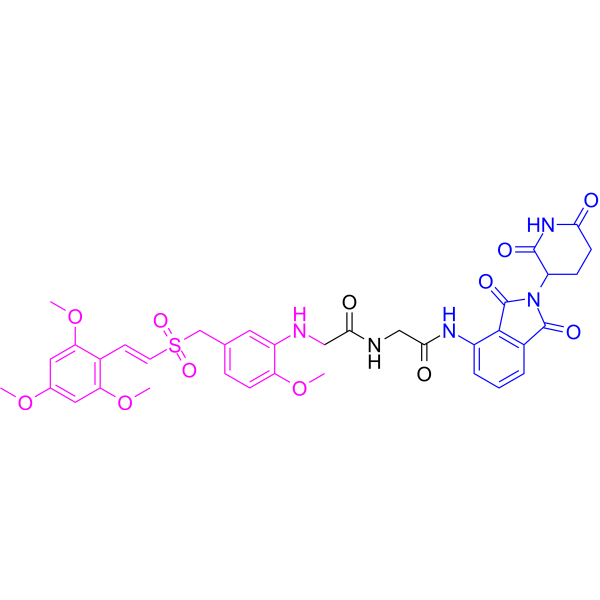
Hsp70TAC PD-1 Degrader-2 is a PD-L1 Hsp70TAC (Hsp70-targeting Chimeras) degrader with Kd values of 0.36 μM. Hsp70TAC PD-1 Degrader-2 forms a ternary complex with Hsp70 and PD-L1 to drive PD-L1 degradation. Hsp70TAC PD-1 Degrader-2 induces degradation of mature membrane-bound PD-L1 in an Hsp70-dependent manner and via caveolin-mediated endocytosis and lysosomal trafficking. Hsp70TAC PD-1 Degrader-2 accumulates preferentially in tumor cells with elevated Hsp70 expression for tumor-selective PD-L1 degradation. Hsp70TAC PD-1 Degrader-2 can be used for the research of cancer, such as breast invasive carcinoma, glioblastoma multiforme, diffuse large b-cell lymphoma . (Pink: PD-1/PD-L1 ligand (HY-19745A); Blue: Hsp70 ligand (HY-182979); Black: linker (HY-182982)).
|
-
-
-
HY-L151
-
|
|
515 compounds
|
|
PROTACs (Proteolysis-targeting chimeras) is a class of molecules that utilize ubiquitin-proteasome system (UPS) to ubiquitinate and degrade target proteins. The PROTACs molecule consists of two ligands joined by a linker. The one-to-one interaction between PROTACs and target proteins determines the high efficiency of PROTACs, making it a potential molecule for targeted protein degradation (TPD) therapy.
MCE supplies a unique collection of 515 PROTACs that effectively degrade target proteins with more powerful screening capability. MCE PROTAC Library is a useful tool for signal pathway research, protein degradation therapy research, drug discovery and drug repurposing, etc.
|
-
-
HY-L129
-
|
|
94 compounds
|
|
Proteolysis-targeting chimera (PROTAC) has been developed to be a useful technology for targeted protein degradation. PROTACs consist of a ligand for E3 ligase (E3 ligase binder), a linker and a ligand (mostly small-molecule inhibitor) for protein of interest(target binder). Upon binding to the target protein, the PROTACs can recruit E3 for target protein ubiquitination, which is subjected to proteasome-mediated degradation. Therefore, PROTACs execute their functions by degrading the target proteins rather than inhibiting them, which has a great superiority in overcoming resistance caused by target mutation or overexpression. To date, PROTAC technology has been applied to a variety of targets, including AR, ER, BTK, BET, and BCR-ABL to overcome resistance.
MCE carefully prepared a unique collection of 94 ligands for target proteins, which have been reported to be used in PROTAC design. MCE Target Protein Ligand Library is a useful tool for PROTAC development.
|
-
-
HY-L128
-
|
|
174 compounds
|
|
Proteolysis-targeting chimera (PROTAC) has been developed to be a useful technology for targeted protein degradation. PROTACs consist of a ligand for E3 ligase (E3 ligase binder), a linker and a ligand (mostly small-molecule inhibitor) for protein of interest(target binder). Upon binding to the target protein, the PROTACs can recruit E3 for target protein ubiquitination, which is subjected to proteasome-mediated degradation.
Although there are more than 600 E3 ubiquitin ligases, only several with small molecule ligands have been used for designing PROTACs, including Skp1-Cullin-F box complex containing Hrt1 (SCF), Von Hippel-Lindau tumor suppressor (VHL), Cereblon (CRBN), inhibitor of apoptosis proteins (IAPs), and mouse double minute 2 homolog (MDM2).
MCE carefully prepared a unique collection of 174 ligands for E3 ligase, which have been reported to be used in PROTAC design. MCE E3 ligase ligand library is a useful tool for PROTAC development.
|
| Cat. No. |
Product Name |
Target |
Research Area |
-
- HY-P10446
-
|
|
Epigenetic Reader Domain
PROTACs
|
Cancer
|
|
TAT-PiET-PROTAC is a proteolysis-targeting chimera (PROTAC)-modified TAT-PiET (HY-P10445), which is a cell-penetrating peptide targeting the extra-terminal (ET) domain of BRD4. TAT-PiET-PROTAC can reduce BRD4 and JMJD6 levels and inhibit cell proliferation. TAT-PiET-PROTAC also resists the endocrine resistance of ERα-positive breast cancer cells. TAT-PiET-PROTAC can be used for the research of cancer, such as breast cancer .
|
-
- HY-P1556
-
|
|
PKG
|
Cardiovascular Disease
|
|
Vasonatrin Peptide (VNP) is a chimera of atrial natriuretic peptide (ANP) and C-type natriuretic peptide (CNP). Vasonatrin peptide possesses the venodilating actions of CNP, the natriuretic actions of ANP, and unique arterial vasodilating actions not associated with either ANP or CNP. Vasonatrin Peptide protects the diabetic heart against ischemia-reperfusion injury by inhibiting ER stress via the cGMP-PKG signaling pathway .
|
-
- HY-P2548
-
|
|
EGFR
|
Others
|
|
pp60 (v-SRC) Autophosphorylation Site, Phosphorylated is the phosphorylated peptide of an EGFR substrate. pp60 (v-SRC) Autophosphorylation Site, Phosphorylated can be used for the screening of EGFR Kinase inhibitors via phosphorylated-substrate quantification .
|
-
- HY-P1556A
-
|
|
PKG
|
Metabolic Disease
|
|
Vasonatrin Peptide (VNP) TFA is a chimera of atrial natriuretic peptide (ANP) and C-type natriuretic peptide (CNP). Vasonatrin peptide TFA possesses the venodilating actions of CNP, the natriuretic actions of ANP, and unique arterial vasodilating actions not associated with either ANP or CNP. Vasonatrin Peptide TFA protects the diabetic heart against ischemia-reperfusion injury by inhibiting ER stress via the cGMP-PKG signaling pathway .
|
| Cat. No. |
Product Name |
|
Classification |
-
- HY-114312
-
|
|
|
PROTAC Synthesis
|
|
MD-224 is a first-in-class and highly potent small-molecule human murine double minute 2 (MDM2) degrader based on the proteolysistargeting chimera (PROTAC) concept. MD-224 consists of ligands for Cereblon and MDM2. MD-224 induces rapid degradation of MDM2 at concentrations <1 nM in human leukemia cells, and achieves an IC50 value of 1.5 nM in inhibition of growth of RS4;11 cells. MD-224 has the potential to be a new class of anticancer agent . MD-224 is a click chemistry reagent, it contains an Alkyne group and can undergo copper-catalyzed azide-alkyne cycloaddition (CuAAc) with molecules containing Azide groups.
|
-
- HY-152261
-
|
|
|
PROTAC Synthesis
|
|
MS6105 is an LDH protein hydrolysis-targeted chimera (PROTAC) that effectively degrades LDHA and LDHB in a time- and ubiquitin-proteasome system-dependent manner and has anticancer activity . MS6105 is a click chemistry reagent, it contains an Alkyne group and can undergo copper-catalyzed azide-alkyne cycloaddition (CuAAc) with molecules containing Azide groups.
|
-
- HY-101460
-
|
|
|
Tetrazine
|
|
Tz-Thalidomide is a tetrazine-tagged Thalidomide (HY-14658), an E3 ligase ligand. Tz-Thalidomide self-assembles with TCO-labeled target protein inhibitors, forming a CLIP-TAC (targeted protein degradation chimera) via click chemistry. This chimera recruits the E3 ubiquitin ligase CRBN to the target protein, thereby inducing ubiquitination and subsequent degradation of the target protein. When used in combination with JQ1-TCO (HY-148864), Tz-Thalidomide induces concentration-dependent degradation of BRD4 in cells. When combined with ERK-targeting protein inhibitors, Tz-Thalidomide induces degradation of ERK1/2 in cells. Tz-Thalidomide can be used in cancer-related research .
|
-
- HY-168457
-
|
|
|
Azide
|
|
RNase L ligand 2 (compound 6) is the Rnase L ligand part of RNAse L RIBOTAC (HY-168455), an RNA-degrading chimera which binds to a four-way RNA helix called SL5 in the 5’ UTR of the SARS-CoV-2 RNA genome and inhibits the virus replication in lung epithelial carcinoma cells. RNase L ligand 2 can be used in the synthesis of RIBOTAC .
|
-
- HY-168458
-
|
|
|
Alkynes
|
|
RNA recruiter-linker 1 is the RNA ligand-linker part of RNAse L RIBOTAC (HY-168455), an RNA-degrading chimera which binds to a four-way RNA helix called SL5 in the 5’ UTR of the SARS-CoV-2 RNA genome and inhibits the virus replication in lung epithelial carcinoma cells. RNA recruiter-linker 1 can be utilized in the synthesis of RIBOTAC .
|
-
- HY-182978
-
|
|
|
PROTAC Synthesis
|
|
Pomalidomide-C3-O-C4-O-C3-NH2 is an E3 ligase ligand-linker conjugate that contains Pomalidomide (HY-10984). Pomalidomide-C3-O-C4-O-C3-NH2 can be used for the synthesis of PROTACs targeting glycogen synthase kinase 3β (GSK-3β), such as PROTAC GSK-3β Degrader-1 (HY-149845) .
|
Your information is safe with us. * Required Fields.
Inquiry Information
- Product Name:
- Cat. No.:
- Quantity:
- MCE Japan Authorized Agent:

